Tag: Prasar Bharati

  • TRAI extends time for views on opening up DTT to private players

    TRAI extends time for views on opening up DTT to private players

    NEW DELHI: With sharing of Prasar Bharati infrastructure remaining a ticklish issue, the Telecom Regulatory Authority has decided to give more time to stakeholdes to respond to its consultation paper on the issue of Digital Terrestrial Transmission (DTT), which has until now remained a monopoly of the public broadcaster Doordarshan.

    Sakeholders can now respond with comments by 5 August and counter-comments on12 August, and Trai has said no further time would be given.

    The paper issued on 24 June 2016 was aimed at examining opening up DTT to private players in an effort to reach the largest audiences in the country.

    indiantelevision.com had earlier reported that the government was in the final stages of this exercise. Later, the website quoted Prasar Bharati Chief Executive Officer Jawhar Sircar has saying that the pubcaster had itself cleared this more than a year earlier, even while pointing out that this would necessitate use of the Prasar Bharati infrastructure.

    DD, which presently has exclusive domain over terrestrial broadcasting, ranks amongst the world’s largest terrestrial television networks. It has a network of 1412 analog transmitters that provide TV services through two national channels namely, DD National and DD News. In addition to this, the network also broadcast several regional TV channels over the terrestrial network in a time sharing mode to meet the local and regional needs of people in different parts of the country. All TV channels provided by DD are free-to-air.

    DTT for broadcasting TV programme services was first introduced in the UK in 1998 by deploying the first generation DVB-T standard developed by the European Digital Video Broadcasting (DVB) group. Since then, Trai says many new standards have evolved and at this juncture implementation of the second generation standards are underway. The DTT broadcasting spectrum has been harmonized with earlier analog spectrum allocation and therefore DTT makes use of similar analog channel allocations. Latest DTT technologies provide a number of advantages over analog terrestrial broadcasting technology, of which some include better quality TV reception – with enhanced picture and sound performance; eEfficient use of frequency – one DTT transmitter can broadcast multiple TV channels; frequency reuse possible – a single frequency network (SFN) can be implemented to cover a large geographical area; efficient reception of TV channels in portable environment such as on moving vehicles; TV channels can also be received on mobile phones and handheld devices; and the 7 or 8 MHz TV frequency band can accommodate 10-12 Standard Definition (SD) TV channels or it can be employed as a data pipe to deliver different type of services including radio services.

    The DTT platform is flexible and content format agnostic – newer formats of TV channels such as HD TV, 3D TV, UHD TV, data and radio services etc. can thus be delivered with reduced transmission power requirements. Digitization also allows for government bodies to reclaim spectrum and repurpose it.

    With standardized DTT transmission and clear advantages in terms of effective frequency utilization as well as enhanced TV quality, many countries the world over have laid down clear roadmaps to switch-off analog terrestrial TV transmission with a transition to DTT. In India, though work for changeover from Analog terrestrial transmission to digital terrestrial transmission by DD has already commenced, a clear roadmap is however unavailable.

  • Producers question DD’s decision to call of prime time slot  auctions

    Producers question DD’s decision to call of prime time slot auctions

    MUMBAI: When Prasar Bharati had announced that it would auction its prime time slots between 7 pm to 11 pm on Doordarshan, the leading production houses in the country had received it with enthusiasm. Here was a chance for them to expand their audience base through DD’s terrestrial distribution network and reach the rural market that so many brands are vying to address. Some of the big name production houses did send in their bids including Balaji Telefilms, Keylight Productions, and Shakuntalam Telefilms. And it seemed that DD was going to get back in the ratings game after all.

    But then suddenly a couple of days later, the pubcaster once again announced that it was calling off the entire time slot privatization process after receiving applications for the bid scheduled on 17 and 18 July. DD’s move was met with much skepticism and disappointment.

    “The auction being called off was very unfortunate.  At the end of the day, these (channels under Prasar Bharati and its content) are all national assets that need to be taken care of in the best possible manner,” says one of the producers who had put in his bid. “If you initiate something like this, you would want the broadcaster to see it through its logical conclusion Though I am sure DD has had its reasons, and that the impact will be felt more on its part, I feel that it’s the nation’s loss.”

    The reason for nixing the auction that DD gave was because several applications did not meeting its eligibility criteria, and many defaulted on the application fee of Rs 5000 for the bid —  as reported by media. To this, many producers who had applied for the auction have raised their eyebrows.

    “I really can’t ascertain the reason. The fact that top producers wanted to bid to enter the auction and be a part of the DD story was reason enough to qualify them. There was no reason to disqualify them on technical grounds. What is the point of having made all the effort and getting disqualified over a Rs 5000 entry fee? I find this reason baseless,” expresses another disgruntled producer.

    It is to be noted that Prasar Bharati required eligible bidders to have logged a revenue of at least Rs 5 crore per annum in each of the past three financial years and to have  produced at least 300 hours of Hindi general entertainment programming in the past two calendar years.

    Undoubtedly, in a bid to ‘introduce fresh programming to get eyeballs back,’ DD had placed its bets high.

    But were the promised returns from the said deal as lucrative for the production houses?  “When I went through the request for proposals (RFP) document earlier, we found the proposal very unavailable at that point,” divulges a major contributor to India’s Hindi general entertainment channels who chose to opt out of the auctions after going through the particulars of the deal.

    “I had personally requested for certain changes in the RFP document, to which DD had answered saying that it can’t be done. DD must have had its own point of view on the matter and I am not denying them of it. Having said that I am not surprised it was  called off. The issue was more financial than creative, for that matter. We felt the producers should have been given more space on how to produce, what to produce and the terms of slot retention as well. Given the broadcaster’s parameters, it is best that DD maintained and ran its own prime time,” he further opines.   

    Seconding this opinion, another veteran producer  of the television world (who had been approached to bid but declined) explained why the idea was dubious from the start.

    “I knew that the entire process would be botched up right from the start,” he says. “The thinking in DD needs to change. When it is inviting private sector producers to produce content, then it needs to give them what private channels would do in exchange for air time barter deals. At one stage, DD could get by with its high demands from advertisers, and media agencies because it was the only player in the rural areas and had huge audiences. Now the scenario has changed and other broadcasters also have their share of the viewership.

    “DD’s processes are bureaucratic and antiquated and it is not responsive to market demands like the private channels are. For us, it didn’t make economic sense to invest in the time slots and produce content for the channel without any guarantee of returns on them. Moreover there is no clarity to DD’s marketing and promotional strategy for the shows. It doesn’t have a system in place for cross promotional marketing between its shows, something very important and inherent to the current broadcast business. Then there is the issue of dealing with DD’s inhouse producers who are too scared and go only by the rules and some of them also misuse the rules.”

    After this singular failure of the time slot auctions, observers wonder whether DD will be able to once again go down that street. And whether it will be able to gain the producers’ trust and confidence if it does make another try.

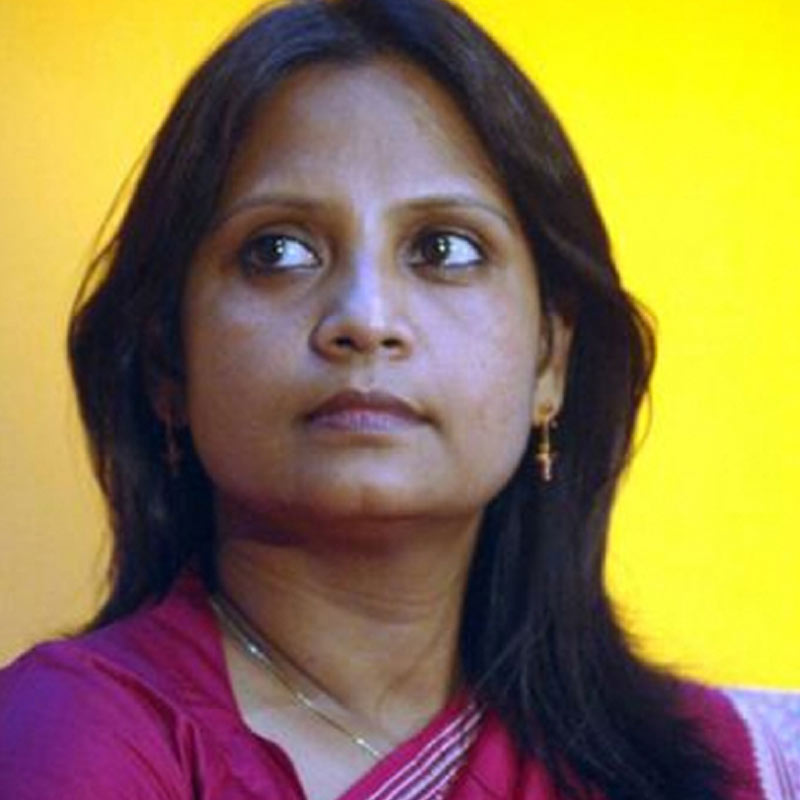
    The new DD director general Supriya Sahu has her task out and she has to decide on whether the broadcaster should take the commercial route or stick to its knitting of public service broadcasting and forget about generating revenues. If it is the latter, then she needs to simply ask for more government funds and improve the quality of public service programmes by retraining its pool of existing in-house talent.

    Industry is watching to see the path she chooses.

    DD officials spoke to indiantelevision.com off the record after the story was published. This is what they said: “Those who sent in names for bidding were disqualified on some ground or other as they failed to fulfil the rules and regulations for the auctions. The auctions have not been cancelled, but suspended for the present.The Prasar Bharati Board will meet on 26 July where it will take further decisions on the matter – this may include some changes in rules and regulations.”

    (Updated on 20 July 2016 3:26 pm)

  • Producers question DD’s decision to call of prime time slot  auctions

    Producers question DD’s decision to call of prime time slot auctions

    MUMBAI: When Prasar Bharati had announced that it would auction its prime time slots between 7 pm to 11 pm on Doordarshan, the leading production houses in the country had received it with enthusiasm. Here was a chance for them to expand their audience base through DD’s terrestrial distribution network and reach the rural market that so many brands are vying to address. Some of the big name production houses did send in their bids including Balaji Telefilms, Keylight Productions, and Shakuntalam Telefilms. And it seemed that DD was going to get back in the ratings game after all.

    But then suddenly a couple of days later, the pubcaster once again announced that it was calling off the entire time slot privatization process after receiving applications for the bid scheduled on 17 and 18 July. DD’s move was met with much skepticism and disappointment.

    “The auction being called off was very unfortunate.  At the end of the day, these (channels under Prasar Bharati and its content) are all national assets that need to be taken care of in the best possible manner,” says one of the producers who had put in his bid. “If you initiate something like this, you would want the broadcaster to see it through its logical conclusion Though I am sure DD has had its reasons, and that the impact will be felt more on its part, I feel that it’s the nation’s loss.”

    The reason for nixing the auction that DD gave was because several applications did not meeting its eligibility criteria, and many defaulted on the application fee of Rs 5000 for the bid —  as reported by media. To this, many producers who had applied for the auction have raised their eyebrows.

    “I really can’t ascertain the reason. The fact that top producers wanted to bid to enter the auction and be a part of the DD story was reason enough to qualify them. There was no reason to disqualify them on technical grounds. What is the point of having made all the effort and getting disqualified over a Rs 5000 entry fee? I find this reason baseless,” expresses another disgruntled producer.

    It is to be noted that Prasar Bharati required eligible bidders to have logged a revenue of at least Rs 5 crore per annum in each of the past three financial years and to have  produced at least 300 hours of Hindi general entertainment programming in the past two calendar years.

    Undoubtedly, in a bid to ‘introduce fresh programming to get eyeballs back,’ DD had placed its bets high.

    But were the promised returns from the said deal as lucrative for the production houses?  “When I went through the request for proposals (RFP) document earlier, we found the proposal very unavailable at that point,” divulges a major contributor to India’s Hindi general entertainment channels who chose to opt out of the auctions after going through the particulars of the deal.

    “I had personally requested for certain changes in the RFP document, to which DD had answered saying that it can’t be done. DD must have had its own point of view on the matter and I am not denying them of it. Having said that I am not surprised it was  called off. The issue was more financial than creative, for that matter. We felt the producers should have been given more space on how to produce, what to produce and the terms of slot retention as well. Given the broadcaster’s parameters, it is best that DD maintained and ran its own prime time,” he further opines.   

    Seconding this opinion, another veteran producer  of the television world (who had been approached to bid but declined) explained why the idea was dubious from the start.

    “I knew that the entire process would be botched up right from the start,” he says. “The thinking in DD needs to change. When it is inviting private sector producers to produce content, then it needs to give them what private channels would do in exchange for air time barter deals. At one stage, DD could get by with its high demands from advertisers, and media agencies because it was the only player in the rural areas and had huge audiences. Now the scenario has changed and other broadcasters also have their share of the viewership.

    “DD’s processes are bureaucratic and antiquated and it is not responsive to market demands like the private channels are. For us, it didn’t make economic sense to invest in the time slots and produce content for the channel without any guarantee of returns on them. Moreover there is no clarity to DD’s marketing and promotional strategy for the shows. It doesn’t have a system in place for cross promotional marketing between its shows, something very important and inherent to the current broadcast business. Then there is the issue of dealing with DD’s inhouse producers who are too scared and go only by the rules and some of them also misuse the rules.”

    After this singular failure of the time slot auctions, observers wonder whether DD will be able to once again go down that street. And whether it will be able to gain the producers’ trust and confidence if it does make another try.

    The new DD director general Supriya Sahu has her task out and she has to decide on whether the broadcaster should take the commercial route or stick to its knitting of public service broadcasting and forget about generating revenues. If it is the latter, then she needs to simply ask for more government funds and improve the quality of public service programmes by retraining its pool of existing in-house talent.

    Industry is watching to see the path she chooses.

    DD officials spoke to indiantelevision.com off the record after the story was published. This is what they said: “Those who sent in names for bidding were disqualified on some ground or other as they failed to fulfil the rules and regulations for the auctions. The auctions have not been cancelled, but suspended for the present.The Prasar Bharati Board will meet on 26 July where it will take further decisions on the matter – this may include some changes in rules and regulations.”

    (Updated on 20 July 2016 3:26 pm)

  • Indian Pay TV subscription to break Rs 10,000 crore barrier in 2016: MPA

    Indian Pay TV subscription to break Rs 10,000 crore barrier in 2016: MPA

    MUMBAI: It’s heartening news for many in the pay TV industry, the slow pace of digitalization, nothswithstanding.

    Subscription revenues for broadcasters in India from cable TV and DTH platforms are on course to cross the Rs 10,000 crore (US $1.5 billion) mark for by end 2016. That’s the prediction of Singapore-based industry research and analysis firm Media Partners Asia (MPA).

    On the whole, Asia Pacific Pay-TV And Broadband Markets 2016, predicts that
    India’s pay-TV industry is on course to generate $9.4 billion in sales this year.

    Of this, the pay TV channels will account for $4.9 billion in aggregate revenue in 2016, up 16 per cent year-on-year. (The rest of the $4.5 billion is revenue that accrues to cable TV and DTH, that is the platforms)

    The revenue mix is approximately 70:30, skewed in favor of ad sales. Maintaining strong future growth will require channel operators to manage several structural changes, including the increased importance of rural markets under BARC’s new TV measurement system, changing norms on channel pricing and the rise of OTT video services.

    Pay-TV channel advertising revenue should grow by 15 per cent this year, to reach US$3.4 billion, predicts MPA.

    Says MPA executive director Vivek Couto: “Future economic growth should remain strong, which will support solid gains in the pay-TV industry. Digitalising India’s 65 million analog subscribers remains a major opportunity for cable, DTH and other emerging pay-TV platforms. Digital cable has done well to attain a 30 per cent share in Phase III areas, which tend to be DTH strongholds. At the same time, changes in the distribution landscape, together with gaps in traditional pay-TV services, are fostering the growth of new platforms. While Reliance Industries has yet to unveil pricing and bundling plans for its broadband service R-Jio, the product could disrupt traditional pay-TV distribution in urban markets. Expanded TV ratings from BARC meanwhile, which gives a better picture of viewing in rural areas, has also helped Prasar Bharati’s Freedish gain traction in Phase III and Phase IV areas.”

    MPA says the future looks bright. The report says that India’s pay TV industry will grow sales at 9.a 2 per cent compounded annual growth rate (CAGR) between 2016 and 2021 to reach $14.5 billion in revenue by 2021, increasing thereafter to $18 billion by 2025.

    Total pay-TV subscribers are forecast to grow from 152 million this year to 183 million by 2025. Pay-TV penetration, including multiple subs in a home, should remain stable over 2016-25 at 80 per cent of TV homes, although digital pay-TV subs are projected to grow from 93 million to 129 million over the same period. MPA forecasts that 70 per cent of India’s pay-TV base will be digitalized by 2025.

    Ongoing cable digitisation will help facilitate a gradual increase in pay-TV monthly ARPUs, from US$3.3 in 2016 to US$4.5 in 2025, although this will be offset by the 30 per cent share of pay-TV subs still accruing to analog by 2025. Cable will remain pay-TV’s largest platform but its share of pay-TV subscribers is expected to decline, from 68 per cent in 2016 to 60 per cent in 2025, as DTH attracts the majority of new subs.

  • Indian Pay TV subscription to break Rs 10,000 crore barrier in 2016: MPA

    Indian Pay TV subscription to break Rs 10,000 crore barrier in 2016: MPA

    MUMBAI: It’s heartening news for many in the pay TV industry, the slow pace of digitalization, nothswithstanding.

    Subscription revenues for broadcasters in India from cable TV and DTH platforms are on course to cross the Rs 10,000 crore (US $1.5 billion) mark for by end 2016. That’s the prediction of Singapore-based industry research and analysis firm Media Partners Asia (MPA).

    On the whole, Asia Pacific Pay-TV And Broadband Markets 2016, predicts that
    India’s pay-TV industry is on course to generate $9.4 billion in sales this year.

    Of this, the pay TV channels will account for $4.9 billion in aggregate revenue in 2016, up 16 per cent year-on-year. (The rest of the $4.5 billion is revenue that accrues to cable TV and DTH, that is the platforms)

    The revenue mix is approximately 70:30, skewed in favor of ad sales. Maintaining strong future growth will require channel operators to manage several structural changes, including the increased importance of rural markets under BARC’s new TV measurement system, changing norms on channel pricing and the rise of OTT video services.

    Pay-TV channel advertising revenue should grow by 15 per cent this year, to reach US$3.4 billion, predicts MPA.

    Says MPA executive director Vivek Couto: “Future economic growth should remain strong, which will support solid gains in the pay-TV industry. Digitalising India’s 65 million analog subscribers remains a major opportunity for cable, DTH and other emerging pay-TV platforms. Digital cable has done well to attain a 30 per cent share in Phase III areas, which tend to be DTH strongholds. At the same time, changes in the distribution landscape, together with gaps in traditional pay-TV services, are fostering the growth of new platforms. While Reliance Industries has yet to unveil pricing and bundling plans for its broadband service R-Jio, the product could disrupt traditional pay-TV distribution in urban markets. Expanded TV ratings from BARC meanwhile, which gives a better picture of viewing in rural areas, has also helped Prasar Bharati’s Freedish gain traction in Phase III and Phase IV areas.”

    MPA says the future looks bright. The report says that India’s pay TV industry will grow sales at 9.a 2 per cent compounded annual growth rate (CAGR) between 2016 and 2021 to reach $14.5 billion in revenue by 2021, increasing thereafter to $18 billion by 2025.

    Total pay-TV subscribers are forecast to grow from 152 million this year to 183 million by 2025. Pay-TV penetration, including multiple subs in a home, should remain stable over 2016-25 at 80 per cent of TV homes, although digital pay-TV subs are projected to grow from 93 million to 129 million over the same period. MPA forecasts that 70 per cent of India’s pay-TV base will be digitalized by 2025.

    Ongoing cable digitisation will help facilitate a gradual increase in pay-TV monthly ARPUs, from US$3.3 in 2016 to US$4.5 in 2025, although this will be offset by the 30 per cent share of pay-TV subs still accruing to analog by 2025. Cable will remain pay-TV’s largest platform but its share of pay-TV subscribers is expected to decline, from 68 per cent in 2016 to 60 per cent in 2025, as DTH attracts the majority of new subs.

  • Supriya Sahu takes over as Director General of Doordarshan, four months after selection

    Supriya Sahu takes over as Director General of Doordarshan, four months after selection

    NEW DELHI: Supriya Sahu has taken over as Director-General, almost exactly two years after the tenure of the last full-time DG ended.

    Sahu, who has earlier served in the Information and Broadcasting Ministry as Joint Secretary (Broadcasting) took charge on 29 June, while the last full-time DG Tripurari Sharan had completed his term in July 2014.

    Sahu and F Sheheryar had been selected as full-time Directors-General of Doordarshan and All India Radio respectively by the Prasar Bharati Board on 24 February 2016 and the names were recommended to the Ministry.

    Thereafter, Sheheryar – who as Deputy Director General had been serving as interim DG since February 2014 – took charge as full time DG on 31 May this year.

    DDG C Lalrosanga had been inducted in April last year as interim DG in Doordarshan and Aparna Vaish took over as interim DG after his term ended.

    Sahu, whose term had ended in June 2014 in the I and B but had been on a three-month extension till October 2014 had sought leave for two months thereafter. She was at that time expected to join her home cadre in Tamil Nadu.

    Sahu is also from the Tamil Nadu cadre of IAS 1991 batch. She joined the I and B Ministry as Director in July 2009 and was promoted Joint Secretary in October 2011.

    This decision on 24 February 2014 was taken after the Prasar Bharati Board interviewed ten candidates for the two posts.

    Prasar Bharati sources told indiantelevision.com that there were six persons from the Indian Broadcasting (Programme) Service, three from the Indian Information Service, and one from the Indian Administrative Service.

    The interviews were held in the backdrop of a decision by the Board earlier last year that the posts for full-time DGs would not be held until the composition of the Board would be complete.

    With two part-time members being appointed, the strength of part-time members of the Board is now complete. The two members are Shashi Shekhar Vempathi, former Principal Architect of Infosys Technologies Ltd and now heading an online media company Niti Digital, and actor Kajol.

    Under the Prasar Bharati Act, the pubcaster should have six-part time members on its Board, which is headed by its chairman.
    Early last year, Chairman A Surya Prakash had told indiantelevision.com that he had made it clear to the Information and Broadcasting Ministry that there would be no full time appointments for the posts of the two Directors-General until the composition of the Board was completed.

  • Supriya Sahu takes over as Director General of Doordarshan, four months after selection

    Supriya Sahu takes over as Director General of Doordarshan, four months after selection

    NEW DELHI: Supriya Sahu has taken over as Director-General, almost exactly two years after the tenure of the last full-time DG ended.

    Sahu, who has earlier served in the Information and Broadcasting Ministry as Joint Secretary (Broadcasting) took charge on 29 June, while the last full-time DG Tripurari Sharan had completed his term in July 2014.

    Sahu and F Sheheryar had been selected as full-time Directors-General of Doordarshan and All India Radio respectively by the Prasar Bharati Board on 24 February 2016 and the names were recommended to the Ministry.

    Thereafter, Sheheryar – who as Deputy Director General had been serving as interim DG since February 2014 – took charge as full time DG on 31 May this year.

    DDG C Lalrosanga had been inducted in April last year as interim DG in Doordarshan and Aparna Vaish took over as interim DG after his term ended.

    Sahu, whose term had ended in June 2014 in the I and B but had been on a three-month extension till October 2014 had sought leave for two months thereafter. She was at that time expected to join her home cadre in Tamil Nadu.

    Sahu is also from the Tamil Nadu cadre of IAS 1991 batch. She joined the I and B Ministry as Director in July 2009 and was promoted Joint Secretary in October 2011.

    This decision on 24 February 2014 was taken after the Prasar Bharati Board interviewed ten candidates for the two posts.

    Prasar Bharati sources told indiantelevision.com that there were six persons from the Indian Broadcasting (Programme) Service, three from the Indian Information Service, and one from the Indian Administrative Service.

    The interviews were held in the backdrop of a decision by the Board earlier last year that the posts for full-time DGs would not be held until the composition of the Board would be complete.

    With two part-time members being appointed, the strength of part-time members of the Board is now complete. The two members are Shashi Shekhar Vempathi, former Principal Architect of Infosys Technologies Ltd and now heading an online media company Niti Digital, and actor Kajol.

    Under the Prasar Bharati Act, the pubcaster should have six-part time members on its Board, which is headed by its chairman.
    Early last year, Chairman A Surya Prakash had told indiantelevision.com that he had made it clear to the Information and Broadcasting Ministry that there would be no full time appointments for the posts of the two Directors-General until the composition of the Board was completed.

  • AIR’s new radio station aimed at Bangladesh with Bangladesh content

    AIR’s new radio station aimed at Bangladesh with Bangladesh content

    NEW DELHI: In a unique venture, a new radio station of All India Radio is expected to beam shortly with exclusive programmes aimed at listeners in Bangladesh and the Indo-Bangla border.

    AIR External Services director Amlan Jyoti Mazumdar told indiantelevision.com that the most unique aspect was that the new channel – Akashvani Maitree – it would also beam programmes that are either co-productions or made by Bangladesh programmers. 

    The channel was to have been launched yesterday but President Pranab Mukherjee, who was to be present, put off his trip. All India Radio sources said that a new date would be fixed as soon as there is a confirmation from Rashtrapati Bhavan. West Bengal Chief Minister Mamata Banerjee will also be present.

    Mazumdar confirmed that artistes from both sides of the border had arrived in Kolkata for the formal inauguration at Rabindra Bharati auditorium, but said the artistes would come again when a new date is fixed.

    The channel is also unique as it is a terrestrial channel, to be beamed from Chinsurah from a state-of-the-art 1,000 KW DRM high power transmitter which was capable of reaching out to listeners in the entire country (Bangladesh). Officials said AIR was talking to FM stations in Bangladesh to relay the programmes to ensure better service in hinterland Bangladesh.

    Mazumdar also said that another unique aspect of this channel was that it could be streamed online on airworldservice.org and through Apps from anywhere in the world and would therefore prove popular among people who spoke Bengali anywhere in the world.

    This is not the first time that an attempt has been made to reach out to audiences across the border in Bangladesh as a Bangla radio service had been launched in 1971 during the Bangladesh Liberation Movement and discontinued in 2010.

    AIR sources said the channel was being re-launched in view of the changed circumstances and the important place Bangladesh occupies in India’s foreign policy.

    Earlier, the radio service ran for 6 hours 30 minutes daily, but the new Akashvani Maitree will run 16 hours a day which will include three news bulletins, one from Bangladesh.

    The content would cover issues ranging from healthcare to agriculture. A programme series profiling different premier medical institutes, super speciality treatments available here, procedures to be followed for availing these services, tentative costs, visa facilitation etc. is also proposed to be broadcast on the service.

    Prasar Bharati CEO Jawhar Sircar said the service was meant specifically for the people of Bangladesh and will primarily be in Bangla and will highlight the common cultural heritage that connects India and its neighbour.

  • AIR’s new radio station aimed at Bangladesh with Bangladesh content

    AIR’s new radio station aimed at Bangladesh with Bangladesh content

    NEW DELHI: In a unique venture, a new radio station of All India Radio is expected to beam shortly with exclusive programmes aimed at listeners in Bangladesh and the Indo-Bangla border.

    AIR External Services director Amlan Jyoti Mazumdar told indiantelevision.com that the most unique aspect was that the new channel – Akashvani Maitree – it would also beam programmes that are either co-productions or made by Bangladesh programmers. 

    The channel was to have been launched yesterday but President Pranab Mukherjee, who was to be present, put off his trip. All India Radio sources said that a new date would be fixed as soon as there is a confirmation from Rashtrapati Bhavan. West Bengal Chief Minister Mamata Banerjee will also be present.

    Mazumdar confirmed that artistes from both sides of the border had arrived in Kolkata for the formal inauguration at Rabindra Bharati auditorium, but said the artistes would come again when a new date is fixed.

    The channel is also unique as it is a terrestrial channel, to be beamed from Chinsurah from a state-of-the-art 1,000 KW DRM high power transmitter which was capable of reaching out to listeners in the entire country (Bangladesh). Officials said AIR was talking to FM stations in Bangladesh to relay the programmes to ensure better service in hinterland Bangladesh.

    Mazumdar also said that another unique aspect of this channel was that it could be streamed online on airworldservice.org and through Apps from anywhere in the world and would therefore prove popular among people who spoke Bengali anywhere in the world.

    This is not the first time that an attempt has been made to reach out to audiences across the border in Bangladesh as a Bangla radio service had been launched in 1971 during the Bangladesh Liberation Movement and discontinued in 2010.

    AIR sources said the channel was being re-launched in view of the changed circumstances and the important place Bangladesh occupies in India’s foreign policy.

    Earlier, the radio service ran for 6 hours 30 minutes daily, but the new Akashvani Maitree will run 16 hours a day which will include three news bulletins, one from Bangladesh.

    The content would cover issues ranging from healthcare to agriculture. A programme series profiling different premier medical institutes, super speciality treatments available here, procedures to be followed for availing these services, tentative costs, visa facilitation etc. is also proposed to be broadcast on the service.

    Prasar Bharati CEO Jawhar Sircar said the service was meant specifically for the people of Bangladesh and will primarily be in Bangla and will highlight the common cultural heritage that connects India and its neighbour.

  • Private broadcasters, DD, telcos and the terrestrial TV dilemma

    Private broadcasters, DD, telcos and the terrestrial TV dilemma

    MUMBAI: There was once a treasured medium. Everyone – 300 million when it started and -800-odd million two decades ago – flocked to it everyday. Every evening and more so on Sunday mornings they gathered around the one eyed God in their homes. They switched it on manually – and later with a remote device – waited for the picture to appear on the glass screen to be transported to another universe. Where they could laugh, learn, cry, enjoy unencumbered. In the comfort of the home.

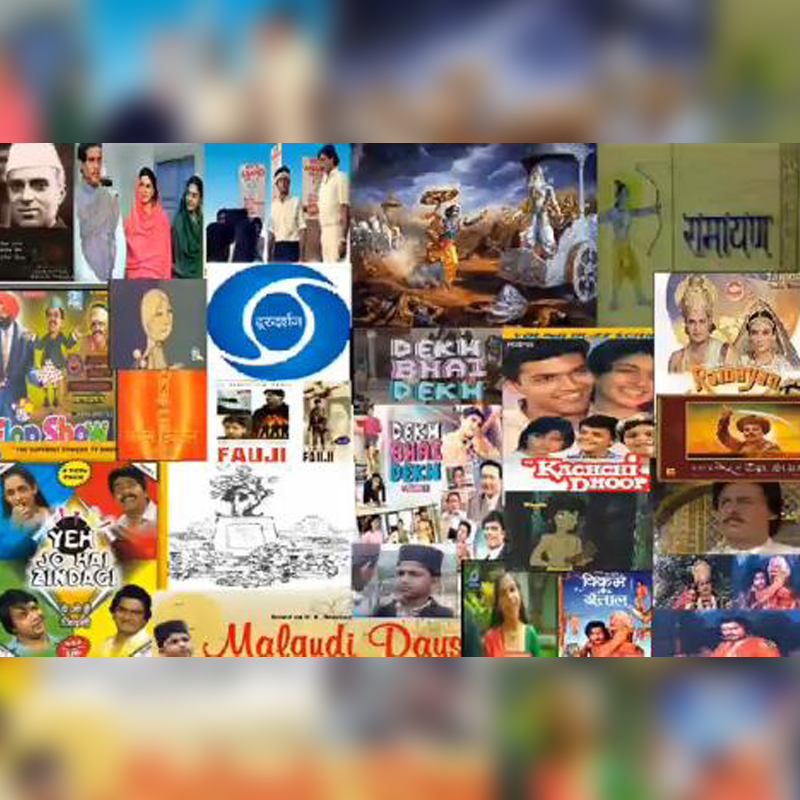
    For years, terrestrial television run by the state owned broadcaster Doordarshan – and later by its parent Prasar Bharati – was our main source of information, entertainment, and education. We Indians used to carp and crib that it gave us one sided information, did not entertain us enough, delivered low quality images, was too rigidly controlled. But the reality is it did engage the nation – at least three generations – during different periods since 1960 when TV was flagged off in India – in internet-before times, in prior-to- liberalisation times.

    And yes it did present a platform to a preferred few, to churn out content, which would become the opium for many. Allegations of nepotism, favouritism, corruption were hurled at the powers that be in the portals of Doordarshan and in the ministry of information and broadcasting as a few producers became rich. As did the paanwala below Mandi House who directed and passed on the scripts and proposals of producers to the higher ups or so it was rumoured

    Doordarshan was a God supreme. Impenetrable. Ubiquitous. And all pervasive. It reached out to every nook and cranny of this nation of ours thanks to the lavish spread of transmitters. In TV set and electricity poor regions of heart land India, its magnetic appeal was so great, that villagers would bring out a generator, which would crank out power, and supply it to a single TV as an entire community sat enthralled before it. In urban India, streets used to be deserted as cities’ denizens huddled around it in worship like awe.

    The Doordarshan of today has the same reach. But not the appeal. The terrestrial network has over the years become a very poor shadow of its earlier muscular self. Indians have fled to cable TV, DTH TV, online and OTT linear services on their mobile phones. A new crop of Gods has emerged – Star India, Zee TV, Sun TV, Sony Pictures, Viacom18, Youtube, Facebook, Hotstar, Voot, dittoTV, Netflix – and they are obsessing a nation wanting to be entertained.

    An archaic government diktaat – passed under the Cable TV Regulations Act- forces both cable TV and DTH networks to carry DD channels at no cost to government, even as other services struggle to pay top dollar to get carriage.

    The spectrum that Doordarshan occupies for its terrestrial transmissions nationally is extremely valuable. And the Modi-led government probably realizes this. Hence, the recent release of the consultation paper by the Telecom Regulatory Authority of India that seeks to understand how private players could be allowed in the terrestrial broadcasting space. Auctioning it or allowing public private sector participation could provide tens of thousands of crore to the exchequer. And possibly to the ailing Doordarshan, which depends on government dole and tax payer money for its continued existence. Prasar Bharati CEO Jawahar Sircar has been tearing his hair out but has admitted that he has found it very difficult to bring a sense of discipline to its vast employee force nationally. He has said that he is sitting on a gold mine with Prasar Bharati but he has confessed the culture in the organization has made it very difficult to mine and yield profits.

    Globally, broadcasters in most markets have migrated to digital using one of the four technical standards: DVB-T (European), ATSC (American), ISDBT (Japanese), and Chinese (DTMB). DD has been tentative about the migration; it has stayed put in standard analog mode with its 1,400 transmitters standing tall. It has installed only some 20-odd DVB-T transmitters; another 40-odd are planned; altogether 600 odd digital transmitters are to replace the current analog ones.

    The cost of this migration is going to run into tens of thousands of crore as old archaic transmitters and analog work flows are converted to digital. It’s something which Prime Minister Narendra Modi would definitely like to be done. But the question is: does it make economic sense under Doordarshan and Prasar Bharati?

    DD is taking the slot sale route once again and inviting private producers to create content, sell the advertising air time, and pay it a flat fee. Sounds interesting, but it’s not something that’s attracting successful private sector producers by the truck load. Most of them are tied up with productions on private channels like ZeeTV, Sony, Star and Colors. The risk factor of producing something on DD is proving daunting for them. So only time will tell whether DD’s private slot sale scheme will work or not. The previous attempt was a sheer disaster as at that time DD dished out oodles of cash to producers who did not really care about what they put out on air. They only pocketed their high margins, which they made, according to DD sources.

    Does DD have a future on its own? Yes, its FreeDish DTH service has caught on like wildfire because of its low cost. But research has shown that some viewers are not staying loyal to it; they are rotating the small dish around to catch signals from other private providers. Also, overall, churn in the DTH space is pretty high as consumers have been service-hopping to avoid paying the high tab each of the operators is charging.

    An issue that the government could think about is: why not privatise the analogue DD as well instead of just selling out slots? The reasons governments at the Centre in the past have held on to the public caster is because they wanted to have a media outlet through which their viewpoint could be heard, and also provide public service programmes to help those in the rural heartlands. But of what use is a network that fewer and fewer viewers are opting for is something those in power need to think about. Private newspapers and TV news channels are anyway behaving like handmaidens of the Narendra Modi-led government. And it could easily sell most of the DD network to private players while retaining some time slots for itself to propagate its views. Additionally, it could mandate leading Indian broadcasters to do really good public service TV programmes on their more popular channels even while paying them to do so. That could prove a cheaper proposition, than running a unwieldy behemoth.

    So does it make sense to privatize the digital terrestrial television space? And who else apart from Doordarshan could venture into it? Prima facie it does: the world over DTT is holding its own against cable and satellite television. Of course, in India’s case, the impact of mobile has been humungous with nearly a billion subscribers, and around 250 million mobile internet users.

    The 4G LTE revolution has yet to hit India. The era of fast cheaper data and internet access is knocking on its doors. Things will change drastically when it does arrive. Among the major players in this segment everyone has been watching to turn on the data juice are: Reliance, Airtel, Idea, Vodafone. 4G LTE and DTT can easily be married to each other thus allowing users to watch terrestrial television on their tablets and phones while on the move. All it requires is a dongle or a chip to be inserted into the smart HD-ready handsets. And viola, you could get a clutch of digital channels.

    And that brings us to the answer of who could get into DTT – obviously the telcos, and primarily Reliance Industries, which is bidding to revolutionise India’s mobile habits.Yes, its Jio venture is heavily laden with debt, but even that is a drop in the ocean, compare to what the megacorp makes from its oil and gas businesses. Then possibly Airtel; the company is already in the DTH platform space. The Tata group: it operates a platform along with Rupert Murdoch’s Sky. The ZeeTV-Essel group which has a strong presence in cable TV, DTH, OTT, and broadcasting. Star India, which has stuck to being a content creator, but its parent Twenty First Century Fox has deep and rich experience in DTH, and terrestrial TV.

    However, a note of caution here: they will get in only if it is economically feasible. On the face of it, the RoI will take a long time – a very long time. Unless innovative models are resorted to. One of these could be to have the private sector bid for either cities, states or regions. This will help distribute the capital risk among several players, each of who could take up a city or a region for their individual DTT service.

    The DTT solution could take some time finding. And it may well be buried because of the rapid strides that online content consumption is making. But at least a start has been made.