Tag: Prasar Bharati

  • Auctions on 5 Oct for Freedish licence renewal

    Auctions on 5 Oct for Freedish licence renewal

    NEW DELHI: The conuntry’s only free-to-air direct-to-home platform Doordarshan Freedish is holding its 31st auction on 5 October. Despite having touched a bid amount of Rs 5.2 crore in the last auction on 15 September, the new auction will have the same reserve price of Rs 4.3 crore.

    A DD announcement stated that the auction is for ‘vacant DTH slot’ without indicating the number of slots, though indications are that there may be more than one vacant slot.

    The slots have fallen or are falling vacant as the license period of one or more of the 80 TV channels on the platform is expiring. The announcement was clear that those channels who are already on the platform but whose licences are expiring by 31 December 2016 can participate. Others whose licenses will expire on or after 1 January 2017 are not permitted to participate.

    Sources told indiantelevision.com that Freedish is being encrypted through Indian Conditional Addressable System (iCAS) to keep a tab on the number of subscribers, but it would remain free-to-air.

    The e-auction will be conducted by M/s. C1 India Pvt. Ltd., Noida, which also conducted the first stage of the FM Radio Phase III auctions on behalf of Prasar Bharati.

    The participation amount (EMD) in the e-auction is Rs.1.5 crore which will be deposited in advance before or by 12 noon on 5 October along with processing fee of Rs.10,000 (non-refundable) in favour of PB (BCI) Doordarshan Commercial Service, New Delhi.

  • Prasar Bharati looks at digitizing archives; to seek Rs 250 crore from govt

    Prasar Bharati looks at digitizing archives; to seek Rs 250 crore from govt

    MUMBAI: Pubcaster Prasar Bharati is taking another stab at digitizing and monetising the huge archival content catalogue that is lying in the shelves of All India Radio and Doordarshan. And it is all set to make a formal request to the ministry of broadcasting and broadcasting (MIB) for nearly Rs 250 crore to help it achieve what it intends to do. It says included in this archive are prominent speeches of national leaders, popular programmes and music.

    Prasar Bharati officials recently made a presentation to the MIB enumerating why it needs to do this. Sources say both Doordarshan and All India Radio have millions of hours of both audio and video content. In fact, All India Radio had digitized some of its content around a decade ago and even monetized some of it by selling CDs. The UK pubcaster BBC is amongst the world’s largest exporters of TV content with worldwide sales of around 400 million Euros. If Prasar Bharati manages even 10 per cent of that, it will more than recover its digitization costs.

    The problem, however, is that its archive has not been maintained in the best manner and is on beta and VHS tapes, many of which could be damaged or unrecoverable. And some of it could be have been stolen or lost.

    It is also looking at drafting a syndication policy to sell its content worldwide to other media outlets or online directly to consumers.

    Says a media observer: “Hopefully, it takes up the task seriously this time and the MIB helps it see it through to conclusion. DD is in danger of becoming a dinosaur; digitisation will allow it to bring new legs to old content which a generation has not seen. It could be put out online or on mobile for consumption apart from finding customers for its clips worldwide.”

  • Prasar Bharati looks at digitizing archives; to seek Rs 250 crore from govt

    Prasar Bharati looks at digitizing archives; to seek Rs 250 crore from govt

    MUMBAI: Pubcaster Prasar Bharati is taking another stab at digitizing and monetising the huge archival content catalogue that is lying in the shelves of All India Radio and Doordarshan. And it is all set to make a formal request to the ministry of broadcasting and broadcasting (MIB) for nearly Rs 250 crore to help it achieve what it intends to do. It says included in this archive are prominent speeches of national leaders, popular programmes and music.

    Prasar Bharati officials recently made a presentation to the MIB enumerating why it needs to do this. Sources say both Doordarshan and All India Radio have millions of hours of both audio and video content. In fact, All India Radio had digitized some of its content around a decade ago and even monetized some of it by selling CDs. The UK pubcaster BBC is amongst the world’s largest exporters of TV content with worldwide sales of around 400 million Euros. If Prasar Bharati manages even 10 per cent of that, it will more than recover its digitization costs.

    The problem, however, is that its archive has not been maintained in the best manner and is on beta and VHS tapes, many of which could be damaged or unrecoverable. And some of it could be have been stolen or lost.

    It is also looking at drafting a syndication policy to sell its content worldwide to other media outlets or online directly to consumers.

    Says a media observer: “Hopefully, it takes up the task seriously this time and the MIB helps it see it through to conclusion. DD is in danger of becoming a dinosaur; digitisation will allow it to bring new legs to old content which a generation has not seen. It could be put out online or on mobile for consumption apart from finding customers for its clips worldwide.”

  • For DD, it’s time to introspect not celebrate

    For DD, it’s time to introspect not celebrate

    NEW DELHI: There were evenings in the 1960s to mid ’70s when India, at least those homes fortunate to have TV sets, set their alarm clock in the evening to around 6 pm. It was that time the TV sets came alive with a signature tune and colour bands heralding something exciting.

    Those were the days when Indian pubcaster Doordarshan brought the world and entertainment — in a rationed manner typical of those pre-liberalization days — to Indian homes via production values that would be considered shoddy by today’s standards.

    Cut to circa 2016. TV sets today beam audio and video round the clock by DD, as Doordarshan came to be popularly known as, and a swathe of private sector TV channels.

    However, at a time when DD celebrated its Foundation Day (or birthday) on September 15, a question that rankles everybody is: Why does Doordarshan not function like some other pubcasters — the BBC, NHK, DW, PBS, etc —- in terms of functioning and quality of programming?

    Clearly, it is linked to another question: was Doordarshan doing better off when it was a direct wing of the Ministry of Information and Broadcasting (MIB), or has it benefitted by become ‘autonomous’ under Prasar Bharati?

    Doordarshan since 1959 beamed for half an hour educational programmes three days a week. However, as its programming timing grew, so did the control by the government, which found in DD a perfect tool for propaganda.

    Whether the Emergency days during Prime Minister Indira Gandhi or other governments, the government of the day realized the importance of DD’s widening networks and its role in pushing the government agenda.

    The Prasar Bharati Bill, paving the way for an autonomous DD and sibling All India Radio, was only notified and formalized in 1997.

    Interestingly, DD saw its hey days in the eighties with programmes like ‘Hum Log’; ‘Buniyaad’, ‘Ramayana’, ‘Mahabharat’, ‘Tamas’ and ‘Nukkad’, among many others, which not only highlighted India’s cultural traditions but also the ongoing societal changes. In fact, one wonders, whether a serial like `Tamas’, based on India’s partition, could be made today without somebody’s sentiments getting hurt and, in the bargain, getting canned.

    Though DD (and AIR) are modeled on the BBC — as famously described the then MIB Minister Jaipal Reddy in 1997 — DD’s case is different. Despite being dependent on government funding, it is running low on financial resources with each successive government insisting that Prasar Bharati start generating its own resources, but not letting go of the control. But this is difficult when the network has to compete against more than 800 private channels that are not impeded in terms of programming and other initiatives like DD is.

    No wonder the present Prasar Bharati CEO Jawhar Sircar said on DD’s birthday, “We need to look forward…renew our tryst with destiny.”

    Lines by a Canadian author, who penned ‘Morningstar’, aptly sum up the confused state of Prasar Bharati: “If you think you know what your purpose is, but can never seem to gain satisfaction from it, then it’s probably not the purpose you’re destined for.”

  • For DD, it’s time to introspect not celebrate

    For DD, it’s time to introspect not celebrate

    NEW DELHI: There were evenings in the 1960s to mid ’70s when India, at least those homes fortunate to have TV sets, set their alarm clock in the evening to around 6 pm. It was that time the TV sets came alive with a signature tune and colour bands heralding something exciting.

    Those were the days when Indian pubcaster Doordarshan brought the world and entertainment — in a rationed manner typical of those pre-liberalization days — to Indian homes via production values that would be considered shoddy by today’s standards.

    Cut to circa 2016. TV sets today beam audio and video round the clock by DD, as Doordarshan came to be popularly known as, and a swathe of private sector TV channels.

    However, at a time when DD celebrated its Foundation Day (or birthday) on September 15, a question that rankles everybody is: Why does Doordarshan not function like some other pubcasters — the BBC, NHK, DW, PBS, etc —- in terms of functioning and quality of programming?

    Clearly, it is linked to another question: was Doordarshan doing better off when it was a direct wing of the Ministry of Information and Broadcasting (MIB), or has it benefitted by become ‘autonomous’ under Prasar Bharati?

    Doordarshan since 1959 beamed for half an hour educational programmes three days a week. However, as its programming timing grew, so did the control by the government, which found in DD a perfect tool for propaganda.

    Whether the Emergency days during Prime Minister Indira Gandhi or other governments, the government of the day realized the importance of DD’s widening networks and its role in pushing the government agenda.

    The Prasar Bharati Bill, paving the way for an autonomous DD and sibling All India Radio, was only notified and formalized in 1997.

    Interestingly, DD saw its hey days in the eighties with programmes like ‘Hum Log’; ‘Buniyaad’, ‘Ramayana’, ‘Mahabharat’, ‘Tamas’ and ‘Nukkad’, among many others, which not only highlighted India’s cultural traditions but also the ongoing societal changes. In fact, one wonders, whether a serial like `Tamas’, based on India’s partition, could be made today without somebody’s sentiments getting hurt and, in the bargain, getting canned.

    Though DD (and AIR) are modeled on the BBC — as famously described the then MIB Minister Jaipal Reddy in 1997 — DD’s case is different. Despite being dependent on government funding, it is running low on financial resources with each successive government insisting that Prasar Bharati start generating its own resources, but not letting go of the control. But this is difficult when the network has to compete against more than 800 private channels that are not impeded in terms of programming and other initiatives like DD is.

    No wonder the present Prasar Bharati CEO Jawhar Sircar said on DD’s birthday, “We need to look forward…renew our tryst with destiny.”

    Lines by a Canadian author, who penned ‘Morningstar’, aptly sum up the confused state of Prasar Bharati: “If you think you know what your purpose is, but can never seem to gain satisfaction from it, then it’s probably not the purpose you’re destined for.”
  • DD begins work on next year’s govt. funding

    DD begins work on next year’s govt. funding

    NEW DELHI: India’s television pubcaster Doordarshan, managed by Prasar Bharati, has begun an annual exercise to convey to the government the level of funding it could need for next financial year beginning April 1, 2017.

    While directing the various units  and centres under DD to send in their financial demands, a communiqué from the DD Directorate clarified that such budgeting should not  include any (financial) provisions for vacant posts.

    Prasar Bharati, which runs DD and All India Radio, like many other public broadcasters of the world, is funded with public money that the government allocates to it as part of the country’s annual budgetary
    proposals.

    The official communication from DD head office added that any liabilities from previous year’s budgetary support should be detailed, including separately listing reasons for exceeding allocated budgets for the financial year 2015-16 as also enumerating the likely effect that payment of certain government allowances, bonuses and increased payout to employees likely to have.

    It is estimated that Prasar Bharati has around 40,000 employees on its rolls.

    Though Prasar Bharat is an autonomous organisation, formed under an Act of Parliament of 1990 that was notified only in 1997 paving the way for its formal set up, a majority of its employees are still categorised as government officials, a hangover of pre-Prasar Bharati days when DD and AIR were media units of Ministry of Information and Broadcasting (MIB). Hence, any revision of pay scales for government officials, as notified earlier this year, has an effect of Prasar Bharati officials too.

    ALSO READ:

    DD sets up ‘War Room’ to revitalise programming & revenues

  • DD begins work on next year’s govt. funding

    DD begins work on next year’s govt. funding

    NEW DELHI: India’s television pubcaster Doordarshan, managed by Prasar Bharati, has begun an annual exercise to convey to the government the level of funding it could need for next financial year beginning April 1, 2017.

    While directing the various units  and centres under DD to send in their financial demands, a communiqué from the DD Directorate clarified that such budgeting should not  include any (financial) provisions for vacant posts.

    Prasar Bharati, which runs DD and All India Radio, like many other public broadcasters of the world, is funded with public money that the government allocates to it as part of the country’s annual budgetary
    proposals.

    The official communication from DD head office added that any liabilities from previous year’s budgetary support should be detailed, including separately listing reasons for exceeding allocated budgets for the financial year 2015-16 as also enumerating the likely effect that payment of certain government allowances, bonuses and increased payout to employees likely to have.

    It is estimated that Prasar Bharati has around 40,000 employees on its rolls.

    Though Prasar Bharat is an autonomous organisation, formed under an Act of Parliament of 1990 that was notified only in 1997 paving the way for its formal set up, a majority of its employees are still categorised as government officials, a hangover of pre-Prasar Bharati days when DD and AIR were media units of Ministry of Information and Broadcasting (MIB). Hence, any revision of pay scales for government officials, as notified earlier this year, has an effect of Prasar Bharati officials too.

    ALSO READ:

    DD sets up ‘War Room’ to revitalise programming & revenues

  • DD sets up ‘War Room’ to revitalise programming & revenues

    DD sets up ‘War Room’ to revitalise programming & revenues

    NEW DELHI: Fazed by stagnant viewership and battling a “negative perception”, Doordarshan has set up a strategy ‘War Room’ to look into re-vitalising the pubcaster’s marketing and content acquisition processes with an overall aim to enhance revenues.

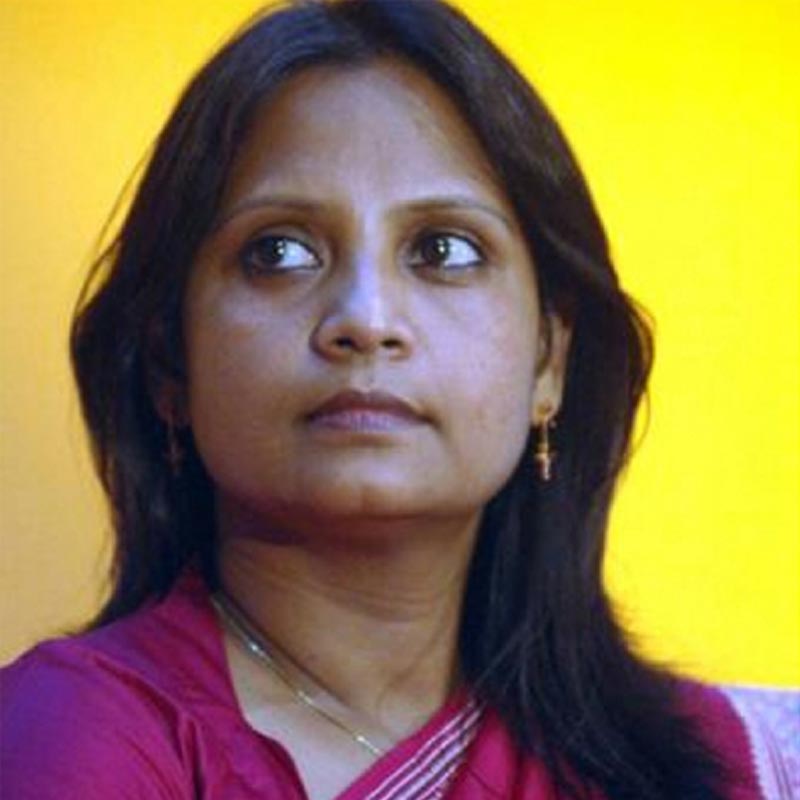
    The crisis management group, set up under the overall stewardship of DD Director-General Supriya Sahu, is mandated to suggest ways to attract and invite fresh talent for various DD channels in view of depleting manpower, new marketing and programming strategies and shore up the bottomlines via innovative marketing.

    Elaborating on the need for a crisis management group, the DG said in an office order: “Dive deep into the issues that are adversely impacting our performance and devise a strategy to re-position ourselves… (hence) it is proposed to set up a strategy ‘War Room’ in the office of Director-General.”

    According to Sahu, who has taken over the new role at DD few months back after having done a fruitful stint at Ministry of Information and Broadcasting (MIB), the `War Room’ will study rules and regulations for in-house production and suggest measures to modify them to  improve programming for DD National and regional channels.

    The office order doesn’t mince words when it goes on to add that new programming strategy should look at revamping how programmes and films are acquired for DD channels— especially for the auction slots — and suggest credible methods to improve viewership (audience measurement) and enhance revenues. 

    In addition, this group is to deliberate on present marketing initiatives of DD, which experts feel are out-dated, and devise new strategies to revitalise it, apart from suggesting innovative ways to pool resources and synergise efforts for maximising DD’s impact. 

    Sahu has made it clear that since there cannot be a one-shoe-fits-all approach, the `War Room’ has to come up with programming and marketing strategies that is specific to each channel like DD National, DD  Kisan, DD  Bharati, DD  India (the international channel), DD Urdu, DD Kashir and DD Sports.

    Dwelling on the negative perception relating to the overall functioning of DD, especially content acquisition policies and marketing processes, Sahu said in the office order, “We need to change this perception. This would happen through a very strategic thinking, planning, implementation & initiation.”

    The `War Room’ would end its work later this month when it is expected to submit a report on ways to reboot DD, which, hopefully, would also resonate with parent Prasar Bharati’s bosses.
    Headed by Deputy Director of Programmes G Sajan, the other members of this group include P.K. Srivastava, PEX, DDK-Raipur; Sandeep Sood, ADP, DDK-Pune; Anurag Darshan, Programme Executive (PEX) DD National; Abhishek Dubey, Advisor DD Sports; Ms. Soma Bose, Consultant, Films Division; Sanjeev Rai, Production Assistant, DD Urdu; Tathagat, Creative Editor, DD Bharati; Karmdeep, Senior Content Manager, DD Sports; Birupakhya Goutom Phukan, Senior Programmer and Arjun  Mehto, Senior Content Manager.

    ALSO READ:

    Prasar Bharati’s monopolistic-era mind-set has to change: CEO Jawhar Sircar

  • DD sets up ‘War Room’ to revitalise programming & revenues

    DD sets up ‘War Room’ to revitalise programming & revenues

    NEW DELHI: Fazed by stagnant viewership and battling a “negative perception”, Doordarshan has set up a strategy ‘War Room’ to look into re-vitalising the pubcaster’s marketing and content acquisition processes with an overall aim to enhance revenues.

    The crisis management group, set up under the overall stewardship of DD Director-General Supriya Sahu, is mandated to suggest ways to attract and invite fresh talent for various DD channels in view of depleting manpower, new marketing and programming strategies and shore up the bottomlines via innovative marketing.

    Elaborating on the need for a crisis management group, the DG said in an office order: “Dive deep into the issues that are adversely impacting our performance and devise a strategy to re-position ourselves… (hence) it is proposed to set up a strategy ‘War Room’ in the office of Director-General.”

    According to Sahu, who has taken over the new role at DD few months back after having done a fruitful stint at Ministry of Information and Broadcasting (MIB), the `War Room’ will study rules and regulations for in-house production and suggest measures to modify them to  improve programming for DD National and regional channels.

    The office order doesn’t mince words when it goes on to add that new programming strategy should look at revamping how programmes and films are acquired for DD channels— especially for the auction slots — and suggest credible methods to improve viewership (audience measurement) and enhance revenues. 

    In addition, this group is to deliberate on present marketing initiatives of DD, which experts feel are out-dated, and devise new strategies to revitalise it, apart from suggesting innovative ways to pool resources and synergise efforts for maximising DD’s impact. 

    Sahu has made it clear that since there cannot be a one-shoe-fits-all approach, the `War Room’ has to come up with programming and marketing strategies that is specific to each channel like DD National, DD  Kisan, DD  Bharati, DD  India (the international channel), DD Urdu, DD Kashir and DD Sports.

    Dwelling on the negative perception relating to the overall functioning of DD, especially content acquisition policies and marketing processes, Sahu said in the office order, “We need to change this perception. This would happen through a very strategic thinking, planning, implementation & initiation.”

    The `War Room’ would end its work later this month when it is expected to submit a report on ways to reboot DD, which, hopefully, would also resonate with parent Prasar Bharati’s bosses.
    Headed by Deputy Director of Programmes G Sajan, the other members of this group include P.K. Srivastava, PEX, DDK-Raipur; Sandeep Sood, ADP, DDK-Pune; Anurag Darshan, Programme Executive (PEX) DD National; Abhishek Dubey, Advisor DD Sports; Ms. Soma Bose, Consultant, Films Division; Sanjeev Rai, Production Assistant, DD Urdu; Tathagat, Creative Editor, DD Bharati; Karmdeep, Senior Content Manager, DD Sports; Birupakhya Goutom Phukan, Senior Programmer and Arjun  Mehto, Senior Content Manager.

    ALSO READ:

    Prasar Bharati’s monopolistic-era mind-set has to change: CEO Jawhar Sircar

  • Do not mix news with views and avoid speculation: Naidu

    Do not mix news with views and avoid speculation: Naidu

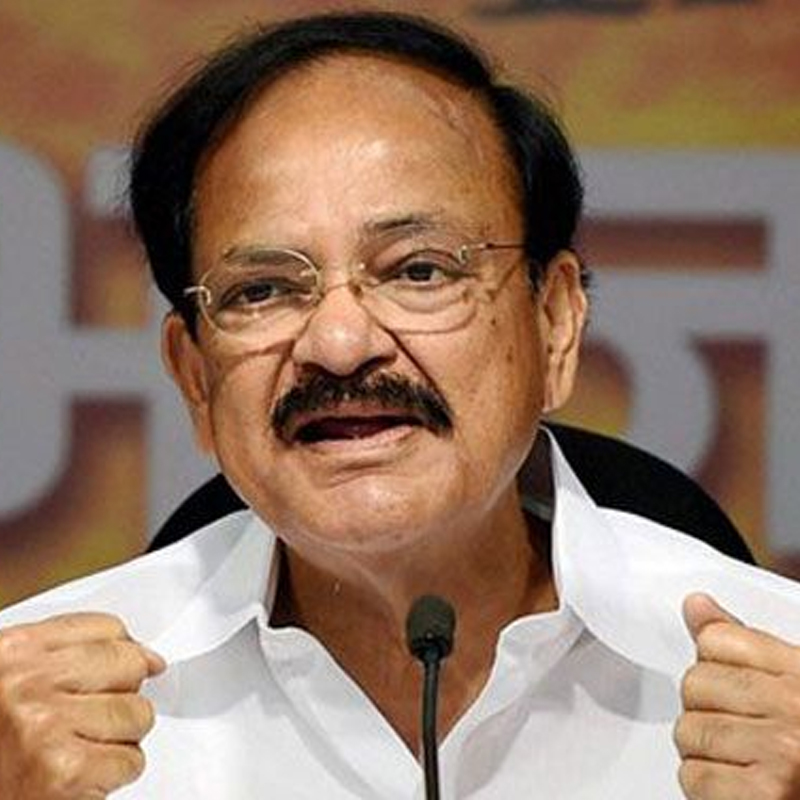
    NEW DELHI: Information & Broadcasting Minister M Venkaiah Naidu today handed out some sanskari (rooted in culture) advise to officials of All India Radio and Doordarshan while reminding them of a pubcaster’s responsibilities in dishing out information devoid of sensationalism.

    Stressing on the need for upholding credibility in dissemination of information by public broadcasters, the Minister said, “Public service broadcasters have a great responsibility on their shoulders to ensure credibility in the era of competition.”

    Naidu was speaking at a review meeting during a visit to the All India Radio (AIR) and Doordarshan (DD) centres in Hyderabad on Monday.
    Naidu infused confidence in the officials of different media units of Ministry of Information and Broadcasting (MIB) while interacting with them to understand their problems.

    He said the information empowerment of the people is quintessential in the age of information revolution, and information is “great ammunition in the hands of the people in fighting corruption, poverty and inequalities from the society for the overall development of India”.

    The Minister added that the public discourse should be guided by development rather than disruptive tactics and politics.
    Public broadcasters must excel in factual information while communicating to the mass audience. He advised those in the public broadcaster Prasar Bharati, parent of DD and AIR, not to jump to conclusions but confirm the news before putting it on air.

    “A public broadcaster, while disseminating information must abstain from obscenity, vulgarity and violence”, he said, adding that people in the media while producing programmes, plays, cultural programmes, must keep in mind India’s great heritage, culture, traditions and customs in mind.

    He advised people in media to maintain high standards in informing the masses, keeping in mind the philosophy and guidelines established by the founding fathers in various spheres of public life. “Let us not mix news with views and create a bad practice,” Naidu exhorted Prasar Bharati officials.

    He advocated that media should work together in bringing social harmony and discourage politicisation of social issues and not play into the hands of terrorists and to avoid in “turning them into heroes”.
    He wanted the media to be biased towards rural people, agriculturists, down trodden sections, women and disabled people in giving more coverage to highlight their grievances.