Tag: Prasar Bharati

  • Nine Doordarshan ‘kendras’ fail to utilise budget for Kisan channel

    Nine Doordarshan ‘kendras’ fail to utilise budget for Kisan channel

    NEW DELHI: Nine Doordarshan ‘kendras’ (centres) including four in the northeast failed to utilise budgetary allocation for Kisan channel programmes in the first quarter of 2017-18. On the other hand, the Central Production Centre in Delhi exceeded using its allocated budget.

    However, Doordarshan has urged Prasar Bharati to release a sum of Rs 159.083 million as grant-in-aid for the Kisan channel under Plan Scheme for the second quarter of the financial year 2017-18.

    Of this, Rs 134.875 million is for the Central Production Centre from where the channel is beamed, while Rs 21.583 million is for 12 Doordarshan kendras in the northeast.

    The remainder (Rs 2.625 million) is for the seven stations at Ahmedabad, Bhopal, Jalandhar, Lucknow, Mumbai, Vijayawada, and Jammu.

    In the first quarter, CPC was allocated a sum of Rs 108.744 million but it spent Rs 115.293 million till August 2017.

    The northeastern kendras were allocated Rs 12.331 million in the first quarter while only Rs 2.651 million was used, with four kendras not spending any money at all.

    Other stations were allocated Rs 2.625 million of which only Rs 69,000 was spent, wherein only two stations – Bhopal and Lucknow – incurring expenses.

  • Comment: DD birthday debate should be on change in attitude

    Comment: DD birthday debate should be on change in attitude

    Indian pubcaster Doordarshan, which claims to be one of the largest television network in the world in terms of reach, appears all set to take on a new look — is searching for a new logo, has auctioned prime time slots on DD National channel, is moving forward on acquiring newer technology, among other things.

    But even as the pubcaster marks its 59th birthday on 15 September 2017, will all such moves get it out of the morass it has got itself into, and clear the dust and rust that has settled on umpteen reports making suggestions for improvement, including the Sam Pitroda report that was presented early in 2014?

    Why does Doordarshan not function the way BBC World does, putting out the best of programmes without having to worry about the costs involved in production and minimum of influence from its political masters?

    Perhaps, the answers to all these vexing questions lie in the unexplained relationship between the government and Prasar Bharati, which is the parent of DD and sibling All India Radio. Often, the query is raised whether Doordarshan was better off as a direct wing under Ministry of Information and Broadcasting (MIB) till the 1990s, or has it benefitted by becoming ‘autonomous’ after Prasar Bharati Act was enacted in 1997.

    A perusal of questions answered in Parliament is very revealing. The replies in most cases begin with the lines that Prasar Bharati is an autonomous body and the government does not interfere, and yet MIB issues directives when it wants to.

    Clearly, the answers will come when the details of this relationship become clear. Because, the biggest stumbling block to the pubcaster moving ahead in a fast changing world of broadcasting, according to a section of critics, is the government of the day, which does not leave it free to move on its own and instead believes in the general principle of he who pays the piper plays the tune. For the records, a major portion of funding of Prasar Bharati comes from the government.
    Doordarshan was born on 15 September 1959 to beam for half an hour, three days a week with educational programmes. However, as its programming timing grew, so did the control by the government, which found in DD a perfect tool for propaganda.

    Immediately after the national Emergency in 1977 when DD was used by the then Prime Minister Indira Gandhi, the national party that took over reins in the late seventies decided to work on autonomy for the public broadcaster. The then Minister for Information and Broadcasting L K Advani set up the B G Verghese Committee that recommended the formation of an Akash Bharati Trust.

    Interestingly, DD saw its best days in the eighties when it was a department of the government with a series of programming that literally had the whole nation mesmerized. These path-breaking shows included ‘Hum Log’, ‘Buniyaad’, ‘Ramayana’, ‘Mahabharat’, `Tamas’ and ‘Nukkad’.

    However, it was only in 1990 that Prasar Bharati Act was passed but it was much later in September 1997 that it was notified and Prasar Bharati became functional as an ‘autonomous’ corporation — though still dependent on the government.  

    BBC World is today held as one of the best examples of an autonomous public service broadcasters although it is also dependent to an extent on the British government for funding. But its main source of income comes from a license fee that each consumer household has to pay.

    But the case of DD is different: despite being dependent on the government, it is running low on financial resources with each successive government insisting that Prasar Bharati should start generating its own resources.

    In India, there have been several committees even after the B G Verghese Committee, which have gone into various aspects, but to little effect, and now the recommendations of the Sam Pitroda Committee — the lone committee after the pubcaster was operationalized — are being worked on.

    But unfortunately, this report came out with nothing new that was not already being done by the broadcaster or had not been said by many a Parliamentary Standing Committee in reports year after year.

    At a time when the country has around 900 licensed television channels, all in the private sector, Doordarshan cannot remain complacent by telling itself it is the most seen and heard broadcaster in the country.

    Perhaps these lines by a Canadian author, who penned the fantasy series ‘Morningstar’, aptly sum up the confused state of Prasar Bharati that is completing two decades this month: “If you think you know what your purpose is, but can never seem to gain satisfaction from it, then it’s probably not the purpose you’re destined for.”

    ALSO READ:

    Prasar Bharati’s monopolistic-era mind-set has to change: CEO Jawhar Sircar

    New Prasar CEO to leverage DD’s reach & bank on creative content, tech & social media

    Prasar Bharati’s main role is of pubcaster, not revenue generator, says Rathore

    Reducing targets no solution, Prasar Bharati needs to lead


  • RS TV audit sought, content sharing with Prasar proposed by Veep

    RS TV audit sought, content sharing with Prasar proposed by Veep

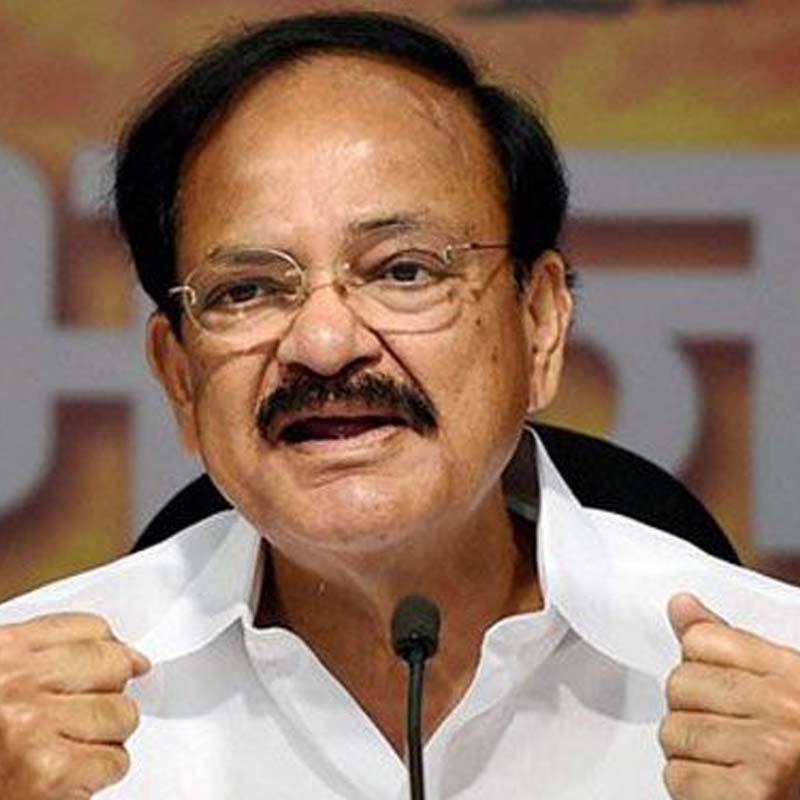
    MUMBAI: India’s vice-president M Venkaiah Naidu, who is also the chairman of Rajya Sabha, has sought audit of the upper house broadcaster.

    RSTV, Naidu also said, should be able to quantify the reach of the channel (viewership) besides having systems for feedback on and evaluation of content. Efforts, he said, needed to be made to expand its reach with a clear plan of action, suggesting the possibility of synergy with Prasar Bharati through sharing of content.

    During a review, he was surprised to notice it was spending Rs 125 million for making “Raag Desh,” a commercial film produced by former RS TV editor and CEO Gurdeep Singh Sappal. It was based on Indian National Army trials, the court martial of its officers — Col Gurbaksh Singh Dhillon, Col Prem Sehgal and Major Shah Nawaz Khan.

    Naidu was informed that the channel had invested around Rs 3.75 billion since August 2011 when it started, the Times of India reported.

    Naidu sought a full-fledged professional and expense audit after he also found that an annual rent of Rs 250 million was being paid for office premises in New Delhi and around Rs 35 million spend on housing-keeping and hiring of cabs. Naidu wants to, instead, explore the possibility of owning an office.

    Naidu also questioned on RS TV’s original mandate, reach of the channel, present content mix, utilisation of manpower and other resources, expenditure, and the scope for rationalisation, Mint reported.

    The Competition Commission of India (CCI) meantime ordered a probe against the pubcaster Prasar Bharati for alleged abuse of dominance with regard to infrastructural facilities for FM radio broadcasting.

    The probe was ordered based on a complaint filed by Mumbai-based Clear Media against Prasar and the MIB. Clear Media had entered into an agreement with Prasar in 2006 for using its common transmission tower in Delhi. The dispute started after the collapse of the tower in 2014.

    The fair trade regulator, however, rejected similar complaints against the MIB, saying it was a government department responsible for framing rules without any involvement in any economic activity.

  • Prasar Bharati, Dish TV, Star, Zee and BES bat for KU-band open-sky policy

    Prasar Bharati, Dish TV, Star, Zee and BES bat for KU-band open-sky policy

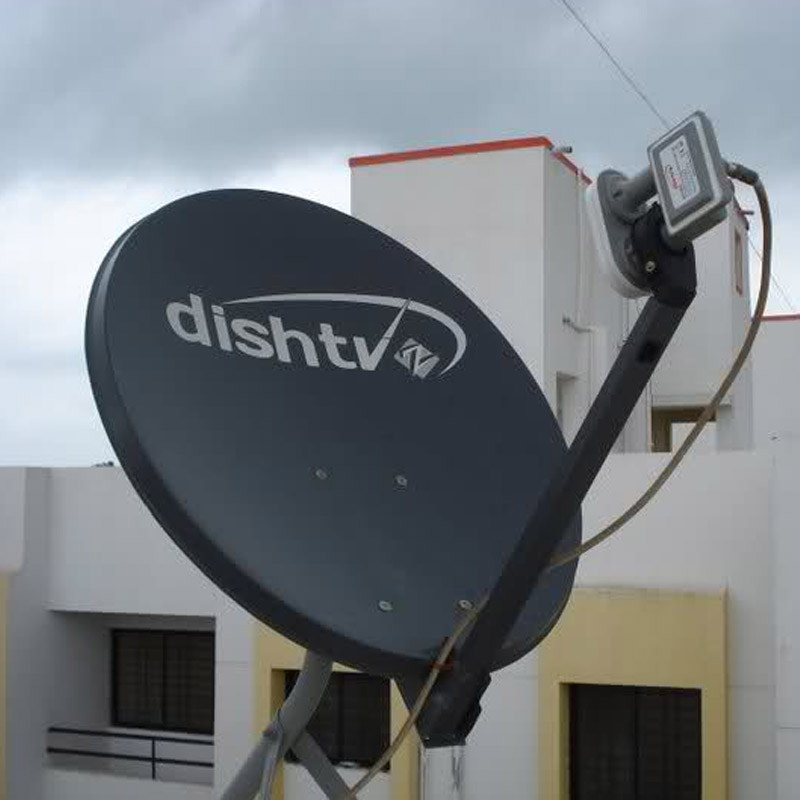
    NEW DELHI: A number of stakeholders in the Indian broadcast and satellite industry, including the country’s first DTH service provider Dish TV, Star India, Zee, the pubcaster Prasar Bharati, and industry organisations such as Broadband India Forum and CASBAA are batting for an open-sky policy relating to KU-band transponders.

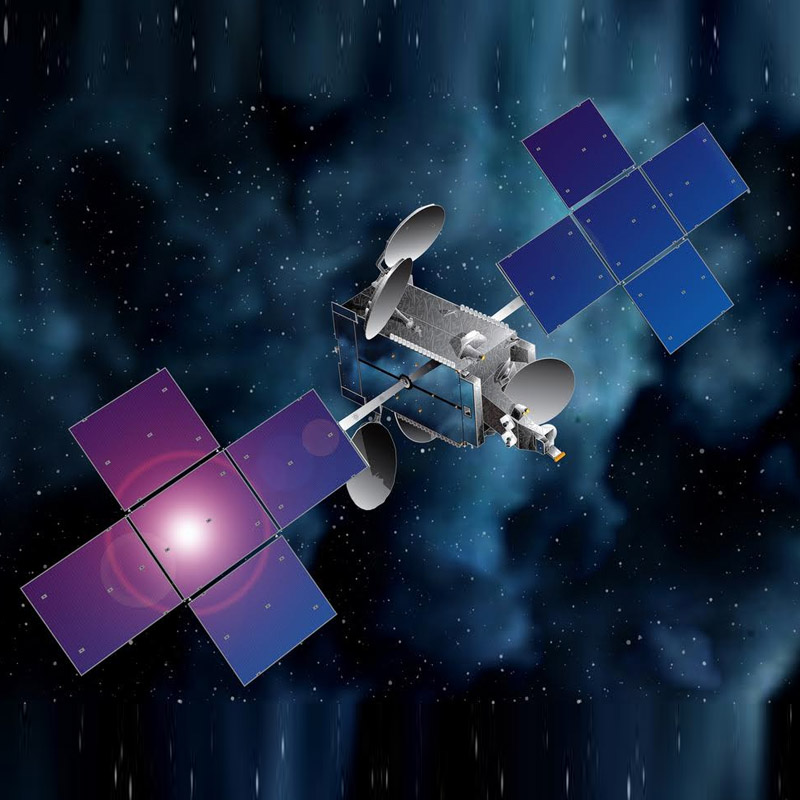
    The reason for this support for an open-sky satellite policy is rooted in the need for increasing KU-band transponder capacity. The allotment of KU-band transponder on foreign satellites is regulated by the country’s space agency Indian Space and Research Organisation (ISRO) when it is unable to provide space on Indian satellites to domestic customers.

    While Dish TV does not see “any justification” in the closed-door or regulated policy regime followed for KU-band transponder capacity, Star India is of the opinion that absence of such a policy is limiting DTH platforms’ capacity to provide additional services. Though Prasar Bharati, managers of Doordarshan and All-India Radio, gets preference on Indian satellites, it has also supported an open policy.

    “At present, KU-band is permitted for HITS, DTH, uplinks and DSNGs/VSATs. These applications should be enabled for open-sky policy, which will allow the broadcasters/DTH operators to negotiate long-term contracts. As satellite life is 15-17 years, operators give benefit in long-term contracts to the extent of 50 per cent,” Dish TV has said, adding that, at present, ISRO executes only three-year contracts.

    According to Star India (its parent 21 Century Fox has a minority in DTH operator Tata Sky), “With the introduction of new satellite TV channels, DTH operators require more KU-band capacity with footprint over India to enable to uplink all such channels on such DTH platforms… (but), owing to the lack of open-sky policy in KU-band, DTH platforms are restricted to provide limited value-added services. The open-sky policy for DTH will unlock such value-added services and enable viewers to consume such immersive and interactive content.”

    Why is this clamour for an open-sky policy regarding KU-band transponder?

    At present, any request for additional KU-band capacity on foreign satellites to expand business by Indian customers is hampered as they are unable to negotiate directly, and have to go through ISRO’s commercial arm Antrix that acts as a gate-keeper and, after a deal is concluded with a foreign satellite for KU-band transponders, also charges a commission.

    This happens when ISRO is unable to provide space on Indian satellites, which are increasing in number but have failed to keep pace with the demands of the domestic companies. Incidentally, there is no restriction on leasing C-band transponder capacity on a foreign satellite.

    “For DTH services, acquisition of KU-band transponder capacity is highly regulated and is done through an intermediary (Antrix that is a government organisation). As a result, there has been considerable delay in acquiring KU-band transponders…and also due to non-availability of adequate transponders, DTH service-providers are unable to chalk out their business plans. This is necessitated as the current procedures are fraught with restrictive practices,” said Broadband Forum India, an industry organisation comprising member-companies providing services via satellites.

    Hong Kong-based Asian industry body CASBAA, pointing that it has been seeking a “less restrictive policy” for KU-band for over a decade, has said a PwC-researched paper for it mid-2016 concluded that the policy for KU-band was “in effect a very restrictive satellite policy as presently operated in India,” which “artificially suppress(es) demand, which in turn leads directly to a reduction in growth, profits, and therefore lower tax revenues.”

    Though the bogey of national security is often raised when liberalisation of satellite policies are talked about, CASBAA, while discounting such fears, suggested following medium-term policy tweaks to ease KU-band capacity crunch, which were also listed out by some other stakeholders too:

    i) ISRO/Antrix can regularly publish a list of pre-cleared satellites and operators who are permitted to supply transponders to the Indian market. Indian DTH operators should be free to negotiate and contract capacities directly from them.

    ii) An efficient procedure can be established for DTH operators to obtain security clearance from ISRO before contracting the transponder capacity directly from foreign satellites.

    iii) Contracting for incremental capacity or extending the contracts of existing suppliers can and should be completely left for DTH operators without any need to seek additional, duplicative approvals from ISRO/Antrix. DTH operators would need to keep the ISRO updated with the contracted capacities and contract durations.

    The issue of freeing up KU-band transponder lease regime has been discussed for years, but its gaining momentum as the present PM Modi-led government in New Delhi has been talking about furthering economic liberalization and easing norms for doing business in India.

    Broadcast Engineering Society (BES), a government organisation, too is in favour of  an open-sky policy. “Keeping in view the growing number of TV channels and their carriage on various platforms, it has become inevitable for the government to go for an open-sky policy for KU-band,” BES stated, adding technological advancement and growth of HD channels, apart from experimental 4K services, has necessitated this.

    The stakeholders were expressing their views on KU-band satellite capacity vis-à-vis an open-sky policy as part of a consultation process initiated by sector regulator TRAI on ease of doing broadcast business in India. Incidentally the regulator has been recommending in vain an open-sky policy for several years now.

    ALSO READ :

    ISRO stresses on indigenization; TRAI for Open Sky policy

    ISRO’s ‘South Asia Satellite’ to carry 12 ku-band transponders

    Could India blocking ABS’ FTA TV signals lead to breach of ITU norms?

    MIB: No DPO request for infra sharing, DTH ops’ transponder demand up
  • Dish TV moves TDSAT against Star Life OK name change & turning FTA

    Dish TV moves TDSAT against Star Life OK name change & turning FTA

    NEW DELHI: After having raised an alarm a day back over an impending monopoly of Star India if it wins the broadcast and other rights to IPL cricket, Essel/Zee Group’s DTH platform Dish TV has moved broadcast and telecoms disputes tribunal seeking restraining order against Star Life OK’s rebranding process and turning free-to-air (FTA).

    In its interim prayer Dish TV has sought an order from disputes tribunal TDSAT to “restrain” Star India from converting Life OK from a pay channel to FTA by changing its name to Star Bharat and joining the Doordarshan FreeDish platform. Reason?

    According to the petition, reviewed by Indiantelevision.com, Star is making the changes “without informing” sector regulator TRAI as also without giving public notice about the change as “specified in clause 4-3 of the TRAI regulations.”

    Star India is in the process of renaming on-air GEC TV channel Life OK (a pay channel) into Star Bharat and put it on Doordarshan’s FTA DTH platform DD FreeDish. Though industry sources indicated that the change was to come into effect from sometime end of August 2017, sources in Prasar Bharati, owner and manager of DD, had said the pubcaster’s DTH platform was not yet technically capable of bringing on board more channels despite they winning slots to be part of the FTA KU-band service as an upgradation process was still not complete.

    The case at TDSAT is scheduled to for an initial hearing on 25 August 2017. Dish TV, along with its partner Videocon D2h, has appealed the tribunal for a restraint on Star India and any other further direction that it may “deem fit and proper” keeping in mind the facts placed before the court.

    Keep tuned in for more episodes on the new and unfolding corporate warfare in the Indian media and entertainment realm.

    ALSO READ:

    Jawahar Goel raises alarm of emerging Star cricket monopoly

    Star Bharat to be available on DD FreeDish as b’caster’s fourth FTA offering

    Life OK rebranded as Star Bharat


  • DD Kashir: Prime Focus, Beehive & Grasshopper shortlisted for packaging

    DD Kashir: Prime Focus, Beehive & Grasshopper shortlisted for packaging

    NEW DELHI: Three agencies have been shortlisted by Doordarshan to undertake the channel packaging work for its channel, DD Kashir. The agencies are — Prime Focus Technologies Pvt Ltd, Beehive Systems Pvt Ltd, and Grasshopper Media Pvt Ltd.

    However the Scrutiny Committee which went through the tender documents of these three agencies has pointed out some defects in the documents and asked them to rectify these by 22 August 2017.

    DD Kashir had issued a similar tender for April but has made some changes following some feedback and changes made by DD Directorate General, particularly relating to the payment mode and sought fresh tenders in June with 29 June as the last date.

    DD Kashir is a 24×7 satellite channel of Doordarshan. The channel was launched in the year 2003. It is planned to bring fresh content on DD Kashir to showcase richness, variety and diversity of the local culture. The channel’s USP will be to attract young people of Jammu & Kashmir.

    Earlier in June, Doordarshan invited proposals for telecast of programmes under the Commissioning category in eleven different categories for DD Kashir,
    All proposals had to be submitted by 27 June 2017. Although producers could submit more than one proposal, each proposal had to be accompanied with a non-refundable processing fee of 25,000 as bank draft. 

    According to an announcement on the Doordarshan website, Prasar Bharati is making special efforts in Jammu and Kashmir to promote and nurture talent, provide a platform to deserving producers/artists from Jammu & Kashmir as well as from outside to encourage production of better programmes for Doordarshan viewers.

    Also Read:

    DD Kashir channel packaging bids invited by 29 June

    Doordarshan Kashir invites prog telecast proposals in 11 categories 

  • Star Bharat to be available on DD FreeDish as b’caster’s fourth FTA offering

    Star Bharat to be available on DD FreeDish as b’caster’s fourth FTA offering

    MUMBAI: Going FTA seems to be the flavor of the season. Star India’s Hindi general entertainment channel Life OK, which will be soon rebranded as Star Bharat, is now slated to be available on DD FreeDish.  

    Recently, one of India’s largest broadcasting company Star India had won additional slots on pubcaster’s FTA KU-band service (DD FreeDish) by bidding shades over Rs. 160 million. At present, the three Star channels on the platform are Star Utsav, Star Utsav Movies and Star Sports First.

    Prasar Bharati sources admitted to indiantelevision.com that Star India has additional slots on DD FreeDish, but could not give an immediate time frame for any new channel to be made part of the FTA platform. Reason: DD FreeDish is being upgraded with a new technology (MPEG-4) that will help it enhance overall viewer experience as also get more TV channels on board after signal compression.

    “We cannot guarantee if the technological upgradation will be complete by the end of this month so as to accommodate more TV channels,” a source in Prasar Bharati said, explaining that the arrival of Star Bharat or any other TV channel on FreeDish could get delayed beyond August.  

    Meanwhile, according to industry sources, shows such as ‘May I come in Madam’, ‘Sher-E-Punjab Ranjeet Singh’ and ‘Chandrakanta’ will go off air and shows like ‘Savdhaan India’ and ‘Ghulam’ will continue on Star Bharat. Shows like ‘Kya Haal Mr Paanchaal’, produced by Optimystix, are among the new launches. Life OK earlier carried another named and was originally launched in 2011.

    ‘Aayushman Bhava’, produced by White Horse Telefilms (a murder mystery) and Zama Habib’s ‘Nimki Mukhiyaan’, which was supposed to have aired on Star Plus, has now been shifted to soon-to-be launched Star Bharat. It’s a story about a girl who becomes a village chief and changes her entire village.

    Star Bharat is also exploring launching a bhajan reality show ‘Om Shanti Om’, produced by Colosceum Media, which will be likely judged by rock star yoga guru-turned-entrepreneur Baba Ramdev, along with Sonakshi Sinha, Kanika Kapoor and Shekhar Ravjiani.

    On 17 August 2017, Star Bharat launched its first TVC, #Bhuladedarr. The TVC gives a new definition to ‘overpowering inhibitions’.
    BARC data has shown in the past that private sector FTA channels on DD FreeDish, like Zee Anmol and Star Utsav, garner good audience and help in upping the ratings of such TV channels.

    Doordarshan’s FreeDish is a multi-channel FTA DTH service, which was  launched in December 2004 with a modest collection of 33 TV channels. Regular upgrades has enhanced capacity and presently platform has the capacity of 80 SD TV channels along with 32 radio channels. The service is a available in KU-band on GSAT-15.

    (With additional inputs from BB Nagpal in New Delhi)

    ALSO READ:

    Life OK rebranded as Star Bharat may start from 15 Aug

    FreeDish: English news channel among two come aboard (Updated)


  • DD logo design submission deadline extended

    NEW DELHI: The deadline for submission of logo design for India’s pubcaster Doordarshan has been extended by a week to 20 August 2017, the Prasar Bharati CEO Shashi Shekhar Vempati said yesterday.

    Doordarshan (DD), using the current logo since 1959, had floated a logo design contest, the winner of which would get a cash prize of Rs 100,000.

    “Deadline for a new logo for Doordarshan was extended till the 20th of August in response to many requests,” PTI quoted Vempati as saying in a tweet. The last date for submitting the logo design was August 13.

    With the new logo, the broadcaster seeks to connect aggressively with the youth while preserving the “nostalgia” associated with the DD brand. Prasar Bharati runs Doordarshan, which broadcasts 23 TV channels across the country and All India Radio (AIR).

    ALSO READ:

    Doordarshan seeks GenNext appealing logo, contest opens

    Local language content a major challenge, says Prasar CEO Vempati

    DD invites short films on Govt schemes, ‘DAVP producers’ preferred


  • Local language content a major challenge, says Prasar CEO Vempati

    NEW DELHI: Prasar Bharati chief executive officer Shashi Shekhar Vempati has stressed that India was very rich in content and with so many platforms it is important to capitalise on this.

    Vempati said: “While native technology and artificial intelligence effectively guarantees impact, it is imperative to supplement it with creative minds, which exist in India and gives it an edge over the others. India possess a demographic uniqueness which places us ahead on the global map. What is lacking is an ecosystem to incentivise creators and insulate consumer experience.”

    Thus the situation is right for good and meaningful content. But, unfortunately, he felt that more funds were being put into automation and distribution than on content.

    Addressing the Create4India meet organised by Digital India Foundation, he said India had a major advantage in not only being the youngest but the largest democracy, and had an advantage over China as it had freedom of speech. The country was also a rich source of content with its ancient heritage.

    Referring to Doordarshan, he said even BARC had shown that DD had a larger reach than any other channel, particularly taking rural viewers into account.

    Describing Its DTH platform FreeDish as a “democratic tool”, he said it reached the far corners of the country. But, he said the time had come when DD makes programmes not just for India, but the world. He stressed the need for more content in local languages to reach out to the people.

    Vempati also referred to outsourcing and in this context he said the new DD logo contest had brought back many new viewers to DD. But, marketing was as important and FreeDish was doing that for DD.

    With convergence coming in, the emphasis on variety in content had become even more relevant.

    Telecom Regulatory Authority of India chairman R S Sharma brought the regulators perspective, sharing his belief in a transparent mechanism of open consultation with the industry and the stakeholders, with accountability to the people at large.

    He said the basic layer of connectivity is ‘robust’ but the layer of software has to be built. He complimented the start-ups which were producing rich content.

    Foundation founder Arvind Gupta said though there were around 400 million viewers in the country, 86 per cent were watching content which was not in their local language.

    He said the country had a net addition of 25 million smartphones per year and that emphasized the need for more content. There are around 30 GB of downloads per month.

    Content creation was a very small portion of the $100 billion industry, he regretted. Gupta said, “The current digital disruption and technological change has redefined the limits of human ingenuity and innovation, a phenomenon accelerated with ‘convergence’ in technologies and modes of content delivery. This convergence necessitates an ecosystem approach towards the creative economy’s growth and future regulation.”

    Bringing perspective to the content consumption trends in India, he reiterated the need for creating new content that is, affordable, understandable and socially relevant for the India market.

    The panel discussions featuring industry stalwarts as Arun Thapar (EVP & Head of Content, AETN18 Media) and Vijay Nair (CEO, Only Much Louder) focussed on building a qualitative content driven framework, backed by digital disruption. Creating significant digital presence in today’s era is not a luxury of choice, but a ‘must have’, to unleash the creative potential. Addressing the key ingredients of a robust creative economy, the panel necessitated the need for ‘humanising’ content, to make consumption more compelling and generation defining.

    The second panel, led by Pushpendra Rai (former director World Intellectual Property Organization), felt progressive policies backed by the right legislative intent is quintessential to contribute to the success of this sector, not just to foster creativity, but to help in sustenance and growth of the creative economy.

    Author and entrepreneur Barkha Dutt brought forth the content creator’s perspective stating that advertising dependence in media will always play to the lowest common denominator – the masses. What needs to be addressed is, how India’s creative class will emerge with a revenue model and an audience willing to pay for content.

    She wondered why Indians did not want to pay for news which enabled creative disruption without monetisation. She said she was open to the tyranny of the market if she was given a level-playing field. She also wondered why Indians were shy of personalising and marketing individual brands.

    In 2016, the National IPR Policy brought the administration of copyright under the Department of Industrial Policy and Promotion (DIPP) and highlighted the intrinsic linkages between commercialization, consumer choice and creativity. The relative contribution of India’s creative economy to the GDP (0.9%), is less than most emerging market counterparts, she said.

  • Prasar may soon launch OTT, keep tabs on DD costs, exploit reach

    MUMBAI: When almost all the broadcasters — Indian and foreign — have an OTT platform of their own, how could India’s own pubcaster be left behind. Although it’s a tad late, but it’s never too late. Prasar Bharati is drafting a plan to foray into digital broadcast even as the public broadcaster plans to revamp prime-time content on Doordarshan for which several ideas are in the works.

    Prasar Bharati CEO Shashi Shekhar Vempati told FE that, instead of viewers watching linear content, DD Kisan, for example, could be transformed into a digital platform such an on-demand app – which would permit farmers to view content on the move, and would also help them get information on farming subjects.

    Speaking on the sidelines of ‘Create4India’ conference hosted by the Digital India Foundation, Vempati did not clarify whether the pubcaster would launch a single-video OTT app or would have a set of channels on YouTube, stating that the details would be finalised later as part of Prasar’s three-years vision.

    About Prasar’s plans to launch an English news channel, he quipped that real news was DD News. He said he wanted to exploit the reach of DD News by launching a 24-hour dedicated English news channel. The news channel will also have an on-demand app.

    So as to keep costs under control, Vempati said that, instead of launching the channel in international markets, an app was a cost-efficient solution.

    ALSO READ :

    Doordarshan seeks GenNext appealing logo, contest opens

    New Prasar CEO to leverage DD’s reach & bank on creative content, tech & social media

    Doordarshan invites by month-end EoIs for 2,754 English & regional films per yr