Tag: Prasar Bharati

  • Star to share select IPL matches with DD with an hour’s delay

    Star to share select IPL matches with DD with an hour’s delay

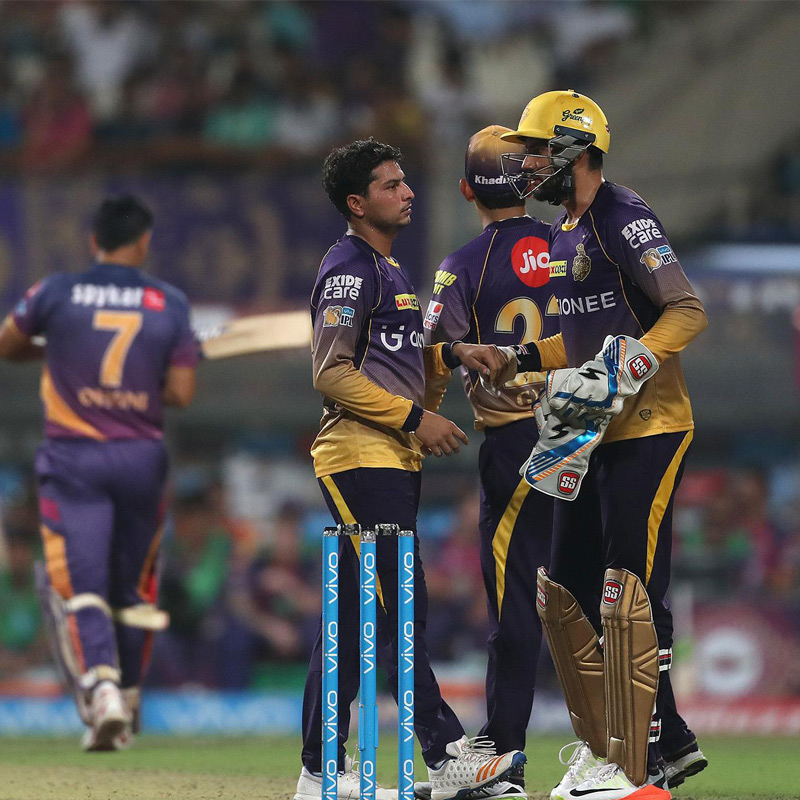
    MUMBAI: For the first time in the Indian Premier League’s (IPL) history, one of the biggest cricketing bonanzas in the world will be aired by India’s public broadcaster Doordarshan too. But there’s a catch. Rightful broadcast rights holder Star India and DD have mutually agreed that select matches out of the 60-odd ones to be played this season will get aired on the pubcaster’s channel with an hour’s delay.

    Asked specifically by Indiantelevision.com on the sidelines of an event here on Thursday, Star India chairman and CEO Uday Shankar said, “We will share with DD some highlights and one match every Sunday, apart from select other ones. It’s good for IPL that new audiences (not subscribing to pay TV) will get to sample it.”

    According to Shankar, who’s riding a wave of cricket broadcast rights and other successes, Star India will share with DD select matches of the 11th edition of the IPL in 2018 that the pubcaster will air with a delay of 60 minutes. What does it mean? If an IPL match starts at 8 pm, for instance, DD will start airing it 9 pm onwards.

    Asked as to why Star, which won the IPL global broadcast rights last year for a period of five years, is willing to share matches with the pubcaster that can probably have advertising revenue implications, Shankar said, “Its more in the nature of providing sampling opportunities to people who don’t have access to pay TV. It’s a mutual agreement [and] if we were not comfortable, we wouldn’t have shared the delayed feed also.”

    Though Prasar Bharati CEO Shashi Shekhar Vempati and Minister of Information and Broadcasting Smriti Irani tweeted about the IPL matches to be aired on DD sometime early evening Thursday quoting a media report, Prasar Bharati’s Twitter handle later expanded on the actual deal to say, “To bring Vivo IPL 2018 to a wider audience, Star TV has agreed to share with Prasar Bharati select matches on a one hour deferred live basis with 50-50 revenue sharing.”

    Indiantelevision.com also learns from industry and government sources that the as per the Star-Prasar Bharati deal, the matches to be aired on DD will also include the opener, the play-offs and the final. The 2018 edition of the cash-rich league will feature 12 matches that will be played at 4 pm and 48 matches that will start at 8 pm. According to details available, the matches will be played at nine venues over 51 days starting 7 April 2018.

    Though Star was not forthcoming on the issue, Indiantelevision.com also learns from industry sources that DD will do the ad-sales and marketing of the matches to be aired on pubcaster’s TV channel and share the revenue with the rights holder in the ratio of 50:50. Star, while quoting government norms on mandatory sharing of sporting events with DD, earlier had pushed for a revenue share in the ratio of 75:25 in its favour.

    For several months, officials of the MIB and Prasar Bharati and executives of Star India were locked in a series of hard bargaining over the finer details of match sharing with the pubcaster. Even as the finer points of sharing were being negotiated, the Indian cricket board wrote a letter to the MIB two days back expressing concerns over various government nods not forthcoming needed to telecast IPL matches live. The MIB has given its nod for temporary live uplinking of the IPL’s 11th edition, whose inaugural ceremony will be held on 6 April 2018.

    In September last year, Star India had won the global television and digital rights to IPL for the next five seasons for approximately $ 2.5 billion or Rs 16,347.50 crore. Until 2017, Sony Pictures Networks India had held the television broadcasting rights of IPL for 10 years (since 2008).

    Also Read :

    Star India beats Sony, Jio to win media rights for BCCI’s home matches

    IPL 2018 gets a makeover with Star India

    Comment: Does Star stand to gain or lose by sharing IPL with DD?

    Star’s Uday Shankar on distribution challenges, IPL, FTA vs. pay TV, innovations, Made in India content…and much more

  • DD Free Dish looks at  advertising for monetisation

    DD Free Dish looks at advertising for monetisation

    MUMBAI: The government’s own direct-to-home (DTH) platform DD Free Dish has had a good run since launch because of its wide acceptance, especially in the rural areas where the reach of cable is limited and pay TV is expensive. Now, the government is drawing up plans to make money from the platform.

    Last year, the government sanctioned a scheme to extend the number of channels to up to 250. In a reply in the Lok Sabha recently, Minister of State in the Ministry of Information and Broadcasting (MIB) Rajyavardhan Rathore said that this would enable Free Dish to generate revenue via advertisements. Quoting a private newspaper, the response mentions that private channels easily garner Rs 500-700 crore as revenue a year while a channel slot on Free Dish is as low as Rs 6-8 crore. He admitted that there were limitations to the revenue models that could be adapted into the free service if it wanted to ensure quality and reach.

    Another means of making money is via auction of channel slots on the DTH platform, which turned into a legal case when the auctions were arbitrarily called off mid last year by Smriti Irani, the information and broadcasting minister. Auctions have been kept in abeyance till a settlement is reached between Prasar Bharati and the networks that have reached out to the Telecom Disputes Settlement Appellate Tribunal. The tribunal has asked the government to conduct a comprehensive review on the auctioning policy for Free Dish before any stand is taken.

    At present, there are 72 free channels and 39 radio stations available on Free Dish.

    Updating the parliament on its growth, Rathore added that about 66,000 DTH set-top boxes have been given out in tribal, remote and border areas. According to estimates, Free Dish’s total subscriber base is 22 million.

    Also Read :

    TDSAT interim order ensures continuity for private channels on FreeDish

    TDSAT gives Prasar Bharati 2 days to respond to FreeDish auction suspension

    FreeDish auction on 4 July, different reserve prices for GEC and news


  • MIB calls for ‘fiscal prudence’ in Prasar Bharati

    MIB calls for ‘fiscal prudence’ in Prasar Bharati

    NEW DELHI: The Ministry of Information and Broadcasting (MIB) on Friday justified certain government directives to India’s publicly funded national broadcaster Prasar Bharati Corporation by saying “fiscal prudence” was the need of the hour, while reiterating its commitment to safeguard interest of the organisation’s employees.

    “Fiscal prudence and accountability is the very fulcrum of the functioning of any government organisation. Prasar Bharati is as much bound by the general financial rules (GFR) of the government of India as any ministry or any organisation receiving grants-in-aid from the government,” MIB said in a statement, which, apparently, looks like a rebuttal to a report appearing in news website The Wire that questioned certain decisions of minister Smriti Irani.

    MIB also termed the story, without directly referring to it, as a “deliberate, sinister (and) motivated campaign” to “tarnish” its image by putting out a report that was “based on ill-will and incorrect appreciation with half baked facts”.

    “As per the provision of GFR, any autonomous organisation receiving grant-in-aid must sign a Memorandum of Understanding (MoU) with the ministry, clearly bringing out the physical and financial targets with timelines for activities to be done by utilising the said grant during that financial year,” MIB clarified further, adding, “For the record, irrespective of repeated reminders from the ministry, no MoU has been signed by Prasar Bharati.”

    In a news report, headlined ‘Angered by Prasar Bharati’s Defiance, Smriti Irani Blocks Salary Funds for DD, AIR’, which went viral on social media over the last few days, The Wire quoted Prasar Bharati chairman Surya Prakash, serving his second term, as saying contingency funds were utilised to pay salaries to employees for the month of January and February 2018. It also concluded that if the standoff continued, the pubcaster will run out of money by April.

    The story’s reporter, a freelance journalist who’s also written a book on BJP’s online troll army, highlighted that the federal government earmarked around Rs 2,800 crore in 2018-19 towards Prasar Bharati where the allocation is routed through the MIB, which releases monthly installments for the salaries of its approximately 5000 employees.

    The report went on to state, quoting unnamed sources in the pubcaster, that the ministry had been “raising queries and creating problems” before releasing funds and, since December, has “not released money for salaries, forcing a drawdown of contingency funds”. The crisis, the report quoted the sources as saying, began when Prakash started questioning some of  Irani’s actions.

    It must be stated here that Indiantelevision.com is not in a position to independently verify the allegations made in The Wire report and has based its present news story on an official statement put out by MIB on the website of Press Information Bureau on a day when majority of Indians took a public holiday to celebrate the festival of colours – Holi.

    However, illustrating how fiscal accountability led to “curbing of wasteful expenditure” in the Prasar Bharati, which controls Doordarshan and All India Radio, MIB said, “By bringing in Human Resource Information System in Prasar Bharati, at repeated insistence of the ministry, exact amount of expenditure on employees has been worked out and this has resulted in savings to the tune of nearly Rs 30 crore per month for the salary head (Rs 360 crore a year). The Sam Pitroda Committee had also suggested a number of measures such as manpower audit etc. to enhance financial discipline. Hence, we are hopeful that following similar footsteps, together a lot can be done to enhance transparency and accountability.”

    At a media conference last week Irani had publicly questioned Prasar Bharati management’s ability in generating additional revenues. “The tragedy was that private broadcasters grew at the cost of [pubcaster] Prasar Bharati [riding DD’s FTA FreeDish platform],” Irani had said, adding, “How can we leverage the infrastructure that taxpayer has paid for so that good content is available [and] there is increased ad spend because of sheer power of reach of Prasar Bharati?”

    Meanwhile, according to a report in The Economic Times, the MIB is scrutinising the pay packages given to senior officers in Prasar Bharati and pointing out cases of mismatch in positions to pay. Being an administrative ministry, it claims to have more power in deciding the pay for current and retired employees, superseding the directive of Prasar Bharati.

    In one particular case, Rajeev Singh, an officer at the additional secretary position in the finance wing, is drawing the salary of a secretary. This leads to a difference in pay of Rs 20,000. Seven other employees in the rank of additional director general are being probed with regard to their appointments.

    ALSO READ:

    Smriti Irani exhorts DD to leverage reach better

    Prasar Bharati’s main role is of pubcaster, not revenue generator, says Rathore

    MIB minister Smriti Irani orders review of DD prime time auction process

    Smriti Irani tweets industry body advisory urging restraint by TV news channels

  • Smriti Irani exhorts DD to leverage reach better

    Smriti Irani exhorts DD to leverage reach better

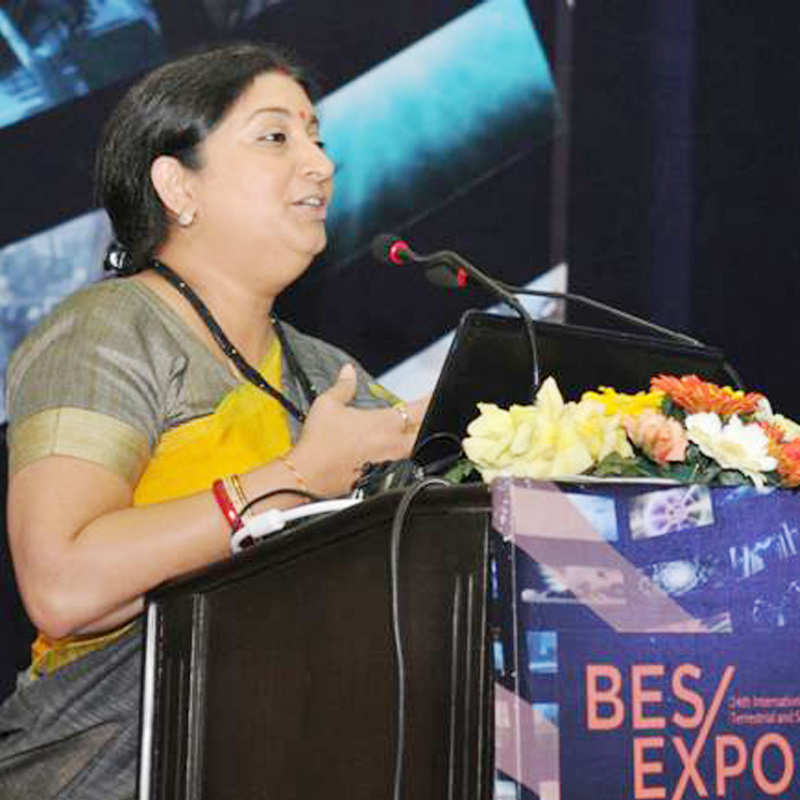
    NEW DELHI: Minister of Information and Broadcasting Smriti Irani at a public platform yesterday posed a question that may not be palatable to all but would bolster the confidence of Doordarshan bosses. She asked why the pubcaster couldn’t better leverage its own taxpayer-funded vast infrastructure for revenue generation the same way as private sector broadcasters had done.

    “The tragedy was that private broadcasters grew at the cost of [pubcaster] Prasar Bharati [riding DD’s FTA FreeDish platform],” Irani said, asking further, “How can we leverage the infrastructure that the taxpayer has paid [for] so that good content is available [and] there is increased ad spend because of sheer power of reach of Prasar Bharati?”

    According to her, India’s total advertising spend is expected to grow from 9.6 per cent last year to 12.5 per cent this year.  

    Irani, speaking at the Broadcast Engineering Society-oraginsed BES Expo 2018, went on to raise several other issues on the need of marrying good business model with technology, inadequate capacity and capability to manufacture locally STBs and the importance of broadcast engineering in the development of India’s media industry.

    DD’s KU-band DTH service, marketed under FreeDish brand, has been in the news lately with private TV channels questioning the pubcaster’s decision to not renew contracts to be on the FTA platform on expiry. Since then, DD has been giving temporary extensions to TV channels, waiting for broadcast disputes tribunal TDSAT, moved by some by some aggrieved TV channels, to give a final ruling on the matter.

    Bringing up the issue of FreeDish at a media event, Irani looked at a natural process of sending a message across to the private sector TV channels (over 800 on last count) and the mandarins of Prasar Bharati, which, by an Act of Parliament, is an autonomous body but relies heavily on government for funds.

    “The tragedy was that private broadcasters [on DD FreeDish] ended up taking a huge chunk from the ad pie not only from the ad spend of private sector, but also from government institutions like the DAVP [agency responsible for handing out government ads] on the basis of strength they leveraged from Prasar Bharati’s own infrastructure,” the minister pointed out.

    According to Irani, if Prasar Bharati, the managers and owners of DD, leveraged its infrastructure better, it would result in not only increased advertising revenue for the pubcaster but also reducing the burden of the taxpayer. She added that the government had allocated over Rs 2,500 crore to Prasar Bharati to fund its activities that also include DD’s sibling the All India Radio.

    Admitting that online consumption of video is increasing in India—40 per cent of entertainment is consumed online—and there is a growing demand in the digital arena for broadcasting, the minister asked whether Indian consumers, both rural and urban, have been sufficiently educated about digitisation of entertainment and the convergence happening in the country.

    While exhorting the stakeholders to collaborate with phone handset manufacturers to get additional numbers on video consumption patterns in terms of quality, quantity and genre, Irani said, “Data cannot have only [a] few masters… [one of the] greatest liberators in terms of data is the expanding reach of digital tech.”

    Bemoaning the country’s inability to manufacture locally good quality, cost-effective STBs in adequate numbers, Irani said, “That engineering anomaly needs to be addressed.”

    Though India is still far from digitising fully its 183 million TV homes, industry observers say the country imports almost 90 per cent of the boxes from China and ASEAN countries not because of engineering inability but lack of financial incentives.

    The BES Expo is one of the biggest broadcast technology shows in India. Nearly 300 companies from 25 countries will display their products in this year directly or through their dealers and distributors in India.

    Also Read :

    WOW Cinema petitions TDSAT on delayed auctions for DD FreeDish slots

    Right time for India-centric global news channel: Smriti Irani

    Smriti Irani: Need to reduce gap between regional & national news & democratize viewership

  • Doordarshan’s R-Day broadcast notches up record TV viewership

    Doordarshan’s R-Day broadcast notches up record TV viewership

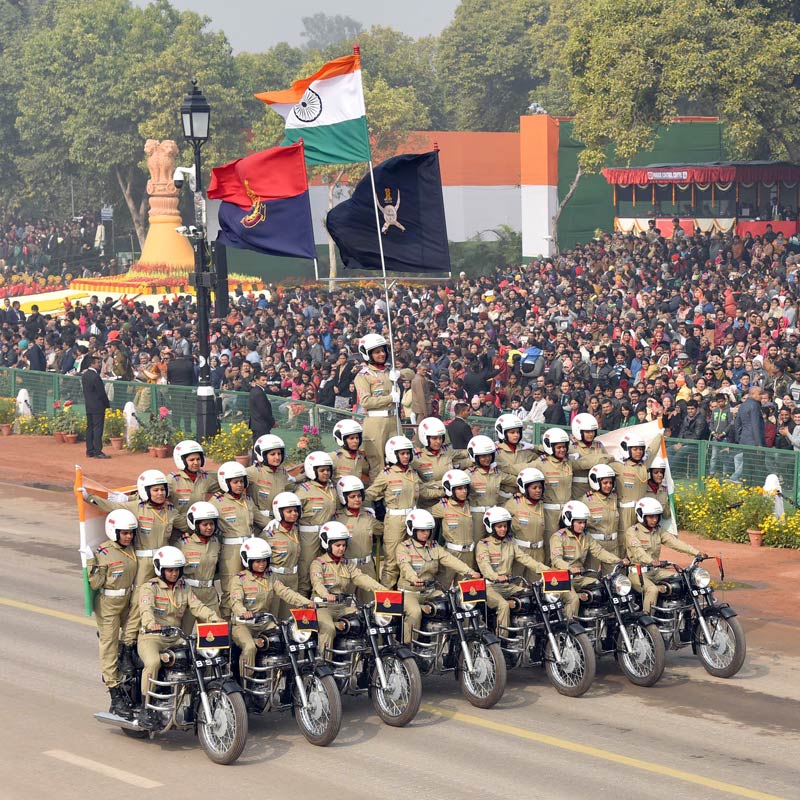
    NEW DELHI: Pubcaster Doordarshan notched up record viewership of 38.3 million for the live telecast of India’s Republic Day celebrations, including the impressive parade by armed forces and civilian organisations, in the presence of special guests from 10 Asean countries, apart from bigwigs of the country’s political system.

    Not only did DD record high audience data for the R-Day telecast shown simultaneously across its 22 terrestrial and satellite TV channels, but the gross figure, too, stood at 45.4 million. The 90-minute odd show, conceptualised to celebrate the Indian republic and its evolution through the years since 1950, was captured via 38 cameras this year.

    According to DD’s parent Prasar Bharati Chairman A Surya Prakash, six cameras were deployed beyond central Delhi’s India Gate (the parade passes through some of the arterial roads from the India Gate roundabout) to capture a panoramic view for the telecast that was also beamed in HD format apart from the regular SD broadcast.

    After BARC India released its weekly audience data last week highlighting the pubcaster’s R-Day broadcast, DD Director-General Supriya Sahu in a series of tweets said: “India trusts Doordarshan, the Public Service Broadcaster with events of national importance. Undeniable proof of people’s faith and confidence. Thanks to all our viewers. Million thanks dear viewers for watching and appreciating DD coverage of the Republic Day parade. It’s your love and affection which drives our team to do their best. We are nothing without you.”

    Republic Day telecasts not only helped DD viewership soar, but also shored up audience data of English and Hindi-language TV news channels as many private channels re-telecast DD-generated feeds from various locations of the official celebrations.

    The impressive show by DD, which pulled out all the stops for the coverage and telecast of the R-Day 2018 celebrations beamed live on digital platforms, including YouTube, too, once again highlighting the pubcaster’s massive reach that continues to remain under-exploited and is reflected in the annual revenues generated by the national network.

    Over the last 24 months, however, under chief executive Shashi S Vempati, and Sahu, DD has been attempting a series of initiatives to not only modernise itself, but also infuse fresh programming ideas for the network channels to up generation of revenue too, apart from living up to its objectives as a pubcaster. 

    Also Read :

    TV channels ready Republic Day programming line-up

    Celebrate Republic Day special with ‘Beats of India’ only on MTV Beats

    Ensure full use of funds for schemes, house panel tells MIB


  • Doordarshan calls off DD Kashir’s channel packaging

    Doordarshan calls off DD Kashir’s channel packaging

    NEW DELHI: Over five months after bids were invited and three months since agencies were shortlisted, Doordarshan (DD) has cancelled the tender for the channel packaging work of DD Kashir.

    DD said the tender has been cancelled ‘due to administrative reasons’ and said bidders could collect the earnest money and processing fee paid by them.

    The decision is the third major decision rescinding in an ongoing exercise at DD since Smriti Irani took over as Information and Broadcasting minister. Earlier, the auctions for DD FreeDish were cancelled and the successful bidders for DD National Prime Time auctions were not allowed to air their programmes as the minister wanted to reportedly study the issue.

    The three agencies finalised for the packaging work were Prime Focus Technologies, Beehive Systems, and Grasshopper Media.
    DD Kashir had issued a similar tender for April but had made some changes following some feedback and changes made by DD Directorate General, particularly relating to the payment mode and sought fresh tenders with 29 June as the last date.

    Details of documents can be viewed at ddindia.gov.in

    DD Kashir was launched in the year 2003 to show the richness, variety and diversity of local culture to Jammu & Kashmir (J&K) viewers. Prasar Bharati is making special efforts in J&K to promote and nurture talent, provide a platform to deserving producers/artists from the state as well as from outside to encourage production of better programmes for Doordarshan viewers.

  • Former I&B minister Priya Ranjan Dasmunsi passes away

    Former I&B minister Priya Ranjan Dasmunsi passes away

    NEW DELHI: Former Information and Broadcasting (I&B) minister Priya Ranjan Dasmunsi, who took several unpopular decisions during his tenure, died after being in a coma since 2008. He was 72.

    He had suffered a massive stroke in 2008 leaving him paralysed and unable to speak and lapsed into a coma during treatment. He had been critically ill over the past month, according to the Apollo hospital, and died at 12.10 pm on 20 November.

    As I&B minister during the first term of the Manmohan Singh-led government from 2004-2008, Dasmunsi was instrumental in passing a law in 2007 which resulted in all broadcasters holding rights to sporting events having to forcibly share signals with Prasar Bharati. His term also saw several bans on western television networks, including a three-month ban on the Sony-owned television network AXN and Fashion TV following the broadcast of programs deemed “obscene” by him.

    In 2006, Dasmunsi was the first Indian to be a match commissioner in a FIFA World Cup game between Australia and Croatia. He was heading the Indian football governing body at the time of his stroke in 2008, which led to Praful Patel taking over as president. Dasmunsi served as the president of the All India Football Federation for almost 20 years.

  • Prasar Bharati gears up to mark 20th anniversary

    Prasar Bharati gears up to mark 20th anniversary

    NEW DELHI: Celebrating its 20-year anniversary, Prasar Bharati is conducting jingle and short film competitions for current and former employees. People have to send their nominations by 10 November.

    This year is also important as Prasar Bharati has for the first time shifted to its own premises, adjoining Doordarshan in Copernicus Marg in New Delhi. Until now, it had been a tenant in the PTI Building on Sansad Marg (Parliament Street), just opposite Parliament House Annexe.

    A statutory autonomous body established under the Prasar Bharati Act 1990, it came into existence on 23 November 1997.

    Prasar Bharati had been conceived as a trust known as Akash Bharati in the report prepared by a committee headed by the late renowned mediaperson B G Verghese in 1978 focused on autonomy for broadcasting in India.

    After Prasar Bharati came into formation, both All India Radio and Doordarshan came under its ambit. These public service broadcasters had till then functioned as media units under the Ministry of I&B.

  • TDSAT interim order ensures continuity for private channels on FreeDish

    TDSAT interim order ensures continuity for private channels on FreeDish

    NEW DELHI: Private TV channels on Doordarshan’s FreeDish with expired licences have been informed by the Telecom Disputes Settlement and Arbitration Tribunal (TDSAT) that they can continue airing until further orders. This applies to even those whose licences are soon to expire.

    Channels can continue on a pro rata basis taking the bid with which they had won the slots or the reserve price, whichever is higher, as benchmark. This can continue till the government formulates a new policy within two months.

    TDSAT chairman justice Shiva Keerti Singh, and members B B Srivasatava and A K Bhargava gave three days to any other channels similarly affected to take advantage of this interim order by informing the tribunal.

    While admitting all the petitions before it, the tribunal asked the government to file its reply within four weeks.

    Earlier in the morning, the government through counsel Rajeev Sharma presented a letter sent to Cinema 24×7 which laid down a new formula aiming at bringing the pricing at par with the system followed for FM channel auctions which also provides for revenue sharing.

    Sharma said that Prasar Bharati was in the process of reorienting its content to live up to its credo of public service broadcasting and had therefore sought a time of two months. However, channels whose licences will expire this month or in February next year can continue by paying the highest bid amount and by sharing its revenue with the pubcaster. However, counsel for the private channels rejected this as discriminatory.

    Counsel Aman Lekhi who represented Cinema 24×7 said the government could not bring an interim policy which was not relatable to something that law recognises. He said this would also amount to creating two classes of TV channels: those who were on a pro rata basis and those who were being forced to pay an amount that was higher than the amount for which they had successful bid for the channels. There was no guarantee that the government will not revert to the existing prices after the two-month exercise was over.

    He added that the ad hoc exercise was even unnecessary since the government is in contemplation. Such a measure doesn’t give certainty or continuity and alterations have to be by ‘sound consideration’. In fact, he stated that even Prasar Bharati was unaware why the auction was called off by the Minister of Information and Broadcasting Smriti Irani.

    Senior advocate Ramji Srinivasan added that it was clear that DD was eager to continue with the auctions but the ministry had arbitrarily stopped them. He also said that ‘continuity’ implied continuing with the existing policy and not imposing something completely new.

    He said equating general entertainment channels with news channels was sheer arbitrariness. This may result in closing the channels and shutting doors to people.

    Assistant solicitor general Tushar Mehta added that the aim of the government had been to balance equations on both sides. He said that in the FM auctions, the channels shared revenue of fifty per cent apart from the bid amount in the e-auctions and so the same policy was sought to be extended to the TV channels on FreeDish.

    Apart from Cinema 24×7 which runs Wow Cinema and News Nation, others who joined the fray today included Enterr 10 TV Pvt Ltd., B4U Broadband India Pvt Ltd, and Independent News Service Pvt Ltd.

    The letter sent by a senior executive of Doordarshan said that Doordarshan “can as an interim measure follow a model on the pattern of FM auction policy of the government for two months or till the centralgovernment policy is made, whichever is earlier for the channels which are going to be off the air on completion of their contract period” and they may “be offered continuity of operation at the highest bid amount for any of the channels auctioned in the past, together with revenue sharing at the rate of 50 per cent of the gross profit or 4 per cent of the gross revenue  or  2.5 per cent of upfront highest bid amount whichever is higher. This system, as an interim arrangement should be operated on first come first served basis if the terms and conditions of the short duration extension are acceptable to the existing  contract holder.”

    The letter noted that FreeDish has witnessed a significant growth spurt in free to air (FTA) channels in  2015-2016 and the popular FTA channels spanning general entertainment, movies and music have targeted core TV audiences and according to estimates reported in the media to have earned Rs 5 to 7 billion. Keeping so many vacant slots will not only affect revenue from one of Doordarshan’s largest sources but will also force people to shift to other expensive options.

    Soon after Smriti Irani became the Minister of Information and Broadcasting (MIB) few months back, the decision of halting the bids for FreeDish slot was announced. This came at a time when FreeDish was testing its MPEG4 technology in an attempt to encrypt the platform and also expand the number of TV channels that could be carried. At present 80 channels are carried on the FTA DTH platform. 

    Also Read:

    WOW Cinema petitions TDSAT on delayed auctions for DD FreeDish slots

    10 FreeDish slots may fall vacant by Oct-end as renewals hang fire

    TDSAT gives Prasar Bharati 2 days to respond to FreeDish auction suspension

    Dish TV moves TDSAT against Star Life OK name change & turning FTA

  • Smriti Irani: Need to reduce gap between regional & national news & democratize viewership

    Smriti Irani: Need to reduce gap between regional & national news & democratize viewership

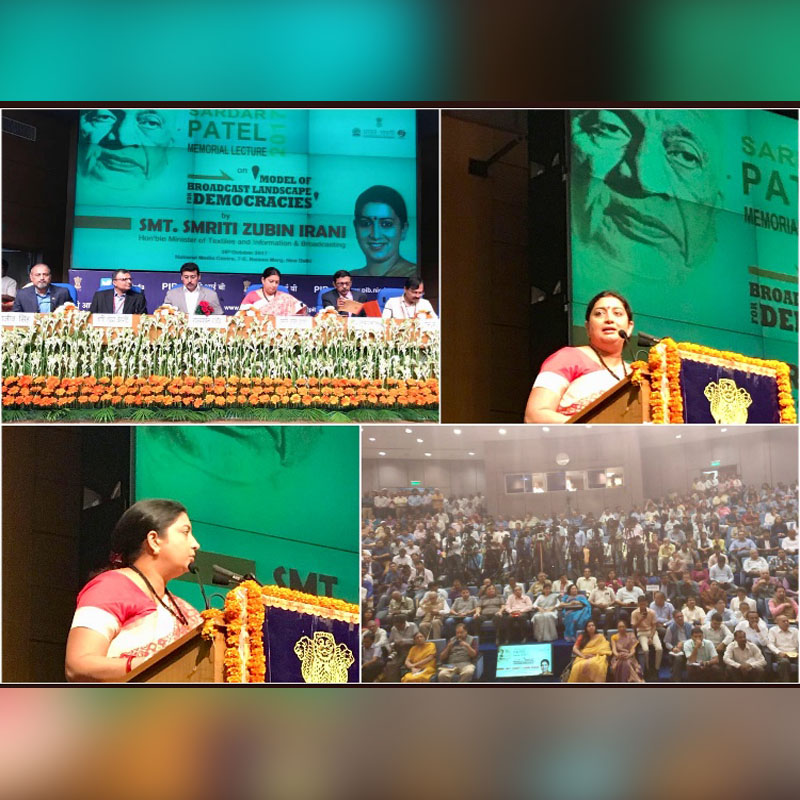
    NEW DELHI: Stressing on the need for a model structure of broadcasting, which can strengthen the Indian democracy, Minister for Information and Broadcasting Smriti Irani yesterday exhorted the media to reduce the gap between regional and national news, thus democratizing viewership, and the need for meeting objectives of public good and entertainment.

    “If we want the broadcasting landscape to be strong, the first and the foremost requirement is to give as much importance to the regional content as the national content…(and) reduce the gap between the regional news and  national content,” Irani said yesterday while delivering the Sardar Patel Memorial Lecture 2017 themed ‘Model of Broadcast: Landscape for Democracies’.
     
    Describing the broadcast news landscape as a “spectator sport”, the minister said the rush for audience ratings has reduced everything to “headlines competing with hashtags” in the wake of social media explosion taking place in the country that has provided a new pathway for information dissemination.

    Coming down heavily on a certain section of the media for being driven by TRPs, forsaking codes, ethics and conduct rules, unlike another section, Irani said, ”There is a need to democratize the (audience) measurement system in the country.”

    According to the feisty minister, who also holds the portfolio for Textiles Ministry, a model structure of broadcasting should focus on “democratized viewership” based on an accurate measurement system that reflects the strength of regional languages, varied tastes of viewers/consumers and bridges the divide on issues related to agenda setting, creative content and revenue between the mainstream and regional platforms.

    Stressing the importance of the sector keeping abreast with trends in the social media, which she described as a “disruptive” force, Irani said though the broadcasting sector is based on business propositions and technological upgradation, the ‘Mann ki Baat’ programme of Prime Minister Narendra Modi aired on AIR was an ideal example of how a technology platform blended his message with citizen understanding and awareness of the issues highlighted in each episode.

    Highlighting the difference in the way pubcasters — Doordarshan and All India Radio — functioned vis-a-vis a large section of the private sector media, Irani added: ”If you look at the broadcasting sector, the overriding focus of the public broadcaster has been on serving the public good. In today’s times, however, when news has become a spectator sport, there is a need to bridge the gap between serving the public good and providing entertainment.”

    The annual lecture held at the National Media Centre in the Capital, started by All India Radio way back in the 1950s, was attended by Minister of State for MIB Rajyavardhan Rathore, pubcaster Prasar Bharati chairman A. Surya Prakash and Prasar Bharati CEO Shashi S. Vempati, apart from other senior government officials.

    Even as Irani lauded the public broadcaster’s endeavour to focus on public good, she said it was the “duty of the public broadcaster to speak fairly and freely, as it is doing now”. She also called upon the pubcaster to weave stories on the lives of ordinary people, which could have an impact both within India and abroad.

    The minister said it would be the endeavour of MIB to promote the concept of “design thinkers” for content generation in the digital space in the light of growing use of technology by the young generation in areas of internet, mobile content and animation & gaming. This would also incorporate the elements of the New India vision envisaged by the Prime Minister by 2022.

    Highlighting the fulcrum strength of her ministry, Irani said that the Information Service officers’ profile would be strengthened in the future by giving them skill sets along with an integrated administrative exposure so as to enable them to serve policy and programmes of the people through the medium of information. This would be along the lines of Sardar Patel’s vision of creating a steel frame to serve the people through the channel of information dissemination, she added.

    The first Patel memorial lecture was delivered by C. Rajagopalachari, while the other distinguished speakers in the series have included stalwarts like Dr. Zakir Hussain, Dr. A.P.J. Abdul Kalam and Morarji Desai.

    Also Read: Smriti Irani tweets industry body advisory urging restraint by TV news channels

    MIB minister Smriti Irani orders review of DD prime time auction process

    Smriti Irani gets additional charge as MIB minister

    BARC India to TRAI and MIB: Tweak legislation to make data tamper-proof