NEW DELHI: In a written reply in the country’s Lower House of Parliament (Lok Sabha) today Prasad said that officers of the I&B ministry had visited the metros of Delhi, Mumbai, Kolkata and Chennai to assess the preparedness for conditional access system (CAS) and have, inter-alia, observed that the demand of set-top box (STB) at first stage would be met by imports.
Procurement of STBs is in progress, while training is being imparted to local cable operators for a post-CAS regime. The minister said that the domestic industry has not yet geared itself to meet the demand.
Some multi-system operators (MSOs) have already offered attractive introductory schemes of making available of STBs on Installments/hire-purchase/rental basis and have declared that they would be able to show approximately 60 free-to-air channels within the maximum price of Rs. 72 (plus taxes), Prasad added basing his observations on the feedback from his officials.
Replying to a question by Prakash V. Patil on CAS, the minister said that it has been decided to implement addressability in a phased zone-wise manner in the three metros of Delhi, Kolkata and Mumbai and at one go in Chennai from 1 September.
The intervening period is being used to step up the preparedness, educate the consumers and closely monitor the procurement and availability of the STBs. An Implementation Committee under the chairmanship of additional secretary in the I&B ministry has also been constituted with representations from broadcasters, MSOs, cable operators amongst others.
This panel will closely monitor all things related to CAS, the minister said, adding the ministry has also launched a multi-media publicity campaign through advertisements in all the leading dailies of the country and TV channels.
Tag: Prasad
-
Govt. monitoring CAS progress: Prasad
-
Government examining complaints against MBPL: Prasad
NEW DELHI: The Indian government is examining complaints regarding Music Broadcast Pvt. Ltd. (MBPL) being indirectly promoted and controlled by the Rupert Murdoch-owned Star Group.
This was stated by information and broadcasting minister Ravi Shankar Prasad in a written reply in the country’s Lower House of Parliament (Lok Sabha) today, which has been adjourned for the day because of the Opposition stalling proceedings.
MBPL operates private FM radio stations under the brand name Radio City. Replying to a question by Ram Vilas Paswan, Prasad said his ministry has received complaints regarding the company, which are being examined in consultation with Department of Company Affairs (DCA) and the ministry of law.
The minister said that MBPL had applied for licence and as it fulfilled the eligibility criteria, permission was given to participate in the auctioning of FM radio licences over 18 months back. On being successful bidders, licences were given to MBPL for operating FM radio stations at Bangalore, Lucknow, Mumbai, Delhi, Nagpur and Patna.
Though it was not stated in the house, but MBPL has since then surrendered at least two licences for Patna and Nagpur citing reasons of business not being viable in these cities.
Meanwhile Prasad in his written replies, which are deemed to have been tabled in Parliament in the wake of adjournment, also told Lok Sabha also said that private FM broadcasters are not permitted to air news and current affairs programming.
As per terms and conditions of licence agreement’s Clause 7 Main Text and Clause 1 (a) Sec 6 of the tender document, “the licence is for free to air broadcast of audio on main carrier and data on sub-carrier, both excluding news and current affairs and any other services, which are under jurisdiction of Department of Telecommunication,” the minister said.
Replying to a question by Sunder Lal Tiwari and Satyavrat Chaturvedi, Prasad told Lok Sabha that a complaint from India’s pubcaster Prasar Bharati, dated 11 June, 2002, was received through the Prasar Bharati CEO regarding broadcasting of news and current affairs on a private FM channel in Mumbai.
The matter was taken up with the company, which has responded that it had happened inadvertently and measures have been taken to ensure that this is not repeated, Prasad said. According to the minister, the Central Monitoring Services, a wing of the I&B ministry, had been asked to monitor the radio stations in Delhi and such vigil is being kept by the ministry too to ensure that the terms and conditions of FM radio licence agreement are adhered to. -
Prasad defends govt. handling of Star News case in RS
NEW DELHI: Information and broadcasting minister Ravi Shankar Prasad today juggled criticism and defence admirably. Especially when it came to the Opposition criticism of the government allowing Star News to continue uplinking despite doubts being raised over the company’s funding process.
Prasad admitted that “a prime concern” of the government has been to ensure that ownership and editorial control of television channels telecasting news and current affairs is in Indian hands without any proxy.
However in the same breath, he also said that the government cannot suddenly “switch off” an existing channel (read Star News) even while investigations are on about its antecedents.
(Till the time of writing this piece late in the evening there was no confrimation from the government whether Star News had been given another uplinking extension as the deadline expires midnight).
Pointing out that when Star News filed an application it was simple one, the minister said now a lot of queries — mostly by the I&B ministry — have been raised and details obtained after asking 46 questions. “Since it’s under consideration, it would not be fair for me to comment now,” the minister said amidst a chorus of protest from Opposition members.
The minister was replying to calling attention motion in Rajya Sabha (Upper House) on CAS and uplinking.
An inter-ministerial group has been formed that is looking into various issues of Star News case, the minister said, asking, “Should I stop them (Star News) midway? After all I have to be fair.” Dwelling on the genesis of the guidelines for foreign investment in TV news channels, the minister said that the case of print and electronic medium cannot be termed the same.
When the foreign direct investment guidelines for print was reviewed, no foreign investment was allowed — it was a “closed” regime — but in the electronic medium, many things has been allowed (it’s an “open” regime), the minister said , adding the comparison of two should not be done at this point. Still, striking a conciliatory note Prasad said, “If some more tightening (of laws for the electronic medium) is needed, we are open to it.”
The government came for severe flak from its ally Shiv Sena and main opposition Congress for its uplinking policy that demanded any foreign channel violating norms should not be given uplinking facility.
Congress member Kapil Sibal told the Rajya Sabha that “uplinking policy should be non-discriminatory and any party, which violates norms, should not be given uplinking facility.”
Shiv Sena member Sanjay Nirupam said the FDI policy for foreign channels should be on the lines of one pursued for print media that makes it mandatory for 51 per cent equity for Indian partners, besides the editorial control.
Others who also spoke on the issue included Samajwadi Party member Amar Singh and Congress’ Falerio.
According to Prasad the guidelines, issued on 26 March laid down the following eligibility criteria for a company uplinking news and current affairs channels, including the following: to be registered/incorporated in India under the Companies Act and management control of TV channels are vested in Indian hands; foreign equity holding in the applicant company not to exceed 26 per cent of the total paid up capital; majority of its board of directors to be resident Indians; CEO of the applicant company, known by any designation, and or head of the channel to be resident Indian; and News Editor(s) or authority(ies) exercising editorial control over news and current affairs programmes of the channels to be resident Indians.
Further, by an order of 15 July , an inter-ministerial group has been set up to examine the foreign exchange norms and guidelines, particularly, relating to uplinking of news and current affairs channels. The case of one of the application (Star News), seeking uplinking, as per extant guidelines is under examination, the minister informed the House. -
Special provisions for DD, AIR services for the North East
NEW DELHI: Provisions of Rs 1705.5 million and Rs 3805.5 million have been kept for All India Radio (AIR) and Doordarshan, respectively in the 10th five-year plan for the schemes to be implemented under Phase-II of the Special North East Package. The scheme is yet to be approved by the Expenditure Finance Committee (EFC) though.
India’s information and broadcasting Ravi Shankar Prasad offered this information today, adding that the government has no timeframe for setting up a regulatory body for post conditional access regime.
Replying to a question by Dr Arun Kumar Sarma in Rajya Sabha (Upper House of Indian Parliament) today, the minister for information and broadcasting Ravi Shankar Prasad said that the special package for expansion and improvement of AIR and Doordarshan services in North East Region and Island territories was approved in principle by the Government in October 2001.
The minister said that a separate North East Zone was created by setting up a small office with limited staff in a rented building in Guwahati. A chief engineer has also been posted in Guwahati. Budget has been provided for the establishment of North East Zone office, Prasad said. -
No timeframe for CAS regulatory body: Prasad
NEW DELHI: The government has announced that there is no specific time frame to set up the Broadcasting Regulating Authority of India.
I&B Minister Ravi Shankar Prasad informed Rajya Sabha on Monday (28 July) morning that the Convergence Commission Bill was still pending with 77 amendments from the standing committee on I&B.
The Rajya Sabha members pointed out during the question hour that the government can use the services of an existing regulator like TRAI instead of wasting government money on a new regulator.
Also, the members were agitated over the issue of CAS and free to air channels. Sanjay Nirupam of Shiv Sena pointed out that the cable operators like Hindujas have been forcing the set-top-box on the consumers. He also asked the minister why there are only 30 free-to-air channels stipulated by the government.
The minister replied that the government has decided on a minimum of 30 free to air channels because at a time of the decisions there were only 35 free-to-air channels. He also said the cost accounting department had reached the figure of Rs 72 for free to air channels. -
Prasad is spared the CAS test in Parliament
NEW DELHI: Information and Broadcasting minister Ravi Shankar Prasad got off comparatively lightly in the Lok Sabha today when the Opposition’s bid to corner the government on conditional access system (CAS) came a cropper because of lack of time during question hour.
On a day when the question hour was dominated by issues related to ministries of external affairs and labour, the Opposition got less than ten minutes to question the government on CAS.
Things were made easy for the government when despite the Speaker’s assertions on lack of time, an Opposition Member of Parliament insisted on reading out his question in detail taking up precious time.
Prasad got off by stating in the Lok Sabha that since a large number of television sets in the country and the metros are black and white, which cannot receive very many channels, the government thought it best to prescribe a minimum of 30 channels for the basic tier of free to air (FTA) channels.
Prasad further added that some multi-system operators (MSOs) have promised to provide up to 70 channels as part of the basic tier, which is a welcome step. This way, even the rich and the not so rich would have a choice of channels.
However, Prasad admitted that lack of adequate number of set-top boxes (STBs) led the government to postpone the rollout of CAS to 1 September from the earlier deadline of 14 July. To make things easier, an area-wise implementation would be adhered to.
DATA SHOWS 50,000 BOXES CLEARED BY CUSTOMS
Meanwhile, in written replies to fellow parliamentarians on CAS, Prasad clarified that the industry and not the government will be importing the STBs.
“As per the data furnished by the Customs and Central Excise authorities, 50,050 STBs have been imported by various MSOs/cable operators as on 16 July, 2003,” Prasad informed the Lok Sabha, adding that according to the data given by the industry, orders for “large volumes” of boxes have been placed and these are expected to arrive in a phased manner in the next few months.
Dwelling on the indigenous manufacturing of the boxes, Prasad said that local industry is “yet to gear up fully since technology deployed is quite new” and the momentum would pick up slowly with tax sops having been extended by the government.
Assuring the policy makers in the Lower House of Parliament that the government is monitoring the arrival of boxes in the country, Prasad said, “Visits are (being) made to head-ends to assess the level of preparedness and test check of boxes has also commenced to ensure that the boxes conform to the standards published by the Bureau of Indian Standards.”
CONNIVANCE DENIED
Replying to queries raised by 11 parliamentarians on the government proposal to introduce CAS “in connivance with STB manufacturing companies,” Prasad in a written reply denied such charges.
“The implementation of CAS was considered only in consumer interest. The representatives of the Consumer Electronics and Television Manufacturers’ Association (CETMA), who represent the indigenous industry, were consulted at different times,” Prasad said.
According to the minister, CETMA and some manufacturers had appealed for reduction in duty on import of components required for manufacturing boxes, which has been rationalised by the government.
On a query on outdated technology being imported in the name of “digital boxes (MPEG-2),” Prasad informed the Lok Sabha that, the compression standard used worldwide for commercial digital TV broadcast across all delivery platforms like cable, satellite and terrestrial is MPEG-2. However, MPEG-4 is not used for commercial TV broadcast.
“Bureau of Indian Standards has adopted the international cable TV standards known as DVB-C and DVB-CSA, which are based on MPEG-2 technology. These are widely in use and not out dated,” the minister said.
72 FTA & 49 CHANNELS IN INDIA
According to the government, there are, at present, 49 pay channels and 72 FTA channels including 26 Doordarshan channels available in India.
The list laid on the tables in Lok Sabha states that channels like Star News are FTA and would be part of the basic tier, as also NDTV India and NDTV 24×7, which will be “FTA on the date of CAS implementation.”
The list also gives the prices of individual channels as had been indicated by the broadcasters.
CHANNEL-WISE PRICE LIST
Channel Individual price (Rs) Bouquet price (Rs)
Gemini TV 10
Teja TV 5
Sun News 5
KTV 12
SCV 3
Action TV 7
MAA TV 5
B4U Movies 10
ESPN 29 32
Star Sports 29 32
Raj TV 10 14
Raj Digital Plus 10 14
Star Plus 24
Star Gold 10
Vijay TV 10
NGC 10
Star World 14
Adventure One 4
Channel V 8
CNBC 20
Zee TV 25
Zee Cinema 20
Cartoon Network 20
Alpha channels 15 each
Zee News 10
Trendz 10
Reality 5
Hallmark 12
Ten Sports 14
Sony 20
HBO 14
SET Max 14
AXN 10
Discovery English 10
Discovery Hindi 10
Animal Planet 4
Surprisingly the government list puts the cost of channels called Less TV at Rs 72, while Ten Sports’ cost is Rs 14 and Hallmark’s Rs 12. -
Prasad to inaugurate AIBD broadcasting conference
NEW DELHI: The second general conference of Asia-Pacific Institute of Broadcasting Development (AIBD) would be held in New Delhi from 22 to 25 July 2003.
India’s minister of information and broadcasting Ravi Shankar Prasad would inaugurate the conference and deliver the keynote address. The associate meetings of AIBD, however, would start on Monday, 21 July 2003.
Messages from the UN secretary general Kofi Annan and UNESCO director general Koichiro Matsura would also be read on the occasion.
About 75 delegates from the countries in the Asia-Pacific region and representatives from several organisations like UNESCO, UN-ESCAP and Commonwealth Broadcasting Association would be attending.
Besides these, the affiliate members like Russian State TV and Radio Broadcasting Company, National TV and Radio Corporation of Kyrgizstan, Khabar Broadcasting Agency of Kazakhstan, Prix Jeunesse International, Germany, Deutsche Welle Radio Training Centre, Germany, Young Asia Television, Sri Lanka, Radio France International and Trans TV, Indonesia would also be attending.
On 21 July, the AIBD board executive would hold its daylong meetings. The AIBD Sub-Group on Radio would also hold discussions. The agenda on other meetings would include the AIBD Strategic Plan, Strategic Approach in Broadcast Management in the Asia-Pacific Region. Asia-Pacific Europe Partnership Committee would also meet during the conference.
The Asia-Pacific Institute for Broadcasting Development with its headquarters at Kuala Lumpur is a unique regional inter-governmental organisation servicing countries of the United Nations Economic and Social Commission for Asia and the Pacific (UN-ESCAP) in the field of electronic media development.
The paramount aim of the Institute is to achieve a vibrant and cohesive electronic media environment in the Asia Pacific region through policy and resource development.
The institute was established with the objective to assist countries, which are members of the institute, to improve the professional capability of their broadcasting systems through systematic training and research programmes, consistent with their national development.
Towards these objectives, the institute organises training courses, seminars and study courses for broadcasting personnel of member countries, both at regional and national levels, specifically designed to develop professional capabilities; undertakes research and comparative studies on broadcasting problems, provides advisory and consultancy services to member countries. -
Prasad meets PM, mum on what transpired
MUMBAI / NEW DELHI: The ongoing conditional access soap opera ended another day on an inconclusive note.
Information and broadcasting minister Ravi Shankar Prasad had an hour-long meeting with Prime Minister Atal Behari Vajpayee with law minister Arun Jaitley also present. Both Prasad and Jaitley maintained a stoic silence about the deliberations though.
It is learnt from official sources that the meeting at the prime minister’s residence was to update the PM on the status of CAS implementation and discuss some legislative measures, but the meeting was “inconclusive.”
What preceded the meeting had much more drama though. Rumours emanating from Shastri Bhavan said that the reason why Prasad had gone to meet the PM was to “brief him” on a plan to delay the implementation CAS by 18 months.
Well, till something more definite comes out about the latest on the vexed CAS affair, such speculation and rumours will continue to float. -
Broadcasters to meet PMO officials today; MSOs to meet Prasad
NEW DELHI: The confusion over the alternative and seemingly unviable options being mooted by the information and broadcasting ministry have forced broadcasters to approach PMO officials. A group of broadcasters will be meeting the PM today even as the multi system operators are slated to meet the I&B minister RS Prasad at 2 pm.
An indiantelevision.com report filed yesterday states that it took the Indian government and bureaucrats almost six months to realise that conditional access system may not turn out to be as consumer friendly as had been earlier envisaged by the country’s policy-makers when the amendments to the related Acts were steam-rolled through Parliament by the coalition federal government late last year.
An indiantelevision.com comment piece “Dual illumination not a workable proposition” has really set the ball rolling. Amidst all the confusion, this new “formula” doing the rounds called the soft rollout plan looks more like a plan to soften the mess that the government has got itself into ever since I&B minister Ravi Shankar Prasad gave a commitment to the world at large that CAS would deliver all channels (including the pay driven ones) to the subscriber within Rs 200.
The last month or so has seen the government, instead of applying itself to the nitty gritty of getting the CAS machine rolling in terms of how it is actually to be managed, playing pricing officer with pathetic results.
And now, while the government insists that the CAS rollout is on schedule, it says it is studying various options to make things easy for consumers, who should not face a blackout of their favourite channels post 14 July.
All eyes will be on the two important meetings scheduled today! -
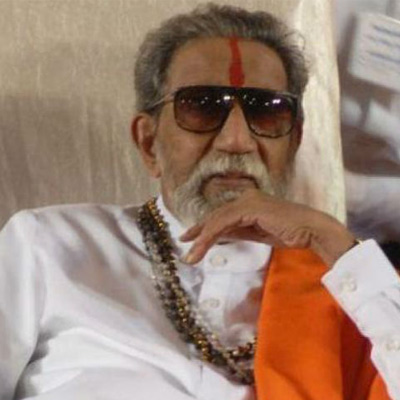
‘CAS’e closed – Prasad allays Sena Supremo’s fears
MUMBAI: “The post-CAS scenario – good interplay of market forces; healthy intervention of the government!” These were the words with which information and broadcasting minister Ravi Shankar Prasad signed off at a press conference held in Doordarshan Kendra in Mumbai this afternoon.
The minister addressed a packed media conference after a delay of nearly two hours – he met Shiv Sena supremo Balasaheb Thackeray (at his Bandra residence). Prior to that, he attended an Indian Merchants Chamber- organised seminar on the conditional access system (CAS) earlier in the day.
Speaking about his meeting with Thackeray, Prasad said the Sena chief’s concerns were justified and shouldn’t be seen as “opposition”. It may be recalled that on 5 June Thackeray, an ally of the BJP-led coalition government, had warned that the decision to go ahead with CAS would prove an “expensive one”.Prasad said that Thackeray’s reservations about CAS revolved around two key issues:
a) consumers interests must be safe-guarded and
b) the interests of cable operators must be taken care of because the cable operators had spearheaded the cable revolution in India through their enterprise
(entrepreneurial spirit).Prasad said Thackeray had asked him to focus on these two aspects while implementing CAS.
Prasad said he had given assurances to Thackeray and his son Uddhav Thackeray on the matter. He also added that he had informed the Sena leaders that the monthly rental cost of the set-top-boxes (STBs) would be as low as Rs 30; as against the initial apprehensions that consumers would have to shell out up to Rs 7,000 for buying STBs outright. Prasad added that he would continue to have further interactions with the Thackerays and would keep them abreast of developments.
Prasad added that as a step in this direction, he was appointing Shekhar Joshi of Cablevision on the CAS task force. Prasad said that this move would allay the fears of the Mumbai cable trade, which didn’t have any representation on the government appointed CAS task force.
While reiterating that CAS would soon be a reality, Prasad noted that he was happy with the latest developments wherein MSOs (multi system operators) were willing to offer 70 plus free-to-air (FTA) channels at a monthly price of Rs 72. “I have got confirmation from the MSOs and cable operators that the channels in the FTA bouquet include 25 entertainment channels, 10 news channels, all the Doordarshan and it’s affiliate channels, several film/movie channels, music channels such as Balle Balle, regional channels such as Lashkara amongst others. Consumers will get choice,” Prasad added.
While talking about pay channels, Prasad said he didn’t foresee any problems in the non-declaration of individual channel rates by several broadcasters as yet. “The broadcasters have asked for some extra time as they need to address several issues and I don’t see any problem or resistance. In the near future, every cable operator will have to display a list of all the pay and FTA channels outside his premises – akin to that of a ration shop,” said Prasad, while expressing the hope that all the constituents of the trade would work unitedly to make CAS a resounding success.
Prasad expressed confidence that the monthly outgo for consumers wouldn’t exceed Rs 200. He also said that MSOs had given assurances that they would make things convenient for the consumers by giving quality after-sales service – such as warranty; buy back schemes; replacements; receipts amongst others. He envisaged that the post-CAS scenario would entail practicality and scientifically oriented practices into the earlier disorganised nature of the cable business.
Prasad was optimistic that CAS would go through primarily because the government and ministry had taken care of two important aspects —
* Choice of platform – in terms of CAS, DTH, HITS
* Choice of content – choice in the FTA as well as pay bouquet
While answering queries about the need for a regulatory body, Prasad said that he was open to suggestions but decried the fact that there were some
vested interests pushing for a regulatory body in an attempt to delay and frustrate CAS. “This kind of manipulation wouldn’t be tolerated, as the
appointment of a regulatory body would be juxtaposed with the wider context of the Convergence Bill,” Prasad said.Referring to the process of educating the consumer, Prasad said several activities had been initiated and more would come. He added that the MSOs would start their helpline (call centres) by mid-June. He also requested the media to avoid creating confusion in the minds of the consumer.
While answering a query on the issue of licences or monopoly of the cable operator in any given region post-CAS, Prasad said: “Our primary concern is to
ensure quality of service, choice of content and platform. We feel that the industry constituents will not disappoint the consumer – and the policy makers.If a consumer is disillusioned, he can opt for DTH. Even in DTH, we have taken steps to ensure that there is no private monopoly. The national broadcaster
Doordarshan has been encouraged to start DTH services and attain a big degree of professionalism.”Prasad might have inherited CAS from his predecessor but the I&B minister is leaving no stone unturned to ensure that the CAS “project” becomes
successful.Also present at the briefing were several MSO representatives including Ashok Mansukhani (Hinduja TMT), Jagjit Singh Kohli (Win Cable) and others from the Star India-backed Hathway Cable and Datacom.