Tag: Prannoy Roy

  • ‘Channels will stop chasing TRPs if we had a proper subscription revenue model:’ Vikram Chandra

    ‘Channels will stop chasing TRPs if we had a proper subscription revenue model:’ Vikram Chandra

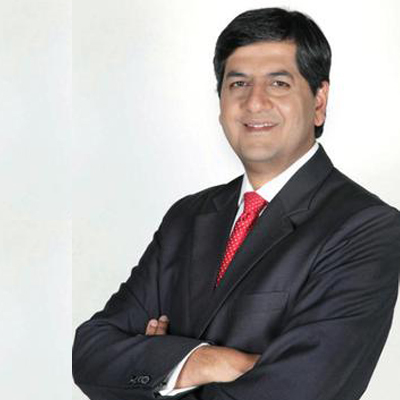
    In an industry where people change jobs every few years in order to quickly climb the ranks, his association spanning more than two decades with Dr Prannoy Roy’s NDTV Group speaks volumes about his commitment and stability. One of India’s leading journalists, he now helms NDTV Group as executive director and CEO. He is also the executive chairperson of the company’s online venture – NDTV Convergence.


    What’s more, even with the increasing managerial responsibilities, he manages to find time to anchor shows like Gadget Guru and The Big Fight and therein reflects his love for the Fourth Estate. He also flirted with the pen when he wrote his first fiction thriller titled The Srinagar Conspiracy in the year 2000. He is none other than Vikram Chandra.


    With many a feathers in his cap, Chandra is now well poised to take NDTV to newer heights with the expansion in the digital space. Tapping new avenues, NDTV now has its fingers dipped in multiple segments like wedding, fashion, auto, gadgets et al… and all under Chandra’s stewardship.


    In a chat with Indiantelevision.com’s Megha Parmar, Chandra sheds light on his journey, NDTV’s businesses ventures, cable TV digitisation, social media and the road ahead for the company.


    Read on for excerpts:


    NDTV is now expanding its digital footprint with gadgets, auto and retail. What drives you towards digital despite being a traditional broadcaster?


    This has been one of NDTV’s key strategies from a long time. Going digital is a key part of NDTV from several years. Way back in 1999 and 2000s, we started to believe that Internet is going to be a dominant part of our lives. While TV is still a core part of our DNA and plays an important role in everything that we do, we then wanted to expand into digital from a long time.


    Today, people can consume the same NDTV news though different streams. You can watch it on your TV, phone and the NDTV app. There are different ways to get the content that we are enabling for people. Going forward, we took a decision that there were individual niche areas where we want to make a major impact. That is what we are building on from the past couple of years; be it food, auto, wedding, retail and there are other things also coming into place.


    How much does digital contribute towards the company’s revenue?


    Digital’s contribution to the company’s revenues has been growing. It used to be around three – four per cent sometime back, but today because digital revenues are growing at a faster rate, digital accounts 20 – 22 per cent of NDTV’s revenue. The number is growing rapidly.


    What was the idea behind NDTV entering the online wedding market?


    Everything that we are doing in these areas has a very specific planned execution strategy. We thought it is a good proposition to be in and we got into it. We followed the same thing with Gadgets360 and the other portals. In weddings, we have found the same niche that we think is going to be very attractive. 


    Are revenues from television on the decline?


    The revenue from TV has grown over the years and will continue to grow. It’s just that the revenues from digital are growing at a faster rate almost at 15 per cent a year from a long period of time. While the share of digital revenue is increasing, it’s not that the TV revenues are declining.


    How long before revenue from digital will surpass that from television?


    We’re a long way from there. There is a lot of action going on TV also and we are also expecting regulatory changes to happen soon. If everything goes fine, the revenues from TV will also grow at a faster rate. There is no competition between the two. As long as the both are growing and are doing well, that is what we want.


    What are your plans with Gadgets360 and Auto? Do you see enough monetisation opportunities?


    Gadgets360 is by now a very dominant property. It is not just the number one gadget site in the country, it’s four or five times far than the number two in the entire world and has gained a very massive position. With Gadgets360, we tend to hold a position of considerable dominance in the space. If the people want to buy a gadget and want to know about anything related to it be it news or reviews, they have to refer to some or the other NDTV’s properties. It gives us a good position to build a strong community around the gadget loving and gadget dying population. We have now started to do some select launches of individual products that we think are interesting on the website. Many e-commerce transactions have also started to happen on Gadgets360 and the initial response has been quite astonishing. The first two three phones that we tried to sell were sold out in a month’s time, which surprised us. So now we are planning to do more such things, which will surprise us in many other ways.


    Auto is an area where we have built a powerful franchise over a long period of time. We have a good combination of content like carandbike.com and technology package combined with good engineering. This will help the auto portal also scale up both from the content side and from the transactions point of view.


    Do you see enough monetisation opportunities in Gadgets360 and Auto?


    Gadgets360 is doing well for us and has stayed ahead of our expectations. The monetisation is coming in. Once you have strong communication in various communities, it’s not just an attractive proposition from the revenue point of view but also from advertising. From an advertiser’s perspective, where else would you want to put your money than on a leading portal in that space? If you have a leading tech, auto or food content portal, that’s where you will want to put your money. Auto is also emerging successfully.


    What kind of investment is being pumped in for these new ventures?


    Well these have raised funds already. Food is the recent one, which has raised funds to the tune of $12 million roughly. Each of these have been visualised as an individual entity and they have a life of their own. Each of them have been done in a very entrepreneurial manner like start-ups. We don’t have the group dynamics playing; it’s all done by individual entrepreneurial team. They have raised their own money including some of the top investors.


    Can you share your overall plans for NDTV Convergence? It’s already the leader in its space but now there have been others joining in too.


    There will always be competition and that’s good. We are not scared of the competition. The more the activity and action in the field, the more it will help in growing the market. Today, only a small fraction of our population has access to the internet but the number of people who are going to use the service five years down the line is huge. It’s a vast untapped market. If more people come in, it will just expand the market. So far, with competition, it has not changed our position, market share or even the traffic that we get. We are in a comfortable position.


    In the age of clutter, competition & multiple start-ups mushrooming in the country, how does NDTV plan to have an edge over the others in the new areas that it has ventured into? 


    There are things that we do and focus on. So far we have managed the competition right. If you look at the page views or the traffic, it’s clear that there are a couple of clear leaders and while a few competitors are at some distance behind. We know how to manage the space.


    How do you see digitisation changing the game in India for broadcasters in terms of content, revenues, etc?


    Digitisation was always anticipated to be a game changer but to some extent we are disappointed. What is causing disappointment in the market is that the business models have not changed after digitisation.


    Digitisation was supposed to transform the business models for broadcasters where distribution revenues start to become a very major contributor, where subscription money starts to flow and also lower the reliance on advertising. That was the logic that digitisation was supposed to drive.


    There was also a strong economic business rational for this that in analog systems you only had 40 slots for 200 channels but now you have no capacity constraints. What we really would want to see in 2016 is concerting actions to be taken especially by the government and the regulators to try and persuade people that the model needs to change and formulate what the correct model should be.


    There is an effect on the content model as well. If subscription revenues were robust, then it sets up a business model where quality channels will have money to invest in quality content and a channel’s revenue will be based on subscription and not around chasing the advertising. Then what will be the need of content if one is chasing advertising? It’s not only chasing advertising; the channels are chasing TRPs, which is to some extent evident in the news space. They are clearly following tabloid type of news content, creating sensationalism and other things that are basically designed to get more TRPs. If you had a proper model wherein channels could make money from subscription, then people will not want to chase the TRP game. They will do good quality content and would gain some money from subscription.


    How much importance do you give social media? Do social media insights play a vital role in penning down your strategy?


    Social media is a very powerful tool and helps people connect with each other. There are obviously issues around and you should not think that social media is everything, which sometimes you pretend to do. Social media sometimes acts as a platform for the loudest voices but with a disproportionate scare. For a journalist too, it’s one of the first bases where you might get breaking news and information about what’s happening around you. But you do need to be careful about how you use social media and how you engage with social media. You should not believe on everything that goes around.


    Having said that, I don’t think social media plays any key role in driving our strategy back at NDTV.


    The credibility of a news story is now defined by a trending hashtag. If your story leads to a trending tag, it’s a successful story, otherwise it’s not. Is it a fair proposition?


    I don’t agree to that. It’s good to have your story trending but you can do a very successful strong and powerful story, which does not necessarily need to trend. It should not be the only metric. As a journalist, I think that it’s not necessary that something that drives more clarity or will trend means that it’s the only form of journalism you can do. You can still do very powerful journalism in various areas, which may not drive TRPs or trend on Twitter.


    Do trending #tags like presstitutes bother you?


    I think on social media a lot of the language and discourses have become disappointing. The language used, at times, is inappropriate. There are some people using abusive language. I think this is dangerous as at times you will find accusations, which aren’t true. People are straightforward and mature and also are definitely using social media for the right purpose but there is a possibility that they sometimes might pick up something, which is incorrect or not accurate and is a total fabrication. Someone will put something on social media and then it will be re-tweeted repeatedly and will be passed around, which is not true and will cause damage. 


    Social media has helped us in democratically using the voice of the people. Anyone can access it and express their views on anything, which should be rolled forward. But everything has a sad part attached to it and here the issue is about how we control the worst impulses of a few people putting something, which is invalid or not factual. We have to find a solution to how we can control such things from taking place on social media.


    Suppose a journalist is doing a hard hitting story like on child smuggling or malnutrition or about what is going in the Vidarbha region; these are not negative stories but are strong powerful development stories and may lead to some transformation happening in one place or other.


    We often hear people commenting on why we don’t publish positive stories or development stories. The answer is, these stories are done but are not the kind of social stories that will either make TRPs or be trending on Twitter. You do a great story on solar power and publish it; it will not work that much. But the story should be done. We should find ways to tweak the model that those stories are done on and are broadcast without anyone worrying about TRPs or trends.


    How important are ratings in the larger scheme of things?


    Ratings are a currency. TRPs will always reward a certain type of content over another type of content. That is one another intrinsic problem with the rating system. Now we are seeing new methods of measurement also coming out with a much larger monitoring system and a larger sample of people, which is interesting. At some point, I am sure BARC India and others will start monitoring digital data as many consume news not only from television but also from live streams.


    For a long time, NDTV has not been trying to sell on the basis of TRPs alone. I think the sales team has done a great job. Many of the powerful and important brands are keen to be a part of NDTV now.


    Is digital gradually taking over TV when it comes to news? What should TV players be doing to keep the audience intact?


    I don’t think it is going to be an either or situation… just as television and print have co-existed from such a long time. It’s not that after the invention of TV the newspapers shut down. Digital is another facet of it.


    We at NDTV are content providers and will provide content to  consumers in whichever format we can. It will be on TV, desktops, mobiles, etc. Wherever the consumer is consuming content, we will be there in that space. We are visible in most of the areas. So I think TV and digital will go together.


    From Doon School to journalism to Chief Executive Officer, how would you define your journey so far?


    Well, it’s been an interesting journey. I have worn so many hats so far. I have always enjoyed my years as a journalist and I still enjoy my anchoring. I get a lot of satisfaction especially from things like the special projects that I do and the big campaigns in which I play an active role as an anchor.


    Other than Gadget Guru and The Big Fight, I don’t get to do so much journalistically, which taps some area of regret within me. 


    What role has Dr Prannoy Roy played in your career?


    He has been a guide and a mentor in more ways than one. I went to TV because I saw Prannoy anchoring a show. That’s when I decided to make a career in the same field. He has been a role model for me and many of us. I wouldn’t have been a journalist if it wouldn’t have been for him.


    What can we expect from NDTV in the coming year?


    We are hoping for another change in the TV business model in 2016. On TV, we will continue to target growth and profitability. We will focus on our three basic aspects of TV, i.e. digital content, TV  and e-commerce business. Each have their own targets and matrices against which we will be evaluating them. We will go to the bottom line and get the profitability up as much possible.


    In digital content, we will try to consolidate our leadership position. On the e-commerce side, this is a crucial and critical year of all our new ventures that we are launching and we are hoping that the success that they have seen in the initial stage will turn into strong marketing business model.
  • NDTV Prime presents ‘Face of India’ in association with Getty Images

    NDTV Prime presents ‘Face of India’ in association with Getty Images

     MUMBAI: NDTV Prime in association with Getty Images, the world leader in visual communication, announces Face of India, the search for India’s best amateur portrait photographer. It is a first of its kind contest that will provide a platform to identify and nurture raw photography talent in the country.

     Face of India is an amateur and enthusiast photography award, dedicated to shining a spotlight on upcoming non-professional and student photographers. It has one mission; to discover and celebrate portrait photography and photographers in India. The last date for sending entries to be a part of the contest is 30th November, 2015.

     The entries will be judged by a renowned jury consisting of Aditya Arya, known for his advertising photography work; Ravi Dhingra, a versatile lifestylephotographer and the festival director for the Delhi Photo Festival; Dinesh Khanna,  a photographer who has been extensively involved in creating images for advertising and editorial features; Sanjay Nanda, a graphic designer by profession but a passionate photographer along with a bevy of international photographers will be focussing their lens on exploring new talent.

     By participating in the ‘Face of India Portrait Photography Competition’, you stand a chance of becoming a “Contributing Photographer for Getty Images”, giving you access to the company’s industry-leading experts and an opportunity to take your photography to the next level.

    Speaking on the contest NDTV chairperson Prannoy Roy said, “NDTV is proud to be associated with Getty Images to extend a platform for amateur photographers to display their talent and to be recognised across India.  Photography has become an increasingly popular format across every age group and a camera is no longer limited to a DSLR. The regular smartphone has also become a part of us to pursue our passions to explore new photographic styles. We are confident that this contest will find some real hidden heroes who will capture their talent in photography’’ 

     Getty Images, India director and country head Nitin Lakhotia said, “Imagery is the most spoken global language of our time, with more people creating more imagery than ever before. As the world-leading creator and distributor of imagery, Getty Images has a team of experts developing and directing the top photographers in the world. Getty Images passionately believes in nurturing local talent and giving people the opportunity to tell stories from their own personal experience, so we are proud and excited to partner with NDTV to give India’s amateur photographers the platform to demonstrate and amplify their talent. We look forward to working with and developing the unique talent that comes through.”

     The competition is open for Indian nationals only from around the world. Portrait is the theme for the competition as they are more complex than just a beautiful face, or a well-staged family photograph. A skillfully captured portrait has the power to move us through its expression and mood. Portraits speak of happiness, sadness or reveal a distant thought within the subject’s glance, an untold story is heard.

  • Bihar Elections: NDTV’s Prannoy Roy apologises for misguiding viewers

    Bihar Elections: NDTV’s Prannoy Roy apologises for misguiding viewers

    MUMBAI: With something as big as the Bihar elections taking place in the Indian political scenario, the masses are glued to their television screens on counting day.


    From being a reliable source of news to predicting trends, designing the cabinet to declaring a mandate before it actually happens, is what orchestrates the programming on news channels on the big day. It was the usual work flow, which followed in the newsroom this time too on 8 November.

     
    But minutes into the coverage, every dynamic was shattered as most news channels committed journalistic harakiri and had to reverse what they had been hurrahing about  merely half an hour into their coverage.
     
    In the initial stages psephologists’ announced that trends were pointing to a saffron wave and to a washout of the Grand Alliance led by Nitish Kumar, which led to ecstatic celebration at Amit Shah’s residence and BJP party headquarters.
     
    However, the celebrations did not last long and turned into agony when the actual results were announced.   The Grand Alliance emerged triumphant with the larger vote share of nearly 46 per cent compared to NDA’s 34 per cent.
     
    On a mission to provide exclusive and quick information to grab a pie of the massive viewership on counting day, news channels seemed highly confused half way through the day. The media went on to declare BJP and its allies as sweeping the election battle in Bihar… but alas… the counting sang a totally different tune. With confusion in the press rooms across the board, viewers were none the wiser.
     
    The father figure of Indian  television news broadcasting – NDTV chairman Dr Prannoy Roy felt that the Indian audiences and the diaspora that remained loyal to the news fraternity deserved an apology and explanation about the mayhem that took place.
     
    “Let me start with an explanation and an apology. Now, for over more than 30 years, NDTV has tried to be the hallmark of election news and analysis. With exit polls and opinion polls, we always made the point – even when we get it spot on – that there are statistical errors that shouldn’t make them be taken too seriously. You get it right, you get it wrong sometimes – that’s the life of a pollster,” explained Roy.
     
    The last time an error as big as this was made was about 32 years ago when NT Rama Rao won with a landslide. “Since then we’ve never made such a big error- we’ve made errors – but not as big as this one,” asserted Roy.
     
    So what was different this time? Why was there so much chaos? “This time, like before, we tried our best with a large sample size and we went to every single constituency – which meant we didn’t have to convert votes into seats. The sample, the poll was just taken directly. But the data from the fieldwork agency, normally a very reliable agency, was incorrect and this happens. And we are looking into why this went wrong. In any case, we take responsibility and we sincerely apologise,” is the answer that Roy gave to his viewers during his bulletin.
     
    Further explaining he asserted, “Secondly, on every Counting Day, all news channels get data from one agency. Again, a very globally respected agency. This morning, the first data that came in to all news channels was completely wrong. Our trend analysis was based on this data like it has been for 35 years – it’s never been wrong so far.”
     
    The data showed BJP ahead and that’s what the channel mirrored, confessed Roy. “The data, unfortunately, turned out to be incorrect. All news channels had to change their data half-way. Now, this has never happened before. And we’ve asked the agency for an explanation and we’ve heard from them that they are going to write and explain what went wrong once they look into the errors,” he said.
     
    Not just NDTV, almost every English national news channel got it wrong early on… from Times Now to even India Today. However, the Network18 group’s ETV and CNN-IBN clearly stated that the Grand Alliance was going to romp home.
     
    Will this abysmal show wake up the television news boys? Though there are many high decibel debates that have successfully managed to grab viewers’ and hence advertisers’ attention, election coverage still remains the largest source of revenue generation for news channels. So will this performance change those dynamics too? Questions are aplenty and only time will tell if new highs or lows are in the offing.
  • NDTV’s ‘The Buck Stops Here’ nominated for 2015 Emmy Award

    NDTV’s ‘The Buck Stops Here’ nominated for 2015 Emmy Award

    MUMBAI: In a first of sorts, NDTV 24×7’s The Buck Stops Here – Srinagar Floods Coverage has been named as one of the eight international nominees for the 2015 News & Current Affairs categories at the 2015 International Emmy Awards. 


    The show has been nominated for its week long ground reportage and broadcasts on the floods in Jammu and Kashmir. This is the first time that a channel from India has been nominated in the news category at the Emmy Awards.


    Reported and presented by Barkha Dutt, who has covered Jammu and Kashmir for nearly two decades, this special series of The Buck Stops Here saw the show travel to Srinagar and bring ground reports and interviews from the scenes of the unfolding tragedy. The team reported from some of the most inaccessible areas that could only be reached by boat, wading through water and jumping over walls and debris to bring the stories of horror and heroism in the worst floods to hit Jammu and Kashmir. 


    It also showcased the sterling courage of local Kashmiri volunteers and highlighted the role of the Military in the relief and rescue operations in a state, which has witnessed a two decade old insurgency in the Kashmir valley. 


    The eight nominees from seven countries and spanning four continents, Brazil, Canada, Germany, India, Malaysia, the Netherlands and the United Kingdom, will be presented medals at a ceremony on 27 September and winners will be announced in New York on 28 September, at a ceremony to be held at the Lincoln Center.


    The international winners will be recognized alongside their American news and documentary peers.  


    NDTV Group founder and executive co-chairperson Prannoy Roy said, “The nomination for news coverage by The Buck Stops Here team and Barkha at the 2015 International Emmy Awards is a matter of great pride for us at NDTV. Barkha is a wonderful journalist and we are honoured with the recognition given to her, her entire team and to NDTV.”


    “So very excited and honoured to be nominated for what is the world’s most coveted television award. It makes it even more special that this is the first time India has been nominated in this category. Am very proud of my team at NDTV that made this nomination possible working in extremely difficult conditions in flood ravaged Kashmir,” added NDTV Group consulting editor Barkha Dutt.

  • NDTV rubbishes media report questioning ownership

    NDTV rubbishes media report questioning ownership

    MUMBAI: News broadcaster New Delhi Television Ltd (NDTV) has not just been breaking news lately but has also been making headlines. The company has been asked to answer questions by the stock exchange regarding an article published by Moneylife on 9 June, 2015.


    The said article titled “Who Really Owns NDTV” has put the spotlight on the company with the matter even trending on Twitter after the news came out. So much so that it also caught the attention of the Bombay Stock Exchange (BSE), which sought clarification from the publicly listed company on the same.


    According to the report by Moneylife, a Mukesh Ambani group entity had taken control of NDTV on the pretext of a loan agreement, way back in 2009.


    Speaking to Indiantelevision.com, NDTV executive vice chairperson KVL Narayan Rao refuted all allegations saying, “The promoters, i.e. Dr. Prannoy Roy, Radhika Roy and RRPR Private Limited (“RRPR”), continue to hold the majority shareholding of NDTV, which amounts to 61.45 per cent of the total shareholding of NDTV. There has been no change in the above shareholding since August 2008. Further, Dr. Prannoy Roy and Radhika Roy continue to hold the entire shareholding of RRPR since its incorporation.”


    Rao also added that there has been no change in the exercise of voting rights by the promoters with respect to their shareholding in NDTV. According to the records of NDTV, the voting rights in connection with the shares have throughout been exercised by the promoters in the case of Dr. Prannoy Roy, Radhika Roy and RRPR.


    “Therefore, NDTV would like to clarify that the allegations raised in the article with respect to a change in the control/ ownership of NDTV are entirely without any merit. NDTV is mindful of its obligations under Clause 36 of the Listing Agreement,” he said.


    It may be recalled that just last year Ambani’s Reliance Industries bought over Raghav Bahl’s Network 18 Media and Investments Ltd, which has under its belt TV news channels namely CNBC TV18, CNN-IBN and CNN Awaz amongst a host of other businesses. NDTV, on the other hand, competes with Network 18 with its own bouquet of news channels namely NDTV 24×7, NDTV India and NDTV Profit.


    A source from the channel further said, “If NDTV has to take any loan, we have to inform the BSE. We do not give importance to every news piece.”

  • NDTV inks deals with multiple potential investors for e-commerce ventures

    NDTV inks deals with multiple potential investors for e-commerce ventures

    MUMBAI: The Prannoy Roy led New Delhi Television Ltd (NDTV) has signed preliminary deals with certain potential investors for its e-commerce ventures in the fields of food, auto, and gadgets.


    In the auto sector, portals like CarDekho.com, CarWale.com, CabKhabri.com and Gaadi.com amongst others operate in the Indian market. In the food sector too, portals for pre-cooked and uncooked food like travelkhana.com,merafoodchoice.com, Getlunchin.com and biryani360.com have mushroomed recently. On the other hand, portals specifically selling gadgets are far and few.


    An established player in the news content business, NDTV has ample online content around these segments in NDTV Gadgets (gadgets.ndtv.com), NDTV Food (food.ndtv.com) and NDTV Auto (auto.ndtv.com). NDTV’s e-commerce ventures in these specific areas will only stand to benefit from the backing it will receive from the network.


    While the company has signed term sheets with potential investors in the food, auto and gadgets sectors, along with its subsidiary company NDTV Convergence, it did not divulge names of the companies that the deals have been signed with.


    It may be recalled that in March this year, NDTV’s board had given in principle approval for setting up of online ventures including digital transactions.


    In a filing on the Bombay Stock Exchange, NDTV said, “The term sheets are non-binding and are subject to the parties agreeing upon and executing the definitive agreements, which will include detailed terms and conditions in relation to the proposed transactions.”


    The company said that the proposed transactions would be subject to various conditions precedent to be specified in the definitive agreements, including due diligence, receipt of requisite corporate authorizations, approvals and regulatory approvals.


    On the e-commerce front, NDTV through its subsidiary NDTV Ethnic Retail already operates Indianroots, which sells ethnic wear from various Indian designers. The venture recently also raised $5 million in funding from the Mumbai-based KJS Group.

  • NDTV’s e-commerce venture Indianroots.com raises Rs 32 crores

    NDTV’s e-commerce venture Indianroots.com raises Rs 32 crores

    MUMBAI: NDTV’s e-commerce venture IndianRoots.com has received fresh funding of approximately Rs 32 crore ($5 million) from Jaipur-based KJS Group, which in turn values the firm at Rs 545 crore ($85 million).


    The company, which falls under NDTV Ethnic, will use the funds to scale up the portal’s logistics and delivery mechanisms, and expand its marketing activity with the aim to be the market leader in Indian fashion in the year ahead.


    Launched in mid-2013, Indianroots.com showcases more than 100 designers and over 700 brands on its curated online marketplace. It has a worldwide customer base, with India and USA being the largest markets.


    “With the fresh investment in the business and the complete backing of the NDTV Group, IndianRoots will be able to push harder in achieving its plans for the year. We look forward to our partnership with the KJS Group in strengthening the IndianRoots venture,” said NDTV co-chairperson Prannoy Roy.


    NDTV Ethnic achieved gross merchandise value (GMV) of Rs 61 crore in the year ending 31 March, 2015, which was a twelvefold jump over the previous year.


    Speaking about the company’s investment, KJS Group chairman Kamaljeet Singh Ahluwalia and director Karanpal Singh said, “Given our interest in the e-commerce sector, partnering with a respected and credible organisation such as NDTV was the obvious choice for us. Given the clear positioning of IndianRoots and its achievements in the Indian fashion domain, we are confident that the business has a great growth story ahead.”

  • Prannoy Roy to receive RedInk Lifetime Achievement Award

    Prannoy Roy to receive RedInk Lifetime Achievement Award

    MUMBAI: NDTV Group executive co chairman Dr Prannoy Roy has been awarded the 2015 RedInk Award for Lifetime Achievement for Excellence in Journalism for his consistent and pioneering contribution to news television in India. Dr Roy will be honoured for his service to journalism at a glittering ceremony on Thursday, 30 April in Mumbai at the Jamshed Bhaba Auditorium, NCPA.


    Dr Roy along with his wife and journalist Radhika Roy in 1988, were the first to set up a television news production company called New Delhi Television, now called NDTV. In later years, Dr Roy made a mark for his incisive and pioneering coverage of election news and changed the way people consumed TV news with his ground-breaking programmes such as ‘The News Tonight’ and ‘The World This Week’. After years of producing the news for Star News, Dr Roy launched his own broadcasting network with NDTV 24X7, NDTV India and other channels in 2003. NDTV, one of the largest news networks in the country today, has set up benchmarks for good, ethical and no-frills news coverage.


    The RedInk Award for ‘Journalist of the Year’, instituted for the first time, has gone to Sreenivasan Jain of NDTV for his consistent investigative work epitomized in his series ‘Truth versus Hype’ and other programmes. Times Now editor in chief Arnab Goswami was selected as the ‘Impact Editor’ of the Year for his ability to capture eyeballs and expand audience reach with his ‘News Hour’ show. Scroll.in will be awarded the ‘News Start-up of the Year’ for scaling up its influence rapidly as an alternative source of news and features.


    Judging for the RedInk Awards, which includes as many as 10 categories have just been completed, and as many as 24 journalists who have produced outstanding and impactful stories in calendar 2014 will also receive awards along with Dr Prannoy Roy, Sreenivasan Jain, Arnab Goswami and Scoll.in on 30 April at the NCPA.


    Judging process proved to be a herculean task with over 800 entries in the print/online category and nearly 250 stories from television journalists. Each of the categories – politics, crime, environment, sports, human rights, etc – had a dedicated jury of senior persons with domain knowledge assigned to judge the entries. A special curator was also assigned to sift the large number of entries in each section and guide the judges.  

  • Barkha Dutt to step down as NDTV group editor

    Barkha Dutt to step down as NDTV group editor

    MUMBAI: After a stint spanning two decades, Barkha Dutt is now stepping down from her post as NDTV group editor to set up her own multimedia content company and policy group.


    Dutt will continue as consulting editor for the news network and will continue as host of her two on-going shows namely The Buck Stops Here (daily) and We The People (weekly).


    In an email to its employees, a copy of which is with Indiantelevision.com, New Delhi Television founders Prannoy and Radhika Roy wrote, “She (Barkha) will also be available as always for analysis and inputs on big news events and stories. While her TV relationship with NDTV remains unchanged, in her new role she will be setting up her own multimedia content company and policy group. We have literally seen Barkha grow from a child to an adult professional and look forward to our close bonds only strengthening further as she embarks on this new venture.”


    Having made her name reporting the war in Kargil, Dutt became one of NDTV’s most prominent faces as it went from a content provider for Doordarshan in its early days to being a media conglomerate that it is today.


    Dutt was 23 years old when she joined NDTV as a young reporter cum producer. Having won several awards in her 20 year stint with the channel, Dutt has worn several hats like: journalist, anchor and editor.

  • Media gives AAP an upper hand as Delhi goes to poll

    Media gives AAP an upper hand as Delhi goes to poll

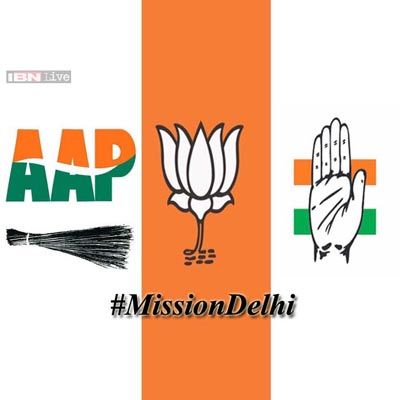
    MUMBAI: With 12 million voters, 70 seats and four major national parties contesting elections, New Delhi has become the focal point for all the news channels for the next four days. The entire news fraternity is covering the election with esteem supervision, with not even a single incident staying unreported. Interviews, analysis, opinion polls, poll of polls, panel discussions and debates are the daily offerings.


    Narrating the political significance of Delhi, NDTV co-founder Prannoy Roy during his show ‘Battleground Delhi’ where he was joined by Shekhar Gupta and Dorab Soopariwala said, “Delhi election is a big big election and the whole question is will there be a continuation of the impact of Modi juggernaut or the Modi juggernaut will hit the pot holes and take a setback.”


     The growth of the Aam Aadmi Party (AAP) and the downfall of Indian National Congress (INC) have made life difficult for Bharatiya Janata Party (BJP). No clear picture is evolving from the battle ground and that makes pollsters’ job extremely difficult. Soliciting tweet came from veteran journalist Rajdeep Sardesai, “Suprabhatam! Feel sorry for pollsters. get it wrong, will be accused of being bazaaru if they get it right, will be called tukka!” is what he tweeted.


     When asked about the relevance of opinion polls and exit polls BAG Network chairperson and MD Anuradha Prasad told Indiantelevision.com, “Election is a festival of democracy and the surveys are a part of it. The opinion polls do leave a small impact on voters mind.” On the credibility quotient Prasad added, “We have our own team of surveyors consisting of 70 to 80 specialists who are working hard day and night to get the most relevant figures.”


    ABP News managing editor Milind Khandelkar added, “We don’t do any on field survey; Ac Nielsen conducts the survey for us which we telecast on all of our channels. We have a distinguished panel consisting of different expertise, and we analyse the numbers to come to a relevant conclusion.”


    With elections, comes opinion polls and this time, like every other time, news channels have given out their verdict much before the counting day. As per the ABP + Nielsen opinion polls, Delhi could see a hung assembly with AAP closest to victory with 35 seats followed by BJP with 29 and Congress with 6 seats.


    NDTV on its analysis predicts an absolute majority for AAP with 37 seats, followed by BJP with 29 and Congress with 4.


    India Today analysis also gives an upper hand to AAP. The venture predicted 38 – 46 seats for AAP, 19 – 25 seats for BJP and 3 – 7 seats for Congress.


    The IMRB survey has got a different data. Its data indicated absolute majority for BJP with 36 seats followed by AAP with 29 and Congress with 4.


    The ET/ TNS survey gives Kiran Bedi lead BJP an upper hand with 36 – 40 seats. AAP is predicted to get 28 – 32 while Congress was restricted to mere 3 by the surveyors.


    Arvind Kejriwal tweeted, “Sources- BJP workers have given up in many places, similar to how cong workers gave up in last elections. They are completely demoralized.”


    Prime Minister Modi urged the youth to cast their votes by tweeting, “As Delhi votes today, urging voters to go out & vote in large numbers. I particularly call upon my young friends to vote in record numbers.”


    At the time of filing the report, 64 per cent voters had successfully registered their opinion.