Tag: Pranab Mukherjee

  • It came at the right time – in the birth centenary year of Dadasaheb Phalke: Gulzar

    It came at the right time – in the birth centenary year of Dadasaheb Phalke: Gulzar

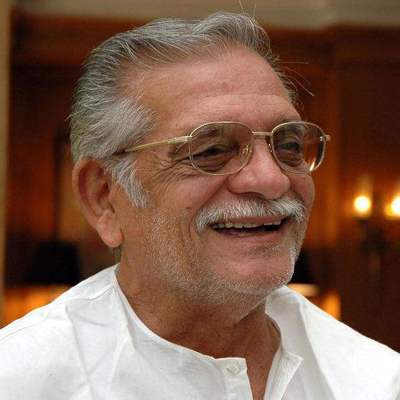
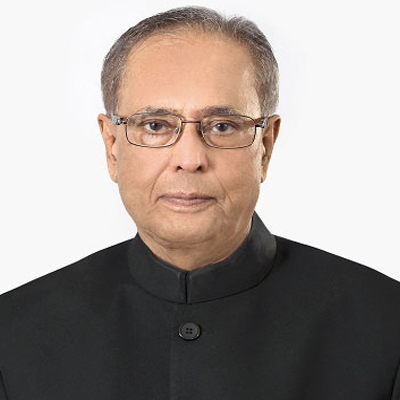
    NEW DELHI: Later this year, eminent director-screen writer-lyricist Gulzar will be honoured with the prestigious Dadasaheb Phalke Award (2013) by President Pranab Mukherjee along with the National Film Awards (2013). Gulzar will be the third lyricist after Majrooh Sultanpuri (1994) and Kavi Pradeep (1998) to win the award.


    According to Information & Broadcasting Ministry Secretary, Bimal Julka, the seven-member selection committee was unanimous in its recommendation of Gulzar for what is the nation’s highest award in cinema.


    “I am particularly happy since the choice was made by an independent committee, though set up by the Government,” said Gulzar. While many feel the honour was bestowed on him rather late, he only said, “This was special, as it came at the right time- in the birth centenary year of Dadasaheb Phalke.”


    An institution into himself, Gulzar has not only penned several Hindi film songs and dialogues but also directed a clutch of notable films. As one of the greatest authorities in the history of song in Indian cinema, he has given talks on the subject, both in India and abroad. Often accused of selecting other people’s novels/stories for adaptation, there’s no denying his talent for optimally adapting the same to Indian/Hindi film audiences.


    Biography


    Gulzar was born as Sampooran Singh Kalra to Makhan Singh Kalra and Sujan Kaur in Dina, Jhelum district, in undivided India, in what is now Pakistan. Sampooran started off as a car mechanic in a garage in Mumbai but went on to become a writer, assuming the pen name, Gulzar Deenvi. His father rebuked him for becoming a writer saying, “As a writer, you will have to depend on your brothers”. He started his film career as a lyricist, going on to write dialogues and screen plays, and later, even directing many critically acclaimed films.


    Gulzar began as a songwriter with music director Sachin Dev Burman in the movie Bandini (1963) with the song, Mora Gora Ang Lai le picturised on Nutan. Gulzar’s most successful songs as a lyricist came out of his association with S D Burman’s son, Rahul Dev Burman, whom he described as the anchor in his life. Gulzar’s lyrics were special in that they formed part of the narrative. As a lyricist, he also had award-winning associations with music directors Salil Chowdhury (Anand, Mere Apne), Madan Mohan (Mausam) and more recently Vishal Bhardwaj (Maachis, Omkara, Kaminey), A. R. Rahman (Dil Se.., Guru, Slumdog Millionaire, Raavan) and Shankar–Ehsaan–Loy (Bunty aur Babli).


    Some of Gulzar’s more notable songs are: Maine Tere Liye Hi from the film Anand; Bole Re Papihara Papihara from the film Guddi; Koii Hota Jisko Apna, a nostalgic number from Mere Apne; Aanewala Pal Janewala (Golmaal); Sun Sun Sun Didi (Khubsoorat); Ae Zindagi Gale Laga Le (Sadma); Roz Roz Aankhon Tale (Jeeva); Tum Aa Gaye Ho Noor and Tere Bina Zindagi Se from the film Aandhi; Saare ke saare gaama ko lekar gaate chale (Parichay); and Dil Dhoondhta hai (Mausam).

    Gulzar won international fame when he was awarded the prestigious Oscar Award (with A R Rehman and Sukhwinder Singh) for writing the Best Original Song  Jai Ho from the film, Slumdog Millionare. He was also honoured with the Grammy Award for Best Song Written for a Motion Picture, Television or Other Visual Media.


    Apart from films, he has written ghazals for ghazal king (late) Jagjit Singh’s albums “Marasim” and “Koi Baat Chale”. Both albums were a great success.


    For the peace campaign (Aman ki Asha) jointly flagged off by leading media houses from India and Pakistan, he wrote the anthem “Nazar Main Rehte Ho”, which was recorded by Shankar Mahadevan and Rahat Fateh Ali Khan.


    Gulzar’s poetry is partly published in three compilations: Chand Pukhraaj Ka, Raat Pashminey Ki and Pandrah Paanch Pachattar (15-05-75).


    Gulzar also wrote dialogues and screen plays for films like Aashirwad, Anand, Khamoshi and more. His short stories are published in Raavi-paar (also known as Dustkhat in Pakistan) and Dhuan (smoke). He has penned dialogues and lyrics for several Doordarshan serials including Jungle Book, Alice in Wonderland, Guchche, Hello Zindagi, Potli Baba ki and more recently, the children’s audio-book series, Karadi Tales.


    Fluent in several languages and dialects, Gulzar has written in Braj Bhasha, Khariboli, Haryanvi and Marwari though he primarily writes in Hindustani (Hindi-Urdu) and Punjabi.


    He forayed into direction with Mere Apne(1971). The film was a remake of Tapan Sinha’s Bengali film Apanjan (1969), where Meena Kumari played the lead role of Anandi Devi, an old widow caught between the local fights of unemployed and tormented youngsters. Anandi Devi’s death in one of the fights makes the youth realise the futility of violence. The film was rated “Above Average” at the Box Office.


    He then directed Parichay and Koshish, with the former based on a Bengali novel Rangeen Uttarain by Raj Kumar Maitra and inspired by the Hollywood classic, The Sound of Music. Whereas Koshish, written by Gulzar, depicts the struggle of a deaf and dumb couple. Sanjeev Kumar won the National Film Award for Best Actor for his performance in the film. The year 1973 saw another directorial venture from Gulzar named Achanak, inspired by the real-life sensational 1958 murder case K M Nanavati vs State of Maharashtra. The story writer, Khwaja Ahmed Abbas, earned a Filmfare nomination for Best story.


    Gulzar’s Aandhi, based on the Hindi novel “Kaali Aandhi” by the renowned writer Kamleshwar, told the story of a separated couple against the backdrop of politics and was often believed to be based on the story of Indira Gandhi though it was actually based on the life of Tarkeshwari Sinha. Along with various wins and nominations, the film also won the Filmfare Critics Award for Best Movie. During the emergency in 1975, the film was banned from theatres. Gulzar’s next, Khushboo, was inspired by Sharat Chandra Chattopadhyay’s Pandit Mashay. While his other film, Mausam, won the National Award for second Best Feature Film, Filmfare Best Movie and Filmfare Best Director awards, along with other six Filmfare nominations. It was loosely based on the story “Weather” from the novel, The Judas Tree, by A.J. Cronin. Sharmila Tagore for her roles of Chanda and Kajli received The Silver Lotus Award at the 23rd National Film Festival.


    Gulzar’s 1982 film Angoor was taken from William Shakespeare’s play, The Comedy of Errors. In his Maachis, a young Punjabi boy becomes a terrorist only to realise the futility of it. While Hu Tu Tu dealt with corruption and one man’s fight against it. Flashback has been an important tool of narration in Gulzar’s films including Aandhi, Mausam, Ijaazat, Machis and Hu Tu Tu among others.


    On the small screen, Gulzar created the popular series Mirza Ghalib and Tahreer Munshi Premchand ki among others. 


    Gulzar, who will turn 80 on 18 August this year, was awarded the Sahitya Akademi Award in 2002 and the Padma Bhushan in 2004. He has won a number of National Film Awards and 20 Filmfare Awards. In 2012, he received the Indira Gandhi National Integration Award.
  • Kamal Haasan honoured with Padma Bhushan, Vidya Balan with Padma Shri

    Kamal Haasan honoured with Padma Bhushan, Vidya Balan with Padma Shri

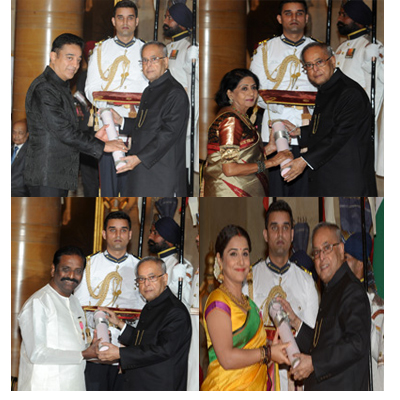
    NEW DELHI: Acting genius Kamal Haasan, renowned vocalist Parveen Sultana and popular lyricist and poet Vairamuthu have been awarded with the Padma Bhushan while the versatile Vidya Balan has been honoured with the Padma Shri by President Pranab Mukherjee.


    The dignified ceremony held at Rashtrapati Bhavan was attended by Vice President M Hamid Ansari, Prime Minister Manmohan Singh and Home Minister Sushil Kumar Shinde, among others.


    Renowned ghatam percussionist T H Vikku Vinayakram also received the Padma Bhushan, which is the third highest national civilian award.


    Recipients of the Padma Shri include famed Bangla actor Sabitri Chatterji, actor Naina Apte Joshi, celebrated theatre director Bansi Kaul and filmmaker Sooni Taraporevala.


    Others awarded include popular humour poet and satirist Ashok Chakradhar, Manipuri dancer Elam Indira Devi, Odissi dancer Geeta Mahalik and squash player Dipika Rebecca. 


  • There is a need for self-correcting mechanisms in media: Pranab Mukherjee

    There is a need for self-correcting mechanisms in media: Pranab Mukherjee

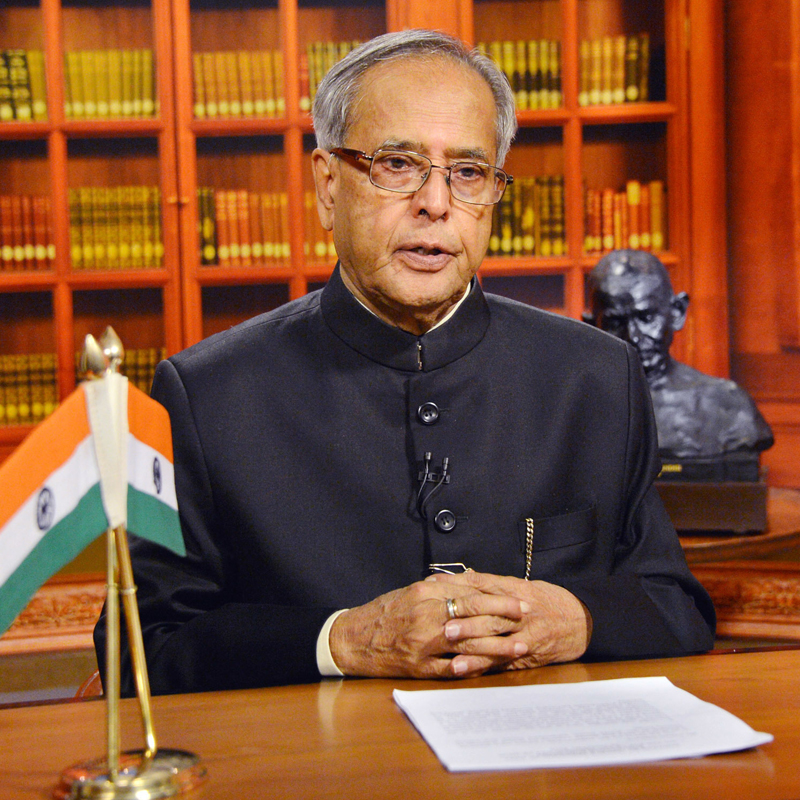
    NEW DELHI: President Pranab Mukherjee today said there was need for self-correcting mechanisms to check ‘aberrations’ like the malaise of paid news in the media.


    Inaugurating the Platinum Jubilee celebrations of the Indian Newspaper Society (INS), the President said, “It is distressing to note that some publications have resorted to “Paid News” and other such marketing strategies to drive their revenues.”


    The temptation to “dumb down” news should also be resisted, he said, stressing that the nation faces critical challenges that go well beyond the pressure of ‘Breaking News’ and immediate headlines. While newspapers must continue to be effective raconteurs, they must also be visionary nation builders.


    But he said India’s ‘vast, varied and vibrant media is a national asset and the media as a whole not only keeps people informed but also performs a very crucial function of presenting ideas and alternatives in the domain of policy formulation and implementation.’


    The President said these are changing times and it is not possible for newspapers to be spared from the consequences of the evolution of ideas and the embrace of technology. It is essential for newspapers to be alive to the challenges of technology and to harness responsibly the opportunities that present themselves.


    He said the influence, credibility and quality of the Indian media is well recognised. Newspapers must be keepers of the conscience of the country. They have to be active participants in the continuing endeavour to nurture a democratic republic committed to achieving justice and fundamental freedoms for all citizens. Journalists must bring to public notice the array of ills and deprivations that continue to beset large numbers of our people – be it malnourishment, continuance of discriminatory practices against sections of society, particularly dalits, or the burdens and tragic consequences of indebtedness. They must shape and influence public opinion even as they provide objective and balanced coverage of news.


    He said the Indian Newspaper Society has over the years met the challenges of time even as it has represented the most influential of India’s newspapers and periodicals. “75 years ago, the world was a very different place. Newspapers of the time not only survived the shortages that war brought in its wake, but also engaged themselves in the difficult task of informing people of the momentous events of a contentious period in our history. It took resolve, vision and a sense of destiny on the part of the founding fathers to have formed a society that could take up issues of common interest for its members. INS members have played a vital role in nurturing a free Press which is a critical component of our democracy,” he added.


    The President stressed that over the years, INS members have informed society and promoted debate on the important questions that confront the nation. “Be it the ravages wrought by war or those inflicted by the man-made Bengal famine, the trials and tribulations of a nation torn by partition or the building of modern day India, newspapers have played a crucial role in educating Indians and giving expression to the diversity of views in our society, upholding thereby the fundamental right to freedom of speech and expression,” he concluded.   

  • President, PM condole passing away of legendary actress Suchitra Sen

    President, PM condole passing away of legendary actress Suchitra Sen

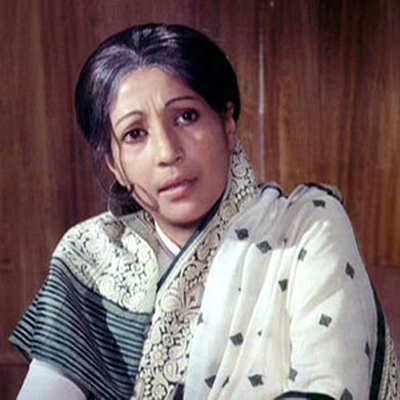
    NEW DELHI: President Pranab Mukherjee and Prime Minister Manmohan Singh have condoled the passing away of legendary actress Suchitra Sen.


    In a condolence message to her daughter, Moon Moon Sen, the President has said, “In the passing away of Smt. Suchitra Sen, the film industry has lost a highly talented and acclaimed actress who played memorable roles in a number of Bengali as well as Hindi films. She shall always be remembered by her countless fans for her versatile acting which brought life into the celluloid characters she played in films.”


    Sen was a legendary actress who ruled Bengali cinema for decades. Her powerful roles in films were highly acclaimed and will be remembered by generations of film lovers. During her illustrious career she was not only a recipient of Padma Shri Award, but also became the first Bengali actress who was awarded ‘Best Actress Award’ at an international film festival. Her sad demise is a huge loss to the Indian film industry, particularly Bengali cinema”.


    In his message, the Prime Minister said, “Ms. Sen had carved a special niche in the hearts of millions of Indians through her graceful cinematic presence. She was one of the first Indian artistes to win an international award at Moscow in 1963. Ms Sen’s versatility and range of performances, in a career spanning nearly three decades, mark a unique contribution to Indian cinema, and to Bengali films in particular.”

  • AIR, DD to beam President’s address and PM flag hoisting on 15 August

    AIR, DD to beam President’s address and PM flag hoisting on 15 August

    NEW DELHI: All India Radio and Doordarshan will beam the message of President Pranab Mukherjee to the nation on the eve of Independence Day on 14 August.


    The flag hoisting ceremony and Prime Minister Manmohan Singh’s message to the nation from the ramparts of Red Fort will also be beamed live on 15 August.


    While the President’s address will be from 7:00 pm on 14 August in English followed by a Hindi translation, the Independence Day programme will commence from 06:25 am.


    AIR will broadcast both the events on all its medium wave channels including the Indraprastha channel and Vividh Bharati, and also on the two FM channels, FM Gold and FM Rainbow, apart from all regional kendras.


    The regional channels will broadcast translations in regional language of the President’s broadcast. Doordarshan will telecast the events on DD National, DD News, DD Bharati, and DD Sports.


    Both AIR and DD will also beam a round-up of the events all over the country later in the evening on 15 August.

  • Cinema must help build the moral compass of the nation and portray positive societal values; Pranab Mukherjee

    Cinema must help build the moral compass of the nation and portray positive societal values; Pranab Mukherjee

    NEW DELHI: President Pranab Mukherjee has said that cinema must be used to portray positive societal values for building a tolerant and harmonious India.

    Referring to recent criminal events involving women and children, he said the role of the film industry was very crucial in building the moral compass of the nation. He said the film industry ought to take steps to ensure that cinema was morally energising.

    Mukherjee was speaking after he conferred the National Film awards for the year 2012 in various categories at the 60th National Film Awards Function held at the Vigyan Bhawan. The award ceremony coincided with the release of the first Indian feature ‘Raja Harishchandra‘ by the father of Indian cinema D G Phalke on 3 May.

    He lauded the initiatives taken by the information and broadcasting ministry including single window clearance for shooting the films in India.

    Lauding the recipient of the highest award in cinema, the Dadasaheb Phalke award, he said actor Pran had commenced in films as a hero in 1940 but then moved on to become the ‘quintessential gentleman villain‘.

    There was standing ovation as the name of the 93-year old Pran Sikand, who could not attend because of illness, was announced.

    I&B minister Manish Tewari said the presence of films with innovative themes at the 60th NFA had proved that the Indian film industry was playing a proactive role in articulating issues and prejudices that had been historically embedded in our society.

    Indian cinema, Tewari added, had been the mirror of the nation‘s milieu and had an incisive influence on the evaluation of society. Internationally, Indian cinema had evolved to cater to the taste of international audiences. A unifying synthesis, Indian films had been able to institutionalise and project India‘s soft power outside the country. The film industry, he said, had grown despite and in spite of the government.

    He announced that the government had decided to institute an annual centenary award from this year to be given to a personality or institution recognising a paradigm transformation in film making and honouring individuals or films that had profoundly influenced contemporary, socio cultural evolution.

    He also announced that the Films Division Auditorium in Delhi was being re-furbished to convert it into a hub for alternate cinema. The Auditorium which was being used for screenings only on special occasions would be modelled along the lines of Prithvi Theatre in Mumbai to not just screen documentaries, small budget films but also provide a forum for film makers and connoisseurs to discuss the film making.

    He referred to the justice Mudgal Committee which was taking a fresh look of the Cinematographic Act 1952, and the Committee would aim to find a golden mean between creative essence and aesthetic sensitivity.

    The highlight of the evening was the release of postal stamps of 50 iconic personalities of Indian cinema by the President to commemorate the century long journey of Indian cinema. The film personalities depicted in stamps include Ashok Kumar, Bhalji Pendharkar, Durga Khote, Dev Annad, Yash Chopra, Smita Patil, Rajesh Khanna, Shammi Kapoor, Suraiya, Geeta Dutt, Sohrab Modi, Tapan Sinha, C.V. Sridhar and Bhanumathi.

    Speaking on the occasion, communication and information technology minister Kapil Sibal said the Department of Posts had given a fitting tribute to the powerful medium by issuing 50 new stamps.

  • Dimple Kapadia collects Padma Bhushan award of Rajesh Khanna

    Dimple Kapadia collects Padma Bhushan award of Rajesh Khanna

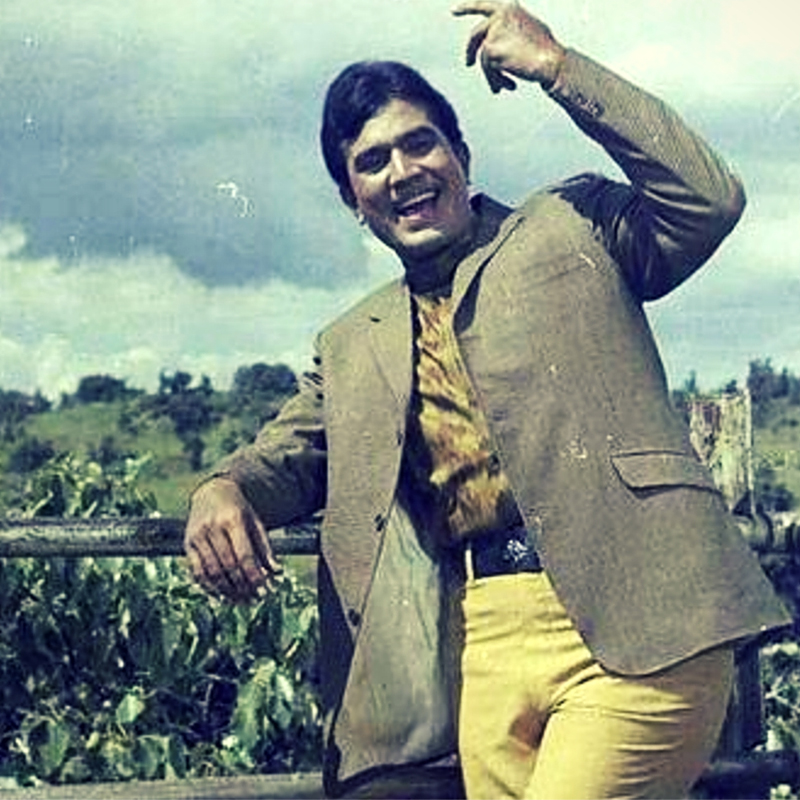
    MUMBAI: India‘s first superstar Rajesh Khanna was posthumously awarded Padma Bhushan, India‘s third-highest civilian award this morning.


    The award was collected on his behalf by his wife Dimple Kapadia.


    Khanna died on 18 July last year.


    Padma Bhushan award was also posthumously conferred upon comedian Jaspal Bhatti, who expired last October.


    Among others who received awards were industrialist Adi Godrej and artist S H Raza received his Padma Vibhushan, India‘s second-highest civilian award.


    Wrestler Yogeshwar Dutt, shooter Vijay Kumar, Sholay director Ramesh Sippy and actor Nana Patekar received the Padma Shri. Meanwhile, Boxer Mary Kom was awarded the Padma Bhushan but was not present at the ceremony to collect it.


    The awards were handed out by President Pranab Mukherjee.


    The first batch of awards were handed out on 5 April when actresses Sharmila Tagore and Sridevi along with cricketer Rahul Dravid collected their awards.

  • GoM on paid news to meet soon: Soni

    GoM on paid news to meet soon: Soni

    NEW DELHI: A Group of Ministers (GoM) will shortly meet to examine the report of the Press Council of India on paid news, according to Information and Broadcasting minister Ambika Soni.

    Soni informed the Rajya Sabha today that the GoM was constituted in January last year but could not meet before September due to various reasons including the fact that Panel chairperson and Finance Minister Pranab Mukherjee was tied up in other matters.

    The Press Council had submitted a report on paid news to the government for necessary action after a sub-committee studied the issue. Although the Government had initially released only a short summary of the report, it had later placed the report on the Council’s website following an RTI application.

    The Minister said the GoM was set up in view of the “wider ramifications” of the recommendations, to prepare a comprehensive policy and institutional mechanism to address the issue.

    The PCI has recommended amendment to the Representation of the People’s Act 1951 to make incidence of paid news a punishable electoral malpractice and suggested that the PCI must be fully empowered to adjudicate the complaints of “paid news” to give final judgment in the matter among others.

    The report has also suggested measures to curb the menace of paid news like setting up of a special cell in the Election Commission for action on such complaints and self-regulation by media and awareness generation.

    PCI has cautioned the media to refrain from publishing news masquerading as advertisement and vice-versa.

    The Election Commission has also taken cognizance of this malaise and initiated steps to check incidence of election time paid news, which includes transparency in the money spent by candidates on advertising, a ban on exit and opinion polls until the last round is over, and similar other measures.

  • Film industry split on stopping work on 23 February

    Film industry split on stopping work on 23 February

    NEW DELHI: Fissures have started appearing amongst the film fraternity on the issue of striking tomorrow to protest the 10.3 per cent service tax, with the Film Federation of India, the apex body of the film industry, reiterating that the plans remain unchanged and the Film and TV Producers Guild wanting that the strike should be deferred.


    FFI President Vinod K Lamba told indiantelevision that he did not give any credence to statements being made by some filmmakers in Mumbai that the strike had been called off, and also regretted that some TV news channels had been playing up these statements. He also questioned the locus standii of the persons who had been saying that the strike had been called off.


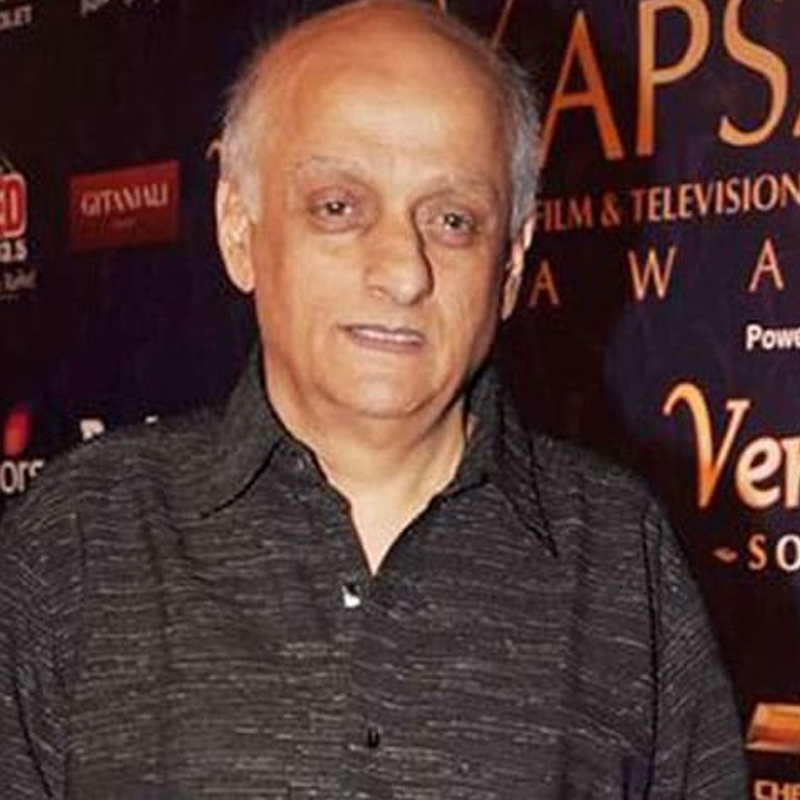
    However, Guild Vice-President Mukesh Bhatt told indiantelevision.com in Mumbai that he wished the best to Lamba, but “let me tell you more than 90 per cent of film folks including the film associations across India and the Multiplex Owners Association are with us and will not take part in the strike tomorrow”.


    Lamba said the FFI was an umbrella body comprising various industry associations including exhibitors, distributors, producers and single screen cinemas, and had taken a unanimous decision to go ahead with the strike. “The result would be there for everyone to see day after tomorrow. My only plea to people not participating in the strike is that they should not sabotage the protest.”


    He said though Finance Minister Pranab Mukherjee had given a patient hearing in a meeting over the weekend, he had declined to give any assurances. However, Bhatt was categorical that Mukherjee had wanted the film industry to wait till after the Budget before taking any decision.


    A Guild spokesperson also said messages had been received to the effect that some states like Andhra Pradesh would not be joining the strike. Eminent Tamil filmmaker and FFI Committee member L Suresh is also understood to have advised deferment.


    Earlier yesterday after a day-long meeting chaired by Lamba, it had been announced that it was necessary for all film bodies to join the protest to voice their anger to the government.


    Lamba had told a press meet that apart from Mukherjee, the Information and Broadcasting Minister Ambika Soni had also met representatives of the industry over the weekend but both had been non-committal.


    Apart from the fact that the industry is already over-burdened by other taxes like the Entertainment Tax, the Show Tax, and the state-imposed taxes, it has to fight the menace of video piracy, he added.


    The FFI has been asking the Government to waive the tax. But Lamba said: “To its utter distress, the Finance Ministry through a circular of 13th December 2011 clarified that the tax was applicable under Finance Act.”


    He said that imposition of the service tax would amount to double taxation since the states imposed their own. In any case, taxation was a state subject and, therefore, the imposition of any tax by the centre was unconstitutional.


    Lamba said the strike had the full support of all organisations including Indian Motion Pictures Producers Association, organisations of distributors, exhibitors and even exporters. There will be a complete shut down of theatres, and shooting studios on that day all over the country.


    Others who attended the meet included South India Film Chamber Secretary Ravi Kottarakara, Arijit Dutta and R S Khemka of the East India Motion Picture Association, A R Raju of the Karnataka Film Chamber, Kalyan of the Andhra Pradesh Film Chamber, Hirachand Dand who is Vice President of the Indian Film Exporters Association, and T P Aggarwal who is Vice President of FFI.


    Lamba said that the service tax is generally levied only on the end user, but this was not possible since the rate of admission tickets in cinemas was already very high because of various taxes.


    Kottarakara, who is also Convener of the Sub-Committee set up for the strike, said it was unfortunate that the film industry was equated by the government to shopping or gambling with taxes imposed on normal industries, whereas this was a creative field.


    It was pointed out that at a time when the number of theatres had come down to under 11,000 for a population of over a billion people, the government should have helped to help build more theatres.


    The negative list concept of service tax and the definition of ‘service’ therein intend to consider ‘right to enter any premises’ as an activity liable to service tax. This endangers the box office collection to be eligible to service tax of 10.3 per cent which is already taxed by high rates of entertainment tax. The new approach of negative list continues to consider film distribution rights as liable to service tax.


    The power to levy taxes on luxuries, including entertainment has been exclusively granted to state governments under entry 62 of the State List of the Constitution. The Empowered Committee of the State Finance Ministers on 9 and 10 January 2012 had suggested that all items mentioned in the State List of the Constitution (including entertainment tax) should be included in the negative list so the Centre cannot impose tax on them. Thus, even state governments agree that service tax should not be made applicable on right to enter any premises.

  • Film industry calls off strike on 23 February

    Film industry calls off strike on 23 February

    MUMBAI: The proposed nationwide strike that was called by the Film Federation of India (FFI) on 23 February has been called off.


    Speaking to Indiantelevision.com, filmmaker Mukesh Bhatt said: “The strike has been called off after we had a positive meeting with our Finance Minister Pranab Mukherjee. We were asked to be patient till the Budget. So be it. We will take a call if the Budget is not satisfactory and take our steps accordingly.”


    Last Sunday, a film delegation met I& B minister Ambika Soni and Finance minister Pranab Mukherjee to talk on the service tax issue.


    Earlier, it is understood that there was growing resentment among film producers from across the country, exhibitors, single screens and multiplexes about the strike; they didn‘t want to be part of it.