Tag: Pranab Mukherjee

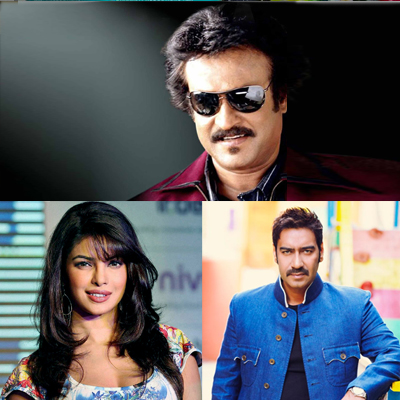
  • Rajnikanth gets Padma Vibhushan, Priyanka Chopra and Ajay Devgn get Padma Shree in Republic Day honours

    Rajnikanth gets Padma Vibhushan, Priyanka Chopra and Ajay Devgn get Padma Shree in Republic Day honours

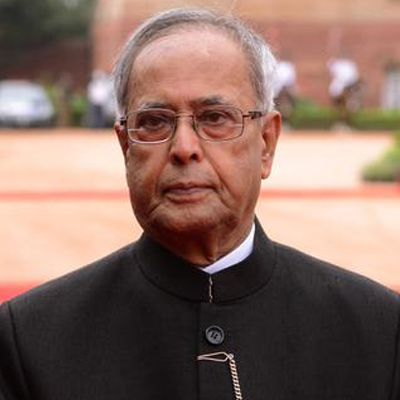
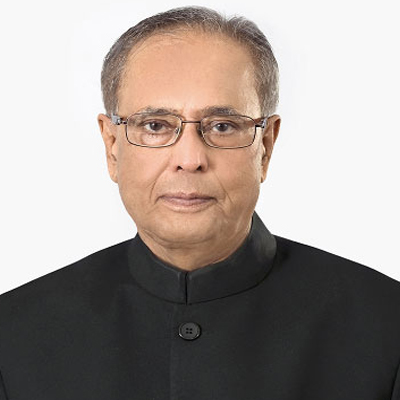
    New Delhi: President Pranab Mukherjee today presented the Padma Vibhushan, Padma Bhushan and Padma Shri awards at a Civil Investiture Ceremony held at Rashtrapati Bhavan. A number of personalities from the entertainment industry as well an adman received awards from a grateful nation for their excellence and contributions in various fields.

    Among the dignitaries present on the occasion were vice president M Hamid Ansari, prime minister Narendra Modi, and the union ministers of Home Affairs, Urban Development, Housing & Urban Poverty Alleviation and Human Resource Development.

    The personalities from the world of arts, culture, sports and other fields honoured today include stars like Ajay Devgn, Rajnikanth, Anupam Kher, Priyanka Chopra and Madhur Bhandarkar from the world of cinema; badminton player Saina Nehwal and archer Deepika Kumari from the world of sports, ad-wizard Piyush Pandey, and Reliance Industries founder late Dhirubhai Ambani.

    The awards have been divided in two batches, with another function to be held later.

    Iconic actor Rajnikanth, media and film magnate Ramoji Rao, and renowned classical vocalist Girija Devi had been named for the second highest civilian honour, the Padma Vibhushan, awarded for exceptional and distinguished service.

    Veteran actor Anupam Kher and singer Udit Narayan are the only recepients from the entertainment industry apart from Heisnam Kanhaukak of the Padma Bhushan, given for distinguished service of high order. Indu Jain of Bennett Coleman and Co also received the Padma Bhushan.

    Many of the awardees like Rajnikath, Priyanka Chopra and Ajay Devgn took to the twitter to express their feelings, while others like Anupam Kher also gave interviews to the media before he went in to receive his accolade.

    The Padma Shri Awardees for distinguished service from the entertainment field include directors Nila Madhab Panda (I want to be Kalam), S S Rajamouli (of the Baahubali fame) and Madhur Bhandarkar; filmmaker Narendra Chandra Lal from the Andaman and Nicobar Islands; actor Ajay Devgn and actor–inger Priyanka Chopra, ad guru Piyush Pande; and a posthumous award to the late veteran actor Saeed Jaffrey.

    In the field of sports, the Padma Bhushan awardees are badminton ace Saina Nehwal, and tennis star Sania Mirza, while those getting Padma Shree are Deepika Kumari for archery from Jharkhand, and sports commentator Sushil Doshi.

    In the field of music, the Padma Shree recepients are Pt Tulsidas Borkar of Goa for classical music; Dr Suma Ghosh of Uttar Pradesh for vocal singing; and Bhikhudan Gadhvi of Gujarat, Mamta Chandrakar of Chhatisgarh, and Bhojpuri singer Malini Awasthi of Uttar Pradesh for folk music, and late Shri Prakash Chand Surana (posthumously) of Rajasthan for classical music.

    The eminent dancer Yamini Krishnamurthy who has churned thousands of disciples gets the Padma Bhushan, dancer Pratibha Prahlad who founded the Delhi International Arts Festival, and Gulabi Sapera who is a folk dancer from Rajasthan gets the Padma Shree.
     

  • Rajnikanth gets Padma Vibhushan, Priyanka Chopra and Ajay Devgn get Padma Shree in Republic Day honours

    Rajnikanth gets Padma Vibhushan, Priyanka Chopra and Ajay Devgn get Padma Shree in Republic Day honours

    New Delhi: President Pranab Mukherjee today presented the Padma Vibhushan, Padma Bhushan and Padma Shri awards at a Civil Investiture Ceremony held at Rashtrapati Bhavan. A number of personalities from the entertainment industry as well an adman received awards from a grateful nation for their excellence and contributions in various fields.

    Among the dignitaries present on the occasion were vice president M Hamid Ansari, prime minister Narendra Modi, and the union ministers of Home Affairs, Urban Development, Housing & Urban Poverty Alleviation and Human Resource Development.

    The personalities from the world of arts, culture, sports and other fields honoured today include stars like Ajay Devgn, Rajnikanth, Anupam Kher, Priyanka Chopra and Madhur Bhandarkar from the world of cinema; badminton player Saina Nehwal and archer Deepika Kumari from the world of sports, ad-wizard Piyush Pandey, and Reliance Industries founder late Dhirubhai Ambani.

    The awards have been divided in two batches, with another function to be held later.

    Iconic actor Rajnikanth, media and film magnate Ramoji Rao, and renowned classical vocalist Girija Devi had been named for the second highest civilian honour, the Padma Vibhushan, awarded for exceptional and distinguished service.

    Veteran actor Anupam Kher and singer Udit Narayan are the only recepients from the entertainment industry apart from Heisnam Kanhaukak of the Padma Bhushan, given for distinguished service of high order. Indu Jain of Bennett Coleman and Co also received the Padma Bhushan.

    Many of the awardees like Rajnikath, Priyanka Chopra and Ajay Devgn took to the twitter to express their feelings, while others like Anupam Kher also gave interviews to the media before he went in to receive his accolade.

    The Padma Shri Awardees for distinguished service from the entertainment field include directors Nila Madhab Panda (I want to be Kalam), S S Rajamouli (of the Baahubali fame) and Madhur Bhandarkar; filmmaker Narendra Chandra Lal from the Andaman and Nicobar Islands; actor Ajay Devgn and actor–inger Priyanka Chopra, ad guru Piyush Pande; and a posthumous award to the late veteran actor Saeed Jaffrey.

    In the field of sports, the Padma Bhushan awardees are badminton ace Saina Nehwal, and tennis star Sania Mirza, while those getting Padma Shree are Deepika Kumari for archery from Jharkhand, and sports commentator Sushil Doshi.

    In the field of music, the Padma Shree recepients are Pt Tulsidas Borkar of Goa for classical music; Dr Suma Ghosh of Uttar Pradesh for vocal singing; and Bhikhudan Gadhvi of Gujarat, Mamta Chandrakar of Chhatisgarh, and Bhojpuri singer Malini Awasthi of Uttar Pradesh for folk music, and late Shri Prakash Chand Surana (posthumously) of Rajasthan for classical music.

    The eminent dancer Yamini Krishnamurthy who has churned thousands of disciples gets the Padma Bhushan, dancer Pratibha Prahlad who founded the Delhi International Arts Festival, and Gulabi Sapera who is a folk dancer from Rajasthan gets the Padma Shree.
     

  • Dilip Kumar receives Padma Vibhushan award

    Dilip Kumar receives Padma Vibhushan award

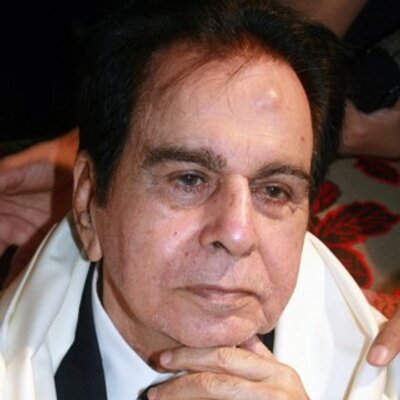
    NEW DELHI: Legendary thespian Dilip Kumar, who gave a distinct meaning to method acting, was presented the country’s second highest civilian honour Padma Vibhushan in Mumbai today – just two days after his 93rd birthday.


    The actor was presented a medal, a certificate and a shawl by Home Minister Rajnath Singh in the presence of the actor’s wife Saira Banu. Maharashtra Governor C Vidyasagar Rao and Chief Minister Devendra Fadnavis among other dignitaries were present at the actor’s residence in Mumbai’s suburb Bandra.


    Though both Dilip Kumar and Amitabh Bachchan were among those whose names had been announced in January this year, Kumar’s sickness prevented him from attending the presentation by President Pranab Mukherjee in April at the Rashtrapati Bhavan. 


    Born as Muhammad Yousuf Khan in Peshawar on 11 December, 1922, Kumar made his debut as an actor in the film Jwar Bhata in 1944 produced by Bombay Talkies. 


    In a career that spanned over six decades and just over sixty films, he showed his caliber in different genres and set trends for others to follow in films like the romantic Andaz (1949), the swashbuckling Aan (1952), the dramatic Devdas (1955), the comical Azaad (1955), the historical Mughal-e-Azam (1960) and the social Ganga Jamuna (1961). 


    While he came to be known as the ‘tragedy king of Bollywood’ for films like Devdas, Daag(1952), Dil Diya Dard Liya (1966), Admi (1968) and Bairag (1976), he also did comedies likeRam Aur Shyam (which has been remade several times) and Madhumati. His acting prowess showed in films like Kranti (1981), Shakti (1982), Karma (1986), Saudagar (1991) and others. His last film was Qila (1998).


    He was honoured with the Padma Bhushan award in 1991 and the country’s highest award in cinema Dadasaheb Phalke Award in 1994 for his exceptional and distinguished contribution to the Indian cinema. The first to receive the Filmfare award in 1952 for Daag, he received this honour eight times though he had been nominated about 20 times. In 1993 he won the Filmfare Lifetime Achievement Award. Pakistan honoured him with its highest civilian honour Nishan-e-Imtiaz in 1997.


    The late cine craftsman Satyajit Ray had described Dilip “the ultimate method actor.”


    Minister of State for Information and Broadcasting Rajyavardhan Rathore tweeted, “Congrats to the screen legend Dilip Kumar for being conferred Padma Vibhushan. His touching cinematic performances are inspiration for many.”


    Fadnavis, in his tweet said, “Honoured to honour the veteran actor #DilipKumar ji with #PadmaVibhushan with Hon @BJPRajnathSingh ji & Hon Governor.”

     
    The veteran actor decided to skip his birthday celebrations to mark ¬solidarity towards the Chennai floods victims. His wife and actor Saira Banu had said, “He has got so much love from all over the world. What more can I give him? I can only pray for his good health and that’s my gift for him.”

     
     “I think his health gets affected after any ¬celebration. We are also very affected by the Chennai incident and decided to keep it quiet. After what happened in Chennai, it would not have been right to have a huge celebration,” she added.

  • Pranab lauds Indian press for upholding high standards and free speech

    Pranab lauds Indian press for upholding high standards and free speech

    New Delhi: President Pranab Mukherjee said today that the media in India has always supported the freedom of individuals to speak out as per his or her conviction and saluted the media for not compromising on freedom of speech and expression.


    He was speaking after receiving the first copy of the English version of the book The Eighth Ring, the autobiography of late K M Mathew, former editor and publisher of Malayala Manorama. The book was released by Mammen Mathew, Chief Editor, Malayala Manorama. Eminent Jurist & former member of Parliament  Fali S Nariman and Dr. Prannoy Roy, Chairman NDTV spoke on the occasion. 

    The President said the history of Indian journalism is intertwined with that of the freedom movement. From the time of Hickey’s Gazette which came out during the days of the East India Company, the media has highlighted problems faced by the common people. Many national leaders founded newspapers or were closely associated with it during the freedom struggle.


    Relatng an interesting story from history, he said Jawaharlal Nehru wrote in October 1937 in The Modern Review of Calcutta under a pseudonym and criticised himself for having dictatorial tendencies. People wondered who had dared criticize Nehru but it was only much later that people realised Nehru himself had written the article in order to encourage criticism. 

    The President expressed confidence that the media in India has always fought authoritarian tendencies. He was confident they would be able to succeed in meeting all modern day challenges, including those posed by techonolgy. He complimented the Manorama Group for treating journalism as a mission and commitment to society.

    The President said he knew Mathew personally from the early days of his public life. He has been familiar with the Malayala Manorama Group for long and attended the 125th year celebrations in Kottayam in 2013. The Malayala Manorama group has established a significant presence in the media world with numerous publications, TV and Radio channels. He was particularly fond of the Manorama Year Book and used to eagerly await the arrival of the Bengali edition every year. 

  • ISRO to receive Gandhi Peace Prize for 2014

    ISRO to receive Gandhi Peace Prize for 2014

    NEW DELHI: The Indian Space Research Organisation (ISRO) will receive the Gandhi Peace Prize for the year 2014.


    The prize will be presented by President Pranab Mukherjee at a function at Rashtrapati Bhavan. 


    The Gandhi Peace Prize was instituted by the Government in 1995 on the occasion of the 125th birth anniversary of Mahatma Gandhi.


    This annual award is given to individuals and institutions for their contributions towards social, economic and political transformation through non-violence and other Gandhian methods. 


    ISRO works with the vision to “harness space technology for national development, while pursuing space science research and planetary exploration.”


    Formed in 1969, ISRO superseded the erstwhile Indian National Committee for Space Research (INCOSPAR), which was established in 1962 by the efforts of independent India’s first Prime Minister Jawaharlal Nehru and his close aide and reputed scientist Dr. Vikram Sarabhai. The establishment of ISRO thus institutionalised space activities in India. 


    ISRO built India’s first satellite, Aryabhata, which was launched by the Soviet Union on 19 April in 1975. In 1980, Rohini became the first satellite to be placed in orbit by an Indian-made launch vehicle, SLV-3. ISRO subsequently developed two other rockets: the Polar Satellite Launch Vehicle (PSLV) for launching satellites into polar orbits and the Geosynchronous Satellite Launch Vehicle (GSLV) for placing satellites into geostationary orbits. These rockets have launched numerous communications satellites and earth observation satellites. Satellite navigation systems like Gagan and IRNSS have been deployed. In January 2014, ISRO successfully used an indigenous cryogenic engine in a GSLV-D5 launch of the GSAT-14.


    On 22 October, 2008, ISRO sent its first mission to the Moon, Chandrayaan-1. On 5 November, 2013, ISRO launched its Mars Orbiter Mission (MOM), which successfully entered Mars orbit on 24 September, 2014, making India the first nation to succeed on its first attempt, and ISRO the fourth space agency in the world and first Asian space agency to reach Mars orbit. 


    The space agency’s future plans include development of GSLV Mk III (for launch of heavier satellites), development of a reusable launch vehicle, human spaceflight, further lunar exploration, interplanetary probes, a solar spacecraft mission, etc.


    ISRO has conducted a variety of operations for both Indian and foreign clients. It has several field installations as assets, and co-operates with the international community as a part of several bilateral and multilateral agreements. As many as 41 foreign satellites have been launched by ISRO’s launch vehicles.

  • President asks for concerted steps to be taken for India’s Internet growth

    President asks for concerted steps to be taken for India’s Internet growth

    NEW DELHI: President Pranab Mukherjee called upon concerned authorities to ensure availability of infrastructure for Internet and ICT-enabled services across the country and use it in a systematic manner.


    Noting that India is at the 89th position in Network Readiness Index with countries like Singapore, Finland and Sweden having become leaders, he said Wi-Fi services could be rolled out in public places across the country both in urban and rural India. 


    The President was speaking after inaugurating 24 Hot Spots with 30 Wi-Fi access points in the President’s Estate by which the Estate became 100 per cent Wi-Fi.


    The President said India, with 244 million, ranks third after China and USA in terms of number of internet users. “However, the penetration of internet use as a percentage of the population is only twenty, indicating not only a huge gap but significant potential for future growth as well. With 960 million mobile phones today, India stands second in the world behind China and soon it is expected to become one billion mobile phones. We have more than 77 mobile phone connections per 100 citizens, which is commendable in terms of the penetration achieved by us in mobile telephony,” he said. 


    Mukherjee said that the idea of bringing information to the doorsteps of citizens through network is a revolutionary step to transform India to a Digital India.  


    Communications and Information Technology Minister Ravi Shankar Prasad, Electronics & IT Secretary R S Sharma, National Informatics Centre DDG Ms Shefali Sushil Dash, officers and staff of Rashtrapati Bhavan and their family members were present on the occasion.

  • Amitabh Bachchan receives Padma Vibhushan amidst thunderous applause

    Amitabh Bachchan receives Padma Vibhushan amidst thunderous applause

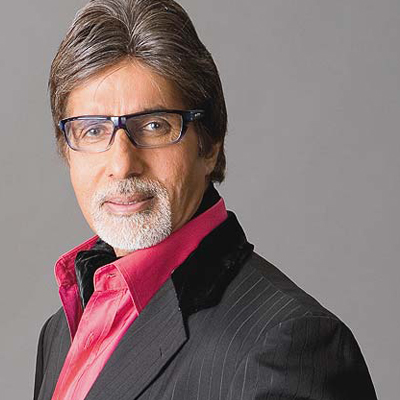
    NEW DELHI: Bollywood megastar Amitabh Bachchan received the nation’s second highest honoour Padma Vibhushan from President Pranab Mukherjee in the presence of various dignitaries as well as his family.


    Due to illness, 92-year-old veteran actor Dilip Kumar, who was also one of the Padma Vibhushan awardees, could not attend the civil investiture ceremony held at the majestic Durbar Hall of Rashtrapati Bhavan.


    The 72-year old Bachchan was cheered by actor son Abhishek, daughter-in-law Aishwarya Rai, wife Jaya and daughter Shweta Nanda, her son Agastye and daughter Navya Naveli. Dressed in a black ‘bandhgala’ suit, Bachchan folded his hands in respect as he received the honour from the President to thunderous applause.


    Bachchan received the Padma Shri in 1984 and the Padma Bhushan in 2001.


    Vice President Hamid Ansari, Prime Minister Narendra Modi, senior Ministers, BJP patriarch L K Advani, Delhi Chief Minister Arvind Kejriwal were among those who were present. 


    The Padma Bhushan awardees included 12-time national award winning film maker Jahnu Barua.


    The awards were presented in two batches, the first batch, having been presented on 30 March. 


    Those from the film and music industry who received the Padma Shri awards included music maestro Ravindra Jain, vocalist Tripti Mukherjee, founder of Shillong Chamber Choir Neil Herbert Nongkynrih, and South Indian film star Kota Srinivasa Rao.


    The Padma Shri recepients from the field of sports included Captain of Indian women cricket team Mithali Raj, Portuguese yoga grand master Jagat Guru Amrta Suryananda Maha Raja, and Women hockey player Saba Anjum, were given Padma Shri awards.


  • Bangladesh gets archival footage from AIR, DD on Liberation War

    Bangladesh gets archival footage from AIR, DD on Liberation War

    NEW DELHI: Bangladesh President has received the recordings of transmissions made by All India Radio and Doordarshan during the Liberation War of 1971 from President Pranab Mukherjee at Rashtrapati Bhavan.


    He recalled that valiant Mukti Bahini soldiers fought hand in hand with Indian troops for Bangladesh’s liberation. He expressed hope that these recordings will remind people of Bangladesh of those momentous times.


    Akashvani, especially the Kolkata station, played a critical role in upholding the cause of Bangladesh even before the rest of the world woke up. Unfortunately, most of the broadcast schedule and other interesting programmes were not kept in permanent format as archives because of several constraints. But Akashvani has been able to retrieve several tapes of that period and has already broadcast them for the last many years, to remind both India and Bangladesh of their shared legacy.


    At the request of Bangladesh Betar and the special interest of Mukherjee, a renewed effort was made by Prasar Bharati CEO Jawhar Sircar, AIR DG F Sheryaar, and DDG, Akashvani Kolkata to salvage more materials from wherever possible so that whatever is possible is put out in the public domain before both the nations.


    Two CDs have thus been produced in the last one month containing recordings from the Akashvani Archives of 1971 and early 1972. They represent the contribution made by Akashvani to the momentous developments of 1971, that led to the War in December, the Vijay Divas and the subsequent commemorations.


    The first CD entitled “Liberation of Bangladesh 1971” contains the public speeches from Akashvani Delhi of the then Prime Minister of India and the Lok Sabha statements, interviews and speeches of Sheikh Mujibur Rahman, the surrender of Pakistani forces on the 16 December, the public address of Rahman in January 1972 and other programmes, that are mainly in Bengali.


    The second CD entitled “Struggle of a Nation” is based on the recordings of Akashvani Kolkata, contains documentations of important happenings and events from March to December 1971 and the speeches of the then Prime Ministers of India and new nation of Bangladesh and live commentaries thereof.  It also has the ‘Samvad Bichitra’ newsreel programme that played a pivotal role during the Liberation Movement.

  • Use social media as a tool for participative governance: Pranab Mukherjee

    Use social media as a tool for participative governance: Pranab Mukherjee

    NEW DELHI: Social media will be used as a tool for participative governance, directly engaging people in policy making and administration and “fully realizing our softpower potential,” said President Pranab Mukherjee on Monday, 9 June.


    He also acknowledged the fact that there is a need to integrate emerging technologies like social media into “external interchange, with particular emphasis on the country’s rich spiritual, cultural and philosophical heritage.” According to Mukherjee, the government will revive ‘Brand India’ riding on the strengths of 5T’s: Tradition, Talent, Tourism, Trade and Technology.


    He added that e-governance brings empowerment, equity and efficiency and has the power to transform peoples’ lives.


    In his first address to the joint sitting of the 16th Lok Sabha and the Rajya Sabha, he said: “The backbone of my government’s new ways of working will be a Digital India. IT will be used to drive re-engineering of government processes to improve service delivery and programme implementation. We will strive to provide Wi-Fi zones in critical public areas in the next five years.”


    He added: “My government will rollout broad band highway to reach every village and make all schools e-enabled in a phased manner. Technology will be used to prepare our children for a knowledge society. The National e-governance plan will be expanded to cover every government office from the centre to the Panchayat; to provide a wide variety of services to citizens.”


    He noted: “Our rich cultural heritage is the very foundation on which rests the unity of our diverse nation. Indian languages are repositories of our rich literature, history, culture, art and other achievements. My government will launch a national mission ‘e-Bhasha’ that will develop digital vernacular content and disseminate our classic literature in different languages. My government will also provide the required resources for the maintenance and restoration of national heritage sites.” 


    FICCI president Siddharth Birla has welcomed the announcements relating to national e-governance plans and usage of social media for participative governance, as that “would help restore the credibility of institutions, improve investor confidence and reignite investment inflow in the country,” he said.  

  • Cinematic content should have desirable impact on social behaviour: Pranab Mukherjee

    Cinematic content should have desirable impact on social behaviour: Pranab Mukherjee

    NEW DELHI: President Pranab Mukherjee has said filmmakers should make a concerted effort to distinguish between what clearly is an art form and what is not and the cinematic content of films should have a desirable impact on the social behaviour of people, especially the new generation.


    He said, “I take this opportunity to reflect upon an important aspect of cinema. Besides being a strong medium of expression, cinema is a vehicle of influence and persuasion for the youth. When our children witness scenes depicting violence and bloodshed, it does affect their psyche.”


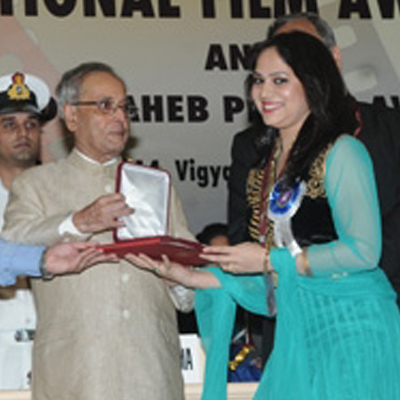
    Speaking after presenting the Dadasaheb Phalke award to poet-lyricist-filmmaker Gulzar and the 61st National Film Awards for 2013 over the weekend, Mukherjee said: “Faced with erosion of values in today’s context, cinema should play a catalytic role in resetting our moral compass. Our filmmakers should deploy their creative efforts to present and propagate core values such as patriotism, respect for women, compassion and tolerance, honesty and discipline. I am hopeful that everyone associated with the film industry will use their talent and artistic pursuits to create meaningful and socially relevant cinema.” 


    Cinema has played a critical role in highlighting social and political issues of concern as well as exposing the deficiencies in our political system. It is an industry which has provided opportunities for many to rise from rag to riches. He called upon the film industry to nurture and strengthen its openness, pluralism and inclusiveness and disseminate the same throughout the country.

    He added: “India’s media and entertainment industry is today at the cusp of a transformation. It is poised to leapfrog into a completely digital landscape. Indian cinema connects with millions of people – within the country and abroad, directly through theatres, close to 2,000 multiplexes and through TV as well as the internet. In 2013, the Indian Media and Entertainment (M&E) industry registered a growth of 11.8 per cent over 2012 and did a gross business of around Rs 92,000 crore. The industry is expected to register a compound annual growth rate of 14.2 per cent to touch Rs 1.8 lakh crore by 2018.”


    Earlier, Gulzar who is turning 80 later this year was given a standing ovation as he went up to the dais of the tastefully decorated Vigyan Bhavan to receive his award for outstanding contribution to the growth and development of Indian cinema. The presentation was preceded by a short showreel into his work, and included tributes paid to him by several cine artistes. The award consists of a Swarn Kamal (Golden Lotus), a cash prize of Rs 10 lakh and a shawl.


     Speaking after receiving the award, Gulzar paid a tribute when he described the film field as the only industry after the Armed Forces which was totally secular and welcomed all.


    He said his honour belonged to scores of film personalities like the late Bimal Roy and Sachin Dev Barman who had given him the right chances at the right times and even younger talent like Shankar Ehsaan Loy and A R Rahman. “Many like R D Burman, Madan Mohan, and Laxmikant are no more. But one could not always live in nostalgia had to move on,” he said.


    Information and Broadcasting Minister Manish Tewari agreed with Gulzar and said cinema was the great unifier. He said the National Film Awards were reflective of the heterogeneity of the film industry which was a confluence of many Indian languages. These awards were truly a tribute to the diversity of thought, and recognition of excellence.


    The report of the feature jury was presented by Manju Borah on behalf of chairman Saeed Akhtar Mirza, while the non-feature book jury were presented by chairpersons Reena Mohan and Sharad Dutt respectively.


    A total of 41 awards were given by the President in the non-feature film category while 40 were given for feature films. Three awards were given to Best Writing on Cinema, including one for the best film critic. 


    The winners of the Best Male playback singer – Rupankar – and Best Female Playback singer Bela Shende renderd their award winning songs ‘E Tumi Kemon Tumi’ from the film Jaatishwar (Bengali) and ‘Khura Khura’ from the film ‘Tuhya Dharma Koncha (Marathi)’ respectively.

    The award for the best feature film was conferred on Ship of Theseus (English-Hindi) produced by Recyclewala Films and directed by Anand Gandhi. In the non-feature film category, the award for the Best Film was conferred to Rangbhoomi (Hindi) produced by Films Division and directed by Kamal Swaroop. In the category of Best Writing on Cinema section, the book Cinema Ga Cinema (Telugu)written by Nandagopal and published by Praga India, Hyderabad bagged the top honour, while Alaka Sahani (English) was conferred the award for the Best film Critic. 


    Hindi films once again dominated the National Film Awards by getting as many as 15 awards among feature films. Marathi came next with 10 awards followed by Bengali with six and Tamil and Kannada with five each and Malayalam with four.