Tag: Pramod Mahajan

  • Manish Tewari’s views on I&B appear to be thinking of a frustrated mind

    Manish Tewari’s views on I&B appear to be thinking of a frustrated mind

    NEW DELHI: It is a well known truism that the administrative arm of the government is not run by politicians but by bureaucrats. And while there have been many cases where a minister had to bow because the bureaucracy in his own ministry did not support him or her, it is only seldom that the politician allows himself to be cowed down.


    One therefore wonders whether the statement by outgoing Minister Manish Tewari that there is no relevance of Information and Broadcasting Ministry (I&B) and that it belongs to ‘an era that is past’ is something that comes out of his own wisdom or his frustration in dealing with an ex-bureaucrat who now heads the public service broadcaster.


    Coming as it does on the eve of the government going out of office, the statement is either way misplaced. It is now open to the new government to decide whether this ministry needs to remain or go.


    And clearly, ‘Broadcasting’ does not mean just Prasar Bharati in a scenario where not only has the radio and television industry grown by leaps and bounds, but needs controls and regulations that only a Ministry can handle.


    At the same time, ‘Information’ does not just mean giving information to the people through the media and goes much beyond to an administrative regulatory role over various media units of the government. If this Ministry has no relevance today, one winders who will monitor the working of these media units!


    Experience of the past decades has shown that the role of the I&B Minister has probably been totally misunderstood by the heads of government. Because the designation says ‘Information’, the government thinks that it has to be led by a person who is well versed with the policies of not only the government but also the ruling party.


    Tewari, therefore, often found himself answering questions about the ruling party rather than his Ministry whenever he was mobbed by the media, particularly electronic media looking for sensational bytes!


    Factually speaking, questions about government policies should have been tackled by the Director General (Media and Communication) in the Press Information Bureau and those about the party by the official party spokespersons speaking in the respective party offices.


    Clearly, the government took ‘Information’ to mean ‘Information and PR’, which is the kind of designation given to ministers holding this charge in the states.


    Actually, the debate over whether one needs an Information and Broadcasting Ministry is not new.


    The issue had also come up about a decade earlier when Sushma Swaraj was in charge of the Ministry.


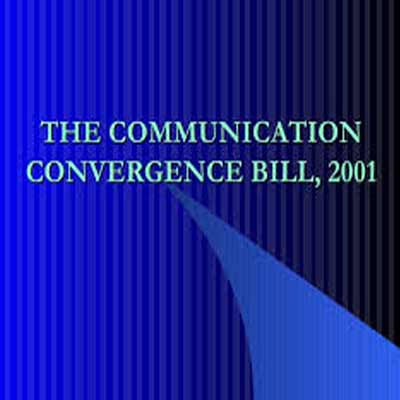
    At that time, a Group of Ministers had been set up under the chairmanship of the then Finance Minister Yashwant Sinha on the possibility of setting a Convergence Commission and also piloting a convergence bill. This was being considered as it was felt that Broadcasting and Information Technology were gradually merging.


    The issue could not be resolved even after several meetings of the GoM, and the whole thing was put in cold storage because of the change of government in 2004.


    While the then Communication and Information Technology Minister Pramod Mahajan and the then Law Minister Arun Jaitley appeared to be in favour of the Commission, it is understood that it was vehemently opposed by Swaraj.


    The possible reason for this is not far to seek: if a Convergence Commission (which would have also made the Prasar Bharati Act redundant) had been indeed approved, then the chances were that broadcasting ministry would have gone to the IT Minister and Swaraj would have been left with only Information and thus a reduced portfolio in terms of power – something no senior politician can afford to let go.


    As far as the broadcasting side goes, surely Tewari knows there is more to broadcasting than dealing with a former bureaucrat who insists that the government has backed out after creating an autonomous Prasar Bharati, by still keeping most powers to itself.


    The view of Prasar Bharati CEO Jawhar Sircar, who has also chosen the current time to express them in writing in an article in a popular magazine, may have its own merit. And while one could always argue on whether a public service broadcaster almost totally dependent for its existence and funds on the government can expect full autonomy!


    But he has deliberately chosen to air his views about ‘covert control raj’ to coincide with the entry of a new government and as well as the interview of Narendra Modi on Doordarshan. Interestingly, even DD News Director General S M Khan has gone on record to say that the decision to make cuts in the interview had nothing to do with the Ministry and were done internally by DD News staff as they wanted the interview to be more balanced.


    As a matter of fact, one wonders whether Prasar Bharati which was conceived at a time when only Doordarshan and All India Radio existed has a place in a scenario dominated by private radio and TV channels!


    And one can hardly deny that there are very few countries in the world which do not have radio or television channels of their own, and many even own news agencies and newspapers.


    In a country as large in population as India and with a low literacy rate, surely no one can deny that the government needs to have a channel to disseminate information about its programmes, and help people learn about their powers. And there is little gain saying the fact that both Doordarshan and All India Radio are today airing programmes which private channels running after TRPs and advertisers cannot do.


    Tewari’s view therefore about the “inherent redundancy” of the Ministry itself appears redundant.


    Perhaps his views about the Films Division can be judged on the same footing. While the Division has undergone various changes from the weekly news reviews to magazines and now short films, it is also an institution that is doing things no private agency would do and this is also becoming clear from the increasing number of National awards its films have been winning, apart from the fact that it was chosen by the Ministry itself to manage the country’s only Museum on Indian Cinema.


    The fate of private television and film training schools is also well-known as they end up as shops that want to give quick training but charge high fees. In that scenario, both the Film and Television Institute of India and the Satyajit Ray FTII have to remain under the I&B Ministry, though there one can hardly deny that greater participation of the private sector – particularly the film industry and TV channels – would help.


    In fact, Tewari himself had said in November 2012 that ‘however archaic its structure might be, I&B over a period of time seems to have got the nuances fairly right. It is to a very large extent, hands-off. If you were to abolish the ministry, what would you replace it with?’


    Interestingly, Tewari had initiated steps to grant more autonomy to it by constituting the Sam Pitroda Committee.


    Irrespective of which party comes to power, I&B is a subjects that will remain with the central government if there has to be a continuity of policy as far as the media and even freedom of speech and expression is concerned, especially in a country where business houses are waiting to gobble up whatever freedom the media enjoys today.

  • ‘We have stepped up work on digitalization for Prasar Bharati’ : Asutosh – IBN 7 managing editor

    ‘We have stepped up work on digitalization for Prasar Bharati’ : Asutosh – IBN 7 managing editor

    His father wanted him to be a doctor, but he chose science as his discipline in college. Within a short time, having done his graduation from Allahabad University, he switched over to philosophy as his master’s degree subject. He did not stick to that either, and did his M Phil from JNU in Foreign Affairs.


    Today at 37, Ashutosh is the managing editor of the Hindi news channel IBN 7. He has been with TV journalism ever since it took off in the country.


    But why journalism, and why so many changes? “Restlessness,” he smiles, almost apologetically. Suave and affable, Ashutosh got a prize fellowship, the Dag Hammejoldt U N Scholarship in 1996, and that was one of his two “major jumps in life.”


    He has got pretty strong opinions and does not believe he needs to pussyfoot his industry for some of the ills that have gotten in and are sticking out like snot. But he has the analytical tools to examine why these problems are there and tries to find a way out.


    Ashutosh spoke to Indiantelevision.com’s Sujit Chakraborty.


    Excerpts:

    Why is Hindi news television so loud, often crude, repetitive and boring?
    I agree with you, but only partly. There has been an unbelievable level of dumbing down of content, so much so that some of it ought not to be there at all. I guess the editors of Hindi channels would have to soon sit and decide what goes and what does not. It’s just the rating, the grabbing of eyeballs, which has become the single focal point and, therefore, all this is happening. But as time goes by, we shall have to mature. This is an evolutionary process.

    Eyeball journalism?
    Absolutely. To that extent, I agree with you. But there is the other positive side. Hindi TV journalism has completely revolutionised the news universe. It has educated and broadened the frontiers of news audience. Things have gone so local it is difficult to believe. And yet, we have become unbelievably global as well, for a Saddam story is as important to a Hindi viewer as a rape in Nashik.


    The other huge positive is at the cultural level. I mean, who knew Karva Chauth? We in the Hindi channels went and did Karva Chauth and now it is a nationally recognised Hindu festival. So is Ganesh Chaturthi…

    But Ganesh Chaturthi was always a huge affair…?
    Yes, but in Maharashtra. We now have brought it to mainstream news with round the clock coverage. Look at Dandiya dance from Gujarat. It is now an elite-class affair in Delhi, and our people here deck up and go for Dandiya. So we have brought Ganesh Chaturthi and Dandiya to Delhi and taken Karva Chauth and Chhat out of Hindi heartland to the rest of the country. Hindi news TV has re-unified and revitalised Indian culture and identity.


    The other thing is that Hindi journalism has brought terror to the law makers and law enforcers. They have changed radically after the sting operations. Corruption has not been wiped out, but things have changed, because now no one knows who is a sting man and who is a common person.


    Most importantly, Hindi TV journalism has brought in a sense of urgency, which has forced newspapers to change. They had lost all urgency, till we came along and gave them such a fright by being there 24 X 7. They had to wake up… I mean the Times Of India front page today is not what it was a few years ago.

    Is it that Hindi news channels introduced crudeness and audiences lapped it up? Or is it that the audience itself was like that and you catered to their tastes?
    Both are responsible. But much of this is misunderstood. Take for example: the ‘F’ word…. It sounds OK when said in English but if I were to translate it in Hindi and use it, there would be a horrific repercussion.


    Hindi itself and the people who speak the language are robust, rustic, loud, feudal. Hindi is used in the area where feudalism is still prevalent largely. Hindi journalism is evolving to be more liberal and things are changing.


    English journalism is sophisticated, modern and in touch with global realities. But English news is only for South Block, India International Centre, South Delhi’s sophisticated lot, may be. Even in Delhi, it makes no sense in Shahdara, a few kilometres from the heart of the Capital. Hence, all these account for the complaint of crudeness, etc., but things are changing.

    In what sense?
    Well, there is this stereotypical image of the Hindi journalist, that you have to be the jholawalla and chew paan masalaa….

    And try your best to be dirty and scrumpy, like this major presenter who makes you feel he could any time spit out the paan juice on the floor of the studio, despite the fact that he is a fine National School of Drama actor…. Why?
    (Laughs) But for him that is his achievement, being sophisticated and yet doing the opposite… Things, though, are changing fast. I mean, look around our studio here, there is none like that. Most of them are fluent in English, dress well… the Hindi news reporter’s image is changing fast. Today, in fact, Hindi TV scribes are better paid than their English counterparts. Because in English TV journalism, there is less competition, so there is less demand and the salaries are lower. We have to compete against huge odds.

    What are the synergies you draw from CNN-IBN?
    We are two entirely different and independent channels. Our outputs are different, but at the level of logistics and information there is a lot of synergising. If there is a murder somewhere, and we do not have that, but they (CNN-IBN) do, they tell us. If they are short of an OB Van where something is happening, they tell us and we give them the back up.

    Why are the names of programmes in your channel ( from Breakfast News downward) in English?
    This is a planned thing. It is a clear signal to the viewers that we have to be international in our approach. There is no point in forcing a bad Hindi name for a good Hindi programme. So if the name sounds good in English, and it catches on, we shall use English names. That is a conscious approach.

    Hindi journalism has brought terror to the law makers and law enforcers. They have changed radically after the sting operations

    Breaking news… all the time, Hindi channels are giving breaking news. Pramod Mahajan dies, that is breaking news for all the channels, from morning to late night. Don’t you think this is ridiculous?
    (Laughs) Those two words are the most misunderstood and misused in Indian TV journalism. Breaking News is a TV technique for catching the eye of the viewer; it is vibrant and attractive, but it is being used for everything. We have to evolve somehow to have different methods of presenting big breaking news and the ordinary news.

    Some of your programmes are very long drawn. Do you think any audience would stay that long with a channel?
    These long programmes are meant to tell the audience that here is a basket from which you get everything, from Saddam Hussain to Bollywood to travel and lifestyle. Stay with the channel and you will get everything from the same basket.

    But is it getting reflected in your TRPs?
    (Somewhat uncertainly), Yes, there is a good response. We have gained ratings and respectability.

    What would you say is the driver programme for your channel?
    We simply do not subscribe to the idea of a driver programme. If the driver programme is good, the channel’s showing is good. But if the driver programme flops, it all goes down. So we cannot have one or two driver programmes. The idea is to create a channel that has all good content across.

    I asked a friend once why there were no programmes on environment on Hindi channels, and he said it does not sell. Is that true?
    True, that is the worst tragedy of Hindi TV journalism. There is a lack of concern, and I am party to that crime. Blame it on eyeball journalism. Besides, can you imagine what kind of money BBC or CNN or Nat Geo spend on their programmes?

    Forget big money. Environmental programmes are the most ethical sting operations you can carry out at minimal cost and people would stay glued to them because it relates to their life. Also, corruption is rampant.
    (Ponders) Yes, I see what you mean, but may be we need to give some real thought to this.

    How do you see yourself in the ratings warfare?
    Everyone wants to be number one, and so do we. But as a group, we are have decided that the biggest thing that we need to develop is credibility. We need to bring back the credibility of TV news journalism. In the process, if we become number one, so be it. I would prefer to stay at the second or third place if people told me that we are hugely credible.

    You see so much sophistication in foreign channels. Why do Indian channels never pick that up?
    Oh, Indian channels are way ahead in terms of energy, vitality and intelligence. And we make mistakes, from the exuberance of youth. That can be corrected. But foreign journalism is not what we want to do.


    Indian journalism is far superior. We also went to war in Kargil, and we were taken there by the Indian army. But Indian channels did not spare the army for the mistakes they made. We did critical stories against the army as well.


    We have that freedom. But look at CNN’s embedded journalism… they not only go with the army, they become the army. This is unimaginable, there is no democracy. BBC was marginally better, but just that.

  • Former I&B minister Pramod Mahajan dead

    Former I&B minister Pramod Mahajan dead

    NEW DELHI: Senior BJP leader and former information & broadcasting (I&B) minister Pramod Mahajan passed away this afternoon at Mumbai’s Hinduja Hospital following multiple organ failure.
    Mahajan, who was shot and grievously wounded by his youngest brother Pravin on the morning of 22 April after an argument at the BJP leader’s apartment in Mumbai’s upscale Worli area, had remained in a critical condition ever since the attack 12 days ago.

    The 56-year-old former I&B minister had three bullets lodged in his body and suffered what ultimately proved fatal damage to his liver, pancreas and intestines. Mahajan is survived by his wife and a son and daughter.

    Hinduja Hospital has been virtually under media seige these past days with television crews stationed there 24/7. Mahajan’s condition, which has had blanket coverage across all news channels, began deteriorating rapidly since yesterday and officials anounced his demise at 4:10 pm this evening.

    It was on Mahajan’s watch that Star India in 1998-99 made its first concerted effort to get a direct-to-home (DTH) broadcast service going with its ISkyB venture. Mahajan had in end-1998 indicated that DTH clearances would come within two-and-a-half months.

    Doordarshan’s news channel is also a brain child of Mahajan, who floated the idea in 1999. The idea of starting such a channel was mooted immediately after the BJP came to power in March 1998. Mahajan gave the green signal for starting the channel after he became I&B minister in December.

    It was also Mahajan who got the idea to upgrade the facilities of Kashmir DD centre to counter Pakistani propaganda unleashed by Pakistan’s state broadcaster PTV in 1999-2000. Though a dedicated Kashmir channel was started with the help of private broadcasters when Arun Jaitley became the I&B minister after Mahajan in 2000, the former had sanctioned a $100m package for the upgradation of DD Kashmir’s centre.

    After Mahajan was shifted to the telecom ministry, holding also the infotec portfolio, he expressly scotched an idea of merging the telecom and I&B ministry to form an ICE ministry for the proposed convergence era.

    It is not wise to make one out of three important ministries of telecom, information and broadcasting and information technology, especially in view of the amount of work involved and number of employees associated, Mahajan had said in his capacity as information technology & communication and parliamentary affairs minister, while opposing a merger of the three ministries.

    The media savvy Mahajan was also the brain behind the “India Shining” campaign that his party, which was then ruling at the Centre, used unsuccessfully to fight the last general elections in 2004.

  • Former I&B minister Pramod Mahajan shot at by brother, remains critical

    Former I&B minister Pramod Mahajan shot at by brother, remains critical

    MUMBAI / NEW DELHI: Senior BJP leader and former information & broadcasting (I&B) minister Pramod Mahajan was shot this morning (Saturday) and remains in a critical condition.

    Mahajan was shot at by his youngest brother Pravin with a Brownie pistol after an argument at the BJP leader’s apartment in Mumbai’s upscale Worli area at around 8 am, news channels have reported.
    The 56-year-old former I&B minister reportedly has four bullets lodged in his body and has suffered grievous injury to his liver, pancreas and intestines. He underwent a nearly four-hour operation at Mumbai’s Hinduja Hospital where he was administered nearly 25 bottles of blood due to the heavy internal bleeding he suffered in the attack. Doctors have not removed the bullets yet and will take a call on that only after keeping him under observation for the next 48 hours.

    It was on Mahajan’s watch that Star India in 1998-99 made its first concerted effort to get a direct-to-home (DTH) broadcast service going with its ISkyB venture. Mahajan had in end-1998 indicated that DTH clearances would come within two-and-a-half months.

    Doordarshan’s news channel is also a brain child of Mahajan, who floated the idea in 1999. The idea of starting such a channel was mooted immediately after the BJP came to power in March 1998. Mahajan gave the green signal for starting the channel after he became I&B minister in December.

    It was also Mahajan who got the idea to upgrade the facilities of Kashmir DD centre to counter Pakistani propaganda unleashed by Pakistan’s state broadcaster PTV in 1999-2000. Though a dedicated Kashmir channel was started with the help of private broadcasters when Arun Jaitley became the I&B minister after Mahajan in 2000, the former had sanctioned a $100m package for the upgradation of DD Kashmir’s centre.

    After Mahajan was shifted to the telecom ministry, holding also the infotec portfolio, he expressly scotched an idea of merging the telecom and I&B ministry to form an ICE ministry for the proposed convergence era.

    It is not wise to make one out of three important ministries of telecom, information and broadcasting and information technology, especially in view of the amount of work involved and number of employees associated, Mahajan had said while opposing a merger of the three ministries.

  • Murdoch: Still hungering for DTH

    Murdoch: Still hungering for DTH

    There was great speculation whether Rupert Murdoch would do it again – raise the DTH issue, which has got Star TV into trouble time and again in the past, what with rivals rushing to ministers and getting them to unenthuse over-excited information and broadcasting ministers about allowing it in India. But Murdoch apparently seems to have been undeterred by the past, when he met with I&B minister Arun Jaitley. He popped the same proposal: allow DTH. In a different garb though.

    The minister – in a meeting with journos – said that Murdoch has proposed that he will use DTH for long-distance education in India in conjunction with the Internet, a proposal former ISkyB number 2 Urmilla Gupta has been flaunting for some time now. Jaitley said that Murdoch told him that he was considering tying up with some Indian Universities to promote distance education and health training.

    In a forty minute discussion with the Minister, Murdoch said that he was in favour of an open skies policy wherein he expected the Govenment’s whole-hearted support. Murdoch also highligthed the fact that Ku-band broadcasting is not harmful and it is the wave of the future and India cannot be left out of it. True, because even a so-called totalitarian (in Murdoch’s words) state like China is experimenting with DTH.

    When asked about the restructuring of Star TV, he said that the process was still on but there was no time-frame for its completion. Mr Murdoch further revealed that he had picked up a small stake in a Bangalore based IT company about which no details were disclosed by him.

    Murdoch told reporters that Star TV is considering going in for an for an Initial Public Offering but a time frame for it has not been set as yet. He later met Information Technology Minister Pramod Mahajan with whom he discussed infotech policy outlines, and also discussed the old bubear, DTH, and convergence in India.

    Later at night, Murdoch attended a bash thrown by Star TV on behalf of Janata Ki Adalat host Rajat Sharma where even Prime Minister Atal Behari Vajpayee was supposed to turn up.

    After the party, he flew into the night in his private jet, headed for Hong Kong to ensure his partnership with C&WHKT is fine fettle and sort out other issues relating to Star TV in Asia.

  • Murdoch on India visit this weekend?

    Murdoch on India visit this weekend?

    Is global media baron Rupert Murdoch coming to town? If reports are to be believed a visit is being planned for the News Corp chief to visit Bangalore, Delhi and Mumbai, (if possible) over this weekend. Murdoch last visited India, if reports are to be believed in a hush-hush meeting with the then Congress (I) strongman, Sharad Pawar in 1996 at an army base in Pune.

    His earlier visit to India was in 1993-94 which was much hyped up when he was seen with various politicians, dignitaries and businessmen. He was feted wherever he went. Since 1996 he has been unable to fly into India because of a flimsy obscenity case that was pending against him for the airing of a bit of skin on Star Movies. The case apparently took an ugly turn when summons were sent to his residences/offices in Australia and the US, and an arrest warrant issued against him. The situation was so bad that he was not permitted to enter the country and declared a criminal because he did not attend court when he was summoned. He would have been arrested had he landed in the country. Since then, however, the case has been set aside and Murdoch can visit India.

    During his current visit – if it takes place over the weekend – he is expected to meet the Prime Minister, information technology minister, Pramod Mahajan. His focus is expected to be on the information technology sector, in which he has suddenly begun to see lots of promise. He is also expected to give a direction to Star TV India CEO Peter Mukerjea as to how much he is willing to commit to India and in which areas. And obviously, he is going to be tomtomming Star TV’s forays into the information technology and convergence sector.

    Currently, hectic preparations are on within Star TV and his once Indian partner in Star TV’s Indian DTH project Pramod Mittal who is trying to smoothen his visit out here. Obviously, a meeting with his old mate Zee Telefilms chairman Subhash Chandra is planned. For sure, he is going to thank him, Chandra has helped Murdoch make more money on his investment in Zee Telefilms than he has made through his entire Star TV operations in the past six years, thanks to an appreciation in Zee’s share price over the past six months.

    Meanwhile, the media can expect to have a rollicking time. Murdoch is eminently quotable as we have known him to be.

  • Murdoch’s India visit confirmed

    Murdoch’s India visit confirmed

    After Star TV Executive Chairman Gareth Chang’s recent resignation, and NewsCorp Arthur Anderson officials have visited India twice to asses the value of Star TV, NewsCorp Chairman Rupert Murdoch plans a five day India visit starting 10th March. His wife Wendy Deng and son James, NewsCorp’s Vice President of Music and New Media will accompany him.

    The trip is expected to kick off with a two days in Bangalore, where he expects to kickstart NewsCorp’s joint venture with Pramod Mittal’s Ispat Group company eVentures. eVentures has already invested in two portals recently. Net Access, a Delhi based e-business service provider, where eVentures has invested about US$ 1.75 million acquiring a 26 equity.

    The joint venture has also acquired 100 percent equity in netpligrims.com, a web based placement service provider. Besides eVentures deals, Star TV plans 10 to 20 percent in popular portals. The net plans to extend synergies between broadcasting and the Internet, “to increase our access to content and tap the traffic which comes on various sites on the Internet,” said News television India Ltd.’s CEO Peter Mukerjea in a newspaper interview. The strategy is via the mergers and acquisitions route, and plans are to for multi-point distribution including the Internet and mobile communications.

    Besides, Murdoch will visit Bombay “to meet his office people” as a spokesman puts it. Also appointments are being arranged with Prime Minister Atal Behari Vajpayee, State Minister for Information and Broadcasting Arun Jaitley, Minister for Information technology Pramod Mahajan and Opposition leader Sonia Gandhi.

    Murdoch’s visit, the first since June 1996 when he met Deve Gowda gains significance. The importance of India in it’s Asian strategy is apparent. NewsCorp has doubled it’s content related investment in India over the next five years. An additional US$ 20 million this year has for it’s Indian operation. Murdoch will seeks a first hand view impression on the Broadcast bill including DTH and other regulatory issues, besides it’s proposed Internet /mobile investments in India.