Tag: Prakash Javadekar

  • Phase III of digitisation likely to begin from April 2015: Javadekar

    Phase III of digitisation likely to begin from April 2015: Javadekar

    NEW DELHI: Just two days after the Information and Broadcasting (I&B) Minister Prakash Javadekar officially announced the extension of deadlines for phase III and phase IV of digitisation, he has now announced that the phase III of digitisation is likely to begin from April 2015 and will end the same year in December. “And phase IV will commence as soon as the phase III is completed,” Javadekar said.


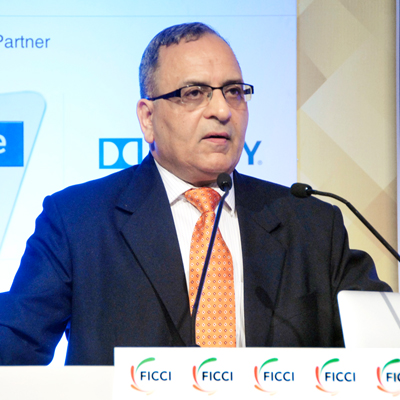
    The I&B Minister made the announcement at the ongoing CII Big Summit 2014. “There is some confusion with regards to the extension of digitisation dates.  Tentatively, it will start from 1 April 2015, the final decision on this will be taken soon,” he added.


    The Ministry will also form a committee consisting of all the stakeholders. “So unlike what people feel, we are not delaying digitisation. Our commitment is having a ‘Digital India’. Even a household in a remote village has the right to experience digital viewing,” he informed.


    He also asked the direct to home (DTH) and multi system operators (MSOs) to advertise to the consumers how they are selling expensive set top boxes at cheaper rates. “If the customers understand that they are benefitting with digitisation, they will be supportive of the action,” said Javadekar adding that digitisation is on track.


    Elaborating on the theme of the summit: ‘Monetising strategies: The tryst for a $100 billion Indian M&E industry’, he said, “Aiming low is a crime. So an industry which in 2014 is already a $50 billion industry, cannot say that by 2020, it will become a $100 billion industry. This is not correct. We must aim high. This industry has immense potential to grow.”


    Javadekar in order to boost the fraternity said that no one had thought in 1992 when cable TV started that so many crore of households will be connected to cable, but it happened. No one had also thought that people would pay anywhere between Rs 200 to Rs 500 for entertainment, but people are paying. “Entertainment has become a necessity today and so people are ready to spend. So $100 billion is achievable and so we need to aim high,” he said.
     

  • Total number of TV channel goes up to 813

    Total number of TV channel goes up to 813

    MUMBAI: Within a fortnight, three more channels have been added to the entire list of channels that can be viewed in India. This includes 400 news and current affairs channels and 413 non-news and current affairs channels, as on 15 September 2014.


    The number of TV channels that can uplink from and downlink to India is 685 (earlier 682).This includes 378 news (earlier 376) and 307 (earlier 306) non-news channels.


    As for the channel that can only uplink and only downlink, the number remained constant at 35 and 93, respectively. The new channels include Kalinga TV, Epic TV. The latter, started by former Disney MD Mahesh Samat, has been waiting for more than a year to get a licence approval from MIB.


    At a recent function, Information and Broadcasting Minister Prakash Javadekar had said that the ministry is working towards clearing licences of all the pending channels that had been deliberately kept pending by the earlier government. Near about 14 channels were to be listed.


    The ministry has also simplified the process of security clearance for broadcasters.

  • Government notifies new dates of phase III and phase IV of DAS

    Government notifies new dates of phase III and phase IV of DAS

    NEW DELHI: The Government has finally issued the notification postponing the dates of phase III and phase IV of implementation of digital addressable system (DAS) to December 2015 and December 2016 respectively.


    Indiantelevision.com was the first to break the news about the postponement of the dates for DAS phase III and IV. Speaking to indiantelevision.com I&B secretary Bimal Julka had confirmed that ‘the government had decided to delay the digitisation deadline by a full year in order to give all those involved enough opportunity to overcome all the unseen hurdles that had come up after the UPA government mandated  DAS and the various analogue sunset dates.’


    The notification says that the change has been done ‘on being satisfied to do so in public interest’.


    The DAS notification has been issued by way of amendment to the notification issued on 11 November 2011 which had made it “obligatory for every cable operator to transmit or re-transmit programmes of any channel in encrypted form through digital addressable system.”


    Although the Government had announced its decision to postpone DAS in phase III and phase IV to encourage greater indigenisation of set top boxes, no action could be taken until issuance of the notification.


    Until now, the deadline for phase III was September 2014 and for phase IV December 2014.


    In the first two phases of digitisation, which included cable TV households in the four metros and other major cities, most of the STBs that were installed had been imported from other countries.


    After he took over as Information and Broadcasting Minister, one of the major areas of focus of Prakash Javadekar has been indigenisation of STBs and Ministry sources said the new dates are in keeping with inputs supplied to the Minister in this connection.


    The ministry has made efforts to get STBs declared as Telecommunication Network Equipment which will enable domestic manufacturers to get exempted from certain taxes, an official said.


    Nearly 110 million STBs are required to be installed in cable TV households in the remaining two phases of digitisation and the extended deadline will ensure that the domestic manufacturers prepare themselves and meet this demand, officials said.

  • Govt. reconstitutes task force for DAS phases III and IV

    Govt. reconstitutes task force for DAS phases III and IV

    MUMBAI: Days after Information and Broadcasting (I&B) Minister Prakash Javadekar announced that digitisation in the country will progress as per the new deadlines; the government has come up with a reconstituted task force for implementation of digital addressable system (DAS) in phases III and IV.


    The new task force will constitute I&B additional secretary chairperson, Telecom Regulatory Authority of India (TRAI) principal advisor for broadcast and cable satellite, I&B Ministry joint secretary broadcasting, representative from the MSO Alliance, five independent MSOs one each from north, south, east, west and north east regions, five registered LCO associations one each from north, south, east, west and north east regions, representatives from the Indian Broadcasting Foundation, News Broadcasters Association, Association of Regional Television Broadcasters of India, DTH Association, FICCI, CII, ASSOCHAM, CEAMA, Department of Telecommunications, Department of Electronics and Information Technology, DG: Doordarshan, DG: All India Radio, BECIL, BIS, five prominent consumer organisations one each from north, south, east, west and north east regions and 33 state level nodal officers one each from the states/union territories governments.


    The task force would act as an interface between the government and the industry in matters related to implementation of DAS in the cable TV sector and monitor the implementation of DAS. It also will have to analyse the roadblocks that may come in the way of digitisation and suggest measures.

  • Local STB manufacturers confident of meeting target of DAS phase III and IV

    Local STB manufacturers confident of meeting target of DAS phase III and IV

    NEW DELHI: The Information and Broadcasting (I&B) Ministry has been assured by manufacturers of domestic set top boxes (STBs) that they will be able to meet the demand of 11 crore STBs needed for the final two phases of cable television digitisation.


    This assurance was given to I&B Ministry secretary Bimal Julka over the weekend with manufacturers to check the status of indigenous manufacturing of STBs.


    I&B Minister Prakash Javadekar had recently told that it was unfortunate that good quality STBs were being exported overseas and poor quality STBs from overseas were being installed.


    Earlier, he had said that the Ministry will take steps to solve problems of local manufacturers including those relating to taxation.


    The manufacturers appreciated the efforts of the government for resolving their long pending demand of C-form. They said that they have sufficient installed capacity to meet the full demands of STBs locally and said the government’s initiative would help give employment to about 50,000 people and would attract an investment of about Rs 500 crore. It would generate local support facility for repair of STBs and would also help in smooth implementation of digitisation initiative in the country. 

    The Finance Ministry had on 13 August extended the facility of Form ‘C’ under section 8(3) (b) of Central Sales Tax (CST) Act 1956 to STBs thus fulfilling the major demand of the domestic STB manufacturers who would charge CST @ 2 per cent against VAT of 12-14 per cent being paid earlier. 

    The phase III of digitisation to be completed by December 2015 would cover all other urban areas (municipal corporations/ municipalities) which were not covered in first two phases. Phase IV to be completed by December 2016 would cover the rest of India.


    The meeting was attended by the members of the consumer electronics and appliances manufacturers association (CEAMA) and representatives from STB manufacturers such as My Box Technologies, Dixon Technology, Videocon, Jabil, One-Eight Technologies, Skyworth Digital, Spectra Innovations, Indieon, Logic Eastern and Simmtronics.

  • I&B Ministry explains to PMO its reasons for postponing digitisation dates

    I&B Ministry explains to PMO its reasons for postponing digitisation dates

    NEW DELHI: The Information and Broadcasting Ministry feels that digitisation is a tool to empower the people and not create difficulties, and therefore does not agree that it will create any setback to the Digital India Plan.


    Ministry sources told indiantelevision.com that this had been conveyed by the Ministry to the Prime Minister’s Office (PMO) in response to the communication to PMO by Telecom Regulatory Authority of India chairman Rahul Khullar.


    The sources also pointed out that the pace of digitisation had slowed down over the past year due to lack of adequate publicity and paucity of fund allocation. 


    The Ministry said cable TV digitisation was only a small though major part of Digital India.


    The main purpose was not to delay digitisation of cable television networks but to encourage greater indigenisation of both set top boxes and other equipment, the sources informed.


    The dates proposed by the Ministry were only the outer limit and every effort would be made to ensure digitisation of cable TV is achieved before that. It was also pointed out that the consumer’s capacity to pay was of great importance in the last two phases which were reaching out to semi-urban or rural areas.


    It was also emphasised that TRAI was being consulted on the proposal about the new dates and the views of the regulator would be taken into account.


    Khullar in his note to the PMO has said staggering implementation of the cable TV digitisation plan will be a major setback to the Digital India plan.


    He said, “For the last six months, we have been working on phase-III and phase-IV. If implementation is now staggered, it will be a body blow to the project, primarily because momentum will be lost and it is truly very difficult to enforce compliance countrywide.”


    Under the current plan, the third phase of the cable TV digitisation plan is expected to end on 30 September, and phase IV by 31 December this year, while the Ministry feels the new dates should be December 2015 and December 2016 respectively.


    “Should this happen, it will be a major setback to digitisation in the country. Further, a huge effort was made by TRAI to enforce compliance. We encountered significant difficulties in ensuring that phase I and phase II were effectively completed,” the TRAI chief wrote.


    There are 100 million homes with cable TV connection of which 20 million are digital. In addition, there are 56 million DTH homes. This is more than the fixed line telephony subscriber base. Digitisation would enable cable TV networks to be used for two-way communications, a pre-requisite for internet services.


    TRAI said that digitisation offers much cheaper means of providing broadband to consumers compared to the National Optical Fibre Network project, which aims to roll out fibre cables across the country as broadband is the main supplier of TV signals in all developed countries. 

  • Publication division needs to adopt new technology, e-commerce: Javadekar

    Publication division needs to adopt new technology, e-commerce: Javadekar

    NEW DELHI: Information and Broadcasting Minister Prakash Javadekar has asked the publication division to adapt itself through technological tools, e-commerce, business models, online publications etc.


    According to the Minister, crowd sourcing has become a principal tool to involve people in bringing about change and innovation and enhancing outreach through people’s involvement.


    The Minister has invited suggestions from youngsters regarding the future role of publication division in the changed scenario where it has undergone a drastic change both in content and technology.


    Presenting the Bhartendu Harishchandra Awards for promotion of Hindi writers for the years 2011 and 2012, Javadekar said the growing literacy in the country was a catalyst to promote relevant contemporary writings.


    The role of publication division was much more beyond mere publishing. As a Government institution the future road map lay in identifying benchmarks so as to ensure people had access to good quality publications. Literature remained the principal catalyst to promote creativity across different sections of society. This was a time tested exercise and it provided the people a sense of satisfaction across all age groups.


    The Minister also called upon the publication division to explore the possibility of starting a special series/collection of prominent books/works on eminent personalities. 


    He also said while the prize money of Bhartendu Harishchandra Awards would be enhanced, a special category of awards to promote original writings focusing on all round development of adolescent girls would be instituted from next time. The objective of the new awards was to encourage the spirit of women empowerment from the adolescent stage of growth for girls.


    The Minister also announced that the award function would be held every year on 9 September being the birth anniversary of the eminent writer. These awards were presented on the birth anniversary of renowned Hindi writer Bharatendu Harishchandra for the first time this year.


    One of the key initiatives of the Ministry was to promote books and manuscripts original writing in Hindi, the Bharatendu Harishchandra Awards have been presented by the publication division annually since 1983. Bharatendu Harishchandra paved the renaissance for Hindi language and literature.


    The awards were initially given in Journalism and Mass Communication. The other three categories, viz., National Integration, Women’s Issues and Children’s Literature were added in 1992. Original writing in Hindi by Indian authors is the eligibility criteria for the award. 


    For the year 2011, the first prize in the Journalism and Mass Communication category was awarded to Vijay Dutt Shridhar for his manuscript ‘Pehla Sampadakiya’. Harish Chandra Barnwal’s book ‘Television ki Bhasha’ has been chosen for the second prize in this category. The third prize went to Santosh Kumar Nirmal for his book ‘Filmein aur Prachar: Tab se ab tak’. 


    In the Women’s Issues category, the award was conferred on Gitashri for her manuscript ‘Aurat ki Boli’ while for National Integration went to Dr. Navratan Kapoor for the book “Tyoharon Tatha Melon ki Vichitratain, Jansanchar Maadhyam aur Rashtriya Ekta”. 


    The first prize in Children’s Literature category for the same year was given to Bano Sartaj for her book ‘Pakya aur Parichham’ and the second prize to Rajiv Saxena for ‘Professor Khurana ka Clone’. 


    For 2012, the first prize in Journalism and Mass Communication category was awarded to Vijaya Lakshmi Sinha’s ‘Maine Awaaz ko Dekha’, while the second and third prize was conferred on Madhav Hada for his book titled ‘Seedhiyaan Chadhta Media’ and Suresh Kumar’s ‘Online Media’ won the third prize. 


    In Women’s Issues category in 2012, Urmila Kumari’s book ‘Jaar Jaar Taar Taar’ was selected for the first prize while Dr. Sanjula Thanvi’s book ‘Manavaadhikar, Panchayati Raj Se Sashakt Naari’ was selected for the second prize. 


    In Children’s Literature category Dr. Mohammed Arshad Khan’s book ‘Mickey Mouse’ won the first Prize and the book ‘Phoolon se Pyar’ by Pavitra Agrawal received the second prize.   

  • Prakash Javadekar confirms the new digitisation deadline

    Prakash Javadekar confirms the new digitisation deadline

    MUMBAI: The first deadline for complete digitisation in the country, 31 December 2014 has been pushed to 2015 and 2016, as first reported by indiantelevision.com.


    Now, the Information and Broadcasting (I&B) Minister Prakash Javadekar has assured stakeholders who were present at the Indian Broadcasting Foundation’s (IBF) annual general meeting that “Digitisation is on track and will happen as per new schedule.”


    Phase III of digitisation is scheduled to be completed by December 2015 and phase IV by December 2016.


    Javadekar once again emphasised that one of the key reasons for pushing digitisation to a further date was to allow time for Indian set top boxes (STBs) to be manufactured.


    Regarding industry rating body Broadcast Audience Research Council (BARC), the Minister said that the government was also keen to have its rollout to have multiple agencies for ratings.


    A meeting to discuss carriage fees is also likely to happen sometime soon between Javadekar and members of the IBF.


    The Home Ministry has also given the I&B Ministry approval to treat files pending with it for more than three months as ‘cleared’ to speed up channel licence clearances.

  • I&B Ministry may relax FTA channels from proposed 10+2 ad cap

    I&B Ministry may relax FTA channels from proposed 10+2 ad cap

    NEW DELHI: The News broadcasters, music channels as well as a few general entertainment channels are still fighting the case against the 12 minute advertising cap per hour proposed by the Telecom Regulatory Authority of India (TRAI). While they await the decision of the Delhi High Court, news is that the Information and Broadcasting Ministry (I&B) may consider a relaxation in the proposed ad cap for the Free to Air (FTA) channels as these channels depend only on commercials for survival.


    A source from the Ministry confirmed the news to indintelevision.com while adding that the ad cap fixed under the Cable Television Networks (Regulation) Act, 1995, was in view of the international practice in other countries.


    It was in March 2013, when the TRAI had notified the regulations, which restricted advertising time on TV channels to a maximum of 12 minutes per hour. The Regulator had then said that the move was to protect the interest of consumers and quality of service being offered to them.  


    I&B Minister Prakash Javadekar has assured the FTA channels at various forums that he would favourably consider their plea of scrapping the proposed 12 minute ad cap.


    The FTA channels claim that as they are pitted against pay channels, that also get subscription fee, there is a need for the government to intervene to create a level-playing field.


    Of the 810 channels approved by the government as of 31 August 2014, close to 548 are FTA, which include both news and non-news channels.

  • Javadekar’s personal website launched by Jaitley

    Javadekar’s personal website launched by Jaitley

    NEW DELHI: In keeping with the new initiatives on social media, Information and Broadcasting Minister Prakash Javadekar has launched a personal website whereby he can interact with the youth in the country.


    The website, launched by Finance Minister Arun Jaitley has among its features a News Update button which gives event wise information.


    The website prakashjavadekar.com also contains the Minister’s tweets, press releases, photographs, speech and audio-visual package about an event.           


    The youth can interact with the Minister through the ‘Connect with Me’ section.


    The Minister’s corner, Minister’s contact details and social media profiles are other areas which help easy interaction with the Minister.


    Google news, Youtube Crawler have also been linked with the website to reflect real-time updates, as are all major Social Media platforms of the Minister.