Tag: Prakash Javadekar

  • AIR News SMS service now available in 14 languages including English

    AIR News SMS service now available in 14 languages including English

    NEW DELHI: Noting that mobile phones acted as a tool of empowerment to all sections of society, Information and Broadcasting Minister Prakash Javadekar has suggested that All India Radio could consider a customised news and related information to varied sections of the society.


    Javadekar said the government has initiated innovative approaches in reaching out to the people through multiple media platforms.


    The endeavour was to address the communication needs, to enter into a dialogue with different cross-sections of the society and address the aspirations of young people.


    The Minister stated this while launching the free News SMS service of All India Radio News Services Division in four Indian languages – Assamese, Gujarati, Tamil and Malayalam – thus bringing the total number of languages covered by this service to 14.


    Javadekar said the SMS services of AIR intended to provide instant communication to public in a language and form understood by them. The service reiterated the richness and reach of each of the languages introduced by AIR.


    AIR had launched SMS service in English on 9 September last year and in five other languages on 19 September this year – Hindi, Marathi, Dogri, Sanskrit and Nepali – to provide AIR News on mobile sets to its subscribers free of cost. The service has already touched the database of over three lakh subscribers. 


    This newly launched service can be availed by registering on the website of All India Radio viz. http://newsonair.nic.in/smsservice . SMS can also be sent for registration in following format to 7738299899:


    AIR<space>NAME<dash>AGE<dash>GENDERCODE<dash>LANGUAGECODE

    Different codes for the SMS are as follows:

    GENDER CODES: M for Male    and    F for Female


    LANGUAGE CODES: A for Assamese,  G for Gujarati, ML for Malayalam, T for Tamil, H for Hindi, M for Marathi, D for Dogri, S for Sanskrit, N for Nepali.


  • Roadmap soon on converting IIMC into Communication University: Javadekar

    Roadmap soon on converting IIMC into Communication University: Javadekar

    NEW DELHI: Information and Broadcasting Minister Prakash Javadekar has said steps are being initiated shortly to upgrade the Indian Institute of Mass Communication into a ‘Communication University.’
     
    A roadmap would be prepared soon by the Ministry, he said, inviting suggestions from the public especially the young generation.
     
    Javadekar said a specific corner would be developed on the I&B Ministry’s website for these suggestions to be placed for the perusal of the Ministry. The entire process was part of the Prime Minister’s Communication Vision which laid emphasis on ‘Participative Communication’- a process which linked the key stakeholders including the media fraternity.

     
    The Minister stated this while delivering the address at the 47th Convocation Ceremony of the Indian Institute of Mass Communication and the launch of the Golden Jubilee Celebrations of the Institute in Delhi.

    Javadekar said press freedom came with an element of responsibility. Throughout history, the responsibility of the press had been flagged on different occasions. He exhorted the students who were conferred diplomas to avoid sensationalism at all costs and fight the menace of paid news. A young journalist ought to work with passion, compassion in a mission mode without commission. He called upon the students to balance information taking into account the sourcing of information from different media sources which included new and traditional media streams. These aspects would lay down the architectural framework for ethical journalism in the future.


    He called upon the IIMC to undertake studies to understand the different aspects of elections related to the communication process and the electoral system. The Minister also unveiled the new logo to commemorate the golden jubilee celebrations of IIMC. He inaugurated the new bilingual website of IIMC.

    IIMC has the distinction of being universally recognised as a centre of excellence in the field of journalism, media and mass communication teaching, training and research. A total of 341 students were conferred with their Diplomas at this Convocation which included students from six Centres of IIMC, at New Delhi and Dhenkanal, as well as at the newly opened Regional Centres at Aizawl in Mizoram, Amravati in Maharashtra, Jammu in J&K and Kottayam in Kerala. The PG Diploma courses were conferred in Journalism Hindi and English, Advertising& Public Relations, Oriya Journalism and Urdu Journalism. Special awards were also conferred in different categories to 31 students across all courses. 

  • LCO forums appeal to Minister Javedekar for their inclusion in new task force

    LCO forums appeal to Minister Javedekar for their inclusion in new task force

    KOLKATA: The local cable operators (LCOs) have once again appealed to the Minister for Information & Broadcasting Prakash Javedekar that the last mile owners (LMOs) associations/federations from all the four corners of the country must be a part of the new task force.


    The task force was set up for the implementation of digitisation in the country and particularly to oversee the execution of the last two phases of digital addressable system (DAS).


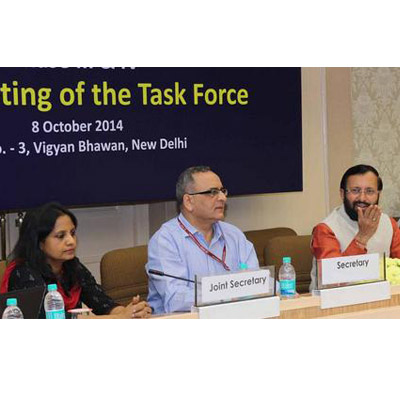
    It should be noted that on 8 October, when all the stakeholders met, the LCOs expressed their view of not being given a voice in the task force.


    “We have requested our president Arvind Prabhoo to communicate to the Minister and to ensure that MCOF be a part of the new task force and that LMO associations/federations from north, south, east and west of India must be part of the new task force,” said Maharashtra Cable Operators Foundation (MCOF) core committee member Bobby Shah.


    He added, “The Minister himself has noticed and mentioned that more than two to four LMO association/federation must be in the task force.”


    Reiterating the new government’s plan to transform the country into Digital India with the ideology ‘saabke sath saabke liye’, Kolkata-based Cable & Broadband Operators’ Welfare Association’s secretary Swapan Chowdhury said the forum has sought government’s intervention to the system, which would work in a transparent manner with a scope of protecting the livelihood of millions of people of our country.


     “We appreciate government’s endeavors to re-look and re-construct the digital addressable cable TV system and accordingly take up time to reconstruct the task force,” the LCOs said.


  • Viewers of pay TV channels should not be burdened with ads: Javadekar

    Viewers of pay TV channels should not be burdened with ads: Javadekar

    NEW DELHI: Even as a few broadcasters continue to grapple with the ad cap issue in the Delhi High Court, Information and Broadcasting Minister Prakash Javadekar today said pay channel viewers should not be burdened with advertisements.


    He said that while the government felt the logic of permitting advertisements was logical in the case of free-to-air channels, it would shortly decide whether this kind of restriction should also apply to pay channels who also earned through subscriptions. FTA channels have no other means of revenue apart from advertisements.


    The Minister was answering a question relating to the 10+2 ad cap presently permitted to all television channels. 


    The News Broadcasters Association and other stakeholders have already challenged the 10+2 formula in the Delhi High Court and it is pending hearing.


    While the NBA contends that news broadcasters being free to air do not earn any other revenue, the government has reiterated that the ad cap was part of the Cable TV Networks Regulations 1994 and the Cable TV Networks (Regulations) Act 1995. 


  • Govt will provide all facilities to local STB manufacturers for DAS: Javadekar

    Govt will provide all facilities to local STB manufacturers for DAS: Javadekar

    NEW DELHI: Information and Broadcasting Minister Prakash Javadekar today clarified that the new dates for Phase III and IV for digital addressable system were the outer limits but all attempts would be made to achieve the target well before that.


    Reiterating that the main aim of the new deadlines was to encourage DAS with use of India-made set top boxes, he told the first meeting of the DAS task force for the final two phases here today that the Government has facilitated C form issue for indigenous manufacturers.


    At the outset, he said the entire digitisation programme was an integral part of Prime Minister Narendra Modi’s Digital India plan.


    He also pointed out that he represented the viewer and consumer, who had no voice unlike the other stakeholders who were present at the meeting.


    Javadekar said the cable TV digitisation process aimed at providing the consumer with greater choices and affordable and qualitative options. The overall objective was to be sensitive to the needs and choice of the consumer. The choice of the consumer was paramount in defining the inputs, strategies and roadmap for the remaining phases of the digitisation process.


    He called upon the manufacturers to innovate and explore new technologies for addressing the different consumer tastes and needs.


    The Minister added that in the next phase of digitisation, the price mechanism offered to the consumer would be a key determinant of the process, particularly as DAS was being extended to rural areas. As a consequence, it was mandatory for all stakeholders to sensitise the consumers on the benefits of the process in view of the rural outreach of the programme. 

    Regarding the indigenisation of STBs, the Minister said that the concerns of the industry had been taken up with the Finance and Communications and IT Ministries and STBs were declared as part of ‘telecommunication network’.


    The Minister said the task force ought to identify timelines for implementation so as to ensure the timely completion of Phase III and Phase IV. All issues concerning the key stakeholders needed to be debated at length so as to ensure the mainstreaming of the process with the existing policy. The need of portability of set top boxes so as to provide the option of interoperability to the consumers was an issue that could be looked into by the concerned stakeholders.


    Every meeting of the task force was critical as it identified critical inputs so as to ensure the effective implementation of the timelines and processes. Every viewer should be able to get the best viewing experience over the next two years, he added.


    He also wanted portability for STBs on the lines of portability for mobile phones and said the government and the task force will study this issue.


    Earlier speaking on the occasion, I and B secretary Bimal Julka said the task force provided an important platform to debate and overview issues related to the digitisation implementation. It also provided an opportunity to understand the concern of stakeholders.


    The experience of such meetings during the first and second phase of implementation of the programme had been extremely useful in streamlining the roadmap for effective implementation. He said the consumer is the judge of what he gets to see and content rules. He said a lot of complaints had been received from stakeholders during the implementation of the first two phases but he hoped to get more suggestions as well.


    The meeting saw various stakeholders raise issues concerning them. Taxation was raised by STB manufacturers and auditing was requested by consumer groups. The broadcaster suggested that the deadline should be reduced to 2015 for both phases. No TRAI member attended the meeting.


    Javadekar also assured that there will be sub committees that will monitor the process of digitisation.  

  • DAS task force to meet on 8 October amidst protests

    DAS task force to meet on 8 October amidst protests

    NEW DELHI: Almost a month after its constitution, the task force set up for the implementation of digitisation in the country and particularly overseeing the execution of the last two phases of Digital Addressable System (DAS) is expected to meet on 8 October at 10:30 in Delhi.


    However, local cable operators who have already expressed their protest at not being given a voice in the Task Force have not been invited to the meeting.


    Talking about the meeting, Information and Broadcasting Ministry secretary Bimal Julka told indiantelevision.com that all the stakeholders named in the task force order of 12 September had been nominated and are expected to be at the meeting. Although an official of the Information and Broadcasting Ministry denied this.


    LCOs who form the backbone of the cable television system in the country said no organisation of LCOs had been included in the task force or invited in the meeting.


    Meanwhile, ASSOCHAM Media and Entertainment Committee co-chairman Sujatha Dev informed the industry body that she is unaware of how a representative of ASSOCHAM was nominated to the task force.  


    National Cable & Telecommunication Association president Vikki Choudhry has in a letter to the I&B Minister Prakash Javadekar alleged that “In spite of all your endeavours taken to clean up the mess that had been created on account of DAS by the previous UPA government, few officials still attached to the MIB are bent on misleading and misguiding you on this much controversial DAS issue.”


    He has also pointed out that certain categories had not been invited to the task force meeting despite them being directly involved in implementation of DAS which included five Independent MSOs one each from North, South, East, West and North East region, five registered LCO associations one each from North, South, East, West and North East regions, a representative of the Association of Regional Television Broadcasters of India/ Regional News Broadcasters Association, five prominent consumers organisations, one each from North, South, East, West and North East regions, a representative of ASSOCHAM and a representative of Telecom Equipment Manufacturers Association of India (TEMA).


    Choudhry added that while there had been mention of these in the order of 12 September constituting the task force, no persons had been nominated for these categories.


    Additionally, he also revealed that there was no representation / invitation sent to Conditional Access System Vendors (an integral part of the entire DAS) and Subscriber Management System (SMS) that controls the entire DAS ecosystem after integration with the CAS.


    According to the 12 September order, the new task force was to be headed by I&B additional secretary as chairperson, with Telecom Regulatory Authority of India (TRAI) principal advisor for broadcast and cable satellite, I&B Ministry joint secretary broadcasting, representatives from the MSO Alliance, five independent MSOs one each from north, south, east, west and north east regions, five registered LCO associations one each from north, south, east, west and north east regions, representatives from the Indian Broadcasting Foundation, News Broadcasters Association, Association of Regional Television Broadcasters of India, DTH Association, FICCI, CII, ASSOCHAM, CEAMA, Department of Telecommunications, Department of Electronics and Information Technology, DG: Doordarshan, DG: All India Radio, BECIL, BIS, five prominent consumer organisations one each from north, south, east, west and north east regions and 33 state level nodal officers one each from the states/union territories governments.

    The task force was to act as an interface between the government and the industry in matters related to implementation of DAS in the cable TV sector and monitor the execution of DAS. It also will have to analyse the roadblocks that may come in the way of digitisation and suggest measures.


    While NBA and IBF will be participating in the meeting, representatives of cable operators associations from different states are protesting against the exclusion of LCOs and MSOs from the meeting. 


  • Joshi composes, Kher sings on ‘Swachh Bharat’

    Joshi composes, Kher sings on ‘Swachh Bharat’

    NEW DELHI: An audio track of the song “Swachh Bharat ka Irada Kar liya hum ne” sung by Kailash Kher has been composed by lyricist Prasoon Joshi and put to music by Vishal Khurana.


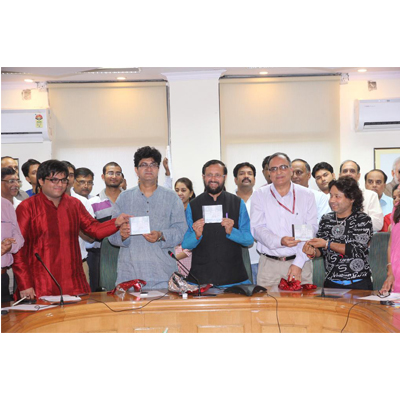
    The track was released by Information and Broadcasting Ministry Prakash Javadekar over the weekend as he administered the pledge of the Swachh Bharat Mission along with the senior officials and staff of the Ministry. 

    The song specially prepared for the Swachh Bharat Mission was composed in very short span of time. A section of the track was shown at the India Gate Ceremony graced by Prime Minister Narendra Modi on 2 October.


    A special song composed by the Song and Drama division on Swachh Bharat Mission was also performed live during the pledge taking ceremony. 

    The Minister along with senior officials took part in the cleaning drive in the premises of Shastri Bhawan. Joshi, Kher and Khurana also took part in the cleaning drive.  


    Similar cleaning drives were held in many Press Information Bureau offices in the country. 

  • Goa to be permanent venue of International Film Festival of India

    Goa to be permanent venue of International Film Festival of India

    NEW DELHI: Although Goa has been the venue of the International Film Festival of India since 2004, there has been discussion year after year on whether it should continue to remain so, with a large section of the film industry particularly from eastern and north east India opposing this move.


    However, Information and Broadcasting Minister Prakash Javadekar has reiterated that Goa will be formally made the permanent venue for the festival.


    The Minister made this statement after the signing of the ritual annual Memorandum of Understanding between the Ministry and the state government at the State Secretariat in Panaji in the presence of Javadekar and Goa Chief Minister Manohar Parrikar. The MoU was signed by Ministry secretary Bimal Julka and Goa Chief Secretary B Vijayan.


    The 45th edition of the festival will be held from 20 to 30 November.


     “With the signing of the MoU, Goa will now be designing permanent facilities and world-class infrastructure for the festival at Goa, which has matured as a venue for IFFI,” declared Javadekar. This year will be the State’s 11th time hosting the IFFI.


    With its peculiar culture and hospitable atmosphere, Goa would soon catch up with renowned international film festivals like Cannes, Javadekar added.


    With a few days to go, Javadekar expressed confidence in the facelift planned for the festival, which is being organised by a steering committee comprising representatives of the Directorate of Film Festivals, the State and reputed film industry stakeholders.

  • “We have to drive BARC to measure outside of TV, on different screens”: Sudhanshu Vats

    “We have to drive BARC to measure outside of TV, on different screens”: Sudhanshu Vats

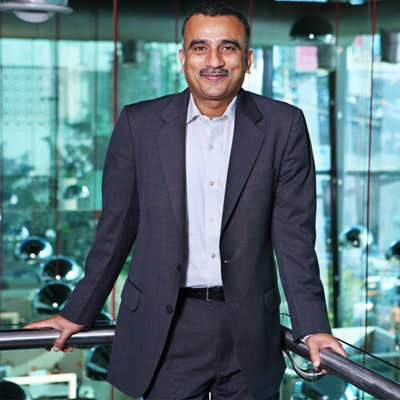
    NEW DELHI: Mobile phones today define the life of the youth. Kids watch all kinds of programmes, sometimes on TV and sometimes not on TV. And this, according to CII chairman national committee on media and entertainment and group CEO Viacom 18 Media Sudhanshu Vats, is not an urban phenomena but an Indian one. The consumers are moving fast, but the question currently is if the regulator and the regulations are moving fast enough?


    Reflecting his thoughts on consumer behavior at the recently concluded CII Big Picture Summit 2014, Vats said that the industry hasn’t made much progress in the area. Talking sector wise in the media and entertainment sector he first spoke of radio. “Today private news is splashed across print, television, internet and then there is news available through tweets and other formats on mobile, but private news is still not available on the radio,” he informed. Through the forum he appealed to the Information and Broadcasting  Minister Prakash Javadekar (I&B) to take this into account during the phase III of FM.


    In the film sector, Vats informed that the number of screens that China has is three times the number that India has. Not only this, while the biggest film in India is close to $50 million, the biggest local Chinese film is close to about $150 dollars today. And Hollywood films tend to be bigger. “There is a need to reduce taxation in ticketing and entertainment. If this happens, we will expand volumes and if volumes expand, we will grow in this country, giving a boost to films which are the best ambassadors of our culture. Both in India and abroad,” he said.


    The third sector he spoke about was events, which currently are not much spoken about. “This can become a hotspot for tourism. Single window clearance is needed,” he added.


    Vats also touched upon the most talked about issue of digitisation. “There is a need to look at digitisation holistically and take strides firmly in one direction. What is happening is that in phase I and phase II, we have done something and not done something. Addressability is still not there. The entire start-stop is not helping,” he opined.


    According to Vats, this new India needs new thinking and it needs new rules and principle. “The time for this is ‘now.’ “We are open to looking at this, but we need to make radical, important strides,” he said while putting forth four new principles to address this new thinking.


    The first is the consumer or viewer. “We need to start the story with the viewer. We need to realise that media and entertainment industry is a consumer industry. The question is:  are our regulations or business models tailored to consumers? The answer is no,” he said.


    The second principle that he stressed upon was on collaboration. “It is extremely important that we start collaborating, both within the industry and by the government with the industry in India and other countries as well.”


    Measurement was the third principle he highlighted. “This aspect is extremely important as audience and viewer is moving very fast. Are we being able to measure it the way we want to, currently the answer is no. But the Broadcast Audience Research Council (BARC) India, which is a joint industry body, is the first step in this area. We have to see how we drive it further so that BARC measures outside of television; on different screens and how it is there for other media as we move forward from the point of view of measurement,” Vats said.


    The final principle that he spoke of was capacity. This refers to human capacity and talent. “Are we recognising media and entertainment as a serious industry? Are we developing it as a curriculum which can be brought about, at least in high schools, so that we start facilitating some of the work which happens. So human capacity building and physical infrastructure capacity building like broadband, digital cable etc needs to be worked upon,” he informed.


    According to Vats, a few years down the line, the distinction between the creator and the consumer will narrow down. Not just this, different sectors of media and entertainment will come together. “Converged India will thrive in a connected world,” he opined.


    India is bubbling with creativity and we can pride ourselves in freedom of thought. “Let’s create in India for the world, make in India, show the world,” concluded Vats.  

  • “DoT should regulate carriage and I&B can look at content”: Rahul Khullar

    “DoT should regulate carriage and I&B can look at content”: Rahul Khullar

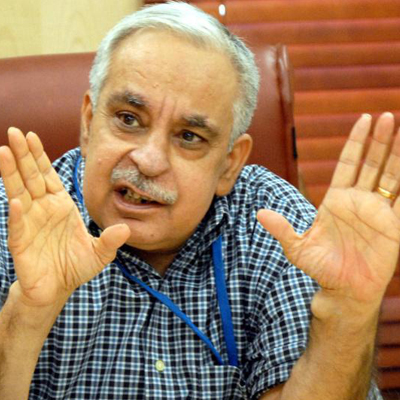
    NEW DELHI: The Telecom Regulatory Authority of India (TRAI) chairman Rahul Khullar has once again spoken loud and clear. The 62-year-old Khullar has proposed that while the Department of Telecom should exclusively focus its attention on carriage and carriage related issues while the Information and Broadcasting Ministry (I&B), considering its history, should be only regulating content.


    “And I think that is the way we need to go,” he said while addressing the gathering at the recently concluded CII Big Summit 2014.


    He also came down heavily on the politicians and political parties. He said, “The Supreme Court through its ruling has clearly stated that airwaves are not the monopoly of the state.”


    So, while Prasar Bharati must exist and it must be independent; politicians, governments, state governments and their organs have “absolutely no business whatsoever to be in broadcasting space,” he announced and suggested that the government must announce this as an integral part of the National Media Policy.


    Khullar also gave his perspective on the other components of the National Media Policy. “Firstly, there must be a clear articulation that we want a free media, unhampered and unrestricted by the government in any way possible,” he said while also suggesting that the media itself must be subject to safeguards. “It could come from other forms of independent regulators. You cannot have an institution which has rights but no duties,” he added.  


    Secondly, there must be commitment in National Media Policy to uphold plurality of views and opinion. “And this must be a commitment,” he said.


    Thirdly, time has come that we start talking about infrastructure. “If this National Media Policy is actually going to work, are we or are we not going to be in a digitised world? We cannot be flipping and flopping the dates as we send out wrong signals to the rest of the world about your credible commitment towards any policy,” he stated.


    Khullar also pointed out the issues with spectrum availability. “It is a nightmare to deal with ISRO. The organisation neither gives you a transponder nor does it allow you to get a transponder of your own,” he informed.