Tag: Pragati Maidan

  • Media Expo in September-end in Delhi; to focus on ad solutions

    Media Expo in September-end in Delhi; to focus on ad solutions

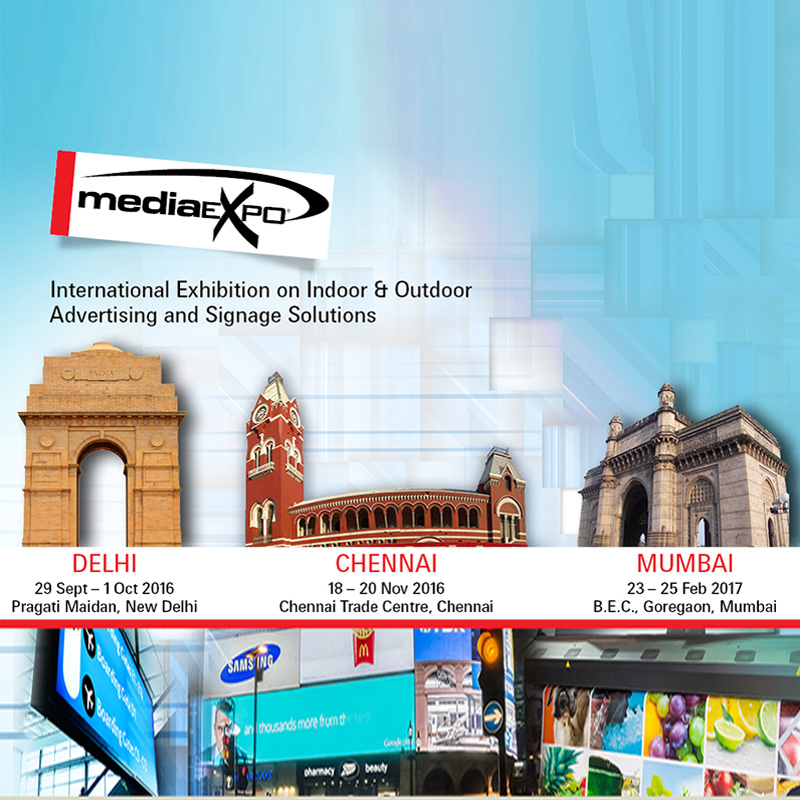
    NEW DELHI: The thirty ninth edition of the Media Expo to be held this year will concentrate on indoor and outdoor advertising and signage solutions. Media Expo will be held in New Delhi with a full range of advertising, signage, printing, and Point of Purchase (PoP) solutions from 29 September to 1 October at Pragati Maidan. The meet is being organized by Messe Frankfurt, one of the world’s leading trade fair organisers, generating around €648 million in sales and employing 2,244 people.

    The trade fair for modern marketers, brand managers and business professionals will be an important source and facilitator of traditional and modern marketing strategies.

    With confirmations from leading brands like Mimaki India, Apsom Infotex, TCS, Rex Tone, ITMS, Fujifilm India, JN Arora, RD LED, Megastar, Neenjas Technologies, Technova, AXYZ Automation, Navratan Speciality, Kartar Corporation, Konica Minolta, SRF, Admart, Infinity Digital Solution, Plasto India, and Arihant Uniglobe, more than 75 percent of the show space of 12,445 square meters is already booked. Companies from China, Japan, Korea, India, and the UK will be on the show floor presenting the very latest in indoor and outdoor advertising and signage solutions and expertise.

    Global media management investment conglomerate GroupM’s latest report says that India is the fastest-growing ad market among all the major markets of the world. The country is on its way to achieving the highest growth rate in ad spends in six years at 15.5 percent in 2016.

    According to a press release, the Indian signage industry specifically is going through a transformation phase from traditional signboards to digital and several technological advancements surging at a CAGR of around 10 percent from 2013 to 2016.

    The market for digital signage systems is projected to reach $ 524 million (Rs 3,510 crores) by 2019. Growth in online services, new printing technologies and laser engraved sign boards are emerging as the predominant trends in the signage board industry.

    Brands like Sign Sutra, Cosign India, Associated Plastic, Neenjas Technologies, Promocare, and Monosign will be showcasing these sector advancements at the fair.

    Printing industry continues its healthy growth with industry leaders taking innovative leaps with technology. Some of the biggest brands in printing industry will be displaying their high-end technologies at the show. Among the highlights is the first look and live demo of HP’s two new DesignJet post-script printers at the fair. Besides ease of operation and vivid results, the printers are also said to cut costs with its 6-ink printing system and can be web-operated by just sending an email message to the printer. Visitors can also see printing advancements and variations associated with inks and consumables, print heads, and printing machinery by notable brands like Colorjet, Monotech, Daksh Enterprises, Briotmatics, Negi and Axis Enterprises among others.

    Featuring more than 100 brands excelling in indoor and outdoor advertising, signage, printing, point of purchase, in-store branding and marketing solutions, Media Expo will cater to the varied needs of new age media, advertising and marketing professionals ensuring ad spends are inclined towards modern, creative and more targeted solutions.

    More information about the fair is available on www.themediaexpo.com

  • Media Expo in September-end in Delhi; to focus on ad solutions

    Media Expo in September-end in Delhi; to focus on ad solutions

    NEW DELHI: The thirty ninth edition of the Media Expo to be held this year will concentrate on indoor and outdoor advertising and signage solutions. Media Expo will be held in New Delhi with a full range of advertising, signage, printing, and Point of Purchase (PoP) solutions from 29 September to 1 October at Pragati Maidan. The meet is being organized by Messe Frankfurt, one of the world’s leading trade fair organisers, generating around €648 million in sales and employing 2,244 people.

    The trade fair for modern marketers, brand managers and business professionals will be an important source and facilitator of traditional and modern marketing strategies.

    With confirmations from leading brands like Mimaki India, Apsom Infotex, TCS, Rex Tone, ITMS, Fujifilm India, JN Arora, RD LED, Megastar, Neenjas Technologies, Technova, AXYZ Automation, Navratan Speciality, Kartar Corporation, Konica Minolta, SRF, Admart, Infinity Digital Solution, Plasto India, and Arihant Uniglobe, more than 75 percent of the show space of 12,445 square meters is already booked. Companies from China, Japan, Korea, India, and the UK will be on the show floor presenting the very latest in indoor and outdoor advertising and signage solutions and expertise.

    Global media management investment conglomerate GroupM’s latest report says that India is the fastest-growing ad market among all the major markets of the world. The country is on its way to achieving the highest growth rate in ad spends in six years at 15.5 percent in 2016.

    According to a press release, the Indian signage industry specifically is going through a transformation phase from traditional signboards to digital and several technological advancements surging at a CAGR of around 10 percent from 2013 to 2016.

    The market for digital signage systems is projected to reach $ 524 million (Rs 3,510 crores) by 2019. Growth in online services, new printing technologies and laser engraved sign boards are emerging as the predominant trends in the signage board industry.

    Brands like Sign Sutra, Cosign India, Associated Plastic, Neenjas Technologies, Promocare, and Monosign will be showcasing these sector advancements at the fair.

    Printing industry continues its healthy growth with industry leaders taking innovative leaps with technology. Some of the biggest brands in printing industry will be displaying their high-end technologies at the show. Among the highlights is the first look and live demo of HP’s two new DesignJet post-script printers at the fair. Besides ease of operation and vivid results, the printers are also said to cut costs with its 6-ink printing system and can be web-operated by just sending an email message to the printer. Visitors can also see printing advancements and variations associated with inks and consumables, print heads, and printing machinery by notable brands like Colorjet, Monotech, Daksh Enterprises, Briotmatics, Negi and Axis Enterprises among others.

    Featuring more than 100 brands excelling in indoor and outdoor advertising, signage, printing, point of purchase, in-store branding and marketing solutions, Media Expo will cater to the varied needs of new age media, advertising and marketing professionals ensuring ad spends are inclined towards modern, creative and more targeted solutions.

    More information about the fair is available on www.themediaexpo.com

  • 22nd Convergence India 2014 expo ends today

    22nd Convergence India 2014 expo ends today

    MUMBAI: Convergence India 2014 expo, South Asia’s largest ICT, media, entertainment and applications industry expo, was inaugurated by Hon’ble Member of Parliament and Former Union Minister, Shri Syed Shahnawaz Hussain at Pragati Maidan, New Delhi. Speaking on the occasion, Shri Syed Shahnawaz Hussain had said, “I am pleased to be present at this important platform that recognizes the potential of the evolving telecommunications, media and entertainment industry and its contribution in boosting the economy, and overall growth of the nation”.
     

    Following this, Dr. Rahul Khullar, Chairman, TRAI set the agenda for the three day expo by opening the floor for dialogue on “Connecting India”, the theme for the 22nd edition of Convergence India 2014. The inaugural ceremony also saw industry leaders such as N Ravi Shankar (Special Secretary & Administrator, USOF, DoT), Anupam Shrivastava ( Director (CM) & CMD (Designate), BSNL), Umang Das, Chief Mentor, Viom Networks Ltd., Rajan S Mathews, ( Director General, Cellular Operators Association of India ), Pankaj Mohindroo (National President, Indian Cellular Association) and Rajiv Bawa (Country Head, Telenor).
     

    The 1stTelecom summit 2014 on “Home Grown Technologies and Skills’ was inaugurated on the day 2 of the 22nd Convergence India, 2014 expo. The summit was jointly organized by Telecom Centers of Excellence (TCOE), Telecom Sector Skill Council (TSSC)and Exhibitions India Group and was supported by Government of India (DoT &DeitY), service providers, manufacturers, training partners, industry associations and academia.
     

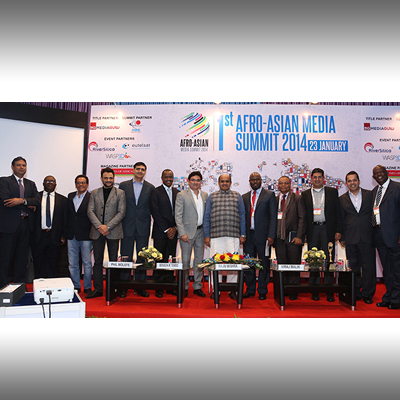
    The day 3 of 22nd Convergence India 2014 witnessed the first of its kind Afro-Asian Media Summit which was chaired by Mr. Phil Molefe, Vetran South African Broadcaster. In his address, he said, “Geographical boundaries have fallen away and we are now one big media community driven by the power of technology. We have to be committed, skilled and innovative to capitalize the abounding opportunities”.
     

    This dynamic initiative will create opportunities of partnerships, investments, support and many more collaborations. With this platform in place, there can be an exchange of ideas, expertise between the two nations.
     

    Mr. Albertus Aochamub, President SABA, said, “This is a partnership of equals. Both India and Africa have common history, struggles and challenges. India is a hub of skilled personnel and with the help of media, technology and other ICT tools, both the countries can learn from each other.”

    Mr. Rahul Nehra, Co-Founder Afro Asia-Media Summit, announced the launch of Afro-Asian Media Awards 2015. He said, “We are taking the first step in driving excellence through the awards. We need to felicitate people of our own continents for the work they do”.
     

    H.E. Dr. Perks Ligoya, High Commissioner of Malawi, said “I feel honored to be in the First Afro-Asian Media Summit. This event comes at a very good time”. He also commented on how through e-learning, e-health, e-money, e-commerce, Africa and India can benefit from each other.

     
    In addition, 22nd Convergence India 2014 also witnessed a seminar on FTTH Council Asia-Pacific, also strategic partner of Convergence India this year. The theme for the seminar was ‘Fiber for Convergence’ and offered great opportunities to the participants to network & collaborate while providing consistent information on FTTH from industry experts.

     
     Some of the prominent speakers were N Ravi Shankar, CMD, Special Secretary & Administrator, USOF, DoT, Anil Pande, Director, Dura-Line, Anuj Jain, PWC and Vipin Tyagi, C-DOT.

     
    Prem Behl, Chairman, Exhibitions India Group said, “With this 22nd Convergence India 2014, the roadmap for telecom, media and entertainment industry has been outlined and we will continue to contribute towards the changes and development of these sectors as the journey continues.”

  • MTNL launches value add service ‘Broadband with Wi-Fi’

    MTNL launches value add service ‘Broadband with Wi-Fi’

    MUMBAI: MTNL has introduced a value add to its broadband services with ‘Broadband with Wi-Fi’. These Wi-Fi services are enabled with CPE’s (Customer Premises Equipment) which have a speed of up to 2 mbps.Using these CPE’s, subscribers will now be able to create their ‘private hot spots’ covering a range of 40 meters in their homes and offices. They can also create “Private public hot spots” through MTNL’s
    pre paid broadband service.

    Speaking on the occasion MTNL executive director A.K. Arora said, “Broadband with Wi-Fi is an initiative to create ease and comfort for our consumers while at home or work. Broadband MTNL’s contribution aims to help increase internet penetration and its usage will be significantly driven by these kind of services”.

    Broadband with Wi-Fi will bring convenience to consumers to the level that multiple computers, laptops and PDAs can operate simultaneously. This will help household consumers who have more than one device at their residence.
    This facet will also help educational institutions such as Engineering, Management, Medical and Research Institutes to save cost and provide better work as well as learning environment.

    Convention centers like auditoriums, conference halls, seminar rooms can also be helped through this connection by providing better service and in turn they will be able to enhance their turnover. With broadband Wi-Fi one can access the Internet anywhere and so café’s restaurants and shopping malls can be converted into infotainment zones.

    The Wi-Fi modem works on the latest version 802.11g of Wi-Fi standard and working in unlicensed 2.4 GHz band. It generally provides bandwidth of 54Mbps. The concurrent users can be upto 30. The Wi-Fi modem shall have a range of 40 meter indoor & 60 meter outdoor range. The range varies with
    obstacles between Wi-Fi modem and laptop/PC/PDA. With above facilities of modem, one can create Hot spot in each house or corporate. The two types of modem used will be USB and Ethernet port or with 4 Ethernet ports.

    Currently MTNL provides Wi-Fi services at domestic airport, India Habitat Center, Pragati Maidan, Vigyan Bhavan, UPSC, Election Commission, IIPA, and Delhi Government etc.

    The customers can get this service by dialing 1500 or 22221500.

  • MTNL launches Broadband with Wi-Fi in Delhi

    MTNL launches Broadband with Wi-Fi in Delhi

    NEW DELHI: Mahanagar Telephone Nigam Ltd Delhi announced the launch of their IPTV-competent broadband with Wi-Fi, with a maximum speed of 2 mbps, which will help set up thousands of “Private Hot Spots” across the Capital city.

    Meanwhile, the Wi-Max system is already functioning on a trial basis in some government offices, and should be launched within this year, A K Arora, Executive Director, MTNL said at a press briefing here today.

    The broadband Wi-Fi modem works on the latest version of 802.11g of Wi-Fi standard and functions on the unlicensed 2.4 GHz band and generally provides bandwidth of 54 mbps. There cane be up to 30 concurrent users in this system.

    The MTNL will sell two types of modems for the new Wi-Fi system: one with one USB and one Ethernet port and the other with four Ethernet ports. Besides, there will be the normal LAN facility as well. MTNL is buying the modems from HT Star company.

    The users can purchase pre-paid cards for the usage, which come in various price ranges.

    “Small hotels and restaurants can set up these connections which function on radio wave and not through any cable, and allow its customers to use the Internet,” Arora explained.

    What is most attractive is the pricing of the modems and the monthly rentals.

    “It will cost the clients very little, just the security deposit and the cost of the modem. There is no setting-up cost, being on radio waves,” he added. There can be multiple users working with their computers or laptops within 40 metres of the modem inside a house or restaurant (in open space, with less physical intrusions, they can work within 60

    “The need for us to go into this is that there are at least 1.3 lakh private hot spots across the world, whereas in India there are just a thousand. Especially with the government declaring 2007 as the year of the broadband, we decided to launch this from February 8, and you can get through the Sanchar Haats anywhere. It will be set up within two days of the purchase made,” Arora claimed.

    He said that the system has already been tried at the domestic airport, Pragati Maidan, India Habitat Centre, Union Public Service Commission office, Indian Institute of Planning and Administration and many offices of the Delhi government. “The most popular has been the one at the airport,” Arora said.

    He said that setting up public hot spots will hugely help businesses, convention centres, engineering, management and medical institutions, and also private homes. “This helps us also develop our new revenue model, because there will be up to 30 users per modem, and download is free up to one GB and then it costs Rs 1 per MB, as usual our broadband.

    The registration charge is Rs 500, security deposit Rs 800 and installing and testing charges are Rs 300. The monthly rental is only Rs 150.

    The payments for usages can be made through credit cards as well purchasable prepaid scratch cards.
    “Suppose you go to a restaurant and are not sure of being over charged, the scratch card is of major help,” explained a senior engineer present at the press conference.

    Our aim was to become the dominant player in the field, Arora stressed as the factor behind the decision to launch early. Besides, he said, there will be 90 lakh broadband users by 2007, of which MTNL will have to give 50 lakh connections.

    Arora said that Wi-Max is already there in use in Delhi. “This room in which we are having the meeting is Wi-Max enabled, and there are some other government offices as well. Trail runs are on, and we can launch when the government gives permission for the spectrum, which should be the end of this year,” Arora hoped.

    Arora also announced the launch of MTNL’s CDMA mobiles, and asserted that with this, the Nigam has become the only service provider to operate both CDMA and GSM services.

    The handset comes for really cheap: the original handset, Huwai C 300, costs Rs 3,500, but MTNL is selling it for just Rs 1,499 paid upfront (VAT extra), with Rs 1,499 free talk time in local network CDMA, GSM and landline) as well, for one year.

    MTNL is also giving Rs 25 worth talk time free to other networks, for a period of a week.

    The pulse would be of 15 seconds and the rate, Arora said, would be Rs 0.10 for a pulse for local calls. The STD charges would be Rs 2.40 per pulse, he said.

  • ‘B’cast pros will benefit from tec choices at Expo’ : AS Guin – Engineer-in-chief at AIR and president, BES

    ‘B’cast pros will benefit from tec choices at Expo’ : AS Guin – Engineer-in-chief at AIR and president, BES

    The NGO Broadcast Engineers Society is holding its 13th Expo this year from February 1 to February 3 at Delhi’s Pragati Maidan. It is a much larger exposition this year, and with the government setting the cut-off date for digitalisation, will showcase technology options. Possibly the most socially significant technology presented will be the low-band community radio system, supported by Unesco.


    Indiantelevision.com’s Sujit Chakraborty met AS Guin, engineer-in-chief at AIR and president, BES, to find out what’s on offer this year.


    Excerpts:

    The BES Expo is just a few days away. What are the new things expected this year?

    There are many changes in respect to last year. The participation has grown manifold and instead of the earlier venue of Hotel Taj Palace, as in 2006, this year we have to shift to a much larger arena, the Pragati Maidan, which gives us 20 per cent additional space.

    In terms of revenue, what is BES’ business model?

    Here too, there will be a 20 per cent rise in receipts. There will be 16 new companies who will take part for the first time. BES depends mainly on revenue from the exhibitions and membership. We have 1,600 members across the country, and we expect the number to grow further next year. We have to cut some of the costs, but then we also plan to start an educational programme, which will be no-loss, no-profit.

    What are the major technological windows that you wish to open this time?

    The biggest is of course the community radio solutions and mobile TV and radio. These would be most important in terms of both business and community service, with local NGOs being able to broadcast on their own radio, with all the support of AIR experts. Even our retired engineering staff is willing to offer their services free to persons willing to set up local channels.


    As I told you, we have 1,600 members across the country and they give us a tremendous outreach to help spread the low-band community radio movement. We are very excited about this programme, which will be a prime exhibit this year.

    Who all are supporting this event?

    The event is supported by the Ministry of Information and Broadcasting , Government of India, and endorsed by International Association of Broadcasting Manufacturers and also by Prasar Bharati, Asian Broadcasting Union, UNESCO, IGNOU and Department of Information Technology, Government of India.


    UNESCO is going to showcase its low-cost technological innovations and is with us at BES EXPO 2007, and will push forward the community radio programme. They are going to present suitcase radio, hand-wound sets (which need no battery or electricity to run) solar-powered FM transmitters, and other radio equipment compatible with Indian conditions.


    They will also set up in their stall a community multi-media centre, including radio, internet, and content networking programme, with live content programming.

    Many private sportscasters have announced their mobile programmes and one is running already, but these show snaps only. So how is your system going to be different?

    No, ours will be a full streaming. This will not be clips. In fact, this will completely shift prime time to office time, with people seeing DD or hearing AIR news and programmes on their way to office. These will not be clips, but as you see or hear news.

    New technology will always remain in the public domain, because of the sheer scale of operational costs, which the private sector would find very difficult to match

    Is this Prasar Bharati’s own technology?

    There is technology available in Europe and the US. The latter is using the MediaFlo. technology and Europe is using DVB-H. MediaFlo is a proprietary system, while DVB-H is an open system. An expert committee constituted by the Ministry of Information and Broadcasting has recommended DVB-H .With Secretary level approval a final decision is still awaited.

    What are the technical and operational differences in the two?

    DVB-H is IP-based and an open platform, where as MediaFlo has proprietary elements MediaFlo has less channel switching time than DVB-H. Both employ battery-saving techniques. They have different encoding and modulation schemes.

    What is the delay, and how long would it take?

    The proposal has been sent to the Planning Commission, which will study it and will have to sanction money. This could take eight to 10 months.

    What will be the outcome of the event?

    Broadcast professionals will be highly benefited in enhancing their knowledge about emerging broadcast technologies and also have a look and feel of new broadcast equipment systems in the exhibition. It will help the broadcast planners to choose viable and right technologies for their digitalisation plans.

    You have said that AIR and DD will turn digital during the 11th Plan. What is the cost you are looking at?

    For AIR, we have asked for something like Rs 5,900 crore and for DD another Rs 6,000 crore. But these are very large sums of money and chances are we might not get it all during the 11th Plan itself. But even if we get something like half of this, we could go digital and AIR could have seven digital channels. The output would be almost FM quality.

    Would these channels be available on the normal radio sets we use today?

    No, that technology is not available so far and even in the west, it is very costly, about $80 for a digital radio handset.New technology will always remain in the public domain, because of the sheer scale of operational costs, which the private sector would find very difficult to match.


    This will completely take away perhaps the only joy of millions of poor Indians who are totally dependent on AIR for news and entertainment, besides the public services as on health and agricultural advice. Well, the decision to go digital, across the world, has been taken, so this will have to happen. In any case the cut-off date set by the government for transition from analogue to digital is 2015. But then, as demand goes up, the prices will come down. A normal radio handset now costs Rs 200, and these sets will cost something like Rs 500, at the most, with cheaper technology coming in. But do remember that the audience will have a choice of seven channels.

    Any other benefits on offer for this costly technology?

    Interactive broadcasts and a number of value-added services will be possible. Well, one of the most important things will be the pro-active role AIR will get to play in disaster management. We will introduce a system all across the channels on the coastal belts, which will be integrated with the early warning systems. Thus, whenever an early warning is triggered off the computer linkage with the radio stations will ensure that the channel would automatically switch over to transmitting the warning, with the ongoing programme switched off. Once the warning has been issued, the radio station would switch over to the normal ongoing programme. This will give a huge lead time for people to evacuate.

    How do you see prices coming down?

    Take the example of DTH. When it started the companies were asking for Rs 5,000 per dish, but we are now giving our DTH, DD Direct Plus at Rs 1,200. So this depends on two things, content and demand.

    Who are you looking to as technical collaborators?

    You see, the US has HD radio, and Korea uses DMB but that’s mostly for TV. China uses DRM technology for external services. We have spoken with China about DRM .It has shown a keen interest and once the two countries collaborate, the prices of receivers would dramatically come down. China would have to collaborate to set up factories in India, because if we have to import, prices would be very high.

    What are the network plans?

    The digitalisation process would start with all the studios. It would be the Short Wave transmissions that would go digital first. Each state capital would have one Short Wave transmitter and there will be three transmission complexes with five transmitters per complex for national digital radio coverage. These complexes will be suitably located., Each complex will transmit five digital channels across the country, including regional language channels. This will mean that these channels will be accessible across the country. So, a Bengali in Mumbai would not have a problem if he wishes to hear All India Radio Kolkata.

    Being a public broadcaster, how do you think the private players would match your line of thinking?

    Interestingly, I think that introduction of new technology will always remain in the public domain, due to the sheer scale of operations and costs that private enterprise would find it difficult to match. This is a Plan expenditure with government support. Only after it is introduced in the country will public private participation happen. For example, the private players have invested a huge amount in Phase 1 and 2 of FM, which is in the analogue mode. AIR is proposing digital FM in the near future, using DRM+, or DAB or HD Radio technology. But forget replacing the existing transmitters, even initial investment will not be easy for the private entrepreneurs, unless the receivers for digital broadcasting become low cost and catch the imagination of the public.

  • BenQ to unveil range of products

    BenQ to unveil range of products

    MUMBAI: BenQ, a leading player in digital network devices, today announced their participation as official display partner at India’s biggest gaming event Skoar! 2007 at Pragati Maidan, Hall no. 12, New Delhi.

    Skoar! 2007 is an expo for gamers, game publishers, content providers and gaming-related hardware manufacturers.

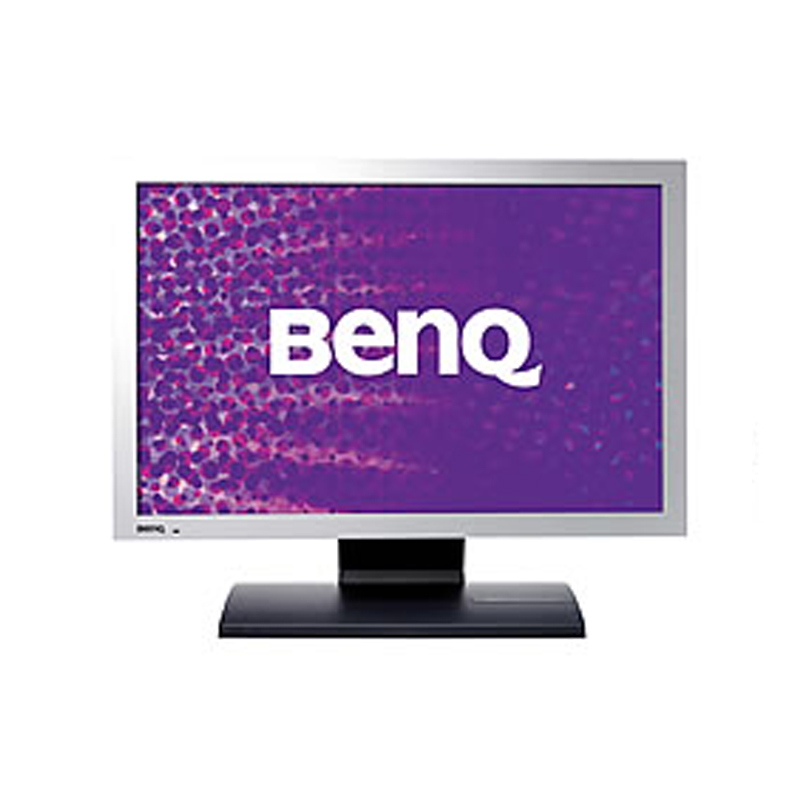
    Leveraging this platform, BenQ also announced the availability of new products in India including the BenQ FP92W, claimed to be the worlds fastest LCD wide screen monitor, and the new BenQ MP510 projector for professionals.

    The BenQ FP92W will offer a completely new “viewing” experience and comes with a 5ms-response time, the release says.

    Further BenQ MP510 projector is an affordable big screen home entertainment well suited for gaming. With a 1500-lumen lamp and 2000:1 contrast ratio, the MP510 adds wall color correction which gives picture quality even withoput a projector screen, the release claims.

    Says Robert Dung, BenQ managing director IMEA (India-Middle East-Africa), “With the advent of hi-tech games, movies and animation there would be an increasing demand for fast and wide screen LCD monitors as compared to the CRT monitors.”

  • Kalam calls for ethical use of telecom tools

    Kalam calls for ethical use of telecom tools

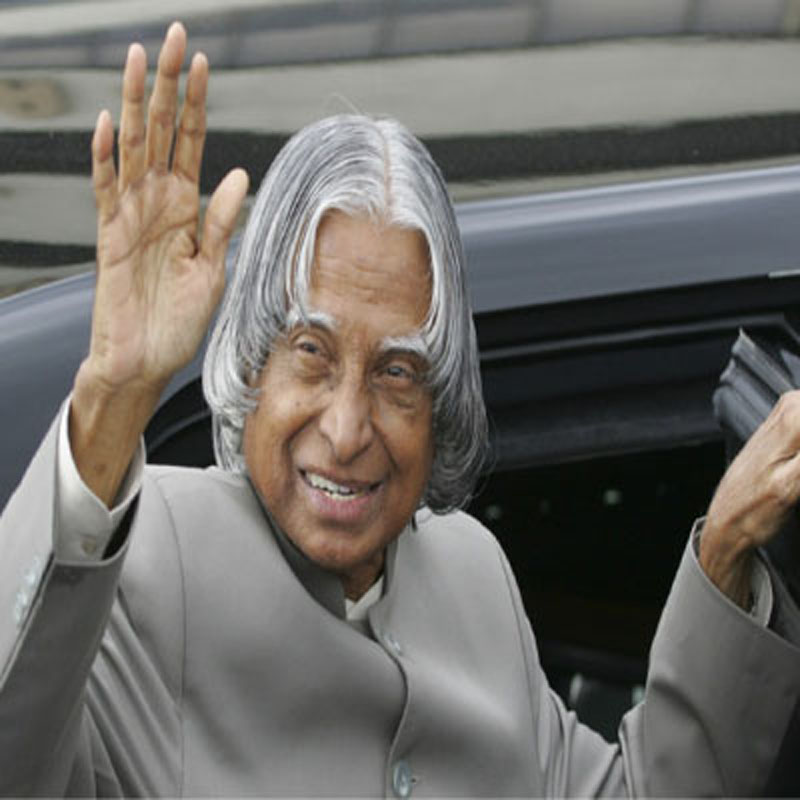
    NEW DELHI: President Dr APJ Abdul Kalam stressed the need to assess and debate issues relating to invasion of privacy while inaugurating “India Telecom 2006” here yesterday.

    “Telecom technologies are capable of locating the position of a cell phone, its utilisation pattern, and the particulars of the contactees, leaving the individual open to avoidable exposure and exploitation by motivated agencies,” he said.

    Thus, ethics for utilisation of telecom tools and technologies also need to be evolved, so that individual privacy is not intruded upon, he asserted.

    Although some restrictions are in place for unsolicited telephone calls, there is a need for a more effective control mechanism. President Kalam said this in his address after inaugurating “India Telecom 2006 Exhibition and Conference” – held at the Pragati Maidan in the presence of Dayanidhi Maran, Minister of Communications and Information Technology.

    The President said that connectivity is key to the transformation of a billion people into members of knowledge society. He said that this meant connecting 600,000 villages and bringing their 700 million people to the 300 million people living in urban areas.

    Speaking on PURA (Providing Urban Amenities in Rural Areas) the President said that for providing knowledge connectivity, Village Knowledge Centres (VKCs) would act as frontline delivery systems.

    Establishing VKCs in the panchayats would empower villagers with the knowledge and help act as local centres for knowledge connectivity within the overall framework of PURA, Kalam said.

    The service data have to come from various connected institutions which provide the service to the people on a timely basis periodically. But the transformation of data into user-friendly information on a regularly updated basis is the real challenge, Kalam said.

    The main focus of the VKCs should be to empower the youth to undertake development tasks in the villages and establish rural enterprises, which would provide large-scale rural employment.

    Therefore, it is essential to skill-enable and knowledge-enable the village youth through the industry, banking as well as academic and marketing institutions. VKCs should act as facilitators, he stressed.

    The President appreciated the Ministry of Communication and Information Technology for its efforts in establishing 100,000 Common Services Centres, which will become part of PURA knowledge connectivity.

    Maran, in his keynote address, said that in order to achieve growth with equity and sustainability, it is necessary to take technology to the masses. This aspiration had been visualised by the late Prime Minister Rajiv Gandhi way back in 1985, he held, adding that the late leader had laid the foundation for providing one PCO in every village.

    The present government’s decision of providing support from USO Fund for mobile telephony as well as broadband services is going to open up the vast untapped market in rural areas of the country.

    “In fact, we are christening 2007 as the ‘Year of Broadband’ in India,” Maran said, adding that presently the country’s broadband penetration is quite modest, at about three million connections.

    With the USO scheme for coverage of rural areas and intense coverage through WiMAX, the DoT is expected to start adding more than one million broadband connections per month before the end of year 2007, he revealed.

    For this, Bharat Sanchar Nigam Limited (BSNL) has come out with an aggressive plan for providing five million broadband connections in the year 2007 itself, with a minimum download speed of 2 mbps.

    This, he hoped, would be a real challenge for private operators too, “either to match it or beat it”.

    The entry of Nokia into the manufacturing space, followed by Flextronics, Motorola and a whole lot of others, has set up the platform for positioning India as a global hub for telecom manufacturing. He said there were expectations of fresh commitment of about $2 billion in telecom manufacturing itself in the next year or so.

    “This would be further enhanced to $20 billion by the year 2010, with more jobs, contribution to GDP, revenue, etc.,” he said.

    N Srinivasan, vice president, FICCI, in his welcome address said: “Recognising the key role that telecom plays in the growth of the economy, FICCI has joined hands with Ministry of Communications and IT to launch this annual event. The first event has seen very good response from all leading telecom players. We hope to make it a flagship event of the telecom sector in India in coming years.”

    He said that the Indian telecom industry was on a high growth trajectory, with over 183 million mobile subscribers in the country today.

    Srinivasan added, “I hope this event, with the expertise of national and international speakers, along with inputs from all the stakeholders with their vast and rich knowledge domain, will bring out useful recommendations for policymakers.”

    The international exhibition will showcase products and technologies from over one hundred companies, both domestic and international. The Indian telecom industry is being represented by companies like Bharti Airtel Limited, BSNL, C-DOT, Hutchison Essar Mobile Services Ltd, COAI, Qualcomm India Pvt Ltd. Reliance Communication Ltd. etc.

    Among the international participants there are companies from Canada, China, Singapore, Hong Kong, and Italy, while Taiwan, Korea and US .companies will be seen in independent pavilions.

    India Telecom 2006 has been organised by the Department of Telecommunications, Ministry of Communications and IT in association with Federation of Indian Chambers of Commerce and Industry (FICCI) and Telecom Equipment Manufactures’ Association (TEMA).

    The main sponsors are BSNL, Nokia, Ericsson, Reliance Communications and ZTE. MTNL is the co-sponsor, while the Associate Sponsors are Airtel, Idea Cellular, Tata Indicom, Qualcomm and UT Starcomm.

    Ernst & Young are the Knowledge partners.

  • President to inagurate INDIA TELECOM 2006 on14 Dec

    President to inagurate INDIA TELECOM 2006 on14 Dec

    MUMBAI: India Telecom 2006, the biggest showcase of the telecom industry, will be inaugurated by President Dr APJ Abdul Kalam on 14 December at Pragati Maidan, New Delhi.

    Communications and information technology minister Dayanidhi Maran will deliver the keynote address at the inaugural session.

    Over 200 companies are participating is the international exhibition and conference. In the exhibition the Indian telecom industry will be represented by companies like Bharti Airtel Limited, BSNL, C-DOT, Hutchison Essar Mobile Services Ltd, COAI, Qualcomm India Pvt Ltd. Reliance Communication Ltd. Etc.Among the international participants there will be companies from Canada, China, Singapore, Hong Kong, and Italy while Taiwan, Korea and US companies will be seen in independent pavilions.

    A highlight of India Telecom 2006 will be the CEO’s Roundtable with Maran. It will be an interactive session of all the telecom CEO’s with the minister. Trai chairman Nripendra Misra and DoT secretary DS Mathur will also address the session. Among the participants at the Roundtable will be ADAG chairman Anil Ambani, Bharti Enterprises CMD Sunil Bharti Mittal, Infosys CEO Nandan Nilekani, Essar Group chairman Shashi Ruia, BSNL CMD AK Sinha, MTNL CMD RSP Sinha and IDEA Cellular MD Sanjeev Aga.

    Concurrent to the exhibition would be technical seminars and conferences. The objective of the summit is to discuss new growth drivers that are revolutionizing the telecom sector in India and around the world. It would also focus on showcasing the huge potential that India holds in this sector for inviting investments.

    The first session on 15 December would be on Regulatory and Policy Imperatives. Misra will chair the session, while the theme address would be delivered by Ambassador David A Gross, US Co-ordinator for international communication and information policy, US department of state. Global Mobile Suppliers Association president Alan Hadden will also address the session.

  • Sandy Media launches second edition of ‘TAAL’

    Sandy Media launches second edition of ‘TAAL’

    MUMBAI: Sandy Media, publishers of two magazines, Theatre World and SoundSolutions – Asia’s resource magazines on motion picture exhibition, and audio/acoustics technology applications respectively – is launching the second edition of Theatre AV Acoustics and Light (TAAL), to be held at Pragati Maidan, New Delhi from 1 to 3 December 2006.

    TAAL, meaning rhythm, is aimed to be an industry platform for theatre, audio-visual, acoustics, and lighting industries in Asia. It is an initiative conceived and conceptualised in tune with the industry demand for a new platform between the equipment manufacturers and the user communities from across the continent / globe, asserts an official release.

    The national capital is now the focus of global attention for trade and commerce and therefore is a befitting event location for TAAL. In fact, TAAL will now be hosted alternately in south and north India to sustain the national footprint.

    This year the event will be a congregation of prospective cine-mall builders/multiplexes, performance space owners/builders from across Asia, and design professionals, consultants, manufacturers, integrators and people from entertainment industry from across the world, adds the release.

    Commenting on TAAL, AV integration expert Kavy Pradeep said, “The tech sessions are too good, they have thrown up many questions which we are not even aware off. It is good that something like this is happening.”

    TFEAC and CCFEA general secretary Abirami Ramanathan added, “Though the cinema exhibition industry has been witnessing tremendous changes in technology and management, most cinema owners in India are not aware of these changes. A convention and tradeshow such as TAAL would bring about the awareness.”