Tag: Pradeep Hejmadi

  • ZEEL appoints Pradeep Hejmadi as Business Head of Zee TV

    ZEEL appoints Pradeep Hejmadi as Business Head of Zee TV

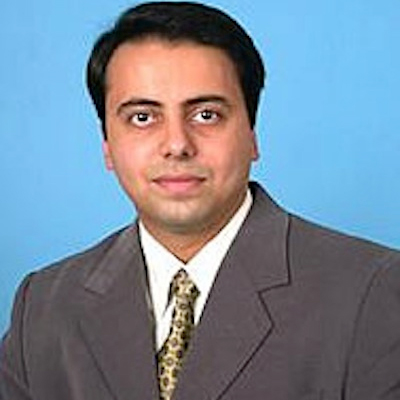
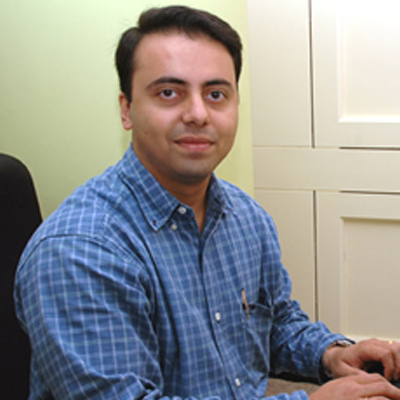
    MUMBAI: Zee Entertainment Enterprises Limited (ZEEL) today announced the appointment of Pradeep Hejmadi as business head – Zee TV. Pradeep will be responsible for the overall functioning of Zee TV and will report in to Bharat Ranga, chief content and creative officer (CCCO), Zee Entertainment Enterprises.


    Speaking on the appointment, Punit Goenka, MD & CEO, Zee Entertainment Enterprises said, “We would like to welcome Pradeep into the ZEE family. With multi-dimensional understanding of the Indian media industry, he has spear-headed and successfully launched, innovative and first-in-class profit-bearing initiatives in the Indian media marketplace. We are confident that his industry knowledge and consumer insight will be invaluable in driving Zee TV’s further growth and innovation.”


    Bharat Ranga, chief content and creative officer (CCCO), Zee Entertainment Enterprises Limited said, “Pradeep brings with him an immense experience that will help us drive our Vision 2020 goals. We welcome him on-board and we are confident that his presence will add value to the channel and the organisation.”


    Pradeep Hejmadi commented on his joining, saying, “ZEE’s flagship channel Zee TV has a rich and successful history behind it and I am looking forward to being a part of its future.  With the incredible talent, original content and dynamic team that the channel has at hand, I am sure that we will be able to break new barriers and conquer even greater heights.”


    Pradeep has over 18 years of experience in the Indian media industry spanning Media Sales, Media Planning and Buying, Consumer Research, Business Planning and Product Development. Prior to joining ZEE, he was the Senior Vice President – Strategy Group & Marketing at TAM Media Research Pvt. Ltd. where he was responsible for anticipating needs and focusing resources towards ensuring TAM that builds on its Intellectual Properties and drives the value upwards for consumer insights data and services. He pioneered the Radio Audience Measurement (RAM) Service in India and launched a Sports Sponsorship Evaluation & Consulting division – TAM Sports, thus consistently delivering revenue growth year-on-year, through development and delivery of new and innovative products/services.

    He formerly served as director – business and operations, Nickelodeon India at MTV Networks India and as director – research at Turner International India. He was also associated with organisations such as Discovery Communications India, J. Walter Thompson and The Times Of India. Pradeep is a Science Graduate from Mumbai University and is extremely passionate about playing Badminton and running marathons.

    Pradeep Hejmadi’s appointment is with effect from 1 July, 2014.
  • Pradeep Hejmadi quits TAM; to join Zee TV

    Pradeep Hejmadi quits TAM; to join Zee TV

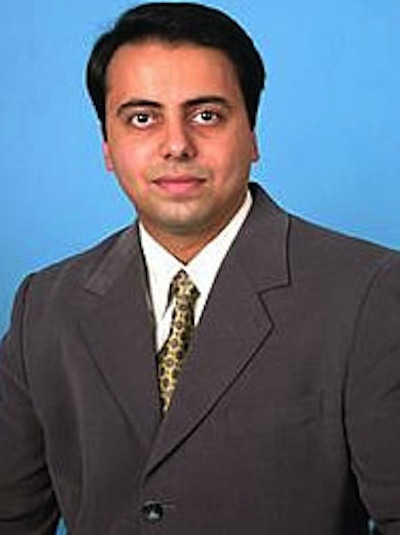
    MUMBAI: He is going back to his broadcasting roots. After close to a decade with TAM Media, senior vice president- S group and marketing Pradeep Hejmadi, is moving on to a business head role at Zee TV. Prior to TAM, Hejmadi had stints with MTV Networks as Nickelodeon India director-business and operations, Turner Broadcasting director research and Discovery Communications director, research and planning.


    Hejmadi who has been associated with TAM since 2005 was reporting into TAM CEO L. V. Krishnan and was responsible for revenue generation, client management, new business development and new product development. He also focused on enhancing the value associated with TAM data/services by way of integrating TAM products/services into day-to-day functional areas of TAM’s clients.


    “It was nice having Praddy with TAM for almost a decade. The journey we crafted together as a team that included the rest of TAM unit heads was pioneering and heralded a new era of work in areas like S-Group, AdEx products, News Track and TAM Sports. As he steps into a new shoe to handle a new portfolio in one of TAM prestigious client’s organisation, we wish him the very best. The younger team of S-group that he had groomed over these years has stepped in to take the responsibilities of S-Group, Client Service and Marketing into future,” said TAM Media Research CEO L. V. Krishnan.


    “Working with TAM and the team members in each unit was a lifetime experience. The decade was full of opportunities with proactive initiatives in Client Servicing, new product development and innovation undertaken by the team during my tenure. I leave TAM with a sense of pride for not only contributing to TAM’s achievements but also in a way, changing the working dynamics of the TV industry,” concluded Hejmadi.

  • ‘With all the new delivery platforms, we are at the doorstep of a very interesting phase’ : Pradeep Hejmadi – Tam Media Research vice president

    ‘With all the new delivery platforms, we are at the doorstep of a very interesting phase’ : Pradeep Hejmadi – Tam Media Research vice president

    He has been associated with a wide variety of assignments in the domain of media planning and broadcast management. Now he’s buried into hardcore research.


    It’s been just over six months since Tam Media Research vice president Pradeep Hejmadi joined the company and when we mention that to him, he seems shocked at how time has flown.


    His last assignment was with the kids’ channel Nick. His experience traverses through various media organisations like Turner International, Discovery India, HTA and The Times of India.


    Speaking to Indiantelevision.com’s Hetal Adesara Hejmadi dwells on the various issues that concern the television industry today and also on the exciting phase that it entering.


    Excerpts:

    It’s been just over six months since you joined Tam, how has the journey been so far and what was the mandate given to you when you joined?

    The journey has obviously only begun but it’s been good fun. Being on the broadcast side, you see one view of the world. There I was doing a whole host of stuff that is quite different from what I’m doing here. So from that point of view it is a refreshing change to come to audience research and to help people to converse with data.


    In terms of mandate, the idea was simply to focus on two areas: one is on the needs of the broadcasters and to keep the system abreast in terms of the areas that are emerging as interest areas for the industry per se.


    The other mandate is to get people to make decisions on the basis of the information that they have. Some people tend to have a biased approach towards numbers as research sounds like such a difficult animal to manage and tame. Our focus has been to try and make sure that people are able to read audience behaviour and act on it. And hopefully start seeing some response on the basis of what they are doing so that they can get far more structured in the way they go about their businesses.


    The environment is pretty crazy as we are operating in a very heterogeneous market and it is not easy to use any information and just act on it. Many a times the devil is in the details so our focus is really to find that devil and help people tame it.

    Can you throw light on the new initiatives that Tam is or will be undertaking and in which areas?

    Not too much of what we do is an industry secret, so I’m sure that you know pretty much everything. The Elite panel is something that is going to be launched and the current panel expansion is also underway. The panel expansion is a nine month process that we started in the beginning of this year. By the fourth quarter of this financial year, we should be ready. We have consulted the industry and many people have told us not to make a mid-year change in the measurement science. So after consensus from the industry, we are looking at January 2007 to switch to the new universe.

    What about the launch of the Elite panel and what according to you will be the data thrown by it in terms of viewership patterns? How much of importance will it hold in the coming days in terms of tracking viewership?

    The Elite panel will be up by July this year.


    The way that we have crafted the panel has not been to bring out any nuance but to focus on a segment. Everyone wanted to have an audience profile, which is the top end of our entire market structure. So in Mumbai and Delhi, we are now going to have a panel, which will represent the behaviour of the top three or four per cent of the population.


    Our focus has been to use all the quantitative data that we can get and construct that profile in such a manner that it robustly segments the elite from the national panel. Again we have a whole set of variables through which we have been successful in bringing that point out.


    In terms of behaviour, once the panel is up people will see what happens. There are a lot of myths and that is a constant in any industry. But once the panel is up people will be able to see the reality as it is.


    Obviously, given that the elite are the top three or four per cent of the population will have a different lifestyle and it will reflect in their media consumption as well. Right now we don’t have the panel up so I can’t even force a guess as to what the panel will throw up. But it should be very interesting and the industry is very keen on getting that kind of information.

    Which are the broadcasters who are specifically interested in the elite panel?

    Surprisingly, all the broadcasters are interested. For the Hindi general entertainment channels, the aim is to talk to everybody and they don’t want to exclude the elite. English entertainment channels are also very keen because they feel that the core component of their viewership is the elite. But a lot of these feelings and aspirations that broadcasters have at present are driven by perception. But as the data comes out we will be able to find out the reality.


    A few of the things that we have seen is that for the elite the segmenting elements in terms of defining them differ by market. For example, in Delhi, the definition for elite was a much trickier one than it was for Mumbai. But now for both the markets we have been able to arrive at variables that describe that segment very well.

    ‘In the digital age, numbers will keep rapidly changing so we needed to find ways of being able to pull out from a large sample a very robust estimate of DTH penetration as it stands’

    So the elite panel will be only in Delhi and Mumbai?

    Currently we are looking at only these two cities for the elite panel.

    With new delivery platforms like IPTV and mobile TV coming in this year and also keeping in mind the new DTH platforms launching, is Tam undertaking any research in these areas?

    We have just done a penetration study, which has brought out estimates of what the DTH number is for households, the small number of the addressable conditional access boxes that are there and also what the current incumbent players have in terms of market share.


    Those numbers are already in place. The fact is that in the digital age, numbers will keep rapidly changing so we needed to find ways of being able to pull out from a large sample a very robust estimate of DTH penetration as it stands. The large sample needs to be touched, collected and reported in a very short period of time. We were able crack that by using the IMRB household panel, which has shown very interesting numbers. As things pan out, we will be working towards getting the universe estimates updated more frequently. We will also be able to understand the rollout of this phenomenon in different markets in a very different manner.

    Is this a difference of viewership of people watching DTH and those watching C&S?

    At the moment we don’t know because we are not measuring DTH. To us the mandate from the industry was to measure any phenomenon which had a market share of five per cent and above. If any phenomenon was below five per cent of a market then there is no point in measuring that.


    So from our point of view we have been doing establishment surveys to measure a phenomenon. So if CAS or DTH becomes five per cent of the market then we will have to report on it.

    So are you saying that DD Direct and Dish TV DTH subscribers do not add up to five per cent of the market?

    No it is not five per cent of an individual market.

    Once Tata Sky and Reliance launch their DTH, will Tam begin measuring viewership on DTH?

    Once DTH arrives and reaches a five per cent critical mass, we will begin measuring it. Now whether it is pre or post the launch of Tata Sky DTH is immaterial.

    If you get 300 channels as against 100, will you watch three times the TV? It will be interesting to find out

    What will be the difference in the backend infrastructure for measuring DTH?

    There will be a difference because these signals are digital. Currently, primarily because the market is analog is nature, we had meters which worked on analog. Now we’ve brought in state-of-the-art TVM5 meters which can measure DTH and any digital and IPTV signals. These are the meters that we will be deploying for measuring viewership on DTH.


    So the elite panel will be on TVM5 meters and also all the metros will be moving to TVM5 meters.

    What according to you is going to be the impact on programming content after the launch of these new platforms?

    This is a very interesting question you raised. There is one aspect of what DTH providers will do to justify a person to shift from cable to DTH. And there is another part of the picture, which is what the consumer will do once the new DTH platforms are launched.


    DTH platform players have already realized that to drive people to take a box or dish and to go through the motion of having a one on one relationship with the service provider, they will have to add some value over the basic tier. So from their point of view, they are trying to build and aggregate as much content and provide as much variety as possible. Whether consumers will watch or not, we will know once we know what content has been aggregated.


    It will be a game of wait and watch to find out whether tastes will change. But the fact is that tastes changed when we shifted from terrestrial to cable and satellite. So going by that, tastes should change with DTH coming in but how much and by what measure will have to be seen.


    Obviously some rules of the game will change. For instance, currently distribution does play a very critical role. At that time, the kind of TV sets will not matter because all these households will be remote households by default because they will switch channels off the set top box (STB). All of these households will get all the channels on the STBs provided they pay for them. So it will become television neutral and also cable bandwidth neutral.


    In one sense it becomes a level playing field across consumers. Now if you get 300 channels as against 100, will you watch three times the TV? It will be interesting to find out. I have a feeling that over a period of time people and their tastes change. So you will see a change in behaviour but over what period of time and will it be an easy or painful switch-over will be ascertained by various constituents.


    From our perspective, we need to have measurement that is representative and precise. We need to have people understanding what is coming out of this system so that they can then funnel it back.


    We are actually at the doorstep of a very interesting phase. In six to eight months’ time we will start seeing some things changing.

    What are your views on conditional access system (CAS)? How is it going to impact the industry if and when it comes into place?

    From a long term perspective it is obviously good for the industry. Nothing happens very easily. We know the resistance to change that we as human being have. On CAS it has got into a kind of a mess and has had a bad history. It also got much politicized and hence because of that and a whole host of things, it has made life difficult for CAS.


    But I think once DTH rolls out and channels announce their pricing for DTH, it will help CAS. It is very good that we have a body like the Telecom Regulatory Authority of India (Trai), which has put in certain norms to help platforms iron themselves out. So in their regulation the ‘must provide’ clause has been put in and pricing parity has been brought in so that channels can’t have different pricing for different platforms. This will help CAS and DTH.


    Intrinsically there are some issues with CAS. One of them is inter-operatibility. As far as CAS is concerned, if you stay in Chembur and then move to Churchgate, you might not be able to use the same box. Whereas this problem does not arise in DTH.


    In Chennai, for example CAS did not fly because the tastes of that market is very different. Also the popular regional channels are all free to air. So the number of people who were ready to pay for that box was very small. But in a lot of other markets, most of the Hindi entertainment channels are all pay. As long as they don’t buckle because of advertising revenue pressures and stay pay, they could fuel growth of CAS.

    Tam has been tracking viewership in Chennai, where CAS has been implemented. What have been the learnings from there?

    CAS penetration is very low in Chennai. The pricing is very exorbitant. For instance, initially, the channels that were on STBs and were of interest to the mass population were kids channels and English entertainment channels. If you added up all those channels on an a la carte rate, the cost of the box was four times the cost of annual subscription for these channels. Now that’s prohibitively expensive.


    In that market, it was a first launch, so it is understandable if Sumangali might have adopted the strategy of not wanting to price it down that much. But obviously the value proposition was not that compelling. This is not the case with a lot of northern and western markets. In these markets a lot of Hindi content is pay, which has appeal. Therefore it might drive the box much faster than it did in Chennai. So Chennai is really an exception.

    Going forward, what according to you are the issues that broadcasters will face in the coming years with new technologies launching? Do you have any words of caution for them?

    I don’t have any word of caution for them mainly because of one reason – I don’t see any threat, I only see an opportunity in the way things are happening. Consumers have consumed channels for a while and they like the programming they watch. The positive thing that is happening now is that a broadcaster is seeing an opportunity in a disguised form of various distribution routes.


    If broadcasters see that as an opportunity and seize it, it might be a lot more good news for them than what it seems to be, with certain reservations. If you get your pricing right; if you make sure that as a broadcaster you are not biased towards a distribution platform, it is only going to be better because there are issues with the kind of TVs in a household and in what kind of analog frequency band is there with cable. Plus there are issues with the number of people you can serve with one cable system. All of these will cease to exist with DTH.


    A consumer will start making a choice and give their preferences, whereas broadcasters will be able to solidify the product over a period of time. So that revenue line will become a far more solid line.


    Obviously, there will be a painful and uncertain phase but that is there everywhere. People will have to learn to deal with it but it will take a slightly longer time. Consultation can work much better than confrontation in many a situation. At this stage people in the industry need to communicate more effectively… forget strategy and that’s what will help them.

    Do you see any other major event impacting the television industry this year?

    If I say yes, I might be wrong. If I say no, I might be wrong too. I really don’t know. I think the days ahead are going to be fun as all the different genres are reinventing themselves in order to get a lion’s share, whether it is music, kids, regional or Hindi general entertainment channels, all of them are rethinking their approach.


    I don’t know what else will be big this year, but religious channels are catching up big time. Sports is going through the roof in terms of the number of events. With so much of cricket, I’m not sure whether it will have that novelty value. It will have mass appeal but whether all masses will run for it will be worth watching.

    What are the genres that will work this year? Will reality shows still rule the roost?

    Reality is a very broad term, it’s like saying – serials, which brings everything under one category. But within reality we have seen only a few things happening. Reality has its pluses and minuses, you can’t overdo reality and start running it like a soap as it tends to become boring. It needs to have that ‘Wow’ factor.


    Also notable is the fact that unfortunately all the sequels of reality have not done that well. So it also tells you something about such programming. But there is a growing appetite for it from the consumers’ side. So from that point of view it will stay… in what form and format, we will have to see.


    If you see the number of people going to Mipcom from India, you know that reality is not going anywhere. Over a period of time things will start ironing out in the reality genre.


    In reality a unique concept, which is executed well gets you walk-ins faster than a soap. For anybody who wants a shot in the arm, reality is the quick fix solution. But then, they need to have a solid strategy to retain that new audience and capitalise on it.