Tag: Pradeep Hejmadi

  • Zee allocates 20% of total spends on marketing ‘DID Super Moms 2’

    Zee allocates 20% of total spends on marketing ‘DID Super Moms 2’

    NEW DELHI: Zee is leaving no stones unturned to push the next edition of Dance India Dance (DID) Super Moms. For marketing and publicty, the channel has allocated around 20 per cent of the show’s total budget. The reality show is commencing on 28 March on Zee TV.


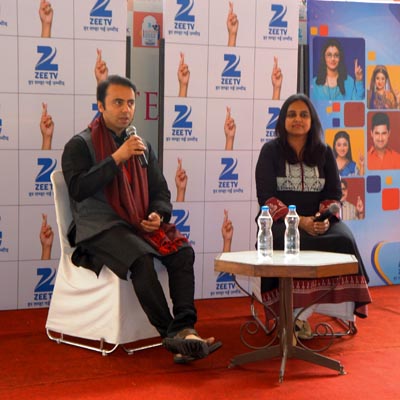
    Zee TV business head Pradeep Hejmadi told Indiantelevision.com that the marketing will also stress heavily on social media, apart from the usual marketing route on television channels.


    Speaking on the sidelines of a press meet here, Hejmadi said that there will be emphasis on advertising actively through radio, but print media may be used only on the day the series is to commence.


    However, sponsorships deals for the show have not yet been finalized. The channel is in active discussions with potential advertisers for all categories, including the title sponsor.


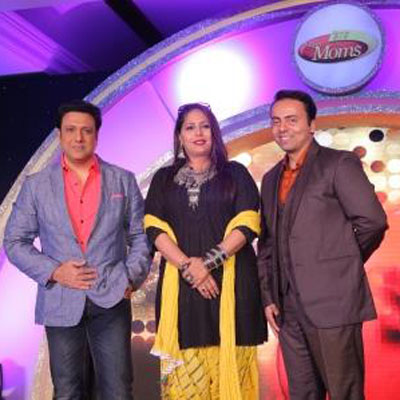
    Apart from Geeta Kapur and Terence Lewis, who have been part of the jury earlier, actor Govinda has come on as a judge. However, the concept of Maha Guru (a role, which Mithun Chakraborty essayed in the earlier series) has been done away with.


    Hejmadi said that auditions were held in 16 cities and towns and post that the 16 shortlisted candidates were called to Mumbai.


    The show had also introduced the concept of skippers and the dancers had been divided into three teams, each headed by a skipper, who trained them.


    Hejmadi also informed having achieved its core target audience in the first season of the series, the channel has now decided to add some new features.


    In order to provide support to the Super Mom, the channel will now highlight the contestants’ ‘super families’ on the show too.


    Hejmadi said, “This season aims to celebrate the dancing talent of India’s most graceful mothers yet again and set higher benchmarks for excellence in dance. We have some very interesting contestants this season. While some are dancing for the sheer joy of it, there are others who are reconnecting with a latent talent. There are also some unique cases where the lady in question is participating in the show to redeem herself and dance, as an art form, in the eyes of her family.” 


    He added, “We are privileged to have Govinda on board – without a doubt, the most natural, effortless dancing star Bollywood has seen in recent years. With him joining our DID veterans Geeta and Terrence as a judge, we look forward to a season packed with phenomenal performances and some great entertainment.”


    The new season will be a 11 week series starting with the auditions of the show, moving into week-on-week eliminations with the top 15 contestants from across the country vying for the coveted title of DID Super Moms.


    Television actor Karan Wahi will host the show, which is being produced by Essel Vision Productions, the creative and production studio of Zee Entertainment Enterprises Ltd (Zeel).


    Govinda said, “Mothers represent love, caring, nurturing and strength, so it’s going to be wonderful to be surrounded by so many of them in the weeks to come. DID has a set a benchmark for all dance reality shows in terms of the talent it brings forth every season. The creative team of the show has an eye for picking out only the best from across the country. I have just shot a couple of audition episodes and I am floored by the sheer range of talent these mothers have displayed and the reasons that motivate them to dance.”

  • The first-of its-kind crowd-sourced Book on Ummeed

    The first-of its-kind crowd-sourced Book on Ummeed

    MUMBAI: Zee TV, India’s leading broadcaster, recently announced an evolution in its core proposition to ‘Har Lamha Nayi Ummeed’– A line that captures the beauty of re-discovering a new ray of hope with every moment of life. The channel, with its rich programming content that resonates with this proposition, has emerged as a beacon of hope to millions of viewers over the years. Apart from setting inspiring examples for the masses through the journeys of its strong, resilient fiction show protagonists and lending a national platform for celebrating the common man’s talent through its non-fiction formats, Zee TV’s endeavors of spreading hope have extended beyond the realms of just television content – the most recent case being ‘Hum Hai … Ummeed-e-Kashmir’ where the channel, along with its philanthropy partners, organized star-studded charity concerts to raise funds and provide shelters for the rehabilitation of flood-afflicted citizens of Jammu & Kashmir, Assam & Vishakhapatnam. As an interesting extension of its constant mission of spreading Ummeed, Zee TV recently invited its loyal viewers to share their personal ummeed stories – Real life accounts of their journeys of hope, successes and triumphs over any daunting obstacles and challenges life posed them with.


    The channel has received an overwhelming response and some very intriguing and inspiring stories of tiding over trials with the power of hope! Zee TV believes that the country has a lot to benefit from reading about these motivating accounts of Ummeed and plans to bring them to the masses in a book specially written and curated by author Rashmi Bansal — a writer, entrepreneur and a youth expert with six best-selling books on entrepreneurship, each of which have sold more than 1 million copies and been translated in 10 languages. She is also one of India’s most sought-after motivational speakers. Her books – be it I Have a Dream, Poor Little Rich Slum, Follow Every Rainbow, Take Me Home or Arise Awake, have captured the journeys of enterprising women, students, slum-dwellers and small-town entrepreneurs.


    Every single Ummeed entry shared by Zee TV’s viewers will be showcased on the channel’s official website, 10 entries per week will be featured on air through astons on Zee TV, the top 25 will make their way into the special book being curated by Rashmi Bansal while perhaps a select handful of the best stories will go on to inspire Zee TV’s upcoming shows.   


    Elaborating on Zee TV’s plans in this regard, the channel’s Business Head Pradeep Hejmadi said, “Zee TV has and will always stand for Ummeed. It is its articulation that will change to reflect the changing times. So, as we recently evolved our core proposition to Har Lamha Nayi Ummeed, making it even more relevant to our viewers’ daily lives, we set out in search of inspiration. We called out to our own viewers to share their most moving, motivating accounts of triumphs and victories – stories where they held on to Ummeed and stayed afloat, tiding over tribulations and challenges, only to emerge winners. We’ve received an overwhelming response with thousands of people writing in with diverse subjects and issues. These are stories waiting to be told, as they have the potential to inspire. With Rashmi having made a significant contribution towards encouraging India’s youth, shaping careers and fostering entrepreneurial spirit, we are pleased to partner with her in bringing alive some of these most impressive crowd-sourced stories of Ummeed. Rashmi will curate and author a special book for Zee TV that will tell each of these truly inspiring Ummeed stories in the way only she can!”


    Rashmi Bansal said, “Zee TV understands the hopes, dreams and aspirations of the common man of India. While my passion as an author, has been writing about those who’ve made such dreams come true. So, when their team approached me to write and curate a book based on stories of ‘ummeed’ shared by thousands of their viewers, I thought – wow, what a powerful idea! Such a book will definitely create a huge and positive impact.  The challenge now lies in identifying the most deserving entries whose stories provide true inspiration and hope. The task is not easy, as fascinating stories continue to pour in … but it’s very satisfying. My work on the book has just begun and we hope to showcase some truly inspiring role-models who will lend ummeed to countless others!”   


    The book will be released on 2nd October, 2015 – the anniversary of Zee TV.

  • Zee TV sings the right tune with ‘Sa Re Ga Ma Pa Li’l Champs 5’

    Zee TV sings the right tune with ‘Sa Re Ga Ma Pa Li’l Champs 5’

    MUMBAI: Singing, like any other art form, is a talent which comes to the fore very early in life. These seeds of talent are then nurtured and some of them even get a chance to be part of highly-competitive reality shows.

    Right from the country’s finest, budding talent to some of the who’s-who of the music fraternity are wooed as judges. It’s a platform that has grown from strength to strength with each successive season and has struck the right chord right from its very inception.

    Yes, we are talking about none other than Zee TV’s ‘Sa Re Ga Ma Pa’, the first-of-its-kind singing talent search show on Indian television. It has been instrumental in introducing the country to some of its demigods of music over the last two decades. Not only that, it has given a glimmer of hope to countless, aspiring singers, to tirelessly showcase their talent season after season.

    The channel stood tall on the ratings chart when it bought back the fifth season of ‘Li’l Champs’ on 27 December, 2014. And the audiences simply lapped it all up! It therefore comes as no surprise at all, that the premiere week of ‘Sa Re Ga Ma Pa Li’l Champs 5’ garnered a stupendous opening of 4,776 TVTs in the very last week of TAM TV ratings.  And so, 2014 closed on a very high note!

    It shot to the top of the table amongst all singing reality shows of 2013-2014. According to TAM TV ratings, other singing shows like ‘Indian Idol Junior’ (2013) on Sony Entertainment Television (SET) opened at 3,777 TVTs and ‘India’s Raw Star’ (2014) on Star Plus opened at 4,521 TVTs.

    Zee TV Business Head Pradeep Hejmadi believes that this ride to success not only hinges on a strong weekday fiction line-up; but it has equally focused on building strong weekend pillars in the ‘Super Weekend’ non-fiction band.

    He goes on to say, “The promising opening to our latest non-fiction property ‘Sa Re Ga Ma Pa Li’l Champs’ only adds to our weekend offering. It has 12 beautiful young voices of India and the larger vision of the show is to lend ‘Har Lamha Nayi Ummeed’ to countless other similarly talented children, to be inspired and hone their latent talents. Let’s hope the journey of each of the ‘L’il Champs’ motivates India’s youth!”

    Moreover, the marketing also paid off well for the channel. An aggressive on-air and off air strategy was done which included promos on TV channels.  A roadblock was executed across news, kids and music channels on the launch day.


    To top it all, a high visibility print campaign across key main lines pan-India and high frequency radio plan across key HSM markets was done.

    2014 was an unforgettable year of jubilation for the channel. It made a clean sweep in the fiction genre last year with four of its weekday primetime shows leading the pack in the top 10 fiction launches of the year.

    Likewise, the channel’s fiction line-up has grown from strength to strength with each successive launch. Jamai Raja’s opening episode that clocked in 5,930 TVTs, combined with an opening week average of 5,488 TVTs, made it the highest opening soap in the last two years. The show also emerged as the quickest gainer and attained slot leadership within three weeks of its launch.

    Kumkum Bhagya saw a stupendous 171 per cent growth during its ‘shaadi’ highpoint (first four weeks average: 2,963 TVTs and the ‘Shaadi’ event registered 8,043 TVTs), thereby gaining slot leadership in week 34. The soul-stirring, historic series Jodha Akbar continues to be a consistent slot leader and winner for over a year now.

    “The sustained success of our fiction programming speaks volumes of our relationship with audiences…It has not only evolved but strengthened over the years. Viewers seek refuge in our main protagonists, who give them a ray of hope, as every story unfolds; thereby, bringing to our audiences, a reflection of our core proposition of ‘Nayi Ummeed’,” adds Hejmadi.  

    The spirit of innocent camaraderie, fun and frolic is in the air!  In a hugely competitive format, these cute, gutsy ‘Li’l Champs’ now embark on a historical, musical journey. They will simply floor you with their command over ‘sur’ and ‘taal’ way beyond their years, week after week, leaving you in raptures with mature renditions of songs, that you would least expect little ones to even attempt, let alone have heard of.


  • The movers and shakers of 2014

    The movers and shakers of 2014

    To achieve something, one needs to let go of something, 2014 saw many stalwarts of the media and entertainment sector taking that leap.

    From being bitten by the entrepreneur bug to grabbing on to better opportunities, the industry saw a number of movements. Some of these created a stir while others went down as “regular” developments. Nonetheless, Indiantelevision.com lists down some of the major movers and shakers of the years…


    Ajay Bhalwankar: He is a man who can be credited to providing valuable programming inputs across content on various channels. The year 2014 was like a shuffling battle for Bhalwankar. After spending almost 19 years with Zee Entertainment Group, with his last stint as programming head at Zee TV for six years, he joined Sony Entertainment Television (SET) on 7 April, 2014 as chief creative officer. Now in SET, he provides creative leadership and direction for the channel, and leads the programming and OAP (on-air-promotions) teams. Spanning various roles of creating, writing, programming, producing and directing entertainment content, he is an industry veteran with over 20 years of experience.

    Ajay Trigunayat: TTN English entertainment channels, Romedy Now and Movies Now CEO Ajay Trigunayat quit the network this year. With M K Anand taking over as TTN CEO and business functions being centralised, Trigunayat moved out. Before joining TTN, he was in the Middle East in an entrepreneurial capacity, and had been the business head of the Zee English Channels bouquet, and put in stints at Lintas, Contract and Rediffusion and at Pepsi in a sales role.

    Ajit Thakur: In a shocking development, the man credited for Life OK’s success story, Ajit Thakur decided to call it quits from the network. It was in July this year that he was given an additional charge of managing the network’s youth entertainment channel, Channel V. Currently he is serving his notice period and his last day in the organisation will be February, 2015.

    Abhijit Avasthi: An engineer by education, Abhijit Avasthi was the right-hand man of India’s ad guru Piyush Pandey. After spending more than 10 years at Ogilvy, he finally decided to hang his boots to pursue what he loves the most.

    However, according to reports, Avasthi is likely to set up his own creative agency, a move that he has been contemplating for a while.

    Alok Agarwal: Zee Media CEO Alok Agarwal ended his one and a half years stint at the network to take charge as Network18 group COO.


    Bharat Ranga: Since 1998, he had been an invaluable member of the Zee Entertainment Enterprises Ltd (Zeel) family. After a 16-year stint with the network, he bid adieu in the month of October to explore new avenues. While at Zeel, he moved across functions and domains seamlessly, from sales to business head to being the international business head and then, the chief content and creative head for the organisation, he has been instrumental in making Zee’s content an unforgettable one for the audiences. His last project – Zindagi is getting critical acclaim from the masses.

    Dilip Venkatraman and Savvy Venkatraman: ITV Network, which owns and operates news channels NewsX and India News, appointed former CNN IBN and IBN7 CEO Dilip Venkatraman as group COO of strategy and business development. Meanwhile, Savvy joined the network as group chief marketing officer.


    KV Sridhar: After 17 long years Leo Burnett India chief creative officer, Pops, moved on to join SapientNitro, an interactive marketing, creative design and technology services agency. The movement did create a stir in the industry with many questions being raised on who can fill his shoes. Rajdeepak Das joined the agency as chief creative officer, soon afterwards.

    MK Anand: The former Disney UTV Media Networks MD MK Anand took over as the new MD and CEO of Times Television Network (TTN), stepping into Sunil Lulla’s shoes.  Anand had previously worked at The Times of India group for nearly 19 years, beginning first with the print business for 14 years and later on with the television business at Zoom from 2004 to 2009. He was the managing director for Disney UTV Media Networks till December 2013. The move saw functions like HR, finance, distribution being centralised and direct reportage to Anand.   

    N P Singh: The industry was treated with a good surprise at the beginning of 2014, when in a major development Multi Screen Media (MSM) promoted its COO N P Singh as the new CEO. He replaced Man Jit Singh who was designated as non-executive chairman and moved to Los Angeles (LA).


    Namit Sharma: From a creative background to a broadcast space, it was a challenge for former Wizcraft head for television business Namit Sharma. It was in early February when the news of former programming head Ajay Bhalwankar quitting and Sharma stepping into his shoes came to light. From directing fiction shows at Cinevistaas to film production and script writing at Yash Raj and handling events and non-fiction properties at Wizcraft International Entertainment, Sharma has done it all. As the programming head of the channel, he has brought some best creative ideas to the table.

    Nagesh Chhabria: IndusInd Media Communications Limited (IMCL) CEO Nagesh Chhabria too was seen hanging his boot this year. Chhabria later bought 50 per cent stake in Mumbai-based Bhawani Rajesh Cable & Digitech Services through his company Bhima Riddhi Digital Services (BRDS). He also signed an agreement with Atlas Consolidated LLC – a joint venture between Greenwich Equity Partners and Jagran Infra-Projects led by Sanjiv Mohan Gupta – to create a national MSO with about $200 million being pumped into it.

    Prem Kamath: The industry was shaken after former Channel V head and Star Pravah general manager decided to quit from Star for better opportunities at A+E Networks as deputy managing director, Asia Pacific. Associated with Star Network since 2007, Kamath had been heading Channel V for more than four years. Seeing his capability, he was given an additional responsibility at Star Network to head Star Pravah in 2013.

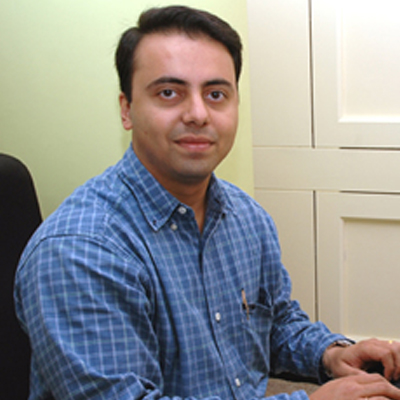
    Pradeep Hejmadi: With more than 18 years of well-rounded experience in the Indian media industry spanning media sales, media planning and buying, consumer research, business planning and product development, he is the man with multi-dimensional understanding of the media business. Former TAM Media Research senior vice-president Pradeep Hejmadi quit the organisation to join Zee Entertainment Enterprises Ltd (Zeel) as business head in the month of June. At TAM, he was responsible for revenue generation, client management, new business development and new product development and changed the working dynamics of the TV industry.

    Pratap Bose: Omnicom-owned DDB Mudra witnessed a sudden churn at the top, early this year when DDB Mudra Group COO Pratap Bose resigned from the agency after a six-year stint.

    The exit, who was looking to take over the top job, came after group chief executive officer and managing director Madhukar Kamath was given a four-year extension.

    Raghav Bahl: Network18 founder and chairman Raghav Bahl, sold his baby to RIL chairman and MD Mukesh Ambani for a whopping Rs 4000 crore. What followed this was an upheaval of sorts, as one by one, the main pillars of the company began to fall. As soon as the meeting concluded between Bahl and the management of Network18, departures began which included group CEO B Sai Kumar, COO Ajay Chacko, CNN-IBN deputy editor Sagarika Ghose, IBN Network editor in chief Rajdeep Sardesai, Network18 Media CEO Sanjay Dua, Network18 digital CEO Durga Raghunath, Network 18 CFO RDS Binni Bawa and deputy foreign affairs editor Suhasini Haidar.

    Rajdeep Sardesai: It was in July this year that after nine long years, the face of IBN18 and editor-in-chief Rajdeep Sardesai decided to move on from the network. He later on joined the India Today group as consulting editor. Further, penning his expertise of writing, in November he launched his book – ‘2014: The Election That Changed India’. The book tracks the story of the 16th Lok Sabha elections with a media insider’s view. It was in the same month when deputy editor at CNN-IBN Sagarika Ghose too bid adieu to the Network18 group and joined Times of India as consulting editor. 

    Rajesh Iyer: Associated with the channel since its inception, Colors marketing head Rajesh Iyer has been one of the many behind the success of popular shows like Khatron Ke Khiladi, India’s Got Talent, Jhalak Dikhhla Jaa and Bigg Boss. Iyer quit Colors in March to join Zee Entertainment Enterprises Ltd (Zeel) as its business head, new initiatives, Hindi broadcast. With more than 13 years of experience in marketing and business segment, he aims to create some thrilling benchmarks in the industry.

    Ravi Mansukhani: The year 2014 saw the ending of the seven year innings from IndusInd Media & Communications Ltd. (IMCL) managing director Ravi Mansukhani, who decided to step down from his position. It was said that Mansukhani had expressed the desire to relinquish his services, which was accepted by the board of directors in the board meeting held on 31 January. His next move is yet unknown.

    Sameer Nair: He has donned numerous hats. From selling space in Yellow pages to being a member of a political party, Sameer Nair has had a volatile career. It was in July this year when the former Star India CEO joined Ekta Kapoor’s Balaji Telefilms as Group CEO.


    S N Sharma: In what can be described as the biggest setback was the resignation of DEN Networks CEO SN Sharma, who was one of the founding members of the multi system operator. Sharma’s vision of growth through consolidation and digitisation had laid the foundation for the company. He has also spearheaded DEN’s rapid growth with his visionary leadership and unparalleled execution abilities. He has also been the driving force behind taking the company into the digital era.

    Suhasni Haider: In a major development, CNN-IBN deputy foreign affairs editor and prime time anchor Suhasini Haidar bid adieu to the organisation in May this year. To focus on long-format journalism, she joined The Hindu as its diplomatic editor. 


    Sunil Lulla: A 30-year media and communication veteran, Sunil Lulla made headlines in July when he decided to move on from Bennett Coleman & Co. Ltd. After almost 10 years with BCCL, Lulla, joined WPP-owned Grey Group as chairman and MD for Grey Group India.
    His joining the advertising industry was homecoming as he had started his career in one.
    However, his appointment led to Grey Group India president and CEO Jishnu Sen moving on from the network.

    Tony D’silva: With Ravi Mansukhani stepping down, IMCL saw a new MD and CEO in Tony D’silva, who was earlier the president of Hinduja Ventures Limited (HVL) and was overlooking its upcoming Headend InThe Sky (HITS) project. D’silva was given additional responsibilities as Group CEO-Media of HVL, and MD and CEO of IMCL.  

    TS Panesar: Star India EVP for distribution TS Panesar, who was entrusted with the responsibility of handling distribution for national DTH and digital addressable systems (DAS) earlier in 2014 when the JV between Star and Zee- MediaPro was broken, quit.  He later joined MSO Hathway Cable & Datacom as head-video business.  

    Vikram Mehra: After spending close to 10 long years at one of the leading DTH companies in India, Vikram Mehra, the chief commercial officer of Tata Sky moved on to Saregama, this year. While at Tata Sky, he was responsible for subscription revenue management, churn management, brand marketing, new product development, consumer analytics, interactive service operations, consumer research and PR, he is handling the digital platform for Saregama.

    Vikram Sakhuja: It was in October that GroupM announced the appointment of Lindsay Pattison as global CEO of Maxus, the post held by Vikram Sakhuja. Till date his next move in the group hasn’t been decided, but he is expected to take up a global role at parent firm GroupM.


    Vivek Srivastava: It came as a surprise when the news of former Colors commercial and digital head Vivek Srivastava quitting, shot the mailers. His extensive background in research, awareness of new media and over a decade in the broadcast industry contributed to maintaining the robust presence of all Colors brands in the digital space and managing the overall costs for the brand.  He headed to Times Television Network (TTN) in the month of October as senior vice-president and head of the English Entertainment Cluster, which includes premium channels like Movies Now and Romedy Now.

    (The names are in alphabetical order)
     

  • Zee’s progressive outlook for 2015

    Zee’s progressive outlook for 2015

    MUMBAI: As we gear to celebrate the ‘Happy New Year’, Hindi general entertainment channel Zee TV is looking for some changes.  It was on 14 December when viewers got to witness the channel sporting a new look which was unveiled at the Zee Rishtey Awards.


    With the new tagline ‘Har Lamha Nayi Ummeed’, the channel aims to capture the beauty of re-discovering a new ray of hope with every moment of life. Along with the new brand identity, Zee has also donned a fresh look with a new logo.


    It was in 2011 when the channel rolled out its new tagline ‘Umeed Se Saje Zindagi’, to which ZEEL MD and CEO Punit Goenka said that the company’s objective was to take forward a progressive outlook.


    While the previous slogan resonated with the content across Zee TV’s primetime shows, the new one’s core objective, according to Zee TV business head Pradeep Hejmadi is to get an audience that can contextualise all the shows in Zee’s environment. “Today what tends to happen when you pretext a context, audiences turn around and say ‘This can happen on any channel’. To us, it clearly tells us that most of the channels have not been able to very clearly define what you should expect and what you should not. That is important when your space is well-defined by the audience.”


    For the channel, it was important to create a proper mind space and then articulate it nicely. “Once the canvas is set then filling up the balance part of the painting is not very difficult,” asserts Hejmadi.


    Journey of six months…


    As an on-going exercise, the channel does brand equity measurement every quarter. Moreover, it also does regular interactions with the audiences on a daily basis for variety of shows and also for general brand conversations.


    On the brand, what the channel observed and heard clearly from the audiences was ‘Umeed Se Saje Zindagi’, which over a period of time, received decent responses. “It had literally celebrated life around umeed and its proposition of saying that ‘Our life becomes beautiful when there is hope’ was something that the audiences felt really nice about,” says Hejmadi. “What we were delivering through our shows was clearly umeed in different forms and authors, in different situations.”


    However, Hejmadi believes that there was a need for a shift from ‘Umeed’ to ‘Har Lamha’ because though the earlier brand proposition was not irrelevant but it was not sharpening any further for an audience to find relevance on an on-going basis.


    Hejmadi feels that this was the relevant next step. “Typically, any brand when feels that its proposition has been acknowledged, but is not giving them the kind of competitive advantage that one would like, it tends to recraft its communication and takes a step forward.”


    How it all began? The channel was brainstorming for nearly six months to get the right proposition in place. The research highlighted the various routes of communication to positioning line, what is valid and what will stay valid, what is flexible and inflexible if the channel can adopt and what can the channel do creatively with different things.


    Campaigns cracked quickly, comes the quick reply from Hejmadi. “It is just that the right creative person has to have the right strength of coffee to come up with a kickass idea. That happened in one day.”


    The new packaging for the channel has been designed and developed by Paris-headquartered design studio Les Telecreateurs. Zee Entertainment’s creative agency FCB Ulka crafted the advertising campaign, the music for which has been rendered by music director duo Salim Sulaiman.


    The new design dons a deeper shade of blue, as opposed to the erstwhile aqua blue, symbolising a “stronger, more dynamic edge.”


    Further, weekday fiction shows are represented by a “strong” shade of blue (which captures the faith and trust of Zee’s loyalists) and weekend fiction shows are represented by the colour yellow (which stands for warmth and optimism). Orange stands for weekend non-fiction (symbolising cheer, confidence and celebration), and the red packaging stands for movies and events (capturing both, excitement and youthful energy).


    Hejmadi feels that the new motif of the packaging is a spinning top, originally derived from the left top portion of the ‘Z’ itself. It spins, taking the form of a beautiful flower-like element. Here, each spine is perceived as a new lamha; every show of Zee TV is a new lamha, a new emotion, a new sense of exuberance, a new cherishable moment. And from this thought stems the new brand slogan ‘Har Lamha Nayi Ummeed’.


    The channels tested what are the associations with the softer blue versus the brighter blue logo. It clearly witnessed that the brighter blue logo was playing out as a lot more assertive, positive and younger. “We wanted to make it a lot more personal.”


    In umeed… the channel was celebrating hope as part of its lives and now with the new identity, in every moment there is a new hope that Zee TV will bring to the audiences’ table. Whether it is with Darpan’s pursuit of happiness and journey of hope in Bandhan or Sid’s journey in Jamai Raja or Urmi’s trials and tribulations in Doli Armaanon Ki.


    Will one see more progressive shows on the channel? Hejmadi feels that the new identity gives them a very interesting fabric to play with programming point of view. “In the current year there was a vision of how we wanted to craft our primetime shows and we have executed that. Now with the brand context very clear, we will think of building more interactivity and dialogue with the audience.”


    The channel will explore different kinds of content and lamhas which are yet unexplored. “Currently we are populating the campus with many dots, each of those dots being a different lamha. We will see which of these will turn into programming ideas or marketing initiatives.”


    The marketing fever…


    Zee TV has rolled out a 360-degree marketing campaign across Hindi speaking markets, to unveil this new identity. The channel has also brought on board popular music composers Salim and Sulaiman to compose an audio track to bring alive the essence of the new brand proposition.


    In the days ahead, the channel will reach out to its viewers, asking them to share their “Ummeed stories”, or “slices of their life that have the potential to inspire content on Zee TV, and be showcased on digital platforms.”


    Some of the most impressive, crowd-sourced stories will be compiled and showcased in a book that will be written by a best-selling author. Zee also plans to encourage its viewers to send videos of themselves in which they are dancing/singing to what the channel calls “an online talent repository.” The best entries will be recognised and awarded, on a monthly basis.


    The channel is spreading the new tagline across cities through hoardings showing its leading protagonists with their crossed fingers. According to Hejmadi, it is a universal symbol of hope. It is a symbol which instils people to instantly associate with and people who are hoping for a good/positive outcome. Moreover, it is a very easy thing for people to play out within the higher economic social classes.


    He believes that from a brand idea point of view, it is a very nice way to say a lot by doing very little. “Today when you try to get too explanatory in your communication, you lose the audience. That is why we have got the picture to do the questioning and the text to do the answering.”


    It is going to be a long marathon for the channel, which will run the marketing campaign in various legs. While the first was communicating the proposition; the second leg includes extending that into actual action.


    Brand experts feel that channels usually go in for re-branding when they need to signal some changes as far as the inherent brand value is concerned. “However, there are other factors at work as well. In some cases, when brands get old and lose their connect with audiences, a makeover helps them get a fresh lease of life and project a more modern image. Though it’s a good move taken by the channel, how it projects itself going forward with its content will be something to watch out for,” says a brand expert.

  • The Content Hub: Broadcasters are averse to experimenting with content

    The Content Hub: Broadcasters are averse to experimenting with content

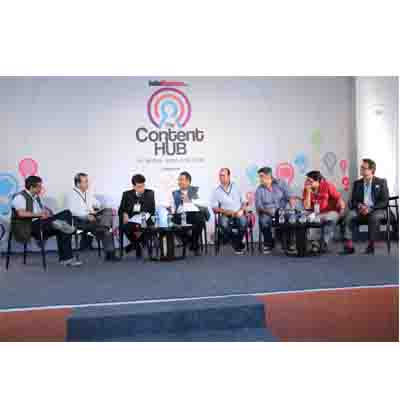
    MUMBAI: The first edition of Indiantelevision.com’s The Content Hub saw a full panel of broadcasters, producers and writers discussing how to change the dynamics of TV content. Moderated by Bodhi Tree Multimedia director Sukesh Motwani, the panel consisted of Doordarshan ADG West Mukesh Sharma, Zee TV business head Pradeep Hejmadi, Cinevistaas producer Siddharth Malhotra, Shashi Sumeet Productions co founder Sumeet H Mittal, Satyamev Jayate director Satyajit Bhatkal, Viacom18 head of content regional network Sanjay Upadhyay and writer Purnendu Shekhar.


    Motwani started off by asking whether the only model of monetising was through having daily soaps with the 23 minute per episode limitation? Upadhyay responded to this saying that some efforts have been made to break away tried to break away. “For instance, Viacom18, we have attempted to do this with our regional shows with one hour shows run twice a week,” he said. “What we found with this is that the audience’s addiction level isn’t as good as a daily because they are so used to dailies. At the same time, economics do play a big role.”


    Motwani further queried if broadcasters could experiment with hour long episodes during weekdays while restricting certain genres to only weekend? Hejmadi  pointed out that it isn’t easy to do dailies, as people generally think. “There is a need for change, yes. But the manner of migrating the audience is also needed. Some people have tried that but even then there is a thought process that broadcasters don’t encourage innovation,” he said.


    On the other hand Malhotra said that when the 9pm-10 pm time band became successful, the economics improved and after that no one even tried to experiment with hour long episodes. Upadhyay clarified that though the broadcaster makes an effort, the pressure on them is heavy. Shekhar lamented that broadcasters are scared of losing loyal audiences by introducing short stories that conclude in four episodes from Monday to Thursday.


    In most shows, the characters drive the shows and shows are scripted accordingly. Hejmadi pointed out that it takes to build characters and promote them amongst viewers to develop stickiness, hence having limited episode shows – like say which run from Monday to Friday does not really work, thanks to the attention deficit among Indian veiwers.  even suggested that producers should comHee with their own research insights that they should show broadcasters.


    Public broadcaster Doordarshan, on the other hand,  tends to look at art, culture and of course  literature for inspiration. Sharma said that this was mainly due to them having a different mandate. “For us the universe isn’t between 7pm to 11pm. We also do events such as every second Sunday is a ‘mothers’ day’ where we bring mothers and daughters to talk about them and this makes good money. But we don’t interfere with producer whether or not a show makes money.”


    As to Motwani’s question of whether there can be different shows for ‘India’ and ‘Bharat’, Upadhyay said, “Honestly, we don’t try hard enough because we don’t have patience. We shift goal posts depending on hits.”


    With a few shows having big names backing them such as Saraswatichandra and Everest, he also went on to say, “The noise that comes out of big shows may amortise costs in a shorter time.”


    While format shows are slowly losing audiences in India, the TV community needs to look at other metrics than simple TVTs and TRPs,  opined Satyemev Jayate director Bhatkal. “We chose the graveyard slot – Sunday morning  – when no one is really watching television to do the show,”he said. “We wanted to reach those viewers who don’t generally watch television, we wanted to encourage appointment viewing. People who would take the trouble  to switch on their sets at that early hour. And we apparently did, if we look at the buzz that SMJ generated online. And this is what sellers of channels also need to do, show the media buyers and planners the  volumes of social media data. In six episodes, we had billions of impressions and we were trending worldwide,” he said.

  • “We don’t want to be the first but be the best”: Pradeep Hejmadi

    “We don’t want to be the first but be the best”: Pradeep Hejmadi

    With multi-dimensional understanding of the media business, he has spearheaded and successfully launched innovative and first-in-class profit-bearing initiatives in the Indian media marketplace.


    Having more than 18 years of well-rounded experience in the Indian media industry spanning media sales, media planning and buying, consumer research, business planning and product development, former TAM Media Research senior vice-president and  now Zee TV business head Pradeep Hejmadi,  is in the happy space.


    Hejmadi has filled up the position which was vacant since 2010 and believes he has a long way to go. With the channel’s fiction offerings doing pretty well as per TAM TV ratings, according to Hejmadi it is time for the channel to strengthen its weekend band with new shows and target younger profile.


    In a conversation with indiantelevision.com’s Disha Shah, Hejmadi talks about the challenges that he had to face when he came on-board, the channel’s biggest upcoming property – ‘Aryan’ and how it will live up to the channel’s expectations. 


    Excerpts:


    It’s been five months since you took charge as the business head of Zee TV.  How has the experience been so far?


    It was like getting onto a running horse or a speeding vehicle. For me, it was more about gathering the right amount of momentum to get on-board and steer it in the right direction. The initial challenge was to get a sense of the pace like what track are we on and what track we need to be in and what is the destination and fix those things. Then it was just to get on-board and work with the team to add to the spirit and the momentum.


    Have you brought any changes in terms of content and marketing?


    Nothing at all… (laughs).. Honestly talent has been there. It has all the ingredients. Zee has had a legacy of being a pioneer in creating new formats and being acknowledged by viewers as a powerful brand in the fiction space.


    There were just a few small things that needed to be aligned. Firstly, it was getting our priorities in order which we did as a team. It was about sitting down and saying “What are the things that we are doing right now and what are the serious things that we need to take on the front and which are the things that we need to start on a development front.” So it was really about setting our priorities right and then getting a process and a way of functioning to harness the best that was already there.


    So we have a very good creative team; an effective marketing team and a powerful PR and digital team working here. We just had to bring all these pieces together and get them to fire in proper synchronization.


    And obviously, every time you hit a bump on the road, there can be a bit of alignment requirements as well. This is the other piece that is required but it is no rocket science. Life is no different, irrespective of what work you do because principles are the same. I came here to help several millions of consumers. At TAM, I had a responsibility in delivering in a particular manner and here I have the responsibility of delivering in a slightly different manner.


    Which band works wonders for the channel? Weekday or weekend programming?


    The beauty about facts is that you don’t have to think about them, you need to note them down. When I joined Zee, Jodha Akbar was on top and that was one show which was standing for us on top. Most of the other shows delivered medium range ratings and on the non-fiction end we had Dance India Dance (DID) which was winding up.


    It was in an interesting phase that I came on-board. We prioritised and looked at what are the things that are really going to give us reflection points in our shows and the teams took the backend to it. They put the energy back into it. There was a need for some alignment, because so much happens at the same time. One has to understand that the buzzing lights on the road are not the street markers. Those are pass inkers. So if you start thinking that they are the ones you have follow then you lose your direction.


    So we needed to separate the cat eyes on the road from the blinking headlights of the other vehicles to remain in the race and that is what we did as a team. We made that difference between those blinking cat eyes versus the shinning lights of some vehicles. With that focus, by god’s grace and the opportunity that audience provides you to get your act together, we are where we are and intend to be.


    ‘DID’ has delivered good ratings during weekends, do you think ‘Aryan’ will live up to the expectations?


    Sometimes media business is like a circus. There will be both clowns and animals and so when you a buy a ticket, you just don’t buy it for the clown. The same thing happens when you sit in front of the television screens. It must have a mix of multiple things.


    So we should not compare a horse stick with a clown act.  In the same way, there is no comparison between DID and Aryan. What we are trying to do with Aryan and other shows like Neeli Chatri Wale and the 9 pm non-fiction band is to create variety so that the whole family can sit together and watch. Not for even a moment, are we wanting Aryan to compete with a DID. They both are very different.


    DID is a platform to identify and give to the industry a fresh pole of choreographers. These are the guys who have raw talent in them but are not actors. Aryan on the other hand is meant to appeal to a family, be inclusive of the family but bring in the audience through a slightly younger profile because that is the kind of profile that starts watching television on a weekend. It is a story that will inspire people to believe in themselves. Our intent is to create a nice family blog where you go back to general entertainment days where you can actually sit with your family and watch television.


    We don’t want passing of remotes to happen. That’s our intent of weekend programming. Weekend is an environment we are going to create for families to sit and watch television together.


    In the future as well, we will create different kinds of properties to give audiences a variety to enjoy. Weekend programming is by sheer nature very varied; while some do celebrity-based dance shows, we do non-celebrity based shows.


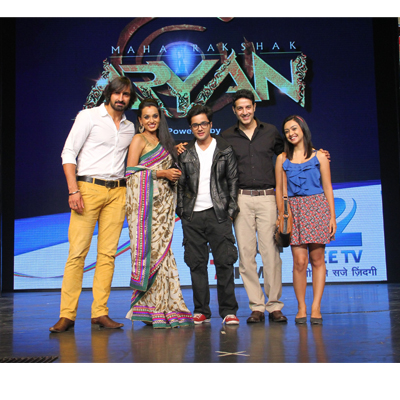
    As for Aryan, it took us almost eight months to be where we are now and the challenge continues as it is a trilogy. Maharakshak is the brand and Aryan is the first of its trilogy followed by two other superheroes.


    Will we see a return of Sa Re Ga Ma Pa? And is the channel working on new formats?


    Yes. Sa Re Ga Ma Pa will soon hit the television screens. Work is on. Once we reach the stage where we are confident of the talent and the format we will announce it officially. As of now, we are working on multiple projects and those will go on air first.


    Talking about new formats, one should not forget that every format demands newness. DID and Sa Re Ga Ma Pa are power brands for us, so we don’t have to go looking for something new. We need to make sure that we do justice to the standard that it has lived up to.


    I think sometimes audiences are comfortable in what they are familiar with but they would like to see something better and if we are able to provide that with little alterations then that too becomes new for them.


    Is an increase in number of hours of original programming in fiction on agenda?


    Yes, but gradually. The audience has limited time so we have to make sure that we become their preferred choice.


    We are clear that we will create new properties and put out more hours but we have to make sure that every hour is worth its value in gold for the audience because every time we put a new show we are expecting the audience to shift its time. We are not in a mad rush to just keep on expanding slots because we are answerable to millions of viewers who come to us every week.


    Once we are at that point where we feel that it is time to go on to the next one, we will. We are in no hurry to score on somebody else’s score sheet. Our focus areas are very clear in terms of what we want to do. We don’t want to be the first but be the best.


    Zee being the pioneer, are you planning to revive the afternoon slot anytime soon?


    Given the way the industry is balanced between a hybrid revenue model of advertising and subscription, it is not that if I go to open an afternoon slot and get audience’s affection, it will translate into subscription revenues for me. It has to be advertising revenue and then over a period of time subscription revenue will start coming in. And advertisers somewhere think a 2 rating point in the afternoon is worth less than a 2 rating point in traditional primetime. So as long as that mindset is there, it does not work for me from an economic model point of view.


    For makers to make a show and put it in the afternoon costs as much as to make a show what advertisers love to call, prime time. If I can deliver 6 per cent reach and 2.5 rating in afternoon, as a content provider I don’t see what is wrong in it. But somewhere the yield on that has always been a matter of concern and therefore over a period of time, if you see that what Zee pioneered and others followed, has now died because economically the model crashed.


    With digitisation dates being postponed, how do you see it impacting the channel?


    Digitisation is a far bigger phenomenon than a short-term milestone. We have to learn to do well no matter how the environment changes. I don’t see how it will impact the channel in the immediate run. However, it will help us on the distribution level to ensure better revenues and possibly reduce the carriage costs etc. But at the same time, we should not forget that audiences need that time to be able to cough up money, last miles to go and put up the boxes and it needs to be done in a more organised and systematic manner.


    From Zee’s perspective, whatever be the environment, playing out of a set-top box or an analogue cable or DTH service provider, we need to be as relevant and as important for the audience to come and watch us. Those are just means of getting there. We would like digitisation to happen sooner, but also done in a systematic manner so that it makes sense for the whole value chain.

  • ‘DID Super Moms’ back with season 2

    ‘DID Super Moms’ back with season 2

    MUMBAI: Not all shows can make superstars out of commoners, but a property that is considered to be the biggest home-grown reality show in India, Dance India Dance, has  been doing it for over five years now.


    The show along with its various sub-franchises like Dance Ke Superstars, DID Dance Ka Tashan, Dance India Dance Li’l Masters, Dance Ke SuperKids and Dance India Dance Doubles, have had a successful run in the country.


    One of its hit property, Dance India Dance Super Moms, launched last year along with other two big non-fiction properties, Jhalak Dikhhla Jaa on Colors and Indian Idol Junior on Sony. And if numbers are to be believed, out of the three, DID Super Moms emerged out as the clear winner and opened with the highest ratings.


    Following the success of the first season, the makers (Essel Vision Productions Limited) and Zee TV are back with the season two of Super Moms, to give a chance to mothers to spread their wings and bring out the talent hidden within.


    The show will hit the television screens immediately after the on-going show – Dil Se Naachein Indiawaale goes off-air by November end.


    The format remains the same. After a rigorous selection process, the 15-week series will have 16 finalists that will be shortlisted from across the country. The contestants will be divided in a group of four, and they will be coached by four best choreographers.


    The auditions for the show has already begun from 7 October 2014 in Patna followed by other cities like Lucknow, Ranchi, Dehradun, Guwahati, Amritsar, Jaipur, Bengaluru, Nagpur, Kolkata, Hyderabad, Indore, Vadodara, Delhi and Mumbai.


    Zee TV business head Pradeep Hejmadi believes that DID is a platform to identify and give to the industry a fresh pool of choreographers. “These are the guys who have raw talent in them but they are not actors. Choreographers are the people behind them who are making it possible. DID creates and identifies them. How we demonstrate their journey and how do we get audiences to start looking at these faceless people and start liking them for their talent and how they shape up is our format,” he says.


    On the digital front, the channel has already started to create the buzz on the same. The official Facebook page was created on 4 October. Moreover, the promo of the show has already hit the television screens.

  • ‘Maharakshak Aryan’ to strengthen Zee’s weekend offering

    ‘Maharakshak Aryan’ to strengthen Zee’s weekend offering

    NEW DELHI: In a move to strengthen its weekend slot, Zee is set to launch a fantasy trilogy. The trilogy, which will commence with ‘Maharakshak Aryan’, is about an unassuming boy-next-door.

     
    Zee business head Pradeep Hejmadi said, “With shows like Neeli Chhatri Wale, Dil Se Naachein Indiawaale and now Maharakshak Aryan, we’re fortifying our weekend line-up with content that engages every family member. Aryan adds a new flavour of fantasy to our line-up, attracting diverse sets of viewers. Our current fiction line-up is robust and is only poised to get stronger”.

    Starting from 1 November at 7:00 pm, the show will air on Saturday and Sunday. Hejmadi expects the show to become a slot leader during weekends as it was a programme that would appeal to both adults and children.  

    In the series, Aryan is played by debutant Aakarshan Singh, who is chosen to save the earth from the Triloki -the ultimate embodiment of evil – essayed by the talented Vikramjeet Virk better known as Mahmud of Ghaznavi. Triloki is trapped in the centre of the earth under various layers surrounded by molten Lava. He wants to bounce back to power and rule the world but the only way he can do so is by reclaiming the ‘mani’ (magical jewel) which is the ultimate source of energy available in the world. Triloki will send his super villains – Vishkanya, played by the svelte Reshmi Ghosh, Challa played by the popular Mishal Raheja, and Kumbha played by acclaimed actor Deepak Bhatia amongst others to defeat the protector Aryan who finds himself gifted with some superpowers.

    Zee programming head Namit Sharma said the aim was to show that every person has some strong elements in him and it was only a question of using them.  “Maharakshak Aryan is one of our most ambitious projects and aims to set a benchmark in the fiction thriller genre, as this kind of programming has earlier only been seen on the large screen.

    The show will be very different from any of the content we currently have on air.  The ability of a superhero series of transporting viewers into an exciting world of fantasy, slick, cutting-edge superhero series is remarkable.”  

    The channel will put 15 to 20 per cent of its expenditure on marketing and publicity of the trilogy. The show is powered by PC Jewellers but Hejmadi is positive about more sponsors coming on board as talks are on with others.

    Hejmadi said that though the series, which is already being promoted on Zee channels, will now be promoted on other channels; he did not feel that on-ground events give much scale during the festive season.

    He said, “In view of the top-class visual effects, this kind of programme could only be promoted well on television.” And added that the website created for it was already very popular.

    Essel Vision business head Akash Chawla said the new series had taken six months of research and another six months of production in view of the high quality VFX involved. “Indian audiences have not seen an original superhero series for a fairly long time and Maharakshak Aryan will be the first from EVPL in this genre. A lot of meticulous research has gone into creating a world of fantasy that forms the canvas of the show. We have taken our time in scouting for the right talent and we have an interesting ensemble of actors playing the key roles. The show with its slick production values, innovative visual effects and ingenious cinematography will raise the bar for action thrillers and the fantasy genre on Indian television. ”


    The series has the involvement of the art director for films like Saawariya, Black and the director of Mary Kom, Omung Kumar for the production design and Hardik Gajja, the popular visual effects designer for the graphics of the show, and Majid Khan as the creative producer.  


  • Zee TV’s ‘Kumkum Bhagya’ gives tough fight at 9 pm slot

    Zee TV’s ‘Kumkum Bhagya’ gives tough fight at 9 pm slot

    MUMBAI: Zee TV, the channel that enjoys a steady second place on the TAM TV ratings chart is riding high on success and all thanks to its properties which have seen remarkable rise in viewership. But this week, what caught attention was Balaji Telefilms’- Kumkum Bhagya.


    It has seen a distinct spike in viewership ever since its protagonists Pragya and rockstar Abhi tied the knot clocking in 7,405 TVTs. The episodes from pre-wedding till the two tied the knot has seen a gradual rise in viewership.


    According to TAM data provided by the channel, while a four-week average for the pre-wedding period (starting week 21’14 to week 24’14) stood at 3,263 TVTs, the show has seen a 127 per cent increase in viewership in the last six weeks.


    So what has caught the attention of the viewers? Zee TV business head Pradeep Hejmadi believes that the ‘wedding track’ was a very important inflection point for people to gravitate to the series. He believes it is growing in terms of interest in all parameters.


    “The focus was on how fate can sometimes bring two very dissimilar individuals together. Then it is about how the relationship will take form and how they will conform to the institution of marriage as per our culture.”


    Kumkum Bhagya saw a surge in audience interest during the rather unlikely marriage of its protagonists – the flamboyant rockstar Abhi and the shy, serious girl-next door Pragya. The channel feels that due to its engrossing storyline coupled with believable performances, the show has been on a steady ascent, despite stiff competition at its time slot across GECs.


    Aired at 9 pm it picked a fight with slot leader Diya Aur Baati Hum (Star Plus) across Hindi GECs and has managed to grow exponentially. As per TAM, the show’s viewership has dropped by 22 per cent since week 16, when Kumkum Bhagya was launched. In the week 30, Diya Aur Baati Hum garnered 10,379 TVTs, down from 10,488 TVTs.


    Hejmadi believes that research forms an integral part during such competitive slots. Each show goes through a development process on how one would want to deal with a plot or the character.


    “Each story has its own promise and people who tune in are people who are bought into those promises or are keen to explore the relationships or the characters that stand out speaking to them. We concentrated on bringing out the key inflection points for the show and it was important because it is the core promise of KumKum Bhagya,” he says.


    At the marketing front, Hejmadi said that for any channel, marketing is the mix of two things – the on-air promotion on the network as well as promotion on other networks as additional activation.


    The show was heavily promoted through an aggressive 360 degree marketing campaign by the channel from the launch to the wedding highpoint to ensure traction kept growing week on week.


    Zee TV’s approach was one of sustained character building in all its communication across print, on-air and digital media. A judicious mix of mediums including high impact outdoors, print and innovatively crafted, personalised invites shared through social media on the day of the wedding created high visibility.


    The streamlined promotional strategy not only attracted eyeballs but also garnered a lot of word- of-mouth publicity, thereby creating an enormous buzz around the much touted wedding sequence.


    Hejmadi is confident that the series will continue to have the same kind of engagement level with the audiences. He goes on to say that in the fiction genre there are key points which mark the opportunity for an audience to start engagement. The channel has identified those key engagement points and will continue to focus on its other offerings as well.


    He believes that the ratings game is like running a marathon. But, with robust properties such as Kumkum Bhagya, Jodha Akbar and Qubool Hai ruling the roost, Zee TV is the only channel that has seen a 30 per cent increase in its weekday primetime viewership in the last six weeks.