Tag: Pradeep Dwivedi

  • Virtual Fireside Series: Catch Eros STX Global’s Pradeep Dwivedi live on 18 Sep

    Virtual Fireside Series: Catch Eros STX Global’s Pradeep Dwivedi live on 18 Sep

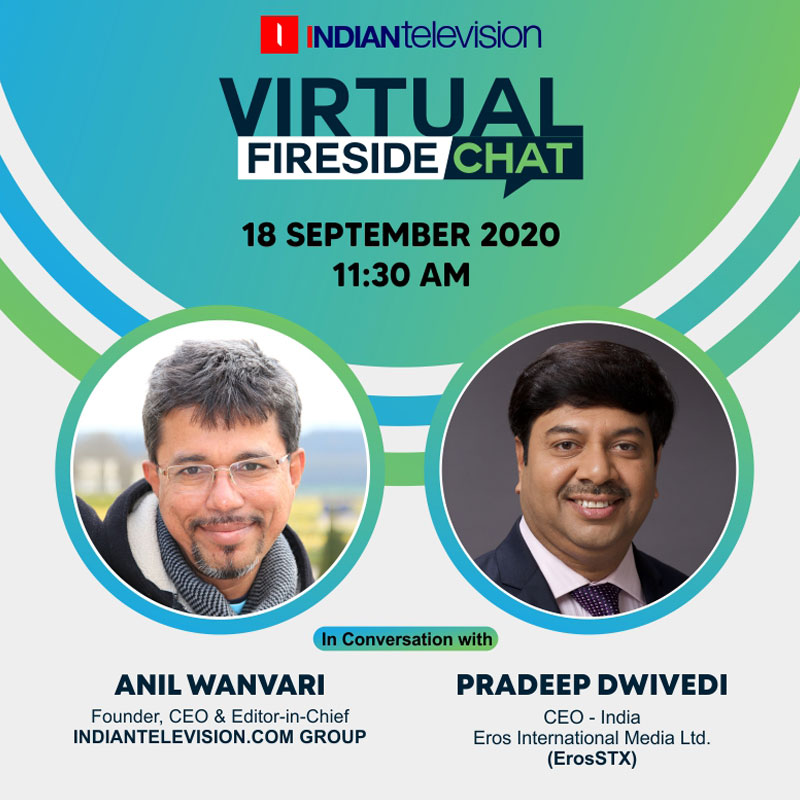
    KOLKATA: Taking ahead its virtual fireside series with eminent professionals of the media and advertising industry in India, Indiantelevision.com will be hosting Eros STX Global CEO-India Pradeep Dwivedi on Friday 18 September at 11.30 am. The session will be helmed by our founder, CEO, and editor-in-chief Anil Wanvari.

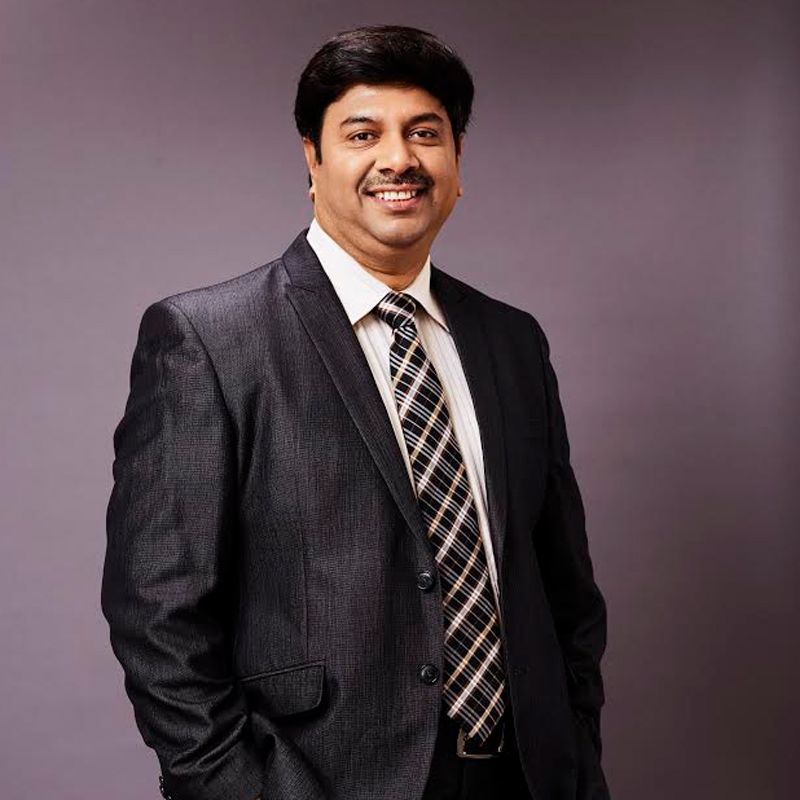
    Dwivedi is an industry veteran with nearly three decades of experience across media, marketing, publishing and advertising. He has worked at multiple brands and publishing houses in different capacities and played a key role in the growth. Dwivedi started his career with Eicher Motors, and went on to work with GE Capitals, Standard Chartered Bank, and American Express. His longest stint has been with Tata Tele Services which extended just a little over eight years. Post that he served with Dainik Bhaskar Group as chief corporate sales and marketing officer and later served in the capacity of chief executive officer with Sakal Group.   

    Watch more Virtual Fireside Chats

    Eros International recently changed its corporate name to Eros STX Global Corporation recently following the completion of rare Bollywood-Hollywood merger. The opportunities are flaring up for both sides of the business – OTT and studio segment. At this crucial juncture of the business, Pradeep Dwivedi is spearheading the Indian market of the newly merged entity.

    Read more news on Eros

    Dwivedi will be sharing his experiences of sailing through the times of pandemic, the changing landscape of the media environment, new trends and developments in the content space, merging of Bollywood and Hollywood at Eros STX Global and leadership & life lessons.

  • Pradeep Dwivedi elected as IAA vice president and area director for Asia Pacific

    Pradeep Dwivedi elected as IAA vice president and area director for Asia Pacific

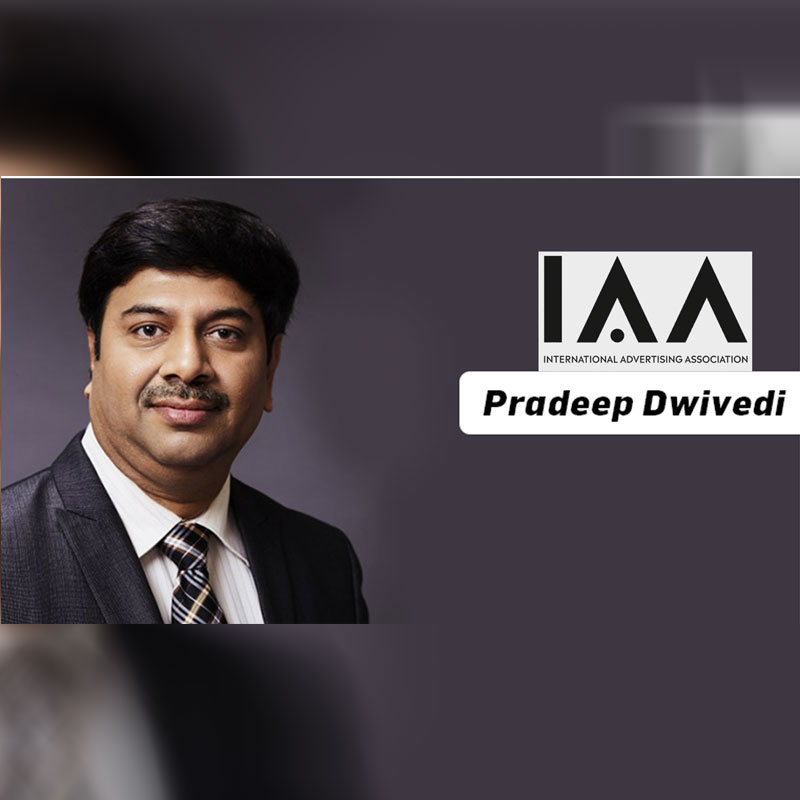
    NEW DELHI: Eros STX Global Corporation CEO Pradeep Dwivedi has been elected as the vice president & area director for the International Advertising Association (IAA) APAC region. He is a senior media industry professional and is currently treasurer and director of IAA India chapter. An accomplished industry leader with an experience of over two decades in advertising & media business, telecom & technology enterprises, banking & financial services institutions and automotive sector, he currently also serves as chairperson of the entertainment, media & sports committee at the IMC Chambers of Commerce and Industry, managing committee member of The Advertising Club of India,  Member of the CII National Committee on Media & Entertainment, as well as a member of the IBG Chamber of Commerce.

    He said, "I am humbled and honoured at the responsibility. I must thank  Ramesh Narayan for a fruitful and productive tenure as my predecessor in leading IAA APAC wonderfully for the past two years as well as IAA Global chairman & world president Srinivasan K Swamy, for inspiring me to take on this mandate.  The APAC region has amazing potential and I look forward to working with all the Chapter presidents to take the ideals of the IAA forward and collectively ensure that IAA remains the harbinger and compass of marketing communications world-wide in a unique post-Covid2019 era, even as we navigate the challenges ahead of us. "   

    IAA chairman and world president Srinivasan Swamy said, "I am delighted to welcome Pradeep Dwivedi as our area director and vice president for Asia Pacific. He has been an integral part of IAA India chapter for nearly a decade and has been leading many initiatives while building a world-wide network with his commitment to IAA. I wish him all the very best in taking on this leadership responsibility at IAA Global.”

    IAA APAC region’s outgoing VP & area director Ramesh Narayan said, “I have always believed in advertising as a potent force for social good, and our actions in IAA APAC have been a testimony to that ethos. I am happy that Pradeep will carry the torch forward with sustained zeal and continue our sincere endeavour. Our best wishes are with him.”

  • Eros International Media appoints Shikha Kapur as COO, Studios

    Eros International Media appoints Shikha Kapur as COO, Studios

    MUMBAI: Eros International, a leading company in the global Indian film entertainment industry, today announced the appointment of Shikha Kapur as chief operating officer, Studios of its majority-owned subsidiary, Eros International Media. 

    As COO, Kapur will be responsible for leading the growth of the Studio Business at Eros. She will be responsible for feature films, Web-Originals, and other differentiated content in India along with managing marketing and revenues for the film slate. She will also lead talent and partner relationships.

    "Shikha has a leadership track record of bringing marketing innovation and business understanding that we believe is critical to lead our studios business. Her vast experience and enviable track record will benefit in driving the company's goals. I look forward to working closely with her in her new role as COO and wish her all the best," Eros International Media India CEO Pradeep Dwivedi said.

    Eros Group chief content officer Ridhima Lulla further added, "Shikha has the perfect blend of diligence and passion, and I welcome her to the Eros International family as she joins us in the new growth phase."

    In a career spanning two decades Shikha is considered as one of most innovative thinkers in the business, and has been the force behind Fox Star Studios most memorable campaigns like Neerja, M.S. Dhoni: The Untold Story, Prem Ratan Dhan Payo, Mission Mangal, Sanju and Chhichhore.

    In her last role as CMO and business head, Fox Star Studios had four films in the top ten films of 2019; Total Dhamaal, Mission Mangal, Chhichhore and Housefull 4, and two films amongst the top 10 Hindi film openings of all time – Sanju and Prem Ratan Dhan Payo. Prior to Fox Star Studios, Shikha was at Disney UTV where she played a pivotal role in reinventing film marketing by pioneering campaigns anchored in big ideas and innovation, paving the transformation of marketing in films.

    Shikha has also been featured in the book titled ‘Changemakers: Twenty Women Transforming Bollywood from Behind the Scenes’ by Gayatri Rangachari Shah and Mallika Kapur. The book outlines the journey of twenty incredible women who have revolutionized the way Hindi cinema is perceived and, in the process, created a new India.

    Commenting on her new role, Shikha Kapur said, “I am excited for the new journey ahead of me. The entertainment business is going through a radical transformation and I am looking forward to collaborating with the exceptional leadership team at Eros and leading the vision for a new era in storytelling. Together we envision to deliver a global entertainment brand immersed in creativity, powerful storytelling and innovation.” 

  • Eros CEO Pradeep Dwivedi on the Eros-STX merger

    Eros CEO Pradeep Dwivedi on the Eros-STX merger

    “Nowhere in the history of Bollywood has any studio really merged with a Hollywood producer in a manner like this.” This statement by Eros International Media Ltd (EIML) CEO Pradeep Dwivedi succinctly sums up the significance of the recent Eros-STX merger. The new global entertainment company will leverage the 40-year-old legacy of Eros and the strength of STX as one of the prominent Hollywood producers. In an interview with Indiantelevision.com, Dwivedi dwells at length on the significance of this merger, its strategic intent, the financial nitty-gritty of the deal, how the new entity will find common ground and tap the combined market of India, China, and the US, the OTT business and the effects of Covid2019 lockdown on the entertainment industry, among other things.

    Edited excerpts:

    The merger deal comes at a time when the entire movie production sector is shut due to the Covid2019 pandemic. So how challenging is the situation for you?

    We have been working on this merger transaction for nearly six months. The timing with respect to the production stoppage is a bit odd; it happened during the last one month. We eventually believe that in the next couple of months as and when the lockdown is lifted in phases and people get back to production work, the work on the ground in terms of production slate and shoots will resume. We had, even before the lockdown, a significant inventory of content that we had built up. So, in a phased manner we are pushing it out to the digital platform. Obviously no studio releases are possible as theatres are completely shut down, not just here but in the US as well.

    In this merger, what we were always planning as a strategic fit was the fact that you have STX, which is a Hollywood studio, which has been doing decent movies with top-of-the-line stars. The bottomline is that they have successfully created a content machine which is delivering good content with top-built star cast into the US market. We have had a similar ecosystem in Eros for nearly 40 years now; look at some of our hits like Vicky Donor. We had our own range of success.  

    Nowhere in the history of Bollywood has any studio really merged with a Hollywood producer in a manner like this.

    Can you elaborate on the structuring of the merger?

    There is a structuring of the transaction. It takes about eight weeks for all regulatory approvals to come in and then the two companies become one. At the merger, only one company will survive, which is Eros STX Global Corporation. In the interim, all of STX will be moving into a subsidiary which is incorporated in the US. That subsidiary merges into a 100 per cent owned subsidiary of Eros PLC, and that subsidiary eventually merges back into Eros. Today, Eros is listed at the New York stock exchange. In fact, if you see the stock value right after the merger announcement, it jumped almost 60 per cent in terms of value. We are getting strong analysts’ support. Just now I was talking to an investor in New York. There is huge excitement in the US and the overseas investor community on this deal.   

    The transaction works like this: STX, an unlisted company, has merged into Eros, a listed company, and Eros STX is the surviving company. So essentially what is happening is that the shareholders of STX will initially get what is known as contingent value rights (CVR). So effectively, we will own about 43 per cent of the surviving company. STX partners will hold another 43 per cent. Put together, it comes to around 85 per cent.

    Now, let me speak about the strategic intent. We want to take the best of Hollywood and Bollywood and create a big impact in China. There, we will be looking at the creation of content, by leveraging the Chinese talent in areas like acting, directing, photography, VFX, production, post-production, music, sound, etc.

    In China, who will be the partner of STX?

    In China, STX has Tencent Films and Alibaba Films as the partners on the production side. On the investment side, Tencent Holdings has invested money. They were already investors in STX to begin with. Eros has two partnerships in China for distribution. Because as you know, we made serious returns on movies like Bajrangi Bhaijaan. Other Indian movies also did really well in China, for example Dangal or Andha Dhun, which we distributed in China and did a fantastic business. We have a huge distribution model, not a production/co-production model in China. We work with Shangai Film Corporation and China Film Distribution Corporation. These two are our distribution partners.

    So you are looking at the Chinese market in a bigger way. What will be the roles of STX and Eros there?

    It will be a combined entity; there is not going to be any difference. In fact, this merger has got nothing to do with the India business per se. Eros International Media Ltd (EIML), a Bombay Stock Exchange- and National Stock Exchange-listed company, is a subsidiary of Eros International PLC.

    Eros International PLC is the holding company, which is Isle of Man-incorporated and listed in New York Stock Exchange and has multiple subsidiaries all over the world. For example, whatever OTT business we do in India is housed within Eros now, which in turn is part of EIML. The worldwide business that we do is housed in Eros Worldwide Digital which is based out of the UAE. We have distribution subsidiaries in Australia called Eros International Australia, we have one in Fiji, one in the UK, and in the US called Eros Incorporated USA, which is a distribution arm. They do the distribution business in all of those markets.  

    Please give an idea about the post-merger entity and the changes at the top level.

    Kishore Lulla, who is currently the CEO and chairman of Eros International PLC, becomes executive co-chairman of the combined company. Robert Simonds who has done about 70-odd movies as producer will be the CEO of the combined company. He will be my boss in that perspective. He has done almost 13-14 Adam Sandler’s top-selling movies.

    I will run all of the India business and there is the worldwide studio business including the collaboration that we will do with STX. So at the base level, STX Studios continues to make movies for the US market and Eros continues to make movies for the Indian market, which covers almost 60-70 per cent of our production output.

    Kishore Lulla is the executive co-chairman of the new company. Rishika Lulla, part of the management, is the co-president at the global management team of Eros-STX Global. Rishika will continue to lead the entire digital business worldwide, including what is coming from STX. Bob Simonds is the co-chairman and chief executive officer of the company. Andy Warren is the CFO of the combined company. I am running India business plus global studio collaboration. Adam Fogelson is running a global studios business. Noah Fogelson is going to manage the entire business from a US perspective. Ridhima is currently head of content – strategy for Eros. She is going to work very closely with the content leadership of STX.

    About 20-25 production output will be Indo-US collaboration that Adam Fogelson, as the president of the studio business in the US, and I will collaborate and jointly work out. Then there is about a 10 per cent layer on top of that. That will be all the Chinese movies that we want to make, with a focus on mainland China; movies that reflect their ethos, culture, science fictions, action, contemporary issues, etc.

    At the end of this exercise, there is no difference between STX and Eros. That’s the whole concept of the merger. We are one team.

    What about Eros’ OTT business?

    Ali Hussein, the CEO for the OTT business, will run the OTT business worldwide. STX worldwide does not have an OTT play, but it has a large content play. So it will obviously be selling some content to Amazon Prime, Netflix, etc. Today, Eros Now OTT has the access to Amazon, Netflix and exclusive access to Apple TV. Any India-Bollywood content you see on Apple TV will be coming from the house of Eros. The advantage it allows is that whatever the STX content is getting produced afresh we have the ability to take a call on whether we should park it in Eros Now, monetise and increase our subscriber base or to part it for Amazon, Apple, or Netflix and monetise better there. It will really depend on the financial equation there. But it gives us a tremendous amount of flexibility to be able to do both. That is one of the advantages we have on the OTT side coming from this merger.

    Will there be more dubbed versions of Bollywood and regional language films for the Chinese audience?

    There is a two-pronged strategy in this regard. As far as the digital front is concerned, we already have partnership with Wuzhou, one of the largest distributors in China. We are looking at other teleco partnerships, too. All the existing content, with dubbed and subtitled versions, will be available to the Chinese audience.

    Then there are the originals and the new movies that we do, which will be done in collaboration with the Chinese studios. It depends on who we want to work with: Huayi Brothers, Tencent, Alibaba, etc. All of these are existing partnerships. We will take a call depending on a particular project idea, which studio or investor on their side is more comfortable with or most excited by the idea.

    To answer your question specifically, yes, we will make sure that our stories are presented as an opportunity to be remade for China. We will look at China's original stories and make movies around that. And we will also look at building strong distribution strategies. So, movie production is one, distribution is another and we want to make sure that we are doing well on both the fronts in the Chinese markets. If you look at the sheer size of the market we are addressing with this joint venture, India already has 1.4 billion people, America has another population of 38 crore, and then you add China on top of that: 1.2 billion people.  So close to 3 billion people in the world is the potential market. And I am not counting other markets like Europe. Essentially, half the population of the world typically will be covered by the footprint of what we are doing right now. And we intend to make sure that we create world-class content. We have a huge reserve of stories that are original and genuine to India. For example Ramayan and Mahabharat. These stories, while they are set in Indian cultural and social context, are universal in many ways, about challenges in family, difference between right and wrong, etc. These are universal values. We intend to do this Indo-US-Chinese collaboration with the best of technology on science fiction, visual effects, etc. to create world-class content. We also wanted to showcase the slate of some of the content that we are going to make, but due to the Covid2019 situation we don’t want to do that. However, by around the end of June, when the merger deal will be closed, we will present a slate of the movies that we are going to produce.

    We believe that we will get all the regulatory approvals in the next eight weeks.

    Theatres are not going to be opened until September or October. When do you expect the production to resume?

    We believe that by middle or end of May some level of production activities will resume. Whatever can be done inside studios, not outdoor shoots, can typically start in a controlled environment in sets with the right level of hygiene, control, safety and distancing, etc., for our studio-related works to start off. I’d expect it to stabilise only by the end of June or early July.

    We still can’t say definitely when theatres will reopen. My hope is that by the end of August or early September some theatre releases will start.  

    The merged entity will have half a billion in cash, right?

    We already have about $195 million cash with us. We have secured $125 million fresh equity capital investment. We have got a limited sanction from JP Morgan in the US, which is leading a syndicate of six banks, to get another 350 million on the debt capital side. In addition, we have close to $300 million of predicted revenue from the 2019 slate of STX.

    Now, let me explain the efficiencies in the deal. Manpower costs as a percentage of our overall costs are not outside the industry norm. What that means is that these efficiencies will come largely on account of financing integrations and on account of financing/ process integration. For example, there are a lot of VFX/post-production works that STX movies need to do. We have negotiated – because we have this typical Indian approach of doing things in a more efficient and cost-sensitive manner – we will be transferring a lot of post-production works from the US studios to the Indian studios. So, that has efficiencies in savings. There is a significant saving opportunity on the financial efficiency and post-production work side. And we believe that as we integrate some of our offices we will have some savings on that side as well. We don’t expect this merger to have any large impact on any kind of reductions simply because these are very diverse universes. In our case there is a strong fit in what we do and what they do, so it is complementary. To that extent, the two teams come together, the efficiencies can be better utilised on the operation side than on the manpower side.

    How will the OTT releases work? You can’t raise the kind of money from OTT like you do through theatre releases. How will you monetise in times of shutdown?

    The film and entertainment industry is going through a cataclysmic shift due to the Covid2019 situation. Theatres are likely to remain shut for the next six months, perhaps even longer in some markets.

    If you look at the value chain of any monetisation for any studio, theatrical release is the largest chunk, followed by television syndication, digital and then DVD, cable and local TV distribution, in-flight distribution, etc. For six to nine months, theatrical will remain zero; it is a hit all companies will take in the top line. The market valuations of companies like Disney, Comcast, Warner Brothers, etc. have come down only because the theatrical revenues are not going to be there and that is true for everybody.

    It is like an airline industry business. If you are not flying for two months, your revenues will be reduced next year and you can’t fly more in the coming time to make up for the flight that you have not done. So it is the same for the theatres; that loss is real; it is going to hit our current year financials. Fortunately, it happened in the last week of March, so we didn’t lose much from last year’s financial standpoint. So we didn’t see the impact in FY 19 books. But in 2021, all studios across the world at an industry level will be hit.

    So if you are investing $100 billion in a film, you can’t get $100 billion back unless you do theatrical?

    No, that is not true. That’s what I was trying to come to. The model itself is now going to shift significantly towards digital. So, as a first step, digital or OTT will overtake television as the second port of call. As and when the theatres come back next year, you will have the releases that are there. The standstill is there on both the fronts in terms of releases and production. If there are no new movies being produced you are creating a lag in the equation completely. Once the theatres start opening up, the existing, ready-to-release movies will first get released. And we are evaluating the release of the movies that we have. We have big, multi-language movies waiting to be released. We are already sitting on some content, which we will release as soon as the theatres open up. In the meantime, we will try and monetise them on OTT. Will there be any audience in theatres for the movies which have been shown on OTT? Perhaps there will be a decline. But that’s the risk you have to take. But none of our movies are mega budget movies where we need to worry about huge dependence on the theatrical.

    So will you release on OTT first and then on theatres?

    It’s a product-by-product call. Our current strategy is to ensure that whatever content is ready with us, we will release them in OTT, because what we want to do is to give fresh content to the OTT audience. Today, the OTT audience has increased exponentially because of the lockdown. You are stuck at home and you don’t have a choice. Old movies are now popular because there is a limitation on new content that is being produced. Here, we will release and promote our old movies in OTT.

    And monetisation will definitely go up. Between last month and this month our paid subscriber base has been growing at 20 per cent per week.

    Will you be selling to other OTT platforms?

    We currently have partnerships with Amazon, Netflix, etc. We market movies to them. In the US, we have an exclusive partnership with Apple TV for Bollywood content. Same goes for STX. Eros-STX combined entity will evaluate every movie, a financial call which will have one of the two factors. We will see whether we are getting good price by selling/marketing it to one of the OTT platforms like Amazon or Apple TV or instead of putting it on a competitor platform, it is better to put it on Eros Now and monetise.  So, that is the kind of financial call that we have to make on every single movie that we make.

    While OTT is definitely the flavour of the time and everyone is talking about it, television syndication is a big deal, which is the second largest revenue stream. Theatrical accounts for 30-35 per cent, television another 30 per cent, digital used to be 20 per cent and rest 10-15 per cent is DVD and local cable TV distribution. So, only the top 30 per cent is impacted. Rest of the 70 per cent is not impacted. And the third category, OTT, is actually expanding.

    Look at an adverse scenario. If theatres don’t open for the next two years, what will you do? You need to figure out a way for the industry to monetise the content. Two things are likely to happen: studios that are agile, nimble, and mid-sized that make budgeted movies will actually do well. Look at the impact. The situation is such that the larger your studio is, the bigger the risk is, because you are putting in tonnes of money and you can’t get the money back from OTT alone. But if you are making here in India, the chances of getting the money back are much higher.

    As far as OTT expansion is concerned, we have seen extraordinary growth in the last couple of weeks.

    Were any of your projects halted because of the ongoing lockdown? And how do you communicate in these times?

    We suspended productions by the end of June.
    As far as communication is concerned we use platforms like Zoom, etc. The positive side is that a rhythm is being set. Now it starts to feel natural with all the Zoom and Skype calls. We can plan, strategise, ideate, work on script ideas, script validations, find out which projects to work on, etc. Those kinds of work can go on. But the works that have physical execution on the ground is obviously held up.
  • Eros International to up its game in Chinese market & digital biz post STX merger

    Eros International to up its game in Chinese market & digital biz post STX merger

    MUMBAI: At a time when production houses across the world are grappling with losses, Eros International (Eros) has announced a merger with US-based STX Entertainment (STX) under a stock-for-stock agreement. In a rare deal, two content houses from Bollywood and Hollywood have joined hands aimed at serving a larger geographical footprint including the US, China and the Indian markets. While both the organisations had difficulties in the recent past, the deal may bring some relief thanks to their complementary nature. Eros International’s digital arm, Eros Now, is also positioned to benefit amidst the raging OTT war.

    Although the timing of the deal may look odd, the talks began nearly six months ago. Eros International India CEO Pradeep Dwivedi terms the deal with STX Entertainment as a strategic fit.

    In the interview with Indiantelevision.com, he dwells at length on the global content powerhouse the post-merger combined entity is set to create.

    “What we really want to do is to take the best of Hollywood and Bollywood, combine these stories and create a big third leg in China. And the China leg is not just about distribution, it is actually about creation of content, leveraging the Chinese talent on the acting side, directing, photography, VFX, production, post production, music, sound, everything. So there's just tons of activity that is going to happen in China as a consequence of this merger, partly because some of our investors do have Chinese origins coming from Hong Kong,” Dwivedi explains the rationale.

    He also explains the complementary nature of the two entities making it a win-win deal. While STX has Tencent and Alibaba films as partners on the production side, Eros has a huge distribution model in China including partnerships with Shanghai Film Corporation and China Film Distribution Corporation.

    “So at the base level, STX continues to make some movies for the US market, Eros continues to make movies for the Indian market, which becomes almost 60- 70 per cent of our production output. About 20-25 per cent production output will be Indo-US collaboration that Adam Fogelson and I will jointly collaborate and work out as to what we want to do on that. Then there is another 10 per cent layer on top of that which will be all the Chinese movies that we want to make,” he adds.

    Moreover, STX does not have an OTT play but will be able to leverage Eros’s existing OTT play. Until now, the former has been selling some content to a few platforms like Amazon and Netflix.

    The advantage of the deal is that it allows deciding whatever STX content is getting produced afresh will be on Eros Now or be offered to other platforms. The content can be monetised through Eros Now’s subscriber base first and will also help to increase the subscriber base. On the other hand, the content can be monetised from outside deals as well. “That's really one of the advantages that we have on the OTT side coming from this merger,” he highlights.

    “If you look at just the sheer size of the markets that we're addressing with the joint venture, today India already has around 140 crore people. America has another population of 38 crore roughly, and then you add China’s 140 crore on top of that. So what we are ending up with is close to 300 crore of people in the world, which is the potential market between these three countries alone, and I'm not counting other markets like Europe. It's essentially half the population of the world which typically will be covered by the footprint of what we are doing right now,” he points out.

    Dwivedi also assures that there will not be any significant impact on manpower. Manpower costs as well as percentage of overall cost base are not outside the industry. While the combined company is expected to generate approximately $50 million in run-rate operating synergies, he says it will come largely on account of financing integrations and process integration.

  • Eros International Media appoints Pradeep Dwivedi as CEO

    Eros International Media appoints Pradeep Dwivedi as CEO

    MUMBAI: Eros International Plc, a leading company in the global Indian film entertainment industry, today announced the appointment of Pradeep Dwivedi, as chief executive officer of its majority-owned subsidiary, Eros International Media Ltd (EIML).

    At Eros International Media Ltd, Dwivedi will be responsible for managing business growth and operations of the company and will also be responsible for all commercial negotiations and representations in various markets, forums, customers, vendors and regulatory authorities.

    Eros International Plc CEO and EIML executive director Kishore Lulla said: “We are delighted to have Pradeep Dwivedi joining us as CEO at Eros India. His energy, leadership credentials and relationships across multiple industries and deep understanding of media & technology business will be an asset in driving our growth. I am looking forward to working with him in successfully executing our strategy”

    Dwivedi said, “The Indian media & entertainment industry is poised for rapid transformation in the digital era and Eros India, with its strong legacy and innovative vision of Kishore Lulla, is all set to take advantage of the enormous market opportunities ahead. This provides a significant springboard to lead large-scale creation of value and business transformation. I am keen to work with all our stakeholders to accelerate growth and further success in the next exciting phase of its journey.”

    Pradeep Dwivedi, B Sc, MBA, is a senior media industry professional. He is an accomplished industry leader with an experience of over two decades in Advertising & Media Business, Telecom & Technology Enterprises, Banking & Financial services Institutions and Automotive sector, with established credentials in digital infotainment business as well as Print Publication, News Television channels and Experiential Events. He has a demonstrated track record in revenue growth, sales & marketing, value creation, joint ventures & partnerships, corporate investments, business operations & general management. In the past, he has been CEO of Sakal Media Group, Chief Corporate Sales & Marketing Officer of Dainik Bhaskar Group, and worked in leadership positions with organisations including Tata Teleservices, American Express, GE Capital, Standard Chartered Bank & Eicher Motors in India. He is an active participant in many media industry associations, such as Director of IAA (India Chapter) and a managing committee member of The Advertising Club of India.

    Eros International Plc has also appointed Vijay Vaishnav as chief finance officer at Eros Now, the premium OTT South Asian entertainment platform.  Vaishnav, BCom and CA, demonstrates exemplary expertise as evinced through the years of financial experience in established media & entertainment organisations such as Zee Entertainment, Viacom18 and Balaji Telefilms to name a few.

    Eros International Plc has further strengthened its legal team with the appointment of Bishwarup Chakrabarti as Legal-Head at Eros Digital. Bishwarup, a postgraduate from National Law School, Bengaluru has previously been associated with various law firms and media conglomerates such as Viacom18 and Sony. At Sony, he was heading legal and regulatory affairs for production across the network.

  • Dailyhunt, Sakal Media partner to offer hyperlocal news content

    Dailyhunt, Sakal Media partner to offer hyperlocal news content

    MUMBAI: Dailyhunt, India’s news and local language content application, has announced a partnership with Maharashtra-based print publication Sakal Media Group.

    With this partnership, Dailyhunt will now be able to offer hyperlocal Marathi and English news content on politics, entertainment, sports, health, agriculture and other topics.

    Dailyhunt founder and CEO Virendra Gupta said, “This partnership is a natural progression towards building robust local language content for our loyal, ever-increasing user base. The local language is the single biggest opportunity in the Indian Internet today. The future for us lies in winning the regional language audiences.

    “The core focus of our business is and will always be on regional language content as it plays a significant role in bringing traffic across various verticals of the Dailyhunt Group. It is our privilege to join hands with a brand that has managed to creates huge library of hyperlocal Marathi content and has become a household name across deep pockets of Maharashtra over the last eight decades,” he added.

    Headquartered in Pune, the Sakal Media Group owns and operates newspapers and magazines in Marathi as well as English that are circulated across Maharashtra and Goa.

    Sakal Media Group CEO Pradeep Dwivedi said, “The Sakal Media Group is poised to take a significant leap forward as it has been expanding its footprint to access audiences across various demographics and geographies in the last few years. We are constantly working towards reaching a wider audience—the Marathi-speaking young audience, not only residing in the state of Maharashtra but also across the length and breadth of the country. We have been curating various distribution technologies and we consider Dailyhunt as our natural ally in this process. This partnership is in line with our long-term vision and content distribution strategy.”

    The online version of Sakal, E-sakal garners about three million views per month. In the next phase, the Sakal Media Group is also looking forward to getting its video and multimedia content on-boarded on the Dailyhunt platform.

  • IAA debate: Metro markets are losing their sheen to tier II & III towns?

    IAA debate: Metro markets are losing their sheen to tier II & III towns?

    MUMBAI: The first in a new season of IAA Debates, organised by the International Advertising Association (IAA) India Chapter and presented by the Dainik Bhaskar group, will be held on Friday, November 28, 2014 at Gallops, Mahalakshmi Race Course, Mumbai.


    Industry captains will speak for and against the motion on: Metro Markets are losing their sheen to Tier II & III Towns for Consumer Products/Services. The speakers are


    •             Sadashiv Nayak, CEO, Future Retail Ltd

    •             Ronita Mitra, Senior VP, Brand Communication & Insights, Vodafone India

    •             Amitabh Pande, Senior Director – Consumer Insights and Strategy, PepsiCo India Region

    •             Atul Phadnis, CEO, Whats-On and GM (APAC), Gracenote

    The debate will be moderated by Mini Menon, Executive Editor, Bloomberg TV India.


    Srinivasan K Swamy, President, IAA India Chapter & Vice President – Development, Asia Pacific, IAA and Chairman & Managing Director, R K SWAMY HANSA Group,  on the new season of IAA Debates said, “The IAA Debates has traditionally seen industry leaders deliberate on topics of vital importance to the stakeholders we serve. We have had debates on the relevance of print and TV in the digital age – whether social media is a good business, the role of creative becoming more critical with media fragmentation. I am happy that the new season of IAA Debates is kicking off with a topic of much relevance to the fraternity.”


    Pradeep Dwivedi, Chief – Marketing & Corporate Sales Officer, D B Corp Ltd. added,  “We are delighted to partner with IAA in  bringing the thought-provoking industry debates again to the entire advertising & marketing fraternity. The great French essayist, Jospeh Joubert, once famously said that ‘It is better to debate a question without settling it than to settle a question without debating it.’ At Dainik Bhaskar, it is our constant endeavour to contribute to this spirit of discovery and hence be a harbinger of change and evolution. We look forward to the upcoming Dainik Bhaskar-IAA debates as an important step in that direction.”


    The IAA Debates hosted so far have been in Mumbai, Goa, Delhi, Bengaluru, Hyderabad and Chennai. The Debates have featured senior advertising, media and marketing professionals such as Prasoon Joshi, Vikram Sakhuja, Lloyd Mathias, Josy Paul, Pratap Bose, Deepika Warrier, Anupriya Acharya, Arun Anant, Arunabh Das Sharma, Partha Sinha, Monica Tata, Vikram Chandra, Punitha Arumugam, Mahesh Murthy, Virginia Sharma, Ashok Lalla and Zerin Rahman, speaking for and against the motion.


    Delegates (including media) wishing to attend the IAA Debates on November 28, need to pre-register at execseciaa@gmail. Or call: +91 22 2874566 (Extn 162). Please send in your name, designation and organisation represented. A limited number of seats are available and you will be intimated by the IAA India Chapter.


  • DB appoints Pradeep Dwivedi as chief sales and marketing officer

    MUMBAI: Dainik Bhaskar has appointed Pradeep Dwivedi as chief corporate sale and marketing officer.

    Based in Mumbai, Dwivedi will report to Dainik Bhaskar Group MD Sudhir Agarwal.

    The post was vacant after Hemant Arora quit in September 2011 to head sales at Times Television Network.

    At Dainik Bhaskar Group, Dwivedi‘s role will be to develop media industry leadership for Dainik Bhaskar group by leading pan India corporate sales and marketing groups and driving growth and business transformation.

    He is responsible for business revenues, trade marketing and establishing the premium brand in the national market by developing and managing clients‘ relationships, media and advertising agencies.

    Prior to joining Dainik Bhaskar Group, Dwivedi was regional COO and SVP – enterprise business at Tata Teleservices. He had joined Tata Teleservices as General Manager – Customer Care in 2004. He had also worked with American Express Bank, Standard Chartered Bank and Eicher Motors.