Tag: Post Production

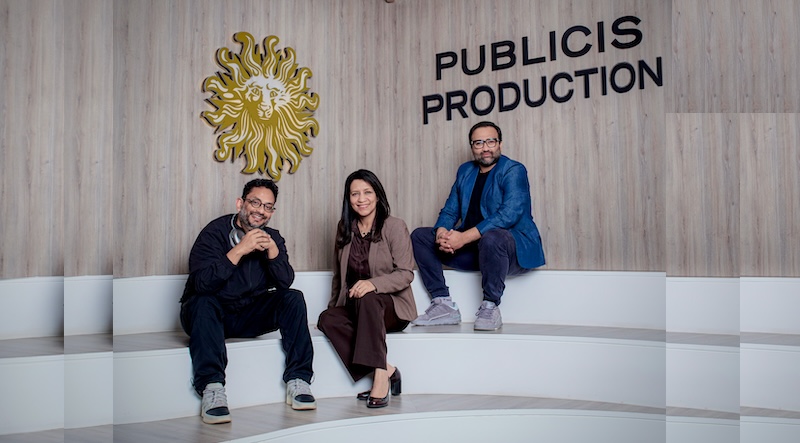
  • Publicis opens AI-powered content studio in India

    Publicis opens AI-powered content studio in India

    MMUMBAI:  The age of one-size-fits-all advertising is over. Brands now need content that speaks to specific audiences, on specific platforms, at specific moments—and they need it fast.

    Publicis Groupe India has launched a content studio designed to meet precisely that demand, combining artificial intelligence with traditional creative talent to produce personalised, localised marketing material at speed.

    The facility, the group’s fifty second globally, integrates AI-powered tools with editing suites and CGI workstations to help brands respond quickly to cultural moments and platform changes. Unlike standard production houses, the studio focuses on creating what the company calls “intelligent content”—assets tailored to specific audiences, platforms and contexts rather than generic material produced at volume.

    “Marketers today aren’t short on data or ideas. What they need is the ability to turn those insights into powerful, relevant content—faster than ever before,” said  Publicis Groupe south Asia chief executive Anupriya Acharya. “This studio does exactly that.”

    The Mumbai operation joins Publicis Production’s network of studios in creative hubs including New York, London, Paris and Shanghai. It is equipped to handle both high-end production and agile content creation, offering post-production services to complement prodigious India’s existing capabilities.

    The studio integrates with Publicis’s international production ecosystem through LucidLink and data asset management systems, enabling real-time collaboration across markets. It has already produced content for brands across beauty, automotive, fast-moving consumer goods and technology sectors, creating thousands of assets for markets from southeast Asia to Australia and America.

    “Production is no longer the final step; it’s the creative engine that connects strategy, media, technology and commerce,” said Publicis Production managing partner C. “Today, it’s not just about producing more content, it’s about producing intelligent content, made for the right audience, tailored to the right platform, and delivered at the perfect moment.”

    Publicis Groupe South Asia  chief creative officer Rajdeepak Das  said the studio brings “creative, production and technology under one roof,” enabling the company to match the pace of cultural change.


  • MIB, Netflix join hands to launch short video series on women changemakers

    MIB, Netflix join hands to launch short video series on women changemakers

    Mumbai: Minister of information and broadcasting (MIB) launched “Azadi Ki Amrit Kahaniya” – a short video series created in collaboration with OTT platform Netflix on Tuesday.

    The ministry and Netflix have collaborated to produce the first set of videos featuring seven women changemakers from across the country who share their experiences in breaking the glass ceiling. Showcasing the unique diversity of India, these two-minute short films were shot in locations across the country and are narrated by acclaimed actor, Neena Gupta.

    The seven changemakers include Poonam Nautiyal, a healthcare worker who walked miles across Bageshwar district in Uttarakhand to vaccinate everyone, Dr Tessy Thomas, the first woman scientist to head a missile project in India, Tanvi Jagadish, India’s first competitive woman stand-up paddleboarder and Aarohi Pandit, the world’s youngest and first woman pilot to cross the Atlantic Ocean and the Pacific Ocean solo in a light-sport aircraft. Three of the videos and a trailer offering a sneak peek into the series, were released on Tuesday.

    The announcement was made as part of the celebration of Azadi Ka Amrit Mahotsav in the presence of ministry of state Dr L Murugan, ministry of information and broadcasting secretary Apurva Chandra and Netflix head of global TV Bela Bajaria.

    The I&B minister indicated that this was a long-term partnership where different themes and diverse stories will be highlighted. He said, “Netflix will be producing twenty-five videos on themes including women empowerment, environment and sustainable development and other days of significance. Netflix will produce two-minute short films for the ministry which will be shared on social media platforms and telecast on Doordarshan network.”

    Thakur elaborated that the ministry in partnership with Netflix will continue to organise training workshops and master classes to encourage film makers in India to create inspiring content on various topics under Azadi Ka Amrit Mahotsav.

    “Netflix and the ministry will partner to develop a creative ecosystem by organizing training programs for post-production, VFX, animation, music production among others and will be organised on ground and virtually,” he announced.

    In his opening remarks, I&B secretary Apurva Chandra highlighted that the I&B ministry and Netflix signed a collaboration agreement and that the three videos released on Tuesday are the first set produced under the partnership. He added that a deeper collaboration featuring a long running series on our freedom struggle and the stories that need to be told to the world is in the pipeline.

    Netflix head of global TV Bela Bajaria said that India was one of the most vibrant entertainment industries in the world and India was remarkably well placed in times of internet entertainment. “Netflix is excited to be part of a time when stories from India are being exported to the world and the best Indian stories are being discovered and loved on a global stage,” said Bajaria.

    Commenting on the partnership, she added, “Netflix is proud to partner with MIB to celebrate and acknowledge the evolution of India over the past 75 years by celebrating its beautiful art, culture and storytelling”. She further added that it was “in pursuance of this partnership Netflix has created a series of short videos based on real life stories aimed to celebrate achievement of people from all corners of India.”

    “These stories are of incredible women who have fought against the odds to achieve their dreams. Netflix’s commitment to India is strong and growing and Netflix will continue to find the country’s finest stories and share them across the globe,” she remarked.

  • Netflix to open its first global post-production facility in Mumbai

    Netflix to open its first global post-production facility in Mumbai

    KOLKATA: Streaming giant Netflix is all set to open its first live-action, post-production facility in Mumbai. The facility with 40 offline editing rooms for use by showrunners, directors, editors and sound designers, will become fully operational by June 2022.

    With innovation and collaboration as the focus, it will pioneer advanced media management workflows to allow a seamless partnership with India’s post-production community, said the streamer.

    “Indian audiences love high quality and diverse stories available on-demand to suit their tastes and moods. We saw this last year with an increase in viewing of stories across formats, genres, and languages. Whether it’s our favourite preschool hit series Mighty Little Bheem, International Emmy winning series Delhi Crime, or our beloved films like Guilty, Ludo, Pagglait, and Paava Kadhaigal… it’s been an incredible ride,” Netflix said in a blog post.

    The US company has invested Rs 3,000 crores in local programming over 2019 and 2020 to build a universe of Indian stories. In March, it announced a lineup of 41 titles featuring more variety and diversity – from some of the biggest films and series to gripping documentaries and ingenious comedy formats. In 2020, it launched NetFX – a platform that enables multiple Indian artists to work on VFX for titles globally.

    Moreover, the company is investing in the latest technologies and skill development through multiple certifications and training workshops in post-production, scriptwriting, and other aspects of creative production.

    “We want to continue to contribute to the Indian creative community. Our goal is to keep improving the overall experience for our talent and industry partners and equip them with the best resources to tell authentic stories most engagingly. We are in a golden age of entertainment in India – this is the best time to be a creator and consumer of great stories,” the blog post read

  • India in great position to create content using new tech: Streambox’s Bob Hildeman

    India in great position to create content using new tech: Streambox’s Bob Hildeman

    KOLKATA: With the rise of premium content in India, content creators, studios, production houses are embracing new age technology. US based video technology company Streambox is eyeing this emerging need with its innovative solutions. While it has customers in the broadcast sector, Streambox is expanding to provide solutions for film and post-production, shared CEO and co-founder Bob Hildeman.

    The company is excited about its prospects in India, which is probably the largest content creation market, in terms of volume if not revenue, mentioned Hildeman. The market is well-known for Bollywood film production, episodic commercial broadcast production that throw up many opportunities.

    “We have been providing cloud services in India for many years on AWS but most of the users have been non-Indian firms. And we can hopefully change that with the growth of Indian companies using a cloud service. Recently, we have released a software product called Streambox Spectra. It is a virtual encoder that works with our cloud. It provides Indian customers pure software into end workflow. And I know that Indian customers, as well as customers around the globe,  appreciate the software-based solutions, ” he said.

    Until now, the North American market, especially the US, has been the main avenue of growth for the company. Many film studios, streaming platforms like Netflix are headquartered in the US. But even if we look at Netflix’s content offering, more Indian and Korean shows and films are dropping every day. Multilanguage content is driving that type of adaptation, he added. Hence, India is in a great position to continue to evolve and create content using newer technology, he noted.

    Large post production companies in the US that work globally have been using Streambox for over ten years. They are strategic partners for the company as it develops ideas on how to make a better product to address the market needs, Hildeman explained further.

     “One of their use cases was using a Streambox chroma 4k, encoder-decoder to provide remote car grading for homes to a producer in LA. From Toronto, Canada, to LA – that is a long distance, and it needs technology where we compress high quality 4k video with Dolby Vision to be able to stream that out at around 80-100 megabits which is available globally. So, we call our technology internet friendly. And that means anyone with you know robust internet connection, can use our product for delivering remote production services,” he detailed.

    With the ongoing work from home trend, Streambox is being gradually adopted in other markets too. Other key markets include UK, Central Europe along with a growing customer base in Japan, Korea.

    The company has just started out its journey in the Indian market. It has Sanjeev Kr Sinha as country sales manager for India & SEA, who is in talks with many premium customers.

    “We see the Indian market as a primary market where we can utilise our software to essentially provide every Indian production company ways to use software-based solutions to do remote grading, remote production. With a cloud presence in India on AWS, it provides a very robust high-performance service that Indian companies could utilize immediately,” noted Hildeman.

    Currently, Streambox is projecting a demand from US, Europe, UK based customer base that carries production work in India. “One of the opportunities can be we move ahead and set up an Indian operation  for those customers as they expand and utilise India based production houses, and of course, the workforce and solution providers. And for them to work remotely, Streambox is a must have for them to do remote, high-quality video streaming from those locations, out to the UK, the US, North America, and so forth. So, I think the timing is critical that we step ahead and provide some direction to our customers outside India, as well as customers inside India,” he stated.

    However, bringing hardware to India is no cake-walk. Hence, Hildeman advised that having Spectra, virtual encoding solution, and cloud-based workflow with software-based music players is the ideal type of software solution for Indian customers to start to deploy.

    “We have travelled to India many times. We have customers in India, in the broadcast sector, and now we are expanding to provide solutions for film and post-production. I believe that the Indian market is very robust. There are highly talented creative, technical people for us to provide the tools so they could do their work better, faster and more efficiently. We are looking forward to the relationship that we build with our customer base,” he signed off.

  • Streambox-US Video technology pioneer to enter India

    Streambox-US Video technology pioneer to enter India

    New Delhi : Streambox, the industry leading pioneer in delivering unique IP based video streaming solutions over low bandwidth connections, has announced the opening of a new sales office in Mumbai to address the vibrant post-production markets in India and southeast Asia.

    “We are truly excited to launch in India, one of the largest and most active markets in the post-production and television broadcast industries," said Streambox CEO and co-founder Bob Hildeman. "Streambox products are a perfect fit for India’s rapid growth in media production and associated activities, such as film, post production and broadcast.” 

    Streambox offers end-to-end solutions for remote collaboration across a wide range of workflows, including editorial reviews, colour grading reviews and audio. According to the company, the collaborators can view and hear a live, colour-accurate audio/video stream in their edit suites, at home on cloud-based workstations, or even using an iPad or iPhone. 

    The company has appointed Sanjeev Kr Sinha as the country sales manager for India and southeast Asia. Sinha brings more than 15 years of experience in sales and marketing in the broadcast, cable TV, OTT post-production, and education industries, said the company on Wednesday.

    "We are thrilled to have Sanjeev join our team and taking a leading role in our business expansion in southeast Asia" said Hildeman.

    Sinha added, “I am very excited to work for a global pioneer like Streambox. I see huge potential for Streambox products in the post-production and video market in India and southeast Asia, which is the hub of post-production, broadcasters and film production activity in this region.”

    Streambox has developed optimised technology that can pack functionality like HDR and 12 bit 4:4:4 RGB processing into pixels, and intelligent utilisation of available network paths to achieve higher rates of transport and playback based on its proprietary leading edge ACTL – Advanced Compression Technology Level 3/5 codec and state of the art Low Delay Multi-Path Protocol.

  • Illusion Reality Studioz aims to revolutionise post-production space in India: Nitin Dadoo

    Illusion Reality Studioz aims to revolutionise post-production space in India: Nitin Dadoo

    MUMBAI: Contiloe Pictures has proved itself a pioneer in the industry since its inception two decades ago. And now, the fully integrated, premium broad-based entertainment content production company announced that its VFX division will be rebranded to Illusion Reality Studioz.

    With the aim to become the one stop destination for all VFX needs, the in-house vertical will solely focus on VFX, animation, previz/techviz, on-set camera tracking, lidar scanning amongst others, and will continue the Contiloe ethos of merging storytelling and art with science. The vertical will be helmed by Illusion Reality Studioz( a Contiloe Pictures group company) animation & VFX business head, Contiloe Pictures CFO Nitin Dadoo.

    “For the last three years, we were evaluating the significance and the extension plan.  Apart from in-house content we started taking external projects – from Hollywood, OTT or regional shows. During this time, we realised that the complexities and number of projects are increasing and it is the best time to start a new vertical which will cater into both VFX and animation,” explained Dadoo, adding that the rebrand was deferred from 2020 to 2021 due to the Covid2019 pandemic.

    At present, the studio has a strength of more than 200 employees who are working from its Mumbai and Bhubaneshwar facilities. The team is bifurcated into two divisions – one solely focused on internal projects and the other handles external projects. The creative team is headed by Nicholas Camecho, along with creative directors Deepak SV and Indraneel Roy. Nicholas boasts of over 35 years experience in the VFX and animation space including his stints with studios like Disney and Warner Bros. He has also held the title of creative supervisor, director and producer across several CG development projects in London. Deepak is an old hand in visual effects and animation, and handles foreign and Indian clients. A national film awardee creative director with a demonstrated history of working in the entertainment industry, he has had successful stints working with Pixion, Maya Entertainment and Accel media. Roy’s expertise lies in motion pictures and visual effects. With 25 years of diverse experience, he has worked closely with the directors, producers, production houses, cinematographers and studios as Visual Effects Director / VFX Supervisor to materialize their varied visions. Nishikant is the CGI and VFX supervisor. Head of production Bharat Mistry has been associated with Contiloe Pictures for well over a decade now.

    In the aftermath of the virus outbreak and resumption of filming, it was observed that several production houses are venturing into virtual production to minimise the budget and avoid outdoor shoots. The team at Illusion Reality Studioz is aiming to take virtual production a notch higher, as it is going to be a key pillar in the VFX facility. Under this technology, there will be functions like unreal motion builder which will be used to create photo imagery. Within the camera, the team can showcase what the directors are emphasising. Through this technology, directors, creators  and DOPs can become the part of visualisation process before it goes on the edit table.

    Citing an example, Dadoo mentioned that for their upcoming premium series, they are virtually creating some assets and locations within the script to make it easier for the director to figure out the cast needed for the show and other important details. He shared that this process will save time on post-production.

    Virtual production will allow them to create photo real and hyper real assets within the existing system. Through on-set camera tracking, lidar scanning (used to scan the set) it would be easier to create an environment in real time and it will also allow to create final imagery without going into post production.

    “In India, we spend 15-20 per cent of our time in pre-production, 40 per cent in shooting and another 35-40 per cent goes in post-production. But in the western world, things are more organised. They spend 40 per cent of their time in pre-production followed by shooting and in post-production they only spend 20 per cent. India is still in the learning process, with our studio we are also trying to get into that space where we plan much in advance and save cost and time,” Dadoo detailed.

    He envisages to become the first VFX studio in the country to use these tools and change the landscape of post-production process.

    Apart from working on current projects like Vighnaharta Ganesha, State of Siege 26: 11, the studio is busy developing an original series – Akshardham, the shooting will commence in may. On the external projects, the team recently finished working on MX Player’s eight-part web series Ram Yug. The series is directed and produced by Kunal Kohli. The studio will also start working on 26-part animation series for The Jim Henson Company.

    Dadoo said he is flexible with working on both co-production and commission based projects. Acquisition and syndication of content is also on the cards, stating that he’s working on syndicating content from Thailand and the Sri Lankan market. However, the major focus will be on creating content where the studio can retain the rights.

  • Telangana govt permits film, TV shootings

    Telangana govt permits film, TV shootings

    MUMBAI: After Maharashtra and Tamil Nadu, the Telangana government has given the much awaited nod to resume film and TV shooting as well as post-production work all over the state. This move comes after nearly three months of lockdown due to the pandemic.

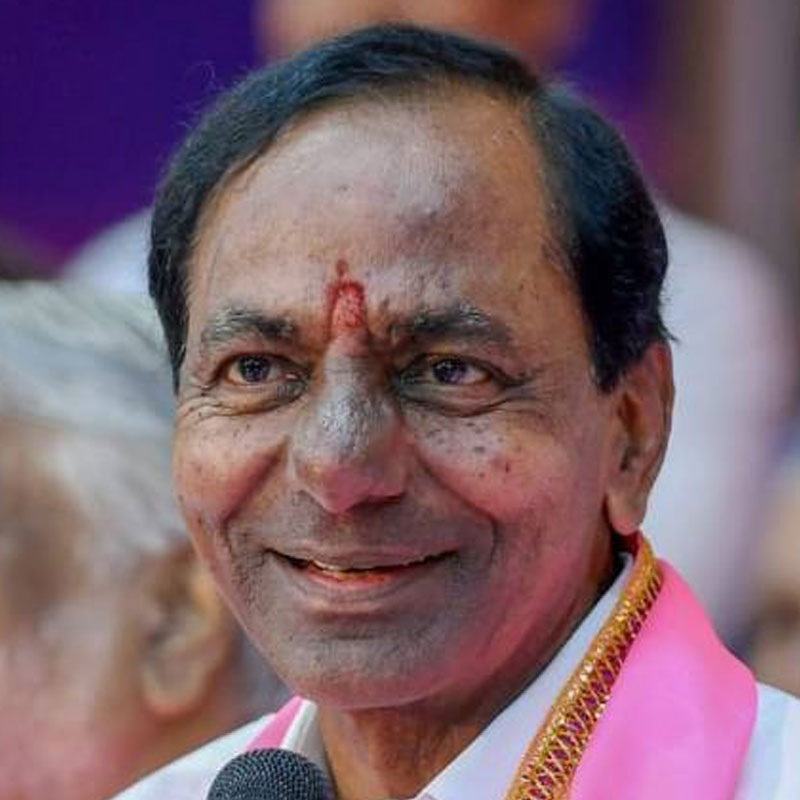
    Telangana chief minister K Chandrashekhar Rao signed the file, allowing filmmakers, producers and television programme producers to resume their work.

    The chief minister, in an official statement, said that production and shooting can be started with limited numbers of staff while strictly adhering to the guidelines issued by the government. He also allowed post-production works to resume with the same guideline.

    However, the state government has not allowed the re-opening of cinema theatres and multiplexes, as per the guidelines issued by the centre. The government has also advised filmmakers to follow all the necessary guidelines and conditions to stop the mitigation of the SARS-CoV-2 virus.

    Several prominent film personalities from the south have met the chief minister recently and requested him to allow production work in the state. Cinematography Minister Talasani Srinivas Yadav, government chief secretary Somesh Kumar, among other film personalities have prepared the draft guidelines.

  • Industry needs to handhold to come out of this crisis

    Industry needs to handhold to come out of this crisis

    MUMBAI: The film and television producers are gearing up to restart shooting in the wake of guidelines issued by the Maharashtra government and the easing of lockdown restrictions. Film and TV post-production activities in Tamil Nadu, Kerala, Karnataka and Telangana have also resumed, albeit with restrictions.

    Indiantelevision.com reached out to leading TV producers to understand their plans in the days ahead.

    Shakuntalam Telefilms founder Shyamashis Bhattacharya said, “People are eager to work; getting them on set is difficult but getting them to work is easy. We have new challenges before us like sanitisation and social distancing, but we will strictly adhere to all the norms.”

    But how production houses with lower budgets will work with added costs of sanitisation and other procedures? According to him, Hindi GECs would be able to sustain and work as soon as the government gives permission. Budget constraints, however, will pose challenges to regional channels. In that case, they might take more time than others to think of suitable measures. He said that broadcasters and production houses are already in talks to find out if there can be deduction in production budgets.

    Producers already have plans to start fiction shows with a lesser number of crew. Non-fiction shows, however, will be on hold as they require larger crews. According to him, broadcasters are also under pressure as there haven’t been any advertising revenues for many months.

    Optimystix Entertainment founder-MD Vipul D Shah suggests, as a measure of social distancing, that editing rooms will require redesigning. A separate space will be allotted to editors with one in one room. Most preferably, they will be asked to work from home.

    Makeup artists and hairdressers are constantly required to be with actors. But, to maintain social distancing, actors will now have to work without makeup artists at least for a few months. However, all these measures are still on paper; one has to wait till shooting starts to test the efficacy of their implementation.

    Indiantelevision.com reached out to Vaishnave Media Works Ltd MD-chairman Kutty Padmini to understand how things have progressed in the Tamil industry.

    She said, “Full-fledged shooting has not yet started in the Tamil industry as not more than 15 to 20 people can work together at a time. So, we have requested the Tamil Nadu government to grant permission for 40 people.” She adds that 30 people can be present inside the set and 10 outside; they will include drivers, generator operators and the rest.

    She said that the pending post-production works like dubbing, CJI, and VFX have started.

    According to Padmini, the Tamil Nadu government decided to resume shooting with 20 people after someone suggested that in Hollywood the shoot is happening with just 22 members. She says that this scenario is not relevant to India.

    “Resuming shoot with minimum people is possible for me as I do my own scripts and everything else, but it might not be possible for other people. It is not quite difficult also. Today, the technology is so advanced that we do not need so many lights or technicians like in the black-and-white era.”

    Padmini made it clear that she is planning to resume shooting only after 15 June. Currently, she is busy creating content for her YouTube channel.

    On creating a bank of certain episodes, Padmini says that now broadcasters allow the creation of banks of only five episodes. Story narrations might change in accordance with other factors like change in TRPs. And then there are many other factors like availability of actors, who come from Karnataka and Kerala.

    During the pandemic, a lot of production houses had to lay off employees, but the situation has been different for Padmini as she preferred to hire people based on projects.

    Padmini is utilising this lockdown period to create scripts which are doable with lesser crew. She is currently working with MSN, Amazon Prime, Dangal and Aha Media in Hyderabad.

    Creative Eye founder Dheeraj Kumar is positive that soon Maharashtra will also start post-production works like other states. Kumar’s 20-year-old show Shree Ganesh will make a comeback on Star Plus. The show will premiere on 2 June and air from Monday to Sunday at 6:30 pm.

    “The show is going to start but I have to do some additions, promos, and post production works. So, I am giving whatever technological help that is required through constant communication with editors and technicians. Basically, my problems are very immediate. The bigger challenge is we cannot start our post-production works until and unless we follow all the guidelines imposed by Maharashtra government,” he added.

    Kumar has his own studio, pro-cut machines, tools, equipment for mixing and sound. Apart from this, he regularly sanitises his studio building. He is bringing in place sanitise tunnels to effectively disinfect offices and equipment. In order to maintain social distancing norms Kumar has enough rooms that could be allotted to the technical staff.

    Kumar is also going to implement an odd-even formula in terms of staff to begin shooting. He believes broadcasters and producers will have to support each other in these troubled times.

    “Going forward we will have to think very carefully with regard to logistics and finances. Necessity is the mother of invention. We will have to learn to work with less crew and a tight budget. Industry needs to do the handholding to come out of this crisis,” he concludes. 

  • Netflix reinforces focus on post-production, holds virtual Q&A session for editing community

    Netflix reinforces focus on post-production, holds virtual Q&A session for editing community

    MUMBAI: It's no wonder that streaming giants across the globe are trying to strengthen their business in India as the country has amongst the highest consumption of online video in the world. Streaming giant Netflix had hosted a first-of-a-kind workshop on post-production in Mumbai last October and recently it held a virtual Q&A session for the editing community in India with Emmy Award-winning editor Stuart Bass on 30 April. Netflix CEO Reed Hastings promised Rs 3000 crore for content in India in 2019-20. Hence, the streaming giant is not overlooking the training requirement of the local creative community as well.

    Bass, who has worked for iconic shows like The Wonder Years, Arrested Development, The Office, and Pushing Daisies along with his long-time assistant editor Preston Rapp, shared his insights with over 100 participants from India and South East Asia. Primarily editors were part of the session along with assistant editors, post-production supervisors, writers, showrunners and/or directors.

    The conversation focused on best practices in editing for complex episodic storytelling, how it differs from editing feature films, editing for different genres and the latest editing technologies. Even with the number of original content flooding the ecosystem, the country has limited experience in editing for series which requires a different approach from a creative, logistical, and management perspective. Hence, skills in editing for series will become increasingly relevant as India produces content at scale.

    “We’re seeing a flourishing of stories from India across multiple genres and for every mood and member of the family. As more episodic series are made in India, there is a desire for best practices in long format storytelling. We were thrilled to see the response to the session led by an editor as prolific and experienced as Stuart Bass. We are grateful to the Indian creative community who, despite this difficult time, joined us and made this an incredibly insightful session that ranged from in-depth creative discussions to the technical aspects of editing for series,” Netflix post-production director Vijay Venkataramanan said who also moderated the session.

    The streaming service has significantly upped its investment in Indian stories and storytellers. Netflix has announced over 50 productions in India. Its recent releases include Guilty, She, Jamtara- Sabka Number Aayega, Yeh Ballet has gained enough word of mouth. Even Chris Hemsworth-starrer Extraction was released on Netflix with dubs in Hindi, Tamil and Telugu indicating its ambition to engage viewers across the country.

    “We've seen a big growth in viewing in India, and have had great success on our local originals there as well. Most recently was She and Guilty and a few others that have really been driving a lot of engagement in local content on our India service, and they also are big fans of our global original content like Lacasa de Papel was a huge hit in India for us, as well as most of our other originals that we have out of the US. So we're growing the business of licensed original international domestic across the board content and content taste,” Netflix chief content officer Ted Sarandos said in an earnings call after q1.

  • Inside Netflix India’s growing post-production infrastructure

    Inside Netflix India’s growing post-production infrastructure

    MUMBAI: Netflix has always shown supremacy in content quality. After entering the Indian market in 2016, the Reed Hastings-led streaming service has created several high-quality originals including Sacred Games, Bard of Blood, Leila, Delhi Crime and Lust Stories. While emphasising on writing, direction, production, Netflix is not overlooking the oft-ignored segment in the industry – post-production. Currently, the over-the-top (OTT) platform is in the process of expanding its post-production team and growing the infrastructure.

    “There have been some very big shifts in the industry and how we look at post-production. In the film days it was that transition going from black and white to colour. After that, we went digital from film. That was the next big shift. Now we are completely almost 99 per cent in the digital space. And that next big shift is the change in discipline going from feature films to episodic series of higher production value,” Netflix India post-production director Vijay Venkataramanan said in a recent interaction with Indiantelevision.com.

    Talking about the big shift, Venkataramanan said that earlier people spent about a year or higher time making a feature film but with the series it needs to be delivered at an even better quality at the same time. Moreover, in contrast to typical feature films which typically would have one director, one editor and one visual effects facility, some shows have three directors, multiple editors and multiple visual effects teams working in parallel to meet timelines.

    He also added that Netflix has an extensive deliverables list because the platform future-proofs its content to stand the test of time. The platform archives everything carefully so it can remaster and update it whenever the technology changes. Venkataramanan added that to be able to get that, the process has to start even before the script is written, putting a plan together of the workflow needed to be followed and how to budget.

    “It’s not about how much time you get, it’s about how you use the time. Often we might get the same amount of time as a film, but then if you are structuring your crew better, hiring more people and hiring specialists for each genre, if you are not trying to economise by eliminating specialists or having one person to do the job of three persons, having dedicated specialist for each genre, you can use that time better. We get the same start date or delivery date but what we change is the factors in-between,” he also pointed out.

    “In India, the post-production team is growing fast. We are nine people now. But if you look at the support teams of our operations, we have QC teams, our visual effects management team and then we have production technology support. So, we are close to 14. We are in the process of expanding the team because for us it’s important to have sufficient support within Netflix and it’s important to hire leaders in the industry,” he added further.

    Notably, Netflix recently organised its first-of-a-kind workshop on post-production in Mumbai to train industry professionals on international standards and practices. It has brought in trainers from APostLab, Netflix professionals from the US and Korea and industry experts from India. The training was aimed at enhancing creative digital skills for the internet entertainment industry.

    Venkataramanan said that while Netflix is a platform with the ability to stream content in 4K high dynamic range and Dolby Atmos in homes, the next step for the international streaming giant is to implement that same technology and finish its Indian content at that standard, format and specification. According to him, post-production is 50 per cent technical, 50 per cent creativity.

    “Typically what we push for the budget is a minimum ten per cent of below the line budget for post-production. But this does not include visual effects cost because visual effect budgets change depending on the creative of the show. There is a huge difference in the scope of visual effect in a Bard of Blood and Bahubali. So the budget of visual effects is significantly high in Bahubali than Blood of Bard. That will also not include the budget for in-licensed music that you are taking. You can’t put pressure on post-production budget,” he added.

    “When you are talking about post-production, you are specifically talking about those functions that tie into post-production and all the crew that are connected to post-production. But these are people who start operating even before you go into production. How do you set up editors, multiple teams of editors, having proper edit facilities, not a stadalone iMAC in the corner of production office but properly set editing rooms, budgeting for the DIT, sound mix, come under that ten per cent,” he added.

    He also added that they keep working with the partners to make sure that money is spent wisely. But when there are savings, they don’t allow that money to go back to production, they put that money back into post-production to create a better product. He also gave an example of a feature film that they are working on for which they had a lot of savings. Instead of taking back that money, they used that money for the highest quality of delivery possible including going to 4K HDR from initially planned 4K SDR.

    “Right now our post-production infrastructure is growing. One year ago, we had only two to three facilities that were capable of delivering to Netflix. After we engaged with the industry and gave them confidence that we will pay fairly and you can fearlessly go and invest in creating your pipeline and we are here to making this content, today we have 11 facilities across India that can deliver to us. It's growing even faster and the industry is responding to the content we are making. Our philosophy towards post-production is different and when people see that, the iwAndustry gets confident and then they partner,” he commented.

    According to him, the challenge is not in terms of technology but how you are planning and budgeting for it. “The technical staff we can teach, our technicians are great. We have people who go to facilities and work with Technical staff and the entire team dedicated to facilities and helping guide them on how to upgrade their infrastructure. We have all these resources but it's important how we manage it efficiently. That’s the culture shift and we are making producers aware of how to use post-production properly respecting their skill set and making them aware of various stages of post-production,” he signed off.