Tag: POP Asia

  • POP Asia: Can Visual Merchandising lead the way?

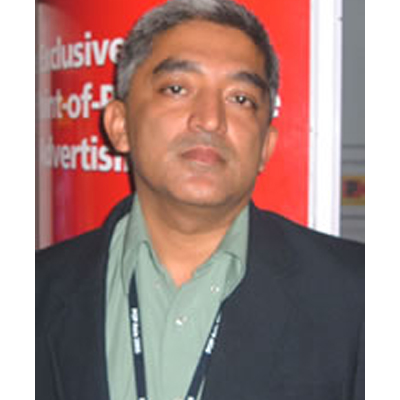
    MUMBAI: The second day at POP Asia 2005 kick started with the Titan head, CEO Bijou Kurien addressing the seminar on visual merchandising- challenges in specialty stores.
     
     
    Titan, which has retail outlets in 170 locations has to keep engaging in clever visual merchandising (VM) to ensure excitement and freshness of the product. Flashing back Kurien pointed out that in 1987 watches as a category were need driven. Retail outlets were very small and extremely poor presentation of point of purchase (POP) merchandise.

    Today, although is a different scenario. Customers of today are driven by desire and latest trends. Stores have become a lot more glamorous. In the current day and age, VM will become increasingly significant with more and more international design trends entering the Indian market.


    Coming to pointers on VM, Kurien pointed out that if a product was small, the focus has to remain on the product. Too much usage of props will divert the customers’ attention and the product will get lost. Secondly, educating the customer and creating a luxury feel that is commensurate with the product identified target audience is very important. Products need to be segregated into clusters to differentiate one from another so as to seduce the customer.
     
     
    Titan also changes its positioning and evolved from ‘Titan’ to ‘The World of Titan’ which Kurien averred made a world of a difference. Another point in note for store design specifically was that what was correct today might not be relevant tomorrow. Also, showing less did not mean selling less. Clusters of product is a definite no-no. On the display window, it is essential only to showcase a few and the rest to be displayed on the counter. Kurien’s ending words were that VM in India is going to be the link between brand communication and the product.
    Up next was R Kannan, director and president RAMMS India who threw light upon how to grow the POP business and how to build long term strategies for tomorrow. Citing HLL’s example, Kannan pointed out that POP was the central theme of HLL’s entire brand communication plan . He said the return on investment (ROI) from POP is a lot higher than the ROI on advertising.

    Delving into viewpoints both of the client and the players in POP business, Kanan highlighted that a lot of brand managers today still look at POP as a last minute post-launch promotional activity. He stressed on the fact that today companies have to look at POP as an integral part of the launch. Brand managers also felt that the POP players lacked credibility, innovation and understanding of the holistic business. On the other hand the POP players felt that POP was always a last minute rush, where delivery and cost were the most important factors rather than quality.

    Kanan said that to formulate a long term strategy for growth, one needs an integrated solution which will lead to the emergence of POP agents. The need of the hour was also stated as the POP business to develop their skill sets and get out of the rut of taking orders from their clients. There is a need for players in this space to demonstrate more accountability, understanding of customer behavior and marketing skillsets. The POP players need to give broader solution and finally evolve as one stop shops for POP.

    HLL’s head (personal wash) Gopal Vittal talked about a marketers perspective on POP advertising at work and the power of below the line. Stating that there was more to advertising than television, Vittal said it is getting increasingly important to influence your customer in multiple ways. Stating some current market realities, he pointed out that today the battle for the wallet was not just within the category his product was in but, across varied categories. Forty per cent of advertising today is ignored and 60 per cent is surfed upon superficially. Differentiation among products is getting more difficult and today’s consumer is influenced by a wide variety of stimuli. The message was clearly to move beyond eye-balls to making products talking points. And to move from traditional media to more innovative non-traditional ways.

    The most awaited session of the day was Martin Pegler’s workshop on VM. Referring to a retail store as above the water line. A question that Pegler asked the audience was that do the retailers in India realize that they are dealing with the new age shopper? Mapping current trends Pegler pointed out the teen boys and the metrosexual man as the new shopper.

    What does today’s shopper need?

    The today’s shopper needs to be stimulated. The stimuli needs to come from entertainment and interactivity that appeals to the customers.

    Stating key pointers in clever VM, Pegler pointed out the following:

    1) Fixtures within a store need to be movable & dismantable
    2) Ambience plays a very big role in ensuring value for money to customers.
    3) There is an increasing trend of stores beginning to warm up and get friendly
    4) Effort needs to be made to integrate commercial with community, ensuring customer spend longer hours at the store.
    5) Bright strong colours and illuminated back light are interesting concepts
    6) Use of graphics which compliments your display and design
    7) Bringing in of subtle smells
    8) Freedom for customers to touch and feel the product.
    9) Daylight being brought back into the stores via skylight.
    10) Mannequins used a fashion runway to make a statement.
    11) Use of colours, sizes, style in a logical sense while arranging products.

    All in all, Pegler’s parting words were VM is nothing but a lot of common sense. It is essentially arranging merchandise in an alluring and accessible manner which keeps it simple for the customer. “You have to know how your shoppers shop.”
  • POP Asia bullish on advertising market

    MUMBAI: The first Indian Point Of Purchase (POP) exhibition-cum-conference – POP Asia 2005, kick started in Mumbai today. The first day of the two day conference saw speakers like Point of Purchase Advertsing International (POPAI) director genreal Martin Kingdon, the organising committee chairman Harish Bijoor, AC Nielsen director – client service Nehal Medh, Foodworld Supermarkets vice president merchandising and marketing K Radhakrishnan and IIT Mumbai’s Ravi Poovaiah presenting their views on the Rs 18 billion POP ad market.
     
     
    Bijoor, in his inaugral speech, said that the growth of top of the line advertising has become stagnant and hence mass media advertising was working less and less. This has resulted in the increase in demand for below the line (BTL) activities which is seen as an alternate medium, he said.
     
     
    Elaborating further on the advertising pie as far as the media mix for a brand is concerned, Bijoor said that 46 per cent was being spent of press advertising, 41 per cent on television, 3 per cent on cinema (the share of which is shrinking at a rate of 23 per cent per annum), 2 per cent on radio, 0.5 per cent on Internet (as opposed to 0.01 per cent a couple of years back) and 7 per cent on out-of-home (OOH).
    “The seven per cent that is spent on OOH is the most interesting as that is where direct contact with the consumer takes place and POP forms an intergral part of OOH,” Bijoor said.


    Bijoor concluded that POP was more action oriented, immediacy led, more measureable than mass media advertising and was a dynamic concept. “The conference aims to focus on the niche that POP is looking at handling the last mile issue that hasseled marketers are facing,” he said.
    Kingdon, on the other hand spoke about the different brand and retail approaches that were taken in the UK as far as POP was concerned. Citing the example of “black goods” (read ciggrattes, alcohol, tobacco products), he said that since traditional advertising of these goods was banned the companies spent millions of pounds every year on POP advertising in the retail space.

    “The role of POP is to stop the shopper, either mentally or physically, and not to make him buy the product. The attention that a POP attracts can then be instrumental in the purchasing decisions of the consumer,” said Kingdon.

    In 2003, the total POP market size in UK, according to Kingdon, was 1.1 billion pound sterling. Speaking to indiantelevision.com he said that the market would grow 5 per cent this year but that he still termed as a conservative growth expectation.

    Ending on the note – “The sky is the limit as far as POP is concerned,” Kingdon said that there were certain brand visibility requirements in the space, which if taken care of can spur sales of products that go in for POP advertising.

    AC Nielsen’s Medh touched upon the research done on consumers and POP. “India is dominated by the traditional format retailing and hence POP is virtually invisible here. POP is only prominent in the dark category brands and for other brands, mass media advertising dominates the mind and pride space and also the budgets of companies. POP is seen as a complimentary tool,” he said.

    He also stressed on the fact that in India the use of POP was very unimaginative and that brands needed to work on that front.

    “Almost 15 per cent of buying decisions are made on the shop floor and hence companies should not spend in an ad hoc manner in the POP space, because there is a huge potential for the brand in POP advertising. Marketers should ignore POP at their own risk,” Medh emphasised.

    Radhkrishnan, on the other hand, stressed on organised retailing and said that there was a steady growth in the organised retail sector in India. “Anything that communicates a message is POP. Product display, banners, posters, shelf tickets, bay headers etc are examples of POP. One should look at the category and not just the brand while deciding on the POP for the brand,” he said.

    He also said that POP formed an important part of the media mix and that while planning for the brand, one should plan down to the POP.

  • POP Asia ropes in international speakers; begins 20 Jan

    MUMBAI: The first-of-its-kind exhibition cum conference on point – of – purchase advertising POP Asia 2005 will commence on January 20 and will go on till January 22 at Nehru Center, Mumbai. This first edition of POP Asia will address the requirements of all constituents of the point-of-purchase advertising value chain – brand marketers, advertising agencies, designers, visual merchandisers, service providers and retailers.
    The seminar has also roped in international speakers like Martin Pegler, the renowned guru of visual merchandising and store design, as well as Martin Kingdon, POP Advertising International director general, UK and Ireland.


    Pegler is one of the most respected authorities on visual merchandising and store design. His book Visual merchandising & Display is currently in its fourth edition and is still prescribed reading for students and professionals in the field. Kingdon on the other hand, has spoken extensively across the world on various aspects of the display market and specialises in the effectiveness of retail displays and layouts and also on brand and retailer attitudes to in-store communications.
    According to Pegler, “POP industry has become the visual arm and now encompasses store design, visual merchandising, point of purchase, store construction and exhibit design. All the extensions of visual field are involved in presentation. It is all about making things look better and more desirable than they may actually be”.
    Other well-known speakers include Raghu Pillai -RPG Enterprises retail sector president and CEO, HLL VP/head – personal wash business Gopal Vittal, ACNielsen ORG-MARG director client servicing Nehal Medha, RAMMS India director and president R Kannan and Ravi Poovaiah – Faculty in visual communication and product design at the Industrial Design Centre (IDC), Indian Institute of Technology (IIT) Bombay.


    POP Asia 2005 will showcase the best and latest international trends in point-of-purchase advertising.This will be the first time that an event will bring the industry buyers and sellers into direct contact from across continents. This exhibition-cum-conference aims at being the ultimate destination of producers and end users of POP who will be provided a ready platform to forge mutually rewarding business partnerships.

    The event has already confirmed participation from POP designers, POP manufacturers, sign makers, electronic signage makers, visual merchandising and store fixtures, creative agencies, exhibition designers, modular systems, POP technology. These will be from both developed and emerging markets in Europe, Middle East, China, Far and South East Asia and the Indian sub continent. Depending on the company profile, exhibitors will be classified into four distinct pavilions: absolute POP, retail signs, V M and storefix and cutting edge technologies.

    The Indian POP advertising industry currently stands at around Rs 180 billion and is on the upswing growing at a healthy 30-40 per cent annually. Organised retail has also grown three-fold from Rs 495 billion in 2000 to Rs 1485 billion today, with a potential to expand to around Rs 3600 billion in 2005. About 25 million square feet of organised retail space would be added to the existing eight million by the year 2005.


    India today ranks fifth in the top list of the 30 emerging retail markets. In the overall 12 million retail outlets, only 5 million are in urban India and contribute to the overall magnitude of the retail opportunity in India. It is estimated that approximately 25 million square feet of organised retail space will be added to the existing eight million by 2005. Organized retail has grown three-fold from US$ 11 billion in 2000 to US$ 33 billion today, with a potential to expand to around US$ 80 billion in 2005. Growth of retail would be driven by an increase in consumer spending which has grown at an average rate of 11.5 per cent over the last decade.

  • ‘Visual merchandising isn’t understood in India’ : Martin M Pegler – Author and lecturer

    ‘Visual merchandising isn’t understood in India’ : Martin M Pegler – Author and lecturer

    Professor Martin Pegler, a name considered to be one of the world’s leading voices in the field of VM and store design graced POP Asia 2005 to conduct a workshop for the Indian POP players. An established guru in this industry with over fifty years of experience and the publication of over sixty books. While lecturing to capacity crowds around the world, he holds down the position of a professor at the famed Fashion Institute of Technology, New York City.

    Professor Pegler was recently been honored by Professionals for the Advancement of Visual Education, with a lifetime achievement award for his many contributions to the field of VM and store design. While his other achievements are far too many to mention, it is important to note that he has also been inducted into the Visual Merchandising/Display Industries’ Hall of Fame and is an elected member of the Society of Visual Merchandisers. Indiantelevision.com’s Sonali Krishna met up with the guru himself for futher insights on VM and VM in the Indian retail market.

    Excerpts:

    How crucial is VM going to be with consumer awareness on the rise in developing countries?
    Today even in villages and small towns, awareness is quite high with the television reach. There is always going to be a demand for something new and different. Some people will never change but the young want what other people have, which is probably the reason why they leave the farm, leave the village and come into the city. So, the ones in the rural areas will want what’s new. Visual merchandising which is the presentation of merchandise effectively is important no matter where it is.

    Coming to the retail stores now, what is the flexibility that a retail outlet should offer considering special offers and discounts during different festive seasons round the year in terms of visuals and designs?
    Ideally, if I were investing in designing a fixture that would sit on the counter, it should have a removable part where as each festival comes up I throw away Valentine’s day and put in Mother’s day. I throw Mother’s day and put in Christmas. So in other words, the same unit with removable or changeable graphics. So, the manufacturer spends money on something that is worthwhile but it has a longer life because you keep changing it.

    Which markets today in the world use VM to its optimum?
    Right now, VM is very well used in the States. Any retail that is successful in the US, is doing VM. The US probably does the best promotional merchandising. But, the best VM , the neatest most organized is probably Germany, Austria and Finland. Whether it is fashion, hard goods or anything else. POP is not VM, VM is part of POP. Clothing, household and any fashion accessory are the primary categories which require VM. Women’s fashion today as a category uses VM to its best.

    Where does India stand today when one talks of VM?
    I really saw such few stores that I thought were good. There are stores in India that are controlled by companies outside of India which do a good job, because they bring their concepts of VM in. We saw a couple of stores in Crossroads where they were selling saris. They were expensive but they looked like rags. It was crowded and totally lacked colour sense. So, yellow, orange, green, purple, red… one didn’t know where to look. I said give me ten minutes and I will organize your store. The saris and the material is so beautiful and the colours are so vivid, but they are fighting each other. Instead of putting all the yellow and gold together, all the oranges together, all the pinks and red in one stack and building the colours up so when you enter you get a rainbow effect and the the customer can pick out whatever colour they are interested in, colours seem to be in a state of battle.

    So, today VM is not understood in India. One of the big problems today is that many visual merchandisers are men. And men don’t know what to do with colours. I remember being in Korea and saw the most outrageous outfits on the window and I asked the girl on the counter who picked the outfits and she said the manager. So, I said he has no taste and she replied saying but he’s the boss. So, that’s what it comes down to.

    What percentage of VM actually induces walk-in’s?
    I would think that, that would be the reason for walk-in’s. If you see something in the window or in the front of the store that you find attractive and appealing, that’s a reason to walk in. So it is extremely crucial.

    Once more international brands come in, they will make the Indian brands look awful and that will bring about the dramatic change in VM

    So, how come it is non-existent in India?
    Because India has been a market place for many years now. Markets and bazaars and people go shopping and they rummage through things. Because this has been the way they have been shopping for years. So, the person who owns the stores figures that he doesn’t need anymore. Indian retailers don’t understand if customers want to be left alone. They are very aggressive with their customers. The young people who will be going to the stores are not going to put up with this. They have to learn that this is not the old way of doing business.

    Tell me about the innovations that you have done in this space.
    I am basically a critic. I am not a doer. I’m in the fortunate position of being able to see what’s happening around me. So, I make conclusions on the basis of what I see.

    Where do you see the future of VM going?
    It has to arrive in India, as it does in every other country as it develops a bigger middle class. We were in Moscow in August 2004, and were there before that two years ago. The difference from two years ago to this year was remarkable. And when you look at the young people in Moscow today congregate in their malls, you could be in a mall in the US. You can’t tell the difference. Once more and more international brands come in, they will make the Indian brands look awful and that will bring about the dramatic change in VM.

    Could you name me a few stores that have really stood out in terms of clever VM?
    In New York city, Bergdorf Goodman in 5th avenue, they are the most creative windows we have. Another name would be Barneys, New York in Madison avenue. I don’t like them personally but it’s a rage in NY.

    Harvey Nichols and Liberty in London are excellent in terms of display and VM.

  • ‘Don’t spend a scanty 2 per cent on POP, spend at least 10 per cent’ : Harish Bijoor – POP ASIA 2005 chairman (Steering Committee)

    ‘Don’t spend a scanty 2 per cent on POP, spend at least 10 per cent’ : Harish Bijoor – POP ASIA 2005 chairman (Steering Committee)

    He talks of a “marketing meltdown” in the country. FMCGs are his real targets. Harish Bijoor does not mince words while reasoning a greater ‘autonomy’ for the POP industry, especially in India.

    Acoustically buoyant about the first POP Asia, he is the Chairman of the steering committee POP Asia, Harish Bijoor CEO Harish Bijoor Consults carves a case for a greater focus on one is to one branding. He justifies this by giving example of the imminent failure of advertising to sustain the top line and the bottom line of a brand.

    Indiantelevision.com caught up on the sidelines of the recently concluded two day expo POP Asia at Nehru Centre, Mumbai.


    Excerpts:

    How did POP Asia go? Has it been successful enough to meet your expectations?

    It has certainly met my expectations. I have been looking at creating some degree of evangelism in it. POP as an industry has always been a neglected medium. We have always been besotted, as a country, with above the line. Several years ago I started talking about below the line propositions. Everything we did was below the line oriented. It convinced me that it is hard work but it is very very efficient. And therefore what I was looking forward with POP Asia as forum was to bring more and more people on to a unified platform. This year we have had 450 odd people. I am sure it will be much more next year.

    Why POP Asia? Why not POP India or say POP International?

    Fundamentally Asia is where the problem is. I do work in Vietnam which is a very nascent market in terms of POP. I work in Korea where North Korea is an advanced market while South Korea is completely a different place for POP industry. Singapore has a very advanced POP market. But you see these are just the top three numbers we are looking at. There are core markets like Indonesia and China except for Shanghai. Therefore as you see Asia is evolving as a big economic battle ground. The potential is enormous for the POP industry to grow. And we are at a junction where POP is evenly poised to arrive in a big way.

    What is your take on the Indian POP scenario? Investments in POP are more or less stagnant.

    We all know 70 per cent of the purchase decisions happen in store. But 80 per cent of the spend takes place out of stores. Now logic needs to meet somewhere. I am not saying that marketers start spending 70 per cent of their budgets on POP. All I am saying is let there be a better equity. Don’t spend a scanty 2 per cent as you do today on POP. Spend at least 10 per cent. I believe that is the right direction to go. I have been watching Indian marketing at a very micro level. The issues are really deep and big. There is this great marketing meltdown which is hitting the oldest marketed categories in India. They are in deep trouble because top line is not growing; the bottom line is also not growing. Then what’s the purpose of the brand.

    What is the reason for this ‘marketing meltdown’? Especially in the FMCG sector. HLL has become quite a case for this.

    You see all of us need to be besotted with brands and we must protect the bottom line of the brand come what may. Overall what is really happening is ‘the discounting mania’. The mania to get the top line at whatever cost. I feel these are big issues. And they need to be avoided at all cost.

    Then how do you fight the competition?

    I think you need to build brands which are on the ground levels. Don’t build it with media. Build it with customer interface. There is something called one is to one branding and there is something called one is to many branding.

    What is your understanding on brand building through POP?

    POP creates excellent one is to one branding. You go to a store you look at a POP, you get swayed by it and buy the product. I have done a study in seven centers of India. Out of every 100 people who walked into the store 83 got swayed by POP. Only 17 came to the store pre decided to buy. So the question is that “Is Advertising working”? No. Advertising has stopped working. It is not working as efficiently as before. I think in today’s context and with the amount of clutter around advertising is only good for awareness.

    But there is so much of clutter in an average Indian retail outlet?

    Look at clutter which happens in the retail outlet today. Our kirana stores are full of clutter. Despite that there are many entities who are able to make a very focused pitch for your retention. Look at what Surf is doing in the retail outlet. Creativity plays a key role. I think there will be more clutter on advertising than POP.

    Are you giving direction to advertising?

    Today the advertising pie in this country is Rs 117 billion. Out of that 46 per cent goes to Television, 41 percent goes to print and rest goes into outdoor, rural publicity vans and POP. I am just saying that bring some method to madness. You are already having a problem of top lines not growing; bottom lines not growing. Apply what is more efficient and cost effective.a