Tag: Pond’s

  • Vossle witnessed an average spike of 200% in its sign-ups over the last 6 months: cofounder Prafulla Mathur

    Vossle witnessed an average spike of 200% in its sign-ups over the last 6 months: cofounder Prafulla Mathur

    Mumbai: Augmented reality (AR) isn’t just a fancy term anymore. It has, in fact, become a much sought-after means of accomplishing brand goals. The major factors driving the growth of web AR are the booming gaming industry and the rapid penetration of the internet, which are driving brands across the world to adopt web AR to increase their engagement with customers on their websites.

    Here’s where Vossle, a cloud-based, no-code web AR development SaaS platform, comes into the picture.

    Launched in January 2021, Vossle was co-founded by Prafulla Mathur and Pulkit Mathur. According to the duo, with the platform, businesses can create augmented reality in under a minute. It requires no app downloads to experience world targets, image target-based campaigns, games, or face detection-based try-ons using Vossle’s core AR+AI engine. It reaches millions of users instantly with an app-less AR experience that works on every modern smartphone browser the moment you publish it.

    Prafulla Mathur and Pulkit Mathur are serial tech entrepreneurs, and are also the founders of Queppelin, a global metaverse development company.

    Vossle raised funds from Nimbuzz ex-CEO Vikas Saxena. Nimbuzz was acquired by the UK’s New Call Telecom for $250 million. Vossle grew quickly and now operates in Gurugram and New York.

    In an exclusive confab with Indiantelevision.com, Vossle co-founder Prafulla Mathur discusses the application of Web AR by various brands and across categories, how it is being used in the advertising and marketing space, and so much more.

    For starters, the global augmented reality (AR) and virtual reality (VR) market size was valued at Rs 1,222.7 billion in 2020 and is projected to reach Rs 37,073.65 billion by 2030, registering a CAGR of 40.7 per cent.

    Discussing the expansion plans of Vossle over the next two years, Mathur reveals, “We are expanding Vossle technology teams as we are releasing new product features. Our current teams are in India and New York (USA), and we will add further teams at these offices. We are also adding more customer support teams (both through email, phone, and the Vossle tech forum) to help our customers.

    “Elaborating on Vossle being a no-code platform, Mathur reveals that it democratises AR for everyone by removing the dependence on development/coding teams. “You can think of Vossle as Shopify for web AR. With Shopify, businesses can create websites without writing any code and do not have to bother with hosting them. Similarly, with Vossle, businesses can create various types of AR without any coding knowledge and use them out-of-the-box as the created AR experiences are also automatically hosted on Vossle,” he explains.

    About the subscription model: Apart from a free trial, Vossle offers two subscription plans, namely, commercial and enterprise plans. In the free trial, users can create unlimited AR experiences with 100 free views. The commercial plans are for $99 per month, wherein users can create various types of AR experiences like in-line AR, face filters, try-ons, games, world tracking experiences, image tracking experiences, green screen chroma key videos, and so on. Users can create unlimited experiences and are offered 10,000 views + $0.01 per extra view. In the enterprise plans, along with all the commercial plan benefits, users can avail themselves of the option for white labelling and custom branding.

    Use cases of Vossle’s technology

    One of the most eminent use cases of Vossle’s technology is that of in-line AR being used for improving website search engine optimization (SEO). Any effective SEO strategy aims to keep visitors on the website for longer session durations. Vossle’s inline AR Feature makes it possible by embedding AR experiences inside a website, which has a 90-times higher engagement rate from website visitors.

    Mathur emphasises that AR is also utilised for product packaging. Brands which integrate AR into their packages are able to capture the audience way more than their competitors. This also gives analytics and insights on customer profiles, store level sales, and customer engagement analytics and makes brands better prepared to update inventory at the highest engagement stores.

    Advertising and marketing also constantly utilise AR. “Traditional marketing strategies are no longer sufficient to stay up with the times. The key to creating a digitally transformed company is to build upon new strategies such as integrating AR into business models,” points out Mathur. For instance, Tanishq, a product of the Tata Company, is one such example of excellent AR marketing. The company used Vossle’s virtual try-on feature to make a gorgeous 3D reproduction of their newest jewellery and made it possible for users to virtually put it on.

    Gaming is another instance wherein AR is used extensively. Nothing compares to AR for attracting audiences, engaging their attention for longer sessions, and boosting click-through rates. Web AR games amplify this even further. For example, Pond’s, a major skincare brand from Hindustan Unilever (HUL), needed a smart, potent, and engaging marketing strategy to connect and influence the younger audience and expand their loyal customer base. Thus, the brand created a unique web AR game on Vossle—users have to pop the bubbles with their facial movements. With each bubble they pop, their skin becomes more radiant and glowing. The game also has an end-to-end ecommerce flow with integrated discount coupons.

    Another example is that of a web AR experience of a 3D basketball game that can be played by scanning the code. The player has to shoot baskets through the hoop with their finger. This is just one of the many examples of how any idea can be turned into a web AR game with Vossle.

    AR being heavily applied in e-commerce. Online retail has already started adopting 3D AR product visualisations. Amazon is already offering 3D product visualisations, Lenskart (a prominent eyewear e-commerce player in India) offers eyewear try-ons, and Tanishq has offered Vossle jewellery try-ons. Mathur says, “This not only improves the shopping experience by allowing customers to visualise and virtually try-on a product before buying, it also reduces returns as the customers are making an informed decision.”

    Education is also an additional use case of AR. Players in the education space are now integrating Vossle into their online courses to explain concepts in a unique way by providing a real-life context to the students through AR. This interactive way of learning results in faster understanding and higher knowledge retention.

    Web AR – led promotions and the effect of web AR on sales

    Mathur brings out, “We witnessed an average of a 200 per cent jump in our monthly Vossle sign-ups over the last six months. Many of these signups are from brand marketers or their agencies. Additionally, some of the largest marketing, advertising, and creative agencies have become Vossle’s service partners, clearly indicating the huge investments that the brands are making towards creating web AR campaigns.

    “Talking about the effect of web AR on sales, Mathur elucidates that as the users’ gaze times are very high when viewing AR, they stay for longer durations on brand websites when AR is embedded on the page. This improves the websites’ SEO rank and hence drives traffic, resulting in higher sales.

    Brands selling their products online also give ads on Google, which is called search engine marketing (SEM). Inline AR on its landing page increases the quality score of such ads, reducing the ad rates for the brand and resulting in more targeted users being able to see it within the same budget.

    Additionally, brands that integrate AR into their packages are able to capture the audience way more than their competitors. “One of the recent campaigns we did for an FMCG company received 500K views in a month on their web AR experience through their packaging. This resulted in higher sales for the brand,” says Mathur.

    Brands and categories utilising Vossle’s web AR technology

    Along with many others, some of the few brands that Vossle is already working in tandem with are Pond’s, Tanishq, and Emirates NBD, which is a banking behemoth in the Middle East and uses Vossle web AR to wish their users on every festival like Mother’s Day or Chinese New Year.

    Speaking about the categories implementing AR, Mathur states that it is used for inline AR—website owners from across education, retail, furniture, jewellery, and consumer goods like beauty products, etc. are taking a lead in using inline web AR.

    It is also employed for packaging-based AR implementations. Consumer packaged goods (CPG) are leading the way in offering web AR experiences to engage customers. They have millions of packages on superstore shelves and in consumers’ homes, which is a huge marketing opportunity they can leverage.

    Reach, target group and brand experiences for consumers

    While deliberating over the kind of reach that web AR has, Mathur says that it works in browsers (Chrome, Safari, etc.) on devices like smartphones (Android, iOS) and laptops/desktops. All combined, a total of 5-8 billion devices across the globe are compatible with web AR.

    What is kept in mind while creating web AR brand experiences for consumers? “No-code platforms for web AR like Vossle have eliminated the need to write code, which used to be a big task earlier. Additionally, Vossle offers a fully hosted web AR creation experience. Hence, website owners and brands who want to create a web AR experience only have to focus on creating interesting content. Vossle helps with that too, with its integrated content library and empanelled service partner to create custom content for Vossle users,” deciphers Mathur.

    Needless to say, web AR as technological advancement is more attractive to the youth. Do brands usually use such experiences to target Gen Y, Gen Z and millenials only? Or if such web AR experiences are also created for the higher age groups, how does Vossle bring in traction from such age groups? Mathur concludes, “Every medium such as movies, television, videos or stories has different user groups and demographics preferring different types of content regardless of the medium. Same is with web AR which can create different content types for different interest groups like fun and educational for kids, exciting stuff like face filters and games for 16-30 year olds, and product visualizations and try-ons for 30-60 year olds.”

  • Bigg Boss Malayalam 4 garners 2.3 mn impressions for the finale episode

    Bigg Boss Malayalam 4 garners 2.3 mn impressions for the finale episode

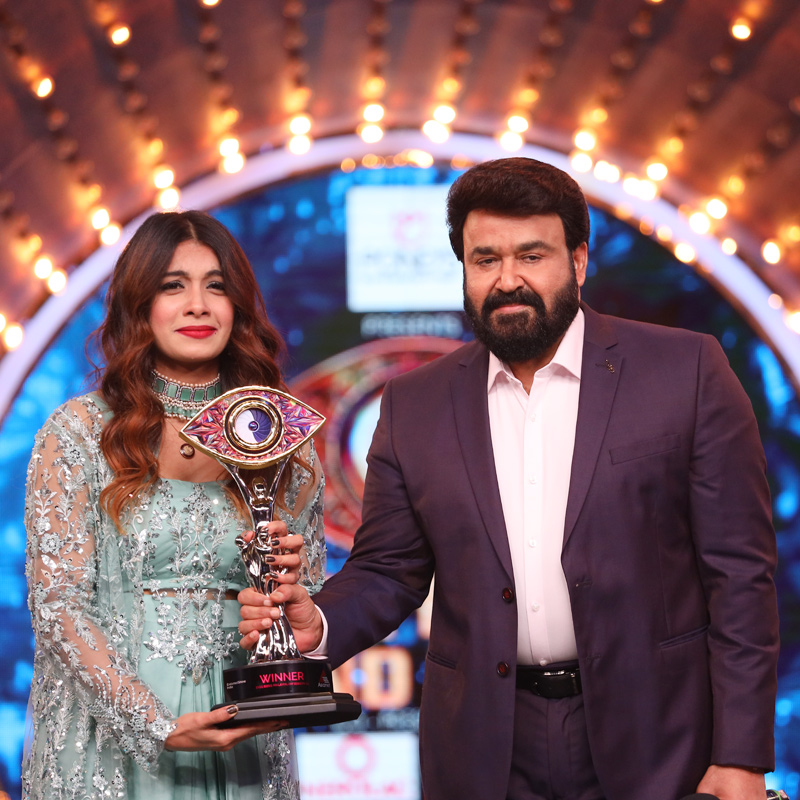
    Mumbai: The fourth season of the popular reality show Bigg Boss Malayalam has garnered 2.3 million impressions, the highest ever for the grand finale of the show across seasons till date. Season 4 which launched on 27 March 2022 witnessed participation from 20 contestants with diverse preferences, world-views, life-stories and continued to entertain audiences through several months.

    Dilsha Prasannan, who competed with six other finalists, was named the winner and awarded the prestigious trophy and this win also established Dilsha as the first ever female to win the title in the history of Bigg Boss Malayalam. The host of the show Mohanlal nurtured, supported and even criticised the contestants from time to time; making him a very involved host.

    Bigg Boss Malayalam 4 was presented by Nerolac and Repose mattress, and the title was sponsored by Ponds. Popular brands like Indiagate, Elite, Domex, and Preethi also supported the grand show. While Dazzler and Atomberg came onboard as special partners, Nandilath Gmart, Joy Alukkas, and the Confident group were the associate sponsors.

    In addition to the usual conflicts, friendship, love, physical activities and mind games, Bigg Boss Malayalam 4 stood out for its uncanny representation of the Malayali society, as promised by the season’s tagline ‘The new normal.’

    True to the positioning of the channel ‘Anudinam Valarunna Aathmabandham,’ the deep emotional bond between Asianet and its viewers keeps getting stronger day by day and the grand success of Bigg Boss Season 4, delivering double-digit rating consistently week-after-week is a testimony to that bond.

    Aside from overwhelming love and support from television viewers, the positive feedback across digital platforms and active audience engagement also reflects the show’s resonance amongst the audience.

    The show, today, has undoubtedly become one of the top shows on Indian television. Disney+ Hotstar fans also took to this season of Bigg Boss, resulting in huge traction on both TV and digital.

  • The Zoom Studios to premiere ‘Happily Ever After’ on 01 February

    The Zoom Studios to premiere ‘Happily Ever After’ on 01 February

    MUMBAI:  Closing 2019 on a high note with its originals transcending reviews from the critics and masses alike, The Zoom Studios kickstarts the New Year with its sixth original, ‘Happily Ever After’, a slice of life series that explores the reality of modern day wedding goals. Firmly positioning itself as a leading content house, The Zoom Studios with its five originals registered a viewership of over 120 million on its YouTube Channel. 

    The last offering from the content house, The Holiday, alone clocked a viewership of more than 45 million on YouTube and created a sensation on digital media with its loyal fan base. Continuing with its promise to offer relatable stories that are brought to life with strong narratives and power packed performances, The Zoom Studios’ upcoming show, ‘Happily Ever After’ will premiere on 01 February at 7 PM on The Zoom Studios YouTube channel and Zoom.

    ‘Happily Ever After’ captures the essence of a modern millennial relationship and brings to light the hitches and glitches the millennial couple – Roneet Bagchi and Avani Mehndiratta faces as they strive to achieve their dream wedding. Determined to host the biggest wedding, Avani and Roneet struggle to pull off their grand wedding with their limited savings. Resorting to their ‘jugaad’ ideas to tackle each impediment, Avani and Roneet are in for a roller coaster ride as the show unfolds.

    The show marks the web debut of acclaimed director, Navjot Gulati and brings together digital powerhouse talents, Naveen Kasturia (Roneet Bagchi) and Harshita Gaur (Avani Mehndiratta) to play the lead roles. Shot in the picturesque locations of Rajasthan, the show presents an ensemble cast of 54 actors from the small screen, coming together for the first time on an OTT original. Shivankit Parihar, Shruti Das, Gurpreet Saini, Shabnam Vadhera, Rajiv Khanna amongst others will be seen playing key characters in this situational drama-comedy.

    Times Network COO and executive president Jagdish Mulchandani said, “In a short span, The Zoom Studios has strongly built itself in delivering real, conversational and engaging narratives that have successfully resonated with our viewers. Continuing with our promise to bring forth strong narratives, ‘Happily Ever After’, is a refreshing take on modern day wedding goals and attempts to focus on the real happiness, which is devoid of a price tag. We are excited and thrilled to present our new show and I am confident that the show will reiterate the success of our previous shows”.

    Watch ‘Happily Ever After’ co-presented by Ponds and Digital Loans partner: SBI on 01 February 2020 at 7 PM on The Zoom Studios YouTube Channel and Zoom.

  • HUL marketing spends up in third quarter

    HUL marketing spends up in third quarter

    BENGALURU: Indian FMCG giant Hindustan Unilever Ltd (HUL) is one of the biggest advertisers in India. On Indian television, the company releases the highest number of advertisements by far according to Broadcast Audience Research Council of India (BARC) weekly data for top 10 advertisers across genre. According to BARC’s weekly data for calendar year 2017 (week 1 starting Saturday, 31 December 2016 to week 52 ending on Friday, 29 December 2017), the FMCG behemoth released a staggering 68,12,298 ad insertions. This number does not include the television insertions by Brooke Bond Lipton India Ltd (Lipton), Lakme Lever Ltd (Lakme) and Ponds India Ltd (Ponds).

    Industry sources said that HUL had promoted its products quite aggressively in Q3 2018 by way of sops to the players across the sales and distribution chain as well as to consumers for some of its brands. In the current fiscal that started on 1 April 2017 (FY 2018) and will end on 31 March 2018, the company spent the highest amount as yet in the quarter ended 31 December 2017 (Q3 2018, quarter under review) towards advertisement and sales promotions at Rs 1,107 crore. In terms of percentage of total revenue also, HUL’s Q3 2018 ad and sales promotion spend works out to 12.66 percent, another peak for this year. HUL’s year-over-year (y-o-y) and quarter-on-quarter (q-o-q) spends towards advertisement and sales promotion in Q3 2018 increased 29.47 percent and 8.21 percent respectively.Please refer to the graph below for HUL’s ad and sales promotion spends during the last eight quarters.

    public://g1.jpg

    HUL was the top advertiser during all the 52 weeks of 2017 according to BARC data.Please refer to the graph below:

    public://g2.jpg

    It must be noted that BARC provides weekly data – BARC’s week commences on a Saturday and ends on the next Friday. Hence the quarterly TV insertions numbers mentioned above are approximate.

    HUL’s Tea and beverages company Lipton was present among BARC’s top 10 advertisers across genre lists during 50 of the 52 weeks. In week 52 of 2017, Lipton had 32,049 ad insertions, the highest by it in the year, while in week 19 of 2017 it had 15,719 TV ad insertions, the lowest while it was present in BARC’s list of top 10 advertisers across genre. Lakme was present in BARC’s weekly lists for 3 weeks of 2017, while Ponds was present in the lists for 15 of the 52 weeks of 2017. Assuming that these three advertisers released 20 percent additional television advertisements during the year, the total number of TV insertions by HUL during the year works out to almost 82 lakhs.

    HUL chairman Harish Manwani said: “We have delivered another strong performance in the quarter, with broad based growthacross categories and further improvement in margins. We remain positive about the mid-term outlook of the industry and willcontinue to invest strongly in our core brands and developing categories of the future. There are early signs of commodity costinflation and we will further sharpen our focus on cost effectiveness programs and manage our business dynamically forcompetitiveness and sustained profitability.”
     

  • Top television advertisers in 2017 based on BARC’s Top 10 lists

    Top television advertisers in 2017 based on BARC’s Top 10 lists

    BENGALURU: The biggest advertiser on television in terms of number of television ad insertions in 2017 was a cliché–Hindustan Lever Limited (HLL). Analysis of Broadcast Audience Research Council of India (BARC) weekly data of top-10 television advertisers across genre: All India (U+R): 2+ Individuals shows that the company was ranked number one during all the 52 weeks of 2017 (Friday, 30 December 2016 to Friday 29 December 2017). HLL had a phenomenal number of 6,845,761 television insertions as compared to the total 18,505,146 or about 37 percent of the total television ads released by the top-10 advertisers during 2017. 

    public://1_8.jpg

    Besides HLL by itself, three other HLL group companies/brands–Brooke Bond Lipton, Ponds India and Lakme Lever were also among the top-10 advertisers for 50, 20 and 3 of the 52 weeks of 2017, respectively, bringing the total ads by HLL and these three HLL group companies to 8,301,365 or 44.93 percent of the total insertions according to BARC’s top 10 advertisers weekly lists for 2017. The actual total number of HLL and its associated companies were much higher given the fact that only BARC data for the top-10 advertisers in a week has been considered in this report.

    The only other advertiser that was present during all the 52 weeks of 2017 in BARC’s list of top-10 advertisers was FMCG personal care and homecare products company Reckitt Benckiser, which released 2,953,290 (16 percent of the total ads released by the top-10 television advertisers) television ad insertions in 2017. Please refer to the figure below for the combined total of TV insertions by the top 10 advertisers per week for 2017.

    The FMCG genre was the biggest advertising genre in 2017 by far accounting for 91.81 percent or 16,989,349 of the combined 18,505,406 total ad insertions by the top 10 advertisers during the 52 weeks of 2017.

    In all, 32 companies made it at least once to BARC’s top-10 advertisers’ weekly list during the 52 weeks of 2017. Of these, besides HLL and Reckitt, six made it to the lists for at least 46 weeks, two each were present in the top-10 advertisers weekly lists for 30 to 40 weeks and 10 to 20 weeks, four were present for 20 to 30 weeks and 18 were present for one to five weeks of 2017 in BARC’s lists.

    The eight biggest advertisers on television were FMCG companies. Of these, only two were present in BARC’s weekly lists for all the 52 weeks of 2017. Confectionary major Cadbury’s India was present in the weekly top-10 lists for 51 of 52 weeks of 2017 with 1,252,931 insertions followed by Brooke Bond Lipton with 1,130,404 insertions. Brooke Bond was present in BARC’s top-10 lists for 50 of the 52 weeks of 2017. Family, personal and household care and FMCG player Procter and Gamble (P&G) was next with 1,077,124 insertions as it was present for 46 of the 52 weeks of 2017.  Baba Ramdev’s Patanjali Ayurved was present in the lists for 47 of the 52 weeks in 2017. Though it was present for one week more in the lists than P&G, its total insertions were fewer.

    It should be noted that the actual number of insertions by Cadbury, Brooke Bond, P&G and Patanjali as well as the players mentioned in the list below may be much higher–the numbers mentioned above are limited to the sum of numbers in BARC’s weekly lists of top-10 advertisers in 2017.

    public://2_3.jpg

    The 32 companies that made it to BARC’s weekly list of top-10 advertisers at least once have been broadly classified into genres according to the table below:

    public://3_0.jpg

    The online genre represented by two players–Amazon Online India and Flipkart–was the next largest advertiser in 2017 based on BARC’s list. Amazon was present in BARC’s top-10 advertisers across genre list for 20 weeks with 427,049 insertions and Flipkart was present in the lists for one week during 2017 with 18,116 insertions.

    Also Read :

    FMCGs were top TV advertisers in week 9

    Advertisers target rural north & south zone on serials & film-based content: BARC

    Top television advertisers in first quarter of 2017

  • Ponds’ Googly Woogly melody on 9XM

    Ponds’ Googly Woogly melody on 9XM

    MUMBAI: 9XM, the popular Bollywood music platform, gas recreated the iconic Pond’s Cold Cream tune ‘Googly Woogly Wooksh’. This popular jingle has been done as a music video by 9XM for Pond’s cold cream, a Unilever brand.

    The new rendition has been sung by popular Bollywood singers Monali Thakur and Armaan Malik. They are also featuring in the music video composed by Jeet Gannguli while Swanand Kirkire has penned its lyrics.

    The music video is airing on 9XM and is being broadcast across the Channel’s YouTube and other social media platforms.

    The ‘Googly Woogly Wooksh’ music video exclusively launched on 9XM is part of the brand integration campaign by 9X Media’s Audience Brand Connect (ABC) division.

    9X Media chief revenue officer Pawan Jailkhani said, “The ‘Googly Woogly Wooksh’ video has received an overwhelming response from the viewers with over 2.5 million YouTube views in just a couple of days.”

  • Ponds’ Googly Woogly melody on 9XM

    Ponds’ Googly Woogly melody on 9XM

    MUMBAI: 9XM, the popular Bollywood music platform, gas recreated the iconic Pond’s Cold Cream tune ‘Googly Woogly Wooksh’. This popular jingle has been done as a music video by 9XM for Pond’s cold cream, a Unilever brand.

    The new rendition has been sung by popular Bollywood singers Monali Thakur and Armaan Malik. They are also featuring in the music video composed by Jeet Gannguli while Swanand Kirkire has penned its lyrics.

    The music video is airing on 9XM and is being broadcast across the Channel’s YouTube and other social media platforms.

    The ‘Googly Woogly Wooksh’ music video exclusively launched on 9XM is part of the brand integration campaign by 9X Media’s Audience Brand Connect (ABC) division.

    9X Media chief revenue officer Pawan Jailkhani said, “The ‘Googly Woogly Wooksh’ video has received an overwhelming response from the viewers with over 2.5 million YouTube views in just a couple of days.”

  • Unilever partner Big Sync Music opens Singapore office

    Unilever partner Big Sync Music opens Singapore office

    MUMBAI: On the eve of Asia’s premier music conference, Music Matters, which kicks off in Singapore this week, specialist music agency and global Unilever partner, Big Sync Music, has officially opened its new Asian regional office in Singapore.


    The company has appointed Angel Lee as country manager and Marine Cremer as music supervisor.


    Lee, who comes from the Singapore Economic Development Board, is now responsible for overseeing all of Big Sync’s work across Asia – supported by Cremer.


    Big Sync, with current offices in London and New York, works with brands and creative agencies on global and regional advertising campaigns. It recently announced a global partnership with Unilever, making Big Sync the single supplier for its music services across all 400 plus brands in all territories covering music strategy, licensing, creative music search and amplification.


    In her previous role, Lee was responsible for charting and driving growth in Singapore’s music and entertainment industry by successfully establishing music businesses in Singapore for Asia. In her new role at Big Sync, she will drive the company’s business development strategy in the region as well as work with creative agencies on advertising campaigns for some of Unilever’s biggest brands such as Cornetto, Ponds and Lux.


    Lee said, “It is a privilege to be joining a young, fast growing, creative and energetic company that is both passionate about music and highly strategic in branded partnerships. It is an exciting time to be joining the company as there is tremendous growth in viewing music as a key building block of brand owners’ content strategy across Asia. I’m looking forward to leading a dynamic team to help different clients across Asia find the best sonic strategies for their brands, the right music solutions for local campaigns and being able to tap into Big Sync’s huge global network of music providers to do that.”


    Lee has over ten years’ experience in strategy, marketing and management roles across a range of music companies including digital roles at Interscope Records in Santa Monica and Sony Music in Los Angeles.


    Cremer was in-house music supervisor and audio producer at DDB Paris for 12 years and a creative at JWT before that, working on global campaigns from VW and Audi to Neutrogena and Nike.


    Big Sync Music CEO Dominic Caisley said, “Angel and Marine form the ideal team to help build on our successful first 18 months in business. Their combined talents in the music and advertising industries and also their local knowledge enhance the overall Big Sync Music offering and with a team firmly on the ground in Singapore. We look forward to helping more brands with their music strategy and also building even better relationships with local music providers. I’m taking part in a panel discussion at Music Matters Live in Singapore on Wednesday 20 May discussing how music is licensed in advertisements and look forward to learning more about the music industry in this region.”

  • FC Goa announces partners for ISL

    FC Goa announces partners for ISL

    MUMBAI: The Hero Indian Super League franchise FC Goa announced that it has signed on six leading brands from various industry verticals as sponsors and partners for the team.


    Joining Videocon d2h as FC Goa’s principal sponsor is Usha International. Ponds, Gardre Marine and Kenstar have partnered with FC Goa as associate sponsors.


    A few days ago, the official kit sponsor for the team, Adidas unveiled the Adidas team kit at the launch of the team. While Wockhardt Hospitals is the official medical partner, Big FM will be the official radio partner and The Navhind Times, the official print partners.


    Speaking on the brands coming on board, the promoters of the team said, “Leading brands from various industry verticals have partnered with FC Goa and have placed their faith in the team. We are happy to have them onboard.”


    Owned by Dempo Group of Companies chairman Shrinivas Dempo, VM Salgaocar and Brothers managing director Dattaraj V Salgaocar, Videocon Group chairman Venugopal Dhoot and cricketer Virat Kohli, FC Goa is will play their first ISL match against Chennaiyans FC. The match will begin at the Jawaharlal Nehru Stadium in Fatorda, Margao on 15 October 2014.

  • Brands piggyback the selfie

    Brands piggyback the selfie

    MUMBAI: When Oscars 2014 host Ellen DeGeneres posted a selfie co-starring some of Hollywood’s finest stars, it went on to crash the record hitherto held by President Barrack Obama. At the end of the awards’ ceremony, DeGeneres’ “Best photo ever” stood at 2,070,132 retweets and counting; a milestone in social media history. More importantly, the fact that Degeneres had clicked the iconic selfie using a Samsung Galaxy Note 3 (given to her by the brand itself) wasn’t lost on the teeming tweeple. In fact, various international reports stated that 37 million people worldwide tuned in to the broadcast to view DeGeneres’ tweet while 43 million tuned in just to view the Samsung snap.

    Taking a cue from Samsung and other such international brands, home-grown brands too are increasingly tapping into the marketing potential of the selfie, allegations of narcissism notwithstanding. For instance, Dove and Ponds from the house of HUL are running a large-scale social media contest incorporating the selfie element even as we speak. When contacted, company officials refrained from sharing any details. However, it is learnt that along with cross promotions, these products are creating a lot of noise across social media platforms.

    Click here to watch the video

    At least a dozen Indian brands are putting the selfie to good use. ”Selfies are the latest fad and something that would instantly connect with our customers. From celebrities to teenagers to even middle-aged people, everyone today is suddenly using their phone cameras to not only click their surroundings but themselves,” said Lenskart CEO & founder, Peyush Bansal. Recently, Lenskart rolled out a social media campaign, asking for selfies from its fan base. “The idea was to see how involved our customers are in our products. We wanted to engage the online customers in a fun Lenskart selfie contest by asking them to take a selfie, share it on our and their social media pages by linking and tagging Lenskart through all platforms and using the hashtag – #mylenskartselfie. They had to ask all their friends to ‘like’, ‘favourite’ their selfies and the ones with the maximum number of likes won the contest,” said Bansal.

    Force-fitting selfie-ness

    Using selfies to market products is fine but the general perception is that all brands, from beauty to surrogate, are looking to engage social media by calling for selfies. We spoke to a few social media experts for their views.

    “Not every brand can pull off a selfie stunt and hope to make it an instant social media hit. It needs to connect with the audiences; it should come across as something natural or on the spur of the moment and not staged. Unless one makes no bones about it but does it in style,” said Grey Digital executive creative director Navin Kansal.

    On the other hand, Digital Quotient COO Vinish Kathuria, expressed the view that curated content really works for brands these days. “It is interesting to see that various brands are thinking in terms of crowd sourcing techniques while rolling out contests on social media,” he said.  

    Whether the continued use of selfies will work for brands or it will reach a point of saturation, only time will tell.