Tag: polls

  • Election Commission issues strict guidelines to media for poll coverage

    Election Commission issues strict guidelines to media for poll coverage

    NEW DELHI: The Election Commission, which recently announced polls for the Maharashtra and Haryana assemblies, said today that news broadcasters must not air any final, formal and definite results until such results are formally announced by the returning officer. The results must have been carried with a clear disclaimer that they are unofficial or incomplete or partial results or projections which should not be taken as final results.


    The Commission, which issued detailed guidelines relating to the polls said these should be duly observed by all the concerned media.


    It reiterated that the TV/radio channels and cable networks should ensure that the contents of the programme telecast/broadcast/displayed by them during the period of 48 hours referred to in Section 126 of the Representative of People’s Act 1951 do not contain any material, including views/appeals by panelists/participants that may be construed as promoting/prejudicing the prospect of any particular party or candidate(s) or influencing/affecting the result of the election. This shall, among other things include display of results of any opinion poll and of standard debates, analysis, visuals and sound-bytes


    It said: “During the period not covered by Section 126 or Section 126A, concerned TV/Radio/Cable/FM channels are free to approach the state/district/local authorities for necessary permission for conducting any broadcast related events which must also conform to the provisions of the model code of conduct and the programme code laid down by the Ministry of Information and Broadcasting under the Cable Network (Regulation) Act with regard to decency, maintenance of communal harmony, etc. They are also required to stay within the provisions of Commission’s guidelines dated 27 August 2012 regarding paid news and related matters. Concerned Chief Electoral Officer/District Election Officer will take into account all relevant aspects including the law and order situation while extending such permission.”


    During the elections, there are sometimes allegations of violation of the provisions of Section 126 of the Representation of the People Act 1951 by TV channels in the telecast of their panel discussions/debates and other news and current affairs programmes.


    The Commission has clarified in the past that the Section 126 prohibits displaying any election matter by means, inter alia, of television or similar apparatus, during the period of 48 hours ending with the hour fixed for conclusion of poll in a constituency. ‘Election matter’ has been defined in that Section as any matter intended or calculated to influence or affect the result of

    an election. Violation of the aforesaid provisions of Section 126 is punishable with imprisonment up to a period of two years, or with fine or both.


    Attention is also invited to Section 126A of the Act, which prohibits conduct of exit poll and dissemination of their results during the period mentioned therein, that is, from the hour fixed for commencement of polls and half hour after the time fixed for close of poll.


    The Commission has drawn attention to the guidelines relating to coverage of elections issued separately for the print media by the Press Council of India and by the News Broadcasters Standards Authority.


    Among others, attention has been drawn to the Guideline that the Press should refrain from publishing false or critical statements in regard to the personal character and conduct of any candidate or in relation to the candidature or withdrawal of any candidate or his candidature, to prejudice the prospects of that candidate in the elections. The Press shall not publish unverified allegations against any candidate/party.


    News broadcasters must endeavour to avoid all forms of rumour, baseless speculation and disinformation, particularly when these concern specific political parties or candidates. Any candidate/political party, which has been defamed or is a victim of misrepresentation, misinformation or other similar injury by broadcast of information should be afforded prompt correction, and where appropriate granted an opportunity of reply.


    News broadcasters are required to scrupulously maintain a distinction between news and paid content. All paid content should be clearly marked as ‘Paid Advertisement’ or ‘Paid Content’ and paid content must be carried in compliance with the ‘norms and guidelines on paid news’ dated 24 November 2011.


    The Election Commission will monitor the broadcasts made by news broadcasters from the time elections are announced until the conclusion and announcement of election results. Any violation by member broadcasters reported to the News Broadcasting Standards Authority (NBSA) by the Election Commission will be dealt with by the NBSA under its regulations.

  • Marketing lessons a la AAP

    Marketing lessons a la AAP

    MUMBAI: The recent-concluded Delhi elections, took everyone by surprise when Aam Admi Party won 28 seats. We take a look at what one can learn from the new entrant.

    When it was formed less than a year ago on 26 November, 2012, little did the Aam Aadmi Party imagine it would make such a big splash at the polls.   

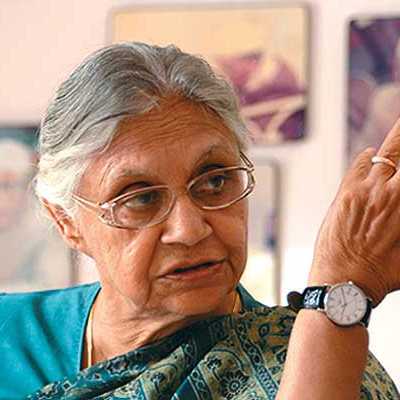
    Winning 28 out of 70 seats in the Delhi Assembly elections on 8 December, the AAP came a close second to the BJP which won 31 seats, pushing the ruling Congress to an irrelevant third position. What’s more, three-time Congress CM Sheila Dixit suffered defeat at the hands of AAP chief Arvind Kejriwal. Before the elections, the now ex-CM of the national capital, didn’t think before making statements like, “Arvind isn’t even on our radar.” Dixit probably forgot the legend of David Vs Goliath.

    For a fledgling party which emerged as an offshoot of the larger ‘India against Corruption’ movement launched by activist Anna Hazare -where people took to the streets to protest the many ills plaguing the current administration – this is no mean feat.

    And neither is the fact that AAP – registered as a political party with the Election Commission (EC) only in March this year – has successfully met the EC’s criteria to become a state party.

    So what did the AAP do right to banish all the scepticism its broom-wielding members met with from seasoned politicians who dismissed the party, at least initially, as ‘chillar’ or worse, a group that made a lot of noise but had no real impact.

    Looking at the AAP’s historic win from a marketing perspective, we at indiantelevision.com believe brands may do well to take a few lessons from the party’s promotional strategy:

    * Strong USP
    Each brand need to have a very strong USP which helps position it in the minds of the target audience. AAP’s USP is that it gives the common man a belief, a hope, that there is going to be a better tomorrow, and that it has been created by the common man who is fed up of the politics of politics, and will hence deliver on its promise.

    *Be consistent
    At the heart of the AAP’s party manifesto is its stand against corruption – which cuts through classes. And it has not deviated from that. It has refused to ally with either the Congress (I) or the BJP, despite there being a possibility of it occupying the seats of power in Delhi.

    Brands need to stick to their core premise and promise and not try to ride fads.
     
    * Marry your brand USP with the brand mnemonics
    The AAP has always had one agenda – the aam aadmi, and it has stayed true to it ever since inception. Party members are common people who have volunteered and are unpaid. They come across as common people; they dress up like common people; they move around like common people. Even though many of them are well educated.
    And during this election campaign there was none of the largesse distribution or ostentation that the general political parties generally resort.

    The choice of name and the symbol in the case of the AAP was also crucial. The name says it all -Aam  Aadmi Party. Then the symbol was the killer: what is the one thing that is still common across all homes in India, even in middle-class and upper class homes and hutments – it is the broom. Using the broom as the mnemonic meant many things: it will be used to sweep clean all the dirt in the political system, while it helped identify the common man with a tool that is used in his/her home every day.

    * Know your customer; make him your network and your ambassador
    The AAP needed to connect with its customer: the electorate of New Delhi. Almost 130,000 volunteers all over the world, some of whom descended on Delhi before the election campaign became both the best focus group and research agency anyone could ask for.

    Some executives even took leave from their high paying jobs in India and overseas, housewives found time from their day to day chores, young college students, technicians, labourers, cable TV operators – everyone pitched to connect with the consumer and pass on what troubled the common Delhi-ite – crucial information to the central headquarters of the AAP. And they then propagated that further themselves to the electorate.

    With millions of products overflowing on shop shelves and online, brands need to know what their customers really want, when they want it and how they want it, and in the process make them your ambassadors and messengers.

    * Choose the correct medium at the correct time
    AAP had little financial resources at its disposal; some say less than Rs 20 crore. That’s probably what’s spent by politicians on a couple of constituencies. Once again volunteers stepped in to build the buzz.

    Twitter, facebook, online, print, and television. AAP went the whole hog on all the mediums. But not to splurge; just to have its message heard. The media were relatively complying: did not the common man also work in media? It hooked the middle class and the upper middle class through social media.

    And what about the man on the street?  Well it used direct selling: volunteers went door to door to the electorate in Delhi, connected with the common man. In trains, in buses, on auto rickshaws, in jhuggis, in bastis – there was the huge poster campaign, and it was the educated folks who went where they normally would not.

    Brands have to be careful about the medium they choose and utilise it to maximise impact. Brands too have to keep themselves in people’s mind through various activations/campaigns especially in today’s market where the sharks are ready to rip apart any competition.