Tag: Polar Satellite Launch Vehicle

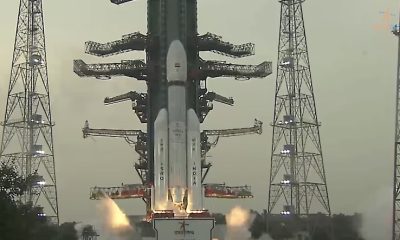
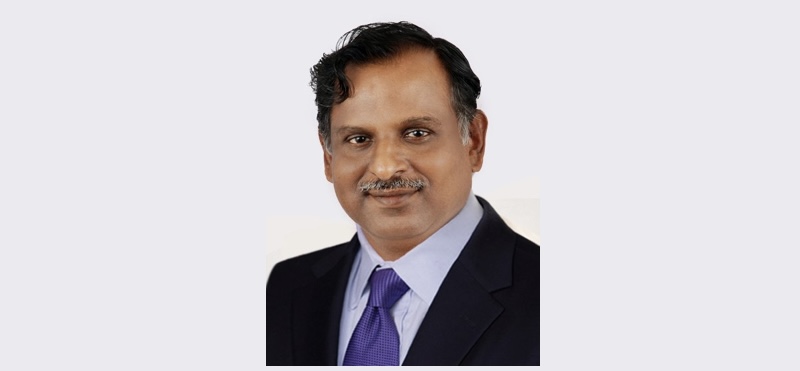
  • V. Narayan to succeed  S. Somnath;  to take over as Isro chairman

    V. Narayan to succeed S. Somnath; to take over as Isro chairman

    MUMBAI: There’s a new head at the Indian Space Research Organisation (Isro) and at the department of space (DoS). On 7 January, the  appointments committee of the cabinet sent out a notification announcing the selection of the head of the liquid propulsion systems centre (LPSC)  V Narayan in the organisation as the man for the job. He will also hold the post of chairman of the space commission. He takes over from current Isro boss S. Somnath  on 14 January when the latter’s term ends.

    Narayan was one of the key architects of India’s development of the cryogenic engine, which on the back of which India’s space program – including launch vehicles and space exploration – could move ahead at the pace it has.

    Speaking to NDTV Narayan said: “We have a clear roadmap for India and I hope to take Isro  to greater heights as we have great talent.”

    As  LPSC  director he has been providing techno-managerial leadership which is engaged in the development of liquid, semi cryogenic and cryogenic propulsion stages for launch vehicles. chemical and electric propulsion systems for satellites, control systems for launch vehicles and transducer development for propulsion system health monitoring.

    Narayanan, who is a rocket and spacecraft propulsion expert joined Isro in 1984 and functioned in various capacities before becoming director of the centre. During the initial phase, for four and a half years, he worked in the solid propulsion area of sounding rockets and augmented satellite launch vehicle (ASLV) and polar satellite launch vehicle (PSLV) in Vikram Sarabhai Space Centre (VSSC). He contributed in the process planning, process control and realisation of ablative nozzle systems, composite motor cases and composite Igniter cases.

    In 1989, Narayan completed his M.Tech in cryogenic engineering with first rank at IIT-Kharagpur and joined the cryogenic propulsion area in the LPSC. Isro’s geosynchronous launch vehicles namely GSLV Mk-II  and GSLV Mk-III capable of placing two-tonne and on four-tonne class communication satellites in geo transfer orbit have cryogenic propulsion stages as terminal stages.

    As one of the few cryogenic members, working  in this area in the initial stages, he carried out fundamental research, theoretical and experimental studies and contributed in the successful development and testing of cryogenic sub systems namely the gas generator, sub-scale cryogenic engine of one tonne thrust and thrust chamber of 12 tonne thrust. 

    Considering the long-lead time required for the development of cryogenic stage of GSLV MkII vehicle, for meeting the initial flights, few of the cryogenic stage hardware were procured from Russia. Towards this, as an expert in cryogenic propulsion,  he contributed in the development of mission management systems, contract management and the successful flights of GSLV MkII vehicle with procured cryogenic stages.

    For sustained operation of GSLV MkII, initially Isro planned for technology acquisition of cryo stage for manufacturing in India. But due to geopolitical reasons, the technology acquisition could not succeed and Isro decided to develop cryogenic upper stage (CUS) indigenously  Narayanan has played crucial role in the successful development of CUS  and contributed in making it operational for the GSLV Mk II vehicle. 

    For the GSLV MkIII experimental mission with CARE module, he conceived and realised the passive cryogenic stage and contributed for the successful experimental flight. As the project, director of the C25 cryogenic project, he provided techno-managerial leadership and conceived, designed and developed the 25 cryogenic propulsion system of GSLV Mk-III launch vehicle powered by an engine developing a thrust of 200kN. 
    He contributed in establishing the necessary infrastructure and facilities for design, analysis, realisation, testing and launching. Due to innovative approach, the C25 cryo stage was developed under his guidance in the shortest time frame with all successful tests and inducted in the GSLV MkIII vehicle. Subsequently he also made the stage operational. 

    His contribution, made India one among six countries in the world to have the complex and high performance cryogenic propulsion systems and made the country  self-reliant in this area. 
    Narayan parallely completed PhD in aerospace engineering from IIT-Kharagpur in 2001. The work carried out as part of M.Tech thesis titled Cavitating Venturies for Flow Control in Cryogenic Rocket Engines and PhD thesis titled Thrust and Mixture Ratio Regulation Systems for Cryogenic Rocket Engines were directly employed in the development of the Indian cryogenic propulsion systems. 

    Towards the GSLV Mk-III M1/Chandrayaan-2 mission, L110 liquid core stage, C25 cryogenic stage, were delivered for the vehicle under his watchful eye. Propulsion systems for orbiter and Vikram lander which include the throttleable thrusters for soft landing were also developed and delivered for the Chandrayaan-2 Mission, under his guidance. As the chairman of the national expert committee constituted to study the reasons for hard landing of the Chandrayaan-2 lander ship, contributed in pin pointing the reasons and corrective actions required to overcome the observations. Realised and delivered all the propulsion systems for Chandrayaan-3. 
    For the Indian human space flight (Gaganyan) programme, he worked on the human rating of C25 and L110 liquid stages of LVM3 vehicle and the development of propulsion modules for crew module and service module and the cabin pressure control systems. He also focused on the thermal and humidity control systems and the propulsion stage for the test vehicle. 

    For enhancing the GTO payload capability of LVM3 vehicle and meeting the future Indian heavy lift  rockets, Narayan guided the team and designed a Lox-kerosene semi cryogenic propulsion system and provided  techno-managerial leadership for its development.

    He took up the development of improving the C25 cryogenic stage performance with higher propellant (32 tonnes of LoX and LH2) loading with higher thrust (22 tonne) engine. His team is also working on developing the 100 tonne  thrust Lox-CH4 engine and electric propulsion thrusters. He has also made significant contribution in the spacecraft propulsion area. 

    Narayan contributed as the member of two failure analysis committees (FACs) of GSLV MkII D3 and GSLV MkII F02 vehicles and , member secretary of the first Indian cryogenic upper stageeEngine FAC. He  was a member of Isro’s 12th Five Year plan-drafting group and contributed in finalsing the propulsion system development during 12th five year plan. He has also finalised the propulsion road map of Isro for the next 20 years (2017 – 2037). As director of  the LPSC, during the last five  years, he has delivered 164 liquid propulsion systems for 41 launch vehicles and 31 space craft missions. 

    V Narayanan, is currently the chairman of LPSC-IPRC co-ordination committee and chairman of programme management council – space transportation systems.

  • MIB notifies amendments in the Cable Television Networks Rules, 1995

    MIB notifies amendments in the Cable Television Networks Rules, 1995

    Mumbai: The Ministry of Information and Broadcasting has notified amendments in the Cable Television Networks Rules, 1994 thereby providing the operational mechanism for implementation of the decriminalised provisions of the Cable Television Networks (Regulation) Act, 1995.

    The Ministry issued a notification appointing 3 October 2023 as the date from which provisions of the Jan Vishwas (Amendment of Provisions) Act, 2023 and entries in the schedule thereto with respect to the Cable Television Networks (Regulation) Act, 1995 has come into force.

    Section 16 of the Cable Television Networks (Regulation) Act, 1995 dealt with the punishment for contraventions under any of its provisions. This section had provision for imprisonment which might extend upto 2 years, in case of first instance and 5 years for every subsequent offence.

    With an aim to make the Cable Television Networks (Regulation) Act, 1995 more business-friendly and to boost the investor confidence in the sector, punishments specified under Section 16 were re-examined and were decriminalised through the Jan Vishwas (Amendment of Provision) Act, 2023. The imprisonment provisions have been now replaced with monetary penalty and other non-monetary measures like Advisory, Warning and Censure. These measures will be enforced through the “designated officer” defined in the rules notified today. Moreover, Section 16 now introduces an appeal mechanism against the order made by the designated officer.  Sections 17 and 18 were omitted for being redundant.

    Some of the benefits of decriminalisation of provisions under the Cable Television Networks (Regulation) Act, 1995 are:

    ●   The amendments are likely to encourage compliance with the Act without resorting to harsh punishments and are sensitive to minor or unintended contraventions. The inclusion of advisory, censure, and warnings in the range of penalties suggests focus is on educating and encouraging compliance rather than solely punishing contraventions.

    ●   The amended provision allows for the use of a range of penalties, which provides flexibility in addressing different types of contraventions. It allows for a more proportional response to the nature, specificity and severity of the contravention.

    ●   The amendment in the rules defines a “designated officer” for imposing penalties. This streamlines the enforcement process and makes it simple in addition to unburdening the criminal justice system.

    ●   The amended provision explicitly addresses subsequent contraventions and in addition to the provision for higher penalties, includes the provisions for suspension or cancellation of registration. This promotes consistency and discourages habitual or repeated contraventions.

    ●   The inclusion of an appeal mechanism provides individuals or entities the opportunity to challenge penalties or decisions. This ensures a fair and transparent process and safeguards against potential abuse of power.

    ●   The definition of common terms in cable industry like “platform services” and “local cable operator” have been defined in the rules for the first time to bring about uniformity in their usages.

    Currently, there are over 1400 Multi-system Operators registered with the Ministry of Information and Broadcasting. Decriminalisation of the contraventions of provisions of the Cable Television Networks (Regulation) Act, 1995 and replacement with civil penalties shall boost stakeholders’ confidence and promote the ease of doing business.

  • I&B ministry acted against 126 violations of Programme Code in last 3 years

    I&B ministry acted against 126 violations of Programme Code in last 3 years

    Mumbai: During 2018 to 2021, the Government took action against 126 cases of violation of Programme Code laid down in the Cable Television Networks (CTN) Rules, 1994 framed under Cable Television Networks Act, 1995. The action with respect to cases was taken by issuance of advisories, warnings, apology scroll orders, and off-air orders, said the ministry on Friday.

    “Government has an institutional mechanism for taking action in respect of private TV channels which are found to violate the Programme Code. The I&B ministry also issues advisories from time to time to private satellite TV channels for adhering to the Programme Code,” said the minister of information and broadcasting, Anurag Thakur in the ongoing monsoon session of the Parliament.

    The minister was responding to a query put forth in the Lok Sabha on whether the Government has taken cognizance of high decibel, sensationalist and slanderous news programmes/debates being hosted on Indian news channels. The Government was asked whether it has received complaints against news channels for violating the broadcasting guidelines and broadcasting fake news, hate and divisive agenda during the last three years.

    The Government was also asked whether it is planning to initiate any code of conduct or broad guidelines for the debates that happen on electronic media and the time by which final decision is likely to be taken in this regard.

    The Programme Code contains broad guidelines related to content broadcast on private television channels.

    The guidelines also provide that no programme should contain anything obscene, defamatory, deliberate, false and suggestive innuendos, and half-truths, and should not criticise malign or slander any individual in person or certain groups, segments of social, public and moral life of the country.

    The Rules provide for a three-level complaint redressal mechanism; Level I by the broadcaster, Level II by the self-regulating bodies of the broadcasters; and Level III by oversight mechanism of the Central Government.

  • Fake news on social media: Law & IT Minister favours evolving a policy

    Fake news on social media: Law & IT Minister favours evolving a policy

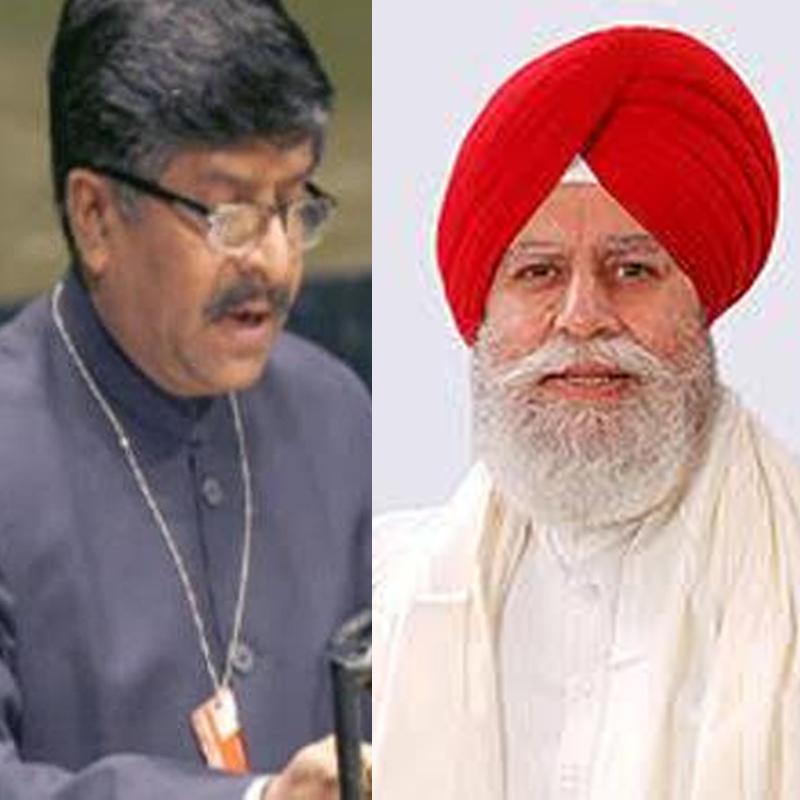
    NEW DELHI: The Indian government seems to be speaking in two voices over the menace of fake news. While law and IT Minister Ravi Shankar Prasad today said he would hold talks with stakeholders to evolve a policy, his junior SS Ahluwalia on Wednesday had told Parliament that the government doesn't propose to bring in regulations for social media.

    Law and IT Minister Ravi Shankar Prasad informed the Rajya Sabha (Upper House) yesterday that he will hold discussion with stakeholders, including political parties, to evolve a policy to deal with the misuse of social media, according to a PTI report, which also quoted a government statement saying it has been conveyed to WhatsApp in "unmistakable terms" that it was a very serious issue that "deserves a more sensitive response".

    The government yesterday also  shot off another notice to WhatsApp asking it to come out with effective solutions to curb the menace of fake news beyond just labelling forwards. It also warned the company that mediums used for propagation of rumours are liable to be treated as 'abettors' and can face legal consequences if they remain "mute spectators", the PTI report said.

    Facebook-owned WhatsApp has been under fire from the Indian government over fake news and false information being circulated on its messaging platform. The government had in the past too issued a stern warning to the company to clamp down on hoax messages designed to "provoke" and "instigate" people.

    "When rumours and fake news get propagated by mischief mongers, the medium used for such propagation cannot evade responsibility and accountability. If they remain mute spectators they are liable to be treated as abettors and thereafter face consequent legal action," a PTI report quoted an IT Ministry statement as saying. The ministry said it has approached WhatsApp to bring more effective solutions to the table, to ensure greater "accountability and facilitate enforcement of law" beyond the existing efforts towards labelling forwards and identifying fake news.

    The Supreme Court, earlier this week, asked Parliament to consider enacting a new law to effectively deal with incidents of mob lynching, saying "horrendous acts of mobocracy" cannot be allowed to become a new norm. 

    “Government doesn't regulate content on social media sites": IT Ministry's SS Ahluwalia,  

    On Wednesday, the Indian government admitted it doesn’t plan to regulate content on social media, as of now, despite the menace of fake news affecting the societal fabric. However, the government is quiet on the future of a committee set up under the Ministry of Information and Broadcasting (MIB) that has the mandate to explore regulation for online content, including those on OTT platforms.

    “Government does not regulate content appearing on social media sites, and law enforcement and security agencies may take action on specific case to case basis as per law in force,” junior Minister for Electronics & Information Technology (MEITY) SS Ahluwalia informed Parliament on Wednesday, emphasizing that the government was fully “committed to freedom of speech and expression” and “privacy” of its citizens as enshrined in the Indian Constitution.

    Ahluwalia was asked about the steps being taken by the federal government to address the problem of fake news and whether there were any plans to monitor and regulate social media content.

    According to the Minister, the Information Technology (IT) Act, 2000 has provisions for removal of objectionable online content that was “harmful, defamatory, hateful, libelous, objectionable” and affected minors, apart from the national security.

    However, as the Minister was not asked, he did not dwell on the future of  a committee —comprising representatives of various government organisations and few industry bodies too — set up under the MIB to explore online content regulations. The setting up of the panel was criticized as it was outside the remit of the MIB as the issue concerned came under the jurisdiction of MEITY.

    The said committee, helmed by MIB Secretary, is reported to have met a few times since its formation, but the details of those meetings are not public yet. Nor is the fact whether it would be disbanded or taken out MIB’s jurisdiction in favour of MEITY.

    MIB Stresses on Self-Regulation To Fight Fake News Menace On TV

    On Thursday, MIB Minister Rajyavardhan Rathore stressed on existing safeguards in laws and self-regulation to say that there was also no proposal to indulge in pre-censorship of TV channels to stop them from allegedly spreading fake news.

    “The [Cable Television Networks Regulation] Act [1995] does not provide for pre-censorship of any programmes and advertisements telecast on TV channels. However, it prescribes that all programmes and advertisements telecast on such TV channels should be in conformity with the prescribed Programme Code and Advertising Code enshrined in the aforesaid Act and the rules framed thereunder,” Rathore informed fellow parliamentarians who were concerned about some TV channels spreading fake news.

    Earlier, MIB, under minister Smriti Irani, had attempted to bring in regulations to control fake news, which had to be aborted as the Prime Minister's Office intervened in the aftermath of nation-wide criticism. Still, some critics feel that the botched attempt to bring in rules to rein in media critical of the government was testing of waters for future norms.

  • MIB says fewer TV channels violating ad, prog norms

    MIB says fewer TV channels violating ad, prog norms

    NEW DELHI: Indian channels seem to be finally toeing the line. The number of TV channels violating codes has been on a decline over the years. As many as 54 private television channels have violated the programme and advertising codes since 2014, though the number has been dipping, the Lok Sabha (Lower House of Parliament) was informed.

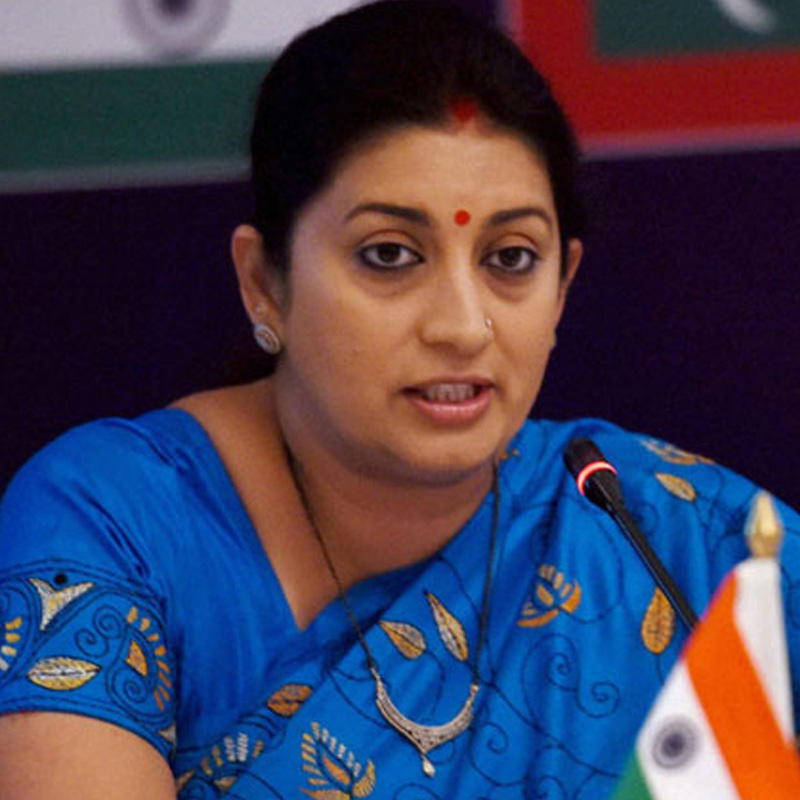
    17 channels each violated the code in 2014 and 2015, while 16 channels in 2016, Minister for Information and Broadcasting Smriti Irani said in a written reply on Thursday to question from a fellow parliamentarian.

    However, there was a sharp dip in 2017 with only four channels found to have violated the code. No violations have been reported yet this year.

    The minister said that all the programmes and advertisements telecast on private satellite TV channels were required to adhere to the Programme and Advertising Codes prescribed under the Cable Television Networks (Regulation) Act, 1995, and Cable Television Network Rules, 1994.

    The minister added that the regulations do not provide for pre-censorship of any programme or advertisement telecast on the channels. However, all programmes and advertisements were required to be in conformity with the relevant codes, which contain a whole range of parameters to regulate programmes and advertisements on TV channels.

    Irani said that action is taken against TV channels as per uplinking and downlinking guidelines whenever any violation of the codes is established.

    Also Read :

    Govt warned 55 violators of programme & ad codes in 3 yrs, says Rathore

    Prog & Advt Code violation: 30 channels faced action in 2015 & 2016

    No proposal to ban junk food ads on TV: Smriti Irani 

    MIB recants, says only explicit condom ads banned during the day

  • ISRO to launch 103 satellites early Feb

    ISRO to launch 103 satellites early Feb

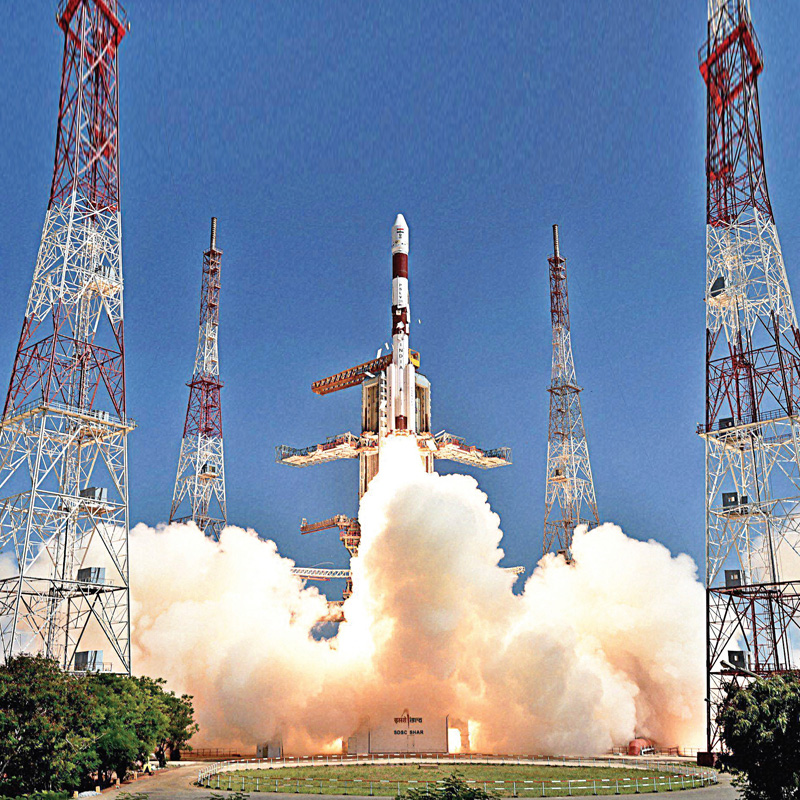
    NEW DELHI: Indian Space and Research Organisation (ISRO) will launch a record 103 satellites in one go using its workhorse PSLV-C37 in the first week of February, while the prime minister Narendra Modi’s pet South Asian satellite project will take off in March. Majority of the satellites (almost 100) set for launch in February are for foreign nations, including the U.S. and Germany.

    “We are making a century by launching over 100 satellites at one go,” a PTI report quoted S Somnath, Director of the Liquid Propulsion Systems Centre of the ISRO, as saying yesterday. The space agency had earlier planned a launch of 83 satellites in the last week of January, of which 80 were foreign. But with the addition of 20 more foreign satellites, the launch was delayed by a week and will now take place in first week of February, Somnath said.

    He, however, did not specify the number of countries that would launch its satellites in this mission, but said the list includes countries like the US and Germany. “These will be 100 micro-small satellites, which will be launched using a PSLV (Polar Satellite Launch Vehicle) – C37. The weight of the payload will be 1350 kgs, of which 500-600 kgs will be the satellite’s weight,” Somnath added in the PTI report.

    The launch will be a major feat in country’s space history as no exercise on this scale has been attempted before. Last year, ISRO launched 22 satellites at a go and this launch will have almost five times the number of crafts. The South Asian satellite will be a part of GSAT-9, which will be launched in March this year, said ISRO Associate Director M Nageshwara Rao.

    The communication satellite was to be launched in December 2016, but was slightly delayed as some other satellites are to be launched before that. PTI quoted unnamed sources saying talks with Afghanistan to have the country on-board for the project is in its final stages.

    Envisaged as a gift to its neighbours, the project, earlier known as SAARC satellite, faced stiff resistance from Pakistan. The neighbouring country wanted it to be launched under the aegis of the South Asian regional forum. It later backed out of the project. Apart from India, the satellite will benefit Sri Lanka, Maldives, Bangladesh, Nepal and Bhutan.

  • ISRO to launch 103 satellites early Feb

    ISRO to launch 103 satellites early Feb

    NEW DELHI: Indian Space and Research Organisation (ISRO) will launch a record 103 satellites in one go using its workhorse PSLV-C37 in the first week of February, while the prime minister Narendra Modi’s pet South Asian satellite project will take off in March. Majority of the satellites (almost 100) set for launch in February are for foreign nations, including the U.S. and Germany.

    “We are making a century by launching over 100 satellites at one go,” a PTI report quoted S Somnath, Director of the Liquid Propulsion Systems Centre of the ISRO, as saying yesterday. The space agency had earlier planned a launch of 83 satellites in the last week of January, of which 80 were foreign. But with the addition of 20 more foreign satellites, the launch was delayed by a week and will now take place in first week of February, Somnath said.

    He, however, did not specify the number of countries that would launch its satellites in this mission, but said the list includes countries like the US and Germany. “These will be 100 micro-small satellites, which will be launched using a PSLV (Polar Satellite Launch Vehicle) – C37. The weight of the payload will be 1350 kgs, of which 500-600 kgs will be the satellite’s weight,” Somnath added in the PTI report.

    The launch will be a major feat in country’s space history as no exercise on this scale has been attempted before. Last year, ISRO launched 22 satellites at a go and this launch will have almost five times the number of crafts. The South Asian satellite will be a part of GSAT-9, which will be launched in March this year, said ISRO Associate Director M Nageshwara Rao.

    The communication satellite was to be launched in December 2016, but was slightly delayed as some other satellites are to be launched before that. PTI quoted unnamed sources saying talks with Afghanistan to have the country on-board for the project is in its final stages.

    Envisaged as a gift to its neighbours, the project, earlier known as SAARC satellite, faced stiff resistance from Pakistan. The neighbouring country wanted it to be launched under the aegis of the South Asian regional forum. It later backed out of the project. Apart from India, the satellite will benefit Sri Lanka, Maldives, Bangladesh, Nepal and Bhutan.