Tag: Poland

  • Mumbai Film Mart gets bigger, better

    Mumbai Film Mart gets bigger, better

     Book your dates from 18-20 October. It is time for Mumbaikars to get ready for the third edition of the Mumbai Film Mart (MFM) to be held at Taj President.  The festival that facilitates Indian films to reach international audiences promises to be bigger and better than its previous avatars.


    The festival is expected to grow from its 1,200 meetings last year and 400 in its first edition. These meetings, between Indian producers and buyers and distributors from several international markets have been fruitful for both parties, with Japan, Taiwan, Brazil, Hong Kong, Poland, Germany, France, Sweden and even South Korea bagging valuable deals.   


    Owing to its valuable contribution in facilitating the sale of Indian films among these countries, MFM has also garnered the support of top Indian production houses such as Yash Raj Films, Disney UTV, Eros International, Reliance Entertainment, AKFPL and Balaji Motion Pictures.


    That said MFM is also an active platform for independent filmmakers to showcase their work alongside big banner Bollywood films.


    Apart from the repeat participation from its earlier breakthrough markets, MFM has confirmed attendance of new buyers and broadcasters such as Astro (Malaysia), MBC (UAE), Shoreline Entertainment (USA), Happiness Distribution and Aanna Films (France), international film services providers such as 3D Alliance (France) and KFTV (UK) and key International exhibitors such as the VOX chain of cinemas operating across the Middle East.  


    MFM 2013 will continue to expand the scope of the business of cinema with a focus on new technologies such as 3D, new distribution models for independent films, Books2Screen to encourage film adaptations, India Project Room for pre-selection of work-in-progress films and Filmy Room an exclusive DVD viewing library.

    This year, MFM will grow its scope manifold by hosting pre-scheduled meetings, on-the-spot networking through speed dating, informal meetings during happy hours, themed round table meetings and greater visibility for select participants through SPOTS.

  • India, Poland sign audio visual co-production agreement

    India, Poland sign audio visual co-production agreement

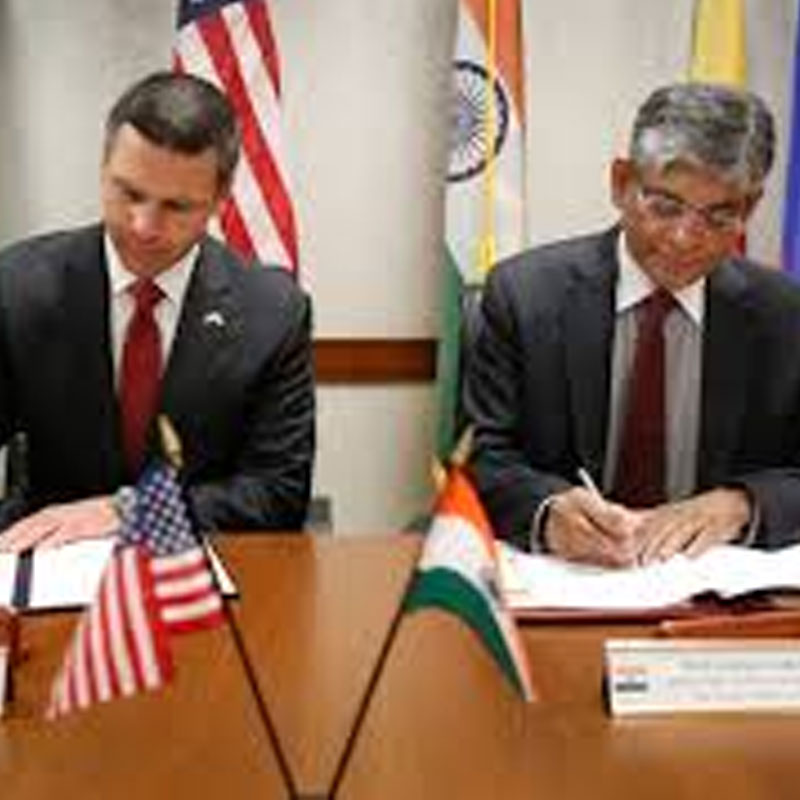
    NEW DELHI: India and Poland have signed an agreement that will make it easier for filmmakers from both the countries to collaborate in filmmaking and also lay down the extent of financial contributions (usually ranging between 20 – 80 per cent).

    Besides, the agreement has provision for both co-producers to make effective contributions, modalities of sharing honours and prizes and exporting films.

    The audio visual co-production agreement was signed by Information and Broadcasting Minister Ambika Soni and Polish Minister of Culture and National Heritage B Zdrojewski at Warsaw.

    The agreement establishes a legal framework for relations regarding audio visual co-production, especially films including animation and documentary films for the cinema and TV, as well as films intended solely for dissemination on analogue or digital data carriers. The agreement shall remain in force for a period of five years from the date of its entry into force.

    The signing of the agreement ensures better partnership and collaboration between enterprises and institutions which produce, distribute, and disseminate films. The inter-governmental co-production agreements are umbrella agreements, under which private, quasi-government or governmental agencies enter into contracts to produce films together. The films so produced are treated as national films in both countries and such films cannot be treated differently from a domestically produced film in each of the co-producing countries.

    One of the key highlights of the agreement is the coverage of filming and animation work, including the storyboard, layout, key animation and in between as well as sound recording. The purview of the agreement also covers laboratory processing activities and facilitates movement of film equipment and associated infrastructure required for co-production. The agreement would also facilitate producers, screenwriters, directors, technicians, actors and other specified personnel to enter and briefly stay in each other‘s country.

    Currently, as part of the initiative, the Government has signed co-production agreements with Italy, UK, Northern Ireland, Federal Republic of Germany, Brazil, France and New Zealand.

  • India, Poland to sign pact on exchange in film sector

    India, Poland to sign pact on exchange in film sector

    NEW DELHI: Information and Broadcasting Minister Ambika Soni, now on a visit to Poland, is expected to sign an Audio visual Co-production Agreement with the Polish Minister of Culture and National Heritage B. Zdrojewski to provide a legal framework for promoting production of films for Cinema and Television.

    As part of the initiative, India has signed co-production agreements with Italy, UK, Northern Ireland, Federal Republic of Germany, Brazil, France and New Zealand.

    One of the key highlights of the Minister’s three-day visit from 3 to 5 July visit is expected to be discussions regarding preservation of film Heritage at the National Film Archives of Poland. It is expected that the initiatives taken by the Government for promoting film preservation and film restoration through the National Film Heritage Mission will be shared with the Polish Government.

    The Minister is also expected to highlight the potential of the Indian film Industry in the context of promoting India as a ‘Filming Destination‘. The Polish authorities would be detailed about the initiative of the Ministry to establish a Films Commission to promote single window clearance for necessary permissions to foreign production companies and film makers. It is expected that this idea will also facilitate film tourism in the country. This would not only result in increased visitor influx and therefore greater earnings, but also generate increased employment opportunities for the indigenous film sector.

    The visit is expected to highlight the initiatives taken by the Government for Centenary Celebrations of Indian Cinema and the enhanced participation of Poland during the International Film Festival at Goa later this year.

    During the visit, the Minister is expected to have detailed discussions with her Polish counterparts in the Broadcasting and Films sector. On the agenda is also the meeting with the officials of the Polish National Television, TVP. It is expected that experience of Doordarshan as a public service broadcaster with nearly 1500 transmitters will be shared in terms of programming, content development, infrastructure roadmap and reach.

    The possibility of bringing synergy and promoting cooperation between the activities of the two national broadcasters would also be explored in the areas of training exchange programmes, sharing of technology, content development including software and possibility of promoting DD through its DTH platform in countries such as Poland.

    The discussions will include ways to enhance cooperation between the Directorate of Film Festival and Polish Government. The endeavour would be to organise Film Festivals in both countries as per mutually agreed terms and conditions. During the last film festival at Goa, a special package on spot light on Poland was organised.

  • BBC Worldwide channels are now available in Poland

    BBC Worldwide channels are now available in Poland

    MUMBAI: BBC Worldwide has announced that its channel portfolio, including BBC Entertainment, BBC Lifestyle, BBC Knowledge and CBeebies, are available in Poland through Telekomunikacja Polska.

    Customers will be able to access the channels via their telephone line as part of TP’s triple play offer. The channels are available through the IPTV service. The channels debuted last December on the Cyfrowy Polsat platform and currently have over 1.7 million subscribers.

    BBC Worldwide Channels GM, senior VP EMEA Dean Possenniskie said, “I am delighted that we are able to build on the distribution of our BBC-branded channels to audiences in Poland through this partnership with TP. The channels have already proven a success since their launch last year and we will be announcing further distribution deals in the future.”

  • Global television revenues reached £164bn in 2005: Ofcom

    Global television revenues reached £164bn in 2005: Ofcom

    MUMBAI: UK media regulatory body Ofcom has published its International Communications Market Report.

    The report analyses trends in the global television, radio, telecommunications and wireless communications industries. It also compares UK data, consumer attitudes and industry performance against that of China, France, Italy, Germany, Japan, Ireland, the Netherlands, Poland, Spain, Sweden and the US

    Global television revenues reached £164 billion in 2005 (equating to £25 per person), having grown at 7.2 per cent per annum in nominal terms for four years, making it the fastest-growing sector within the communications industry.

    In 2005, the US had by far the largest television industry in revenue terms, attracting £75 billion. Japan, came second in the same year with £19.5 billion followed by the UK with £10 billion. However the UK is second to the US on a per capita basis, at £164 against £253 for the US.

    The UK leads the world for penetration of digital television at over 70 per cent of households, against 54 per cent in the US. Chinese viewers benefit from the largest number of analogue terrestrial free-to-view channels (16), while the UK has the fewest with five.

    The UK is one of the most successful countries for exporting programmes and formats – in 2004 64 formats and nearly 3800 hours of programmes were sold internationally. Public service broadcasters are coming under increasing funding pressure around the world; however support for PSBs is still high, especially in the UK.

    Young people are having an increasingly disruptive effect on TV viewing across the globe. In the countries surveyed, around one third of those with broadband access claimed they were watching less TV. Declining TV reach among younger people is an international phenomenon.

    All countries in the survey have made commitments to digital switchover. Sweden and Germany have already begun a geographically phased process which they aim to complete by 2007 and 2009 respectively. The remaining countries have set completion dates between 2009 and 2012.

    Operators diversifying channel business models : Channels launched by channel operators have in some cases relied on a new business model – in other words, free-to-air operators have diversified into pay television and in some cases pay television channel operators have done the opposite (e.g. Discovery launching a FTA channel, DMax, in Germany).

    More channels relying on the same business model:Terrestrial broadcasters have also taken advantage of additional broadcasting capacity to launch channels that rely on their traditional source of revenue, such as free-to-air broadcasters expanding their advertiser-funded channel portfolios (e.g. France Télévision
    launching France 4 and Gulli on the French DTT platform).

    New revenue streams enabled by new technologies : There is a third category of response based around the development of new services enabled by technological innovation.Pay-per-view (PPV) was a widely-deployed service in the earlier days of digital television platforms, but more recently content on demand, delivered though broadband, offers channels and rights holders access to yet another new revenue stream.

    Discovery recently launched a broadband site in Germany that offers consumers subscription-based access to full-length programmes from its archive; and Channel 4 and Five in the UK both have broadband-based download services offering access to US and UK shows. DTT launched in many markets and well established in some

    Roll-outs were advanced worldwide – helped by supplier and consumer incentives. The timing and pace of DTT launches have varied by country – launches began in the late 1990s with Sweden and the UK, but some countries have only recently begun to roll out a DTT network (e.g. France).

    Global radio revenues (including public funding) totalled £25 billion in 2005 (or around £4 per person), of which £18 billion came from advertising. Growth has been generally lower than for telecoms or television – at around 3.8 per cen tper year in nominal terms since 2001.

    The US is by far the largest market for radio, with annual revenues of £11 billion in 2005; Japan is second with revenues of £1.9 million. Together the US and Japan account for over 50 per cent of the radio revenues of the twelve countries studied in this report. The UK is the fourth largest market with revenues of £1.2 billion in 2005.

    The proportion of total ad spent on radio varies substantially by country. In the US, 11.5 per cent of all display advertising expenditure goes on radio; in the UK it is less than four per cent. Radio listening is more popular in the UK than in any other country in this study – with weekly listening per capita averaging nearly 23 hours. The share of listening to PSB stations is also higher in the UK than anywhere else – at around 55% of total listening.

    Digital radio is increasing in popularity. The UK leads in the roll-out of DAB, with 85 per cent coverage and over 200 stations available. The internet Ofcom notes is having a positive impact on radio listening with around one third of adult broadband users among the countries we surveyed listening to online radio every week. Less than one in five adults claims to be listening to less radio offline as a result of being connected to broadband.

  • Disney Channel inks pan-European mobile deal with Orange

    Disney Channel inks pan-European mobile deal with Orange

    MUMBAI: The Disney Channel has announced that it has signed its first pan-European deal to provide content to mobile phones. Through an agreement with Orange, the service will be available to customers in the UK, Belgium, Switzerland, Portugal, Poland, Holland, Romania, Slovakia and, in time, France.

    The service will consist of 65 to 120 minute programming loops featuring some Disney Channel’s most popular content, including full 22-minute episodes of live-action programming franchises That’s So Raven and The Suite Life of Zack & Cody and animated hits like Kim Possible and Disney’s Recess. In addition, consumers will be able to watch clips from Hannah Montana and a selection of Disney Channel Original Movies, informs an official release.

    Disney Channels, EMEA executive vice president and managing director John Hardie said, “This is a break-through deal which we expect to be a huge hit with kids all over Europe. With parents’ consent and knowledge, it allows kids to watch their favourite Disney Channel programmes on the way home or wherever they are. It’s how today’s kids are growing up to watch TV – at a time and in a place they choose and it’s important that content providers are able to deliver that.”

    In other agreements announced by the two companies, Buena Vista International Television (BVITV), Disney’s international TV distribution division, and France Telecom-Orange will extend their existing broadband VOD movie licensing agreement in France across other markets in Europe. With these agreements, Orange VOD subscribers in Spain and TPSA VOD subscribers in Poland will be the first to enjoy movies from Walt Disney Pictures, Touchstone Pictures and Miramax Films. 

    Titles include global box office hit Pirates of the Caribbean: Dead Man’s Chest, The Chronicles of Narnia: The Lion, The Witch and the Wardrobe and the forthcoming sequel The Chronicles of Narnia: Prince Caspian are also included in the agreements. 

    Orange currently boasts of more than 2.9 million mobile broadband customers. France Telecom Executive Vice President Patricia Langrand said, “The agreement for the mobile services illustrates our desire to develop dedicated formats and programs specifically adapted for our mobile services with prestigious partners. Our agreement with Disney for VOD will enrich the content offer for our on demand services across multiple territories and platforms.