Tag: PM Modi

  • News channels undertake moment marketing on PM’s clarion call

    News channels undertake moment marketing on PM’s clarion call

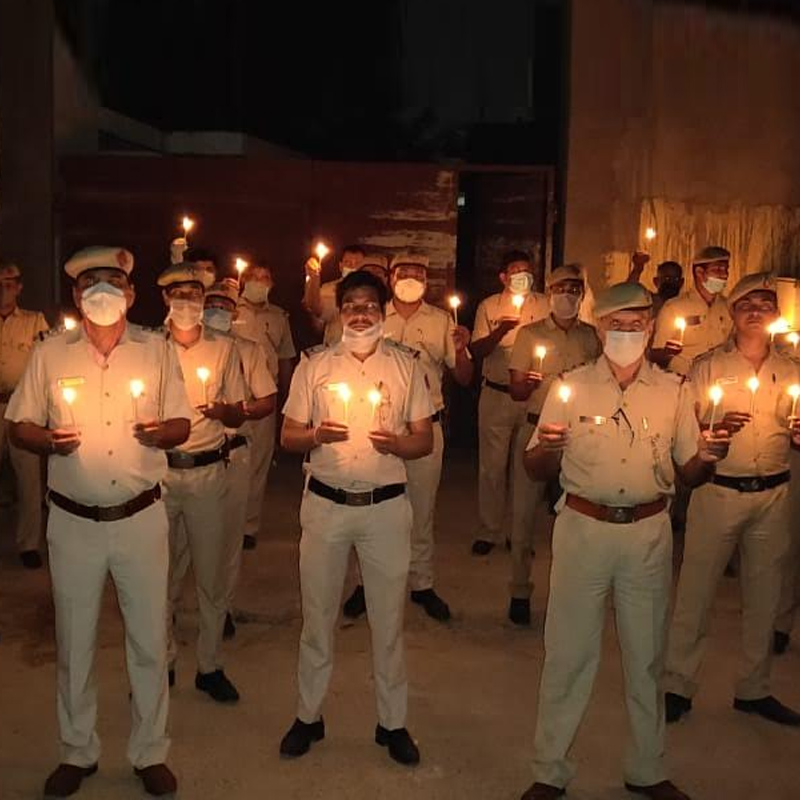
    MUMBAI: News channels across genres cashed in on prime minister Narendra Modi’s clarion call to light a lamp as a collective show of resistance to fight the COVID-19 pandemic, by broadcasting special programmes or participating directly in the initiative.

    On Friday, PM Modi, during his address to the nation, urged countrymen to demonstrate a collective will to fight COVID-19 by switching off all lights at home and lighting a lamp, candle or turning on the mobile phones’ flashlight on 5 April, Sunday, at around 9 pm for nine minutes.

    Lighting up a lamp or candle is considered auspicious: an end of darkness. The prime minister had termed the virus as ‘darkness that engulfs us all’. And, only a collective strength will help the nation to come out of the pandemic, he said during his 11-minute message.

    Almost every news channel across the genre came up with the #hashtag campaign and tried to be different from one another. The most eye-catching one was of ABP News Network’s Hindi news channel ABP News’ #9MinuteKiDiwali and #9PMDiwaliAtABP. The channel placed a timer above the bottom band on the left-hand side of the screen for nine minutes.

    Times News Network’s English news channel Times Now had the same strategy, but it wasn’t about the nine minutes, but to make viewers aware as to when to participate in the event. The moment the clock struck 9:00 pm at the clock, the timer disappeared from the channel.

    Moreover, the network’s news and English entertainment channels curated a special content line-up on-air and across social media, urging viewers to rise to the occasion. It was at the forefront of the event’s coverage with live programming, special guests and ground reports.

    The parent channel of the group, Times Now, with #DiyaJalaoBharatJodo initiative, delivered a comprehensive coverage with live inputs reflecting the mood of the people across the nation and hosted a panel of eminent doctors, who answered the callers’ doubts and concerns about the virus.

    The network’s business news channel, ET Now, rolled out the special coverage under ‘The 9 PM pledge’. And, another English news channel, Mirror Now, hosted a special show featuring Usha Uthup, Bappi Lahiri and Sonu Nigam, who cheered the viewers with their delightful music.

    Similarly, Network18’s Hindi news channel News18 India also had a two-hour special programming line-up Ek Diya Desh Ke Naam. Celebrities such as yoga guru Baba Ramdev, musicians Salim Sulaiman Merchant and singer Harshdeep Kaur, among others, participated. They discussed the power of 130 crore Indian coming together and fighting for a collective cause.

    To show maximum coverage of the event, the channel deployed 100 reporters across 100 cities who tried to capture the Indian spirit of camaraderie and strength amid the fight against the pandemic.

    Unlike taali Bajao, thaali bajao initiative, TV Today Network kept itself low in terms of campaign and special programming. The network’s both English and Hindi news channels, India Today and Aaj Tak, had #9Baje9Minute hashtag running on TV screens just like #5Baje5Minute during Janta Curfew.

    Though there wasn’t any special programming, India Today had a live chat with singer Shibani Kashyap, who sang a self-composed song on the COVID19 during those nine minutes. Aaj Tak showed visuals of people participating in the initiative along with union ministers and Bollywood celebrities.

    Going a step ahead that could be termed as moment marketing, Republic Media Network’s English and Hindi news channels, Republic TV and Republic Bharat, switched off their newsroom’s light and each employee was seen holding mobile phones with the flashlight on. The group’s editor-in-chief Arnab Goswami anchored a live show in the dark with only his face being lit up.

    Similarly, TV9 network’s Hindi, Marathi, and Gujarati news channels followed suit by switching off their newsroom’s light and making employees hold mobile phones with the flashlight on for nine minutes.

    Zee Entertainment Enterprises’ all-Hindi news channels had almost the same programming with the screen divided into four equal parts, one showing anchor, other had yoga guru Baba Ramdev doing Homa at Ganga ghat, third had visuals of people holding lit up lamps and fourth were showing visuals of union ministers participating in the initiative called by the prime minister.

    This is the second such event called out by Modi. An exact fortnight ago, the prime minister during one-day Janta curfew urged citizens to either clap or bang utensils (taali bajao, thaali bajao), as a tribute to the heroes who are fighting this deadly virus from the frontline. 
  • News18 India urges viewers to join PM Modi’s appeal with ‘Ek Diya Desh ke Naam’

    News18 India urges viewers to join PM Modi’s appeal with ‘Ek Diya Desh ke Naam’

    MUMBAI: Network18's Hindi news channel News18 India has lined-up exclusive programming Ek Diya Desh Ke Naam for its viewers in line with the prime minister Narendra Modi's clarion call.

    PM Modi recently urged the people to switch off lights for nine minutes at 9 pm on 5 April and light candles, diyas, flash torchlights or mobile lights to unite in the fight again COVID-19 pandemic.

    With an aim to build excitement, News18 India will showcase two hours of special programming further amplifying the initiative. 

    The programming will witness renowned celebrities such as yoga guru Baba Ramdev, musicians Salim and Sulaiman Merchant, singer Harshdeep Kaur and Anup Jalota along with actor Manoj Joshi  who will discuss the power of 130 crore Indian coming together and fighting together for a collective cause.

    News18 lndia has also deployed 100 reporters across 100 cities who will capture the Indian spirit of camaraderie and strength. Practicing social distancing, the channel's anchors and correspondents will also be reporting live from their respective localities to further bring stories from across the country.

  • PM Modi’s Janta curfew witnessed 85% drop in footfalls across the country

    PM Modi’s Janta curfew witnessed 85% drop in footfalls across the country

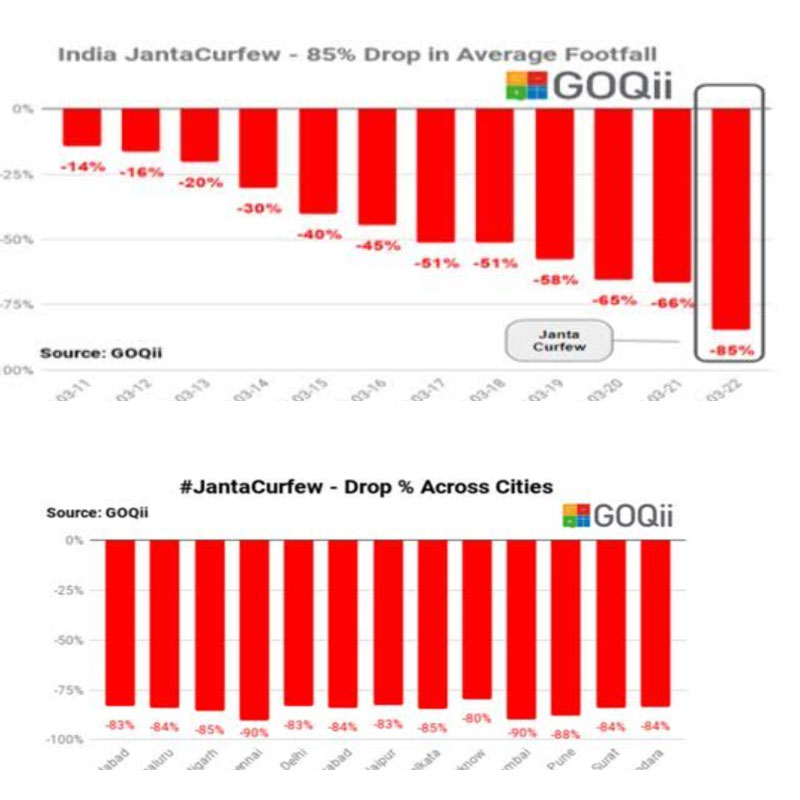
    MUMBAI: The clarion appeal given by PM Modi to participate in janta curfew for a day on March 22, 2020 to contain the spread and make the fight against coronavirus in India a success got an overwhelming response with most Indians staying indoors. This resulted in a 85 % drop in footfalls across the country as per the real time step count data collected by over 5 lakh users who are using GOQii Activity trackers. The footfalls were compared to the average footfalls seen before 5th March 2020. 

    The leading state in keeping most of its people indoors was the state of Kerala. Kerala saw a drop-in footfalls at 90% during janta curfew. Maharashtra also saw the drop increase to 89% and now with the suburban railways stopping, this number is likely to increase. The state GOQii has studied has seen a drop-in footfall percentage ranging from 75% to 90%.  

    Citywise, Mumbai and Chennai saw a drop of 90% in footfalls. Cities across India saw a footfall droop between 80 and 90%. 
     

  • Man v/s Wild with Bear Grylls and PM Modi brings 88% viewership growth for Discovery

    Man v/s Wild with Bear Grylls and PM Modi brings 88% viewership growth for Discovery

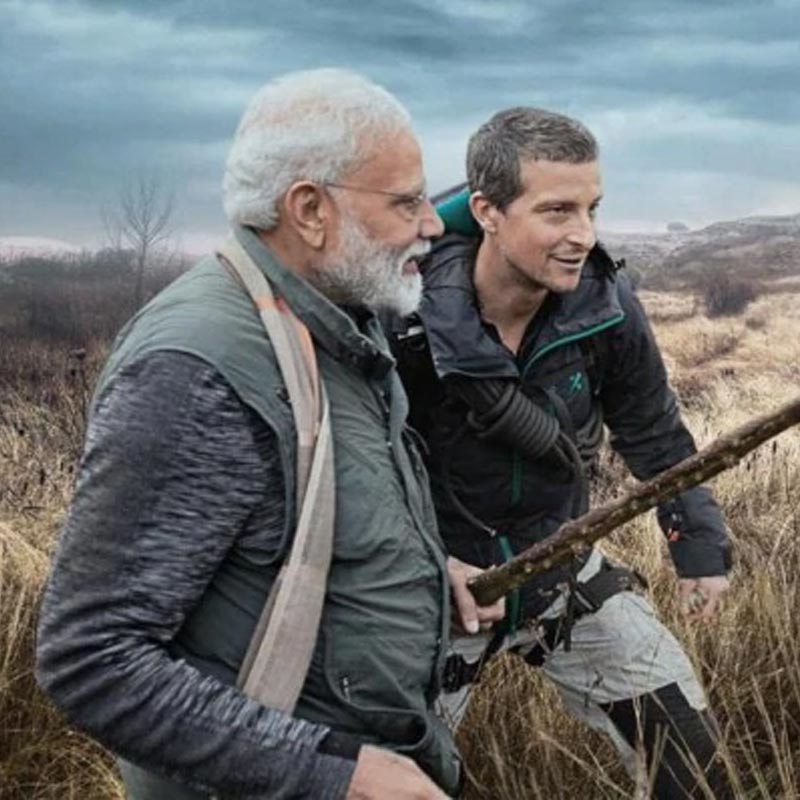
    MUMBAI: Man v/s Wild with Bear Grylls and PM Modi brings 88 per cent growth in the viewership of Discovery channel. The show was broadcasted across 12 channels of Discovery network.

    The original airing of Man V/s Wild with Bear Grylls and PM Modi recorded 6.9 million impressions and ~400 million viewing minutes. 18.4 million unique viewers tuned in for the episode across the country.

    The premiere day Monday August 12 and week 33 2019 have recorded the all-time high viewership for Discovery Channel.

    The channel was at the 4th position across all channels/genres on Monday during the time-slot 9-10 hours. As per week 33 of BARC India ratings the channel garnered 65.2 million impressions in TG all India 2+ segment and 8.3 million impressions were recorded in Megacities NCSS AB 2+ segment.

    The show is also streaming on Netflix across world. The show features the India Prime Minister walking through the wilderness of the Jim Corbett national Park in the foothills of the Himalayas along with Grylls, while extolling the need for tiger and environment conservation. The show witnesses PM Modi in a hitherto-unseen avatar, learning the tricks of survival in the wild from Grylls.

    Apart from sharing space in a make-shift raft with Grylls, making a spear and partaking in a hot drink made from curry leaves, PM Modi also speaks about his time spent in the Himalayas and highlights the rich envirnmental heritage of India, which needs to be preserved. PM Modi is only the second world leader to feature in the iconic show, the first being former US President Barack Obama.

    The show is produced for Discovery India by Bear Grylls Ventures & Electus a Propagate company, where Bear Grylls, Delbert Shoopman, Rob Buchta and Elizabeth Schulze are executive producers and Ben Simms is co-executive producer.

  • PM Modi live-streams new ideas to youth

    NEW DELHI: Drawing a parallel between the five years between 1942 (Quit India call) and 1947 (independence) to the period from 2017 to 2022 when the country will mark 75 years of freedom, the prime minister Narendra Modi has called upon the ‘online world’  to contribute innovatively for building of the New India.

    The radio broadcast was visually adapted by Doordarshan and other private TV and news channels in India and broadcast simultaneously. Similarly, radio in the private sector patched AIR. All DTH platforms also carried it. It was telecast on DD News, DD National, DD Bharati, DD Urdu and DD Kisan.

    It was live streamed for global audience and is accessible through mobile app, All India Radio Live.

    During his 34th Mann ki Baat broadcast from All India Radio, he said he would “particularly like to call upon the online world, since wherever we may be, we are almost always online; so I would like to invite the online community and specially my young friends to come forward and contribute innovatively.”

    In the broadcast which was also shown on Doordarshan channels with relevant archival footage with reference to the freedom struggle, Modi said the young can use technology – videos, posts, blogs, scripts, novel ideas – to put forward all these. He wanted the young to “transform this campaign into a people’s movement”.

    He said: “A Quit India Quiz is also being launched for my young friends on NarendraModiApp. This quiz is an attempt to familiarise the youth with India’s glorious history and the heroes of the freedom movement. It is my belief that you will surely publicise and spread awareness about this quiz”.

    The broadcast was originated by All India Radio, Delhi, and was by all AIR stations, all AIR FM channels (FM Gold and FM Rainbow), local radio stations, Vividh Bharati stations and five community radio stations.

    The regional versions of the Mann Ki Baat were originated by the capital AIR stations in non- Hindi speaking zones and broadcast immediately after the Hindi broadcast, and repeated at 8 pm last night. The regional versions were relayed by all AIR stations including local radio stations in the respective states.

    ALSO READ :

    Mann ki Baat ten-second ad rate is Rs 200,000

    BTVi unveils programming series — ‘1100 Days of Modi’


  • PM Modi third ‘most followed’ leader on Twitter: Burson-Marsteller Study

    MUMBAI: The Indian prime minister Narendra Modi is the third-most followed world leader with 30 million followers on his personal account and 18 million followers on his institutional account, @PMOIndia, which is in fourth place on Twitter, according to Burson-Marsteller’s Twiplomacy study.

    Pope Francis is the most followed world leader on Twitter with a combined total of 33 million followers on his nine language accounts, ahead of U.S. President Donald Trump with 30 million.

    Twiplomacy is Burson-Marsteller’s leading global study of how world leaders, governments and international organizations use social media. Data was captured in May 2017, using proprietary Burson tools, CrowdTangle.com and Twitonomy.com.

    India’s foreign minister, @SushmaSwaraj, is the most followed female world leader with eight million followers and @IndianDiplomacy is third among foreign ministries with 1.2 million followers on Twitter.

    Twitter is the prime social network used by 276 heads of state and government, and foreign ministers, in 178 countries, representing 92 percent of all United Nations (UN) member states. Facebook is the second-most used social platform by world leaders, with 169 governments having established official pages. However, world leaders have, on average, twice as many followers on their Facebook pages as followers on Twitter. Data for Twiplomacy, which updated the studies about Facebook, Instagram, Snapchat and Periscope, was captured in May 2017 using Burson-Marsteller’s proprietary Burson tools, CrowdTangle.com and Twitonomy.com.

    Are World Leaders Conversational on Twitter? While President Trump’s tweets have generated 166 million interactions (likes and retweets) over the past 12 months –PM Modi is in second place with 35 million interactions. For instance, in 2015, Modi sent a Direct Message to his then 12.5 million followers celebrating one year in government. Today selected accounts can still send him direct messages and are greeted by this welcome message.

    Visual Communications on Twitter: A number of world leaders have use animated gifs to lighten up their tweets in a fun and playful way. For example, Indian Prime Minister Narendra Modi created a gif to promote his mobile app.

    The 2017 edition of Twiplomacy also examines the use of other social media platforms including Facebook, Instagram, Snapchat and Periscope, and the Twiplomacy.com website includes rankings as well as a social media atlas for each country studied. The study found, for example, the number of governments using Periscope has doubled over the past year, offering a cost-effective way to broadcast press conferences live.

    “Politics and diplomacy are playing out on social media in a way we have never seen before,” said Don Baer, Worldwide Chair and CEO, Burson-Marsteller. “With the U.S. president bypassing traditional government channels to communicate directly to his supporters and detractors alike, we can expect more people in positions of power to adopt this practice. Our Twiplomacy study shows how fast-paced and dynamic our communications landscape truly is.”

    The 2017 Twiplomacy study analyzed 856 Twitter accounts of heads of state and government, and foreign ministers, in 178 countries with a combined total audience of 356 million followers. Foreign ministries tend to use Twitter to establish mutual relations. The most followed non-government account is the United Nations Twitter account, @UN, which is followed by 338 of the 856 world leaders’ Twitter accounts; @BarackObama and the @ObamaWhiteHouse are followed by 312 and 254 world leaders, respectively. @UNICEF is the second-most followed international organization and The New York Times (@NYTimes) is the most followed news organization. The @Twiplomacy Twitter account is the eighth-most followed non-governmental account by world leaders, with a following of 184 heads of state and government, ahead of @Reuters and @TheEconomist.

  • Ease of doing b’cast biz date extended to 19 May

    NEW DELHI: With the fast-changing regulatory framework for the media and entertainment sector, which in India is one of the fastest growing sectors, the Telecom Regulatory Authority of India had last month embarked on a major exercise to find out easier ways of doing business and cause least harassment to entrepreneurs.

    To give stakeholders more time to respond to its pre-consultation paper on the ease of doing business in broadcasting which was issued on 17 April, the last date for responses has now been extended from 8 May to 19 May.

    The Authority has on its own decided to go for a pre-consultation with the stakeholders on ease of doing business in the broadcasting sector, taking a cue from PM Modi-led government’s efforts to ease doing businesses in India. It hopes to review various policy issues related to the broadcasting sector with a view to create a conducive and business friendly environment in the sector and identify procedural bottlenecks that affect ease of doing business in the broadcasting sector and recommend measures for simplifying the rules, regulations and bring more transparency and clarity in policies/ framework of the broadcasting sector.

    The aim is also to remove entry barriers by laying down well defined and transparent procedures and processes thereby creating level playing field and competition in the sector and to facilitate innovation and technology adoption for providing better quality of services to the consumers to steer further growth of the sector by attracting investment through investor friendly policies
    Subjects to be covered in the pre-consultation before a final consultation paper is issued are related to processes and procedures for obtaining permission/license/registration for the following broadcasting services and subsequent compliance connected with these permissions. The fields include:

    (a) Uplinking of TV channels
    (b) Downlinking of TV channels
    (c) Teleport services
    (d) Direct-to-home services
    (e) Private FM services
    (f) Headend-in-the sky services
    (g) Local Cable Operators
    (h) Multi System Operators
    (i) Community Radio Stations

  • Budget 2017: From highway to e-way media sector searches for sops

    Budget 2017: From highway to e-way media sector searches for sops

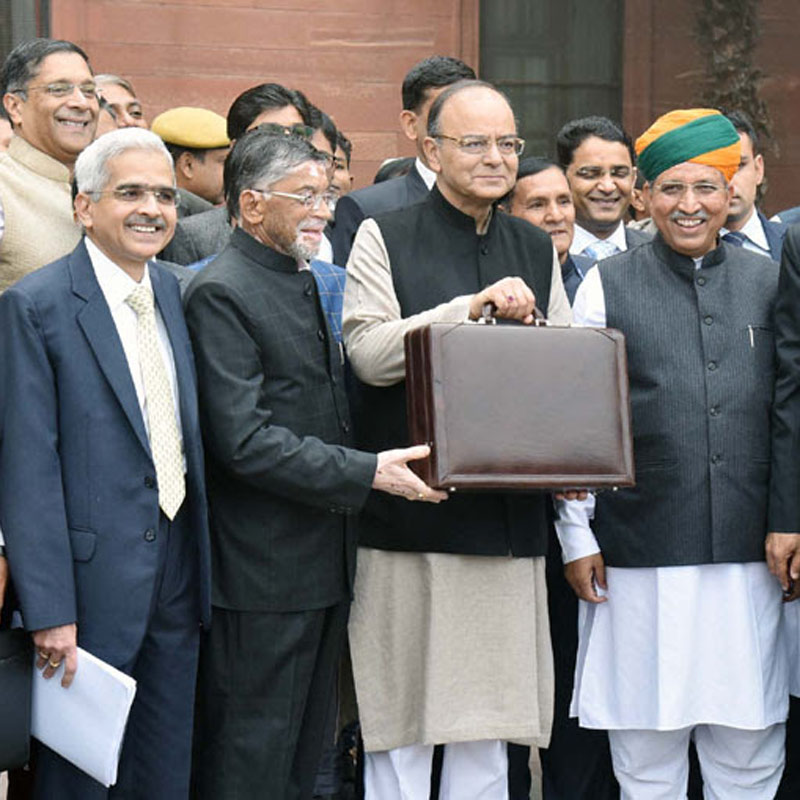
    MUMBAI: The Indian government today unveiled a roadmap for financial year 2017-18 that covers areas from “highways to e-ways” (PM Modi’s words while describing the Union Budget 2017) aimed at “strengthening the hands of the poor”, while looking at further easing doing business by abolishing Foreign Investment Promotion Board and hinting at a new FDI policy. However, for India’s media and entertainment sector, especially the broadcast and cable sector looking to reach the $ 100 million turnover mark, there wasn’t much to cheer about — unless an angel is hiding in the fine prints that are still being deciphered.

    Finance minister Arun Jaitley, while announcing the Budget, has brought in macro-level major financial reforms by slashing tax rates for middle level income groups and opening the FDI floodgates in favour of a rural economy.

    Jaitley’s budget focused on boosting infrastructure and lifting up rural incomes besides bringing in reforms in the financial sector such as the abolition of the FIPB to enable a new policy for FDI. The Indian Railways Catering and Tourism Corporation (IRCTC), one of the world’s biggest e-commerce companies, will be now be listed, Jaitley said, aside from sending out an indirect warning to economic offenders such as Lalit Modi and Vijay Mallya that for for absconders new legislation would be drafted soon.

    But a big thumbs up to the government for allocating Rs. 10,000 crore (Rs 100,000 million) to boost rural fibre optics network to give further leg up to all round digitisation.

    While the fine prints are still being read, some highlights are as follows:

    # The FIPB will be abolished. Further liberalisation in the FDI policy would be done in the next few days. (Star Den, etc to benefit)

    # SANKALP – Rs 4000 crore allotted for market-oriented training. (At least 4 million youth will be provided market-relevant training under Sankalp programme)

    # Cashback scheme – Petrol pumps card payments, launch two more schemes for use of BHIM app

    # In yet another boost for digitisation, the government has removed service tax on e-tickets .

    #IRCTC to be listed.

    # The government proposes to create a payment regulatory board at RBI. (The proposal assumes significance as there is currently no regulator for FinTech companies such as Paytm in India.)

    # Small and Medium enterprises (MSME) to be encouraged. Income tax reduced to 25% from 30% if turnover is up to Rs 50 crore or Rs 500 million.

    # Startups to pay tax on profits for three out of seven years, increased from three out of five years.

    # Under Bharat Net, optic fibre cable has been laid out In 1,55,000 km. (Recent spectrum auctions have removed spectrum scarcity.) Bharat Net allocation at Rs 10,000 crore.

  • Budget 2017: From highway to e-way media sector searches for sops

    Budget 2017: From highway to e-way media sector searches for sops

    MUMBAI: The Indian government today unveiled a roadmap for financial year 2017-18 that covers areas from “highways to e-ways” (PM Modi’s words while describing the Union Budget 2017) aimed at “strengthening the hands of the poor”, while looking at further easing doing business by abolishing Foreign Investment Promotion Board and hinting at a new FDI policy. However, for India’s media and entertainment sector, especially the broadcast and cable sector looking to reach the $ 100 million turnover mark, there wasn’t much to cheer about — unless an angel is hiding in the fine prints that are still being deciphered.

    Finance minister Arun Jaitley, while announcing the Budget, has brought in macro-level major financial reforms by slashing tax rates for middle level income groups and opening the FDI floodgates in favour of a rural economy.

    Jaitley’s budget focused on boosting infrastructure and lifting up rural incomes besides bringing in reforms in the financial sector such as the abolition of the FIPB to enable a new policy for FDI. The Indian Railways Catering and Tourism Corporation (IRCTC), one of the world’s biggest e-commerce companies, will be now be listed, Jaitley said, aside from sending out an indirect warning to economic offenders such as Lalit Modi and Vijay Mallya that for for absconders new legislation would be drafted soon.

    But a big thumbs up to the government for allocating Rs. 10,000 crore (Rs 100,000 million) to boost rural fibre optics network to give further leg up to all round digitisation.

    While the fine prints are still being read, some highlights are as follows:

    # The FIPB will be abolished. Further liberalisation in the FDI policy would be done in the next few days. (Star Den, etc to benefit)

    # SANKALP – Rs 4000 crore allotted for market-oriented training. (At least 4 million youth will be provided market-relevant training under Sankalp programme)

    # Cashback scheme – Petrol pumps card payments, launch two more schemes for use of BHIM app

    # In yet another boost for digitisation, the government has removed service tax on e-tickets .

    #IRCTC to be listed.

    # The government proposes to create a payment regulatory board at RBI. (The proposal assumes significance as there is currently no regulator for FinTech companies such as Paytm in India.)

    # Small and Medium enterprises (MSME) to be encouraged. Income tax reduced to 25% from 30% if turnover is up to Rs 50 crore or Rs 500 million.

    # Startups to pay tax on profits for three out of seven years, increased from three out of five years.

    # Under Bharat Net, optic fibre cable has been laid out In 1,55,000 km. (Recent spectrum auctions have removed spectrum scarcity.) Bharat Net allocation at Rs 10,000 crore.

  • 2016’s top hashtag trends

    2016’s top hashtag trends

    MUMBAI: From Brexit, to GST, to US elections and now demonetisation, 2016 has been an eventful year so far, and continues to throw googlys at us in the last few remaining days (Tamil Nadu CM’s death). No wonder the netizens were exceptionally chatty on Twitter this year.

    The country’s trending moments became worldwide conversations on Twitter, be it PM Modi’s revolutionary demonetisation reform (Most Influential Moment of the Year), Delhi’s rising pollution problem, the debut of Global Citizen Festival in India, and the Bollywood glam at the Filmfare Awards.

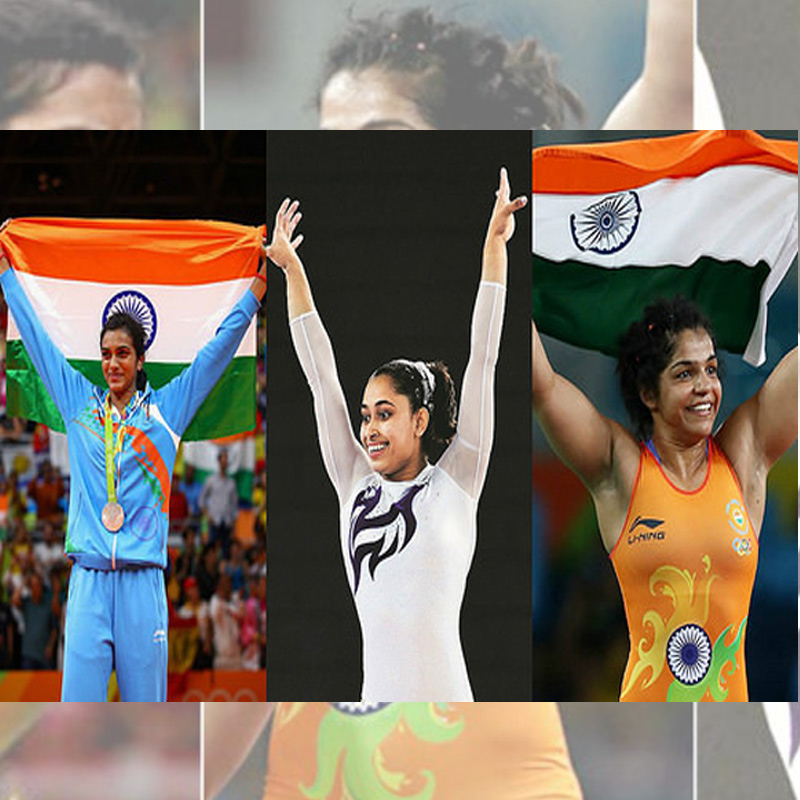
    PV Sindhu, Sakshi Malik, and Dipa Karmakar, India’s women athletes that won a million hearts on Twitter during the Olympics made #Rio2016 the Top Hashtag Trend of the Year on Twitter. Their medal victories and near-misses inspired women everywhere, and showcased a spirit of unwavering determination and grit.

    Virat Kohli’s Tweet in support of Anushka Sharma was the Golden Tweet or the most Retweeted Tweet of 2016.

    According to Twitter India, Twitter reflected and influenced Indian society that was united together in celebration, victory, protests, revolutionary reforms, crises, and significant cultural moments.

    To commemorate that, the micro blogging site has released a list of highlights from Twitter’s 2016.

    Hashtags are the anchors of any solid conversation; they enable users to discover and participate in what others are talking about for an issue they care about. With 7 of the top 10 hashtags this year related to the #Rio2016 Olympics and #WT20 cricket, sports dominated the trending Twitter conversations for the nation. The government’s flagship programme, #MakeInIndia is also one of the most popular Hashtag Trends of the year with its global appeal.

    1. #Rio2016

    All conversations surrounding this exciting sporting global moment converged on Twitter, as Indians Tweeted using the #Rio2016 hashtag. The hashtag united the country in this moment of national prominence and the Tweets reflected the pride, thrill and joy of Indians everywhere as Indian athletes won medals at the Olympics and received well-deserved cheers on the platform.

    2. #IndvsPak

    The two national teams enthralled fans with a cut-throat match in the group stage of the ICC WT20 tournament. The cricket mania took Twitter by storm as aficionados from either side of the border Tweeted fervently with #IndvsPak to join the conversation on the platform onMarch 19th.

    3. #WT20

    The apex international championship of Twenty20 cricket was religiously Tweeted about by the nation’s ardent cricket lovers. Fans rejoiced at every six and coped together with every wicket by using the #WT20 hashtag from March 15 – April 3.

    4. #IndvsAus

    India battled it out against the Aussies in the group stage of the WT20 tournament. Enthusiastic Indians Tweeted their support for the national team with the #IndvsAus hashtag and celebrated the national win when India beat Australia on March 27th.

    5. #MakeInIndia

    The Government of India uses Twitter to promote their flagship #MakeInIndia programme that encourages companies to manufacture their products in India. The Government shared updates on new deals, joint ventures and tech transfers using this hashtag around the world. Large corporations as well as SMBs across various verticals also Tweeted regarding developments related to this global #MakeInIndia initiative.

    6. #IndvsWI

    India vs West Indies was the penultimate knockout semi-final game in the WT20 tournament. #IndvsWI trended all day on March 31st and Tweets regarding the much anticipated match took over the Twitter timeline. West Indies won the match and millions of broken-hearted Indians still stood strong with Team India, in a display of true passion.

    7. #IndvsBan

    Indians around the world were united with #IndvsBan as fans Tweeted to fellow cricket lovers and joined the conversation on March 23rd. India clinched the thrilling WT20 match by defeating Bangladesh by 1 run and Twitter reflected the sentiments of this joyous moment.

    8. #PVSindhu

    India’s 1.2 billion people stood behind PV Sindhu (@Pvsindhu1) as she set out to compete against world #1 Carolina Mari in the Olympic Badminton Women’s Final. She became the first Indian woman to win a silver medal at the Olympics and Indians took to Twitter to congratulate her. #PVSindhu became an inspiring story for women empowerment as young women, mothers, and well-known women icons in India came together on Twitter to celebrate her victory.

    9. #surgicalstrike

    Debates and discussions ensued on Twitter after the Indian Army carried out a surgical strike against Pakistan on September 29th, following the Uri Attack. The nation stood divided in favour of or against this choice of action that led to a significant number of casualties of Indian soldiers.

    10. #JNU

    Jawaharlal Nehru University Students’ Union (JNUSU) president Kanhaiya Kumar was slapped with sedition charges and arrested on February 13th for a speech he gave at an event held on campus to mark the third anniversary of terror convict Afzal Guru’s hanging. The#JNU hashtag took Twitter by storm as people debated over serious issues such as condemning freedom of speech that this arrest reflected.