Tag: Planetcast

  • beIN ropes in Planetcast for sports broadcasting tech across Asia

    beIN ropes in Planetcast for sports broadcasting tech across Asia

    MUMBAI: beIN Asia Pacific has drafted Planetcast Media Services to power its sporting ambitions, striking a deal that will see the technology provider manage 14 HD sports channels across southeast Asia and Australia.
    The Singapore-based broadcaster, part of beIN Media group, has enlisted Planetcast’s cloud-first NexC platform to handle everything from playout to disaster recovery—ensuring sports fans don’t miss a second of action when their team is on the pitch, track or court.

    At the heart of this digital partnership sit two key technologies: Cloud.X Turbo, a nimble playout solution that promises ultra-low latency (tech speak for “you’ll see the goal almost before the goalkeeper does”), and Recaster, which delivers broadcast-quality streams over the public internet without breaking a sweat.

    “beIN Sports is a leader in live sports media innovation,” said beIN Asia Pacific vice-president of media technology  Sabil Salim who clearly believes his company has netted a winner with this partnership. “Planetcast’s proven expertise in managing major sports like the Indian Premier League (IPL), its leading-edge Cloud.X Turbo solution, and its robust NexC cloud platform provide the scalability, reliability, and seamless integration we need to elevate sports broadcasting across the region.”

    Planetcast  chief executive Sanjay Duda returned the compliment, suggesting the tie-up would give beIN “a competitive edge” in a broadcasting landscape that changes faster than football managers after a bad season.

    The deal comes as beIN looks to flex its muscles across 12 countries in the region, where it holds rights to premium sporting contests including Formula 1, UEFA Champions League and the Australian Open.
    Planetcast, meanwhile, will use the upcoming NAB Show in Las Vegas (5-9 April) to showcase its NexC platform—presumably hoping to attract more suitors with its cloud-native charms and AI-powered content automation. 

    Game on.

  • Vidnet 2024: NexC: Distribution that pays off

    Vidnet 2024: NexC: Distribution that pays off

    Mumbai: The OTT business in India is buzzing with new streamers, niche, and language offerings. However, early players are struggling as heavy content spending isn’t matching revenues, and India-specific low pricing hasn’t spurred subscriptions. Growth has plateaued as consumers return to post-COVID normalcy, preferring to binge occasionally.

    Adding to the churn is the shift towards AVOD by giants like JioCinema, offering premium events like cricket for free, with Disney+Hotstar following suit. This has strained streaming bottom lines. The rise of FAST channels is also causing industry jitters. Vidnet explores the future of the streaming ecosystem. The Vidnet 2024 is being held on 19 July 2024, at Hotel Sahara Star, Mumbai.

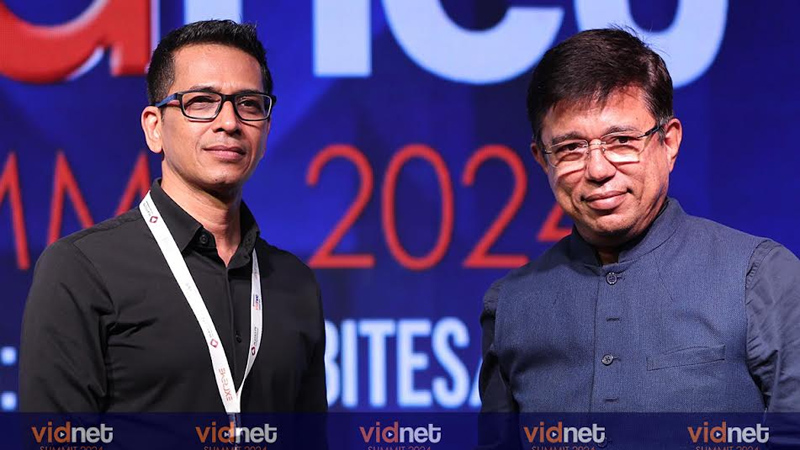
    The fireside chat saw Indiantelevision.com group founder, chairman & editor-in-chief Anil NM Wanvari in conversation with Planetcast COO – digital Venugopal Iyengar.

    The fireside chat delved into the evolving landscape of distribution technology and the challenges faced by Planetcast in its 28-year journey of serving media customers. Venugopal Iyengar highlighted Planetcast’s mission to streamline content creation to delivery, emphasising the integration of software programming and AI in transforming processes and improving cost efficiency.

    “We have been in the business of distribution technology, serving media customers for 28 years,” said Iyengar. “Our goal is to pave the path from content creation to the endpoint where viewers watch it on their screens.”

    Iyengar introduced NexC, a unified platform that simplifies the distribution journey by offering a single access point for all necessary products and services. “NexC gives you a single point ingest and seamless access to all the products and services you need in your distribution journey,” he explained.

    Addressing challenges, Iyengar noted misconceptions about NexC being a monolithic product and concerns over transitioning to cloud solutions. “It’s not a monolith. You can enter through any one product and still be part of the platform,” he clarified. To ease cloud adoption, Planetcast offers hybrid solutions, combining on-prem and cloud services.

    Iyengar also discussed differences between Indian and global markets in cloud adoption and highlighted the significant impact of AI. “AI has been fabulous for us,” he said. “Applications like speech-to-text, text-to-speech, and scene-by-scene tagging are now seamless.”

    In conclusion, Iyengar emphasized the importance of embracing technological advancements to meet customer needs effectively. “We must acknowledge the benefits AI brings and continue to innovate in our approach to content distribution,” he stated.

  • Vidnet Summit 2024: How technology is driving the customer streaming experience

    Vidnet Summit 2024: How technology is driving the customer streaming experience

    Mumbai: The OTT business in India is buzzing with new streamers, niche, and language offerings. However, early players are struggling as heavy content spending isn’t matching revenues, and India-specific low pricing hasn’t spurred subscriptions. Growth has plateaued as consumers return to post-COVID normalcy, preferring to binge occasionally.

    Adding to the churn is the shift towards AVOD by giants like JioCinema, offering premium events like cricket for free, with Disney+Hotstar following suit. This has strained streaming bottom lines. The rise of FAST channels is also causing industry jitters. Vidnet explored the future of the streaming ecosystem.

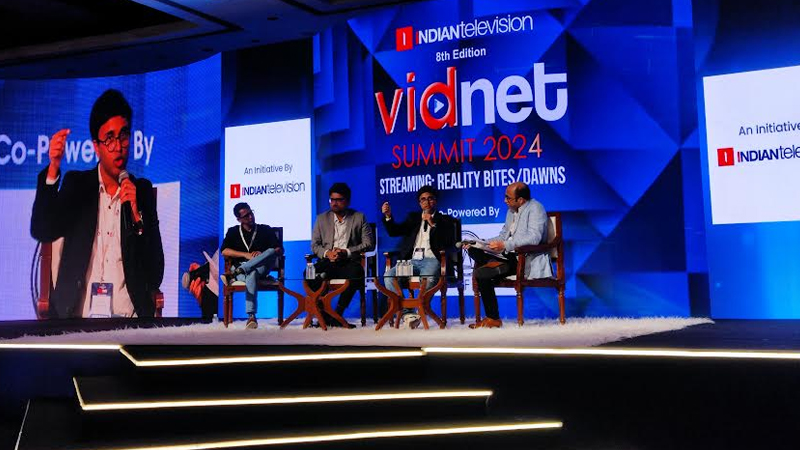
    The session head for this panel was Publicis Groupe India managing partner & head of Publicis Commerce India Anshul Garg along with other panelists: travelxp CEO Tanay Chothani, Planetcast COO – Digital Venugopal Iyengar and Prime Focus Technologies senior VP, Sales & BD-APAC Anupam Sharma.

    Garg discussed technological advancements in the OTT industry, also opening the session to the panelist on how improvements in video streaming, such as high-definition video, low-latency streaming, and adaptive bitrate streaming, significantly enhance the quality and reliability of the customer streaming experience.

    Sharma noted the nature of localisation. He noted that language localisation enhances content accessibility, with AI playing a crucial role in text localisation while experiments continue for voice localisation.

    Chothani said the importance of delivering substantial value swiftly, is driven by decreasing customer attention spans and rapid innovation.

    Lastly, Iyengar highlighted the rapid advancements in viewer experience. He pointed out that platforms like Amazon are at the forefront, leveraging innovations such as multicam views and second-screen interactions to enhance viewer engagement.

  • Avia’s Satellite Industry Forum demystifies trends and the future

    Avia’s Satellite Industry Forum demystifies trends and the future

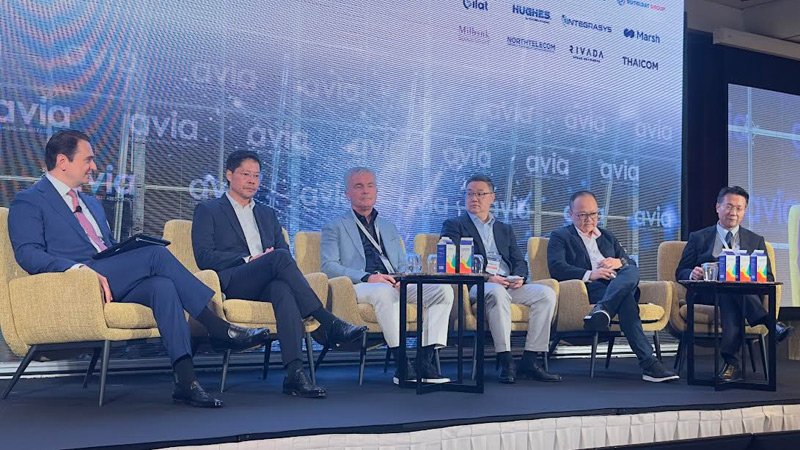
    Mumbai: Industry lobby group the Asian Video Industry Association’s (Avia’s) Satellite Industry Forum held in Singapore took a deep dive into the world of satellites for video, data and mobility with executives from Asia and overseas voicing their opinions around current trends and the future on 28 May.

    The consensus was that while the market for the satellite ecosystem has been tough with some launch failures, hard macroeconomic forces, and caution amongst financiers and insurers about this segment, there is optimism on the horizon.

    The bright star on the horizon has been the success of Elon Musk-owned Space Link’s direct-to-consumer StarLink low earth orbit (Leo) or non-geosynchronous orbit (NGSO) constellation which has notched up $1.4 billion in revenues by signing up millions of users. This, and Amazon’s Project Kuiper, led to a frenzy of consolidation amongst the geosynchronous orbit (GSOs) players, following questioning by financiers and board members on what play they have in the multi-orbital business.

    Intelsat acquired Go-Go and followed up with an announcement that it itself was being acquired by big boy SES for a cash consideration of $3.1 billion. The marriage would create a giant with over 120 satellites in both the MEO and GEO legs of the business. Viasat meanwhile merged with Inmarsat, while Eutelsat fused with OneWeb.

    Speakers expected the wave of digestion and consolidation of the industry to continue, and possibly intensify, even as players such as Rivada Space Networks, promising the outernet through Leos get ready to provide their services. Also, HummingSat, which is Swiss company SWISSto12 small GEO satellite has thrown its hat into the ring.  Speakers at SIF  opined that video will continue to be delivered increasingly via IP, thanks to streaming services, through fibre, terrestrially as well as through high throughput satellites.

    SIF featured speakers such as Thaicom CEO Patompob (Nile) Suwansiri, ABS CEO Mark Rigolle, Asiasat chief commercial officer Raymond Chow, Measat Satellite Systems COO  Yau Chyong Lim, Sky Perfect Jsat GM Asia regional headquarters &  Singapore branch regional director  Kenichi Shimotsuma, Milbank partner Dara Panahy, Global Satellite Operators Association VP policy & regulatory Peng Zhao, Amazon Web Services head of global satcom (A&S), APT Satellite EVP  Huang Baozhong, Encompass VP, engineering & operations Mark Wardle, Lynk Global VP, Asia Pacific James Alderdice, Northern Telecom CTIO  Mahdi Nazari Mehrabi,  Wireless Nation operations adviser  Martin Arias,  GapSat CEO Gregg Daffner, Hughes Network Systems India president Pranav Roach, Curvalux & Saturn executive chairman Thomas Choi, Gilat Satellite VP regional sales  Yossi Gal, VP Regional Sales, Hughes VP International Operations Kartik Sheshadri,  Integrasys CEO Alvaro Sanchez, ST Engineering iDirect VP market development & strategy  Jo De Loor, Acesat Satellite VP business development & engineering Adrian Potter, Baker & McKenzie Wong & Leow principal Ken Chia, Bird & Bird partner  Thomas Jones, Partner,  Marsh Speciality managing director Stephen Monks Office for Space Technology & Industry, Singapore (OSTIn) deputy director  Jacinth Lau, Comsys partner Jeremy Rose,  Arianespace Asia Pacific managing director Vivian Quenet,  Boeing Satellite Systems VP business development Joe Bogosian, Space Machines chief commercial officer  Mark Ramsey,  HummingSat, SWISSto12 CTO Michael Kaliski, SpaceIntelReport co-founder & chief editor  Peter de Selding, Eutelsat OneWeb regional VP-APAC  Neha Idnani,  Kacific Broadband Satellites Group EVP corporate development Jacques-Samuel Prolon, Planetcast CEO Sanjay Duda,  Rivada Space VP of sales APAC Donald Chew, Rivers Advisers CEO Katherine Gizinski &  chief consulting officer Alexis Martin and  Avia CEO Louis Boswell.

  • VBS 2024: Driving distribution success with NexC

    VBS 2024: Driving distribution success with NexC

    Mumbai: India is in the grips of seismic changes as far as video and broadband consumption is concerned. Pay TV cord-cutting is rampant even as free TV subscriptions are on the rise and OTT buy-ins are churning with the signs up for certain platforms stagnating even as others are seeing rapid increases and some are seeing cataclysmic drops. Aggregators of OTTs are popping up on the horizon promising cheap bundles along with value-added services for cable TV and DTH. There’s a rush to set up free advertising-supported TV channels by TV set manufacturers and smart TV device makers. There’s the Jio factor where it is seeking to convert most pay TV customers to free streaming of video content by offering access to consumers at no cost. The consumer continues to demand bandwidths higher than ever imagined even as prices are dropping. Margins are under pressure as every player goes one-up on each other to acquire and retain customers.

    Clearly, the video and broadband distribution landscape has not been as vibrant as it is now… How long will this pot-boiling continue? What will the magic potion of video and broadband look and taste like? And what’s the end game? Indiantelevision.com held its 20th edition of Video and Broadband Summit better known as VBS at Sahara Star Hotel, Mumbai.

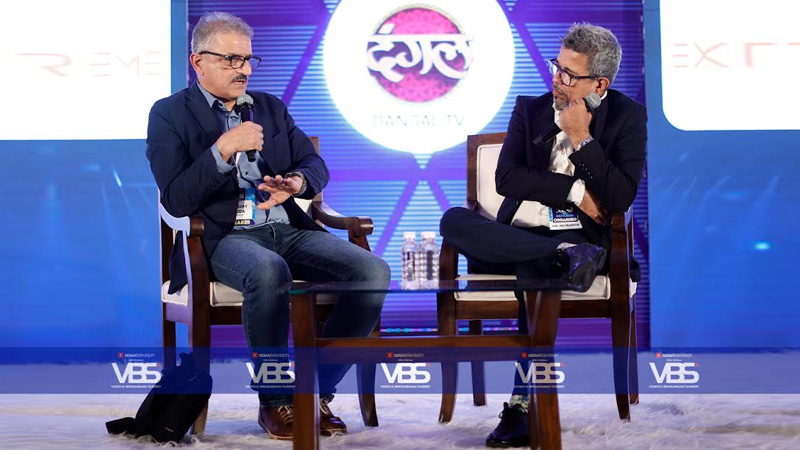
    The fireside chat on the topic: ‘Driving Distribution Success with NexC’ had Planetcast CEO Sanjay Duda in conversation with Indian Television.com group founder, chairman & editor-in-chief Anil NM Wanvari.

    Wanvari began the conversation by asking, “What are the major trends that you all see in terms of the workflows that are going on in production, acquisition, creation, and distribution?”

    Duda answered, “Largely what we’ve seen in the last 25 years and more so in the last seven years, most of the trends are being driven by the fact that on both sides, production and consumption, the creation environment is exploding. There are large, medium, and very small content creators, and they need to deliver ever-increasing profiles of people, and viewers who are viewing across multiple devices. So there are multiple options for delivery and there are multiple creators on this side. This actually is what is creating most of the pressure, it’s creating most of the direction to development. Clearly, content will always be king. It will always be the most important determinant of success. The stress right now is, how do you get your content to the right cohorts of viewers? How do you monetise your content? How do you get your money for the content that you’ve created in the most effective and efficient way? And how do you retain your viewers time after time? Slowly earlier, this whole pipeline had multiple stages, multiple players, there were three or four middlemen, so to speak. There were content creators used to provide the content to a large broadcaster and aggregator. Then they used to process that and then deliver it to the next stage for maybe creating linear channels for playout and slowly creating VOD assets. It then used to go to the next digital platform or cable platform, cable head-end or DTH head-end from where it was then distributed to final consumers who were managed by local cable operators or a DTH operator. This whole pipeline was well-oiled. There were clear business models, people were making money. But now what has happened is everything has been disrupted by the fact that the entire environment has become digital. And we are seeing that the content creator is increasingly able to see who’s viewing the content. Everything is getting driven by data. Information on who is viewing the content, how long they’ve been viewing the content, and that has created avenues for many technologies to come in. Like advertising or targeted advertising, so that you can even earn more for every viewer that you’re reaching. So this is how the overall ecosystem has changed.”

    He added, “From a production perspective, how this has now forced people, forced creators to think, innovate on how to produce your content. Content is of two to three types. One is the live content, which is actually driving this pipeline. Then there is the episodic content, user-generated content. The UGC content technologies are driven by the fact that users should be very easily able to create, curate, and deliver the content. The GECs or the episodic content or the movies, which is the library content, has its own non-linear production behaviour. There too technologies have changed. There’s a lot of VFX, a lot of virtual productions. The world is changing so that you don’t have to create one studio and then break it down and then create it for the next show. And in-between this, is the live. In the live content aggregation, there are a lot more changes. There’s a lot immersive content coming in. Now people get 360 degree cameras at the venue, creating a kind of remote viewer or an e-viewer kind of situation. Also now, data regarding the content that’s going in is also traveling with it. So there’s for sports, for example, all the information about the players is traveling along with it. A lot of the time, you can create a game. Already it’s happening, based on the performance of the players, the rating is determined on a daily basis. There’s a whole gaming industry. So these are the things that are driving the production technology at this end.”

    Wanvari then asked, “Where does your company come into play?”

    Doda replied saying, “I think all the players in this industry have seen change. Initially, there was some amount of denial and then acceptance, innovation, and then change. So we started our journey, providing essentially, distribution over satellite, bringing live videos from the arenas, be it news or sports. But largely satellite driven. We created a huge infrastructure for uplinking, DSNG services. We set up the first commercial teleport in the country and then as the media industry was growing rapidly in the country, our only thought was how do we create more teleports? How do we set up more facilities at that point of time? Then we saw that there are two things that are happening. A: people were going into a zone where they were not too sure. Earlier, most of our services were, because we needed to invest a lot of money to set up this infrastructure to provide services to our four or five customers, we used to always say five-year agreements or 10-year agreements. But as we all have stepped into a world where people have to keep trying. The viewers or the consumers have become very choice-oriented. They don’t want to watch a particular channel or a particular platform all the time. They need the right to stop the subscription and go somewhere else. Similarly, all the broadcasters, therefore, they would also like to experiment, but if they have to be tied down with three-year, five-year contracts, they won’t go there. Therefore, we also realised that we need to create solutions, which are flexible in terms of commitment from customers. And eventually, as some of these services have become robust and they’re accepted, then you’ll automatically see long-term commitments.”

    Doda added, “What we did was we expanded from very infrastructure-heavy services to a set of platform-driven services. We are moving from our on-prem to cloud. What that has done is, on cloud, there are two things you can do. One is that even your services can be flexible in terms of commitments from the customer and you can even deliver services globally anywhere. It connects the entire world and opens it up to you. Whereas infrastructure-based services are you need to set up something and they’re very regional in their influence. What NexC does is, as we have seen over the years, the content journey has four individual stages. One stage is the creation, where you’re creating the content, once you’ve created the content, the content needs to be made addressable. There is a lot of data that has to be attached, meta tagging has to be done, content has to be prepared for consumption, you’ve to check it for quality, technical quality, and SNP, to make sure it meets the content rules and regulations based on where you want to sell the content. You also then create another layer of it, which is localisation. If I’m creating content in India, and the broadcaster or the other publisher wants to deliver it in Korea, or Middle East, or Malaysia. So there’s a requirement for subtitling, dubbing, and SNP. So these are the localisation inputs that go into the client. So that part is essentially content management. Then when you’ve made the content, there is a need to create promos around it so that you’re able to market your content. Then we have the post-production, where you do on-air promotion, creating OEPs or teasers. That’s the second part of the stage that the content goes through these days.”

    Duda further added, “Once that is done, your content is essentially ready for consumption. Either it will go as a VOD asset, which is then delivered to an OTT platform or it could be archived for later use or it will be sent to a playout solution where it is converted into a linear stream. So, that is the third stage. Once it’s created into a linear stream, it is then delivered either directly to customers, or it can be delivered to a cable operator or a digital head end, or a FAST TV channel or FAST digital head end. Delivery is the other aspect of it. So essentially, the content once it’s created, moves from one stage to the other and then the to final destination, which could be your handsets where you’re watching it either on Instagram, YouTube, or Meta. So every platform has its own, technical specs, and you need to create the content for each spec, or it can be delivered to a teleport from where it can be uplinked, or it can be delivered to a digital head-end from where it is delivered through an OTT platform. These three main solutions or you can say modules. We have been involved with all of these three modules over a period of time. First, we started with essentially, delivery, then we did playouts. Maybe six to seven years ago, we got into the post-production domain. Now since we realised that we need to go global, we need to go on cloud, the need was to put it all together under a single umbrella, so to speak. What we found was that it missed only the last stage, which is the OTT. Why we did not go very aggressively initially for OTT because everybody wanted to set up their own OTTs. But we have seen over the years now and we know that it’s going to happen sooner, people will eventually want to outsource the OTT function as well. Right now every OTT has different feature sets. Every OTT player believes that their OTT is something very special, that only they know, they have created. Eventually, all OTT technology will become quite standard, and all features offered will be quite standard. That is where everybody will want to outsource it. It is just a technical platform and that’s what it is. So we therefore put together the entire set of solutions, right from acquisition to delivery to consumption, and this we’ve named NexC, where C stands for comprehensive. Incidentally, it rhymes with sexy.”

    Moving on to his next question, Wanvari asked, “Have you found customers for it so far within India and overseas?”

    Duda replied, “Yes, in fact, we had customers who were using each of these modules, anyway. So as we have started evangelizing the NexC concept, it becomes automatically an upgrade for them. We are able to upsell the other stages, and other services on either side of what they’re using. A playout or customer is ready to utilise the content aggregation. A content aggregation customer is happy to do post-production with us. So that we find a very easy-to-sell, easy-to-manage platform. In almost everything, in all these technologies, what you’ve seen is, that you think of all the problems that you’re solving, and you create a product, and once the product is used, it starts generating its own workflows, its own advantages, and it creates another set of development requirements on top of it. We are already seeing that, because everything is on a single platform, you’re saving a lot of multiple functions, be it a single sign-on, or a common database. We are able to pull a lot of metadata from various stages and eventually, it’s a part of our development plan. We will enable AI-based analytics based on all the data that we’re collecting, and that will automatically give you reports or give you advice on which content is selling better, and which content needs to be sent to which platform, and you can get literally get a real-time feedback on what is happening here.”

    Adding on to that, Duda said, “The idea is that it saves money because you are cutting out a lot of repetition of processes and at the end of the day, it is a solution you can use as long as you want. It takes in all formats. The input formats can range from MXF to MOV to any movie to any. In fact, we are using it for one of our customers, who brings in live feeds from outside. They sometimes bring the worst quality feeds and we are able to stabilise those feeds and put them back into the system. The fact is that this is nothing new. It is well tested, well used by our customers. So it’s nothing new. It’s just putting things together so that people can make better sense of what they’re doing. You’ve seen that there’s so many more questions than answers that are coming up these days. The least that you can do is make things easier and simpler.”

  • Planetcast launches its NexC cloud-first architecture to enable media companies

    Planetcast launches its NexC cloud-first architecture to enable media companies

    Mumbai: Planetcast Media Services, a broadcast technology and media services provider, announced the launch of its NexC architecture to simplify content management, distribution, and monetisation services and technologies. NexC provides a single-window, content supply chain management system, enabling users to beat the complexity challenge of today’s media and entertainment landscape.

    Benefits of NexC include:

    •    Frictionless movement of content assets between most-used services increases efficiency and minimises cost.
    •    NexC’s collaboration tools mean that global teams can work together without leaving NexC
    •    The inclusion of major functionalities in one interface, including content supply chain, playout and distribution, FAST, OTT distribution, and post-production, enables Planetcast customers to effortlessly add services without complex processes or having to deal with multiple vendors.
    •    NexC’s cloud-based infrastructure and content-repurposing features enable users to monetise content quickly and cost-effectively across more formats and geographies than ever before.

    “Media organisations are finding it increasingly cumbersome and expensive to navigate the various stages of post-production, content delivery, and monetisation,” said Planetcast chief executive officer Sanjay Duda. “In addition to seeking to enhance profitability, many media & entertainment companies are expanding geographically, while at the same time targeting new distribution points and functionalities, such as over-the-top (OTT), Free Ad-Supported Streaming TV (FAST), and pop-up channels. This leads to an exponential increase in the requirement for media processing and management, which we call the ‘complexity challenge’. Planetcast’s NexC unified service layer architecture meets this challenge through its flexibility and cloud-first approach, enabling customers to maximize efficiency and cost-effectiveness.”

    The NexC architecture consists of the following elements, all accessed through Planetcast’s unified customer user interface (UI) and dashboard:

    •    Contido content supply chain and management solution
    •    Content Preparation & Localisation Services, a full suite of core technical post-production services from quality control and compliance to subtitling & dubbing, etc.
    •    Scheduling, Playout and distribution through the CloudX hybrid cloud playout and Recaster digital delivery
    •    Planetcast OTT, a white-labelled OTT solution for non-linear content distribution

    In addition, the NexC platform offers partner-integrated value-added services such as:

    •    FAST Playout with partner-driven Server-Side Ad-insertion, Ad-Demand Management and Platform partner management.
    •    Cloud-based Creative Post Production which includes the full suite of creative services such as Editing, Colour Grading, VFX, etc. on Cloud.

    “Planetcast’s success has been built upon the ability to adapt to changing distribution and monetisation trends over the last two decades while successfully handling some of the world’s most valuable sports and entertainment properties,” said Planetcast’s chief operating officer, digital, Venugopal Iyengar. “Our strength lies in having organically built end-to-end distribution value chains using our in-house software development capability, mostly built with our own IP, served by a 200+ software team. We believe that the ‘complexity challenge’ is the greatest issue facing media companies today. To meet this challenge, we have designed the NexC architecture from the ground up to provide all the power and functionality media companies need, combined with the simplicity of a single sign-on collaborative user interface.”

    Further, to ensure sustained value enhancement in this rapidly developing industry, NexC will offer API integration support for any Generative AI solutions that serve to enhance the workflows and functionality of the Platform.

    Planetcast has developed one of the industry’s most comprehensive cloud-driven media services offerings and is trusted by many of the world’s most demanding global media companies, including Amazon Prime Video, Discovery, Disney, Indian Premier League (IPL), Star TV, Sony, Viacom, and Doordarshan, India’s premier public broadcaster. These unique solutions are right now being integrated into the NexC unified service layer architecture.

  • Amrita forays into OTT segment with Planetcast

    Amrita forays into OTT segment with Planetcast

    Mumbai: Malayalam GEC Amrita has launched its OTT platform Amrita Live on Planetcast’s multiscreen digital platform on Monday.

    Amrita Live will exclusively stream content related to spiritual leader Amritanandamayi Devi known to her devotees as Amma. As a part of the strategic partnership, Planetcast will host Amrita Live digital platform’s content from its library comprising over 5,000 hours and various live events, it said in a media statement.

    “By launching our own OTT platform, we will offer our target customers, the luxury of watching content as per their convenience. We are committed to adopting technological & digital solutions for improving the overall operations,” said Amrita TV COO Jayakesh Nair.

    Planetcast’s multiscreen digital platform is a SaaS platform, which offers an agile, advanced, easy to deploy, and easy to manage OTT ecosystem. “Amrita Live is actively strengthening its presence in the international market by launching its OTT service. Together, we will work for massive viewership with multilingual content through versatile apps available on popular platforms, devices, and appliances,” said Planetcast Media Services COO Sanjay Duda.

  • Planetcast launches content production facility in Mumbai

    Planetcast launches content production facility in Mumbai

    Mumbai: Planetcast Media Services has announced the launch of a content production facility in Mumbai to offer best-in-class content services to the film industry, production houses, and all the media content-intensive industries.

    Planetcast aims to offer services across the media value chain through its Mumbai facility to India, Middle East, and Southeast Asia. Its Mumbai facility is equipped with state-of-the-art infrastructure to offer, post-production, and distribution services to the entire range of content owners, the company said in a statement on Monday.

    The facility has large studios to execute live & recorded shows also include the latest augmented reality facilities, video walls, and presenting sets along with editing suites to ensure timely delivery of content to the end-user. It provides various post-production-related services along with S&P edit to various broadcasters & OTT platforms. Planetcast links and powers the whole media supply chain, from procuring to creating video.

    Planetcast’s VP – business development, Suresh Varghese, said, “Planetcast has a rich experience of over two decades in handling content flow for reputed global and Indian broadcasters. We have poured our experience and legacy into this facility which makes this facility the most experienced center for content-related services in India. Our talented technical staff and experienced editors are capable of delivering broadcast-ready content in a matter of hours after the shoot. We welcome the content owners to experience the superior services of our Mumbai center.”

  • Planetcast to showcase ‘Cloud.X Turbo’ at NAB 2020

    Planetcast to showcase ‘Cloud.X Turbo’ at NAB 2020

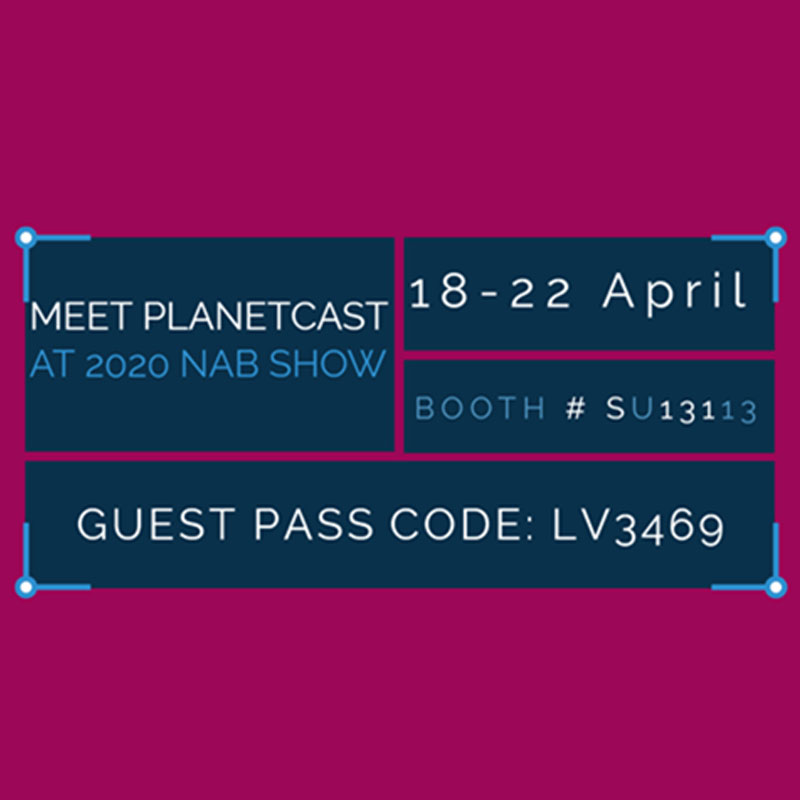
    MUMBAI: At NAB 2020, Planetcast will showcase its latest and most powerful cloud platform ‘Cloud.X Turbo’. The event will take place from 18-22 April at Las Vegas Convention Center. As a part of the live demo, Planetcast will highlight the latest technological advancement in its cloud platform. Cloud.X Turbo has been successfully deployed for reputed global broadcasters and is garnering positive customer reviews. Cloud.X Turbo offers immense flexibility to broadcasters as they can make critical changes at the operations level, which is a great power to have. It has an excellent capability to integrate legacy platforms on any third party playout solution to provide a super high quality and delivery.

    The new wave of technology is sports broadcasting

    The company will also showcase it latest sports broadcasting media asset management software Media.X sports which is capable of handling complex workflows of sports broadcasters. Media.X sports is equipped to handle large volumes of content and operated on direct to customer model. Online viewership is rising rapidly for sporting events and our latest product can deliver the linear streams to online platforms in a highly secure and efficient manner.

    Content delivery over IP

    At the event,  it will reveal the latest version of its IP delivery solution ‘Recaster’. The indigenously developed proprietary technology developed by Planetcast can delivery your content from anywhere to anywhere in any format. Broadcasters can create their own content delivery network completely managed by Planetcast. Recaster is a highly affordable and reliable delivery mechanism for the broadcast world. Recaster is also suitable for live sports and other live events which involves picking and dropping of signals or a group of signals from event location to MCR for live distribution.

    B2B online marketplace for content related services

    Making content related services like editing, dubbing, subtitling, content enrichment, translation etc a completely online experience is the vision behind our latest offering ‘Planetshare’. Planetshare offers complex content related services online, just like shopping from ecommerce website. Planetshare is all set to change the way content is treated around the globe. At NAB 2020, visitors will get world exclusive preview of Planetshare.

    Also on the show

    Planetcast, a global leader in digital broadcast technologies offers technology led managed broadcast services. Planetcast operated one of the largest Teleport in this part of the world uplinks 280+ television channels from its premises. Planetcast manages playout for reputed Indian and

    Global broadcasters by engaging its latest cloud technologies.

    Planetcast has recently entered into a long term service provisioning arrangement with Intelsat for Inflight and maritime communication services in India to provide uninterrupted internet connectivity to cruise ships and airplanes while sailing in Indian waters or flying in Indian airspace respectively.

  • PlanetCast achieves tier 3 certification from WTA

    PlanetCast achieves tier 3 certification from WTA

    MUMBAI: PlanetCast has achieved tier 3 certification for its New Delhi Teleport under WTA’s Teleport Certification Programme by  The World Teleport Association (WTA.

    Since its introduction at IBC 2015, the certification programme has quickly become popular.  Starting with one certified facility in 2015, the programme has added 40 teleports in 3 years, and at present has 12 teleports engaged in the quality evaluation process. Certifications have been issued to teleports operated by Servicio Satelital, USEI, AXESS Networks (AXESS), STN, Eutelsat, du, COMSAT, Optus, Elara Comunicaciones, GlobalSat, Talia, Telenor, Telespazio, Vivacom, Cyta, Singtel, CETel, Etisalat, Hawaii Pacific Teleport, Intelsat, Speedcast, Telstra, Primacom, Santander Teleport and Arqiva. The industry has quickly adopted the transparent, independently verified standards as a means for teleports to differentiate themselves and for customers to choose the price-performance level suitable for their applications. 

    To achieve provisional certification, a teleport operator completes a +170-item questionnaire and submits it to WTA.  The Association analyzes the data based on standards established by its certification committee and issues the provisional certification based on the self-reported information.  The teleport then has six months to achieve full certification, for which an auditor is dispatched to visit the teleport, provide independent validation of the data submitted in the questionnaire, and identify additional factors that may positively or negatively affect the score. Full certification is issued at a tier number from 1 through 4, of which 4 represents the highest degree of excellence, and remains in effect for 3 years.

    Planetcast founder director MN Vyas said, “We operate the largest teleport in this part of the world and we are providing services to top broadcasters across the globe. The certification received from WTA is a part of our continued efforts to create an environment of high quality services emerging from India.”

    “With the addition of PlanetCast, WTA has fully certified teleports operating in the US, Columbia, Mexico, Dubai, the UAE, the UK, Germany, France, Spain, Italy, Norway, Slovenia, Bulgaria, Australia, Indonesia, India and Singapore,” said executive director Robert Bell.  “The growth of the program speaks to its value as a market differentiator and the value of the insight it gives operators into the strengths and weaknesses of their facilities and procedures.” 

    WTA’s Teleport Certification Programme serves both teleport operators and their customers by creating an objective, transparent, and internationally accepted method for teleport operators to document the quality of their operations for customers and strategic partners. It also provides a means for customers to select teleport vendors delivering the price-performance level that is appropriate for their applications.