Tag: Plagiarism

  • Amul Macho wages war against Lux Cozi in a ‘battle of the boxers’

    Amul Macho wages war against Lux Cozi in a ‘battle of the boxers’

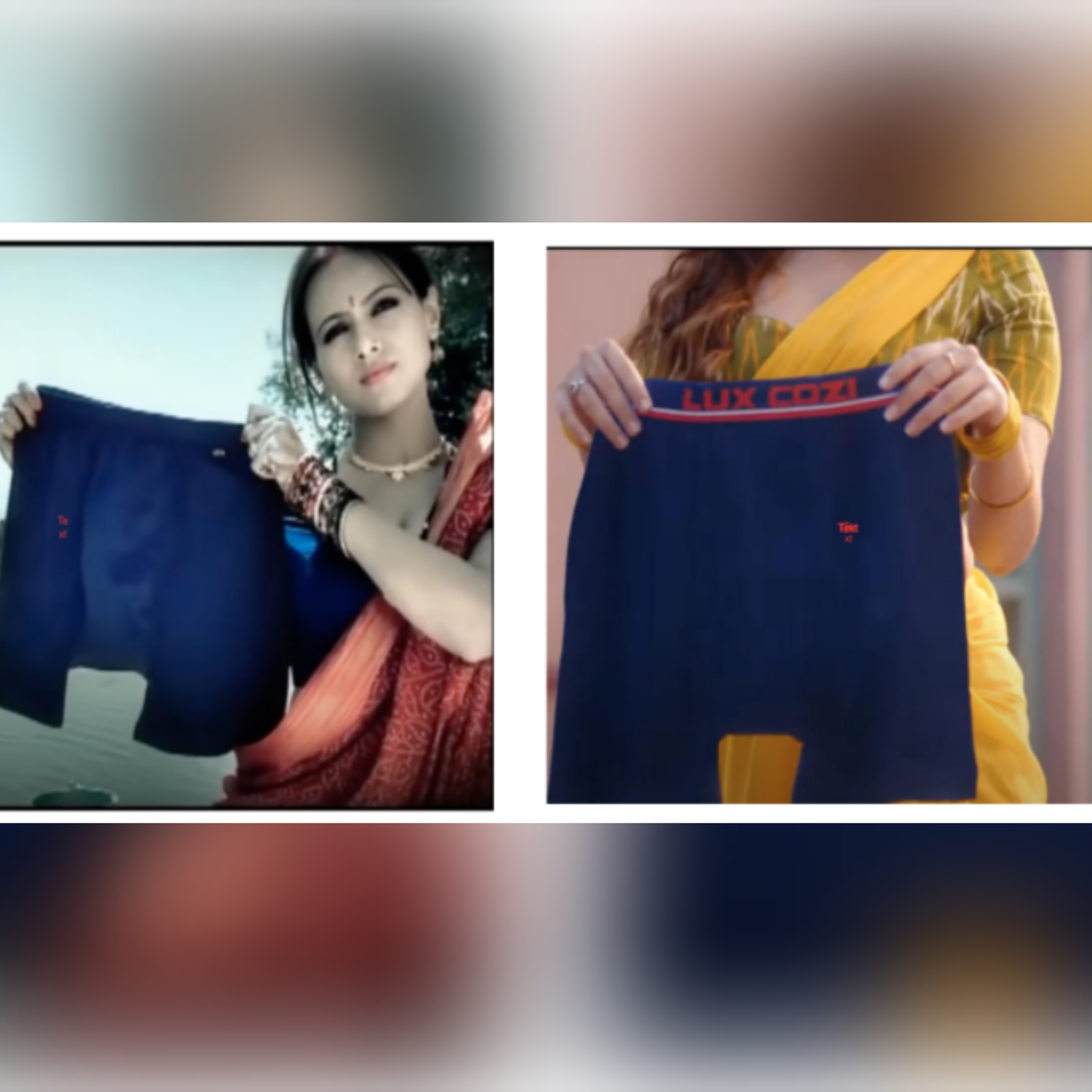
    Mumbai: In what can be termed as a ‘battle of the boxers’, men’s innerwear brand Amul Macho has alleged that another Indian brand of men’s innerwear, Lux Cozi has “blatantly copied” its Amul Macho ‘Toing’ ad from 2007. J G Hosiery Pvt Ltd, the makers of Macho Innerwear, has complained to the Advertising Standards Council of India (ASCI) regarding what it calls “blatant plagiarism”.

    According to Amul Macho, the recently released Lux Cozi ad, featuring actor Varun Dhawan, that is currently being aired on various news channels and on Sony TV, appears to take more than just inspiration from the popular Amul Macho ad with the tagline “Ye To Bada Toing Hai”.

    “We find it shocking that a worthy and esteemed competitor appears to want to ride on the creative success of a brand that’s a market leader in its category, by blatantly copying its popular ad concept and executional elements. We hope good reason will prevail and the copied ad will be withdrawn forthwith,” said JG Hosiery Pvt Ltd, CEO, Navin Seksaria.

    The company finds the premise of the ad by Lux Cozi to be identical to the Amul Macho Toing ad and the storyline of the Lux Cozi ad to be strikingly similar to their own creative asset.

    “It’s a matter of deep concern to J G Hosiery that the woman in the Lux Cozi ad holds up the Lux Cozi underwear to show that her man wears Lux Cozi, implying that Varun Dhawan should stay away, in a similar manner to how it was held up by Sana Khan in the Amul Macho Toing ad,” stated Madison Communications on behalf of Amul Macho in a note to the press. “Amul Innerwear team takes the matter of their creative asset being copied very seriously, believing that the visual similarity of the two ads cannot be a mere coincidence. Both women in the two respective ads hold up the underwear to make a statement about the fact that, ‘My man wears this’.”

    Amul Macho further noted that the similarity between the two ads does not end there but has so many common executional elements that JG Hosiery has felt compelled to “call out the copy-cat work and point out what appears to be an opportunistic brand building attempt by Lux Cozi.”

    The various executional elements of the Lux Cozi ad film that Amul Macho has taken objection to, include the colour and shape of the underwear used in the former’s ad, the way the woman holds up the object of contention and even the specific expressions of the supporting cast when they see the product in question, apart from the music theme and the setting of the film.

    It further alleged that the Lux Cozi ad unfairly tries to take advantage of the brand equity, reputation and goodwill generated by the Amul Macho toing ad, by copying both the concept and executional elements of the brand’s popular ad film and must therefore be restrained from being aired.

    Under the fourth chapter related to fairness in competition, the ACSI code states that: “Advertisements shall not be similar to any other advertiser’s earlier run advertisements in general layout, copy, slogans, visual presentations, music or sound effects, so as to suggest plagiarism.”

    “While the ASCI code allows competitive advertising including naming a competitor so long as the comparison is fair, plagiarism is making use of someone else’s goodwill or effort for your own benefit, which is a violation of the ASCI code,” ASCI general secretary Manisha Kapoor told IndianTelevision.com, adding that, “A complaint that comes to us will need to be examined more specifically with regards to its elements, and taken through the due process to determine if plagiarism is suggested.”

    With regards to this latest complaint of plagiarism, Kapoor stated that any complaint processed by ASCI allows for both the complainant and advertiser views to be tabled, and only after taking into account all the evidence presented, the consumer complaints council will make a recommendation.

    Meanwhile, Lux has refuted the allegations made by its competitor. “Our TVC is based on an original idea and conceptualised by our creative agency and is not inspired or motivated by any borrowed ideas,” a Lux Industries spokesperson told ET Brand Equity, further adding, “We feel that the competition is feeling threatened by the success of our TVC and is levelling baseless allegations.”

    Yellow Beetle, the agency behind the ad’s concept represented by Daven Munjal, stated, “We wanted to give a new dimension to the Lux Cozi communication, we conceptualised the commercial with the clear aim to target the youth, the commercial has freshness and has the flavour of naughtiness and tongue in cheek communication.”
  • Social Media Dissect DM and Schbang spat revives plagiarism concerns

    Social Media Dissect DM and Schbang spat revives plagiarism concerns

    NEW DELHI: In the last decade, social media has changed the dynamics of the marketing landscape. But this has given rise to another big problem – plagiarism. In the latest incident, digital marketing agencies Social Media Dissect DM and Schbang got into a quarrel for allegedly plagiarising content. 

    Social Media Dissect accused Schbang of copying the design concept of Motiphor from a year ago post without giving due credit. The agency posted on Instagram: “Speaking to the original creator and not giving credits while you go ahead and use someone’s work claiming it to be independent thinking, still counts as plagiarised content.”

    Schbang founder Harshil Karia said, “We appeal to the industry to come together and find, perhaps, a technology-based solution that helps agencies vet whether the content is similar to the one being created perhaps by using image recognition.”

    Schbang replied that it’s an original work and posted, “We don’t plagiarise, two separate minds in front of separate screens thought of the same concept and created it. There is no data to support it.”

    Several agencies are plagued by this issue and end up taking it on social media or dragging the party to court. This damages the reputation of the agency and even the brand.

    View this post on Instagram

    Of trolls, sensationalists and better conversation.

    A post shared by Schbang (@schbang) on

    The Advertising Standards Council of India (ASCI) has a code for self-regulation in advertising, which has a section “Fair in Competition” that deals with such issues.

    Former Asia-Pacific Marketing head of HP business strategist Lloyd Mathias opines, “I think plagiarism is a reflection of a lack of original ideas. Any brand that does so consciously is doing itself more harm than good. Social media has got nothing to do with it, but yes, with the increased proliferation of brands using social media – the issue has become stark.”

    Mathias adds, “The best way to deal with plagiarism is to call it out. Showing one’s original content with the plagiarised piece, as a simple name and shame tactic, should be adequate. In an age where interesting posts go viral, this may be the best way to handle the issue.”

    Some years ago, in 2013, several awards were withdrawn from Goa Fest’s Creative Abbys on plagiarism charges. Leo Burnett India withdrew three award-winning Tata Salt Lite radio campaign after its client stated that the work did not meet the guidelines for entry.

    A recent case is that of Ogilvy when it took Vivo and its creative agency, Dentsu, to court over allegations of plagiarism. Matheno Films also initiated legal action against Citibank over a ‘copied’ film. 

    A few years back, McDonald’s pulled down a Twitter ad campaign after a freelance photographer alleged that the brand had copied the idea from his work. He posted a series, which was featured on BuzzFeed that had captured the man’s ‘engagement’ with a burrito and was intended to be a spoof on the romantic photos that flood social media every day. McDonald’s decided to use the idea for its double cheeseburger meal.

    According to Nut Cracker Communications founder Udit Jain, the ideal way to deal with such situations is for the two parties to talk to each other instead of taking it out on public forums. He says, “While there is no shortage of original and creative ideas and concepts, I believe that plagiarism has been in every mass media. Social media has not really contributed to its rise but given higher user participation and two-way engagement. So, issues seem to go hyperbole. There is also cut-throat competition and constant pressure to churn out engaging content but this should not be acceptable. While there are certain groups and organisations for dealing with plagiarism in other mass media, there are still no governing bodies for the social media, which gives us an opportunity for self-regulation and is the ideal way to go.”

    Pulpkey founder Amit Mondal says, “There is no way you can control the situation. The bare minimum which can be done is to check with the representative if there is a serious issue, otherwise, if they have given the work-credits it can actually help the original creative to get more reach.”

    While the issue persists, the industry will have to figure out ways to address this growing concern.

  • Ad industry calls for regulatory body to monitor plagiarism

    Ad industry calls for regulatory body to monitor plagiarism

    MUMBAI: Creativity sometimes takes inspiration from past creatives but what if it is an entirely copied one? Plagiarism (or inspiration), is a never-ending burning issue in the advertising world. A little similarity can be overlooked but complete knockoffs are just astonishing.

    Information sharing on the internet has led to rampant plagiarism. In the garb of creativity, sometimes, knowingly or unknowingly, ideas tend to be entirely copied.
    Plagiarism with ads is much more difficult to pinpoint compared to a music piece or a film narrative, purely owing to the shorter format of the medium. Accepting that this does happen, The Glitch senior creative director Sunetro Lahiri admits that he has personally been part of campaigns where the main thought had to be tweaked in the event of another brand (that too, from a totally different category!) having launched a campaign with the exact thought. He affirms, “It does happen and that’s why it’s more about ethics than rules. We see elements of different auteurs in the work of a lot of current film-makers. Just the way you can’t label it plagiarism, there’s a larger grey area in advertising too.”
    Without naming any brands Grapes Digital COO Shradha Agarwal brings up that there are times that a client shares references to create a new piece of communication. After multiple rounds of changes and iterations, it becomes less of an inspiration and more of a ‘copy’. This is another reason why sometimes a creative agency, without the intention of copying, might actually end up copying a current campaign from an ‘inspirational’ campaign.
    Lesser known local brands tend to ape their famous counterparts. It was only last year when a 2015 ad for Wagh Bakri Tea conceptualised by Scarecrow Communications was plagiarised by a local Gujarati tea brand, Jay Jawan Tea. The local brand not only copied the entire ad but smartly replaced Wagh Bakri shots with its own product placement.

    Wagh Bakri ad:

    Jay Jawan ad:

    Recalling an old incident, Happy mcgarrybowen senior creative director Naren Kaushik read about a bike, named Gulsar, which was a rip off of Pulsar. He says that maybe years ago when internet didn’t make everything news, it was just easier to use existing ideas for which people would have spent time and money, and just rip them off as is. In today’s context, Jai Jawan gets their share of eyeballs very quickly. Now we all know such a brand exists.
    While there is no way to stop it and brands often just send a legal notice to the other party, maybe there is a need to have more stringent rules to keep a tab on plagiarism.
    Our experts view on this:

    BBH chief creative officer and managing partner Russell Barrett:
    The people who do that should be ignored. It’s the best punishment. It’s a vile habit that untalented poseurs have resorted to through the centuries. The best thing is for them to be forgotten and ignored. By their peers and their audience. The argument should not be about copied versus unique. Show me what you think is a unique idea and I will show you another one that is somewhat similar. The drive should be for freshness. Why is this idea different? Why should it exist in a new form? What’s fresh about it?

    Happy mcgarrybowen senior creative director Naren Kaushik:
    Needless to say, yes. A regulatory system for any big industry is important. There will always be me-toos bordering on illegal. If we walk around our own neighbourhood, how many salons do we see with actors’ and actresses’ pictures all over them? Surely they haven’t paid for endorsement. Even smaller and local fashion outlets use celebrities of all sorts. There’s no real way to keep track of who is copying who and where. We have also seen billboards when we drive out to smaller towns where some or other ad has been ripped off. It is very difficult to keep a track of this. But when it does come to someone’s notice, there should be some action that we can take. The trouble, though, is that this is a sketchy process right now. We don’t have a system to ensure quick results and more often than not, the petitioners end up losing time and money. That is a huge deterrent. If there’s a ‘regulatory body’ that can help fast-track this, more agencies will be encouraged to take their case up.

    The Glitch senior creative director Sunetro Lahiri:
    Ideally, it should. If various forms of media are protected, why should this field be left out? The lack of legal action stems from the lack of belief that there will be a possible resolution. Also, as a rule, as mentioned in the question, agencies and brands aren’t even aware of the said creative.

    Grapes Digital COO Shradha Agarwal:
    There are a lot of copyright laws that exist which are meant to safeguard the interests of advertisers from ones that are out to steal. But sometimes they are not enough as has been proven time after time. Things, like muting the audio or taking the entire video down, are currently practised on multiple social platforms as a good way to minimise copyright infringement. So yes, perhaps a regulatory body can help minimise the damage that this sort of plagiarism can cause. If the entire advertising community comes together as one and penalise the one that is stealing work from one of their own, it can definitely serve as a step in the right direction.

    White Rivers Media co-founder and CEO Shrenik Gandhi:
    Honestly, it is too small a problem for a regulatory body to be formed for. These are marketing techniques used by smaller brands to influence a smaller audience. So this has to be solved at a smaller level itself. And I don’t think at this moment there’s a need for a regulatory body to guide on this particular issue. There are much bigger issues the industry is facing and if a regulatory body exists, they should focus on those.
    While copying someone’s creative is a pertinent issue that needs to be looked at, maybe AAAI, ASCI (The Advertising Standards Council of India) and other regulatory bodies should come together to fight against this. If not, let us just leave ideas to breed other ideas just like this ad where oil brand, Sunny Lite filed a complaint with ASCI against the Aashirvaad Atta brand over a TVC where Sunny Lite claimed that the ad bears a striking similarity to its advertisement.