MUMBAI: As the new wave of acquiring rights is shifting from broadcast to OTT players and social media giants, La Liga is the most recent example which has been acquired by Facebook and sub-licensed to Sony Pictures Network (SPN) India. The Spanish premier football league has launched its football school focussing on grassroots programme in Delhi in the first week of October and then in Kerala recently. In Delhi, the school was inaugurated by former French international and Arsenal legend Robert Pires.
Apart from Kerala and Delhi, La Liga is planning to open centres in Mumbai, Pune, Bengaluru and Kolkata.
Indiantelevision.com caught up with La Liga India MD Jose Cachaza to talk about the league’s expansion plans and the strategy behind partnering with social media giant Facebook.
He believes that they are little ahead of the curve from others because it is the way broadcast is going as major companies are getting strongly into sports and OTT is taking a lead role in various countries. Cachaza also believes that the exit of Cristiano Ronaldo has had no effect on the viewership and sponsorships of the league.
Excerpts:
How do you plan to expand the popularity of La Liga in India?
This is an ongoing project that we started two years ago and we are working in different ways. There are two sides of our work; one that is quite central is our digital project for India. Digital is the most direct way of interacting with fans today, especially considering the penetration of digital communications in India. Two years ago, we had 300,000 followers on social media and today we have reached 3.3 million followers. Digital allows us to not only give information directly to our fans but also to get feedback from them. Our broadcast agreement with Facebook strengthens this strategy.
We cannot forget of course the relationship with fans so we do a number of activities involving the fans like the public viewings. We just announced the next big public viewing of the upcoming El Clasico in Kolkata on October 28. They have been successful in the past two years in New Delhi and Mumbai and now we are going to Kolkata, which is the modern heartland of football. We want to get there and bring the excitement of the El Clasico to the Bengali fans. Last year in New Delhi, we had 20,000 people showing up and we hope there will be more in Kolkata.
We are also now bringing to India our network of Football Schools. We are starting with 33 La Liga Football Schools in more than 10 cities and almost 4,000 kids training with us. This project is important to us because we are our philosophy of football, the Spanish way of understanding the game, head coaches who are La Liga trained and UEFA certified coaches. We decided to bring the joy of playing football to thousands of kids and we will leave a legacy of dozens of coaches trained with our methodology and philosophy of football.
We are bringing legends to India like Fernando Morientes, Luis Garcia, Christian Karembeu, Gaizka Mendieta, Robert Pires and Steve McManaman. We are doing many things and a lot more to come.
What is the rationale behind going with the social media giant? How satisfied are you with this deal?
We are highly satisfied and I think it was the right thing to do in this market. So maybe we are a little bit ahead of the curve from others because it is the way broadcast is going. It’s not something we invented with Facebook, major companies are getting strongly into sports and OTT is taking a lead role in various countries. The only thing we have done differently is that we are the first but we won’t be the only.
A recent report was that football in India is at the third position in terms of viewership and revenue, after cricket and kabaddi respectively…
No, that is not right. Audience wise, if you consider all the competitions, football is number two. If you see Indian statistics, Pro Kabaddi League has just a few thousand more viewers than ISL. However, if you consider everything like LaLiga, EPL, UEFA and all other leagues, football is clearly the second sport. In terms of revenue, if you take sponsorship, ticketing and broadcast deals from ISL to FIFA, you will once again find that football is the second sport in India.
Are you planning any content and distribution deals in India to offer more content apart from matches?
We are offering tens of hours of content to India, various shows and content that is already on Sony and now will be available to fans through Facebook.
With the new broadcast model, with TV and digital both, has the viewer engagement changed?
Maybe it has changed in the way they see it, but it is engagement at large. Indeed, our engagement with fans on social media is growing.
Telecom industry in India has seen a great spike after the entry of Reliance Jio. Data consumption got a boost but till now the country is not well-equipped to watch the full tournaments on smartphones. Don’t you think it is a big risk if the digital platform does not reach to a sub licensing agreement with the broadcaster?
It is a risk we are eager to take. Always when you are the first in anything, something that will be the trend, you are taking a risk. But, we are proud to do it.
After the rights are sold, what is the role of La Liga with the broadcast or streaming platform?
We have a really strong cooperative relationship with our broadcasters, anywhere in the world, not only here. It’s not just that they pay and they show the matches, there’s a lot of thing to do, activations, marketing opportunities and more to this that we work together with them. We are here to understand them and to help them to better promote their product because we also have it in our own interest. Our relationship is very close and intense; it was with Sony and now with Facebook.
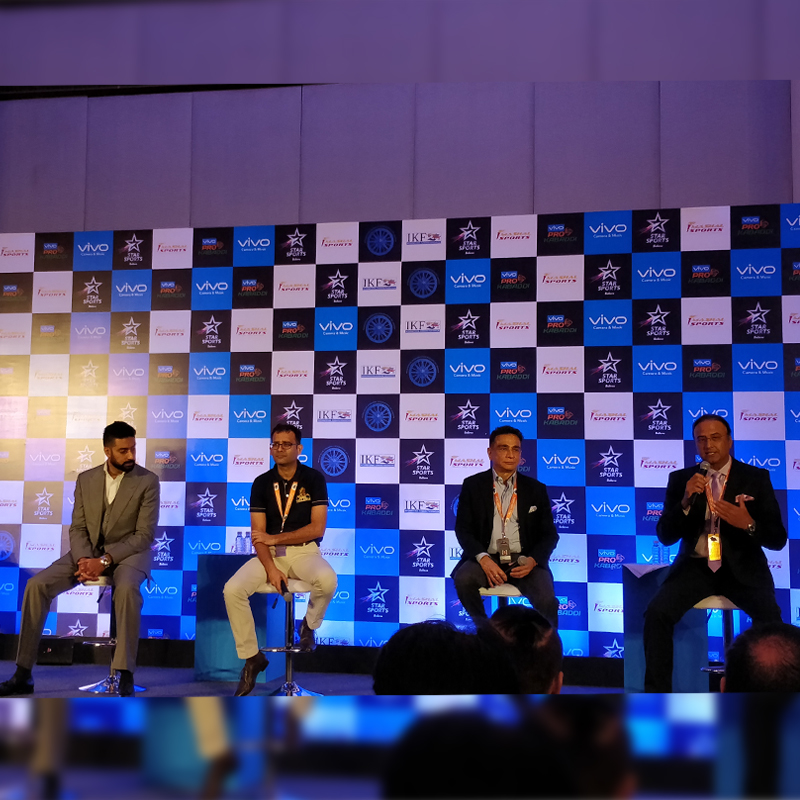
MUMBAI: The Pro Kabaddi League (PKL) auctions saw six players command over a crore, offering further proof of the property’s rising popularity in terms of viewership and advertising interest.
If we look at the viewership, the live telecast of PKL season 5 garnered 1.6 billion impressions with a target audience of 2+ which was broadcast on eight channels. Rural contributed to 75 per cent of the overall viewership and the remaining was contributed by urban audience.
UMumba CEO Supratik Sen said, “Performance does matter. In season 1 to 3, brands were really excited to speak to us, in season 4 and 5, we did not perform well. We have got our sponsors and we are happy with the way the league is functioning. The overall sponsorship including jersey, on-ground and title has increased because we have changed the team and the range is Rs 4-4.5 crore right now. The team has a list of good sponsors like Indigo paints, Syska, MI, Aisen (new electronic brand) and Wintogeno. The team is in talks with two more brands and are planning to have a total of 8-9 sponsors.”
According to an industry source, the sponsorship for the best team would be in the range of Rs 1.5-3 crore, which can only be fetched by 2 or 3 teams. Star India is pegged to earn around Rs 150 crore from the ad revenue and sponsorship this season, the source adds.
Bengaluru Bulls CEO Uday Sinh Wala said, “As the festive season is approaching, we have lots of activations for the fans. We are still in talks with 2 more brands and hopefully we will get our title sponsor. The range this time has increased to Rs 1.5 to 3.5 crore.” The team has only one brand – MI – on board so far.
“Things do change in the first 2-5 matches as the people want to look at how the team is performing. This time our tickets will be priced very low and will be in the range of Rs 300-500 which was previously in the range of Rs 800-1000,” Sen added.
Tamil Thalaivas has brands like Orbit, Valvoline, Moship, Tractor emulsion, BKT, Radiomirchi 98.3 and Paytm. Brands that connect, get the whole of Tamil Nadu to activate.
Tamil Thalaivas CEO Viren Dsilva said, “With the brands we have till now, we see the potential in terms of connect with the audience. There are brands who are looking to exploit it beyond the simple television exposure. I think the brands plan to earmark as part of their yearly calendar and we as a club are extending the calendar in terms of activities we do year round."
Another industry expert said, “It’s been better than ISL so far. The sponsorships depend on market to market. Teams like Patna Pirates and Tamil Thalaivas have been the most successful in terms of sponsorship. Patna Pirates is in the list as it has performed very well in the previous seasons.”
The latest season of PKL features 12 teams participating in close to 140 matches that are spread over 13 weeks. In May, Chinese handset maker Vivo signed a five-year deal with PKL as its title sponsor.
Gujarat Fortunegaints CEO Sanjay Adesara said, “The brands' response this time has been better than the previous seasons. We have sold all our spots and we have brands like MI, Adani, Fogg, Fru2go, Jade Blue, Ranjit Rockey and Odayo. Brands connected with us from the start because they get more mileage as the league starts. We have seen an overall growth of 20-25 per cent as compared to last season.”
It seems like brands resist putting money beforehand and instead prefer to wait to grab a good deal.
MUMBAI: The sports viewership in India has been mainly restricted to cricket for the longest time. It is difficult for any other sport to lock horns with cricket. So the race is on for the second spot. We seem to have a winner for now. Star India’s homegrown property Pro Kabaddi League (PKL) has helped kabaddi carve its space and became the second most watched sport in the country.
With the sport gaining popularity across the country, not only adults and youth but kids are also enjoying the game. PKL season 6 is all set to commence on 7 October 2018. The league is by far the most popular non-cricket property, contributed 61 per cent of viewership share in season 4, according to Broadcast Audience Research Council (BARC) India.
Kids as an audience, contribute to 20 per cent of total TV viewership, which is the highest share across all age cuts. In 197 million TV households, there are around 211 million kids. In sports, after cricket, kids are watching kabaddi with 19 per cent viewership share from week 8 in 2017 to week 37 in 2018.
Ernst & Young partner, media and entertainment advisory services Ashish Pherwani said, “Star changed the way kabaddi was marketed in India. It created heroes, made the sport more involving for the audience and made it a faster exciting event.”
Rural India contributes to 74 per cent of the live viewership and the remaining by the urban market in the kid’s audience. Out of the 19 per cent share, kids mostly watch live telecast (55 per cent), whereas 26 per cent of the viewership comes from highlights.
PKL season five garnered 1.6 billion impressions from the live telecast on seven channels. The final match in season five garnered 25.4 million impressions compared to 13.9 million impressions in season four, which is 83 per cent growth.
Kabaddi as a sport is followed the most in AP/Telangana followed by Maharashtra/Goa and Karnataka. If we look at the region wise contribution in the two to 14 age groups, 44 per cent is shared between Andhra Pradesh, Telangana, Maharashtra and Goa. Karnataka, Madhya Pradesh and Chhattisgarh contribute to 27 per cent of the overall viewership in the same age group.
As kids contribute to 20 per cent of the total TV viewership, a larger part of it is because of co-viewing. A further split is observed between channels whose primary audience are kids and all other channels where kids are the incidental viewers. GEC and movies channel together account for over 80 per cent viewership share on non-kids channels.
PwC India partner, media, entertainment and sports sector advisory leader Raman Kalra said, “Kabaddi is popular that is true and it will continue to grow also but there is a very clear rise of football. Even though the statistics are either way but clearly football is going to grow rapidly in India. I do believe that it is going to become a prominent sport in all the segments, especially given the kind of grassroots development and academies happening in that front.”
If we talk about brands, PKL season one hardly had any sponsor and partner but with the traction it had got for the past couple of seasons, it has managed to cross 100-mark in season five including individual team sponsors and partners. In 2017, Vivo signed a Rs 3 billion ($45 million) deal for five years with the league.
PKL season 4 had a high contribution from female viewers (44 per cent). Despite this, female-specific sectors are not present on PKL. Female-targeted sectors (personal care/ personal hygiene, household products, personal healthcare) contributed 15 per cent to the total duration of advertisement. As opposed to that, male categories (durables, banking/finance/investment, auto, fuel/petroleum products, alcoholic drinks) constitute 35 per cent of the total duration.
As kids watch kabaddi more than football, if we compare the ad sector between ISL and PKL, we can see the entire education sector missing in PKL. Education sector contributed to 11 per cent of total duration at the time of ISL. “That’s a natural phenomenon, brands will follow the audience no matter the sport. As the audience profile starts going up you will always see an appropriate shift of brands,” Kalra added.
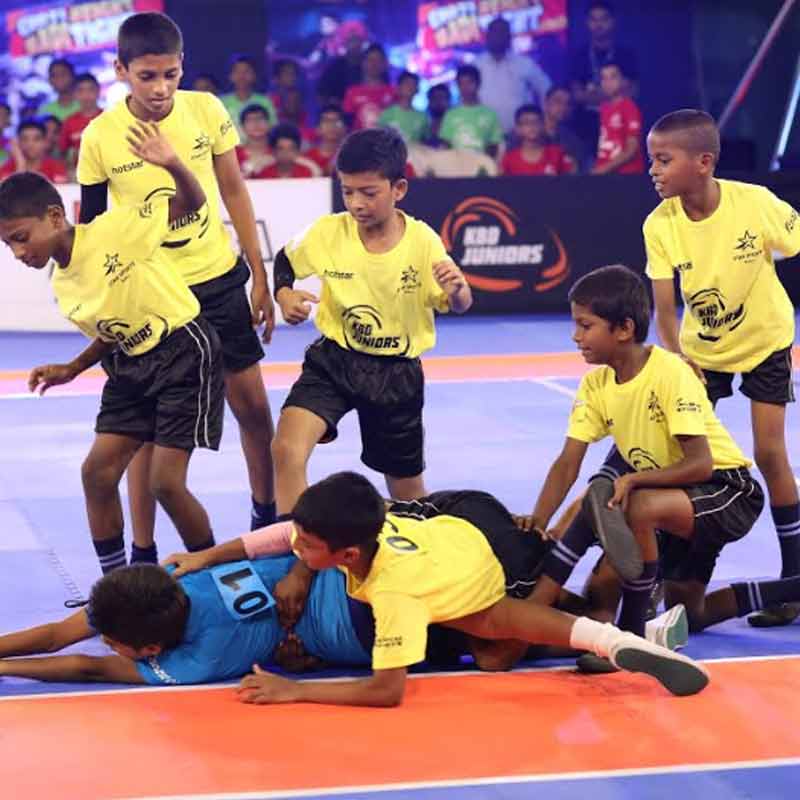
Encouraging the growth of the sport amongst the younger generation, Star Sports has undertaken a pioneering initiative, KBD Juniors, to spread awareness by facilitating grassroots level engagement. KBD Juniors season 2 has already begun and will be broadcast on Star Sports and Hotstar during season six of PKL. The tournament will have 24 schools across 12 cities and 3,500 students between the age group of 11 to 12 years battle it out to make it to the grand finale.
The events included in the data are National Kabaddi Championship, Pune League Kabaddi Spardha, Vivo PKL Season 5 from 2017 and All India national style Kabaddi, Asian Games (Kabaddi), Big C Telangana Premier Kabaddi, Kabaddi masters Dubai, Kabaddi national and Pune League Kabaddi in 2018.
Kirloskar Brothers Limited (KBL) will co-sponsor the Puneri Paltan team for the second time for the sixth season of the Pro Kabaddi League (PKL).
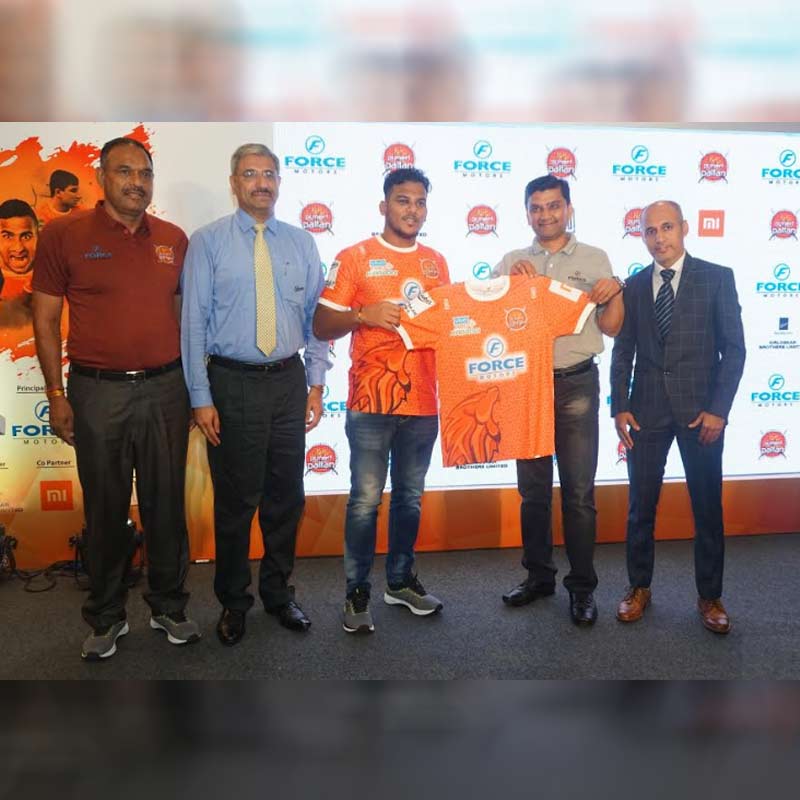
Kirloskar Brothers Limited (KBL), India’s leading pump manufacturer, will again co-sponsor the Puneri Paltan, representing Pune, in the 6th season of the Pro Kabaddi League (PKL), which will be held from 5th October 2018 to 6th January 2019. The company, which co-sponsored the Paltan in the last season in 2017, will thus be reaffirming the brand association with the team.
The official announcement of the association was done by Mr. Anurag Vohra, India Business Head, KBL, at a ceremony held in Pune on Sep 26th, 2018. On the occasion, Mr. Vohra remarked “We are extremely delighted to again co-sponsor the Puneri Paltan team for the second year in a row. We feel honored to be associated with the traditional Indian sport. There is a large similarity between KBL and Kabaddi. KBL, this year, is celebrating its 130 years of existence and the advent of Kabaddi as a competitive sport can also be traced back to the early 20th century. Kabaddi is a sport that requires a lot of strength, intelligence, speed, and strategy. KBL products are also known in the market for their reliability, durability, performance, and innovation. Both embark a sense of “Make in India” feeling and yes, both are representing Pune on the global stage. Kabaddi has made its foray into the international arena and so has KBL with 8 plants in India and 7 plants abroad. We are confident of a stupendous performance of the Puneri Paltan and wish them all the best.”
Mr. Vohra also pointed out how the popularity of the PKL is growing year on year with the franchise garnering the second highest viewership in the country after cricket and how PKL is one of the primary rural games to garner fame in urban areas as well.
PKL is a franchise-based professional kabaddi league in India founded in 2014 and, this season will feature a total of 12 teams. Meanwhile, the Puneri Paltan team will play its first match of PKL VI against U Mumba on 6th October in Chennai.
MUMBAI: India’s sport of kabaddi has grown leaps and bounds with the growth of India’s flagship kabaddi league, Vivo Pro Kabaddi League (PKL). Encouraging the growth of the sport amongst the younger generation, Star Sports has begun the second season of KBD Juniors. The tournament will have 24 schools across 12 cities, and 3,500 students between the age group of 11 to 12 years battle it out to make it to the grand finale.
Season two of KBD Juniors will be broadcast on Star Sports and Hotstar during season six of PKL.
In season two, 24 schools are divided into eight groups of three teams who will play against each other. From each group, the team finishing first will then make it to the round of city finals, which will take place during the home leg of each city as part of PKL and then the national finals.
The first season of KBD Juniors was won by South Point World School, Sonepat.
The 24 participating schools include Ryan International School Goregaon, N M Joshi Marg Municipal School, St. Lawrence High School, RST Madhyamik Vidyalaya Govandi, St Xaviers High School Airoli, Dr Babasaheb Ambedkar Municipal UP, English School Worli among others.
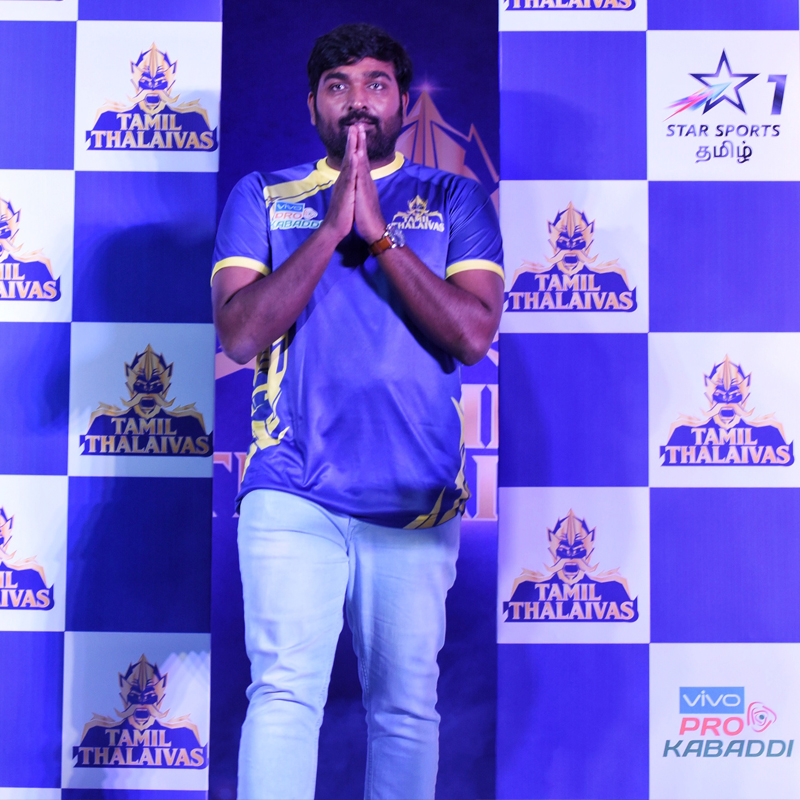
MUMBAI: A month before the sixth season of Vivo Pro Kabaddi League (PKL) will begin on 5 October 2018, Star Sports has announced Vijay Sethupathi, the Tamil superstar and Makkal Selvan, as the face of th sport in Tamil Nadu. Sethupathi will lead the Kabaddi fans in the stadium, in Tamil Thalaivas’ colors cheering from the stands.
Announcing Sethupathi’s association with Vivo Pro Kabaddi, a Star Sports spokesperson said, “After an extremely successful season five, with record viewership numbers and inspiring stories, Vivo Pro Kabaddi has proved to be the boost kabaddi needed. With the home team Tamil Thalaivas, the affinity for kabaddi in the region has grown multifold, and today we are glad to bring on board Vijay Sethupathi as the face for VIVO Pro Kabaddi in Tamil Nadu. We are happy to have Vijay partner with us in the region to build a deeper affinity for the sport in Tamil Nadu. Fans can tune-in to Star Sports 1 Tamil for 3 months of action packed kabaddi extravaganza in their own language.”
The franchise has planned a year-round initiative to spread local love for the sport across the state. Corporate Kabaddi fest was one of the initiatives which were held last month in Chennai.
Ecstatic with his new role, Sethupathi said, “I am very happy to be a part of the Vivo Pro Kabaddi family for the tournament in Tamil Nadu. Kabaddi has a rich history in Tamil Nadu and I am glad that our own sport has now reached such astounding heights. It gives me immense happiness to be a part of a sport deeply entrenched in all of us. I will be at the stadium for the opening leg, cheering for the Thalaivas. IdhuNammaAatam.”
The Thalaivas led by their verstaile captain Ajay Thakur, will take the mat on 5 October in their dazzling new colors of blue and yellow. The new jersey design also marries the rich traditional legacy of Tamil Nadu with the new age hub the state is today.
The Tamil Thalaivas will renew their Deccan Rivalry with Telugu Titans in the season opener on 5 October. That game will be followed by games against Patna Pirates (6 October), U.P. Yoddha (7 October), Telugu Titans again (9 October), Bengaluru Bulls (10 October) and Bengal Warriors (11 October) on last day of the Chennai leg of the league.
MUMBAI: When it comes to sporting events, Star India and its sports bouquet Star Sports, has been at the forefront for the last couple of years. Event after event has been bagged by the network, beating not just broadcasters but even the likes of Facebook.
Shifting away from cricket, focus on other sports has grown in recent times. But yet, cricket remains important. This Asia Cup, Star Sports is very bullish about regional languages and plans to increase its reach by launching a couple of channels more in Kannada, Telugu and Marathi languages.
The sports bouquet of Star India has increased to 13 channels with the recent announcement of Star Sports 3 launching on 15 September 2018. With the growth of football, it sees merit in dedicating much of the new channel for it.
Indiantelevision.com caught up with Star Sports CEO Gautam Thakar to talk about its plans for Asia Cup and the upcoming tournaments. Though he is all smiles with the response from advertisers, the aim is still to drive up regional areas as well as overall consumption.
Excerpts:
With Asia Cup just around the corner, do you have any specific technological innovation?
I don’t know whether you can call it specific for Asia Cup but a couple of things we learnt from IPL, we want to expand on. Some are possible some are not. Certainly, we feel really good about the regional agenda, getting into languages because it did two-three things to us and I’m using IPL as a reference because it was most recent, partly because it was the most extensive coverage anybody has done and I also joined just before the IPL.
What it does for us is it increases engagement because it’s just more familiar in the language but it has also broadened audiences. So a lot of people, particularly in the south, have written to us saying ‘My mom can also watch the IPL now and I don’t have to bother explaining to her everything because it’s easy’. That is something that we want to continue in Asia Cup and beyond.
Our ambition is to have as many languages as possible over the next two-three years. Certainly, we think Kannada and Telugu will be our first forays, depending on licences from the ministry. But there is no doubt that we want to continue our regional investment.
Asia Cup is a very short duration tournament, so we would prefer to have our own channels to show it extensively as opposed to IPL for where we showed a bit on some GEC and movies channels. In a short two-week window it is less obvious that we can build up habit very quickly. Unfortunately, we won’t do it for the Asia Cup. The tournament will be in Tamil, Hindi and English for which we have three channels.
As the language agenda evolves, every sport that we have, we will put in as many languages. The Select Dugout that we did during the IPL, we will have that for the first time for the ODI format. Now one of the things that our core viewers appreciated was that experts were demonstrating what worked or didn’t work.
By design, we have limited advertising on that particular format and with one-day international, it gives us more time to explain from a cricketing sense both strategy and predictive nature of what will happen. So we think that is something we want to continue to do.
From a Hotstar perspective, ‘WatchN’Play’ was a strong engagement driver. People who played the game online instead of just watch were 2X the number of people who didn’t play the game. We feel that gamification is something that we want to continue to invest in as we go. At this point in time, I think there is so much in the cricket calendar that in fact, this is our biggest year. Asia Cup is followed by India West-Indies tour and after that we have Women’s T20 World Cup, India tour of New Zealand and there are other things but from Star India’s perspective, it is Australia coming to India then IPL followed by World Cup. So we have a continuous nine-month cricket calendar which means that from the marketing perspective and the category building, sports consumption, relative to more developed markets, is still low. It is massive in absolute minute terms but percentage wise it is still growing. Now any given week of the year there is some cricket activity.
After Asia Cup finals we have ISL starting from 29 August 2018. There is a nice build up that we can move the audiences there. PKL will start from 5 October 2018.
I was speaking to somebody last week and he said, from the advertising perspective it is good, because of Diwali season, which is great. But we think the world is changing and seasonality is going away a little bit. IPL which happens in March, April and May period, traditionally it is not the advertising period but it is the biggest sporting advertising property in a year.
Asia Cup will kick it off for us but kabaddi and football added will be three big pillars. There are a bunch of sports we have invested in but these three are the big drivers of growth.
If we talk about advertising, especially because you were in America before this, for a marquee sports property like a Superbowl they make the Superbowl ads. We don’t have that sort of facility. Can a broadcaster play a role in facilitating that?
In the US, as you know Superbowl has been on for a long time and this has built-up. It is like high points of the year and there is a lot of social viewing and from the advertising perspective, people actually take pride in what they have created and are very expensive. Some of the ads only air at the time of Superbowl and they spend millions of dollars doing that, but it breaks through the clutter and gets them virality.
The broadcasters can play some role but ultimately marketing professionals need to drive that agenda. We had Re-imagine awards for IPL, it was the first time we were doing it but the idea behind that was to spur the marketing community to think of the IPL in a different way and create advertising for the IPL. We will do the awards every year now to showcase what is the best advertising. In our own little way we are trying to enable it but ultimately the marketers need to embrace it.
What are the challenges in building momentum for a short format tournament like Asia Cup?
There is not much of a challenge to build momentum for Asia Cup. The challenge I was speaking about was about a channel which is not a sports channel because if it airs on a movie channel it takes time before people watch.
Asia Cup this time has a likelihood of having three India versus Pakistan games. We are not seeing Asia Cup as a challenge at all. In fact, advertiser interest is very strong and a lot of it is driven by India versus Pakistan. The challenge comes when the tournament is short and it is a new sport.
Kabaddi is no longer a new sport. In fact, it is the second biggest sport that we have. Imagine if kabbadi was only a two-week event, by the time you get into it, it’s over. Even football is the world’s number one game and is growing nicely in India but there are still a few years before it scales up. ISL being extended over a period of time allows people enough opportunity to get into the game. Because the real challenge in leagues, if they are very short, is that a lot of interest is driven by team affinity and you need some time to build the rivalry, the team support and things like that.
Now the way we consume cricket is changing because of T20 cricket, shorter attention spans of fans. So in a 50-overs format, what is your vision for interactivity and how do you try and keep the viewers glued to the screens as long as possible?
At the end of the day, we as broadcasters can do a few things in terms of quality of our coverage, ultimately the quality of the game is what drives the biggest interest. The way we think about it is two or three things. One is the Hotstar team is doing a lot of things to figure out how to have gamification.
The other thing is audience profiling over time. If you think about what we tried as an experiment in the IPL, the dugout worked well.
During this IPL season, we used something called Piero technology which dimensionalises action on the field in terms of data.
Ultimately, the quality of cricket and the rivalry between different nations is the biggest factor driving engagement. While the first campaign “Knock Knock” was based on the creative insight that one’s neighbour’s success will always be a consistent reminder of their own failure, the second TVC “Pange Wala Padosi” on the fact that the strongest of rivalries occur between neighbours, or in this case India and Pakistan. The commercial showcases Bollywood actor Omi Vaidya who plays the role of the ever challenging or ‘Pange Wala’ Neighbour – highlighting the tongue-in-cheek rivalry that stems between neighbours.
Another idea we are thinking about is, how we get fans to engage with this #knockthemout theme. Fans could give their advice to the Indian team to knock the neighbours out and we will relay it on the TV. Some of it could be in jest and some could be serious advice. We haven’t yet figured out the way to show it on the TV.
Will you be using Star Sports 3 to telecast Asia Cup because the channel is launching on the same date?
We are not yet sure, but the big part of the launch will be with ISL. We think that football is starting to grow in the country and it might merit a channel that large proportion of it should be football. It is not dedicated as a football channel but it is largely football.
We had our plans ready for Star Sports 1 Kannada, unfortunately, we couldn’t get it through the process. We are working on the formalities which need to be done. Kannada and Telugu will be top of the list. Bengali and Marathi are other interesting markets. After all these, the only remaining is Malayalam which is a very football heavy market and so the question would be, do we require a full channel for it?
How do you innovate coverage for your regional audience?
One is at a very basic level which is commentary. It is easier to hear Telugu if you are Telugu speaking native. Another thing that we have for most of the tournaments is unilateral cameras, which means we have a camera dedicated to that channel. Even in the IPL, when we were showing RCB and MI match, we focussed one camera on Bangalore players or fans and their reactions and cut to more coverage of that in the actual feed. The world feed will be what it is but 20 per cent of the coverage will be dedicated to the local feed. The third thing is every state has a flavour and we haven’t got it fully right yet.
How many advertisers do you have on board for Asia Cup?
Some brands which we have on board are Coca-Cola, Dream11, Hero Motors, Byju’s, Google, Nerolac, Britannia, Kajaria, Domino’s, Apollo, Cars24, Unimoni etc. One advantage of a short format tournament with a few big games is that there is a lot more demand and we have to actually manage some demands, particularly for the big games. Actually, advertising is the easiest thing for the tournament like the Asia Cup with big marquee games like this.
We think India is on the cusp of growth from a sporting perspective, still small relative to the world but growing fast now. We think Hotstar is adding a lot of value and incremental consumption, so how do we better coordinate TV and digital and make the experience more seamless. It is a hard place for advertisers not to be.
Do you have scope of more brands coming in?
There are different properties – one is advertising spots then there is some various sponsorship opportunity. So there are enough to do but we try to keep some amount of category exclusivity. There are some categories coming up which are very sports relevant but historically have not been as big as food and drinks. This category is a massive sporting property from an advertiser perspective for all sports and it’s only now starting to take off in India.
How would you manage the Select Dugout feed for 50 overs in Asia Cup?
That’s actually the interesting concept and problem we are talking about right now. The way we are thinking about it is that even in the three hours game the experts’ reactions were that they didn’t get enough time to show some of the nuances. It will be a little bit of an experiment because it is the first time for an ODI format. I think between now to IPL and the World Cup we want to perfect both of these offerings for ODIs and T20Is so by that time we have a higher consumption programming.
MUMBAI: The Indian kabaddi team is ready with all guns firing for the 18th Asian Games Jakarta in August 2018. Team India asserted its supremacy in the recently concluded Kabaddi Masters Dubai 2018. To support the squad, Mashal Sports, the rights owner and organiser of the VIVO Pro Kabaddi League, has started an initiative #RaidForGold and aims to reach out to children from 2000+ schools across 19 cities in India.
The team is gearing up for its eighth consecutive gold in the men’s kabaddi tournament and third consecutive gold in the women’s kabaddi tournament. In keeping with the ever-growing popularity of the sport, Mashal Sports with the support of the Amateur Kabaddi Federation of India (AKFI), launched the initiative that reaches out across the country to give Indians the opportunity to rally behind and express their support for the national kabaddi team.
‘Raid for Gold’ commencing on 9 July 2018, will represent the ‘Voice of a Million Fans’ for the Indian national kabaddi team to achieve the highest glory yet again for India’s own sport. Alongside signing up digitally to pledge their support, students will also get an opportunity to interact with renowned kabaddi stars like Ajay Thakur, Rishank Devadiga, Rahul Chaudhari, Deepak Hooda and Rohit Kumar as they visit schools across the country as a part of the initiative.
The campaign gives fans an opportunity to pledge their support to the team by signing up on https://www.raidforgold.in/.
Kabaddi was included as a discipline in the 11th Asian Games Beijing 1990, where India’s only gold medal was through the sport. Since then, the kabaddi team has been the pride of India in all editions of the Asian Games.
MUMBAI: Vivo Pro Kabaddi League successfully concluded the player auction in Mumbai. Day two was dominated by players and category-B stars, with franchises finding the perfect balance between experienced and young players to craft winning teams.
The first day of the auction saw the Rs 1 crore barrier breached six times with Monu Goyat leading the way to Vivo Pro Kabaddi history.
The top five players of the second day’s auction are Prashant Kumar Rai, sold for Rs 79 lakh to UP Yoddha, followed by Chandran Ranjit to Dabang Delhi for Rs 61.25 lakh. The third player in the list is Vikash Khandola bought by Haryana Steelers for Rs 47 lakh while Dharamraj Cheralathan went to UMumba for Rs 46 lakh. Vishal Mane will play for Dabang Delhi and earned Rs 45 lakh.
Speaking to Indiantelevision.com, Bengal Warriors CEO Sandip Tarkas says that the team has managed to fill all the gaps which it had in the previous season and has also retained its strength. “We have retained some of our last year brands like Big Bazaar and Tasty Treats. We broke-even last season itself and covered all our cost. Coming season we are expecting higher expenses with the festive season starting at the time of season six. We are looking at 20-25 per cent increase in sponsorship this year.”
Tamil Thalaivas CEO Viren D’Silva told Indiantelevision.com that its aim is consistency. “We are focusing on getting three strategic partners for a long term. We have started a residential academy for 70 students with free education, training and housing. We are not looking at this business as a break-even business, our objective is very clear, building the human kabaddi association. Money and profitability are the bi-products. Profitability is not far away. We have aggressive targets on revenue.”
Puneri Paltans boosted its raiding unit this year by buying Nitin Tomar. “We already have Force Motors as our title sponsor and the deal will continue till season seven of PKL. Our inventory apart from title sponsor is available currently which are almost nine spots. This season is going to be the break-even year for the franchise. We are in advance talks with some of the last year’s brands and will mostly close the deal with them,” said Puneri Paltans CEO Kailash Kandpal while speaking to us.
A total of 181 players were sold in the two days auction process.
MUMBAI: India’s second most watched sporting league –Pro Kabaddi League (PKL) – has entered its sixth season auctions. Riding on the back of five phenomenal seasons, the auctions are taking place on 30 and 31 May 2018 in Mumbai.
The salary purse of the franchise remains the same as Rs 4 crore per team with a minimum of 18 players mandatory in the squad. The teams are strategising to build their strongest teams.
A total of 422 players will be drafted into the auction pool of which 58 are overseas players and 87 are players from the Future Kabaddi Heroes Programme (FKH), a nationwide talent scouting programme. The auctions will witness player representation from 14 other countries including Iran, Bangladesh, Japan, Kenya, Republic of Korea, Malaysia and Sri Lanka.
iQuest CEO Nitin Kukreja came in for the support of Tamil Thalaivvas and said, “Previously there was not enough economic opportunity for people but with the likes of IPL and PKL the opportunities have been unlocked. We are setting up our first local residential academy in which we will provide free education to 70 children with the training which might help them to play for any franchise in PKL.”
Mashal Sports director Charu Sharma said, “I’m very mesmerised with the response we got in the first five seasons of this league. We have a long way to go and need to be patient to take this revolution forward.”
Jaipur Pink Panthers owner Abhishek Bachchan pointed out that the viewership goals were surpassed over 10 times till the past season and so have auction rates. “Last season we thought Rs 70 lakh will be the highest bid but it went till Rs 93 lakh. This season there will be 2-3 players crossing the Rs 1 crore mark.”
Fazel Atrachali the costliest player bought for Rs 1 crore said, “I’m happy to be back in my second home UMumba after two seasons.”
On day one six players crossed the Rs 1 crore mark out of which five are Indian domestic player.
The bigs buys of day one from the domestic list is lead by Monu Goyat who was bought by Haryana Steelers for Rs 1.51 crore. The franchise has put Kabaddi in the rich and elite professional sports league with Rs 1.51 crore for the 26-year-old.
Rahul Chaudhari is retained by using Final Bid Match (FBM) by Telugu Titans at Rs 1.29 crore. Deepak Nivas Hooda is the third player in the crorepati list with Rs 1.15 crore to Jaipur Pink Panthers. Nitin Tomar previous years highest earner was sold for Rs 1.15 crore to Puneri Paltans followed by Rishank Devadiga for Rs 1.11 crore to UP Yoddhas.
The first player auctioned for season six was Irani defender Abozar Mohajermighani who was sold to Telugu Titans for Rs 76 lakh and the second was Atrachali.
USports co-founder Ronnie Screwvala also thinks that three to four players will cross the Rs 1 crore mark. UMumba has not retained a single player from its previous squad.
PKL league commissioner Anupam Goswami said, “It has been a historic day for VIVO Pro Kabaddi and it’s wonderful to see so many talented players who are under the radar, make such a difference to franchisee decisions at VIVO Pro Kabaddi S6 auctions. Kabaddi has proven to be a viable career option for emerging talent and with 6 players crossing the Rs 1 crore mark, it is a defining moment in VIVO Pro Kabaddi history, setting a benchmark for inspiring youngsters who look to make a difference in the game.”
UMumba CEO Supratik Sen told Indiantelevision.com that they are going to focus on Defender and Raiders after the day 2 lunch. Staying true to what Supratik said, UMumba bought some C category raiders at a higher price. Siddharth Desai went for Rs 36.4 Lakh and Abhishek Singh at Rs 42.8 Lakh to name a few.
Monu Goyat commentating on being the highest bid player said “I am extremely happy to be the highest paid player this season, there is a huge responsibility to deliver and I am glad to receive this opportunity. I will now focus on increasing the standard of my game and playing the best, I can.
Rahul Chaudhari speaking on being retained with Telugu Titans said “I am very happy that my team has retained me and I am glad to be back to Telugu Titans. Every year the league witnesses’ massive jumps along with a tremendous growth in fan following and I am extremely happy to be a part of the Pro Kabaddi family. I have started my training and am looking forward to this season. It is a growing period for kabaddi and I think by the time the younger generation will step into the auctions, the bid may start at 6-7 crores. Kabaddi is only going to grow and I urge parents to send their children to play kabaddi.”
Speaking on the anticipated outcome of the auctions, Patna Pirates owner Rajesh Shah said, “Being three-time champions we are looking forward to building a team that will retain the trophy again this year. We are looking at players who will complement the four retained players and bring in their strengths to build a strong winning team this season. I am very proud to be associated with Patna Pirates and am ecstatic that they won. But most importantly I am happy to be a part of this club of 12 teams owned and managed by people I know and respect. It’s a unique opportunity to be part of this group not only promoting Kabaddi but a great sense of competition in the game as well.