Tag: Piyush Sharma

  • Guest Column: Four market forces lending the power to risk in Indian TV industry

    Guest Column: Four market forces lending the power to risk in Indian TV industry

    Overall, the outlook for the M&E industry is very positive and robust. This is spearheaded by continuing top performance by Television and projected unprecedented performance by digital.

    Strong long term economic fundamentals driven by domestic consumption – as high as 70% of GDP- constitutes the core reason for the outlook to be rosy. This combined with delayed yet inevitable completion of digitisation with its resultant benefits.  In the long run, government policies of demonetisation and GST also lending further boost to GDP would further help.

    Rising share of FTA channels, even as it may pull down long term subscription revenue forecast, is expected to only contribute to the overall health of the industry.

    The future very clearly revolves around digital.  With the government’s unabashed push for digital consumption and digital payments, mass adoption of technology is a foregone conclusion. Digital media is no longer being viewed as an additional distribution platform but as a core revenue engine.

    Investment Outlook

    public://F1_19.jpg

    Driven by growth, the investment outlook through an analysis of the past as also last year 2016 is very rosy.

    public://F2_10.jpg

    Key Market Force for Investments

    Four key market drivers favouring India and Indian M&E industry in general and Television industry in particular, are:

    1. Favourable demographics
    2. Tremendous Market Potential
    3. Immense Talent Availability
    4. Increasing Digital consumption

    Favourable demographics

    Per capital income growth rate is projected to double from 2016 to 2020. India has the largest youth population in the world (350 million).  Spend on leisure activities in India is projected to grow at a CAGR of 8.4% up to 2025.

    Tremendous Market Potential

    Traditionally urban India has been a major source of revenue.  TV reach in rural markets has expanded rapidly from 78 million hhs in 2015 to 99 million in 2016 (up 27% yoy). Many TV broadcaster have therefore launched rural-specific ‘Free-to-air’ to tap the growing potential.

    Immense Talent Availability

    The M&E industry employs 0.6 million people as of 2016 which is likely to increase to 1.3 million by 2022. The government has set up M&E Skills Council (MESC) with a   mandate to develop 1.2 million skilled workforce by 2020.

    Increasing Digital consumption

    Penetration of high-speed broadband and wireless internet and proliferation of low-cost smartphone devices have led to an increase in consumption of digital media content such as online media, music streaming and on-demand video streaming. Plummeting data cost will continue to support high growth in the segment, particularly in video streaming.  Attracted but high growth, there has been an unprecedented increase in OTT service providers including world leaders in OTT like Netflix and Amazon.

    Conclusion

    Impending challenges galore. For every sub-segment of Media and entertainment industry. These relate to requirements to innovate, to evolve with this change and to evolve for building sustainable business models.

    Media and entertainment companies will need to be flexible and nimble to be able to make the most of this unfolding opportunity. The long-term future for the television industry is very robust with CAGR projections above 14% for both segments of ad revenues and subscription revenues. The Indian Media & Entertainment industry is expected to leap forward after a slow 2016.

    public://Untitled-3_17.jpg

    (Piyush Sharma, a global tech, media and entrepreneurial leader, created the successful foray of Zee Entertainment in India and globally under the ‘Living’ brand. The views expressed here are of the writer’s and Indiantelevision.com may not subscribe to them.)

  • Guest Column: 5 Trends lending the Power to Believe in Indian TV industry

    Guest Column: 5 Trends lending the Power to Believe in Indian TV industry

    The four pillars influencing the M&E sector are: Infrastructure, Government policies, Devices and Digital Technologies. Growing consumer demand is inviting policy support driving innovation and resulting in increasing investments in the sector.

    There are 5 identifiable trends which lend television industry the power to dream and the analysts the power to believe.  These are:
    1. Positive Government Directives
    2. Surge in Digital consumption
    3. Consolidation the new buzzword
    4. Rural India beckons
    5. Data undergirds everything

    1. Positive Government Directives
    The M&E industry is expected to leap forward after a slow 2016. 2016 experienced two large government directives which affected the TV industry in negative ways for the short term. 

    Demonetisation came as a bolt from the blue and shaved off around 2% of ad revenues for the TV industry. 

    GST as another one to rationalise taxation across the M&E industry. While challenges abound initially, overall M&E industry is however a beneficiary for two reasons:
    • Availability of input credits across the board and inclusion of entertainment tax within the ambit of GST are both positive developments.
    • Formalisation of economy and widening of tax base will result in overall positive impact on GDP and thereby resultant positive impact on ad spends.

    public://guest.jpg

    Both Demonetisation and GST will however give a further boost to GDP in the long run. Over and above these, Cable digitisation is already creating a paradigm shift as a game changer with ARPU on an uptrend post digitisation.  Even as it is delayed, the same is expected to be completed in 2017.  

    2. Surge in Digital Consumption 
    The surge in digital consumption is compelling existing players to take a hard look at their business models.  OTT VOD is emerging as a parallel platform along with TV broadcast.   Entry of Netflix, Amazon Prime as global leaders; VOOT, OZEE, Hotstar and Sony Liv as broadcast network backed platforms; and Jio Apps and Airtel Wynk as telecom companies backed platforms joining the game with syndicated content offerings. 

    Development of a sustainable digital ecosystem will be required in the long run to address credible measurement and limited monetisation models.

    3. Consolidation the new buzzword
    Consolidation is gaining momentum across the value chain.  Even as there have been less number of transactions, the good news is that they are of higher value.  The three biggest ones are Dish TV and Videocon merger, Ten Sports acquisition by Sony and Reliance ADAG TV broadcast business takeover by Zee. 

    4. Rural India beckons
    Post commencement of rural measurement by BARC, the big story has bene that of the high levels of TV viewing habits of rural India. This has resulted in higher advertising spending in rural HSMs, introduction of new FTA channels and realignment of content focus for mass tastes.

    5. Data undergirds everything
    Along with the data dividends of digital becoming visible, BARC viewership data has led to consumer analytics becoming indispensable thereby leading to changes in content, distribution and ad strategies.

    Conclusion
    The long-term future for the television industry is very robust with CAGR projections above 14% for both segments of ad revenues and subscription revenues. The Indian Media & Entertainment industry is on the ball with Television leading the charge. 

    public://Untitled-3_17.jpg

    (Piyush Sharma, a global tech, media and entrepreneurial leader, created the successful foray of Zee Entertainment in India and globally under the ‘Living’ brand. The views expressed here are of the writer’s and Indiantelevision.com may not subscribe to them.)

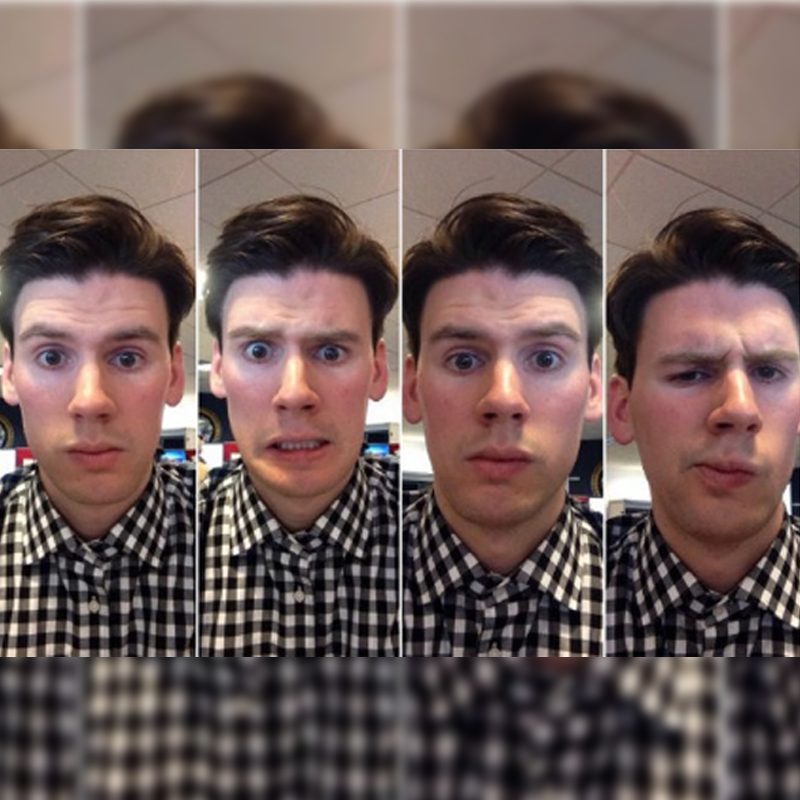
  • Guest Column: Are you good enough to be a CEO: The 4 ‘Selfie’ Check-up

    Guest Column: Are you good enough to be a CEO: The 4 ‘Selfie’ Check-up

    It is within everyone’s grasp to be a CEO.  There are secret opportunities hidden inside every failure.  Life is not really a solo sport – even if you’re the CEO.  Being a CEO is at least twice as hard as the next hardest position in a company.  It is really, really hard.  This is especially true with founder CEOs.
    To become a proven transformational leader and creating a successful track record of building brands, businesses and value requires much more than just an opportunity.

    Working with start-ups exposes one to holding positions of high responsibility and leadership earlier than most of one’s fellow colleagues. Shaping and growing new businesses and building a profitable and large opportunity canvass requires thought leadership, entrepreneurial management style, creative strategy and execution. Most important survival and growth strategy is the ability to reimagine businesses and build innovative business models.

    In delineating the four essential faces for a CEO, I am adapting leading mythologist Joseph Campbell’s description of each of us as “a hero with a thousand faces,” and Erica Fox’s article. A CEO needs to be like a

    Dreamer – this is the visionary face led by intuition – suggestive of an inner CEO.
    Thinker – this is the evaluation face led by reason – suggestive of an inner CFO.
    Warrior – this is the relationship face led by willpower – suggestive of an inner COO.
    Lover – this is the relationship face led by emotion – suggestive of an inner CHRO.

    Everything ultimately becomes the CEO’s problem, no matter where it starts. Reason why some CEOs crack under the pressure.

    A CEO’s job consumes you.

    It should not be looked at as a step-up but as a calling! 

    public://Untitled-4_3.jpg

    (Piyush Sharma, a global tech, media and entrepreneurial leader, created the successful foray of Zee Entertainment in India and globally under the ‘Living’ brand. The views expressed here are of the writer’s and Indiantelevision.com may not subscribe to them.)


  • Guest Column: 3 drivers lending power to create impact in Indian TV industry

    Guest Column: 3 drivers lending power to create impact in Indian TV industry

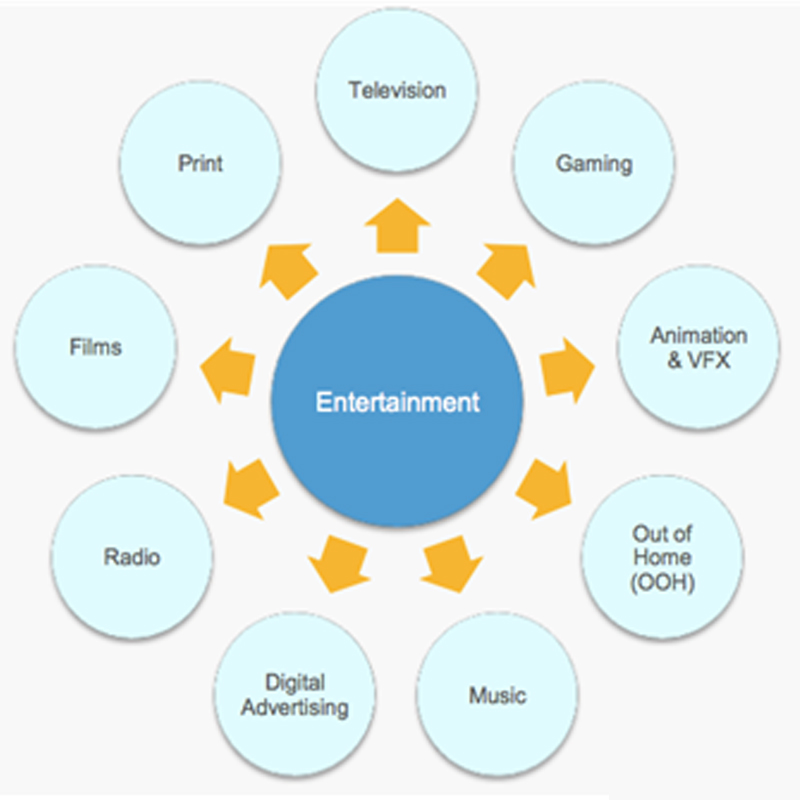
    The Indian Media & Entertainment industry is categorised across nine segments of which Television by far is the largest and is expected to be the largest in the next couple of years.

    India is the second largest Television market in the world characterised by rising number of subscribers.

    public://222222222222222_0.jpg

    Three top long term growth catalysts that are acting as the biggest drivers for the Television industry are:

    1.    Growing Rural Demand
    2.    Increasing FTA channels, and
    3.    Deeper Audience Measurement

    Growing Rural Demand

    Digitisation which is expected to be completed in 2017 is leading to higher digital access and consumption.  High data consumption has already been experienced and there are encouraging trends with rising internet and broadband penetration, declining data charges, proliferation of internet enabled mobile phone, government and private initiatives around wifi and greater emphasis on broadband roll-out by MSOs.  This has led to an unprecedented advertiser interest in digital which played out with a strong performance of digital in 2016.  OTT is therefore seeing a major traction wherein both digital VOD and TV would see a harmonious co-existence.

    Increasing FTA channels

    The big story is 2016 has been that of the rural viewership habits.  BARC viewership data for rural has thrown up interesting insights and goldmine data about rural viewing habits and hence the proliferation of FTA channels.  This development will however require realignment of content for mass tastes.

    Deeper Audience Measurement

    With viewership data leading to better consumer analytics and with advertiser focus and monies increasing in rural HSMs, scientific audience measurement will be the third most important driver for the television industry.

    Conclusion

    The global economy grew at 2.6% in 2016 while the Indian economy is projected to grow at 7.1% in 2017.  The long-term future for the television industry is very robust with CAGR projections above 14% for both segments of ad revenues and subscription revenues.

    public://Untitled-3_17.jpg

    (Piyush Sharma, a global tech, media and entrepreneurial leader, created the successful foray of Zee Entertainment in India and globally under the ‘Living’ brand. The views expressed here are of the writer’s and Indiantelevision.com may not subscribe to them.)

  • Guest Column: Life’s biggest stand-out success lesson

    A ship is safe in the harbour. But, that is not what ships are built for: John A Shedd. Why does stand-out success elude the early achievers from making it finally in the game of life. Did they learn this ONE thing!

    Think of that brightest one in your class back in school or college. Did they change the world or achieve extraordinary success?

    Umpteen number of studies from time to time throw up statistics to show that achievers of the highest grades in schools and colleges as a ratio of proportion of overall extraordinary achievers almost always is weighed in favour of those who did not have those fancy grades and did not walk away with a gold medal at the passing out graduation ceremonies.

    In his new book “Barking Up the Wrong Tree,” Eric Barker explores the maxims we use to discuss success. He finds that just as nice guys don’t always finish last, valedictorians rarely become stand-out successes.

    Not to be misled – by standards of ordinary success, they do well and find good lives but they do NOT achieve extraordinary success to become billionaires who change the world.

    Barker writes:
    There was little debate that high school success predicted college success. Nearly 90 per cent are now in professional careers with 40 percent in the highest tier jobs. They are reliable, consistent and well-adjusted, and by all measures the majority have good lives.

    But how many of these number-one high school performers go on to change the world, run the world or impress the world?

    The answer seems to be clear: zero
    Many academically brightest are acknowledged (even by themselves) to be as not the smartest students in their class but simply the hardest workers. Smartness is restricted to delivering against a teacher expectation rather than true ‘imbibing’ of the knowledge.

    In fact, research demonstrates that students who truly enjoy learning the most often struggle in school, trying to trade off attention given to subjects about which they’re truly passionate with the demands of their other distractions (read coursework). While intellectual students struggle with this tension, grade achievers excel.

    The most valued traits in school are self-discipline, conscientiousness and the ability to comply with rules. The ability to disrupt the world or make extraordinary breakthroughs however requires NOT these traits.

    The education system thrives on and rewards (remember the class monitor/rep) developing ‘promising ones’ with a positive trait of ‘trying to please everyone’. It is also the key to failure.

    I can’t give you a sure-fire formula for success, but I can give you a formula for failure: try to please everybody all the time — Herbert Bayard Swope.

    The high-grade achievers make it their business to be the best. ‘Best’ in real life is a label. It’s something someone decides for you – the ‘educational institution’ in case of students. ‘Better’ is more personal which pushes you to embrace ‘highs and lows’ to find that unique attribute called ‘individuality’ as the key to success while the graduation ceremony sees hundreds of them in identical caps and gowns.

    While the schools produce the best and the brightest to go and change the world, the achievers forget to unlearn to challenge notions and embrace uncertainty. The one thing that stands out is the inability of these ‘brightlings’ to encounter and treat real life’s chaos as a part of the deal.

    The ability to ‘shake things up’ is not a particularly well appreciated quality taught in schools.

    That one thing that keeps these ‘lives of promise’ from making it as truly THE ONE therefore is

    Unlearning is as important at all points in life as learning.

    Anyone whose goal is ‘something higher’ must expect someday to suffer vertigo. What is vertigo? Fear of falling? No, Vertigo is something other than fear of falling. It is the voice of the emptiness below us which tempts and lures us, it is the desire to fall, against which, terrified, we defend ourselves  ― Milan Kundera, The Unbearable Lightness of Being

    Education system mostly is akin to a ‘control experiment’ in science. Lots of mediocre students thrive outside a ‘controlled’ scholastic environment.

    In the school, rules rule life.  In the messy game called life, Chaos rules everything!  Unlearn and embrace it for your success.


    public://Untitled-3_17.jpg

    (Piyush Sharma, a global tech, media and entrepreneurial leader, created the successful foray of Zee Entertainment in India and globally under the ‘Living’ brand. The views expressed here are of the writer’s and Indiantelevision.com may not subscribe to them.)

  • Guest Column: Start-up hacks: A cheat sheet for success

    With the convergence of technology and media, we are witnessing tremendous activity in the start-up space.  From content to distribution to broadcast to affiliate opportunities, there is no dearth of new ideas and their backers.  Surprisingly not all of them are covering all their bases to crack the start-up success code.

    Having been a part of four start-ups in leadership positions along with all the insights gained through studying hundreds of others, here are 9 ways that help us better understand them and reasons that make them succeed.

    1. Start-ups are not smaller versions of large organisations. Bonsai have a different life and game plan as compared to large trees. The two should not be compared and start-ups should not be expected to emulate the large organisation. 

    2. Start-ups do not adhere to a ‘set’ business plan – in most of the cases the challenge is to find one. As Mike Tyson famously said on his opponent’s pre-fight strategies: everyone has a plan till they get punched in the face. Business Plans are a necessary evil but for a start-up they are nothing more than fictional plans and rarely do they survive their first contact with customers.

    3. Customer Plan is much more important than the business plan. This may include customer engagement, customer stickiness, brand advocacy score, net promoter score, etc. “Your most unhappy customers are your greatest source of learning,” said Bill Gates.

    4. Data is the new oil. Data undergirds everything. Period.

    5. Start-ups need to fail fast, fail often, fail cheap and fail better. Constant experimentation and continuous learning is the name of the game rather than elaborate planning. Start-ups need to keep their persistence levels high. “You don’t learn to walk by following rules. You learn by doing and falling over,” as famously told by Richard Branson.

    6. Iteration is the key word for every aspect of the business. Launch and iterate. And again. Everything is changeable except the intent to give one’s best to making it big.

    7. Repeatability and scalability are two pivots to search in the early life cycle stage. Investing in growth in stage 0 is almost a sure-shot pre-requisite. Mostly start-ups are dealing with a new concept and/or a habit change. This may initially require selling only on the strength of price (not the brand or anything else) and may call for disproportionate investments and therefore profitability may be a long way off.

    8. Turmoil and chaos are integral to the existence of a start-up. Those who cannot stand the heat, need to get out of the kitchen.

    9. Lastly as Jeff Bezos said – Entrepreneurs must be willing to be misunderstood for a long time.

    The M&E industry as much needs start-ups as the rest of the economy.  As research shows, the success quotient can go up if the above factors are kept in mind.

    public://piyu.jpgPiyush Sharma, a global tech, media and entrepreneurial leader, created the successful foray of Zee Entertainment in India and globally under the ‘Living’ brand. The views expressed here are of the writer’s and Indiantelevision.com may not subscribe to them.
  • Goafest 2017 gets bigger and better

    GOA: Goafest 2017 is back, and even though the venue, Grand Hyatt Goa, is the same, the energy, enthusiasm and attendance broke all its past records.

    True to its tradition, the day started with the lighting of the inaugural lamp by AAAI India president Nakul Chopra, Times Network MD and CEO M K Anand, the Advertising Club president Raj Nayak, Awards Governing Council chairman Ramesh Narayan, Goafest Organising Committee chairman Ashish Bhasin, Zee Entertainment India new initiatives CEO chairman Piyush Sharma, Discovery Networks Asia Pacific SVP and GM Karan Bajaj, and Goafest Organising Committee co-chairman Nagesh Alai.

    Ashish Bhasin kicked it off by saying, “On behalf of AAAI and Ad Club, I can say that it’s our absolute privilege to host Goafest 2017 for such an esteemed audience. This year we promise to be different from all the other years. Of course, there will be the staple Sam Balsara in his classic shorts and the sight of seeing people run helter-skelter at the sight of Nakul Chopra, but there will be lots of new things.” He ended with a laugh.

    Nayak called out Goafest as the world’s largest advertising festival brought together by two industry bodies. “We are the only national awards that are not for profit, and we intend to keep making it better. Every professional in the country who has made a name for him/herself is made of Abbys.”, he declared.

    True that! No wonder Goa fest promises to be different this year, starting Day 1.

    A Digital World #GOAFEST2017:

    From Knowledge Seminars by Facebook to Digital Awards, to 200,000 digital interactions across social platforms, Goafest is going truly digital this year.

    A Greener World:

    From delegate badges made of recycled paper to efforts encouraging carpooling, to making people conscious about water wastage with strategically placed tanks to empty water bottles in; Goafest 2017 took a big leap towards being greener as well (in partnership with Nat Geo).

    Bajaj kicked off “Discovery Channel presents Industry Conclave” on the topic ‘Role of brands in changing India’. He put a spin on the topic by making it the ‘role of brands changing India’, with words that couldn’t have summarized the sessions to follow better. “The brands that we experience in this room have a deeper impact on our lives than we realise. I’m happy to be in a roomful of people who are impacting people and lives,” he said.

    The energy levels were up from the first session itself, when MobiKwik co-founder Upasana Taku, came on stage to talk about demonetization, the growth of digital payments and powering 55 million users and 1.4 million retailers in India. “Brands have played a role in transforming India. Consumer choice drives brands, and brands have the power to transform an entire country. 86% of India’s spending is cash. It’s a massive amount of money that moves in an unaccounted manner. I truly believe it’s the era of mobile wallets, and won’t deny that demonetization has sped up the journey,” she explained.

    While she spoke about how increasing digital transactions collectively provides a large opportunity in the fintech sectors, ITC Food Business divisional chairman Hemant Malik, also spoke about e-commerce and digitization, while acknowledging the evolution of Goafest. “We are the only carbon positive company in the world.” He also spoke about the shift from hierarchical collectivist culture to individualistic.

    He also acknowledged another brand- Patanjali, which he said to a roomful of laughter ‘had eaten into everybody’s business’. What else could have a better introduction to the next speaker, Patanjali CEO and MD Acharya Balkrishna. In his dhoti, kurta style his session started and ended with resounding applause, laughter and standing ovation. “If you learn to applaud yourself sometimes, the world will learn to applaud you.” True that!

    He ended with the message that truly summarized the ethos of day 1. “The nation is ours, the children are ours, the life is ours. We must take care of it ourselves. Always remember, for the world India is just a market place; for us it’s our home.”

    It was a great day for Make In India, and a greater day for Goafest. After a power-packed, standing ovation leading to the end of day 1 in a full house, Goafest day 1 proved that the number of delegates keeps increasing exponentially every year, and this year is no different.

    If day 1 was anything to go by, day 2 promises to be an even bigger blockbuster.

  • Living Foodz draws up an appetising menu: website, app, new shows

    Living Foodz draws up an appetising menu: website, app, new shows

    MUMBAI: Essel Group’s international food and lifestyle channel, Living Foodz, had hit Indian television waves in September 2015. The channel is already riding on a wave of success within 7 months of its launch. Apart from curating 100 hours of original content for the Indian market, Living Foodz will roll-out its website in May, while the application will launch by June this year. The channel plans to create a marketing buzz within 30 to 60 days. Living Foodz is also looking at converting into HD by the end of this financial year and has already applied for a few licenses and is waiting for approvals.

    “Converting Living Foodz into HD is definitely on the agenda. We have already applied for a few licenses. In any case, 100 per cent of our programming is in HD but as far as the audiences are concerned, the HD penetration is still limited. Business viability and economics dictate that you have a good enough audience reach to justify advertising revenue. It will have to be an optimum and improvement call at an appropriate time for us to decide whether we should create an additional HD channel or go solo HD”, revealed Zee Entertainment’s Living Group APAC and India CEO Piyush Sharma.

    The channel believes that producing original content plays a pivotal role in ensuring enhanced reach. With many channels lying on content library and syndication, Living Foodz stresses on making quality content to enhance brand equity and hold audiences.

    As reported earlier by Indiantelevision.com, under the Living Entertainment umbrella, the group will unveil its other new channel Living Zen, which it plans to launch in the third quarter. Focused on health, wellness and happiness, it is likely to be followed by the launch of Living Rootz, Living Homez and Living Travelz every quarter thereafter.

    Living Foodz claims to have a 40 per cent market share in the lifestyle genre and will continue to focus on food as its strong component for content. To strengthen its footprint in the lifestyle space, the channel has announced a new show Sunday show Ganga:The Soul of India. Bollywood actress Dia Mirza will make her debut on TV with this new offering. The show will launch on 1 May 2016 and will air at 12 noon with a repeat telecast at 7 pm on the same day. The one hour per episode 10 episode show will see Mirza narrating the multi-faced story of the Ganges as she travels through many towns along the majestic river.

    Promising to give viewers a peek into the legacy shaped by India’s longest river, the show has bagged Airtel 4G as title sponsor and Gowardhan Ghee as co-powered by sponsor, while American Tourister is the travel partner. The travel food documentary will explore every part of what the river has to offer, including the people, history, mythology, anthropology, adventure, music and the cuisine.

    “Quality of content is very important to attract viewers as well as advertisers on any show. The reason why we have these sponsors on board is because of our ambitious content. Travelling is an enriching experience that often remains etched in our memories forever. Ganga: The Soul of India will give our viewers a never-before opportunity to experience the culture, history and cuisine offered along the banks of the sacred Ganges through the eyes of Dia Mirza, who is an ardent traveller. We could not think of a better concept and host to marry the ideas of travel and culture in the Indian context,” said Living Foodz business head Amit Nair.

    “It is impossible for me to encapsulate in a sentence the boundless joy, the learning, the discovery, the adventure Ganga: The Soul of India has brought to my life. For those seeking to define the idea of India, this is the journey to be a part of!” said Mirza.

    The show allowed her to combine her passion and love with professional experience, added Mirza. She also said that while the show was a deeply spiritual and inward journey, it was also physically challenging. This was especially true in higher terrains.

    “Before this, I had said no to reality shows and the typical formats that actors get offered. I want people to make their own roadmap. Slow travel gives you a personal, warm and an enriching experience. TV gives you the opportunity to present yourself as who you are. The show encompasses all that I wanted to explore and do,” she said further.

    It has also launched a coffee table book amalgamating the entire journey of Mirza and the team from Gomukh in the Himalayas to the Gangasagar delta where it meets the Bay of Bengal.

    “The numbers speak for us. One of the key reasons why people watch us rather than any other channel is because we create original relevant content set in context for our viewers. All our shows have a deeper connection with the audience which leads to more viewer engagement and time spent. As far as creating original content in the factual space goes, I think we are the leaders making the largest amount of factual entertainment content,” added Nair.

    As far as the marketing goes, Ganga: The Soul of India will be cross promoted on the other channels under Zee Network. The show will be primarily displayed on TV and digital platforms while the channel has also planned more specific market activities like the book launch.

    With a strategically shaped business road map, it will be interesting to see how this new feature in the growing factual entertainment genre can retain its dominance.


  • Living Foodz draws up an appetising menu: website, app, new shows

    Living Foodz draws up an appetising menu: website, app, new shows

    MUMBAI: Essel Group’s international food and lifestyle channel, Living Foodz, had hit Indian television waves in September 2015. The channel is already riding on a wave of success within 7 months of its launch. Apart from curating 100 hours of original content for the Indian market, Living Foodz will roll-out its website in May, while the application will launch by June this year. The channel plans to create a marketing buzz within 30 to 60 days. Living Foodz is also looking at converting into HD by the end of this financial year and has already applied for a few licenses and is waiting for approvals.

    “Converting Living Foodz into HD is definitely on the agenda. We have already applied for a few licenses. In any case, 100 per cent of our programming is in HD but as far as the audiences are concerned, the HD penetration is still limited. Business viability and economics dictate that you have a good enough audience reach to justify advertising revenue. It will have to be an optimum and improvement call at an appropriate time for us to decide whether we should create an additional HD channel or go solo HD”, revealed Zee Entertainment’s Living Group APAC and India CEO Piyush Sharma.

    The channel believes that producing original content plays a pivotal role in ensuring enhanced reach. With many channels lying on content library and syndication, Living Foodz stresses on making quality content to enhance brand equity and hold audiences.

    As reported earlier by Indiantelevision.com, under the Living Entertainment umbrella, the group will unveil its other new channel Living Zen, which it plans to launch in the third quarter. Focused on health, wellness and happiness, it is likely to be followed by the launch of Living Rootz, Living Homez and Living Travelz every quarter thereafter.

    Living Foodz claims to have a 40 per cent market share in the lifestyle genre and will continue to focus on food as its strong component for content. To strengthen its footprint in the lifestyle space, the channel has announced a new show Sunday show Ganga:The Soul of India. Bollywood actress Dia Mirza will make her debut on TV with this new offering. The show will launch on 1 May 2016 and will air at 12 noon with a repeat telecast at 7 pm on the same day. The one hour per episode 10 episode show will see Mirza narrating the multi-faced story of the Ganges as she travels through many towns along the majestic river.

    Promising to give viewers a peek into the legacy shaped by India’s longest river, the show has bagged Airtel 4G as title sponsor and Gowardhan Ghee as co-powered by sponsor, while American Tourister is the travel partner. The travel food documentary will explore every part of what the river has to offer, including the people, history, mythology, anthropology, adventure, music and the cuisine.

    “Quality of content is very important to attract viewers as well as advertisers on any show. The reason why we have these sponsors on board is because of our ambitious content. Travelling is an enriching experience that often remains etched in our memories forever. Ganga: The Soul of India will give our viewers a never-before opportunity to experience the culture, history and cuisine offered along the banks of the sacred Ganges through the eyes of Dia Mirza, who is an ardent traveller. We could not think of a better concept and host to marry the ideas of travel and culture in the Indian context,” said Living Foodz business head Amit Nair.

    “It is impossible for me to encapsulate in a sentence the boundless joy, the learning, the discovery, the adventure Ganga: The Soul of India has brought to my life. For those seeking to define the idea of India, this is the journey to be a part of!” said Mirza.

    The show allowed her to combine her passion and love with professional experience, added Mirza. She also said that while the show was a deeply spiritual and inward journey, it was also physically challenging. This was especially true in higher terrains.

    “Before this, I had said no to reality shows and the typical formats that actors get offered. I want people to make their own roadmap. Slow travel gives you a personal, warm and an enriching experience. TV gives you the opportunity to present yourself as who you are. The show encompasses all that I wanted to explore and do,” she said further.

    It has also launched a coffee table book amalgamating the entire journey of Mirza and the team from Gomukh in the Himalayas to the Gangasagar delta where it meets the Bay of Bengal.

    “The numbers speak for us. One of the key reasons why people watch us rather than any other channel is because we create original relevant content set in context for our viewers. All our shows have a deeper connection with the audience which leads to more viewer engagement and time spent. As far as creating original content in the factual space goes, I think we are the leaders making the largest amount of factual entertainment content,” added Nair.

    As far as the marketing goes, Ganga: The Soul of India will be cross promoted on the other channels under Zee Network. The show will be primarily displayed on TV and digital platforms while the channel has also planned more specific market activities like the book launch.

    With a strategically shaped business road map, it will be interesting to see how this new feature in the growing factual entertainment genre can retain its dominance.