Tag: Piyush Pandey

  • Ogilvy & Mather India establishes new management structure

    Ogilvy & Mather India establishes new management structure

    MUMBAI: Ogilvy & Mather (O&M) India has put in place a new management structure, which will be effective 1 March, 2015.


    The announcement was made by O&M executive chairman and creative director – South Asia Piyush Pandey and O&M executive co-chairman and group chief operating officer – South Asia SN Rane.


    In a statement, the duo said, “It is time that our very strong senior team joins us in all key management decisions of Ogilvy & Mather. Our clients should look forward to even greater impact from Ogilvy & Mather in the days ahead.”


    In the new structure, the current Ogilvy India group chief digital officer Kunal Jeswani is promoted to Ogilvy & Mather India CEO. He will report directly to the chairmen’s office and will work in very close association with Geo/discipline heads, creative, planning and business leaders.


    The current Ogilvy India executive finance director Hufrish Birdy is promoted to chief financial officer (CFO). She will also report directly to the chairmen’s office and work in close partnership with Jeswani, Geo and discipline heads and other key stake holders of the company.


    Hephzibah Pathak will assume a new role as Ogilvy & Mather India global clients’ director. She will be associated with Vodafone, Mondelez (India+Global), KFC, Unilever, Coke and Fiat. Pathak, working with operation heads of 360 degree offerings, will be responsible for delivery that will meet client expectations. A detailed scope of work is being circulated amongst Geo/discipline heads and their business leaders.


    The man who can be credited in building strong planning teams, Kawal Shoor has been promoted to national planning director. He will spearhead the next phase of development of planning and be responsible for the national planning agenda.


    To top it all, the board of directors list has also been expanded. The existing India board comprising Pandey, Rane, Madhukar Sabnavis, Poran Malani, Pathak, Miles Young, Paul Heath, Paul Cocks and John Goodman is being expanded. The company has nominated Jeswani (CEO, India), Rajiv Rao (national creative director), Navin Talreja (president – Mumbai and Kolkata geography head) and Birdy (CFO, India) as additional Directors, which will be effective as soon as the legal compliances are completed.


  • “We’ve come a long way from being WPP’s little known agency”: Samrat Bedi

    “We’ve come a long way from being WPP’s little known agency”: Samrat Bedi

    The year 2014 will go down in history as the year of Indian politics. The main contenders of the two-horse race, Bharatiya Janta Party and Congress, launched massive campaigns to woo voters and became the talking point of the year.


    The BJP campaign ran in series with ‘janta maaf nahi karegi’ and ‘achche din aane wale hai’ becoming the most popular taglines of the year. While some pulled a meme on them, others continue to strongly believe in them and hoped to see a better and brighter India.


    The agency behind the ‘political campaign that created history,’ Soho Square, won not only hearts and accolades from the ‘aam janta’ but the advertising fraternity as well. It won the Grand Effie at the Effies 2014, bringing it at par with the bigger agencies like O&M, Lowe Lintas and McCann Worldgroup India.


    Indiantelevision.com’s Meghna Sharma caught up with Soho Sqaure head Samrat Bedi for a quick freewheeling chat after the award function.

    Excerpts:


    After winning the mandate, what was the reaction of the team? Was there a lot of pressure to deliver?


    We knew that it was a challenging one as it was an uncharted territory for the entire team. We had never done anything like this before. When we started working on it, a day’s work felt like what one would usually do in a week’s time.


    We held meetings at 1 pm everyday where we were given a new brief. After watching a lot of news and reading papers, to gauge the nation’s mood, we would again meet around 2:30 pm or so and come up with new content/idea by night.


    We are very proud of the campaign and it was a huge learning lesson.


    Whom would you attribute the win to?


    It was a team effort. It might sound clichéd but the magnitude of the project was so huge that the whole team had to get involved. There was no senior or junior when we got down to working on the campaign as it was unknown territory and needed everyone’s support.


    One can say a benchmark has been created. So, what will be the next big thing for Soho Square?


    Tough question. (laughs) I would like to call it a springboard rather than a benchmark. One can always do better and create newer benchmarks. Nonetheless, it will work as a springboard for us and now help us grow pillar to pillar.


    In a month’s time, we will be launching the coffee table book on the BJP campaign as well. 


    What advice will you like to give other “smaller” agencies?


    Just because we won the BJP mandate doesn’t make Soho Sqaure an expert. We cannot give advise to anyone because we are sure every other agency has the best talent pool and the ambition to come up with fantastic work across categories.


    However, one thing is for sure that the campaign helped us from being the “little known agency of WPP” to an agency which can now be counted amongst the big leagues.


    Sometimes it takes just an idea to change people’s perceptions!


  • Punit Goenka wins ‘Person of the Year 2014’

    Punit Goenka wins ‘Person of the Year 2014’

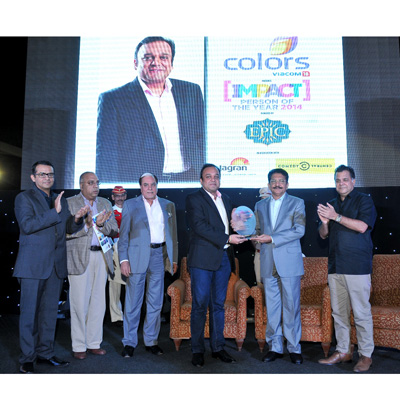
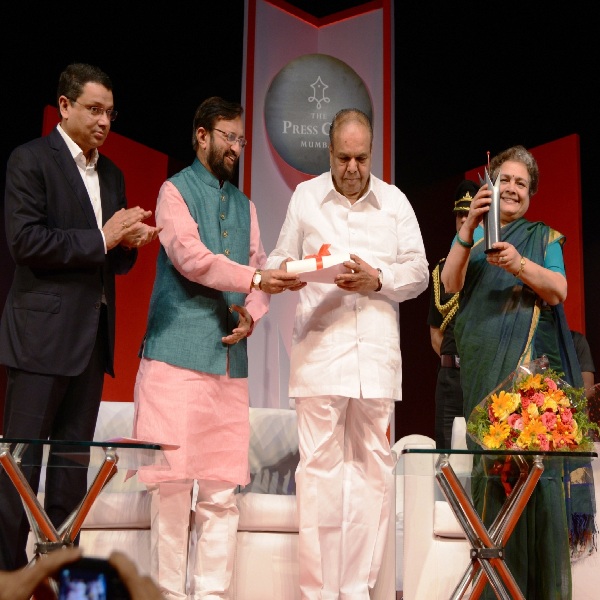
    MUMBAI: Zee Entertainment Enterprises Limited (ZEEL) MD & CEO Punit Goenka was awarded the prestigious IMPACT Person of the Year 2014 on December 05, 2014 at a glittering function held at the ITC Grand Central, Mumbai. The Governor of Maharashtra, Chennamaneni Vidyasagar Rao felicitated Goenka with the award in the presence of Essel Group and ZEEL chairman Dr. Subhash Chandra and exchange4media chairman Group Annurag Batra.


    Goenka won this award for his efforts in bringing about change in television audience measurement in the country, driving profitability in the broadcast sector and steering ZEEL to a steady rise.


    On accepting the award, Goenka said, “It is always a pleasure to get an award which recognizes your achievements, and for making a difference to the industry. But for me, this is a special one, since it also recognizes and applauds the human side and hence titled as ‘IMPACT Person of the Year’.”


    Goenka further added, “I would also like to take this opportunity to thank our Chairman, Dr. Subhash Chandra, for it is his pioneering vision and guidance, which makes us stand tall today ; my wife, Shreyasi, who has been a great support to me ; and of course my entire team at ZEE.”


    The Governor of Maharashtra, Chennamaneni Vidyasagar Rao, in his keynote address, congratulated Goenka, saying, “Goenka has not only risen through the ranks to head ZEE but has expanded its global footprint by offering an amazing variety of content through its channels.”


    The nominees for the 10th edition of the IMPACT Person of the Year were Sam Balsara, Chairman and Managing Director, Madison World, Piyush Pandey, Executive Chairman and Creative Director – South Asia, Ogilvy & Mather India, Prasoon Joshi, Chairman, McCann WorldGroup APAC & CEO, Punit Goenka, MD & CEO, ZEEL, BD Park, President & CEO, Samsung S West Asia and Sachin Bansal & Binny Bansal, CEO & COO, Flipkart. The selection process for IMPACT Person of the Year 2014 was handled by IMRB International. After receiving nominations, the final voting was done by a select few from across the advertisement, media and marketing fraternity. IMPACT’s editorial team then analysed the results to arrive at IMPACT Person of the Year 2014.


  • Abhijit Avasthi bids adieu to Ogilvy

    Abhijit Avasthi bids adieu to Ogilvy

    MUMBAI: The national creative director of Ogilvy, Abhijit Avasthi, has decided to move on from the agency after almost 15 years.


    Known as one of the gems of Piyush Pandey, Avasthi has been instrumental in some of the memorable ad campaigns for brands like Coca Cola, Cadbury, Fevicol etc.


    “Advertising has taught and exposed me a lot of things. Taking these learnings, I want to move on to do something which I love over and above advertising,” says Avasthi and adds, “It would have been unfair on both me and Ogilvy if I cannot give my 100 per cent to what I love doing.”

    “Both Piyush and Rajiv (Rao) have been aware of my intentions for a while now and have been very supportive about it,” he says while adding that his exit was planned well so that things don’t fall out of place at the agency.


    With an engineering background, Avasthi started his advertising career in 1997 at Enterprise Nexus as a trainee writer. After working there for two years, he went on to join Ogilvy as creative supervisor. In 2002, he was then made creative director and in 2005 was elevated as group creative director.


     “I’m taking a break to figure out what should be my next move,” he informs.


    A memo regarding his exit was sent out on 28 October 2014 to the employees. “He is currently serving his notice period and will be associated with the agency till end of November,” says a source within the company.


    The memo reads:


    After a stunning performance as National Creative Director Ogilvy India, Kinu has opted for a creative twist in his professional story.  He has chosen to go independent and would also be pursuing some of his other interests.  Consequently, he will give up his responsibilities as N.C.D. as of 30 November 2014.  However, Ogilvy India is the first to associate with Kinu in his new endeavour and he will be our Creative Consultant on a few key projects.  Kinu will also partner Rajiv and me in developing and implementing a robust on-going creative training programme for Ogilvy India.


    Kinu’s contribution to our creative reputation, first as a senior creative team member and then as N.C.D. with Rajiv Rao, has resulted in the new age creative revolution at Ogilvy.  He has helped build great brands, client relationships and a super strong creative culture in our organisation.  His reputation extends beyond India and he is respected as one of India’s most talented creative professionals.


    Rajiv Rao will take full charge of the National Creative responsibilities and will discuss the creative responsibilities of current creative leaders over the next few weeks.
     

    Meanwhile, we salute Kinu for his immense contributions and wish him the very best in his next inning.


  • OgilvyOne Mumbai does India Proud in WARC100

    OgilvyOne Mumbai does India Proud in WARC100

    MUMBAI:  We are very pleased to announce that OgilvyOne Mumbai has featured in the global ranking by WARC100. OgilvyOne Mumbai is ranked the 5th Smartest Digital Agency in the World.  


    WARC100 has recently announced its worldwide ranking of The Smartest Digital Agencies in 2014 and OgilvyOne Mumbai is the only Indian digital agency to feature in the top 5. No other Indian agency featured even in the top 100!!


    Vikram Menon, President OgilvyOne Worldwide, India: We can’t help feeling a sense of immense pride at being ranked the 5th Smartest Digital Agency in the World among the WARC100. This is an extremely competitive space which is why this ranking is tantamount to an endorsement and recognition of OgilvyOne’s capabilities and talent in India; we are also grateful that our clients give us the opportunity to do quality work for their brands.


    Piyush Pandey, Executive Chairman & Creative Director, Ogilvy South Asia: This ranking is an enormous credit to OgilvyOne’s digital team in India. I am happy and proud of this achievement.  OgilvyOne India’s accolades in the past month have reinforced the Ogilvy India network’s brand building capabilities particularly in the digital domain.  The WARC100 ranking is credit to our creative reputation not just in India but also around the world.

     
    The WARC100 is a benchmark for commercial creativity, allowing agencies to compare their performance with their peers. It is an annual list of the world’s best campaigns, agencies and brands, based on their performance in effectiveness and strategy.


  • Hero ISL launches campaign heralding birth of a footballing nation

    Hero ISL launches campaign heralding birth of a footballing nation

    MUMBAI: The most eagerly awaited football league in the country; Hero Indian Super League launched its official TV campaign on 7 September with a panoramic 100 second film capturing the hope of people wishing to see the building a footballing nation.


    The first TVC sparks the start of the league’s lead up to a 36-day, 360 degree launch marketing campaign, with opening game scheduled on 12 October 2014.


    Conceptualised by Ogilvy &Mather, the newly launched TV commercial urges Indians to be part of their very own league with a simple yet powerful phrase, “C’mon India, let’s football”. Composed by Amit Trivedi, the peppy soundtrack strives to capture the spirit of hundreds of millions of fans across India. The TVC features the fishermen of Kerala, dancers from Rajasthan, monks in the northeast and everybody who is gripped with the football fever. These fans then through their combined effort and power are seen taking the shape of a human stadium. The film ends with hope in the eyes of young kids as the sky fills with raining footballs.


    Star India marketing head Gayatri Yadav says, “The single line brief for the campaign was ‘the birth of a footballing nation.’ The creative is loyal to the magnitude of this project and brings alive the dreams, aspirations and talent that will ultimately see India take its rightful place in football world. The track is brilliant and we are confident that it’ll have the nation buzzing in anticipation for the 12 October launch of the league.”


    Ogilvy & Mather executive chairman and creative director South Asia Piyush Pandey, who feels he was born a sportsman adds, “India is a great nation which will excel in everything possible and football is our next goal. I’m extremely excited about the league and the communication. The only thing I want to hear is 1.2 billion people saying “Come on India, let’s football.”


    The film shot across 20 plus locations in India by Manoj Pillai of ThinkPot films was launched on Sunday’s T20 game – followed with a heavy promotional blitz across Star channels network.


    Indian Super League AVP marketing and commercial Srinivvasan Gopalkrishnan says, “This film showcases India’s grand welcome to the beautiful game and with it, the passion and dreams of all Indians out there.”

  • Siblings bond on Raksha Bandhan

    Siblings bond on Raksha Bandhan

    For many it is a daily struggle – how to balance their daily routines between work and perosnal life. But there are occasions when even the wealthiest man, the most powerful CEO or politician has to forget the position his/her occupation has given him/her. When he/she is at home, the role they enact is simply that of a father or a mother or a son or a daughter and for those who are fortunate enough of a brother and a sister.

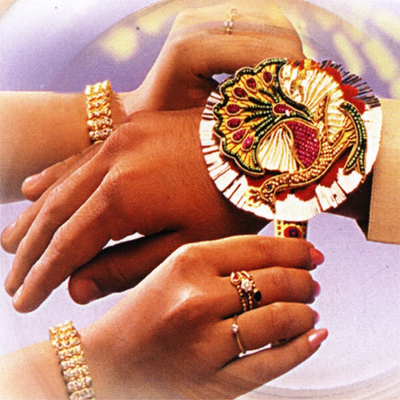
    Raksha Bandhan – a day that reminds brothers and sisters that they share a bond – for a lifetime. She ties a string on his wrist. She annoints his forehead with tikka, and does his pooja. The brother in turn promises to look after his sister, no matter what, and gives her a gift – and seeks her blesssing.  A moment that helps us connect and reminds us that we are human, that all is equal.

    On the eve of Raksha Bandhan, a pious festival, we take a look at some of the well-known brother-sister combinations in the industry. Over the years, they have created their own identities in the media and entertainment sector.  Whether it be broadcast, television, films or the government, these siblings have become powerhouses in their respective fields.

    On this special day, Indiantelevision.com features a few siblings in the media industry.

    Vandana Malik and Raghav Bahl

    The two together built an empire that recently shifted hands to another powerful person in the country. Indeed, brother sister duo Vandana Malik and Raghav Bahl gave their all to the Network 18 group in the span of two decades.

    In early 1990s when Raghav started producing shows for BBC including India Business Report, he roped in his sister Vandana to head operations from Mumbai. Vandana, a housewife,  knew zilch about the industry, took a bold step with her brother’s help and went on to be a core member of the group’s expansion in the years to come.

    Raghav stormed into the media industry with JVs with some of the big names across the world- Viacom, CNBC, CNN, Forbes, GS Home Shopping etc.

    Now with Network 18 being in the hands of one of India’s richest industrialists – Reliance Industries’ chairman Mukesh Ambani, Raghav has ventured into the hand held personalised news space while Vandana’s next venture is not yet known.

    Anurradha and Ravi Shankar Prasad

    She is the managing director of the BAG Network while her brother is the current Union Minister of Ministry of Communications and Information Technology. Anurradha Prasad and Ravi Shankar Prasad have both excelled in their fields, making their presence known wherever they go.

    While the sister is a power woman in the field of news and entertainment television, the brother is one of the country’s top leaders of Bharatiya Janata Party.

    Anurradha runs two TV channels, News 24 and E24 as well as a production house called BAG. Ravi helped establish Goa as the destination for holding the International Film Festival of India as well as led the Indian delegation to film festivals in Cannes, Venice and London.

    Ila Arun and Piyush Pandey

    The godfather of Indian advertising, Piyush Pandey, is brother of Ila Arun, the queen of Indian contemporary music. Born in Jaipur, both Piyush Pandey and Ila Arun are one of the most dynamic brother-sister duos in the media industry.

    While Ila, the singer who turned folk-pop into a craze is also a very talented writer, music director and actor, her ad-guru brother Piyush is Ogilvy & Mather India south Asia executive chairman and creative director. It was under his leadership O&M has become one of the largest advertising agencies in India. He has also penned a patriotic song ‘Mile Sur Mera Tumhara’ for the National Literacy Mission of India in 1988.

    And as Ila blends the rural and the urban traditions of India; Piyush brings the nation together through his addictive campaigns.

    Madhu Trehan and Aroon Purie

    The euphemism, two sides of the same coin, aptly suits the combination of brother sister duo Aroon Purie and Madhu Trehan. The Doon school educated Aroon is well known as the founder of the India Today group while Madhu is arguably one of India’s fiercest media critics today.

    Their father, the late Vidya Vilas Purie was a former film financer and owner of the Thompson Press who in 1975 launched a tabloid newspaper called India Today. Aroon and Madhu revived the tabloid into a fortnightly magazine initially targeting NRI’s.

    In 1977 when Madhu was pregnant she decided to move abroad to start a family. She handed over the magazine’s complete operations to her brother. When she returned to India in 1988, she launched Newstrack, a video news magazine and in 2012 she went on to launch Newslaundry a web portal that keeps a sharp check on the country’s media houses and people including those owned by her brother.

    Ekta and Tusshar Kapoor

    She is the queen of television.  Ekta Kapoor, who late into her teens was only known as Jeetendra’s daughter, is today the CEO of one of the finest production houses Balaji Telefilms in India. She was just 17 when she started working and since then, she has breathed, eaten and slept only television. Today, she also has a film production house – Balaji Motion Pictures – to her credit.

    Ekta shares a very strong bond with her brother Tusshar who is an actor. He has over 30 films under his belt. He is also the executive director of Balaji Motion Pictures.

    Nalini Singh and Arun Shourie

    They are the son and daughter of consumer rights activist, HD Shourie. Nalini Singh is a TV celebrity and senior Indian journalist who is known for her anchoring of the popular television show Ankhon Dekhi on Doordarshan. Her sibling, intrepid journalist Arun Shourie,is known for his writing in Indian Express during the emergency. He has now moved out of media to grace the hallowed corridors of power in New Delhi. He is a powerful politician, columnist and ex-Union Minister.

    Divya and Yogesh Radhakrishnan

    Known for always being on the two opposing ends of the table, Divya and Yogesh Radhakrishan are forces to be reckoned with in their respective fields. Divya set up her own specialty company, Helios Media for broadcasters after working in an agency model for over two decades. On the other hand, Yogesh, the former CEO of Prime Connect is now the director of Pioneer Channel Factory.

    Shavon Barua and Kaustav Niyogi

    She loves most things old world, fashion, travel off the map, her boys are her world and also happens to be the Havas Worldwide West + South India president. Shavon with over 15 years of experience has led major global brands like Pepsi, Nestle, Colgate, Palmolive and Lakme Lever (Unilever) at various agencies such as JWT, Publicis, Y&R, and SSC&B Lintas. Her brother is the Mad Man of the advertising fraternity. Kaustav Niyogi aka Kausti has worked with the big names like McCann Erikson, Rediffusion Y&R and Publicis as creative head. He is currently, busy directing Pooja Bhatt’s next film Cabaret.
  • Senior journalists scrutinise media at RedInk Awards 2014

    Senior journalists scrutinise media at RedInk Awards 2014

    MUMBAI: It was an awards night, albeit not for celebrities, but for the hard working journalists aka the fourth estate of the country. The fourth edition of the RedInk Awards organised by the Press Club of Mumbai saw 30 journalists from print, broadcast and online media receiving awards in various categories for their outstanding writing and research.


    Press Club of Mumbai president Gurbir Singh opened the ceremony with a few thoughts on the state of media in the country today. “Media today is in crisis. Retrenchments are happening, companies are closing, new ones are starting. There is something wrong with the way media is conducting itself. Is it a shortage of funds or the way the business is being done,” he questioned.


    His voice was not alone. A discussion followed on ‘Elections 2014: Were we fair or did we stoke the NaMo wave’ which involved IBN18 editor-in-chief Rajdeep Sardesai, Times Now editor-in-chief Arnab Goswami and Divya Marathi chief editor Kumar Ketkar alongside O&M creative director Piyush Pandey and moderated by former journalist and current Star India CEO Uday Shankar. While Sardesai and Ketkar remained critical of the role of media today, Shankar and Goswami agree that the future is very bright.


    Maharashtra governor K Sankaranarayanan and new Information and Broadcasting Minister Prakash Javadekar were the guests of honour for the evening. While Javadekar said that he would look into establishing a law to prevent attacks on press, the governor had some personal anecdotes to share regarding the media.


    “Today, as a politician, just serving the people isn’t enough. You have to be friends with journalists,” he said in what appeared to be an answer to Goswami’s earlier comment that journalists should not be emotionally connected with politicians. “Paid news is much talked off. I ask the media why do they show it and they say they don’t have money. If you ask a thief why are you stealing he says ‘I don’t have money’,” he said.


    Sankaranarayanan said that the media world in India is so competitive that if one person isn’t there another will come in his place. “I watch Arnab’s debates sometimes. Today at 9:00 pm I don’t know what has happened. He is not there. It is a great loss to the people,” he added amidst loud applause.


    Mrinal Pande who was the first woman editor of the Hindi daily Hindustan and who retired recently as the chairperson of the Prasar Bharati was honoured with the RedInk lifetime achievement award. 

  • Rajdeep Sardesai and Arnab Goswami poles apart on future of journalism

    Rajdeep Sardesai and Arnab Goswami poles apart on future of journalism

    MUMBAI: The venue: the National Centre of Performing Arts auditorium in south Mumbai. The occasion: a panel discussion that preceded the Press Club of India’s Red Ink Awards. On stage were IBN18 editor-in-chief  Rajdeep Sardesai, Times Now editor-in-chief Arnab Goswami, and Dainik Divya Marathi chief editor Kumar Ketkar, O&M national creative director and chairman Piyush Pandey. And for a change it was they who were grilled by Star India CEO Uday Shankar, a former journalist himself. The topic: Elections 2014: were we fair or did we stoke the NaMo wave?’

    Shankar set the pace for the panel when he spoke first, stating that it is he who would be asking the questions and no one would be allowed to answer – in all probability taking a jab at Arnab. As the audience burst into laughter,  he then told Rajdeep to open the debate by speaking his mind.

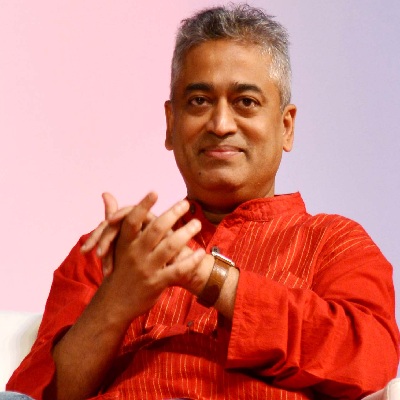
    Dressed as casually as one can get, in a red kurta, simple trousers and chappals, Sardesai delivered a hard hitting monologue on Modi and the kind of journalism that exists in India now.

    “Modi had the most  innovative and sustained campaign that we have ever seen in an Indian election,” he said, while pointing out that Congress president Rahul Gandhi was like a kid in kindergarten in front of Modi. But he also said that it was unfair to blame the media for creating the NaMo wave.

    “Some channels have abandoned the basic role of media. They are now doing cheerleading or supari journalism to get more viewers and ratings. Modi was not subject to the intense scrutiny in the last two years that the others were subject to. While he was brilliant with his social media strategy and communication he was spared the ignominy that others were subject to. Some channels elevated Narendra Modi to God. He is a good politician and communicator but not a messiah. Some journalists need to ask themselves if they want to do journalism or hagiography,” he added.

    On the other hand, Arnab instantly put himself and his channel in the spotlight by stating that one of the positives of being located in Mumbai, far away from the hub of channels (Noida) was that it keeps him disassociated with politicians.

    “I am not romantically involved with any political party so I don’t end up having a bitter break up with them. My distance with politicians is both physical and psychological. We in India are overawed by them. Modi was the focus because there was no competition. We are not dependent on politicians for ratings. There is no scientific evidence that Modi gets ratings,” he said while also stating that he wasn’t aware of this supari journalism that Rajdeep referred to.

    “The next 10 years of journalism to me are very bright,” said Arnab. A view that Shankar totally endorsed. Said he: “The future of journalism is bright because we do something that is essential to the society. We should not be cynical about the media, without them the country would not have been what it is.”

    However, Arnab’s view seemed to have irked Rajdeep who in the latter part of the discussion said, “We can state that in 10 years things will be great and things are going to change, but arrogance is the downfall of every journalist! At our time, it was never that what the anchor said would matter more than what the guests said.”

    Ketkar who comes from the print side of the media and was the senior most scribe on the panel let loose his spleen as he lambasted the electronic media for sidetracking and sideswiping print publications.

    “It is the electronic media that sets the tone for the next day’s morning headlines in the paper by these discussions. The people don’t set the agenda, the media does. The media has covered how miserable Bihar is but no mention of the Gujarat floods when Modi was campaigning at the height of his campaign trail. So, it is not just that you have to speak more about something, but by also not showing something you can stoke the fire,” he said.

    While the three editors did not refrain from taking digs and potshots at each other for the kind of journalism that is being resorted to, it was Piyush Pandey – the man behind the Narendra Modi election campaign –  who gave his insights on what led to NaMo wave. He pointed out that no matter what Modi did, he never gave the media a chance to ignore him; he made sure he was in the public eye, consistently giving out the right message that the public wanted to hear. “The media rode the Modi wave. It did not create it,” he said.

    While the very topic was sidelined, the editors were deeply engaged in pontificating on the state of journalism in the country with Goswami being the most optimistic about it.

    Having recently taken a month long break from his editorial duties, Rajdeep was the most vocal about the fact that news television needs to find its bearings quickly.

    “The idea that the television makes or breaks will not hold anymore. I really think that we have lost the capacity to go beyond the dramatic headline. We have lost our nerve. We need to introspect and ask ourselves : are we willing to do a serious interrogation of the Gujarat model, positive and negative?” he questioned. The fact that the BJP did well in places where cable TV did not reach efficiently was also brought out by Shankar and Sardesai.

    While the discussion didn’t see any real conclusion, it did end with a valuable point to ponder: whether journalists were getting too emotionally involved with politicians?

    Shankar had the last word on this. Said he:  “I think there is too much reverence even now in Indian media and on the other hand, there is too much emotional attachment. Either we are just cynical or when we go there we get sucked in. There has to be a balance in between. Overall, I think we shouldn’t be cynical about media. We have lots to capture and improve but without the media, this place, this country would be much worse.”

  • Ogilvy Mumbai scores a double whammy at the AME

    Ogilvy Mumbai scores a double whammy at the AME

    MUMBAI: Continuing its dominance at the ‘Effectiveness Awards’ shows, Ogilvy Mumbai enjoyed a stellar night at the AME’s (Asian Marketing Effectiveness Awards) held in Singapore on the 29 May.


    Ogilvy South Asia executive chairman & creative director Piyush Pandey said, “I am truly delighted at this wonderful performance.  It is all due to opportunities given by clients and the fantastic delivery of our battery of young men and women.  We value effectiveness which is achieved through high levels of creativity. Cheers to Ogilvy Mumbai and Geometry Global (the activation arm of Ogilvy).”


    On the back of big wins for Lifebuoy Roti & Google Reunion along with other wins on Vodafone, Mondelez, Fevicol and Akanksha, Ogilvy won a total of 17 metals thereby winning the twin titles of Asia Pacific’s Most Effective Agency Office of the Year & Media Strategy Agency of the Year. The AME’s recognise campaigns that demonstrate effectiveness in delivering a return on the marketing investment.


    Commenting on the win Ogilvy Mumbai head of planning Kawal Shoor, who was at the awards said, “This reaffirms that obsession with ‘The Work’ pays. Everything else is irrelevant. Every time I went up on stage to pick a trophy, I felt there were many of us going up together – my creative and account partners, my planners and my friends who are called clients.  I wish my brother-in-arms, Navin was there with me as well.  Ogilvy Mumbai winning the agency-of-the-year in Asia Pacific not just for effectiveness, but for media – through a panoramic bunch of work – not just film, is a good sign that we’re ready for tomorrow.”


    Ogilvy Mumbai head Navin Talreja added, “For the last two consecutive years we have won the title of the Most Effective Agency Office in the World but somehow Asia Pacific eluded us. Until now. At the beginning of the year, as an office, we committed to make it happen in Asia Pacific and so this is a wonderful feeling. A lot of blood, sweat and tears of creative teams, planners and account management has made this happen. A big salute to them all. And most importantly a big thank you to all our clients who keep partnering us and our crazy ideas helping us reach greater heights.”


    Ogilvy India  national creative director Abhijit Avasthi, the man behind the work that wins in the market place concluded, “This win reinforces our belief in the power of creativity and the Ogilvy way of doing things. Our clients are our biggest supporters, so a big thank you to them.”