Tag: Piyush Gupta

  • Piyush Gupta resigns as group CTO of TV Today network

    Piyush Gupta resigns as group CTO of TV Today network

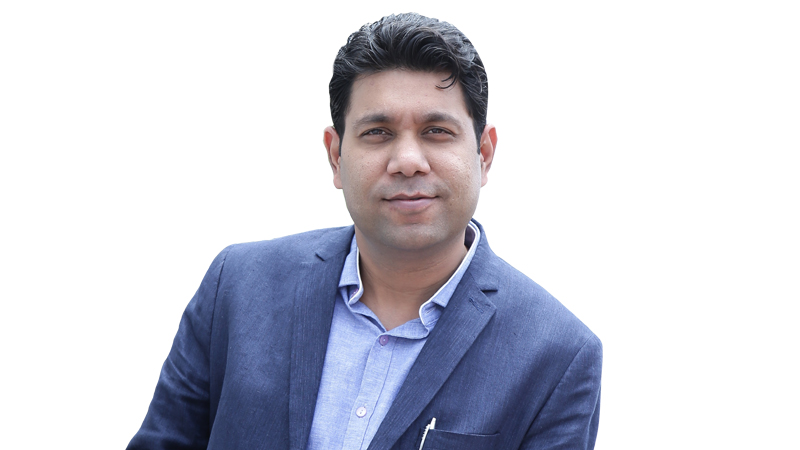
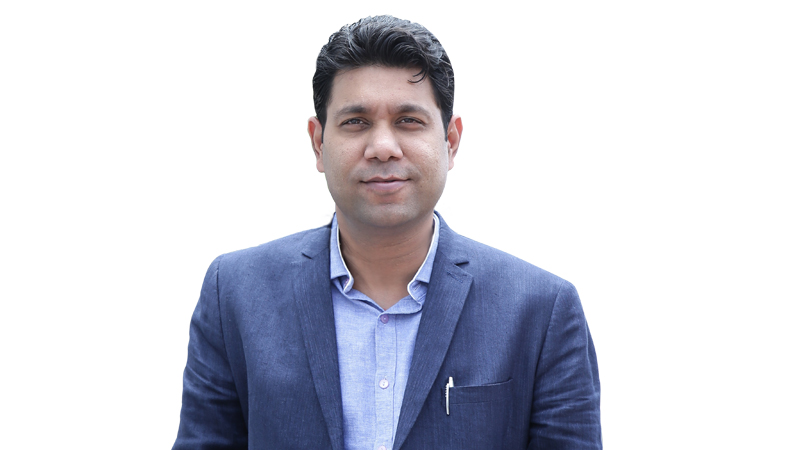
    MUMBAI:  TV Today network has announced the resignation of Piyush Gupta from his position as group chief technology officer. Gupta submitted his resignation via letter, indicating his intent to pursue new opportunities elsewhere. The company has accepted his resignation, and he will officially relinquish his duties at the close of business on 15 April 2025. TV Today informed the Bombay stock exchange about his resignation through a regulatory filing.

    Piyush Gupta has had a distinguished career in the broadcasting industry, having served as Group CTO at TV Today since January 2015. Prior to that, he spent 15 years at Network18 Media & Investments Limited, where he played a pivotal role in launching several prominent channels, including CNBC TV18, CNN IBN, and others. His extensive experience includes overseeing technology and operational processes that significantly contributed to the growth of the network.

    Gupta began his career at Television18  India and also served as a senior engineer at NDTV, bringing a wealth of technical knowledge and leadership experience to his roles. He holds a bachelor’s degree in electronics engineering from Delhi University.

    As TV Today Network prepares for this transition, Gupta’s contributions to the organization and the broadcasting sector will certainly be remembered. For further information, please contact TV Today Network’s corporate communications team.
     

  • The role of social media in building brand loyalty for virtual retailers

    The role of social media in building brand loyalty for virtual retailers

    Mumbai: Virtual retailers are exploring the power of social media to build brand loyalty. Social commerce, which allows brands to sell directly through social networks, has transformed online shopping. It is anticipated to touch $1.698 trillion in sales by the end of 2024, as per Statista.  For virtual retailers, social media is building brand loyalty and offering long-term benefits:

    Connecting with Customers Where They Are

    One of the key advantages of social media for virtual retailers is the ability to meet customers in their preferred digital spaces. With over 80% of online users in countries like Thailand, India, and China actively engaging in social shopping, retailers have a unique opportunity to interact with their target audience directly. By establishing a strong presence on platforms like Facebook, Instagram, and TikTok, virtual retailers can create seamless shopping experiences that align with consumers’ daily social media habits.

    Creating Immersive Brand Experiences

    Social media platforms offer virtual retailers innovative ways to showcase their products and create immersive brand experiences. For instance, augmented reality (AR) features allow customers to virtually try on products or visualize items in their homes before making a purchase. This technology not only enhances the shopping experience but also builds confidence in online purchases, fostering trust and loyalty towards the brand.

    Building Brand Loyalty

    User-generated content (UGC) is a powerful tool for building brand loyalty on social media. By encouraging customers to share their experiences, reviews, and photos of products, virtual retailers can create a sense of community around their brand. This authentic content serves as social proof, influencing purchasing decisions and strengthening the connection between the brand and its customers. The trending hashtag #TikTokMadeMeBuyIt is a prime example of how UGC can drive sales and brand engagement.

    Personalization and Targeted Marketing

    Social media platforms provide virtual retailers with rich data about their customers’ preferences and behaviours. This information enables retailers to create highly personalised marketing campaigns and product recommendations. By delivering relevant content and offers to individual users, retailers can enhance the customer experience and increase the likelihood of repeat purchases, ultimately building long-term loyalty.

    Facilitating Direct Communication

    Social media channels offer virtual retailers direct lines of communication with their customers. Prompt responses to inquiries, addressing concerns, and engaging in conversations help build trust and show that the brand values its customers. This open dialogue can turn potential issues into opportunities to demonstrate excellent customer service, further solidifying brand loyalty.

    Influencer Partnerships

    Collaborating with influencers and creators can significantly boost brand loyalty for virtual retailers. These partnerships allow brands to tap into established communities and benefit from the trust influencers have built with their followers. According to a Forrester survey, 46% of consumers who participated in back-to-school shopping in 2023 bought directly from social media ads, highlighting the potential impact of influencer marketing on purchase decisions.

    Hosting Live Shopping Events

    Live shopping events on platforms like Facebook, Instagram, and TikTok offer virtual retailers an exciting way to engage with customers in real-time. These events combine entertainment, product demonstrations, and instant purchasing capabilities, creating a sense of excitement and exclusivity that can drive sales and foster brand loyalty.

    Rewarding Customers with Loyalty Programs

    Virtual retailers can use social media to create and promote loyalty programs that reward customers for their engagement and purchases. These programs can include exclusive discounts, early access to new products, or special content for followers. By integrating these loyalty initiatives with social media platforms, retailers can increase customer retention and encourage repeat business.

    Creating Educational Content

    Virtual retailers can use social media to share educational content about their products, industry trends, and relevant topics. This approach positions the brand as an authority in its field and provides value to customers beyond just selling products. By consistently offering helpful information, retailers can build trust and keep their brand top-of-mind for future purchases.

    Using Data

    Social media platforms provide virtual retailers with valuable insights into customer behaviour and preferences. By closely monitoring engagement metrics, sales data, and customer feedback, retailers can continuously refine their strategies to better meet customer needs and expectations. This data-driven approach allows for agile decision-making and helps maintain relevance in a competitive market.

    Social media is changing the game for virtual retailers. It is not just about selling anymore – it is about building real connections with customers.

  • DBS Bank India launches India-Singapore Connect with CNBC-TV18

    DBS Bank India launches India-Singapore Connect with CNBC-TV18

    Mumbai: The India-Singapore relationship has emerged as one of the most important partnerships in the context of the ‘Asian Century’. Underpinned by a rich history of cultural and commercial connections, complementary strengths and shared priorities, the India-Singapore corridor has been growing in prominence for many years. To further strengthen these ties, DBS Bank India is launching an initiative that will bring together stakeholders from diverse sectors in both countries to identify synergies and create opportunities for charting a mutually beneficial way forward.

    Since opening its first office in Mumbai in 1994, DBS Bank has now been present in India for 30 years. The bank’s partnership with CNBC-TV18 to launch the ‘India Singapore Connect’ is also a celebration of this milestone, by further deepening the dialogue and the exchange of ideas and best practices. This effort will spread over the rest of the year and will also leverage DBS Bank’s established linkages in both Singapore and India to include perspectives from government leaders, CEOs, entrepreneurs, economists and opinion leaders that will help contextualise key themes that are relevant to this corridor, covering regional trade, investment flows, innovation, emerging technology, sustainable development and cross-cultural interests.

    Speaking on the launch of the campaign, DBS Bank India managing director and CEO Surojit Shome said, “As we celebrate three decades of growth in the country, DBS Bank reaffirms its commitment to India and to continuing to deliver value to customers as a trusted partner over many more decades to come. We envision the ‘India-Singapore Connect’ to be both a celebration of strong bilateral ties, while also looking ahead to further deepen existing relationships and forging new ones through meaningful interchange between both countries. As the largest bank in South-East Asia, it is a privilege for DBS to be able to catalyse greater collaboration between India and Singapore.”

    This milestone program will kickstart with a curtain raiser episode featuring an interview with DBS Group CEO and director Piyush Gupta led by CNBC-TV18 managing editor Shereen Bhan, focusing on how the paradigm of the India-Singapore corridor has evolved and how its strengths can serve as a blueprint for developing successful economic and people-to-people relationships between the nations. It will conclude with an exclusive event – the ‘India-Singapore Connect Summit’ to be hosted in Mumbai, which will see thought leaders and dignitaries from across the region share insights and actionable pathways for inclusive growth.  

    “As India’s premier business news platform, we at CNBC-TV18 are passionate about curating meaningful conversations and focusing on issues that matter. We are proud to partner with DBS Bank India on the ‘India-Singapore Connect’ campaign that touches upon many transformational trends, as seen through the eyes of corporate and cultural leaders in two of Asia’s fastest-growing economies. It presents us with an invaluable opportunity to combine forces with DBS Bank to help develop an important bilateral relationship”, said CNBC-TV18 managing editor Shereen Bhan reflecting on the significance of the campaign.

    DBS Bank India Limited is the first among the large foreign banks in India to start operating as a wholly owned, locally incorporated subsidiary of a leading global bank. As a trusted partner, DBS provides a range of banking services for large, medium, and small enterprises and individual consumers in India, focusing on a seamless customer experience that helps them ‘Live more, Bank less’.

  • Virtual shopping spree: How augmented reality on social media enhances the retail experience

    Virtual shopping spree: How augmented reality on social media enhances the retail experience

    Mumbai: Nowadays, convenience is paramount when it comes to shopping. Consumers want an easy way to try on clothes, visualize how furniture will look in their homes, and generally “try before they buy.” Thanks to augmented reality (AR) technology, these immersive experiences are increasingly prevalent across the retail space.

    AR allows brands and retailers to introduce engaging new shopping experiences like virtual fitting rooms, digital try-ons, and color-matching for everything from paint to makeup to hair dye. By implementing AR, customers no longer need to physically try on items or second-guess how a purchase will look in their space. It eliminates the uncertainty of shopping.

    Ultimately, AR reduces product returns, increases customer engagement, and fosters long-term brand loyalty. According to research by G2, 61% of consumers prefer retailers offering AR experiences. It is no surprise retail accounted for 5% of global AR usage in 2022, with that number continuing to grow each year. Snapchat even predicts nearly 75% of the global population will frequently use AR for shopping by 2025.  

    Brands worldwide are using AR to create targeted marketing campaigns, boost engagement, and deliver personalized shopping journeys. For example, Nike’s AR app Nike Fit lets users measure their feet to find the perfect shoe size and visualize how different sneaker styles and colors look on their feet. The app improves sizing accuracy by 60% and reduces returns by 50%.

    Similarly, Converse’s Sampler app enables shoppers to virtually try on hundreds of shoe styles from multiple angles using their smartphone camera. This immersive experience has increased conversion rates by 30% and time spent in the app by 50%.

    So, what are the key benefits of AR in retail?

    Reduced Returns

    Allowing customers to virtually try before buying dramatically cuts down on product returns and related costs for retailers.

    Increased Engagement

    Shoppers can experiment with makeup shades, try on eyeglasses, and visualize outfits without lifting a finger, keeping them actively engaged with brands and products.  

    Enhanced Loyalty  

    Delivering seamless, personalized shopping experiences builds lasting customer loyalty and repeat business.

    Valuable Data

    Brands gain insights into customer sizes, preferences, and behaviors to inform inventory and marketing decisions.  

    Boosted Sales

    Customers are more likely to purchase items they can confidently preview in a realistic setting.

    Leading brands are finding innovative ways to integrate AR into the retail experience across channels:

    Color Matching

    AR helps match paint colors, cosmetics, and more to a customer’s surroundings or skin tone by overlaying the shade onto a photo for an accurate preview.

    Virtual Fitting Rooms

    Brands like Gucci use AR to let shoppers virtually try on clothing items to find the right size, fit, and style from the comfort of home.

    Interactive Displays

    In-store AR displays allow customers to browse extended product catalogs, personalize items, and ensure a great fit or shade match.

    Virtual Try-Ons

    Similar to fitting rooms, AR lets shoppers virtually try on accessories like eyeglasses or hats before purchasing. Warby Parker’s app uploads a selfie to preview frames.

    Space Visualization

    Customers can use AR to envision how large furniture pieces will look and fit in a room versus relying on guesswork.  

    Gamified Engagement

    Starbucks has used AR to engage customers by letting them scan cups to unlock animated scenes, encouraging brand interaction.

    As this technology continues evolving, augmented reality shopping experiences are set to become the standard. Several companies are already implementing AR throughout the customer journey to deepen connections and redefine what is possible in retail.

    The following article is attributed to Vosmos CEO Piyush Gupta. 

  • How technology has democratised news production

    How technology has democratised news production

    MUMBAI: The newsrooms of today are much evolved than what they were a decade ago. They are spending millions of dollars every year to make systems and processes more efficient so that the news churn out rate is faster and more mobile. Technology is being leveraged in unexpected ways to cater to a dynamic audience.

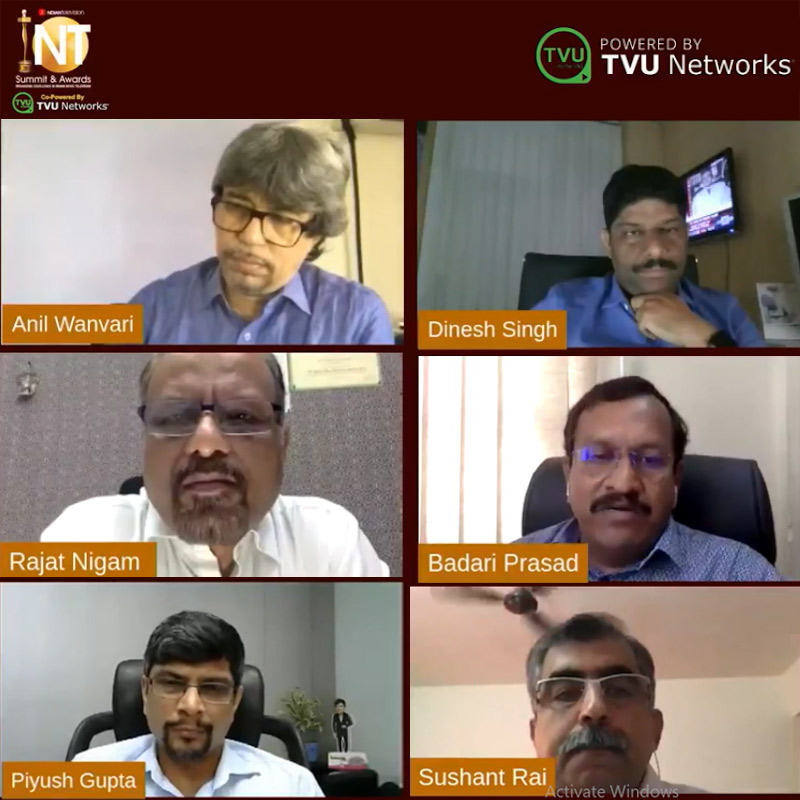
    On day one of the NT Awards 2020 Summit, industry experts came together to examine these unprecedented changes taking place in the news business, and discussed how news organisations are navigating the Covid2019 crisis and strengthening their operations for a better tomorrow.

    The panellists were Network18 group chief technology officer Rajat Nigam; India Today group chief technology officer Piyush Gupta; NDTV Ltd chief technology officer Dinesh Singh; TV9 technical head S Badari Prasad; TVU Networks VP – sales South Asia, Middle East & Africa Sushant Rai. The session was moderated by indiantelevision.com founder, CEO & editor-in-chief Anil Wanvari.

    Badari stated that while challenges exist in the industry, the pandemic has given them an opportunity to learn and experiment with new things, which they never did or thought of before. "We tried remote production, remote graphics, remote editing and luckily many of us have become successful in achieving the output on television,” he said.

    Rai mentioned that the transition to moving beyond legacy devices had started a while ago, and Covid2019 was only the catalyst for bigger changes. “We have been busy through the pandemic addressing these requirements of the clients. For example, we had clients who came back and said we want to reduce costs of going out on the field and using phones. We came up with something called the dual camera capability on the device on the phone rather than carrying two phones to do an interview, two chargers, two batteries, two tripods, etc. We now have the capability to simultaneously record with the front and back cam of a phone. For instance, while conducting an interview, you get the DVE output to get a picture in picture and that output can go with GSM and Wi-Fi to the station. So you reduce your cost and maintain your quality of content while using only a mobile phone on the field.”

    Breakthroughs in technology have led to democratisation of news production, in the sense that reporters and camerapersons no longer need to lug around heavy, expensive equipment, for mobile devices, can serve the same purpose equally well, explained Rai.

    “Look at the iPhone 12, the sensor they have is equivalent to studio cameras. Incidentally, we also do Dolby vision recording in the phone with HDR. You no longer need OB vans to go and cover a story, just take a backpack, connect it with a drone and send it to shoot from a different perspective altogether. have film cameras and video cameras and now you have mobile phones doing it that’s where the news is going,” he said.

    This has resulted in drastic cost reduction: instead of sending a big crew in a van and paying for VSAT connectivity and bandwidth even during non-live hours, the production unit is equipped with mobile phones and directed to the site of coverage. Besides being cost-effective, it has also considerably sped up the production process.

    “Using mobile phones and cloud technology, you get the footage in a minute or two and can immediately push it on social media platforms. This is what's happening increasingly, rather than waiting for the nine o’clock bulletin, which is the legacy way of doing things on the television,” Rai outlined.

    He went on to explain how, in this age of breaking news and viral sensations, latency between acquisition and distribution can make or break a news outlet. Consequently, media groups have stepped up their digital expansion on a war footing.

    India Today group chief technology officer Piyush Gupta said, “Social media is not a competition, it is a distribution channel. Yes, the challenges have gone up because of the opening of this easy medium."

    Rai echoed the view and described social media as an augmentation of a big monetization model. "I think the Aaj Tak digital team has four channels on satellite television, with 17 or 18 digital properties, similarly News18 also has multiple digital properties out there. Everybody is getting their digital properties faster than their regular satellite properties. This is no longer limited to English or Hindi, but extends to various regional languages as well. News has changed now, earlier families used to sit down and watch the 9 o’ clock bulletin to get updates but now you can get the updates at any time you want,” said Rai.

    Gone are the days when editorially controlled content was the domain of TV news, now it’s equally accessible on social media and the digital property of a particular news channel.

    Badari added, “People are not just relying on television for news but also on social media, which is overtaking television. TV has to compete with social media equally and all TV channels are diversifying into online platforms."

    Gupta acknowledged that the competition has increased now, but news organisations are adapting to new technologies through new mediums to generate, produce and distribute content. "The face of news production is changing, news consumption is increasing a lot and social media is one of the very largest mediums for consumers,” he concluded.

  • Kestone Integrated Marketing Services opens Singapore office

    Kestone Integrated Marketing Services opens Singapore office

    MUMBAI: In order to expand its base globally, Kestone Integrated Marketing Services has opened its office in Singapore.


    Kestone in India employs over 2,500 people with a reach in over 100 Indian and 20 international destinations. It has accomplished over 10,000 man days of projects in helping its clients grow. The intent is to carry forth this expertise and experience into other geographies as well.


    Kestone IMS president Piyush Gupta said, “Singapore being one of the open economies in the world provides us the opportunity to be client centric as well as help in meeting the marketing objectives on a global scale. Our new office in Singapore is a step in our growth to provide comprehensive and customized solutions.”


    Having worked with some big brands, Kestone focuses on a result oriented marketing solutions through an integrated approach.


    “Kestone’s expertise lies in designing and engineering ideas that form an integral part of an accurate marketing mix,” added Gupta.