Tag: Pirates of the Caribbean

  • Adam Sandler is highest paid actors: Forbes

    Adam Sandler is highest paid actors: Forbes

    MUMBAI: As the year comes to an end, Forbes listed Hollywood’s highest paid actors of 2014. Forbes compiled the annual ranking by looking at the estimated salaries of Hollywood’s top stars, the budget and revenue of the last three films each actor starred in before June 2014 to determine a return on investment for each actor.


    For the second consecutive year, comedian Adam Sandler topped the list, leaving behind stars Johnny Depp and Tom Hanks. According to Forbes, for every $1 Sandler was paid, he returned an average of $3.20 approximately.


    Adam Sandler’s latest film Grown Ups 2 was a hit, raking $246m at the global box office.


    Depp, the star of the hugely successful Pirates of the Caribbean films, came in second, returning an average of $4.10 for each dollar paid, because of recent flops like The Lone Ranger and Dark Shadows.


    Comedian Ben Stiller, whose film Night at the Museum: Secrets of the Tomb opened in US theaters earlier this month, ranked third with a $4.80 return, due to Tower Heist and The Watch, which did not perform well at the box office.


    Ryan Reynolds, who starred in Green Lantern, was fourth with $4.90 for each dollar paid, followed by dual Oscar winner Tom Hanks, who pulled in a $5.20 return, rounding out the top five.


    Animated and limited release films and movies featuring cameo roles were not included in the calculations.

  • Bring Aamir, Katrina as dolls to your home

    Bring Aamir, Katrina as dolls to your home

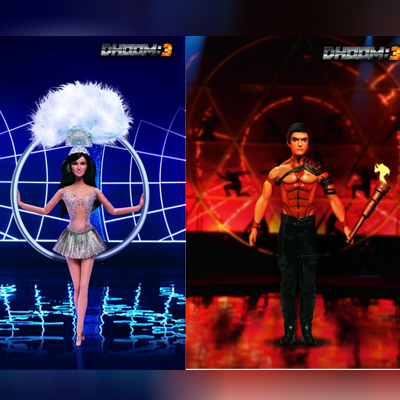
    MUMBAI: Now, it’s no more an international phenomenon as like their Western counterparts, even the Indian movie makers are opening up to launching collector dolls. India’s most popular action movie franchise, Dhoom 3 has entered the league of Hollywood blockbusters like Twilight, Pirates of the Caribbean and Hunger Games with the launch of the first-ever Indian celebrity collector dolls by Mattel.


    The highly-detailed limited-edition dolls are based on Bollywood icons Aamir Khan and Katrina Kaif as ‘Sahir’ and ‘Aaliya’ respectively, and capture the excitement of the film.


    Katrina doll, based on her character Aaliya from the movie, is an acrobat dancer who is glamour and style personified – a veritable goddess in her dazzling silver and golden attire. The look for this doll is inspired from the superhit song Malang.


    Aamir’s doll is based on his character Sahir, who not just a star performer in a contemporary circus, but secretly a cool and clever thief. His perfectly carved body and distinctive tattoo complements his ingenious mind.


    The dolls come with an ‘authenticity certificate’ which certifies them as collector items for keepsake and with autographed posters of the stars, plus an exclusive gift voucher.

  • Disney movies on demand reaches over 8 million viewers in EMEA

    Disney movies on demand reaches over 8 million viewers in EMEA

    MUMBAI: Disney Media Distribution EMEA revealed the figures for its branded on-demand service Disney movies on demand and the continued growth of ABC TV on demand and Disney channels on demand, this Mipcom.

    Since its launch at Mipcom in October 2012, Disney movies on demand, the family-friendly branded SVOD service, is now available on 12 live platforms in six EMEA territories. Disney movies on demand most recently launched on OSN in the Middle East and North Africa and Wuaki in the UK , reaching over eight million consumers across EMEA.

    The service gives customers access to a wide range of Disney’s classic animation and live-action hits including the classic animation ‘Jungle Book’, Disney Pixar’s ‘Monsters’ and ‘Pirates of the Caribbean’.

    Since its launch in 2010, ABC TV on demand has been launched on 26 platforms in 16 EMEA territories. In 2013 to date ABC TV on demand has had over 60 million views in EMEA. In 2012, ABC TV on demand launched in four new countries and on 11 new platforms, registering 33 per cent increase in reach and 80 per cent increase in total views.

    Disney channels on demand that offers popular Disney channel, Disney XD and Disney Junior series at the click of a button, is now available to 47 million Disney channel subscribers across EMEA on 55 live platforms, with further launches scheduled before the end of the year. The channel on demand has also enjoyed particular success in France, where it is now available to 4.7 million viewers with a 62 per cent uplift in viewers between July 2012 and July 2013.

    The Walt Disney Company EMEA SVP & GM media distribution Catherine Powell said, “Disney and ABC Studios content is hugely popular with viewers across EMEA and the significant growth of our branded on-demand services reflects that. We are committed to bringing our great characters and excellent storytelling to all members of the family when they want it; where they want it and how they want it. Our branded services will continue to be a focus for the future.”

  • ‘Zee Studio has concrete plans to beef up its original programming’ : Sujay Kutty – Zee Studio senior VP, business head

    ‘Zee Studio has concrete plans to beef up its original programming’ : Sujay Kutty – Zee Studio senior VP, business head

    The fight among the English movie channels is getting fiercer as new players have entered the battleground. Zee Studio has decided to go aggressive this year by upping its premiere runs on the channel. The plan is also to launch an original show every month.


    The focus this year will be to grow particularly in the smaller towns. Zee Studio is also launching a wap application to take advantage of new media opportunities.


    In an interview with Indiantelevision.com’s Ashwin Pinto, Zee Studio senior VP, business head Sujay Kutty talks about the challenges of the English movie broadcasting business and the channel’s growth plans.


    Excerpts:

    With more players joining the fray, has the English movie genre seen growth in terms of viewership and advertisers?
    As of now, there are seven players in this market. With the advent of new players, the quality and variety of movies on the small screen has definitely improved.


    We will also see unique niches being created where you will have some channels showing big premieres and others sticking to popular titles which get ratings despite being aired many times like Terminator 2, Spiderman, Pirates Of The Caribbean.

    So will you be increasing your premiere runs on the channel?
    The number of premieres has grown considerably. We have 18 premieres lined up for the year with the likes of Vicky Cristina Barcelona, The Wrestler and How to Lose Friends – all close to their theatrical release.

    Is that the key to growing your share?
    Premieres bring an element of freshness to the channel and are definitely more saleable as the films have not been exploited earlier by other channels. Also, most of the satellite premieres we pick are scheduled very close to their theatrical release which helps in ensuring a quick recall in the viewers’ minds and helps create buzz around them.

    But isn’t sourcing big title content difficult as market leaders Star Movies and HBO have the big studios behind them?
    We buy content from all the major studios and have a great relationship with Disney, Warner and Sony. Also, we have done business with studios like Fox and NBCU in the past. Moreover, a lot of independent distributors have access to first runs. There are also cinematic gems from various festivals that we pick up.

    Is a trend emerging to spruce up the English movie channels with original content?
    There is a gap in terms of local content being done in this genre. Zee Studio has concrete plans to beef up its original programming. We will unveil our second product in October-November. A host-based quiz show around movies is on the cards. While talks are on with a number of production houses, it’s a little too early to discuss the show.


    The plan is to have one show every six months. If you do it more, then the novelty can get lost. We will get into many formats except reality shows. Original content helps connect with the consumers and opens up marketing opportunities.

    With newer players entering the markets and major studios coming up with their own channels, content availability will be a source of concern

    How successful have you been in your earlier endeavour?
    As far as local programming goes, we already have Get Shorty, our short film contest for the audience. We ask aspiring filmmakers to submit their entries between 2-10 minutes in length. It is a four half-hour episode show. The filmmakers talk about their short film and why they made it. The jury includes personalities from the industry like Anurag Kashyap. Last time around 17,0000 viewers voted for what they felt was the best entry out of the 18 films that were aired.


    We are planning the third season for this show and it goes on air later this year. Currently, we are planning more shows with the basic aim of involving our audience.

    Your sister channel Zee Cafe tried localisation but the response was mixed. What lessons have been learnt from this?
    On the contrary, local productions always create talking points and an instant connect with the audience. We have got a positive response to Zee Café’s Café Mic Testing. The trick is to make the ‘homegrown’ content as interesting and unique as the shows we acquire abroad. With Café Mic Testing, we tried a unique blend of a talent hunt and a game show.

    But doesn’t your budget go up with local content?
    It does! However there are different ways to do local content. You can create a huge programme like a GEC. For us there is no need to be extravagant and have a big budget. Our aim is to get to a specific audience.


    The purpose is two fold. Firstly you create affinity for the channel among viewers by showcasing homegrown talent. Secondly you build local talent as a base that can be used for the future. The ad revenue that we earn more or less take care of programming costs.

    While the share of Zee Studio has gone up marginally, it is still in the fourth spot among the English movie channels. What is the gameplan to bridge the gap?
    Zee Studio has been in the third spot for more than three weeks now. Our strategy focuses on initiatives that help us create direct consumer connect. This can be done through out-of-home marketing activities, SMS, mailers and, of course, our film club.


    We intend to partner with film societies to showcase cinemas across metropolitan cities as an extension of our movie club initiative.


    In the coming times, we are also launching an application on Wap-enabled phones that will let viewers download our weekly schedules.

    Tam data shows that the time spent on English movie channels has gone up slightly. Zee Studio has also grown slightly but not much. What would you say are the reasons for this?
    With more channels entering the genre, a viewer has many more options to choose from. Moreover, viewers have a wider choice for entertainment that is not restricted to television alone. So the time spent is not likely to show a significant increase across any channel in the genre.

    Going forward, do you see viewership growth coming in from the small towns and cities or would metros be the main focus?
    There is potential in the small towns and cities as well. Our subtitling speaks to this segment of audience. It is about targetting people who understand English, but have difficulty following the dialect. Subtitling helps them associate what is being said to the story. We have, thus, built our second rung base in places like Jaipur and Gujarat.

    What role has subtitling played in growing the channel’s reach?
    We pioneered the initiative of subtitling for English films in India, starting it as early as August 2007. We realised that English is spoken very differently in different parts of the world, especially when you take into account colloquialisms, local slang and even sentence construction.


    Subtitles invariably aid the user in tiding over these differences and absorbing the film in its entirety. Post introduction of subtitling, our films have most definitely reached out to a larger audience base.

    What is the focus area of Zee Studio this year?
    This year our focus is on on-ground initiatives, Shut Up and Watch film Club (Saw) and Studio Nites, the movie song karaoke championship.


    Saw is aimed at taking quality cinema to the genuine movie enthusiasts across the country in the unique setting of a bookstore. Meanwhile, Studio Nites are evenings of ‘Karaoke,’ conducted at popular restaurants and clubs celebrating “music from the movies”. Here, patrons win prizes from the channel for singing along to movie soundtracks.

    What are the programming initiatives you have taken in the recent past?
    Over the last six months, Zee Studio has made constant efforts to bring its audience some great programming content. January saw three weekends with the telecast of High School Musical 1 and 2 and a back-to-back telecast of the two films with just one commercial break. To generate excitement around High School Musical, Zee Studio announced Music For Charity. This was an online auction of a guitar autographed by Farhan Akhtar, Luke Kenny, Shankar-Ehsaan-Loy and Vishal-Shekhar on its official website, www.zeedio.tv. High School Musical had an instant connect with the younger audience.


    Moreover, we created some properties keeping the audience’s needs in mind. One of these was ‘Two Timing’ where we would telecast two movies of a popular superstar back-to-back. The other is the ‘In Express Highway’ wherein a movie and its sequel are telecast back-to-back with just one break on Saturday afternoons.


    From 1 April, Zee Studio moved its primetime to 9 pm following research findings that a majority of the audience tune in at 9. April also saw the introduction of Sunday Noonatics. This is a slot for light/entertaining flicks keeping the relaxed Sunday mood in mind.

    What can we expect going forward?
    We plan on introducing new festivals every month to give the channel a fresh and ever-changing look. This month Zee Studio will air Desi Tadka, a festival of films with an Indian connect.


    September will have a lot of family movies. Going forward, viewers can look out for a Woody Allen Fest, Cinematic Jewels (critically acclaimed films) and more.

    In a genre that is title-driven, how big a challenge is it to build brand loyalty?
    At the end of the day, content is king. Marketing initiatives go a long way in driving brand awareness – be it on-ground initiatives, radio activations, print ads, hoardings, mobile marketing. They all ensure that a channel enjoys top-of-the-mind-recall when viewers are surfing the box for English movies.
    Some English film channels do programming blocks for different TGs. Others do not. What are the pros and cons of this?
    Programming blocks work well if one has a large library of films targeted towards each target group, absence of which results in repetition. It does help in clear communication, though, and also appointment viewing.
    To what extent have acquisition costs gone up in recent times with new entrants?
    It all depends on what you buy, keeping in mind the RoI as well as the channel image. So the acquisition cost keeps varying every year.
    What are the challenges that English movie channels face in India?
    With newer players entering the markets and major studios coming up with their own channels, content availability will be a source of concern. However, one has to wait and watch.
  • ‘The game development and design visualisation markets have grown the quickest for us’ : Rob Hoffman- Autodesk Global product marketing manager media and entertainment division

    ‘The game development and design visualisation markets have grown the quickest for us’ : Rob Hoffman- Autodesk Global product marketing manager media and entertainment division

    Autodesk which manufactures software technologies for the media and entertainment industry as one of its major activities, is looking to grow the business in India.


    Realising that a lot of production facilities in the US are doing their film, TV and gaming work from India, the company is keen to aggressively tap this market segment.


    Indiantelevision.com’s Ashwin Pinto caught up with Autodesk Global product marketing manager media and entertainment division Rob Hoffman to find out more on how the firm’s software is helping the media industry.


    Excerpts:

    For a software solutions company catering to manufacturing, building and construction, how much of revenue does the media and entertainment segment contribute?
    The 3D entertainment space is a sizeable business for Autodesk. Our core areas have always been R&D and designing products like Autocast. We cover the areas of film, television, game development and design visualisation.


    For us, the game development and design visualisation markets have grown the quickest. You now have next generation gaming consoles like Playstation 3, Xbox 360 and Nintendo. There is a huge demand for game titles.

    Could you shed light on how your solutions accelerate collaborative digital content creation workflow?
    We have 3Ds Max 2008 and Maya 2008. We have done a lot of work to accelerate the creative work that our clients do. We do this in two ways. We have worked on the two softwares so that they perform much faster on the new generation of hardware – whether they be multicore or multiprocessor workstations, latest operating systems or graphics cardsware.


    We are trying to take advantage of new technologies coming out and take advantage of the speed these technologies give our software. We have also done a lot of work with the user interface and the workflows of both our softwares. The aim is that artists complete their projects much faster. Something that takes six steps to complete in the past we have managed to reduce to three steps.


    This is a very important goal for us as it represents time savings for the artist. Modelling and animation type features have helped us achieve this. Our aim is to enable clients achieve their tasks with much more efficient tools.

    In what manner have your products been used to enhance films?
    Our 3D products are used extensively on films like Pirates Of The Caribbean, Shrek, Spiderman. Maya has been used a lot here. It has been an extensible software from the standpoint that production facilities and artists are able to enhance the software or extend its capabilities through different kinds of scripting. The software also has rich features in animation, modelling and the ability to create different types of visual effects.

    You mentioned gaming as growing the quickest. What is the work being done here?
    We work closely with the large game facilities globally to find out what challenges they face and then we try to address that within our software. We have added games specific features and functionality in the 2008 releases of our software.

    Could you shed more light on how the two products have been enhanced?
    With Maya one of the big things that artists and production facilities have been telling us is that they needed the product to run faster not just on existing hardware but also on new hardware.


    They also need the artists to work faster on the software in terms of the graphic user interface and the workflow. We have done work on modelling capabilities. We have enhanced the functionality of features that artists are used to.


    We have also done a lot of work on performance. So we have done a lot of work to take advantage of either a single core or a multicore workstation. We have rewritten a lot of the software algorithms to make it inherently faster.


    The Maya Mesh Smooth workflow, for instance, has been dramatically streamlined. You can now preview a smoothed mesh while editing the mesh cage – with a strong performance, particularly on multiprocessor workstations. Other much-requested workflow enhancements include the ability to position objects along a curve, replace objects within a scene, and convert instances to objects.


    To make it more effective on game consoles we have a new hardware shader API. With Maya clients can effectively create and display sophisticated looks for content destined for the next-generation game consoles. In particular, native support for DirectX HLSL shaders in addition to the existing CgFX support lets clients work with assets in the viewport and see them as they will be seen on the target console. Artists get better representation of the content they are creating using Maya. They don’t have to continuously go back and forth between Maya and the game engine.


    We have also done work on character animation. We have new rigging and skinning capabilities. We have got new non-destructive skin editing capabilities. The animator can now add more bones to an arm without disturbing the surface object. Maya also supports a large number of operating systems from Windows to Linux. We now also support Windows Vista 32 and 64
    bit.

    What about 3Ds Max?
    For 3Ds Max we have worked on the viewing of a large, complex scene. It has been known to work with large amounts of data. Artists can have a character with several million polygons. The performance is really good. The issue was that if the artist had tens of thousands of objects with millions of polygons the performance would be slow.


    We have worked on 3DS Max so that the artists will get the same performance with several objects that they would get working with one object.


    It is about being faster and working with larger amounts of data. Our aim is to allow the artist to focus on the art itself as opposed to focussing on the tools and spending time trying to find out how to use them. Our product also allows artists to get a better representation within the interactive environment. Clients also do not have to go through a trial and error process.


    We have done a lot of work on the pipeline. A lot of artists have used scripting as a way to automate or enhance 3Ds Max. We have made the software become more intuitive for artists who are not as technically savvy. This way the scripting capabilities are opened up for artists who traditionally would not have used it in the past.

    What advantages does Autodesk provide vis-?-vis the competition?
    Our products are industry standard software. So there are more people trained on our software. This is because our software is used widely. Artists can get a job more easily if they know how to use our software. We also spend heavily on education. We invest in building an education curriculum for schools.


    We also print our own learning tools. We have DVDs. We do community work as well. We have a community website where artists can come and share ideas. Since Autodesk is a big and stable company it allows to invest in supporting software development or customer service or technical assistance.

    Due to education programmes we are seeing the number of artists grow rapidly in India. We see India as a market that has come in and will help out the rest of the world create content

    What potential do you see in India for growing the business?
    The potential is great. Right now you are seeing more work being done in India not just to create local content but also for the global market. A large number of talented artists can be found in India. So a lot of production facilities in the US are doing their film, TV and games work from India.


    Due to education programmes we are seeing the number of artists grow rapidly in India. We see India as a market that has come in and will help out the rest of the world create content.

    How many Indian clients do you have and what is the strategy being followed to grow the business here?
    We have a huge number of artists using our software. It is growing daily. We are doing different types of awareness activities. We will be conducting roadshows across the country. We will have super user events where we will bring customers from large production facilities like Industrial Light and Magic. People will talk about projects like Pirates Of the Caribbean.


    A lot of development work for our software has been done in India. As far as partnering with Indian software firms to enhance our offerings, this is something we will always look into. It is a question of whether or not it makes sense at a certain time to do so.

    Globally who are some of your major clients and what have been the key learnings working with them?
    We have clients throughout the world. Some of them are Planet Digital in New Zealand, Industrial Light and Magic, Disney, Dreamworks in the US, The Moving Picture Company in Europe. These firms really push the capabilities of the software. So we constantly learn about their requirements and challenges.


    They do things never done before. It is about learning where the industry is going and what are the issues that will come up.

    What are some of these issues?
    There are two challenges right now. The first one is that there is a need for talented artists. If an artist has talent, any job they want can be done with any production facility in the world. This is why we work on education initiatives. We do a lot of work on learning tools and work with schools and universities.


    The other challenge is that the entertainment industry’s work is getting more complex. Films like Lord Of The Rings mean that viewers expect to see bigger and more beautiful effects. So production facilities have to constantly outdo themselves. In television we are moving from standard definition to high definition.


    The themes and characters are more complex. On the games front, the amount of data the consoles can handle is larger than the amount of content that the companies had to deal with in the past. Can software work with these large amounts of data in an efficient manner? That is what clients look for.


    With the transition from standard to high definition in television, there is a need for new software capabilities. For those working in traditional broadcasting they have to now adopt a more film like production process. The data complexity that they work with is starting to come close to film.


    The other issue that they run into is that although they are working with more complex data, their budgets are much smaller compared to film. The timelines to finish the production are much shorter. Our aim has been to see that artists get high quality of work in a less amount of time. Our software has been used in commercials, interviews as well as episodic TV shows.

    Could you talk about Autodesk’s R&D facilities?
    For 3Ds Max we have development facilities in Montreal, and Toronto. We have development groups working on the software. We also have a pure science group that works on new technologies. They work on different ways to approach problems.


    The other thing to remember is that when we develop software, we work closely with the production facilities using them. We use their knowledge to help our developers create better software. Production facilities give us their perspective and ideas on how we can better serve them.

    What role does the Autodesk reseller network play in expanding your presence globally?
    They play an important role globally for us. They are the ones who work and talk with our customers on a day to day basis. We have a close relationship with our resellers throughout the world.


    Resellers give us feedback on customer’s opinions. We also ensure that our resellers are knowledgeable and skilled. They have to be familiar with the industry they are addressing.

    What is Autodesk University?
    This is a networking event held annually. As of now, we only hold it in the US. This year it will be in Las Vegas. The event allows us to better understand the requirements of clients.