Tag: Piracy

  • Indian police crack cross-border TV piracy ring run via WhatsApp

    Indian police crack cross-border TV piracy ring run via WhatsApp

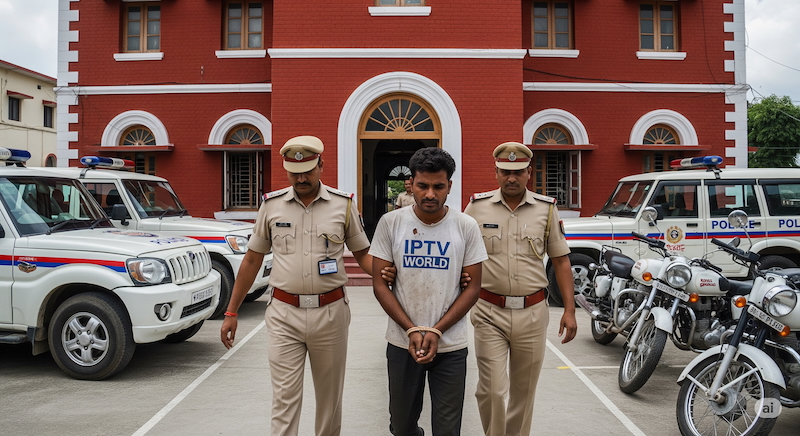
    MUMBAI: Indian authorities have dismantled an international television piracy network that streamed over 10,000 channels—including banned Pakistani networks—to customers via WhatsApp groups, in what investigators describe as the first fully exposed cross-border content theft operation.

    Police in Ghaziabad registered a case against a 35-year-old businessman accused of running the illicit internet protocol television (IPTV) service in collaboration with handlers across the border, according to StoryBoard18, which first reported the investigation.

    The probe began when officers from Tilamod Police Station traced a suspicious WhatsApp group facilitating illegal access to premium television channels. The investigation led to the blocking of 53 domains distributing pirated content under the “IPTV World” brand name.

    According to the First Information Report filed on 27 July, the accused illegally streamed copyrighted content from JioStar India Pvt Ltd and its OTT platform JioHotstar without authorisation. The pirated catalogue included popular Indian channels such as Star Plus HD, Star Bharat HD and Colors HD, alongside Pakistani networks Hadi TV and Noor TV—the latter raising national security concerns.

    Investigators discovered the accused coordinated with a Pakistan-based pirate, paying in cryptocurrency to obtain copyrighted material. The service reached customers primarily through WhatsApp groups, with payments processed via UPI accounts.

    “The modus operandi of the accused was to provide services through WhatsApp groups, which became the key lead in our investigation,” said a senior officer involved in the probe.

    The complaint filed by JioStar accused IPTV World of bypassing technical protection measures and hosting pirated content on servers linked to providers including Hostinger and GoDaddy, violating copyright, information technology and criminal laws.

    The case represents a breakthrough in understanding digital piracy’s mechanics. JioStar’s John Doe lawsuit before the Delhi high court led to the voluntary appearance of the service provider’s owner, who agreed to a permanent injunction and disclosed the network’s complete operations, including business associates, 300 infringing URLs, and distribution platforms.

    These disclosures revealed coordinated cross-border collaboration, cryptocurrency payments, and systematic circumvention of content protection measures. The entire operation—from content sourcing to distribution via WhatsApp and Facebook—was organised from Pakistan.

    The investigation marks the first time authorities have fully mapped premium content piracy’s complete lifecycle, from origin to delivery. It exposes how digital platforms initially designed for communication have become conduits for large-scale intellectual property theft.

    The case highlights broader challenges facing India’s digital entertainment industry as streaming services proliferate. Content owners face sophisticated piracy networks that exploit encrypted messaging platforms and cryptocurrency payments to evade traditional enforcement mechanisms.

    In a related development, police in Rajasthan have registered a separate case against cable operator Hazi Ali for allegedly broadcasting JioStar channels without proper licensing. The ministry of information and broadcasting had cancelled his broadcasting licence in 2024 for regulatory violations, yet he reportedly continued transmitting copyrighted content.

    The crackdown reflects heightened enforcement efforts as India’s entertainment industry pushes authorities to tackle digital piracy more aggressively. With streaming revenues at stake and national security concerns over unauthorised Pakistani content, expect more coordinated action against cross-border piracy networks.

    Whether these enforcement successes can meaningfully dent the broader piracy ecosystem remains uncertain. As investigators shut down established networks, new operators typically emerge using evolved techniques to evade detection.

    The cat-and-mouse game between content owners and pirates continues, now with WhatsApp groups as the unlikely battlefield.

  • Yupp TV helps crack down on global IPTV piracy racket

    Yupp TV helps crack down on global IPTV piracy racket

    MUMBAI: A global piracy party just got shut down—with a solid rap on the knuckles, thanks to global OTT aggregation platform the Uday Reddy-run Yupp TV. The streamer has over the past two years been working with authorities in India and the US, which has now resulted in the bust-up  of a sprawling illegal IPTV empire that’s been streaming premium Indian and international content without paying a paisa in licence fees.

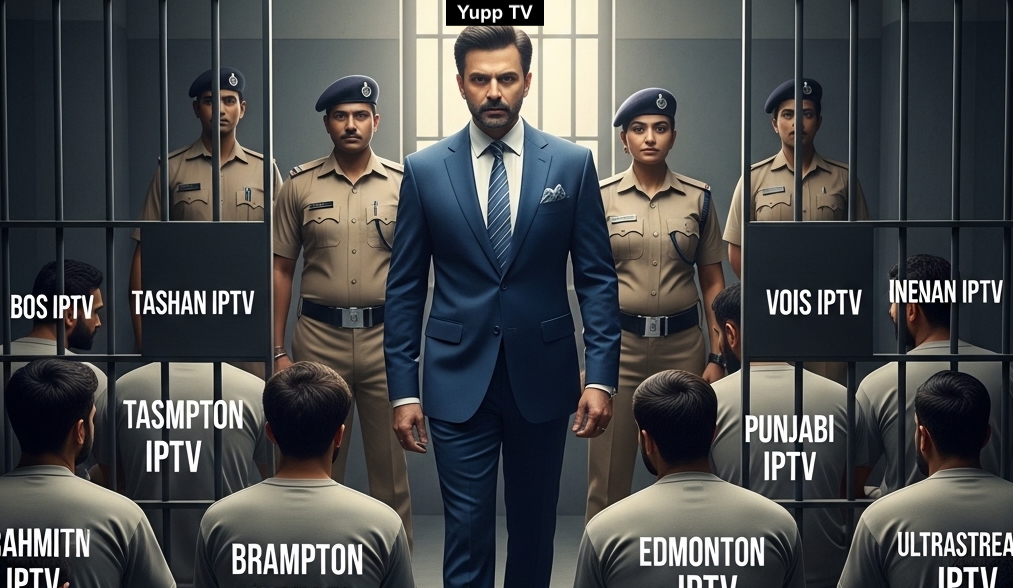
    The syndicate, operating under slick brand names like Boss IPTV, Guru IPTV, Tashan IPTV, Brampton IPTV, Punjabi IPTV, Vois IPTV, and UltrastreamTV, has been caught red-handed pushing pirated streams from the likes of Star, Sony, Zee, Sun Network, Aha, and even global OTT giants like Netflix, Amazon Prime Video, Hulu, and major international sports leagues.

    All this was being served to unsuspecting users via Android and Linux-based set-top boxes and apps on smart devices, aggressively marketed through websites, blogs, and social media—at throwaway rates far below legitimate subscriptions.

    But it wasn’t just the broadcasters who were getting robbed. Authorities say user data—credit cards, passwords, even identities—was likely being harvested and possibly linked to more sinister operations including phishing, tax fraud, and even terrorism financing.

    YuppTV, one of the legal players worst hit by the piracy plague, estimates South Asian broadcasters lose $200–$300 million every year to illegal IPTV operations. The platform triggered a previous crackdown in 2021, when a complaint led to the Faridabad Cyber Crime Branch arresting six people involved with Boss IPTV.

    The matter has now gone international. YuppTV has filed a civil suit in the United States, represented by Goldstein Law Group, LLC, citing criminal copyright violations under 18 U.S.C. § 2319. According to GLP:
    “Using pirate IPTV services may result in felony charges under U.S. law. Non-citizens could face deportation.” That is, criminal activities like watching pirated content  has been brought under the immigration customs enforcement’s (ICE’s) ambit. 

    The latest blow came from Gujarat’s Gandhinagar Cyber Crime Unit, which arrested Mohammed Murtuza Ali, allegedly the kingpin behind Bos IPTV. Based out of Jalandhar, Punjab, his operation reportedly raked in a staggering ?700 crore (roughly $84 million) annually, with over five million subscribers.

    Legal agencies are urging users to quit illegal streaming services immediately and switch to licensed alternatives like YuppTV (www.yupptv.com) to avoid falling foul of the law—or worse.

    This crackdown makes it clear: the era of “chalega yaar, sasta hai” streaming might soon come with handcuffs attached.

  • Spain’s pirate party: nearly half of OTT viewers sail the high seas of illegal streaming

    Spain’s pirate party: nearly half of OTT viewers sail the high seas of illegal streaming

    MUMBAI:  While the Motion Pictures Association (MPA)  loves pointing fingers at India for its piracy woes, they may want to swivel their gaze towards Europe. New data from consultancy firm GECA reveals that a staggering 47.4 per cent of OTT viewers in Spain are tucking into pirated content—no paid subscription in sight.

    The pirate’s treasure chest? Movies top the loot list at 32.8 per cent, followed closely by TV series (30.6 per cent) and sports (18.4 per cent).

    The biggest buccaneers are aged 18–24, followed by the slightly older but no less rebellious 25–34 crew. Even the silver surfers are getting their share—piracy among the 55+ age group has jumped 4.5 points, now clocking in at 32.6 per cent.

    Notably, piracy among 25–34-year-olds surged 5.2 points, hinting at an underground boom even among the prime-income streamers. Whether it’s a protest against high prices or just a thrill of the steal, one thing’s clear—Spain’s illegal streaming scene is alive, well, and growing.

  • Nordic households caught in the act: piracy up 16 per cent as illegal IPTV continues to boom

    Nordic households caught in the act: piracy up 16 per cent as illegal IPTV continues to boom

    MUMBAI: Piracy in the Nordics isn’t just about dodging subscription fees anymore—it’s now fuelling organised crime. New research by Mediavision reveals over 1.5 million households in the region are paying for illegal IPTV services, up 200,000 homes (16 per cent) from spring 2024. These services offer cut-price, unlawful access to premium TV channels and streaming content.

    While Finland lags slightly in pirate uptake, Denmark, Norway, and Sweden are sailing in the same leaky boat. Behind the scenes? A report in late 2024 had disclosed that the web of illegal operators had ties to trafficking and drug cartels.

    “Piracy continues to pose a serious threat to the industry,” said Mediavision.  senior analyst Adrian Grande. “As illegal IPTV keeps growing, it is encouraging that the issue is on the agenda, but it is also clear that action is needed to tackle the problem”.

    The reason: rising living costs and high OTT prices were pushing households into piracy’s arms.

    And it’s not just a fringe issue—25 per cent of 15–74-year-olds in the region streamed or downloaded content illegally in mid-2024 alone. The Nordic Content Protection (NCP) had in 2024 sounded the alarm, not just on copyright theft but its criminal underbelly. 

    To fight back, the NCP had teamed up with TV 2 Denmark, Viaplay Group, Warner Bros. Discovery, and Allente to launch high-impact anti-piracy campaigns, fronted by local TV personalities. These aired throughout 2024, hoping to shock users into realising that their dodgy stream might be bankrolling crime.

    In Norway, legislators are exploring a bold fix: a payment ban on IPTV services, similar to restrictions already placed on offshore gambling. Meanwhile, Sweden’s laws remain murky, with NCP pushing for stricter, clearer rules.

    As pirates loot the digital seas of Europe, Indian broadcasters and streamers would be wise to keep their periscopes up. How much of a revenue loss they are incurring on account of  the Nordic pilferage only a deeper inquiry can ascertain.

  • Canada’s video providers & Friend MTS partner to tackle sports piracy

    Canada’s video providers & Friend MTS partner to tackle sports piracy

    Mumbai: Friend MTS, a provider of video content security solutions, reported that several video service providers in Canada have chosen it to prevent piracy using dynamic delivery server blocking (DDSB). These companies have secured a nationwide court order to block servers hosting pirated content, including content from major sports leagues like FIFA, NBA, NHL, and UFC.

    The court order allows internet service providers (ISPs) to block access to servers distributing pirated content without needing a new order for each event. This approach saves time and money by reducing court fees and appearances, while protecting valuable sports content rights.

    Launched by Friend MTS in 2017, DDSB enables large-scale content blocking while meeting legal standards for court-granted orders. It provides customers with the necessary intelligence and evidence to persuade ISPs to restrict access to illegal servers, reducing the number of illegal streams. This helps drive viewers to legitimate platforms and preserves the value of video content. Friend MTS’ DDSB has a proven track record of blocking illicit access within minutes, particularly for short format content like sports and live events, and is increasingly used to protect linear content.

    “This collaboration shows the powerful impact that results from video service providers, ISPs, and video security specialists coming together to fight piracy,” said Friend MTS CEO Shane McCarthy. “Canadian operators are leading the global industry by setting the bar for piracy prevention in new, dynamic ways. We’re thrilled to have helped them not only implement security solutions, but to obtain the blocking order as well.  Our unique blend of expertise and blocking technology innovation is aiding their security teams, legal counsels, and business leaders with the right analytics and evidence to effectively stop piracy, without impacting legitimate websites.”

  • Piracy, LaLiga, BCCI and the Indian government

    Piracy, LaLiga, BCCI and the Indian government

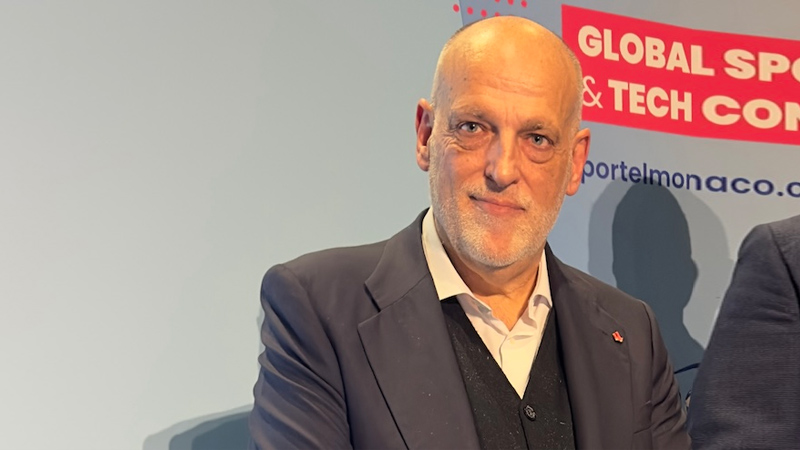
    MUMBAI: LaLiga president Javier Tebas said he is prepared to collaborate with the Board of Control for Cricket in India (BCCI) to stamp out piracy of sports broadcast and streaming signals  in Europe and all over the world.  Speaking at sports and tech conference  Sportel Monaco 2024 on 29 October during a keynote address he addressed his pet subject for the past few years once again: piracy and how big tech is aiding in its spread.

    He pointed that  piracy – especially illegal internet streaming  – is causing huge losses to sports federations, broadcasters, and advertisers with the LaLiga alone losing around Euros 700 million each season.

    His belief is that big tech companies like Google, Cloudflare, X, are actually benefiting from piracy. (He has raised his voice against Google in the past on several forums but he expanded the responsibility towards X and Cloudflare in his latest address during Sportel Monaco.)

    He explained that Google is making money through searches online and on android phones through its ads that pop up during searches for pirated sites by viewers. Downloads of illegitimate apps  on its Playstore give it oodles of money. It has no mechanism – either reactive or otherwise – to tackle piracy.

    Cloudflare is profiting by providing reverse proxy services to pirates and more than 50 per cent of rogue sites are behind it. What’s alarming according to  him is that 70 per cent of delisted content by Google is behind a Cloudflare IP.

    X, he highlighted, is monetising through advertising on pirated streams and has been delaying enforcement by not providing automatic content detection. It does not have a content moderation team, neither is it blocking illegal content on its platform.

    He appealed to sports federations to come together  and raise their voices against big tech. In this regard he extended his hand towards the BCCI welcoming it to come and be a part of the anti-piracy campaign.

    “After football, cricket has a large fan base globally and revenue leakages through piracy could be reduced by making the tech companies  culpable,” he said. “The federations, accompanied by the broadcasters, need to lobby with governments to put in place the proper legislation.”

    Tebas requested governments world over  to pass legislation that would force big tech companies to clamp down on piracy. For the “how of doing it,”  he said, they can turn to Argentina where a federal court ordered Google to block the download and use of a pirate platform Magis TV.  Prior to this, Google had cited its inability to block the android application from being downloaded, but then it was forced to.

    “We need hard measures to be put in place.If we have to stand a chance of reducing the menace of piracy, ” said Tebas in closing. 

  • Cracking down on Indian TV & streaming piracy, Italian style

    Cracking down on Indian TV & streaming piracy, Italian style

    MUMAI: Piracy has been the bane of both broadcasters and streamers for some time now. Yes, both have anti-piracy crews who spend crores of rupees behind sophisticated tools which crawl the world wide web round the clock to track illegal streams and bring down the rogue sites with the help of ISPs. 

    Even the Indian government has stepped in at times with the department of telecommunications (DoT)  directing  ISPs to take down the crooks, but more often than not the takedowns relate to what the mandarins fear could be a threat to national security,  religious sentiment, is defamatory or points fingers at the powers-that-be wrongly. 

    Could it learn from what the Italian government is doing to protect broadcasters and streamers and bring down piracy? The authorities there are not using Mafia-like tactics; they are simply putting in place stricter regulation, policing and implementation. 

    Italy has more than five million or more citizens accessing scoundrel sites costing the pay TV ecosystem (more specifically sports) – Dazn, Sky Italia, Prime Video and Mediaset Infinity –  more than €400 million  annually.

    To get an insight into what’s happening in Italy a little bit of background in sequential order would help. In August 2023, the Italian government passed a strict anti-piracy law which brought in lay viewers  into the fold of those who would be penalised with fines going up  as high as  €5,000.  ISPs would be slapped with administrative fines of 20 million lira to 500 million lira, or in today’s currency – €10,00  to €265,000.  Those involved in the supply/distribution of infringing IPTV streams would  face up to three years in prison and a fine of up to €15,000.

    Then on 31 January 2024, Lega Serie A (the governing body of football  in Italy)  launched an anti-piracy platform Piracy Shield which is operated by the nation’s Communications Regulatory Authority, AgCom. Its purpose was to identify and penalise those who are watching –  mind you, those who are WATCHING –  pirated content, and even those who are streaming it. Piracy Shield was designed to block illegal streaming within 30 minutes of detection by targeting both IP addresses and domain names.

    In March 2024, Italians  received reminders that fines were on the way, even for those who download illegal sports streaming apps from legal marketplaces operated by Google, Apple, and Amazon.

    Reports are that the measures seem to be working so far. The multi-pronged exercise has succeeded in blocking over 1,000 online domains and more than 500 IP addresses associated with illegal streaming activities since the start of the new football season in Italy. However, no information was available about individuals being penalised for viewing pirated content at the time of writing.

    Recently, AgCom announced the extension of  Piracy Shield to cover cultural events, music and TV series. Additionally, it signed a memorandum of understanding between the prosecutor’s office and Guardia di Finanza (financial police) under which automatic information exchange between the parties will enable subscribers of pirate IPTV services to be automatically fined. Yes – AUTOMATICALLY fined.  

    Secondly, an amendment to the online copyright enforcement regulation approved by the Italian senate proposes prison sentences of up to a year for individuals who do not report – yes, those who DO NOT REPORT – piracy or related offences. The amendments also target service providers such as VPN and DNS companies. This includes VPN and DNS service providers such as Google and Cloudflare. These providers will face stricter obligations to cooperate with authorities in stopping the distribution of pirated material.

    The amendments and changes have  been welcomed by the Italian pay TV industry and streamers. The reason: under the new dispensation, authorities will soon have access to names, surnames, IP addresses, and other identifying details of those accessing criminal websites and hence penalties will be automatically imposed.

    We will have to wait and see how effective these measures will prove to be and how much they will deter the pirates in Italy.

    In the meantime, can the Indian pay TV ecosystem, DoT, and the government take a closer look at the Italian model of curbing piracy?  Can the cash-rich Board of Control for Cricket in India (BCCI) and industry come together to create an industry wide platform to curb sports broadcast leakages? Especially, since it is the main sports body that has been raking in billions of dollars by licensing the TV rights. Can the penalties for resorting to piracy be made tougher?

    A study in 2023 pointed out that Indian broadcasters and streamers are losing close to $3 billion (Rs 25,000 crore) annually on signal leakages related to sports and TV series telecasts through illegal cable TV and internet distribution. Indian anti-piracy laws also only finger and penalise the pirates – and that too infrequently as policing, and implementation is weak. Hence, piracy continues to be to be widespread and almost everyone in the ecosystem takes it lightly.  

    Harsher measures like making viewers and the likes of Google and Apple culpable through automatic  penalties could help alleviate the problem. The authorities will not have to penalise too many violators; just making a loud noise about a few could prove a deterrent to most.

    The times, they are a-changing. Can the anti-piracy efforts in India gain in strength and momentum through collaboration between the stakeholders? 
     

  • IP rights aren’t just for big artists; they’re crucial for creators at every level: IPRS’s Rakesh Nigam

    IP rights aren’t just for big artists; they’re crucial for creators at every level: IPRS’s Rakesh Nigam

    Mumbai: India’s music industry, a vibrant blend of tradition and modernity, is evolving rapidly with over 20,000 original songs created annually by around 40,000 artists. As global digital platforms like YouTube and Spotify reshape how music is consumed, protecting the rights of these creators has become more crucial than ever.

    The Indian Performing Right Society (IPRS) is at the forefront of this transformation, navigating the challenges of digital distribution and global IP standards to ensure that Indian artists are fairly compensated and their work respected worldwide. As the industry adapts to these shifts, IPRS’s proactive measures highlight its commitment to safeguarding creators’ rights in a changing digital landscape.

    Indiantelevision.com’s Arth Chakraborty in conversation with IPRS CEO Rakesh Nigam delved deeper into how the organisation is tackling the evolving challenges of digital rights management and working to enhance protection for Indian music creators.

    Edited Excerpts:

    On the rise of global digital platforms impacting the protection of music creators’ rights in India

    The rise of global digital platforms has been both an opportunity and a challenge for music creators in India. On one hand, these platforms, including YouTube, Meta, Spotify, Apple etc, have provided unprecedented reach for our artists, allowing them to connect with global audiences. Our partnerships with these major digital service providers (DSPs) and OTT platforms have been transformative for IPRS and its members. They have not only increased royalty income but also provided significant global exposure to Indian music creators.

    However, the digital environment presents challenges, particularly regarding the value gap, the disparity between the value these platforms derive from music content and the revenue returned to the creators and publishers. A significant number of users access music for free on these platforms, resulting in substantial losses for creators and publishers who are not adequately compensated for their work.

    IPRS has been proactive in adapting to these changes, ensuring that our licensing models and royalty collection methods are aligned with the evolving digital landscape. We anticipate deepening our partnerships, with more tailored licensing agreements that reflect this evolution. New opportunities include increased monetisation options, access to detailed consumption data, and potential collaborations with international artists and creators. Through these initiatives, we are continuously working to protect our creators’ rights and ensure they are fairly compensated in this new digital landscape, while also enforcing their rights on a global scale.

    On the role that IPRS plays in aligning India with global IP standards

    We actively participate in international forums, collaborate with global copyright societies, and ensure that our practices are in sync with international norms. By doing so, we help bridge the gap between India’s traditional IP framework and the evolving global standards. Our initiatives, like the ‘My Music, My Rights’ campaign, are designed to raise awareness among creators about their rights and how to protect them.

    Additionally, our collaboration with neighbouring countries, such as Bangladesh through the WIPO Mentorship Programme, underscores our commitment to fostering a robust IP framework across the region. Our efforts are focused on not only protecting the rights of Indian creators but also ensuring that their works are respected and rewarded globally.

    On some challenges unique to India in managing IP rights in the music industry

    One of the unique challenges in India is the vast diversity of our music landscape, which includes a rich array of regional music and a large number of independent artists. This diversity complicates the implementation of a one-size-fits-all approach to IP rights management. Additionally, there is a widespread lack of awareness about the importance of IP rights among many creators, particularly in rural areas, making it difficult for them to protect and monetise their work effectively.

    Another significant challenge is the value gap, the disparity between the value derived by digital platforms from music content and the revenue that actually reaches the creators and publishers. This issue is particularly pronounced in India, where a substantial number of users access music for free through these platforms. As a result, creators and publishers face considerable financial losses, as they are not adequately compensated for their contributions.

    Piracy also remains a persistent problem in India, further exacerbating the difficulties in ensuring that creators receive fair remuneration for their work. Despite the progress we’ve made, the unauthorised distribution of music continues to undermine the value of IP rights.

    On the steps that IPRS is taking to educate emerging artists and creators about the importance of IP rights

    IPRS is a not-for-profit society, owned by its members, working to ensure they are fairly remunerated whenever their songs/music are utilised. This is the bottom line. Established in 1969, IPRS was built on the solid values of solidarity, resilience, equality, and transparency. We have launched several initiatives, awareness drives, seminars, workshops, round-the-year training sessions, tutorials, grants, and aids, as well as programs like ‘Credit The Creator’ – to acknowledge the creators of music publicly; music licensing drive Licence Liya Kya for fair pay and fair play of music; HerMusic, an initiative to encourage greater representation of women in music; multi-city member workshops ‘Learn and Earn’; CreativeShala, a platform to learn and engage with leading music-makers from the industry, and more. ‘My Music, My Right’ a nationwide workshop to raise awareness on music copyrights and providing support to music creators across the nation.

    We have been very active in speaking to members and listening to them. IPRS has been their voice on various platforms and in multiple institutions. We also launched a ready-to-access and technologically advanced member portal where members can now easily spot discrepancies or conflicts and can be in complete control of their work. Several result-oriented training programs and tutorials to familiarise our members with the registration of their works have also been designed during the period. Timely and accurate registration of works ensures better claims and royalties.

    On the lessons that India’s music industry has learned from global shifts in IP management

    One of the key lessons we’ve learned is the importance of adaptability. The global music industry has undergone significant shifts with the advent of digital platforms, and IP management practices have had to evolve accordingly. We’ve learned that it’s essential to be proactive in adopting new technologies and practices to ensure that our creators’ rights are protected in a rapidly changing environment. We’ve also seen the importance of collaboration, both within the industry and across borders, to address the challenges of IP management effectively.

    On the biggest misconceptions about IP rights in India’s music industry, and how is IPRS working to dispel them

    A common misconception is that IP rights are only relevant to big, established artists. In reality, IP rights are crucial for creators at every level. Many believe that copyright enforcement is weak or that it’s not worth the effort, which leads to complacency. IPRS is working hard to dispel these myths through our outreach and education programs. We’re showing creators that their rights are valuable and that they have the power to protect and profit from their work, regardless of their status in the industry.

    On IPRS supporting innovation while ensuring the protection of creators’ rights

    Innovation and protection go hand in hand at IPRS. We encourage creativity by ensuring that our licensing models are flexible and adaptable to new forms of music distribution and consumption. At the same time, we are vigilant in protecting the rights of our members. We invest in technology that allows us to track the usage of music across various platforms, ensuring that creators are fairly compensated for their work. By balancing innovation with protection, we create an environment where creativity can thrive.

    On the key areas where India’s IP framework still needs to evolve to match global standards

    While India has made significant strides in IP protection, there are still areas that need to evolve. We need support from relevant authorities and the government for proper enforcement of the law. There should be high penalties and strong repercussions for non-compliance to ensure that the law which has been made to protect is rights of the rightful owners has been adhered to.

    One key area is the enforcement of IP rights, where we need stronger legal frameworks and quicker resolution of disputes.

    Additionally, there needs to be greater awareness and understanding of IP rights at the grassroots level. Another area is the need for more robust data collection and reporting mechanisms to ensure transparency in royalty distributions. IPRS is committed to working with policymakers and industry stakeholders to address these gaps and bring India’s IP framework in line with global standards.

  • Disney Star India cracks down on illegal streaming website

    Disney Star India cracks down on illegal streaming website

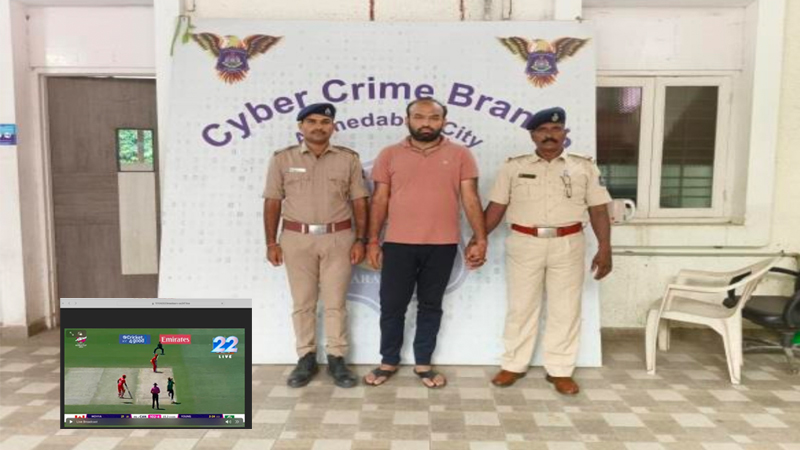
    MUMBAI: There’s reason to celebrate at Disney Star India. The media behemoth’s anti-piracy cell – led by Major Ashok Yadav – has – with the help of the Ahmedabad police – managed to crack down on a clutch of betting websites which were illegally running ICC T20 World Cup cricket streams.

    “What’s alarming is the number of betting websites that have popped up this time during this World Cup and they are running live match video streams simultaneously. These guys at magicwin.games, magicwin.com were streaming the matches and encouraging youngsters to place bets,” said Yadav “We filed an FIR and asked help from the cybercrime cell in Ahmedabad and it has since been blocked from running the video streams. It’s to the police commissioner’s credit that it was brought down in 10 days and the pirate arrested.”

    The cybercrime cell led by Lavina Sinha along with ACP Hardik Mankadiya have named three accused Divyanshu Patel, Shubham Patel and Harsh Patel, According to both Sinha and Mankadiya, the match video feed was being provided to Divyanshu from a cable operator in Pakistan who goes by the name of Azhar, while Shubham – who is based in Canada – would bring in customers from overseas. The police have arrested Divyanshu, who is a website developer from Mehsana district in Gujarat, and another member of the ring Omkumar Goswami whose job was to open bank accounts in which the betting money was deposited. Laptops, routers, encoders, personal servers have all been recovered from Divyanshu’s premises. Additionally, an international lookout notice has been issued against Shubham Patel.

    “Servers were running in Winnipeg, Russia, Germany to keep this operation going,” said Mankadiya.

    For the police, the larger crime of illegal betting is something that they are further chasing.

    Investigations are currently ongoing around the fintech company that was involved in the UPI transactions for betting transfers while also looking into the media agency which had placed billboards throughout Ahmedabad promoting magicwin.

    “Celebrities like Vidyut Jamal were endorsing magicwin without really knowing what they were doing,” said Mankadiya.

    “We hope the new advertising regulations will help make these celebs more aware and be careful about what they are promoting,” said a media professional.

    Shall we say Amen to that!

  • Viacom18 files FIR over piracy of ‘Laal Singh Chaddha’

    Viacom18 files FIR over piracy of ‘Laal Singh Chaddha’

    Mumbai: An FIR was registered on a complaint filed by Viacom18 at Banaswadi police station, Bangalore against a suspect who was arrested on 12 August. Viacom18 received a tip from Cinepolis, Orient Mall, Bangalore, and made the arrest.

    During the investigation, police discovered incriminating evidence, and there is the possibility of an organised crime syndicate operating in the realm of illegal uploading and distribution of the film “Laal Singh Chaddha” and other pirated content.

    According to a preliminary police investigation, the accused may be involved in a larger piracy racket with websites such as Tamilrockers and Primerockers, which are engaged in uploading and illegally distributing pirated content. Because of their illegal actions, such pirate websites cause huge losses to producers, content owners, and creators.

    The arrest of the accused is a ray of hope for all content creators, and it could be a significant step toward action against pirates, as well as a sigh of relief for the industry.

    The company believes larger pirate networks may come to light as a result of this arrest, and the offenders may be prosecuted.

    Viacom18’s General Counsel, Anil Lale, said: “Viacom18 pledges its continuous support in the fight against piracy. We will continue our endeavour to create a secure and piracy-free space. It is important to take proactive measures to prevent piracy or infringement. We believe it is even more important to be involved and actively participate in the execution process to give effect to the larger interest we are trying to achieve.”

    Viacom18 recently obtained injunctive relief from the Madras High Court against a number of more than 12,000 specific websites/links, specified cable operators, internet service providers, as well as unknown individuals, prohibiting them from violating the film “Laal Singh Chaddha” or any part of it by copying, recording, reproducing, distributing, or downloading, etc. in any way without proper authorisation.