Tag: PIPCU

  • Govt extends support to M&E sector in fighting digital piracy

    Govt extends support to M&E sector in fighting digital piracy

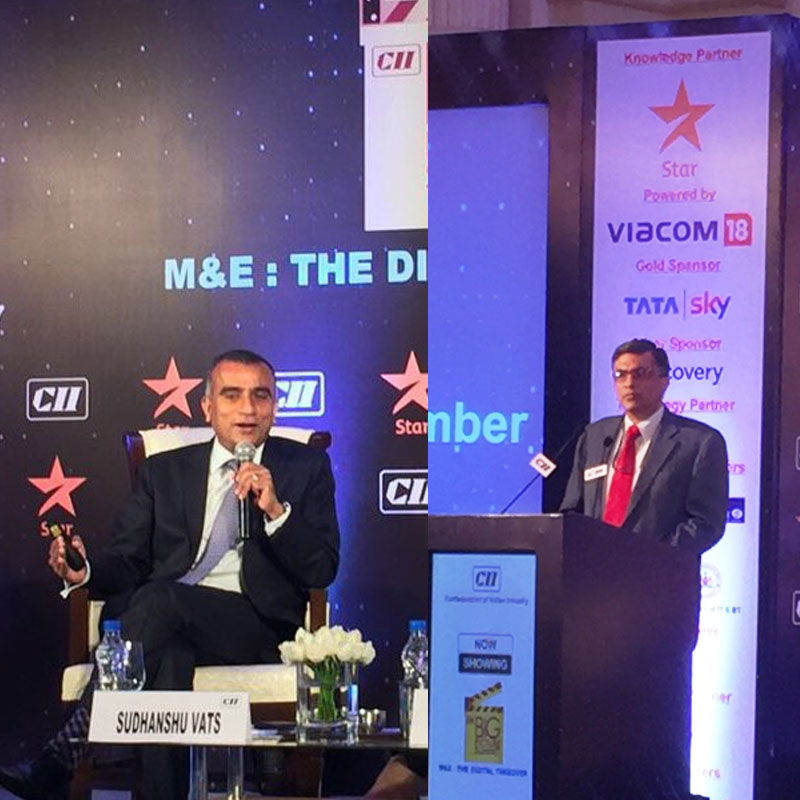
    NEW DELHI: The government of India yesterday stressed that it stood alongside the media and entertainment (M&E) industry in fighting digital piracy to safeguard loss of revenue and ease norms for doing business, while CII entertainment committee head and Viacom18 group CEO Sudhanshu Vats, on behalf of the industry, admitted that automation could result in loss of jobs leading to challenging times, but said the core of the industry will be ‘automation-proof’.

    “The government will stand with you on the issue of digital piracy,” department of industrial policy & promotion (DIPP) joint secretary Rajiv Aggarwal told the audience on Tuesday at the CII-organised Big Picture Summit here, adding that they were exploring a national anti-piracy regulation or regime and there was no need to get further into enacting complicated laws but finding solutions based on global experiences.

    Digital or online piracy is not only a big global challenge for the M&E industry, but has awakened stakeholders in India too who are feeling the heat of heavy loss of revenue due to rampant piracy of Indian content worldwide.

    Pointing out that the Indian government is alive to the issue of digital piracy and the potential of the M&E industry in being able to generate revenues and employment in the country, Aggarwal said that they were looking at how global and some local bodies (like PIPCU of the UK, TIPCU in Telangana and Maharashtra’s online anti-piracy unit) were addressing this challenge.

    Dwelling further on this issue, he exhorted the industry stakeholders to give feedback that will help India in forming a strong case and point of view for submission at WIPO where discussions are on to formulate standards for a global broadcast treaty.

    This year’s Big Picture Summit, an annual two-day conference on issues related to M&E industry, has been themed `The Digital Takeover’, which lays emphasis on the creeping digitisation in general and of delivery services like cable, HITS and OTT, and an impending automation (egged on by the likes of AI) of the various industry sectors.

    TRAI non-committal on exploring auctioning of TV licences

    SK Gupta, telecom regulatory authority of India (TRAI) secretary, which is the telecoms and broadcast regulator, while dwelling on various issues of the recently issued recommendations on net neutrality said the organisation’s efforts have always laid emphasis on consumer interest, while creating a level playing field for all players.

    Incidentally, at a time when the FCC has dismantled net neutrality norms in the US, put in place by the Obama regime earlier, favouring walled gardens of content and premium tiered pricing of various services, India’s TRAI has upheld net neutrality stating that all content should be made available to all distribution platforms on a non-discriminatory basis, apart from other level playing initiatives.

    Later, asked by journalists on the sidelines whether TRAI was exploring a consultation paper on auctioning of TV licences or permissions on the advice of the ministry of information and broadcasting (MIB), Gupta said he at least was not aware of any such move. He was non-committal when pressed on the issue.

    Asian Age newspaper a week back had reported that the government was exploring auctioning of television channel frequencies on the lines of telecoms spectrum, coal blocks and FM radio licences. Reason: bid to increase government revenues as presently permission to uplink and/or downlink TV channels cost a fixed amount with the applicant fulfilling certain set out financial norms, apart from getting clearances for satellite space and internal security. The newspaper report had added that MIB had sought advice from TRAI in this regard. What the report did not clarify was whether the auctioning was of TV licences pertained to DTT (digital terrestrial transmission) or satellite-delivered TV channels later distributed by cable and online.

    M&E industry holds key to creating future-proof, dynamic workforce: Vats

    Earlier in the morning, setting the agenda for the two-day conference, CII entertainment committee head and Viacom18 group CEO Sudhanshu Vats in his opening address said that the theme of ‘Digital Takeover’ was a topic that had “loads of nuances” that needed to be addressed in a proper perspective.

    “In my honest assessment, this is an extremely provocative theme – and one that can mean different things to different people. I can imagine some of my colleagues from the broadcast sector feeling upset. I can also imagine what some of my younger colleagues, who are already social media influencers thinking – this theme is passé, the takeover was complete a few years ago. I don’t want to pick a side at this stage and I’m certain that no definitive side can be picked,” Vats said, adding that he hoped the theme would help delegates form their own distinctive understanding of the future of the Indian industry in general.

    Pointing out that digital takeover could mean greater automation and fewer human jobs, a trend that could is likely to play out slowly in India because of availability of cheap labour, Vats said the Indian M&E sector directly employs between 1.1-1.2 million Indians and in the next five years one million more jobs would be added, thereby playing a role in “assuaging the challenge”. He added: “If we achieve breakout growth, that number can also touch five million. However, I would like to draw your attention not to the number of jobs but to their quality.”

    Explaining that skills, like creativity, story-telling, emotional intelligence and cognitive ability, in M&E sector were most ‘non-routine’ jobs, Vats said, “These are also the skills that can be transferred to other sectors, making us a part of the solution. Of course, we too will face our share of the burden. Some roles will be automated, and the media organisation might look very different in 2027, but our core will still be automation-proof.”

    Vats also pointed out that the private sector needed to be more ‘creator-friendly’ or ‘freelancer-friendly’, which also meant that the M&E sector could hold the key to “creating a future-proof, agile, dynamic workforce” that can take its skills and drive impact across industries even as the government continued to create a better business environment.

     ALSO READ:

    M&E industry to hit Rs8 trillion revenue by 2022: report


  • FICCI Frames ’17: Maharashtra to form IP crime unit to fight online piracy

    MUMBAI: Well, well. The Indian media industry and the government are finally getting serious about content piracy. After Telangana Intellectual Property Crime Unit (TIPCU), Copyright Force and the government-mandated Copyright Board, Maharashtra state is all set to get Maharashtra Intellectual Property Crime Unit, which may be called MIPCU.

    Announcing the go-ahead for MIPCU, a body that would be a joint endeavor of the entertainment industry and the state government, Inspector General of Maharashtra Police (Cyber) Brijesh Singh (in the picture) said, however, the initiative would have to be backed by the industry players too in terms of resources to effectively fight cyber crime and online piracy.

    “I would want it to be set up under a public-private partnership model and want the industry to come forward and help me achieve this. I want the industry to come and tell me that this is what we need and we will then help them. There is a commitment from our side,” Singh said while delivering an address at FICCI Frames 2017 session themed `Decoding the Pirate Economy in Interconnected World: From Noise to Action.’

    Though Singh, who was also slightly skeptical of the losses in terms of revenue that were often quoted by the entertainment industry, said that if the industry was serious, so were the law enforcement agencies. Pointing out that it’s often seen that the film industry’s piracy concerns were “limited” to the first seven days of a film’s release, he added, “I think this issue needs us to be more serious. I want the industry to come to us to build this sustainable and long-term partnership.”

    Motion Pictures Association of America’s Indian unit (MPA) and the Film and Television Producers Guild of India have joined hands to fight the menace of online piracy. After discussing the idea of MIPCU with the chief minister of Maharashtra and MPA last month, the state government formally okayed formation of a unit to fight cyber crimes, especially online piracy. Offline offences regarding this issue will be dealt by the regular police units.
    The budget of this new proposed unit will depend on what kind of technology it plans to offer for a solution. The entire idea is to co-create a global facility, Singh later elaborated and added that the unit’s launch was dependent on the industry’s long-term commitment in terms of negotiating that space.

    Commenting on the proposal to form MIPCU, Viacom18 group general counsel Sujeet Jain said the entertainment and TV industry would back any such move as long as results were delivered irrespective of structures and modalities.
    Incidentally, some months back, as reported by indisntelevision.com, MPA, broadcasters and FICCI had joined hands to announce formation of Copyright Force to set agendas for effective safeguarding of Intellectual Property Rights (IPR) policy and engage with the government.

    To give an international perspective, TIPCU, Copyright Force and the proposed MIPCU have been seemingly inspired by the Police Intellectual Property Crime Unit (PIPCU) of the UK , which is a specialist national police unit dedicated to protecting the UK industries that produce legitimate, high quality, physical goods and online and digital content from intellectual property crime.

    PIPCU is operationally independent and launched in September 2013 with £2.56million funding from the Intellectual Property Office (IPO) of the UK government until June 2015. It was announced in October 2014 that PIPCU will receive a further £3 million from the IPO to fund the unit up to 2017. The unit is dedicated to tackling serious and organised intellectual property crime (counterfeit and piracy) affecting physical and digital goods (with the exception of pharmaceutical goods) with a focus on offences committed using an online platform.

    Also Read:

    Online pirates beware, Copyright Force on way

    Internet included in broadcasting for purpose of Copyright

    Telangana leads fight against online piracy in partnership with film industry

    FICCI keen on IPR awareness & enforcement to encourage innovation

    Internet included in broadcasting for purpose of Copyright


  • Google, MS agree to crack down on online content piracy site

    NEW DELHI: A global war on content piracy, including in India, just got a leg up. For the first time, global tech giants Google and Microsoft have agreed to tighten up their search engines as part of a crackdown on content piracy websites illegally streaming events and films with the UK regulator Ofcom backing it.

    Google and Microsoft’s search engine Bing have signed up to a voluntary code of practice and will ensure offending websites are demoted in their search results, according to a PTI report from London, which goes on to state that he entertainment industry reached the agreement with the tech giants after talks brokered by the UK government.

    The initiative will run in parallel with existing anti-piracy measures, which includes initiatives by PIPCU or the Police Intellectual Property Crime Unit (PIPCU), which is a specialist national police unit dedicated to protecting the UK industries that produce legitimate, high quality, physical goods and online and digital content from intellectual property crime.

    PIPCU operationally independent and launched in September 2013 with £2.56million funding from the Intellectual Property Office (IPO) of the UK until June 2015, got additional funding from the IPO in October 2014 till 2017. The unit is dedicated to tackling serious and organized intellectual property crime (counterfeit and piracy) affecting physical and digital goods (with the exception of pharmaceutical goods) with a focus on offences committed using an online platform.

    The PTI report, quoting BBC and dwelling on Google and MS moves, stated that the code said to be the first of its kind in the world is expected to be in operation by the middle of this year.

    Jo Johnson, the UK’s minister for universities, science, research and innovation, was quoted in the report as saying that the search engines’ “relationships with our world leading creative industries needs to be collaborative”. He added: “It is essential that (consumers) are presented with links to legitimate websites and services, not provided with links to pirate sites.”

    Google has indicated that the effort would provide a way to check that its existing anti-piracy efforts were effective, rather than committing it to adding new measures. “Google has been an active partner for many years in the fight against piracy online. We remain committed to tackling this issue and look forward to further partnership with rights holders,” a Google spokesperson was quoted by PTI as saying.

    The UK’s Intellectual Property Office (IPO) led the discussions, with the assistance of the Department for Culture, Media and Sport. Britain’s communications watchdog, Ofcom, supported the talks by exploring techniques that could be used to ensure internet users avoid coming across illegal content.

    Trade body Alliance for Intellectual Property director-general Eddy Leviten told the BBC, according to the PTI report, “Sometimes people will search for something and they will end up unwittingly being taken to a pirated piece of content. What we want to ensure is that the results at the top of the search engines are the genuine ones. It is about protecting people who use the internet, but also protecting the creators of that material too.”

    Besides demoting copyright infringing sites, search engine auto-complete functions, a time-saving feature that suggests what users may be looking for, are also expected to remove terms that may lead to pirated websites. Compliance with the code will be monitored by the IPO over the next few months.

  • Copyright Force finally here to fight online piracy

    Copyright Force finally here to fight online piracy

    NEW DELHI: The Copyright Force is finally here to fight online content piracy, which has been bleeding the Indian content companies, from film, music and TV world, billions of rupees in revenues as pirates have been making hay.

    It seems in co-ordinated movements by the Indian government and the industry, plans have been initiated to seriously fight the online piracy menace. While the Department of Industrial Policy and Promotion (DIPP), under Commerce Ministry, earlier this week discussed the copyright and piracy issues with stakeholders, industry body FICCI sent out notes to stakeholders to be part of  Copyright Force, a unique cross-industry coalition.

    Globally online piracy of content costs trillions of dollars that have prompted several industry organisations to focus specifically on arresting online piracy. According to Dubai-based GO-Gulf, there are $12.5 billion in economic losses each year due to piracy in the music industry alone; 71,060 jobs are lost in the United States every year due to piracy and $2.7 billion in workers’ earnings are lost each year due to online piracy. Interestingly, according to the research, India is ranked 5th (60 per cent) in the Top 10 countries with online piracy, while China tops the list with 91 per cent piracy.

    The DIPP meeting of stakeholders, including producers from film and TV industry, was held to discuss issues related to copyright infringement and ways to tackle online piracy. The meeting, chaired DIPP joint secretary Rajiv Aggarwal, not only appreciated efforts being initiated by the Telangana Intellectual Property Crime Unit or TIPCU to curb piracy of copyright protected material, but expressed the need to adopt this model by other states also to check the menace within their respective jurisdiction.

    Incidentally, TIPCU is a motivated version of Police Intellectual Property Crime Unit (PIPCU), funded by the Intellectual Property Office of the UK and run by the City of London Police with a special focus on offences committed online.

    The industry initiative, helmed by FICCI, is on the lines of discussions at DIPP — to facilitate exchange of global best practices, support platforms that encourage B2G and G2B dialogue and encourage initiatives to promote and protect copyright and possibly take action against offenders, along with law enforcement agencies.
    While highlighting the need for a robust copyright eco-system and acknowledging the National IPR Policy was as a step in the right direction, FICCI outlined the objectives of the Copyright Force:

    # Highlight vital role that copyright plays in fostering creativity and culture, stimulating investmentsand economic growth, while serving to enhance the competitiveness of industry and business
    # Encourage innovation and improved consumer experience through legitimate content delivery platforms
    #Address the challenge of piracy that undermines the growth potential of this sector.

    The  Copyright Force, which  will bring together leaders in the fields of film, television, music, media, Internet, technology and OTT content delivery platforms, likely to have its first formal meeting sometime in January 2017. Some of the biggest broadcasting companies in India have been part of initial discussion on the formation of Copyright Force.

    ALSO READ:

    Online pirates beware, Copyright Force on way

    Internet included in broadcasting for purpose of Copyright

  • Copyright Force finally here to fight online piracy

    Copyright Force finally here to fight online piracy

    NEW DELHI: The Copyright Force is finally here to fight online content piracy, which has been bleeding the Indian content companies, from film, music and TV world, billions of rupees in revenues as pirates have been making hay.

    It seems in co-ordinated movements by the Indian government and the industry, plans have been initiated to seriously fight the online piracy menace. While the Department of Industrial Policy and Promotion (DIPP), under Commerce Ministry, earlier this week discussed the copyright and piracy issues with stakeholders, industry body FICCI sent out notes to stakeholders to be part of  Copyright Force, a unique cross-industry coalition.

    Globally online piracy of content costs trillions of dollars that have prompted several industry organisations to focus specifically on arresting online piracy. According to Dubai-based GO-Gulf, there are $12.5 billion in economic losses each year due to piracy in the music industry alone; 71,060 jobs are lost in the United States every year due to piracy and $2.7 billion in workers’ earnings are lost each year due to online piracy. Interestingly, according to the research, India is ranked 5th (60 per cent) in the Top 10 countries with online piracy, while China tops the list with 91 per cent piracy.

    The DIPP meeting of stakeholders, including producers from film and TV industry, was held to discuss issues related to copyright infringement and ways to tackle online piracy. The meeting, chaired DIPP joint secretary Rajiv Aggarwal, not only appreciated efforts being initiated by the Telangana Intellectual Property Crime Unit or TIPCU to curb piracy of copyright protected material, but expressed the need to adopt this model by other states also to check the menace within their respective jurisdiction.

    Incidentally, TIPCU is a motivated version of Police Intellectual Property Crime Unit (PIPCU), funded by the Intellectual Property Office of the UK and run by the City of London Police with a special focus on offences committed online.

    The industry initiative, helmed by FICCI, is on the lines of discussions at DIPP — to facilitate exchange of global best practices, support platforms that encourage B2G and G2B dialogue and encourage initiatives to promote and protect copyright and possibly take action against offenders, along with law enforcement agencies.
    While highlighting the need for a robust copyright eco-system and acknowledging the National IPR Policy was as a step in the right direction, FICCI outlined the objectives of the Copyright Force:

    # Highlight vital role that copyright plays in fostering creativity and culture, stimulating investmentsand economic growth, while serving to enhance the competitiveness of industry and business
    # Encourage innovation and improved consumer experience through legitimate content delivery platforms
    #Address the challenge of piracy that undermines the growth potential of this sector.

    The  Copyright Force, which  will bring together leaders in the fields of film, television, music, media, Internet, technology and OTT content delivery platforms, likely to have its first formal meeting sometime in January 2017. Some of the biggest broadcasting companies in India have been part of initial discussion on the formation of Copyright Force.

    ALSO READ:

    Online pirates beware, Copyright Force on way

    Internet included in broadcasting for purpose of Copyright