Tag: Pioneer Publicity

  • MCGM to Bombay high court: Can’t waive licence fee for Mumbai’s OOH owners

    MCGM to Bombay high court: Can’t waive licence fee for Mumbai’s OOH owners

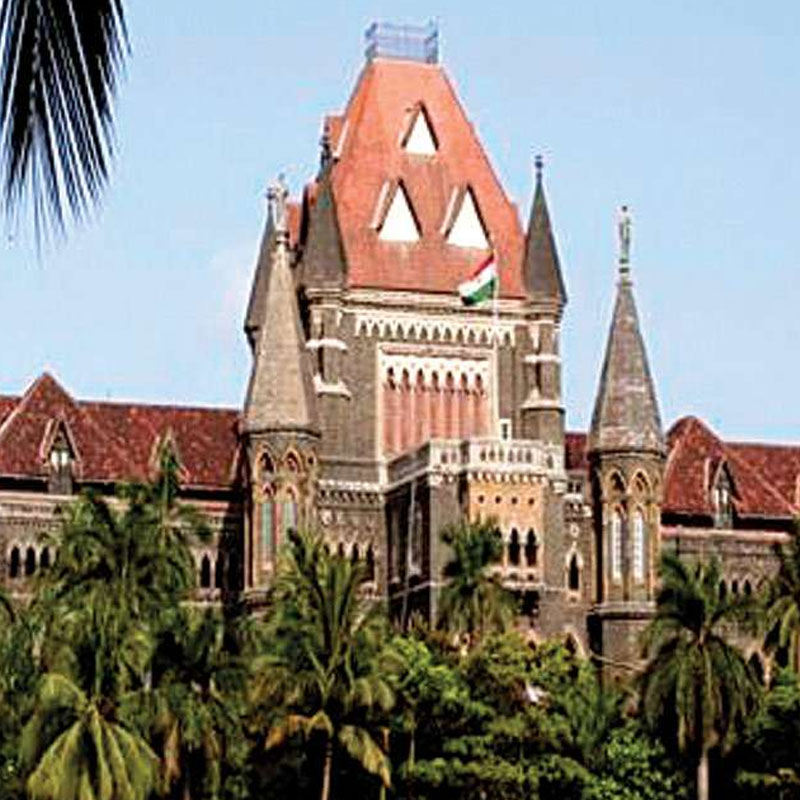
    MUMBAI: On 19 June, in an unexpected turn of events, the municipal corporation of greater Mumbai (MCGM) refused to waive off the licence fees even if the hoardings in Mumbai are advertising civic messages.

    The bench dealt with a number of petitions filed by advertising agencies, holding licences for hoarding sites in Mumbai. The hoarding owners were seeking waiving of the licence fees. The licence holders claimed that they are not using their hoarding sites since March due to the outbreak of Covid2019 and they have been only advertising civic messages.

    "There is no provision in any statute, rule, policy or license condition that contemplates that if the licence holders are unable to display the advertisement for any reason whatsoever, they will be entitled to waiver of licence fees. They have failed to make out any constitutional or legal right for such waiver of the license fees," the MCGM said in an affidavit.

    "Our guidelines specifically contemplate that it is mandatory on part of the agency to display a civic message as and when directed by us for a period of 15 days in a year for which no fees will be payable," the affidavit read.

    The civic body mentioned that it had sent notices to a number of agencies to put messages to spread awareness about the disease in March.

    Clarifying in the affidavit, MCGM said, “Hoardings were required to be displayed for a period of 10 days only and there was no need to give any fresh notice or letter for removal of the same. The agencies are intentionally misreading our notice. The notice does not contemplate that any further instructions would be issued for removing the hoardings.”

    The civic body also revealed that it had waived licence fees for the month of April of Rs 7.49 crore and that the civic body itself went through a loss of nearly Rs 70 lakh.

    "The commercial arrangements between the private advertisers and the licencees are not within our scope and ambit. We are in no way responsible for any such breakdown in the commercial relationship of the licencees and the same cannot be a ground for a grant of a waiver of licence fees without any legal or the statutory basis for the same," the MCGM said while urging the bench to dismiss the plea.

    The eight Mumbai OOH owners who filed the petition in the Bombay HC for waiver of licence fees are — Creation Publicity Pvt Ltd, Bright Advertising Pvt Ltd, Orion Advertisers, Anurag Sites, Em Vee Advertising Company, Pingle Outdoor, Yoag Advertisers and Pioneer Publicity Corporation Ltd.

    The firms have been asked to submit replies in writing, by 26 June.
  • Bombay high court to hear OOH players’ plea on 12 June

    Bombay high court to hear OOH players’ plea on 12 June

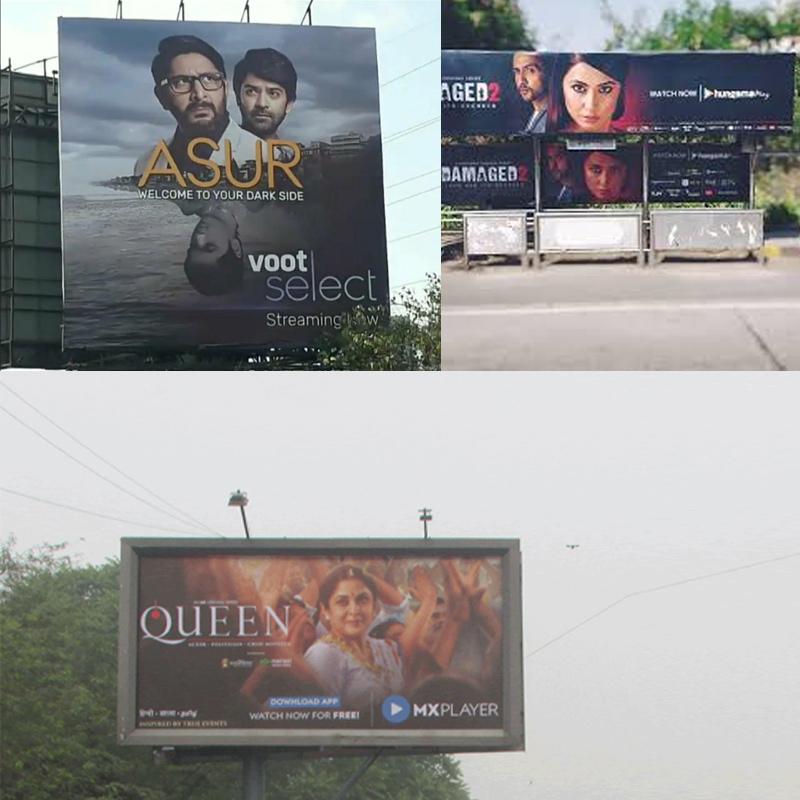
    MUMBAI: On 5 June, the Bombay High Court, while hearing the plea of Mumbai OOH owners, extended its stay order till 12 June, for waiver of license fee on hoardings for the month of May 2020.  According to the verdict, the exemption will only be given to the eight OOH players that have already appealed for the waiver in May.

    Creation Publicity Pvt Ltd, Bright Advertising Pvt Ltd, Orion Advertisers, Anurag Sites, Em Vee Advertising Company, Pingle Outdoor, Yoag Advertisers and Pioneer Publicity Corporation Ltd are the players who will get the exemption.

    The court has issued a notice to the petitioners to submit the amendments in their petitions to the municipal corporation within a period of two weeks, if there are any. In the meantime, earlier order passed by the court will continue i.e., no coercive steps should be taken by the authority for not paying taxes.

    Bright Media Outdoors CMD Yogesh Lakhani shares that due to the crises, all businesses are downhill. “We have requested the civic body to waive off the fee because of the unprecedented crises. For the next four to five months, the situation only looks grim. If people are not stepping out, who will see the hoardings?” he says.

    The court also mentioned that the senior counsel appearing for the municipal corporation has asked for a week’s time to take instructions in the matter, due to which no further proceedings could be done.

    Sharing the same sentiment as Lakhani, another OOH owner, who opted to be anonymous, says, “Paying such a heavy amount for the period when businesses all over the globe are going through a lull doesn’t make any sense. We are glad that the court has given an extension. While the country is slowly opening up businesses, it seems we will be in a better position in a few months from now.”

    Lemma Technologies founder and CEO Gulab Patil says that there has been a heavy impact on the media side, “Most of the advertisers usually plan campaigns in advance, but no one saw this coming. Not just the civic bodies, the publishers are also asking for payments and it puts people in a tough spot. We are just settling down the minimum requirement from the publisher side. We are asking our clients to balance on that.”

    As per the high court’s order issued on 5 June, the municipal corporation sought a week's time to take instructions in the matter. If any of the petitioners are desirous of amending the petition, they shall forward the draft amendment to the municipal corporation within a period of two weeks.

  • Ad world remains positive on eighth day of demonetisation despite inconvenience

    Ad world remains positive on eighth day of demonetisation despite inconvenience

    MUMBAI: India entered the eighth day of limited demonetisation in the backdrop of rejection of a petition by the Supreme Court, and still a majority of the nation is without access to cash.

    Unending queues are thronging the banks, with most of the ATMs either dysfunctional or running out of cash at the speed of light. Local shops are struggling to function with the newly-introduced Rs 2000 note amid this cash flow issue.

    The unorganised sector which mostly operates in cash has suffered the most.

    To ease the situation, the government has allowed use of high-value notes for some purposes — at milk booths, petrol stations and railway stations, up to 24 November.

    Indiantelevision.com takes a look at how the advertising world is coping with the cash crunch, whether any advertising campaign has felt the impact or any ad film shoots have been stalled.

    “We are not facing any difficulty as most of our work is with retainers. Moreover, our transaction is in white, nothing in black and grey, and mostly kept transparent by using cheques for transactions.
    The production houses may face problems during shoots but, so far, we have managed the show, and haven’t heard of an issue,” said Leo Burnett south Asia CEO Saurabh Verma.

    “Of course we will all get impacted by it eventually if the economy slows down in the next few months but we need to wait and watch,” Verma added.

    Similarly, The Glitch co-founder Rohit Raj agrees that there is no immediate impact on the industry. “For campaigns, which are pre-scheduled, money comes in cycles. Therefore, there is always some buffer. During shoots too, we mostly operate through cheques, Raj explained. The Glitch has an in-house studio and production unit for its video content. Luckily, for them, there was only one shoot that fell during this period, and hence the agency didn’t have to go through much hassle.

    Not just the big and well known agencies, but small and medium-sized players in the market have also been cashless in their operations, as explained by corporate films and TV promos video director Avi Sandhu.

    “We mostly operate electronically because that is how agencies pay us.

    Even the spot boy is paid through NEFT transfer. It is to ensure that we have a transaction trail. Sometimes, for props etc., we might need cash. In that case we either go with the available denomination or the company calls in the bank requesting to liquidate the required cash for daily use,” he shared adding that most banks are separately looking at corporate accounts.

    About the models who work on fee per shoot basis, Sandhu admitted that the industry is banking on the usual cycle of paying them after 40 to 45 days when the agencies distribute the payments that comes from the client, by when the situation will normalise.

    When it comes to advertising, the most unorganised sector is perhaps out of home. Asked if there is any challenge in operating, Milestone Brandcom’s Nabendu Bhattacharya explained that there is no issue from the agency’s end. “Our business is mostly cashless. We wire the money when we buy the spaces. But, agencies and vendors working on the selling side might have a different story.”

    The story remained mostly the same, except for some unique variations.

    “We mostly operate cashless as the clients prefer so. The only issue is — we are unable to deposit the cash which is already with us because of the serpentine queues. Because it is all billed money, I am not worried about it, but banking is a hassle these few days,” shared Pioneer Publicity director Sunil Vasudeva.

    Another out-of-home vendor, who wasn’t happy with how things were hampering the business, hesitated to share his plight in public in fear of repercussions from the government.

  • Ad world remains positive on eighth day of demonetisation despite inconvenience

    Ad world remains positive on eighth day of demonetisation despite inconvenience

    MUMBAI: India entered the eighth day of limited demonetisation in the backdrop of rejection of a petition by the Supreme Court, and still a majority of the nation is without access to cash.

    Unending queues are thronging the banks, with most of the ATMs either dysfunctional or running out of cash at the speed of light. Local shops are struggling to function with the newly-introduced Rs 2000 note amid this cash flow issue.

    The unorganised sector which mostly operates in cash has suffered the most.

    To ease the situation, the government has allowed use of high-value notes for some purposes — at milk booths, petrol stations and railway stations, up to 24 November.

    Indiantelevision.com takes a look at how the advertising world is coping with the cash crunch, whether any advertising campaign has felt the impact or any ad film shoots have been stalled.

    “We are not facing any difficulty as most of our work is with retainers. Moreover, our transaction is in white, nothing in black and grey, and mostly kept transparent by using cheques for transactions.
    The production houses may face problems during shoots but, so far, we have managed the show, and haven’t heard of an issue,” said Leo Burnett south Asia CEO Saurabh Verma.

    “Of course we will all get impacted by it eventually if the economy slows down in the next few months but we need to wait and watch,” Verma added.

    Similarly, The Glitch co-founder Rohit Raj agrees that there is no immediate impact on the industry. “For campaigns, which are pre-scheduled, money comes in cycles. Therefore, there is always some buffer. During shoots too, we mostly operate through cheques, Raj explained. The Glitch has an in-house studio and production unit for its video content. Luckily, for them, there was only one shoot that fell during this period, and hence the agency didn’t have to go through much hassle.

    Not just the big and well known agencies, but small and medium-sized players in the market have also been cashless in their operations, as explained by corporate films and TV promos video director Avi Sandhu.

    “We mostly operate electronically because that is how agencies pay us.

    Even the spot boy is paid through NEFT transfer. It is to ensure that we have a transaction trail. Sometimes, for props etc., we might need cash. In that case we either go with the available denomination or the company calls in the bank requesting to liquidate the required cash for daily use,” he shared adding that most banks are separately looking at corporate accounts.

    About the models who work on fee per shoot basis, Sandhu admitted that the industry is banking on the usual cycle of paying them after 40 to 45 days when the agencies distribute the payments that comes from the client, by when the situation will normalise.

    When it comes to advertising, the most unorganised sector is perhaps out of home. Asked if there is any challenge in operating, Milestone Brandcom’s Nabendu Bhattacharya explained that there is no issue from the agency’s end. “Our business is mostly cashless. We wire the money when we buy the spaces. But, agencies and vendors working on the selling side might have a different story.”

    The story remained mostly the same, except for some unique variations.

    “We mostly operate cashless as the clients prefer so. The only issue is — we are unable to deposit the cash which is already with us because of the serpentine queues. Because it is all billed money, I am not worried about it, but banking is a hassle these few days,” shared Pioneer Publicity director Sunil Vasudeva.

    Another out-of-home vendor, who wasn’t happy with how things were hampering the business, hesitated to share his plight in public in fear of repercussions from the government.