Tag: Pinterest

  • Gen Z goes to work in style with Anushka Sen and Newme’s new line

    Gen Z goes to work in style with Anushka Sen and Newme’s new line

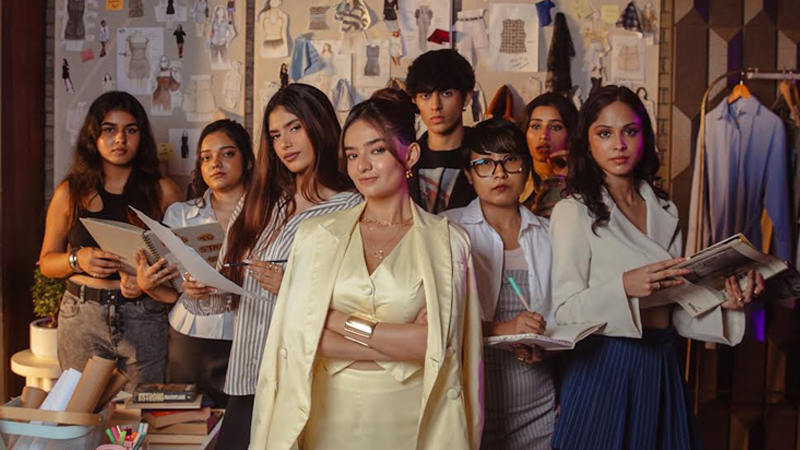
     MUMBAI: Officewear just got a Gen Z glow-up and it’s serving ambition with a side of attitude. Newme, the fashion-tech brand adored by Gen Z, has teamed up with actor and Gen Z style icon Anushka Sen to launch its first-ever co-designed collection WorkSsnIty. The 500-piece line is a bold step into the 9-to-5 world, tailored for the first-jobber, the side-hustler, and the caffeine-fuelled intern with a Pinterest board full of blazers.

    From structured co-ords and pastel-hued tailoring to oversized blazers and breezy elevated basics, WorksenIty is anything but your boss’s wardrobe. Designed for the young and the restless, the collection ditches dull formals for confidence-soaked fits that are equal parts chic and workplace-ready.

    “I’ve always admired Newme for celebrating Gen Z style,” said Anushka Sen, who stepped in as Creative CEO for this collection. “Workwear is an overlooked genre, and this is our way of saying bring your whole self to work, style and all.”

    Sen didn’t just lend her name, she co-created the collection from concept to final fittings, ensuring each piece reflects the real-world aesthetic of young professionals. Her influence is front and centre in the #Staysenatwork campaign, which features her in scenarios from coffee runs to client meetings all while looking like the main character.

    “WorksenIty is more than just clothes, it’s about self-expression at work,” said Newme co-founder and CEO Sumit Jasoria. “Gen Z is entering the workforce in huge numbers, and they’re bringing their individuality with them. With this collection, we’ve built a wardrobe that actually works for them.”

    The drop also signals Newme’s evolution. Founded in 2022, the brand has quickly built cult status with over 14 experience stores and a lightning-fast delivery model that drops 500 plus new styles weekly. By adding workwear to its mix, Newme is growing with its audience showing up for job interviews, boardrooms, and every power move in between.

    Exclusively available on the Newme app, website, and experience stores, WorksenIty proves one thing loud and clear Gen Z isn’t just dressing for the job they want. They’re dressing like they already own the place.

  • Interio brings cool comfort home with Summer Chill Deals campaign

    Interio brings cool comfort home with Summer Chill Deals campaign

    MUMBAI: Turning up the style and turning down the heat, Interio’s latest campaign is a breath of fresh flair. Interio, one of India’s leading furniture brands under the Godrej Enterprises Group, has launched its sunny new campaign, Summer Chill Deals, showcasing how modern Indian homes can beat the heat with cool customisation and hot deals. The campaign comprises three breezy films that highlight the brand’s diverse range of stylish and functional furniture, designed to mirror the tastes, quirks and daily dynamics of today’s families.

    Whether you’re a colour-coordinated maximalist or a minimalist with a Pinterest obsession, Interio promises a personalised fit. From the modular Upmods range perfect for those who want flexibility with flair to bespoke sofa fabrics and user-designed kitchens, every piece becomes an extension of personal expression.

    Speaking about the films Interio head of integrated marketing & communications Reshu Saraf said, “At Interio, we believe that home space is deeply personal. Our furniture isn’t just functional, it’s a canvas for self-expression. From modular innovations like our Upmods range, which allows for limitless customization, to our wide array of styles, colours, and materials, we enable customers to create spaces that truly reflect their individual taste. Our summer campaign brings this philosophy to life, celebrating the creativity and uniqueness of every Indian home. For over decades, our commitment to style, design, and personalization has made us a trusted part of Indian homes and a beloved brand for families across the country.”

    Each campaign film captures relatable everyday moments: the social media-savvy parent trying to recreate a ‘dream home’ setup, the couple debating kitchen finishes over brunch, or the solo dweller designing a living room that suits both Netflix and nap time. The message is clear Interio makes it personal.

    To sweeten the deal, the brand is offering up to 35 per cent off on furniture and a chance to win a free Godrej AC, adding a literal chill to the Summer Chill Deals. The campaign is being rolled out across Youtube, social media, and print, ensuring it reaches digital explorers and newspaper loyalists alike.

    As Indian consumers increasingly seek out spaces that reflect their identity, Interio steps in not just to furnish homes, but to frame the stories within them.

  • Where you place your ad impacts its effectiveness: Magna, Pinterest study

    Where you place your ad impacts its effectiveness: Magna, Pinterest study

    MUMBAI: In a revelatory study that turns traditional media buying on its head, research by global media investment and intelligence company Magna and Pinterest has uncovered a tantalising truth: where your ads appear matters almost as much as the ads themselves.

    The revealing research, conducted across multiple platforms and involving over 6,200 participants, reveals that a positive advertising environment can supercharge brand metrics by up to 94 per cent. Think of it as media magic – the same creative can perform dramatically differently depending on its digital neighbourhood.

    Key findings include:

    * Trust and safety remain the top drivers of purchase intent
    * Positivity trumps entertainment as a performance catalyst
    * High-ticket items see the most dramatic uplift in purchase intent

    Brands can effectively juice their marketing performance by:
    * Knowing their audience’s definition of positivity
    * Using contextual targeting to place ads alongside uplifting content
    * Creating inclusion lists with media partners that reflect brand values

    The study’s neuroscience component adds scientific sizzle, showing that positive environments create a 20 per cent increase in “lean-forward” moments – essentially, viewers who are more engaged and attentive.

    Most provocatively, the research suggests brands can generate 24 per cent more sales by simply being more thoughtful about media placement – without spending an extra penny.

    The message is clear: in the digital advertising ecosystem, happiness isn’t just a warm gun – it’s a revenue-generating weapon.

    To get further details of the study click here

  • Pinterest names Soniya Monga from TikTok as VP of global agency sales

    Pinterest names Soniya Monga from TikTok as VP of global agency sales

    MUMBAI: Whether you’re sketching the blueprint of your dream tattoo, curating the perfect product showcase for your e-commerce venture, or piecing together the wedding of a lifetime, Pinterest has become the visual sanctuary where ideas come to life.

    It’s where inspiration takes flight, a platform transforming everyday moments into extraordinary visions.

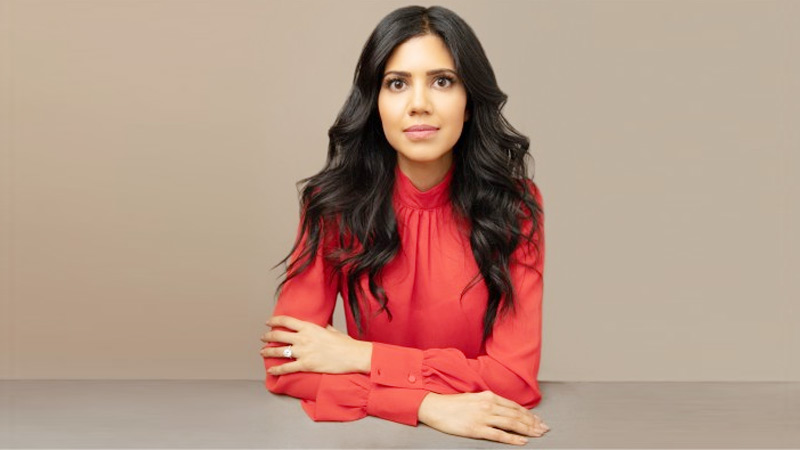
    And now, leading this global powerhouse into a new chapter of creativity and collaboration, Pinterest has appointed Soniya Monga as its vice president of global agency sales. With her at the helm, Pinterest’s connection to the world’s most creative minds promises to grow even stronger, blending innovation, strategy, and boundless inspiration into a canvas that’s truly global.

    Monga brings a wealth of experience from her tenure at leading technology companies. She previously served as head of US agency partnerships at TikTok, where she managed relationships with major agency holding companies and developed go-to-market strategies for top agency groups in the United States.

    Before her time at TikTok, Monga held leadership positions at Snap Inc., LinkedIn, and Microsoft. At Snap Inc., she led global agency partnerships, empowering agencies and brands to leverage the platform’s advertising opportunities. Her tenure at LinkedIn began in 2010 as one of the earliest employees of LinkedIn Canada, where she contributed to building the company’s advertising business. She later relocated to Hong Kong to manage strategic brand relationships across north Asia, including Korea, Japan, Taiwan, and China.

    Monga holds a bachelor of arts in international economics from McGill University. She has been recognised for her contributions to the industry, including being named to Marketing Magazine’s Top 30 Under 30 in 2013. Additionally, she has served on the board of New York Women in Communications, an organisation dedicated to empowering women in the communications field.

    Expressing her enthusiasm for the new role, Monga stated, “Pinterest is a platform I’ve long admired for its vision and its unique position as a visual search and discovery tool. I’m excited to help grow its role as a positive space for consumers and brands alike.”

    Pinterest’s chief revenue officer, Bill Watkins commented on the appointment, stating, “Soniya has a stellar record of building agency business from the ground up, combining strategic vision, product expertise, and operational excellence. We’re thrilled to welcome her leadership as we continue to strengthen our agency business.”

    Monga’s appointment comes as Pinterest continues to expand its advertising offerings and strengthen its position as a visual discovery platform. Her extensive experience in building and managing agency partnerships is expected to play a pivotal role in driving the company’s growth in the advertising sector.

  • Pinterest on-boards WhizCo for creator management & community building

    Pinterest on-boards WhizCo for creator management & community building

    Mumbai: Pinterest has partnered with India’s leading influencer marketing and creator management agency, WhizCo, for onboarding and managing content creators on the platform and helping build engaging communities on Pinterest.

    As part of the collaboration, WhizCo has so far helped to onboard compelling content creators on Pinterest who actively create and share their inspiration with idea pins that enable Pinterest users to bring the ideas to life. Idea Pins are an organic pin format on Pinterest that features multiple pages of video and image content, created natively on the platform to tell a story and inspire Pinners.

    WhizCo will also scale the number of content creators on Pinterest along with starting an expert project where professionals from various niches and fields will join Pinterest and provide valuable insights and informational content.

    Commenting on the collaboration, WhizCo co-founder and CMO Prerna Goel, said “Pinterest has always been one of the most unique and inspiring platforms, and we’re proud that our collaboration with Pinterest is giving aspiring content creators a new way to build and grow on Pinterest, and ensuring that Pinterest is a place not just to be inspired, but a platform where people and creators can also publish content and inspire others.”

    “I’m also excited about the experts’ project, which is another step in helping professionals publish great ideas and help others discover great informational content,” she added.

  • Facebook to block new political ads a week before US presidential election

    Facebook to block new political ads a week before US presidential election

    KOLKATA: Amid large criticism against misinformation and allegation of meddling in elections, Facebook has decided to block all new political advertising on its platform the week before the US general election in November. 

    However, advertisers will be able to continue running ads they started running before the final week and adjust the targeting for those ads, but those ads will already be published transparently in Ads Library so anyone, including fact-checkers and journalists, can scrutinize them. 

    Facebook will also remove posts with claims that people will get Covid2019 if they take part in voting. It will attach a link to authoritative information about the virus to posts that might use to discourage voting, and it is also not going to allow this kind of content in ads. Notably, other social media platforms such as Twitter and Pinterest, have already banned political ads on the services. 

    “Given the unique circumstances of this election, it's especially important that people have accurate information about the many ways to vote safely, and that Covid2019 isn't used to scare people into not exercising their right to vote,” Facebook CEO Mark Zuckerberg said.

    For more than two years now, Facebook has been under constant pressure from authorities across many countries on antitrust and piracy issues. The data fiasco really got murkier when the cambridge analytica scandal came out for influencing 2016 US Presidential election. However, it had been alleged for the same outside US as well including Brexit. 

  • Pinterest opens new office in Singapore

    Pinterest opens new office in Singapore

    MUMBAI: Today Pinterest is proud to announce the official opening of its Singapore office. This is the second office for Pinterest in the region and it will be servicing South East Asia and India as part of the company’s expanding work in APAC. Pinterest also has a team in Japan based in its Tokyo office, which opened in 2013.

    Starting with a small team of local talent, Ayumi Nakajima, Country Manager, South East Asia and India, will focus on increasing growth in the region. The team will also support relationships with brands and publishers and make sure Pinterest offers the best localized experience for people from different cultures throughout the region.

    “Pinterest has a growing, passionate audience across APAC who are using Pinterest for inspiration to create a life they love,” said Ayumi Nakajima, Country Manager, South East Asia and India. “There is a great opportunity for brands, publishers and creators on Pinterest to connect with these engaged users when they’re considering what to do or buy next. With a team based in Singapore, we’ll be able to offer an even more relevant experience for our Pinners in one of our fastest growing regions. So no matter where you’re from, Pinterest is serving you ideas that feel personalized for you.”

    APAC is one of the fastest growing regions for Pinterest with millions of people currently using the platform each month, a number that has increased by more than 50% over the past year (June 2018 to June 2019). People in these countries are also saving more than 7 million ideas on Pinterest each day. 

    The Pinterest Singapore team has already been working with regional partners such as Vogue India and Miss Malini in India and  MasakTV, Tastemade and Femina Magazine in Indonesia.  MasakTV partnered with Pinterest during Ramadan season this year, helping Pinners in Indonesia find inspiration for recipes to break their fast. In just six weeks, the campaign doubled MasakTV’s Indonesian audience, including a new audience of younger, female Pinners—a different audience from who MasakTV typically reaches on other platforms.

    Unlike other platforms, where the focus is on friends, Pinterest is where people go to focus on themselves. More than 250 million people around the world come to Pinterest each month to plan their future—including what to eat for dinner, what products to buy, where to travel and how to decorate their homes. 

    More than half of people on Pinterest come from outside the United States, and international growth is one of Pinterest’s top priorities. Pinterest’s new Singapore office is the company’s next step in its ongoing commitment to deliver locally relevant inspiration to Pinners around the world. 

  • ‘Marketers must not fall prey to the viral trap:’ KS Chakravarthy

    ‘Marketers must not fall prey to the viral trap:’ KS Chakravarthy

    MUMBAI: Speaking at Association for Data Driven Marketing and Advertising (DDMA) India Annual and Awards on Greatness — The New Minimum For Survival, digital marketing and social media agency Liqvd Asia CCO KS Chakravarthy (Chax) points out that accepting the changing role of advertisers and consumers is the bare minimum for the digital world that marketers are operating in today.

    Going back few years, one can see how the internet has changed the way consumers behave. From viewers, they are increasingly looking for outlets to be heard. With social media, advertisers and marketers aren’t the only story tellers; consumers are also partaking in the creative process. In fact, according to Chakravarthy, marketers are no more storytellers, but responders looking out for meaningful conversation touch points in a consumer’s life.

    Citing Google’s concept of micro moments, Chakravarthy highlights how technology enables one to target much sharper. “The entire journey to purchase can be broken down into moments. There is a moment to know, which is when a consumer is seeking information, and it is also the time when you can engage them in conversation and build relationship. And then there are moments to to go when the consumer is actually purchasing… these moments creates avenues for marketers to not just drive sales but to engage consumers,” says Chakravarthy.

    Chakravarthy moves on to expand on the statement with numerous examples of how brands have effectively anticipated and converted consumer engagement with campaigns to brand communications, starting with the Old Spice advertisement in 2010, which the marketers responded to Twitter backlash to generate more conversation about the brand resulting increased sales. While that was accidental, American FMCG brand Honey Maid anticipated negative feedback on their campaign and incorporated that into their follow up campaign.

    Apart from the new take on consumers, the key benchmarks that emerged from the session that digital marketers must take note of are reality of the second screen adoption and the vista of opportunity it poses to the marketers to capitalise upon; social influences or the viral stars of the digital world be it on YouTube, Pinterest or Vine; and the importance of collaboration or branded content, which is being tried but is still at a nascent stage in India compared to other markets.

    Having said that, Chakravathy pointed out why marketers should not fall prey to the viral trap. “It’s sad that in India only 20 per cent of the digital spends goes to video content, while the number is almost 80 per cent in a market like Japan where digital marketing is much more evolved. The issues isn’t just with infrastructure and bandwidth consumption. Whenever we think of digital marketing through videos we think of viral videos. Somehow we all think that we will make a video that will go viral, which is not the case. If one were to analyse YouTube’s data, one can see that most of the videos we know as viral in India are paid for by brands. It’s not organic and hence of no use to marketers,” he said. 

    “Unless a video engages a consumer in something informative, and ensures meaningful consumer engagement, it will not convert to anything even close to sales for a brand,” Chakravarthy asserted.

    When queried as to whether he finds digital marketers lacking confidence in the Indian market, Chakravarthy gives them the benefit of doubt and expresses his primary concerns with the medium in the current landscape. “Apart from a few B2B brands, most brands can’t to without television in India, especially FMCG brands. Moreover even with the buzz around digital marketing, clients haven’t really got what they want from digital practices in India on marketing. Once that happens, this question of confidence won’t come. The fact remains that marketers must engage brands in all touch points of their purchasing journey using digital as a tool. That’s the bare minimum,” Chakravarthy signed off.

  • ‘Marketers must not fall prey to the viral trap:’ KS Chakravarthy

    ‘Marketers must not fall prey to the viral trap:’ KS Chakravarthy

    MUMBAI: Speaking at Association for Data Driven Marketing and Advertising (DDMA) India Annual and Awards on Greatness — The New Minimum For Survival, digital marketing and social media agency Liqvd Asia CCO KS Chakravarthy (Chax) points out that accepting the changing role of advertisers and consumers is the bare minimum for the digital world that marketers are operating in today.

    Going back few years, one can see how the internet has changed the way consumers behave. From viewers, they are increasingly looking for outlets to be heard. With social media, advertisers and marketers aren’t the only story tellers; consumers are also partaking in the creative process. In fact, according to Chakravarthy, marketers are no more storytellers, but responders looking out for meaningful conversation touch points in a consumer’s life.

    Citing Google’s concept of micro moments, Chakravarthy highlights how technology enables one to target much sharper. “The entire journey to purchase can be broken down into moments. There is a moment to know, which is when a consumer is seeking information, and it is also the time when you can engage them in conversation and build relationship. And then there are moments to to go when the consumer is actually purchasing… these moments creates avenues for marketers to not just drive sales but to engage consumers,” says Chakravarthy.

    Chakravarthy moves on to expand on the statement with numerous examples of how brands have effectively anticipated and converted consumer engagement with campaigns to brand communications, starting with the Old Spice advertisement in 2010, which the marketers responded to Twitter backlash to generate more conversation about the brand resulting increased sales. While that was accidental, American FMCG brand Honey Maid anticipated negative feedback on their campaign and incorporated that into their follow up campaign.

    Apart from the new take on consumers, the key benchmarks that emerged from the session that digital marketers must take note of are reality of the second screen adoption and the vista of opportunity it poses to the marketers to capitalise upon; social influences or the viral stars of the digital world be it on YouTube, Pinterest or Vine; and the importance of collaboration or branded content, which is being tried but is still at a nascent stage in India compared to other markets.

    Having said that, Chakravathy pointed out why marketers should not fall prey to the viral trap. “It’s sad that in India only 20 per cent of the digital spends goes to video content, while the number is almost 80 per cent in a market like Japan where digital marketing is much more evolved. The issues isn’t just with infrastructure and bandwidth consumption. Whenever we think of digital marketing through videos we think of viral videos. Somehow we all think that we will make a video that will go viral, which is not the case. If one were to analyse YouTube’s data, one can see that most of the videos we know as viral in India are paid for by brands. It’s not organic and hence of no use to marketers,” he said. 

    “Unless a video engages a consumer in something informative, and ensures meaningful consumer engagement, it will not convert to anything even close to sales for a brand,” Chakravarthy asserted.

    When queried as to whether he finds digital marketers lacking confidence in the Indian market, Chakravarthy gives them the benefit of doubt and expresses his primary concerns with the medium in the current landscape. “Apart from a few B2B brands, most brands can’t to without television in India, especially FMCG brands. Moreover even with the buzz around digital marketing, clients haven’t really got what they want from digital practices in India on marketing. Once that happens, this question of confidence won’t come. The fact remains that marketers must engage brands in all touch points of their purchasing journey using digital as a tool. That’s the bare minimum,” Chakravarthy signed off.

  • Pinterest’s new pitch to advertisers; impressive or run of the mill?

    Pinterest’s new pitch to advertisers; impressive or run of the mill?

    MUMBAI: Today, disruption is the operative word and brands of all hues are harnessing the digital medium to create cutting-edge communication. However, online audiences are very impatient and want things instantly – things that can sustain their interest, considering they have a short attention span to boot.


    An online platform that has endeavoured to help consumers curate and share things they love is Pinterest. Founded four years ago by Ben Silbermann and Evan Sharp, Pinterest has caught the attention of marketers with the launch of its various ad inventories over the past six months.


    According to a report published in Reuters last month, Pinterest has raised a new $200 million round of funding that gives it a valuation of $5 billion. The company last raised money in October 2013 at $3.8 billion valuation in a round led by Fidelity Investments.


    The social media platform stated in the report that it would use the capital to invest in technology, develop its advertising program further, and expand internationally. Pinterest said it has raised a total of $764 million so far from the time of its inception.


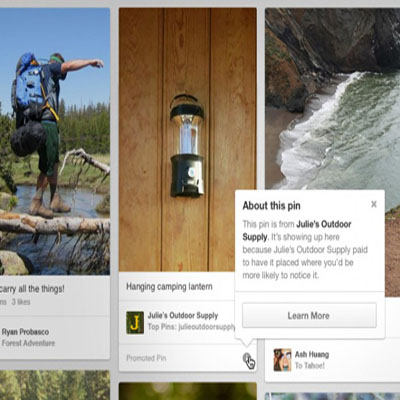
    Pinterest also introduced a new advertising tool called ‘Promoted Pins’, in January this year. According to digital experts in India, the social media platform tested the inventory in multiple phases. It was just last month that the platform made a small roll out with a group of brands in the U.S. This comprised ABC Family, Banana Republic, Expedia.com, GAP, General Mills, Kraft, lululemon athletica, Nestle’s few products, Old Navy, Target, Walt Disney Parks and Resorts and Ziploc.


    While on an average it takes around $30 to $40 to advertise on Pinterest, according to experts, with ‘Promoted Pins’, Pinterest aims to improve functionality, generate revenue and serve additional content around the pin. The company also aims at generating between $1 million and $2 million per campaign from its big advertising partners.


    To address the large chunk of small and medium-sized businesses Pinterest is going to take a different route and opening up ‘Promoted Pins’ to more businesses in a very Facebook-like advertising model. Instead of paying by impressions, like on Facebook, with Pinterest’s this inventory, brands only pay when people click through to their brand website.


    It is learnt that Pinterest is also prepping up to open a data firehose by the name Business Insights API. With this, companies will be able to customize their online campaigns based on user insights.


    Pinterest’s move is being likened to what Facebook initiated only to be taken over by Twitter later. Indiantelevision.com spoke to social media experts to understand what this means to an emerging market like India.


    Digital Quotient strategy and planning head Girish Mahajan opines that though Pinterest has gained a lot of momentum worldwide, in India, its power is yet to be fully realized. “This is mainly because Indians constitute only eight per cent of the entire Pinterest user base. But if your business is fashion, interiors, arts or F&B, Pinterest could be an interesting tool to make shopping easier and fun,” he says.


    “If a brand wants greater engagement of a particular target audience say women, in that case, Pinterest can prove to be tremendously influential. Visual is Pinterest’s strength, a very important factor for retailers. Also when compared to other social media tools, the amount of time required to run digital campaigns on Pinterest in less. Promoted Pins are available on an invite-only basis; it is essentially a CPM-based model. Pinterest is aiming for e-commerce bucks unlike Facebook and Twitter. The platform will evolve more into a second base for e-commerce sites other than FB or Twitter. At present in India, advertising options are not fully available but in the near future, we will witness people leveraging this tool better,” Mahajan added.


    According to RAPP India president Venkat Mallik ‘Promoted Pins’ will work well but only if brands handle them well. “If the promoted pins are overly ‘salesly’ they are likely to get rejected. The visual of promoted pins needs to look like content that is generally interesting to people with related interests and then have a sales message may be one layer down. There are a number of theories about the kind of pictures that get the largest amount of likes and repins and some of those could potentially serve as guidelines on how to make promoted pins work better as well,” mentioned Mallik.


    Facebook’s buying of Instagram last year added a lot of value especially in a market like India.  According to social baker Nike, MTV and Starbuck are the top brands in Indian on Instagram.  Ignitee social media head Nikhil Kharbanda says that many Indian brands prefer Instagram to Pinterest because of the former’s reach and subtle advertising option such as sponsored post/video. Though Instagram doesn’t release numbers according to many international news reports, the application has doubled its user base in the last one year.


    “The way ahead in creating effective communication on social media is to bet high on image marketing. It can be noted that currently, Indian brands are interestingly using Instagram in their digital media mix but I am positive that with platforms such as Pinterest introducing affordable advertising options, there will be much more action seen from brands in this space,” adds Kharbanda.


    Whether Pinterest will be able to make a dent on Instagram’s popularity with Indian brands, only time will tell…