Tag: PIL

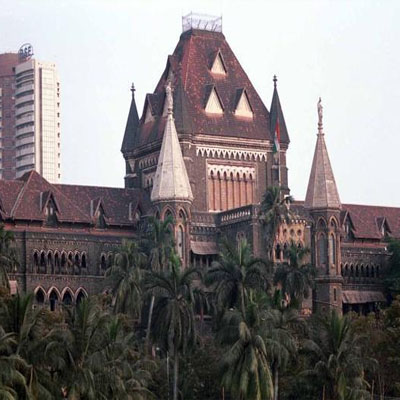
  • Can media reporting hamper due course of law, asks Bombay HC

    Can media reporting hamper due course of law, asks Bombay HC

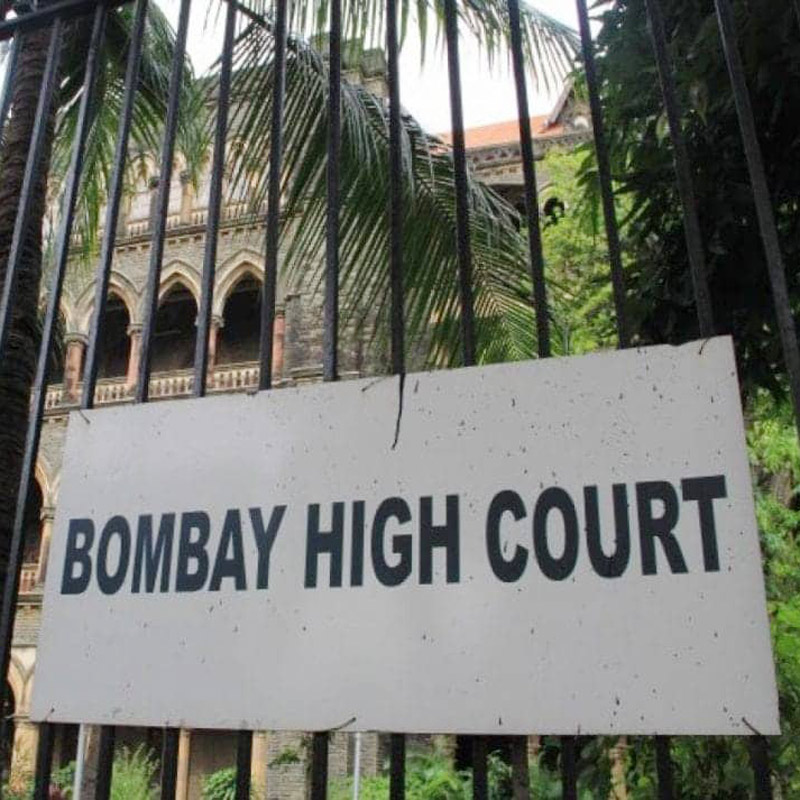
    NEW DELHI: The Bombay high court has sought written submissions from all parties regarding the adverse effects of media reporting on any investigation and the court’s own jurisdiction in such cases, in the ongoing case of PIL against media trials. The case has been pushed to 6 November for further hearing. 

    Stating that the court wants to give guidelines with respect to interference during investigation prior to the filing of the charge sheet, the bench of chief justice Dipankar Datta and justice GS Kulkarni sought answers on the issue of if the media should report responsibly keeping in mind the facts. 

    Regarding the reporting on ‘accused’, the court asked if trial by media would lead to interference in deciding whether an accused goes for trial or not; accused being on guard or tampering with evidence; tarnishing of reputation in case of an innocent person, et al. 

    It also asked, “Can you guarantee a police officer will not be influenced by media statements like ‘this is not the right track for investigation’ and then start hounding an innocent person?"

    Read our coverage on the Sushant Singh Rajput case 

    The court has also directed the parties to answer if the sensationalised reportage in the Sushant Singh Rajput case amounted to a media trial and whether the court can intervene in such matters.  

    The bench noted, “Let us not be blinded by precedents. Come to the bare facts, let us know the boundaries of our own jurisdiction.”

    The court also showed concern for the safety of the witnesses and if media trial can force them to turn hostile. 

    The court also opined that if the media wants to aid in the investigation, it can do so under the provisions of the Code of Criminal Procedure by giving information with the police.

    At its last hearing, the Bombay high court said it may have to lay down guidelines to check the rash of media trials in the country. 
     

  • PIL moves Delhi HC to prevent news channels from preaching communal disharmony

    PIL moves Delhi HC to prevent news channels from preaching communal disharmony

    NEW DELHI: A PIL has been filed in the Delhi high court in reference to the recent episode aired by Sudarshan TV on its programme Bindas Bol around the subject of the controversial Tanishq ad. The episode was aired on 12 October on the channel and talked about how the jewellery brand’s campaign was promoting ‘love jihad’ and attacking the psychology of the Hindu community.

    The petition, which has been filed by advocate Asghar Khan, sought directions to the central government to formulate guidelines to ensure that news channels do not preach communal disharmony and hate speech. It also sought a mechanism to check content and advertisements which are spreading hatred and are against the spirit of the Union of India.

    The plea said it can be clearly inferred from the Tanishq advertisement that its purpose was to showcase the spirit of unity and brotherhood amongst two religious groups.

    "However, Sudharsahan TV in its 8 pm show ‘Bindas Bol’ dated 12.10.2020 made their best attempts to incite hatred amongst above said religious groups…editor-in-chief of Sudarshan News and anchor of the show Suresh Chavhanke mentioned that love jihad is now being promoted by the way of advertisements and to quote him he said ‘advertisement jihad’.. an insidious attempt has been made to insinuate that the community is involved in a planned conspiracy to infiltrate the advertisement agency,” the petition reads.

    It stated that the central government and other authorities have, from time to time, issued directions and advisories to all private satellite TV channels, asking them to refrain from broadcasting content that may incite violence, threaten national integrity and violate the programme code.

    However, Sudarshan TV has not followed any of these advisories and has come up with broadcasts and printed blogs that target the sentiments of a particular community, the petitioner states. This isn’t the first instance of litigation against the channel. It is currently in the dock for its programme 'UPSC Jihad' over complaints that it violated the program code by communalising the entry of Muslims into the civil services.

    The plea further urged to ensure that the media houses report only true facts and not opinions and be responsible for what they are publishing.

    The plea sought direction to the authorities to form guidelines to include restrictions as envisaged under Article 19 of the Constitution and orders of the Supreme Court to ensure that media does not abuse the freedom of speech and expression.

    It has also prayed for imposition of "gag order" restraining the orators or authors of hate or derogatory speeches made on the lines of religion from addressing the public anywhere within the country till the disposal of the criminal proceeding initiated against them.

  • Is DAS III optional in AP, Telangana? HC seeks Govt answer by 31 Jan

    Is DAS III optional in AP, Telangana? HC seeks Govt answer by 31 Jan

    MUMBAI: A high court division bench has directed the Centre to respond to a PIL questioning the coercive manner in which the authorities were trying to bring in digital transmission of television programmes. Posting the case to 31 January, the bench has directed Central Government to clarify the issue.

    The bench of the Hyderabad High Court of justice Shameem Akther and acting chief justice Ramesh Ranganathan directed the Central Government to respond to the public interest litigation questioning the manner in which the authorities were trying to bring in digital transmission even in small towns in Telangana and Andhra Pradesh in place of transmission through cable television mode, the Hindu reported.

    The bench was hearing a case filed by the Citizens Welfare Society of Hyderabad. The court was told that, though an Act has made digital transmission mandatory, the explanation said it was optional. Meanwhile, the Society argued, citizens were being coerced. Two phases of digital addressable system (DAS) were completed whereby major cities were covered.

    The Centre now had started the third phase of DAS covering small towns in the two states (and across India). Government officials, the Society argued, had been threatening that after 1 February, television sets without (digital) set top boxes would not get signals.

    Also Read:

    DAS petitions challenging constitutional provisions listed for 3 November   

    DAS Phase III stay extended in Uttar Pradesh, Telangana and Andhra Pradesh

    Govt claims almost 100 percent STB seeding in DAS III areas despite cases     

    Telangana state government sets up committees to track the television sector

  • Is DAS III optional in AP, Telangana? HC seeks Govt answer by 31 Jan

    Is DAS III optional in AP, Telangana? HC seeks Govt answer by 31 Jan

    MUMBAI: A high court division bench has directed the Centre to respond to a PIL questioning the coercive manner in which the authorities were trying to bring in digital transmission of television programmes. Posting the case to 31 January, the bench has directed Central Government to clarify the issue.

    The bench of the Hyderabad High Court of justice Shameem Akther and acting chief justice Ramesh Ranganathan directed the Central Government to respond to the public interest litigation questioning the manner in which the authorities were trying to bring in digital transmission even in small towns in Telangana and Andhra Pradesh in place of transmission through cable television mode, the Hindu reported.

    The bench was hearing a case filed by the Citizens Welfare Society of Hyderabad. The court was told that, though an Act has made digital transmission mandatory, the explanation said it was optional. Meanwhile, the Society argued, citizens were being coerced. Two phases of digital addressable system (DAS) were completed whereby major cities were covered.

    The Centre now had started the third phase of DAS covering small towns in the two states (and across India). Government officials, the Society argued, had been threatening that after 1 February, television sets without (digital) set top boxes would not get signals.

    Also Read:

    DAS petitions challenging constitutional provisions listed for 3 November   

    DAS Phase III stay extended in Uttar Pradesh, Telangana and Andhra Pradesh

    Govt claims almost 100 percent STB seeding in DAS III areas despite cases     

    Telangana state government sets up committees to track the television sector

  • Centre’s opinion sought on YouTube uploads; notice issued on AIB case

    Centre’s opinion sought on YouTube uploads; notice issued on AIB case

    NEW DELHI: The Bombay High Court has asked the Information and Broadcasting Ministry’s opinion on the screening mechanism of YouTube uploads.


    This followed a public interest litigation (PIL) against the AIB Roast programme by law professor Sharmila Ghuge, who sought guidelines for a screening mechanism to keep a check on obscene and vulgar videos uploaded on YouTube.


    AIB (All India Bakchod) filed an intervention application in the matter. “We oppose this petition. It was a humorous show for a private audience. None of the private audience found it offensive. The language was excessive, but within the bounds of humour,” AIB’s senior counsel Mahesh Jethmalani told the division bench of Justices V.M. Kanade and Revati Mohite Dere.


    The court admitted the intervention plea. AIB will file a reply, if any, to the petition within the next two weeks. The Union of India too has been directed to file its opinion within two weeks. The court will hear the matter next on 3 March.


    Along with the PIL, the petitioner also submitted a copy of the CD about the programme, which was conducted in Mumbai in December last year. Its videos were uploaded on YouTube later. The petitioner also transcribed the excerpts of the show, and told the court that the content was objectionable.


    When the court said that only those who are defamed can file a defamation suit, Ghuge’s advocate Shyam Dewane said, “This (programme) has crossed the limits of morality. The language used is such that it crosses the limit of decency. It is obscene to the core, and it particularly affects the minds of the youths.”


    In the PIL, Ghuge said, “Whereas, the film stars have made a deliberate attempt to lower the dignity of women by showing their insensitive attitude towards the most heinous crime of rape by passing several jokes on rape and gang rape enjoying the flavour of humour for the most unfortunate act any women can ever face in her life. Not only this, cracking jokes on gays, race, rape, ebola and making homophobic jokes is an absolute insult to not only to women but all the individuals.”


    She has said such remarks will adversely affect the youth of the country. “That such a rapid augmentation of audience to this video is unquestionably aiming to adversely affect the youth of this nation. Particularly the sway and influence of these film stars is beyond imagination on the youth. These celebrities are youth icons and the young generation blindly follows them which indeed is misleading and disgraceful for the nation in such incidences.”


    Dewane said there was need for a mechanism to filter out vulgar and obscene videos from YouTube. The court thereafter sought Union government’s say on the matter.


    “That the video of the AIB show, which has been uploaded on 28 January, 2015 has not been verified by any of the authorities, whether the content of the video is suitable to be thrown open to public at large. The said video has been uploaded by the organisers of the AIB show as evident from the titles of the video. Neither the organisers nor the respondents felt the need and importance of verifying the content before putting the video on air, which needless to state has gone viral amongst people, more particularly youths,” the PIL has stated. 

  • Centre gets notice regarding broadcast media regulation

    Centre gets notice regarding broadcast media regulation

    MUMBAI: The debate regarding the need of an external body to govern broadcast media has been raging since long. It has now reached the Supreme Court via a public interest litigation (PIL) filed by NGO Mediawatch.

    The SC has taken cognisance of the PIL seeking the establishment of an independent regulatory body to overlook broadcast media and issued a notice to the centre regarding it. The News Broadcasters Association (NBA), Association of Radio Operators for India (AROI) and the Advertising Standards Council of India (ASCI) have also been asked to submit their responses.

    The order was passed by a bench headed by chief justice P Sathasivam stating that the body is needed as the centre had failed to regulate content for the medium.

    The petition said: “For the last one and a half decades, the Ministry of I&B is perpetuating virtual anarchy in the realm of broadcast media regulation. Especially on the content regulation front, its broadcaster-appeasing and wait-and-watch policies marked by sheer ad-hocism and indifference to viewers’ interests are adversely affecting the rights of millions of broadcast media consumers. The Ministry as content regulator had failed completely in protecting the interests and basic rights of the audience. It has not constituted sufficient infrastructure and resources to ensure quick decision-making against offending channels and also not imposing deterrent penalties as provided by law.”

    The bench agreed to hear the PIL and clubbed it with a similar pending petition. The SC had on 29 November asked the Ministry of Information and Broadcasting, Ministry of Law and Justice, Ministry of Communications and IT as well as the Press Council of India to respond to the PIL asking for guidelines to regulate TV content.

  • Mukta Arts PAT at 1.04 per cent of income from ops for Q1-2014

    Mukta Arts PAT at 1.04 per cent of income from ops for Q1-2014

    BENGALURU: Mukta Arts Limited (MAL) announced a PAT of Rs 0.74 crore and total income from operations of Rs 71.45 crore for Q1-2014, which translates roughly to 1.04 per cent for Q1-2014. A major chunk (63.1 per cent) of this PAT – Rs 0.47 crore for Q1-2014, came from discontinuing operations (see Notes (3) below).


    PAT percentage for Q1-2013 was slightly higher at 1.21 per cent of total revenue, but numerically lower than Q1-2014 – PAT for Q1-2013 was Rs 0.59 crore, total income from operations was Rs 48.98 crore. Discontinuing operations added Rs 0.39 crore or 65.25 per cent of total PAT for Q1-2013.


    MAL incurred loss of Rs 2.49 crore in Q4-2013. Loss from discontinuing operations added Rs 0.38 crore or 15.15 per cent to the loss for Q4-2013.


    For FY-2013, MAL had total income from operations of Rs 257.82 crore and a PAT of Rs 2.90 crore, hence PAT was 1.13 per cent of total income from operations. Discontinuing operations added Rs 1.12 crore or 38.6 per cent to total PAT for FY-2013.


    Let us take a look at MAL’s other figures for Q1-2014


    Total income from operations for Q1-2014 at Rs 71.45 crore increased by 45.9 per cent as compared to the Rs 48.98 crore for Q1-2013 and 21.3 per cent as compared to the Rs 58.92 crore for Q4-2013. As mentioned above, MAL’s total income from operations for FY-2013 was Rs 257.82 crore.


    Total Expenditure for Q1-2014 at Rs 70.34 crore rose 42.2 per cent as compared to the Rs 49.39 crore for Q1-2013 and was 13.6 per cent more than the Rs 61.91 crore for Q4-2013.


    A major chunk of MAL’s expenditure is the Distributors and Producers share (DAPS). For Q1-2014, DAPS at Rs 64.94 crore (90.9 per cent of Total Income from operations) was 40.2 per cent more than the Rs 46.32 crore (94.6 per cent of Total Income from operations) for Q1-2013 and 20.9 per cent higher than the Rs 53.73 crore (91.2 per cent of Total Income from operations). For FY-2013, MAL had reported a DAPS of Rs 233.74 crore or 90.7 per cent of Total Income from operations.


    Segment Results


    Four segments – Software division; Equipment division; Theatrical Exhibition division; and Others are responsible for revenue for MAL.


    Revenue from MAL’s Software division contributes more than 90 per cent to its revenues. For Q1-2014, the Software division had revenue of Rs 65.92 crore (97.3 per cent of Total Income from operations), which was 34.9 per cent higher than the Rs 48.86 crore (96.5 per cent of Total Income from operations) for Q1-2013 and 20.9 per cent higher than the Rs 54.54 crore (92.6 per cent of Total Income from operations) for Q4-2013. For FY-2013, revenue from Software division at Rs 246.47 crore was 95.6 per cent of Total Income from operations.


    Revenues from MAL’s Equipment division and Theatrical Exhibition division were a small fraction at Rs 0.31 crore and Rs 3.68 crore respectively of overall revenues for Q1-2014 and have not been major contributors to MAL’s PAT for the quarter. Equipment division incurred a loss of Rs 0.06 crore in Q1-2014, while Theatrical division added Rs 0.08 crore to MAL’s profit before tax and finance costs.


    Revenue from ‘Other’ in Q1-2014 rose marginally (by 5.14 per cent) to Rs 1.71 crore from Rs 1.63 crore in Q1-2013 and was just 0.87 per cent higher than the Rs 1.70 crore for Q4-2013. This segment however added Rs 1.41 crore as compared to the Rs 0.69 crore from the Software division’s and formed a major chunk (66.25 per cent) of MAL’s profit before tax and finance costs for Q1-2014 at Rs 2.12 crore.


    NOTES: (1) In the matter of two PIL’s filed in the Bombay High Court, the Bombay High Court quashed the J.V. Agreement between Mukta Arts Limited (MAL) and Maharashtra Film Stage & Cultural Development Corporation Limited (MFSCDCL) and ordered Whistling Woods International (WWI) to return the 14.5 acre vacant land immediately and balance 5.5 acre land with structure by July 2014. Court also asked WWI to pay rent along with interest but allowed the same to be set off against market price of the building to be paid by Government as per valuation to be done. After Supreme Court of India dismissed the SLP filed by MAL against the impugned order, MAL & WWI have filed review petitions in Bombay High Court, which have not yet come up for hearing. MFSCDCL had demanded Rs 83.21 crore vide letter dated 3 December 2012, which has not been accounted for in view of the pending review petition referred to above. During the year 2012-13, the PWD Engineer has given his valuation report based on the Balance Sheet of WWI as at 31 March 2011. The said valuation report specifically mentions that market price is not considered.


    Further, MAL has made an application to the Government of Maharashtra in February 2013 to appoint expert valuers to determine the market price which in its view is the price to be determined by reading the directions in their proper perspective. Pending final disposal of the review petition and resolution of the above, and in view of the future plans for WWI which are being evaluated, management believes that the Company’s investments in WWI and amounts due therefrom are good and recoverable as management is hopeful of reliefs based on the issues involved and on merits of the case, as also of a high valuation of the building. The auditors continue to modify their report on the said matter.


    (2) Remuneration paid to the managing director of the Company for the year ended 31 March 2013 and for earlier financial years from 2005-06 to 2011-2012 is in excess of the limits prescribed under Schedule XIII to the Companies Act, 1956. The Company made applications to the Central Government seeking post-facto approval for earlier years, which is awaited; application for the year 2012-13 is proposed to be made. During the year 2011-12, the company had received approval for part of the excess remuneration paid. The company had made applications to the authorities requesting reconsideration/ approval for the balance excess remuneration. Pending final communication from the authorities in this regard and application for the year 2012-13, no adjustment has been made in these financial results. The auditors continue to modify their report on the said matter.


    (3) During the quarter ended 31 March 2013, the Board of Directors approved the formation, with another venturer, of a company as a subsidiary of Mukta Arts Limited to conduct the business of exhibition and programming currently being carried on by Mukta Arts Limited. The results of the said business have been disclosed as Discontinuing operations. Previous quarter’s/period’s figures have also been recast for comparative purposes.


    (4) Figures for the previous quarter/ period have been regrouped/ rearranged to conform to current quarter’s/ period’s presentation.

  • Madras HC admits PIL against minister Dayanidhi Maran

    Madras HC admits PIL against minister Dayanidhi Maran

    MUMBAI: The Madras HC has admitted a Public Interest Litigation (PIL), which accuses the Union minister of communications and information technology Dayanidhi Maran for releasing advertisements worth Rs 100 million to the family-owned Sun TV Network.

    According to a Times of India report, justices M Karpagavinayagam and A R Ramalingam on 9 March admitted a writ petition on the case that would come up for hearing before the chief justice on 13 March. The PIL, filed by J Veparasu, accuses Maran of abusing the office of the Union minister.

    Veparasu, in the PIL, has sought an HC direction for a CBI investigation into all transactions since May 2004, when Maran assumed the office as Union minister. He has also sought an interim injunction restraining Maran’s ministry from releasing any advertisement to Sun TV Group channels and publications till his PIL is disposed.

    The Chennai-headquartered Sun TV group, which has 15 television channels, four print publications and two radio channels, is owned by Maran’s elder brother Kalanithi Maran.

    The crux of the petition is that, though there are many private producers who telecast their programmes on the Sun group channels, Maran has not released even a single advertisement to their programmes. The petitioner alleges that the advertisements went exclusively to programmes telecast and produced by Kalanithi Maran.

    Maran, now under fire for committing breach of oath under Schedule III of the Constitution, has also been accused of neglecting government-owned channels when it came to advertisement support.