Tag: #PhysicsWallah

  • PW adds more force to its formula with Satish Sharma as new CMO

    PW adds more force to its formula with Satish Sharma as new CMO

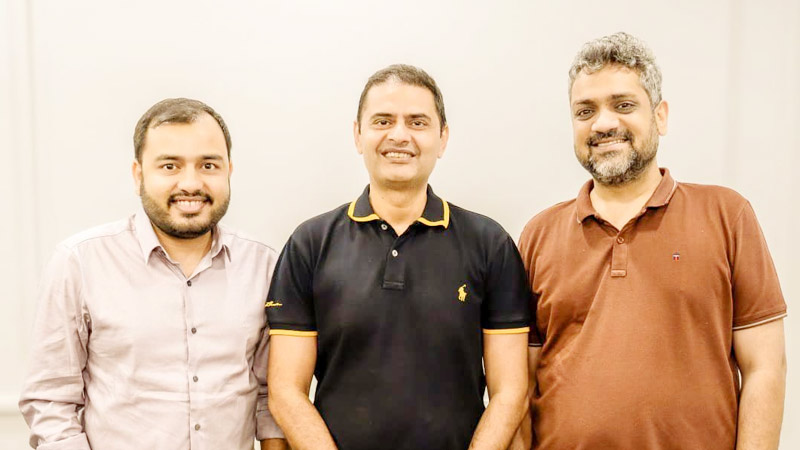
    MUMBAI: It’s not rocket science, it’s marketing. And Physicswallah just found the right mind to lead the charge. In a move to amplify its brand and deepen its market resonance, India’s edtech powerhouse has appointed Satish Sharma as its new chief marketing officer (CMO). Sharma, a seasoned leader with over two decades of experience, has donned many hats entrepreneur, brand strategist, and tech transformation expert. Most recently, he co-founded Unyscape, a global marketing and analytics firm, where he served as both COO and CMO. Prior to that, he held formative roles at IBM and Tata Steel, adding operational muscle to his marketing brain.

    A graduate of IIT Varanasi, Satish now steps into Physicswallah (PW) at a time when the company is doubling down on its mission to democratise education across India and beyond. With offerings spanning test prep, skilling, higher education, and study abroad, PW is evolving rapidly and it needs marketing leadership to match its ambition.

    “The brand’s attempt at making education accessible to those who wish to learn deeply resonates with me,” Sharma said. “I look forward to amplifying the impact with authenticity and empathy.”

    PW’s Founder and CEO, Alakh Pandey, echoed the sentiment: “Satish brings a rare mix of strategic clarity and operational excellence. As we enter the next chapter of growth, his experience will be invaluable in building a brand learners trust and love.”

    With Sharma in the cockpit, Physicswallah is clearly gearing up to accelerate its brand journey powered not just by formulas and facts, but by focus and finesse.

  • Physics Wallah appoints Amit Sachdeva as CFO to drive financial strategy

    Physics Wallah appoints Amit Sachdeva as CFO to drive financial strategy

    Mumbai: Physics Wallah (PW) proudly announces the appointment of Amit Sachdeva, former CFO at Blinkit, as its new chief financial officer. Bringing a wealth of experience in financial strategy and transformation across consumer tech, IT, and ITeS sectors, Sachdeva is set to enhance PW’s mission of delivering quality, accessible education to students nationwide. With leadership roles at prestigious companies like IGT Solutions, Blinkit, and Wipro, Sachdeva is well-prepared to guide PW’s financial oversight and growth initiatives.

    Sachdeva is a chartered accountant from the Institute of Chartered Accountants of India and a certified public accountant in the USA. An alumnus of Shri Ram College of Commerce (SRCC), University of Delhi, he brings both a strong educational background and years of hands-on experience to PW. As CFO, Sachdeva will lead PW’s strategic and financial initiatives, advancing the company’s vision of accessible, high-quality education.

    Reflecting on his new role, Sachdeva stated, “Joining Physics Wallah is a great opportunity to support an organisation seeking to make education accessible to so many. I am thankful to Alakh Sir and Prateek Sir for this opportunity and PW’s objective to broaden educational access and be of help to students working towards their goals.”

    Physics Wallah, CEO, Alakh Pandey highlighted the significance of this appointment: “Amit’s experience in financial leadership and his focus on robust corporate governance will be invaluable as we continue our efforts to grow and broaden our educational impact. His approach to finance as a transformative tool aligns with PW’s goals, and we’re happy to welcome him.”

    With Sachdeva’s expertise, Physics Wallah aims to reinforce its financial planning, enable sustainable growth, and further its commitment to making quality education accessible to all.

  • Moneycontrol and CNBC-TV18’s AI alliance comes to the National Capital Region on 17 May

    Moneycontrol and CNBC-TV18’s AI alliance comes to the National Capital Region on 17 May

    Mumbai: Following the resounding success of its Bengaluru and Pune edition, Moneycontrol and CNBC-TV18’s AI Alliance is set to host its next chapter, themed ‘AI: Shaping the Future of NCR’ on 17 May 2024, at The Oberoi, Gurgaon. The summit promises to highlight the transformative potential of AI across various industries and its pivotal role in shaping the future of the National Capital Region (NCR).

    Known for its diverse array of IT/BPM firms, multinational corporations, and a thriving startup ecosystem, NCR has been a key contributor to India’s prominence in the technology sector. With its inherent advantages, tech talent and potential in AI innovation, NCR was a natural choice for the AI alliance.

    The AI Alliance in NCR will serve as a platform for industry leaders, policymakers, and innovators, fostering collaboration and charting a path for NCR’s AI-driven future.

    The event will be graced by distinguished speakers such as S Krishnan (Secretary, Ministry of Electronics and Information Technology), Abhishek Singh (Additional Secretary, Ministry of Electronics and Information Technology), Rajan Anandan (Managing Director, Peak XV Partners) Kunal Bahl (Co-Founder, Snapdeal and Titan Capital), Rafee Tarafdar (CTO, Infosys), Prateek Maheshwari (co-founder PhysicsWallah) Varun Alagh (co-founder and CEO, Honasa Consumer) Mayank Kumar (Co-founder & MD, upGrad), Pratham Mittal (Founder, Masters’ Union) and Ruchi Kalra (Co-Founder, OfBusiness and Oxyzo).

    The event will also have top executives from Nandan Nilekani’s people+ai to take the audience through why India can emerge as the AI use case capital of the world.

    Attendees can expect to gain valuable insights as the discussions touch upon themes ranging from India’s AI mission, AI regulation and policy, impact of AI on the IT sector, building population scale AI, its implications on education, to the essentials of building a thriving AI startup ecosystem in the region. The audience will also get a chance to interact with founders, policymakers, and thought leaders, and explore networking opportunities and potential collaborations.

    Moneycontrol deputy executive editor Chandra R Srikanth said, “With the NCR city chapter of AI Alliance, we are deepening our commitment towards fostering and building an AI community in India and shining a light on its impact across sectors. Just as our Pune edition highlighted the city’s vibrant auto, Saas and deep tech ecosystem, this event will delve into NCR’s tech DNA and the opportunities it can leverage in the AI era. It will serve as a platform to boost collaboration and innovation.”

  • Is the Indian edtech boom beginning to go bust?

    Is the Indian edtech boom beginning to go bust?

    Mumbai: The Indian edtech industry has witnessed a dream run in the past two years. The pandemic turned out to be a boon in disguise for the fledgling sector, which saw blockbuster growth with schools and educational institutes switching over to the online mode. This paved the way for the rise of numerous ed-tech startups, with the space attracting a slew of investors and funding, helping several of them script success stories.

    However, now with the reopening of schools and offline institutes accompanied by an inflation-induced “funding winter,” edtechs face an uncertain future. Questions are being raised about the effectiveness of online learning as consumers become more sceptical of the digital learning model and the additional costs it entails. Several established companies in the space, including Unacademy, Vedantu, Lido, and Byju’s WhitehatJr., have had to resort to layoffs to avoid taking a big hit to their revenues or simply to stay afloat in the aftermath of the pandemic-driven edtech boom.

    So is the edtech bubble in the country finally starting to burst? Let’s find out.

    Customer acquisition- a major hurdle

    In the post-pandemic scenario, student retention and customer acquisition have become more and more of a challenge for e-learning companies, according to industry experts. There is no denying that, currently, all the firms in this sector are facing huge problems in acquiring fresh customers and retaining their existing ones, says Optiminastic Media head of business development and partnerships Aditya Pandey. “After offline centres and schools have been resumed, the registration count of new customers has lowered by a significant degree. Despite big funding and marketing promotions, edtech firms are still struggling to convince parents to adapt to the new services these firms have to offer.”

    Over 4,450 edtech startups were launched between 2014 and 2019, of which nearly 25 per cent have been shut down while the rest have been acquired by the big players in the sector, according to Pandey.

    Cutting down on adspends

    To curb the challenge of customer acquisition, edtech firms—which were one of the largest spenders on advertising during prime television properties such as IPL last year—have drastically dropped their ad spends on all platforms. According to experts, the cost of acquiring a single customer and converting that customer during the sales cycle has become too high for many edtech startups, and this is the primary reason why they have significantly reduced their ad spend.

    Be it digital, TV, or print, these startups are not spending as they used to during the pandemic, notes Pandey, adding that the prime reason for taking this step is to reduce the cost of customer acquisition, which was very high during the pandemic.

    “Compared to traditional institutes that spend 10 per cent of their total revenue, the edtech firms were spending more than 25 per cent on advertisements and promotions. In the post-pandemic period and due to some negative reviews by the customers, there was a big drop in the revenue, which forced them to reduce their current ad spending,” he continues. Instead, these edtech firms are revamping their pricing and working to regain the trust of the lost customers by adding value to their products and services, he adds.

    Taking the Hybrid road

    Many edtech companies are looking to launch physical centres as they prepare themselves for a new battle in the new normal as competition heats up in the offline space. In May this year, SoftBank-backed edtech unicorn Unacademy announced a plan to set up offline tuition centres.

    Edtech major, Byju’s is also pivoting to a hybrid model as the next stage. Since February, the conglomerate has opened 100 Byju’s tuition centres nationwide that combine both in-classroom learning and online tuition. It expects to roll out 400 more this year.

    Both online and offline education have their own set of advantages, where online education provides an excellent option for students who are unable to enroll in traditional classes due to financial constraints or other factors, says PhysicsWallah chief strategy officer Abhishek Mishra.

    We have seen the rise of e-learning as a result of advanced technology in recent years, but have never intended to replace the entire nature of traditional education with online learning, he says, adding that the company aims to provide quality education at affordable prices through both online classes and offline centres.

    CivilsDaily founder Sajal Singh agrees that both modes have their advantages and disadvantages. “Just as offline teaching cannot hide the dynamic benefits of online learning, it is undeniable that online coaching cannot replace traditional teaching methods.”

    Most edtech companies are adapting hybrid models, and I believe this will be the accepted way forward, says media tech startup FC Play CEO Arti Gudal. “As corporates, we believe the physical mode will always remain predominant with the online edtech companies complementing it, hence the hybrid model can and will work better for edTech.”Customer acquisition does not have to be through a single mode, it can be managed offline and online, she adds.

    The roadmap ahead

    Education is a long-term investment with lifelong returns, and people don’t want to compromise on their educational aspirations, believes Athena Education co-founder Poshak Agrawal. “Against expectations, we have seen a sharp increase in student queries for applications to elite universities in the last two years, and we think these aspirations are here to stay,” he adds.

    While the pandemic definitely accelerated the integration of technology into education and gave a boost to the adoption of educational technologies across all socioeconomic strata, now that parents and students have experienced the conveniences of online learning, there may be no going back, believes BrightCHAMPS founder and CEO Ravi Bhushan.

    Consumer acquisition is no longer the daunting challenge that it once was, he asserts. “The convenience of learning from anywhere and anytime in the world; greater control over their learning journeys through personalisation; global exposure and learning from a faculty that comprises subject matter experts from around the world at affordable price points; savings in terms of time and money; and the safety that comes with learning from your own home—an increasing number of parents and students are now opting for online classes.”

    In a service like ours, word-of-mouth is the best marketing strategy, Bhushan continues, adding that controlling customer acquisition spending is what has allowed the startup to maintain a long runway and safeguard them at such a time.

    The challenge for edtechs going forward, and possibly the only way forward, is to ensure customer stickiness and achieve sustainable growth while avoiding making misleading claims and unsustainable promises in their advertisements and marketing promotions.