Tag: Phase III

  • IDOS 2014: Are STBs high on QC?

    IDOS 2014: Are STBs high on QC?

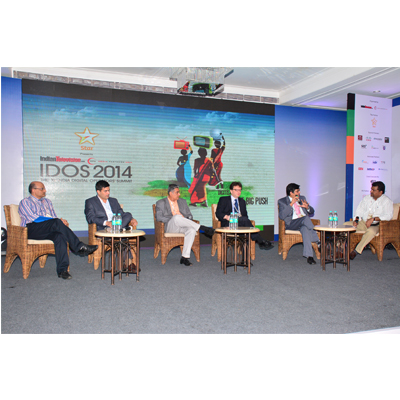
    GOA: As high as 38 million set top boxes (STBs) have been rolled out in phase I and II of digitisation, but as for the quality, a lot of these boxes were described as ‘dabbas’. Of the total number of boxes, a tiny percentage was high definition boxes and even of those, several were found faulty. The session on ‘Technology Shifts in Indian Pay TV’ during the recently concluded India Digital Operators’ Summit (IDOS) 2014 at Goa, started with these crucial facts.


    The government has decided to push digitisation of phase III and phase IV to December 2015 and December 2016 respectively, citing indigenous manufacturing of boxes as the main reason for the extension. The big question now is, ‘Are the Indian manufactures ready for the 100 million boxes needed in the next 24-30 months?’


    “Contrary to the expectations of many, yes, we are ready,” said Mybox executive director Amit Kharbanda.


    With the ‘Make in India’ concept, the government is not just promoting the Indian manufactures, but is asking the international manufacturers to come to India and create hardware here. “When you talk of manufacturing of STBs, the basic requirement, after the components, is the capacity for big production. According to our calculation, if there is a requirement for 100 million boxes, and we break it to 40-45 million boxes per year, the SMT capacity required is 26 machines, and if we remove all the big international manufactures, India will still have SMT capacity with an availability of 46 machines,” informed Kharbanda.


    The next question which many have been asking is how has the extension benefited the STB manufacturers? “We have been growing from the time we entered the manufacturing space. After digitisation, we knew we had to supplement the market and so we increased our capacity by about 30-40 per cent. Right now we have the capacity of 5 million boxes per annum, of which 60 per cent is utilised by our captive customers and 40 per cent is for other consumers. But considering the experience we have, we can easily expand our capacity,” said Videocon Group head trend electronics Jagdish Bangad.


    The question, according to Kharbanda is not about if we can manufacture 45 million STBs in one year, the question is, considering there are 300 components in a STB, “will we have those many Broadcom or other chips makers in India, and this, keeping in mind that we are not the only country buying it?” Kharbanda questioned.   


    For Broadcom MD Rajiv Kapur, the chip output is extremely high. “We produce more than two billion chips annually. The issue is not production of chips, neither is capacity an issue. The main thing now is that we should be a little careful about our expectations. One doesn’t want to go down the path of over preparing and over- producing and compromising on the maturity which is needed to develop quality in a supply chain,” said Kapur.


    He also cautioned the industry, that in order to achieve the target of the 100 million boxes in the given time frame, one should not start cutting the corners on quality.  


    Cisco, which works closely with a number of multisystem operators (MSOs) in the country and also the STB manufacturers, is agnostic to whether the boxes are made in India, China or Korea. “We welcome the move that the Indian government is keen to promote manufacturing locally,” said Cisco director John McCorkindale adding that they haven’t changed their strategy for the country with delayed digitisation.  


     According to Logic Eastern CTO Vineet Wadhwa, one needs to keep the backend support ready. “One of the key points is that most of us are just concentrating on the manufacturing skills or strengths. But, this is just a part. More thoughts need to go when one plans on scaling,” he said adding that the industry needs funding.


    “We are dealing with tier II and tier III markets. The amount of support needed for tier II and III markets don’t help me when I go to tier IV MSOs. For every three or four tier III MSOs, one needs at least one or two support personnel and for every five support personnel, you need one support manager,” informed Wadhwa.


    He also highlighted that with the different types of CAS, boxes, networks etc, the complexity of managing a network 500-2000 km away over mobile phone is difficult. This means that the manufacturers will also need to set up a support team. “They will have to have deep pockets,” he added.


    A very crucial point that came out during the session moderated by Castle Media director Vynsley Fernandes was that while the capability and technology exists in India, the fundamental challenge is that tier III and IV markets have huge pricing issues. One needs to understand from the LMOs, how much their subscribers will be ready to pay.


    Kharbanda pointed out that the industry which has a target of manufacturing 100 million boxes, if it could even produce 50-60 million boxes, will start a cycle that will help them in the long run. “The fact is that we have to come together as an industry and we need support from the MSOs as well,” said he.


    According to McCorkindale tier III and IV MSOs want to control everything on their own. “They want good quality and want more power to increase their ARPU,” he said.


    For Kapur, delayed digitisiation is actually good. “I feel we were going too fast. The benefit of this delay is that now we can look at the experience of the first 20-30 million boxes which have been deployed. The common approach from vendors in the first two phases was of cutting corners, while only thinking of price and compromising on the quality,” he said.


    MSOs, according to Kapur, have learnt a lot from the first two phases and are now upping their specs. “The difference in pricing of high quality and low quality boxes is not a very big dollar amount. One only needs to know what specs are needed for its STBs,” he added.  


    Another point which was highlighted during the session was that in the rush to seed boxes, no field trials were done in the first two phases. “This led to bad quality boxes being rolled out. Now we have the time to do all this and control the quality,” opined Kharbanda.


    A very important component of the STB cost is the warranty and the support charge per hour from the box company, CAS company and SMS company etc. “And my belief is that the MSOs of tier II and tier III will not compromise on the quality of the box. But they might not be able to afford the dollar per hour charges for support,” said Wadhwa.


    Kapur, is a firm believer that the STBs should have a long lifecycle. “India is a nation where TV moves from house to house but is never thrown, so we can’t be producing 100 million boxes, which are bad quality ones, with no support and element of future proof for different markets,” he said.

    The session concluded with the remark: It is time we move away from speed and cost. 

  • IDOS 2014: Alternative platforms eye growth in phase III and IV of digitisation

    IDOS 2014: Alternative platforms eye growth in phase III and IV of digitisation

    MUMBAI: With digitisation being delayed for phase III and IV of digitisation, alternative platforms such as HITS and OTT will see their importance rising. Speaking on the growth of alternative video platforms were Doordarshan deputy director general CK Jain, IMCL MD and CEO Tony D’silva, JAINHITS MD Ankur Jain and Zenga TV MD and CTO Shabir Momin moderated by indiantelevision.com founder, CEO and editor in chief Anil Wanvari and Media Partners Asia executive director Vivek Couto.


    Couto started off by asking how the digitisation delay will impact DD’s DTH service Freedish to which CK Jain responded by saying that it won’t hurt Freedish or DD much because most of DD’s audience is in phase III and IV markets. “There are still many households that don’t yet have a TV set but I’m sure that the new households are likely to have DD Freedish as the connection or our upcoming DVB T2 service. So even if we lose out on some numbers, we will most likely make them up with the new ones,” he said.


    Ankur Jain was then asked to explain a bit about his HITS model to which he highlighted that JAINHITS has 253 services out of which 140 are free to air (FTA) for which no subscription is charged. However, the road wasn’t easy for them. He said that most broadcasters refused to give content on the pretext of geo fencing and piracy. “It took six months of TDSAT and High Court. But we still have one of the highest content rates in the industry as most of them are on RIO which we subsidise for our partners,” he said.


    JAINHITS has signed up with nearly 300 partners in 240 districts that have an analogue base of 2.7 million customers. As far as digitisation delay is concerned, Ankur Jain said, “The Minister had started making noise around the delay a while before it was announced and indiantelevision.com wrote the first story on it and it spread like wildfire. But we haven’t seen any real change in business volumes, demand for STBs, headends etc.”


    According to him, this model acts like an aggregator for the smaller operator and for bigger ones, an opportunity to reach smaller markets where they don’t have fibre or reach. When questioned about the challenges a HITS operator has to face, Ankur Jain said that it was the pressure to keep STB cost low. But eventually, it was seen that the STB that was sold to the LCO at Rs 2300 was being sold by the LCO to the customer either at Rs 2300 or Rs 2500. “The cable guy was cribbing that we would make him bankrupt. But they have the money and ability to talk to consumers and in most cases, they market the price up and sell it,” he pointed out.


    Mindset is also an issue while dealing with content companies because some of them want average revenue per user (ARPU) to go up while some want to selectively distribute and keep ARPU low and charge good rates.


    On the other hand, D’silva feels that the Hinduja ideology for launching HITS is different. “One of the major issues of phase I and II was that we aren’t getting fair share. The reason why we are looking at HITS is to bring order in disorder and we are spending considerable money to upgrade and take this network itself up,” he said. Content, however, remains an issue but according to him the way forward is to take content and make universal bundles.


    D’silva claims that for cable operators nearly 60 to 65 per cent of revenue comes from phase I and II, which is about 30 million with another 100 million lying in phase III and IV. With this, bundling dynamics will have to change. The Hinduja HITS model is looking at launching prepaid from the first day along with services such as VAS, TV Everywhere etc.  “It is not about delaying or advancing digitisation. It is whether we make the same mistakes or learn from it,” he said.


    He also said that he isn’t convinced about digitisation being mandated solely to increase ARPU as according to him ARPU is a function of the derivatives that are put in.


    Addressing Momin, Couto asked him to highlight a bit about the digital model. Momin started off by saying that digital has always been taken either as a threat or as inconsequential.  “We are building for a leapfrog future. I have to worry about 19 formats (devices). Our advantage is lack of hierarchy leading to more growth,” he said.


    The dynamics of digital is different where success is measured by minutes watched. Momin says that for digital platform, the important thing is to establish reach through good content. “I run two companies, Zenga TV and One Digital, both of them PAT positive. Sitting in India, we have a global platform with about 40 per cent revenue coming from international which has only 10 per cent viewership because their CPM rates are higher,” he said.


    Couto asked whether advertising revenue from India was sufficient and if it was coming out of TV and whether this will lead to a subscription based model for OTT anytime soon. Momin feels that the last few years have seen content makers rip people off by giving low quality product, thereby losing trust. “Very few people will say that I don’t want to look at an ad, I want to pay for quality content,” he said while stating that brand integration was an important means of revenue.


    Momin said that brands that were spending about Rs 50 lakh last year are now spending Rs 3 crore to Rs 3.5 crore but the important thing is brands mandating agencies to look at digital more. As far as ad rates are concerned, they aren’t the best in the world because of lack of good ad formats.


    Coming to an end to the session, Couto asked the HITS players to highlight their value in the ecosystem. Ankur Jain said that JAINHITS is helping digital India plan, DOCSIS and two way cable be a reality while D’silva said that broadband would be a success when entertainment is added as an important quotient to ‘roti, kapda aur makaan’. 

  • IDOS 2014: ‘Customer is the King and not the Content’

    IDOS 2014: ‘Customer is the King and not the Content’

    GOA: Content is the king is a passé; in today’s world it is the customer which rules.


    Businesses across the world understand that involving their customers will help them innovate and provide better products and services. The same goes for the Indian cable television industry. The players believe that the core intention of digitisation was not just converting the analogue signal into digital one, but to offer choice to the customers.


     “One key element, which we all missed out in the phase I and II of digitisation is the customer, itself. Customer is the king and not the content. Customer decides whether ARPUs will go up or not. Hence, a methodology needs to be found by all the stakeholders,” said Hinduja Group MD and IMCL CEO Tony D’silva while adding that if  a customer wants broadband, VAS or cable, we have to give it to him/her as per the need.


    He was speaking at a panel discussion on ‘Digitisation: The phase III and phase IV Challenge’ held at IDOS 2014.


    Ortel Communication CEO BP Rath said that the core intention of digitisation was not to decrease the carriage fee but to increase the ARPUs. “The aim was to offer choice to the customers; those who want more services, will pay more or otherwise,” he said and added that he is happy with the delay in dates for digitisation in phase III and IV as the players would get more time to understand the needs of their clients.


    “It was inevitable. Most of the people sitting here don’t know what India is. The lessons are simple. Except for seeding boxes in phase I and II, nothing much has been done. Customers’ choice was not taken into consideration in earlier phases,” he said.


    Instead of taking the top-down approach, we should work from customers’ perspective and integrate those into our plans, suggested Rath.


    Speaking in the same tone, CSG International south Asia vice president Letchu Narayanan said that customer experience matters the most. The industry should shift focus to customer as it is a customer-driven industry.


    Essel Group’s Dish TV CEO RC Venkateish feels that in phase III and IV there is a need for regional and low price offerings in around 70-80 million cable TV homes, which are yet to be digitized. He said that even though the players have different models, customer addressability is the need of the hour.


    On the content and the challenges to be handled in phase III and IV, Venkateish said the DTH players are working on different packages as per the customers need. “The road for better revenue can be achieved if all solve the problem together,” he said.


    Talking about the Dish TV business model, he said India is a big market and there are different needs. The company reports around 55 per cent of its revenue from the mass as only 15-20 per cent customers go for HD channels. “It all depends on the purchasing power,” he said.


    Maharashtra Cable Operators Foundation (MCOF) president Arvind Prabhoo said the players are mulling to offer choices to customers by not only providing network, Wi-Fi but also ensuring that the up-gradation is done before the next rollout.


    Agreeing with others Sagar E-Technologies executive director Sudish Kumar further elaborated that by understanding the needs of the customers, the industry players can establish the market well. “Every cable TV home in our network will connected with internet. If a customer will get a taste of it then it will contribute to the ARPU. We might not charge for cable, at all,” he proposed.


    The public broadcaster, Doordarshan, also has the same opinion that customer has to play a key role in digitisation. Doordarshan deputy director general CK Jain said, “Doordarshan is trying to ensure that people, who can’t afford the subscription of cable and DTH, we will provide value to them.”


    Cable TV Operators Association (COA) president Nassir Hassan Anwar talking about the preference of the customers in the southern region of the country said the demand for Hindi channels among the customers is comparatively less hence, the packages are designed keeping that in mind.


    So, going forward if customers’ needs are addressed, cable digitisation in India offers huge opportunity for all the stakeholders.


  • Phase III of digitisation likely to begin from April 2015: Javadekar

    Phase III of digitisation likely to begin from April 2015: Javadekar

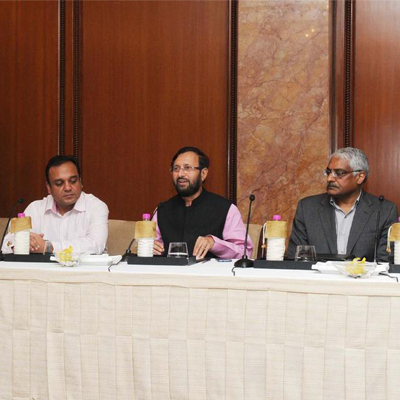
    NEW DELHI: Just two days after the Information and Broadcasting (I&B) Minister Prakash Javadekar officially announced the extension of deadlines for phase III and phase IV of digitisation, he has now announced that the phase III of digitisation is likely to begin from April 2015 and will end the same year in December. “And phase IV will commence as soon as the phase III is completed,” Javadekar said.


    The I&B Minister made the announcement at the ongoing CII Big Summit 2014. “There is some confusion with regards to the extension of digitisation dates.  Tentatively, it will start from 1 April 2015, the final decision on this will be taken soon,” he added.


    The Ministry will also form a committee consisting of all the stakeholders. “So unlike what people feel, we are not delaying digitisation. Our commitment is having a ‘Digital India’. Even a household in a remote village has the right to experience digital viewing,” he informed.


    He also asked the direct to home (DTH) and multi system operators (MSOs) to advertise to the consumers how they are selling expensive set top boxes at cheaper rates. “If the customers understand that they are benefitting with digitisation, they will be supportive of the action,” said Javadekar adding that digitisation is on track.


    Elaborating on the theme of the summit: ‘Monetising strategies: The tryst for a $100 billion Indian M&E industry’, he said, “Aiming low is a crime. So an industry which in 2014 is already a $50 billion industry, cannot say that by 2020, it will become a $100 billion industry. This is not correct. We must aim high. This industry has immense potential to grow.”


    Javadekar in order to boost the fraternity said that no one had thought in 1992 when cable TV started that so many crore of households will be connected to cable, but it happened. No one had also thought that people would pay anywhere between Rs 200 to Rs 500 for entertainment, but people are paying. “Entertainment has become a necessity today and so people are ready to spend. So $100 billion is achievable and so we need to aim high,” he said.


  • Government notifies new dates of phase III and phase IV of DAS

    Government notifies new dates of phase III and phase IV of DAS

    NEW DELHI: The Government has finally issued the notification postponing the dates of phase III and phase IV of implementation of digital addressable system (DAS) to December 2015 and December 2016 respectively.


    Indiantelevision.com was the first to break the news about the postponement of the dates for DAS phase III and IV. Speaking to indiantelevision.com I&B secretary Bimal Julka had confirmed that ‘the government had decided to delay the digitisation deadline by a full year in order to give all those involved enough opportunity to overcome all the unseen hurdles that had come up after the UPA government mandated  DAS and the various analogue sunset dates.’


    The notification says that the change has been done ‘on being satisfied to do so in public interest’.


    The DAS notification has been issued by way of amendment to the notification issued on 11 November 2011 which had made it “obligatory for every cable operator to transmit or re-transmit programmes of any channel in encrypted form through digital addressable system.”


    Although the Government had announced its decision to postpone DAS in phase III and phase IV to encourage greater indigenisation of set top boxes, no action could be taken until issuance of the notification.


    Until now, the deadline for phase III was September 2014 and for phase IV December 2014.


    In the first two phases of digitisation, which included cable TV households in the four metros and other major cities, most of the STBs that were installed had been imported from other countries.


    After he took over as Information and Broadcasting Minister, one of the major areas of focus of Prakash Javadekar has been indigenisation of STBs and Ministry sources said the new dates are in keeping with inputs supplied to the Minister in this connection.


    The ministry has made efforts to get STBs declared as Telecommunication Network Equipment which will enable domestic manufacturers to get exempted from certain taxes, an official said.


    Nearly 110 million STBs are required to be installed in cable TV households in the remaining two phases of digitisation and the extended deadline will ensure that the domestic manufacturers prepare themselves and meet this demand, officials said.

  • Govt. reconstitutes task force for DAS phases III and IV

    Govt. reconstitutes task force for DAS phases III and IV

    MUMBAI: Days after Information and Broadcasting (I&B) Minister Prakash Javadekar announced that digitisation in the country will progress as per the new deadlines; the government has come up with a reconstituted task force for implementation of digital addressable system (DAS) in phases III and IV.


    The new task force will constitute I&B additional secretary chairperson, Telecom Regulatory Authority of India (TRAI) principal advisor for broadcast and cable satellite, I&B Ministry joint secretary broadcasting, representative from the MSO Alliance, five independent MSOs one each from north, south, east, west and north east regions, five registered LCO associations one each from north, south, east, west and north east regions, representatives from the Indian Broadcasting Foundation, News Broadcasters Association, Association of Regional Television Broadcasters of India, DTH Association, FICCI, CII, ASSOCHAM, CEAMA, Department of Telecommunications, Department of Electronics and Information Technology, DG: Doordarshan, DG: All India Radio, BECIL, BIS, five prominent consumer organisations one each from north, south, east, west and north east regions and 33 state level nodal officers one each from the states/union territories governments.


    The task force would act as an interface between the government and the industry in matters related to implementation of DAS in the cable TV sector and monitor the implementation of DAS. It also will have to analyse the roadblocks that may come in the way of digitisation and suggest measures.

  • Local STB manufacturers confident of meeting target of DAS phase III and IV

    Local STB manufacturers confident of meeting target of DAS phase III and IV

    NEW DELHI: The Information and Broadcasting (I&B) Ministry has been assured by manufacturers of domestic set top boxes (STBs) that they will be able to meet the demand of 11 crore STBs needed for the final two phases of cable television digitisation.


    This assurance was given to I&B Ministry secretary Bimal Julka over the weekend with manufacturers to check the status of indigenous manufacturing of STBs.


    I&B Minister Prakash Javadekar had recently told that it was unfortunate that good quality STBs were being exported overseas and poor quality STBs from overseas were being installed.


    Earlier, he had said that the Ministry will take steps to solve problems of local manufacturers including those relating to taxation.


    The manufacturers appreciated the efforts of the government for resolving their long pending demand of C-form. They said that they have sufficient installed capacity to meet the full demands of STBs locally and said the government’s initiative would help give employment to about 50,000 people and would attract an investment of about Rs 500 crore. It would generate local support facility for repair of STBs and would also help in smooth implementation of digitisation initiative in the country. 

    The Finance Ministry had on 13 August extended the facility of Form ‘C’ under section 8(3) (b) of Central Sales Tax (CST) Act 1956 to STBs thus fulfilling the major demand of the domestic STB manufacturers who would charge CST @ 2 per cent against VAT of 12-14 per cent being paid earlier. 

    The phase III of digitisation to be completed by December 2015 would cover all other urban areas (municipal corporations/ municipalities) which were not covered in first two phases. Phase IV to be completed by December 2016 would cover the rest of India.


    The meeting was attended by the members of the consumer electronics and appliances manufacturers association (CEAMA) and representatives from STB manufacturers such as My Box Technologies, Dixon Technology, Videocon, Jabil, One-Eight Technologies, Skyworth Digital, Spectra Innovations, Indieon, Logic Eastern and Simmtronics.

  • Prakash Javadekar confirms the new digitisation deadline

    Prakash Javadekar confirms the new digitisation deadline

    MUMBAI: The first deadline for complete digitisation in the country, 31 December 2014 has been pushed to 2015 and 2016, as first reported by indiantelevision.com.


    Now, the Information and Broadcasting (I&B) Minister Prakash Javadekar has assured stakeholders who were present at the Indian Broadcasting Foundation’s (IBF) annual general meeting that “Digitisation is on track and will happen as per new schedule.”


    Phase III of digitisation is scheduled to be completed by December 2015 and phase IV by December 2016.


    Javadekar once again emphasised that one of the key reasons for pushing digitisation to a further date was to allow time for Indian set top boxes (STBs) to be manufactured.


    Regarding industry rating body Broadcast Audience Research Council (BARC), the Minister said that the government was also keen to have its rollout to have multiple agencies for ratings.


    A meeting to discuss carriage fees is also likely to happen sometime soon between Javadekar and members of the IBF.


    The Home Ministry has also given the I&B Ministry approval to treat files pending with it for more than three months as ‘cleared’ to speed up channel licence clearances.

  • Govt. rejects TRAI proposal for lower reserve fee for FM phase III auctions

    Govt. rejects TRAI proposal for lower reserve fee for FM phase III auctions

    NEW DELHI: The recommendations by the Telecom Regulatory Authority of India (TRAI) to review the reserve price for FM phase III auctions have not found favour with the Information and Broadcasting (I&B) Ministry.


    TRAI had recommended a change, after going through the views expressed by radio channel operators and new stakeholders that the price was too high.


    However, the Ministry has pointed out to TRAI that the reserve price was fixed by a Group of Ministers and later approved by the Union Cabinet.


    TRAI had expressed apprehensions that the auctions could be jeopardized since many operators felt the price was too prohibitive. The phase III reserve fee formula (highest bid of phase II), has already led to a lot of opposition from broadcasters.


    When asked if this would lead to lesser number of bidders for phase III, I&B secretary Bimal Julka told indiantelevision.com, “We will cross the bridge when we come to it. At this moment, I can only say that we have accepted the TRAI recommendations with some exceptions.” 

    When the process begins – hopefully expected to start by October as indicated by Ministry sources – phase III is set for auction of 839 FM channels across 294 cities. These sources did not feel the reserve price was a major issue as the players likely to bid for the channel are large parties.


    However, the Ministry sees nothing wrong with the TRAI recommendation of allowing 15-year licence period for operators migrating from phase II to phase III as phase II had provided for 10 years of licence.


    TRAI had also recommended a lower minimum channel spacing of 400KHz for FM radio broadcast, as against 800KHz now, to allow more radio stations which has not been accepted by the Ministry. 

    The recent 2G auctions which came as a result of an order of the Apex Court had justified the need for a low reserve fees.


  • I&B Ministry issues new deadlines for DAS phase III and IV

    I&B Ministry issues new deadlines for DAS phase III and IV

    NEW DELHI: It is official now. The new dates for digitisation of cable television in the entire country have been announced. While indiantelevision.com was the first to write about the extension in the date given for digitisation of phase III and IV, Information and Broadcasting Ministry officials have said that while phase III has been postponed to December 2015, phase IV can be completed by December 2016. The move has been taken to allow great indigenisation of production of Set Top Boxes (STB) to meet the demands of digital addressable system (DAS).


    Earlier, the government had set 31 December 2014 as the date by which the cable sector across the country would be completely digitised.


    In the first two phases of digitisation, which included cable TV households in the four metros and other major cities, most of the STBs that were installed had been imported from other countries.


    After he took over as Information and Broadcasting Minister, one of the major areas of focus of Prakash Javadekar has been indigenisation of the digitisation drive and Ministry sources said the new dates are in keeping with inputs supplied to the Minister in this connection.


    The Ministry has made efforts to get STBs declared as Telecommunication Network Equipment which will enable domestic manufacturers to get exempted from certain taxes, an official said.


    Nearly 110 million STBs are required to be installed in cable TV households in the remaining two phases of digitisation and the extended deadline will ensure that the domestic manufacturers prepare themselves and meet this demand, officials said.