Tag: Phase III

  • TRAI seeks views on methodology for calculating reserve price of FM phase III

    TRAI seeks views on methodology for calculating reserve price of FM phase III

    NEW DELHI: The Telecom Regulatory Authority of India (TRAI) has recommended that the reserve price for FM radio channels in phase III should be 0.8 times of the valuation of FM radio channels in that city.


    In a consultation paper on the subject of reserve price at the request of the Information and Broadcasting Ministry, TRAI suggests reserve price of Rs 5 lakh per city, for FM radio channels in 11 border cities in phase-III.


    The regulator has also asked if stakeholders agree with the proposed   approach/methodology for determination of the valuations of FM Radio channels in 253 new cities in phase-III.


    The Ministry sent a reference dated 16 December 2014 to the Authority seeking recommendations  of TRAI on reserve prices for 831 FM radio channels in 264 new  cities in the phase-III. With this, the private FM radio operations would be permissible in 350 cities.


    Comments/views of the stakeholders on the issues related to estimation of the reserve prices for auction of FM radio channels in new cities should be sent latest by 25 February.


    TRAI has said that for FM channels in 253 new cities, the Reserve Price can be fixed at 80 per cent of the derived valuations.


    For 11 new cities classified in the ‘Others’ category, no reference price is available from phase-II as no city was available in this category in that phase. These cities have population figures of less than one lakh and are located in the border areas of Jammu and Kashmir (J&K) and the North- Eastern (NE) States. The Cabinet approved the RP for each of these 11 cities as Rs 5 lakh.


    These cities are of strategic importance. The availability of FM radio broadcasting service in these far-flung areas can also be used for Emergency Warning Services (EWS) with the specific approval and guidance of the local district administration. When the reserve price of Rs 5 lakh per city set for these cities in phase-III, the policy is compared with the proposed RPs for ‘D’ category cities of NE and J&K, it appears to be reasonable to encourage the participation of a large number of prospective bidders. The inherent design of an ascending e-auction process would anyway ensure that the true market value of the FM radio channels in each city is discovered during the process of auction. So the RP for each of these 11 new cities may be Rs 5 lakh.


    The Consultation Paper noted that the non-refundable one time entry fee (NOTEF) for FM radio channels in all the cities coming up during phase III is to be discovered through an ascending e-auction. The phase-III policy guidelines provides the mechanism for migration of existing FM radio operators from phase-II to phase-III regime.


    According to the decision of the Empowered Group of Ministers (EGoM), the Ministry had in April 2013 sought recommendations of TRAI on the migration fee to be charged from existing phase II operators on their migration to the phase-III regime of FM radio. Broadcasting authority sent its recommendations on ‘Migration of FM Radio Broadcasters from phase-II to phase-III’ on 20 February 2014.


    The methodology for determination of the reserve prices for auction of FM Radio channels   was already finalised by the Government. In its recommendations of 20  February 2014, the Authority recommended that the methodology for determining the reserve prices for fresh (new) cities (where no private FM radio channels are operational) in phase-III should be reconsidered as the current methodology might jeopardize the auction.


    Thereafter, MIB decided to seek fresh recommendations of the Authority on reserve prices for new cities in phase-III and also make the 2011 census data applicable for identification and categorisation of the new cities. Based on the 2011 census data, MIB has identified 37 additional cities where 112 private FM radio channels are proposed to be put up for auction. This is in addition to the already identified 227 new cities earlier earmarked for FM radio expansion as per the 2001 census data. Further, based on the 2011 census data, MIB has also upgraded the category of 11 new cities that were already mentioned in the phase-III policy guidelines dated 25 July 2011. Thus, there are now, in 264 (227+37) new cities, a total of 831 FM radio channels that are to be put up for auction.

  • TRAI pulls up broadcasters, MSOs on DAS implementation

    TRAI pulls up broadcasters, MSOs on DAS implementation

    NEW DELHI: Broadcasters were taken to task for their failure to file reports relating to subscribers while multi-system operators (MSOs) were rapped for failure to meet their commitments relating to billing in two separate meetings held with senior officials of the Telecom Regulatory Authority of India (TRAI) held in the first fortnight of this month.
     
    The meeting, with selected broadcasters earlier this month, also saw TRAI officials asking the broadcasters about agreements with MSOs under the reference interconnect offer (RIO).
     
    Broadcasters were also urged to step up awareness among subscribers in phase III and phase IV so that the transition to digital addressable system (DAS) is smooth.
     
    TRAI also urged broadcasters to highlight problems faced by them in the switch-over to DAS and issues relating to connectivity.
     
    In the meeting with MSOs earlier this week, problems relating to issuance of licences were also taken up.
     
    The MSOs were also asked to provide a list of areas not reached by them, an issue that had also been raised at the last DAS Task Force meeting.
     
    A TRAI official told Indiantelevision.com that issues relating to set top boxes were not taken up as they are being dealt with directly by the Information and Broadcasting Ministry.


  • MSO’s request govt to set up regional units to facilitate DAS registrations

    MSO’s request govt to set up regional units to facilitate DAS registrations

    NEW DELHI: Even as the government has agreed to consider extension of four to five weeks for registration of multi system operators (MSO), who want to opt for phase III of the Digital Addressable System (DAS), the government has been asked to consider setting up regional units to facilitate such registrations.

    Speaking at the task force meeting last week, several stakeholders also wanted online registration for MSO’s wanting to enter their names for phase III.

    Ministry additional secretary J S Mathur, who chaired the meeting, also said that meetings were being organised between manufacturers of indigenous set top boxes and the Ministry of Information and Technology.

    Mathur responding to queries from some MSO’s wanted them to prepare a list of areas in phase III which were currently not being reached by cable television. A member had pointed out that a Headend In The Sky (HITS) platform could be used in such areas.

    Some consumer organisations which are part of the task force, said they will need to organise workshops in different parts of the country to help people understand DAS.  

    The Confederation of Indian Industry (CII) representatives said that the association was planning such workshops in Kerala and Guwahati. Mathur asked CII to give him details of the workshops when they are scheduled.

    Mathur regretted that the number of stakeholders attending the meetings was very minimal and expressed hope that later meetings will be attended by larger number of members.

    In the last meeting it had been announced that the task force would meet every month to ensure deadlines are met and phase III of DAS comes into operation by December 2016.


  • “We are looking at funding options and are actively engaged with investors”: JK Jain

    “We are looking at funding options and are actively engaged with investors”: JK Jain

    Cable TV industry in the country has been the hub of the action for the past one year, especially with the government pushing through digitisation of cable TV homes. An important player in the industry is the headend in the sky (HITS) player JAINHITS, which did face some initial hiccups in being accepted by the broadcasters and local cable operators (LCOs), but has now finally made in-roads in several homes pan-India.


    And leading the HITS platform from the front is Dr. Jinendra Kumar Jain, who is not only a surgeon, a former member of parliament, but also the founder chairman of Jain TV Group.  


    He pioneered the satellite TV era in India by launching the country’s first round-the-clock satellite television service in Indian languages. JAINHITS is his latest initiative to serve the national goal of digitisation. 


    The HITS platform proposes to distribute 200 to 500 digital channels via satellite to the existing ground networks of cable operators. It is designed to integrate broadcasting and broadband services and thus, help bridging the digital divide in one go all over the country.


    Jain’s leadership, innovative ideas in the ICT sector and entrepreneurial initiatives have led to establishment of several successful businesses, including: Video on Wheels (Vow), a countrywide network of mobile video and health service vans, Noida Software Technology Park Limited (NSTPL), India’s first private teleport that provides both fixed (FSS) as well as mobile (MSS) satellite services, Medical Communication Network (MCN) whose publications include the Indian edition of FIGO Journal, IJGO (International Journal of Gynecology and Obstetrics) and the Population Reports for John Hopkins University, National Broadcasting Academy (NBA), a graduate and post graduate educational programme providing degrees in Management and Communication fields.  


    While the eyes are fixed on the soon-to-be launched HITS platform from Hinduja, Indiantelevision.com’s Seema Singh spoke to Jain on the platform’s performance, the struggle in getting accepting, his future plans and much more….


    Excerpts…


    How did you think of launching a HITS platform in a market which was dominated by multi system operators (MSOs)? How long did it take from planning to finally launching the service?


    We were the very first company that explained the headend in the sky (HITS) strategy to deliver digital signals to the cable operators. It was somewhere in the year 2003 that the then Minister Sushma Swaraj declared the decision of digitisation. They had obviously not done any homework and officials in her Ministry were willing to learn the technological aspects of the task. I had an opportunity to explain Anil Baijal, the then additional secretary in the Ministry about HITS. He liked the idea and I agreed to submit a detailed project report with all the relevant information.  The Government issued us the permission letter to deliver HITS services from our Teleport which had already been set up. In the beginning, there was no market and therefore we did not show any hurry. In fact, Citi Networks also got the similar permission and even started HITS based services without waiting for finalisation of rules and regulations. They arrived in the market before time but we waited for the right time and that is how they closed their shop without waiting for the market conditions to ripe and our timely decision is now giving us full benefits. Today we are the market leader in this sector. 


    Was it a task to get the broadcasters onboard? How did they initially react to the HITS model?


    Yes it was quite a task to get the broadcasters onboard. This became possible only with the help of judicial intervention. The big monopoly houses of the Indian cable industry have been offering resistance at every step of our journey. Nobody doubts the fact that cable digitisation will be a game changer in India. The cable distribution market is flourishing and millions of people in India watch TV via cable. Digitisation is certainly good news for broadcasters and tax authorities because subscriber numbers will be reported accurately and transparently.  Even the subscriber shall benefit from itemised billing detail so that they will be charged only for the channels that they wish to subscribe.


    It is true that the vertical chain of the industry stands divided between big and small players.  But, the game is turning in favour of small cable operators and their victory would mean the success of HITS platform.


    While a lot of the issues have been resolved with the court ruling in your favour, how have you dealt with the issues the broadcasters were raising, that of piracy?


    We have deployed best technology solutions to prevent piracy related issues.  As a company we take ‘Piracy’ very seriously. We have our own anti-piracy teams who look into such piracy issues.


    We also work in tandem with our business partners- broadcasters, LCOs, and distributors and take inputs from them to fight back the malice of Piracy. At present, during the audits conducted by the broadcasters they have found our systems working efficiently and exceeding industry standards. 


    How big is the company today, in terms of number of offices, employees, ground stations, revenue?


    NSTPL is a Public Ltd. profit making company. The business of the company is divided across three verticals:


    NSTPL Infra

    NSTPL Broadband

    JAINHITS


    The company has presence across the country with its own offices as well as distribution partners spread across India. NSTPL that operates India’s only National Cable and Broadband Platform called JAINHITS, operates teleports in Greater Noida and Hyderabad, serving 70 broadcasters. The Teleport is duly authorised & licensed by various regulatory bodies such as Ministry of Information & Broadcasting and Ministry of Communications, Government of India.


    When you started, what was the initial investment that was made into the company? Who were the partners? How have you grown the company over the years?


    NSTPL is a closely held Limited Company with fully paid up share capital of Rs 30 crore. 86.66 per cent of its shares are held by  Ankur Services Growth Fund, 13.33 per cent is held by Jain Studio and 0.002 per cent is held by individuals. We have invested approximately Rs 150 crore in JAINHITS since the concept initiation i.e. from April 2012.


    The response to JAINHITS has been extremely encouraging and thus, in a short span of one year we have signed up with over 300 cable operator partners across India.


    How many TV channels does the platform have currently? How many homes do you reach to and in which regions?


    We have around 254 channels today. Out of which 7 channels, namely, Disney, Cartoon Network, Pogo, Discovery, History, TV18, Animal Planet and Nickelodeon have dual audio feeds. Our services are available pan-India.


    How will digitisation benefit JAINHITS? What are the steps that are being taken to reap the maximum benefits of digitisation?


    Owing to pressure from DTH and on account of the digitisation law, all cable operators have to go digital. JAINHITS provides most cost-effective digitisation solution for such cable operators across India. Any cable operator across India can go completely digital and be fully DAS compliant with mere investment as low as Rs 5-10 lakh, while retaining full control of their business. They also have a chance to enhance their monthly Average Revenue Per User (ARPU) by offering additional value added services like Triple Play Services throughout India – Video, Data & Voice, Broadband Services.


    We keep announcing consumer friendly schemes so that our business partners i.e. the cable operator community have the best to offer to its customers. We conduct LCO meets in every state almost once a quarter. This is a platform where partner LCOs along with potential prospective cable operators come face to face and get their concerns addressed. We participate in industry events and expos to reach more and more cable operators.


    What are the services that the platform provides to its consumers?


    JAINHITS provides a platform of 254 SD channels at present. Very soon we will introduce HD platform and additional value added services like Triple Play Services– Video, Data & Voice, Broadband Services throughout India.


    How do you think HITS platform will play a major role in phase III and IV of digitisation? Will you be competing with DTH and MSOs? What’s the strategy?


    Phase III & IV of digitisation covers over 1350 Municipal Corporation and 597,464 Villages (as per Census 2011) spread in the far flung areas across India. These are the areas where the reach of cable TV is at its lowest level on account of non-availability of adequate infrastructure. For the land based networks and MSOs, this vast area in phase III & IV is the most difficult to reach.


    Only and most effective method of reaching this area is through HITS platform. JAINHITS allows all cable operators in these phase III & IV markets to go digital at a miniscule cost of Rs 5 lakh. The platform also provides these cable networks to offer broadband services to their consumers in these far flung areas. Above all, it is the only platform in the country, offering complete empowerment and ownership to even the smallest LCO by making him a leader & cable owner and an ISO (Independent Service Operator). It provides a simple “Plug & Play cost effective digitisation solution” to cable operators.


    Recently, MSOs have been facing issues with a few broadcasters like Star and Zee. Also with TDSAT ruling that Star channels will be available on RIO, does that impact JAINHITS in any way? What’s your take on the judgment?


    We have most of our content available on RIO basis and accordingly we offer our viewers a choice wherein they can opt for A-la-Carte choice of content to meet their individual needs.


    Per say this Judgment, really doesn’t affect our business models.


    While the cable TV industry in phase I and II are still struggling with packaging and billing, what’s the scenario with the HITS platform?


    HITS services were envisaged with an inbuilt SMS & CAS system. Accordingly, we at JAINHITS have also sensitized our partners- ‘the need’ of different types of packaging that may be required based on the area they will service. Accordingly, we have created different types of packs that serve the needs of large cross-section of people in India. Billing is automated and done through SMS platform.


    Are you looking for funding to go ahead with your plans? Any plans for IPO?

    We are indeed looking at funding options and are actively engaged with investors interested in the Indian cable & broadband market.
  • Govt. keen on early expansion of phase III of FM radio

    Govt. keen on early expansion of phase III of FM radio

    NEW DELHI: Even as the government wants to commence the expansion of phase III of FM radio to bring in additional revenue, there appears to be a re-think on the question permitting these channels to carry All India Radio news bulletins.
     

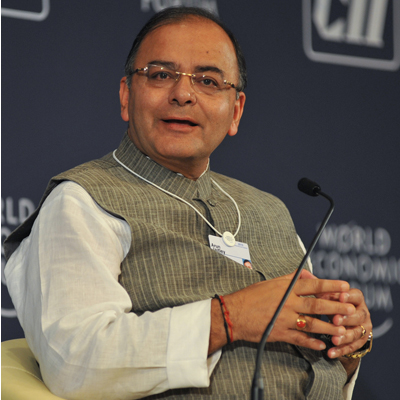
    While confirming that he was keen to start the process as soon as possible in the current financial year, Information and Broadcasting Minister Arun Jaitley said about the proposal to allow broadcast of news on private FM radio stations: “Let me consider this at length.”
     

    His response was in a similar manner when asked about permitting All India Radio news bulletins on private FM stations.

     
    The Minister said his Ministry and the Telecom Regulatory Authority of India (TRAI) are considering aspects related to this process. He said. “Some aspects are being considered between the I&B Ministry and the regulator. And I would like to see that happen quite early. If I could have my way, it should be in this financial year because I now speak in both capacities.
    31 March, and some more revenue to the government has some relevance to me,” said Jaitley,

     
    More than 800 new FM radio channels are proposed to be allowed to come up in nearly 294 cities across the country under phase III.

     
    While the previous government had cleared the carriage of AIR news bulletins on private FM channels and even given the option to the existing 245 FM channels to opt for phase III, it had halted the process of auction in view of the elections.

     
    Jaitley’s predecessor Prakash Javadekar had not only promised early e-auctions, but said that the government would consider what can be broadcast by the private FM channels on their own other than AIR news bulletins.


  • Nodal monitoring units for DAS to be formed by mid-January, task force to meet every month

    Nodal monitoring units for DAS to be formed by mid-January, task force to meet every month

    NEW DELHI: A total of 11 crore set top boxes (STBs) will be needed for the third and final phase of digital addressable system of which only three crore will be for direct-to-home (DTH) platforms.

     
    The Information and Broadcasting Ministry (I&B) says the requirements for phase III have been worked out on the basis of census 2011 data and the compiled data will be sent to state governments for vetting.
     

    The data for TV households is also being collected from the Registrar General and Census Commissioner for verification.

     
    The Ministry, which claims that manufacturers have assured it of adequate supplies of STBs, has constituted a publicity committee and begun issuing advertisements in newspapers and the electronic media in this regard to encourage multi-system operators to place orders.

     
    During the recent task force meeting for the next two phases of DAS, the Ministry said it will facilitate a meeting of manufacturers of indigenous STBs and MSOs in view of complaints by the manufacturers that no orders were being placed for the STBs.

     
    A multi-lingual call centre will be set up by the end of February, and 12 nodal regional monitoring units will begin working by 15 January. The task force will meet every on the second Wednesday of every month.

     
    The task force meeting under the chairmanship of Ministry additional secretary J S Mathur was also addressed by the advisor for DAS Yogendra Pal.

     
    A road map has been prepared by the government for the final two phases, and MSOs have been asked to apply by 21 December this year for licences.

     
    The Home Ministry will clear all security licences within 90 days, the meeting was informed.

     
    Publicity awareness campaigns have also commenced, for which a Publicity Committee has been formed.

     
    The Department of Information Technology is in the process of developing an Indian cable access system that will be ready in a year and will make interoperability of STBs possible. A participant pointed out that there was still the issue of certification involved in the embedment of CAS in set top box manufactured by the domestic STB manufacturers. The integration of CAS with the STB is a time consuming process and indigenous STB manufacturers must clear the apprehensions on this account.

     
    The long pending demand of “C” Form had been resolved to give fillip to domestic manufacturing of STBs.

     
    Interestingly, the Telecom Regulatory Authority of India has not attended any of the two task force meetings, a point noted by several participants. However, Mathur said TRAI was being apprised of the proceedings.

     
    The Ministry officials said that MSOs could simply download the forms for registration and did not have to come to the Ministry.

     
    A participant pointed out that the carriage fee which had fallen initially after announcement of DAS had again shot up. Others said issues relating to billing, packaging and reference interconnect order had still not been ironed out by TRAI.

     
    There was also a reference to entertainment tax, and it was stated by some participants that the Uttar Pradesh Government had sharply raised this tax.


  • “Digitisation will bring quality and transparency in subscriber base”: Arun Jaitley

    “Digitisation will bring quality and transparency in subscriber base”: Arun Jaitley

    NEW DELHI: Information and Broadcasting Minister Arun Jaitley has emphasised the importance of the digitisation programme in providing better quality of service, wider choice of content and its important role in bringing about transparency within the subscriber base.

     
    As a process it had also brought about a change in the broadcasting landscape as well as enabled broadband penetration within the country, he told the first Consultative Committee Meeting of Members of Parliament attached to his Ministry.


    The meeting devoted its deliberations to the issue of digitisation of cable TV network in phase III and IV.  Minister of State for I&B Col. Rajyavardhan Singh Rathore was also present in the meeting.


    A presentation was made on behalf of the Ministry giving an overview of the digitisation process. The presentation highlighted the steps taken during phase I and II and the proposed road map for phase III and IV.

     
    Specific reference was made to the initiatives undertaken by the Ministry including the discussions with stakeholders and the campaign to sensitise masses.


    Members of the Committee gave suggestions to ensure that the concerns of all stakeholders were addressed. It was also emphasised that MSOs should operationalise grievance redressal mechanisms to address the concerns of cable subscribers. They emphasised that quality of domestically manufactured Set Top Boxes (STBs) must be ensured.

     
    The issue of digitisation, plan of Doordarshan terrestrial network and the steps being taken to implement the process was also deliberated upon.

     
    It was also mentioned that the Ministry needed to take proactive steps to ensure timely registration of MSO applications so as to ensure the large presence of MSOs to implement the digitisation programme during phase III and phase IV.


    During the discussions emphasis was laid on the efforts being made by the Ministry to integrate the domestic STB manufacturers with the ‘Make in India’ programme. Specific reference was made to the initiative of the Ministry in resolving the long pending issue of ‘C’ Form to create a level playing field for domestic STB manufacturers. Members were also informed that interactions were being held with the STB fraternity to ensure that they utilised their capacity to fulfill the demand for STBs during phase III and phase IV.


    The Members of Parliament who attended the meeting included Dr. Jayakumar Jayavardhan, Tapas Paul, V. Sathyabama, M P Achuthan, P Rajeeve, Pawan Kumar Varma and Vivek Gupta.


  • With broadcaster backing, MSOs eye voluntary digitisation

    With broadcaster backing, MSOs eye voluntary digitisation

    MUMBAI: When the industry was moving in full force towards digitising phase III and phase IV cities, the Information and Broadcasting Ministry announced the postponement of digitisation till 2016. The news may have elated a few, but multi system operators (MSOs) and broadcasters have been critising the move. 


    “It is the MSOs who have to invest in digitisation,” says Siti Cable CEO VD Wadhwa and president of the newly formed All India Digital Cable Federation (AIDFC). In such a scenario, Wadhwa has suggested voluntary digitisation in these phases.

    The MSOs have a feeling that with delayed digitisation, the local cable operator (LCO) will not pay them the incremental money, since digitisation is not taking place.
     

    With delayed digitisation, broadcasters who were looking for a hike in their subscription revenue from the phase III and phase IV markets will also have to put a break to their dreams. 

    The MSO too is at loss. Currently, an MSO invests close to Rs 1500 per set top box and additional money on connectivity. “With this delay, the MSOs are not going to get any return on their investments for the next 15 months.  So whether I pay today or after 15 months, my interest cost will keep getting high, since I will be borrowing money and then investing,” informs Wadhwa.

    To tackle this situation, Wadhwa suggests that since the industry has to in any case move to digitisation in the next two years, they can start with voluntary digitisation.  “Broadcasters will have to back the MSOs to achieve this,” he says adding that Siti Cable is ready for voluntary digitisation, provided that broadcasters do not charge the MSO for the next 15 months.

    “Since the MSO is bringing in the money, the broadcasters should agree to not charge for next 15 months,” he says.

    Wadhwa also suggests that voluntary digitisation can be smooth provided the LCOs increase the cable bill in phase III and IV markets by Rs 50-Rs 60. “LCOs have till today been charging only Rs 150-Rs 180 from the consumer for some 60 channels. I would suggest that since with digitisation the number of channels will go up to 200-250, the LCOs should increase the bill by Rs 50-60 per subscriber.”

    Wadhwa is of the view that the LCOs can keep 50 per cent of the amount they increase in the cable bill. “With this, till digitisation is complete, while the ARPU for the MSO increases, the LCO can also get 50 per cent more on what he is currently getting,” he opines.


    In order to make this possible, Wadhwa will first try to bring consensus amongst MSOs and then will talk to all the broadcasters. “If the broadcasters support us, we will go ahead with voluntary digitisation.  We will also go to each state and talk to the LCOs,” he concludes. 


  • Ali Corporation aims to sell 20 million chipsets by December 2016

    Ali Corporation aims to sell 20 million chipsets by December 2016

    KOLKATA: Taiwan-headquartered Ali Corporation, a set top box (STB) solution provider, is looking at an order size of between 15 to 20 million chipsets by the end of December 2016.


    “India is a big market and we are looking at it keenly. Compared to other countries, it is different because branding which is important here. Our focus is to build around the brand and the technology in India. In phase III and IV of digitisation, we are eyeing between 15 million and 20 million chipsets,” Ali Corporation country manager Shivani Pratap Singh exclusively told indiantelevision.com.


    Singh was extremely gung-ho about the potential in India as the country’s television ecosystem digitises fully by December 2016.


    With India’s transition from analogue to digital service, many consumers need new, full-featured set-top boxes (STBs) for home viewing. This represents a major opportunity for regional operators and STB manufacturers, as only a portion of the roughly 100 million STBs in consumers’ homes have already been digitised according to published government figures.


    Adding to the STB growth is the trend of consumers placing more than one TV in their homes, as well upgrading from standard definition to high definition.


    The government had previously set a target of digitising the cable TV services in the entire country by December 2014. However Information and Broadcasting Ministry recently issued a notification as per which the deadline for the areas which came in phase III was extended from 30 September 2014 to 31 December 2015 and phase IV for December 2016 as was also first broken by indiantelevision.com.


    “By December 2014, we were looking at 5 million chipsets. Due to the delay in digitisation, the clients also delayed it,” he said. If an order of 2 lakh had been placed, clients have picked up nearly 10000 to 20000 chipsets and left the remaining for later.


    Demand had grown down due to digitisation delay but Singh says that it is always balanced by the international market demand.


    The company supplies chipsets to most of the big players in the industry.


    “We at Ali, have our own system in place; our chip sets are reliable, cost effective and when the technology is upgraded, we keep on updating ourselves,” concluded Singh.

  • Govt will provide all facilities to local STB manufacturers for DAS: Javadekar

    Govt will provide all facilities to local STB manufacturers for DAS: Javadekar

    NEW DELHI: Information and Broadcasting Minister Prakash Javadekar today clarified that the new dates for Phase III and IV for digital addressable system were the outer limits but all attempts would be made to achieve the target well before that.


    Reiterating that the main aim of the new deadlines was to encourage DAS with use of India-made set top boxes, he told the first meeting of the DAS task force for the final two phases here today that the Government has facilitated C form issue for indigenous manufacturers.


    At the outset, he said the entire digitisation programme was an integral part of Prime Minister Narendra Modi’s Digital India plan.


    He also pointed out that he represented the viewer and consumer, who had no voice unlike the other stakeholders who were present at the meeting.


    Javadekar said the cable TV digitisation process aimed at providing the consumer with greater choices and affordable and qualitative options. The overall objective was to be sensitive to the needs and choice of the consumer. The choice of the consumer was paramount in defining the inputs, strategies and roadmap for the remaining phases of the digitisation process.


    He called upon the manufacturers to innovate and explore new technologies for addressing the different consumer tastes and needs.


    The Minister added that in the next phase of digitisation, the price mechanism offered to the consumer would be a key determinant of the process, particularly as DAS was being extended to rural areas. As a consequence, it was mandatory for all stakeholders to sensitise the consumers on the benefits of the process in view of the rural outreach of the programme. 

    Regarding the indigenisation of STBs, the Minister said that the concerns of the industry had been taken up with the Finance and Communications and IT Ministries and STBs were declared as part of ‘telecommunication network’.


    The Minister said the task force ought to identify timelines for implementation so as to ensure the timely completion of Phase III and Phase IV. All issues concerning the key stakeholders needed to be debated at length so as to ensure the mainstreaming of the process with the existing policy. The need of portability of set top boxes so as to provide the option of interoperability to the consumers was an issue that could be looked into by the concerned stakeholders.


    Every meeting of the task force was critical as it identified critical inputs so as to ensure the effective implementation of the timelines and processes. Every viewer should be able to get the best viewing experience over the next two years, he added.


    He also wanted portability for STBs on the lines of portability for mobile phones and said the government and the task force will study this issue.


    Earlier speaking on the occasion, I and B secretary Bimal Julka said the task force provided an important platform to debate and overview issues related to the digitisation implementation. It also provided an opportunity to understand the concern of stakeholders.


    The experience of such meetings during the first and second phase of implementation of the programme had been extremely useful in streamlining the roadmap for effective implementation. He said the consumer is the judge of what he gets to see and content rules. He said a lot of complaints had been received from stakeholders during the implementation of the first two phases but he hoped to get more suggestions as well.


    The meeting saw various stakeholders raise issues concerning them. Taxation was raised by STB manufacturers and auditing was requested by consumer groups. The broadcaster suggested that the deadline should be reduced to 2015 for both phases. No TRAI member attended the meeting.


    Javadekar also assured that there will be sub committees that will monitor the process of digitisation.