Tag: Phase III

  • DAS: A mirage that moves farther, the closer one gets to it

    DAS: A mirage that moves farther, the closer one gets to it

    New Delhi/Mumbai: When developed countries like the United States and the United Kingdom decided to adopt digital addressable systems (DAS), they knew there would be major road blocks.

    Not only did these countries decide to complete digitisation by 2017-end, but admitted that both analogue and DAS would have to co-exist for some time until all viewers realised the advantages of digitisation.

    In its effort to beat these bigger countries, India decided it would set out a deadline wherein analogue and DAS would not co-exist.

    The result was a mirage that was shown to most Indians and – as it happens with a mirage – the realisation became more distant as the deadlines approached.

    It was exactly a decade earlier (14 September, 2005) that the Telecom Regulatory Authority of India (TRAI) presented its first report on Digitisation of Cable Television. Five years later, in August 2010 it gave recommendations relating to DAS.

    However, it was only in April 2011 that the Ministry of Information and Broadcasting (MIB) finalised the schedule for digitisation. According to that decision, which was notified in November that year, the entire country was to have adapted to digital addressable cable systems by December 2014. The first phase covering the metros was to be completed by 31 March, 2012, Phase II covering cities with a population more than one million by 31 March, 2013, Phase III covering all urban areas (Municipal Corporations/Municipalities) by 30 September, 2014 and Phase IV covering the rest of India by 31 December, 2014.

    Since then, the deadlines have been pushed at least twice. The first was when Phase I was delayed by six months, whereas the second was when the current Government decided that the Phase III deadline would be extended to December 2015 and Phase IV to December 2016.

    And clearly at a time like this, it would be apt to quote these popular lines from Robert Frost’s poem made famous by the country’s first Prime Minister Jawaharlal Nehru – ‘The woods are lovely, dark, and deep, But I have promises to keep, And miles to go before I sleep.’

    Indeed there are miles to go even as Phase I in the metros claimed to be major success. But it is well known that DAS continued to be barred by a stay order of the Madras High Court, and there are large pockets in the other three metros (Mumbai, Delhi & Kolkata) where analogue TV continues to thrive. 

    Phase II also suffered in that many of the cities are still not digitised and this is evidenced by the large number of cases pending before the Telecom Disputes Settlement and Arbitration Tribunal (TDSAT).

    Keeping in mind ground level realities, the government initially contemplated merging the final two phases, but realised that this might lead to major embarrassment. Therefore, it was decided by the Narendra Modi led government to implement Phase III by the end of 2015 and the rest of the country in Phase IV by the end of 2016. The third phase includes 38.79 million television households spread across 630 districts and 7,709 urban areas.

    In a recent conversation with Indiantelevision.com, MIB additional secretary J S Mathur, who heads the Task Force for the final two phases, ruled out any possibility of extension of deadline. He said, “There is no reason for any extension of dates for completion of phase III. Work is proceeding as per schedule.”  

    However as the saying goes, there are many a slips between the cup and the lip. So even as the first deadline is barely four months away, there are many hurdles in the way that need to be crossed.

    Apart from several legal issues, the last Task Force itself laid bare many of these hurdles.

    SHORTAGE OF MSOs

    Although the Home Ministry has in principle decided to do away with security clearance for multi system operators (MSOs), the fact is that India still has not even touched the figure of 375 in the number of MSOs. As per the last report dated 20 August,2015, while 226 MSOs have 10-year licences, 146 have only provisional licences. It does not need a bright mind to figure out that the number stands out as a joke when one considers the number of television households in the country.

    SET TOP BOXES

    The country still does not have adequate STBs and it is claimed by many local cable operators (LCOs) that the STBs being supplied are those that are meant for direct-to-home (DTH) transmission and not cable and therefore create problems. The other option is to take cheap China-made STBs.

    Despite the Make in India campaign, very few manufacturers have come forward with proposals for reliable STBs. 

    The Consumer Electronics and Appliances Manufacturers Association (CEAMA) complained at the Task Force meeting that no major orders were being placed with it by MSOs. However, a representative of the CEAMA said, “There is little time to place orders if they want the STBs, which are required to be delivered before the cut-off date.”

    The FICCI annual survey of manufacturing shows that there has actually been a decline in the manufacture of electronic goods, despite the Make in India impetus. The manufacture of electronics – presuming these include broadcast equipment and STBs – and electrical came down from 75 per cent in the last quarter of 2013-14 to 70 per cent in the same period of 2014-15.

    LACK OF AWARENESS

    Clearly, this is a grey area, since many people in the country are not aware of the advantages of DAS. The last Task Force meeting stressed on the need to push up awareness through advertisements, workshops, and interactive sessions. There was even mention of a Chetna Yatra.  

    There is lack of communication even between the regulator TRAI and the stakeholders. A Task Force member from Assam said, “The regulatory bodies need to speed up their action. TRAI is supposed to launch its regional operations. There is no clear idea when that will happen. The system here in Assam is not aware of various rules and regulations and the operators do not have the affording power to take the legal battle to Delhi so they often succumb to injustice.”   

    INTER-CONNECT AGREEMENTS

    TRAI had recently asked all broadcasters and MSOs to make the Authority aware of any problems they were facing. However! there were very few complaints, because in most cases the matters are pending before TDSAT or courts of law.

    The interconnect agreement between the stakeholders of the ecosystem is pending even in DAS phase I and phase II areas. “People are not ready to spend in head-ends as there is no clear revenue model. There are distributors who have their favorite MSOs and there is a discrimination of revenue flow on the basis of that favouritism,” said an LCO. He further added “We want a transparent revenue model, which will only come after signing of the interconnect agreement.”

    DAS TARIFF

    In an order on 28 April subsequently upheld by the Supreme Court, TDSAT told TRAI that it “will be well advised to have a fresh look at the various tariff orders in a holistic manner and come out with a comprehensive tariff order in supersession of all the earlier tariff orders.”

    It had also said, “While doing so, it may consider all the agreements and relevant data available with it. It may consider differentiating between content, which is of a monopolistic nature as against that which is shown by other channels also. It may also consider classifying the content into premium and basic tiers.”  The Tribunal had struck down TRAI’s tariff orders.

    COMMERCIAL TARIFF

    TRAI has already begun a fresh exercise in the light of court orders in trying to determine the difference between commercial and private tariff. Following directions by TDSAT earlier this year that there was need for a fresh look at tariff orders, TRAI had issued a new paper on “Tariff issues related to Commercial Subscribers”. In the paper, TRAI asked commercial subscribers whether there is need to define and differentiate between domestic subscribers and commercial subscribers for provision of TV signals and the basis for such classification.

    PROBLEMS BETWEEN MSO AND DISTRIBUTORS

    There is no clear communication between the two very important stakeholders of the DAS ecosystem – the MSOs and distributors. Recently all Multi Screen Media MD channels were taken off Hathway due to internal issues between the two stakeholders. Additionally, Indusind Media and Communication Limited (IMCL) and India Cast are now going through disruption. IMCL informed its subscribers through a message: “Indiacast group is demanding steep increase in monthly subscription, which is commercially unviable, they are pressurizing us by running OSD on colors. IMCL is planning to take the legal recourse. Regret inconvenience caused to you and appreciate your support. Thanks IMCL team”

    MSO – LMO TUSSLES

    The lack of understanding is more prominent when it comes to the MSO and the last mile operators (LMO). The LMOs claim that they are never given their due. The differences are often taken to the regulatory bodies. In one such case, the Bombay High Court issued directions to TRAI to settle the Interconnect Agreement (ICA) issue between LMOs and MSOs within two weeks even as the MSOs believe that there is not enough transparency when it comes to the revenue models.     

    Progress, it is said, cannot be stopped. Similarly, DAS is bound to come in the country. What remains to be seen is whether in its race to catch up with the developed world, it will succeed in a smooth transition or lead to a mess that probably will linger on in courts of law, corridors of bureaucracy, or the one-upmanship of political parties. 

    digitisation


  • Day 2: FM Phase III sees increase of Rs 100+ crore in provisional winning price

    Day 2: FM Phase III sees increase of Rs 100+ crore in provisional winning price

    NEW DELHI: The second day of the e-auction for FM Radio channels in Phase III infused new enthusiasm though there were no bids in as many as 14 cities and the provisional winning price was lower than the Clock round price in some cases.


    In all, eight rounds of e-auction have been completed including four today for 135 FM channels in all the existing 69 cities of the first stage.


    At the close of second day of bidding, 79 channels in 55 cities became provisionally winning channels with cumulative provisional winning price of around Rs 479 crore against their aggregate reserve price of about Rs 377 crore.


    The auction began today with Auction Activity Requirement set at 80 per cent. A total of 26 bidders were allowed to participate in the auction. 


    The demand over the price in many cities fell by up to three per cent below the aggregate demand. 


    The Percentage Price Increment (in INR) applicable for the Next Clock Round was five per cent in the metros of Mumbai and Chennai, and in Bhubaneswar, Bengaluru, Ahmedabad, Guwahati, Rourkela, Jodhpur, and Pune, whereas in Delhi, it went up to eight per cent.


    The highest Provisional winning price – the same as the Clock round price at the end of the eighth round – was in Mumbai – Rs 55.43 crore; followed by Delhi – Rs 48.11 crore with both showing sizeable increase compared to the first day; Hyderabad – Rs 18 crore; and Lucknow – Rs 14 crore. Among cities recording more than Rs 10 crore, it rose sizeably in Bengaluru – Rs 30.39 crore; and marginally in Chennai – Rs 17.26 crore; Pune – Rs 19.7 crore; Ahmedabad Rs 16.89 crore and Cochin – Rs 10.21 crore (marginally lower than the clock round price), but fell just marginally in Chandigarh – Rs 15.61 crore.


    The ongoing auction is a Simultaneous Multiple Round Ascending (SMRA) e-auction, which is being conducted online from Auction Control Room No. 404 B Wing, Shastri Bhawan.

  • Regional Units  set up  to implement DAS; broadcasters ask MSOs for analogue rates till Dec

    Regional Units set up to implement DAS; broadcasters ask MSOs for analogue rates till Dec

    NEW DELHI: Twelve Regional Units (RUs) are being set up for implementation of Digital Addressable System (DAS) in Phase Ill areas.


    At the ninth meeting of the DAS Task Force earlier this month, Information and Broadcasting (I&B) Ministry joint secretary (broadcasting) R Jaya said these RUs will hold workshops on digitisation where all issues shall be discussed with the District Nodal officers nominated by State Governments.


    The remark came when a representative of local cable operators (LCO) from Assam said multi-system operators (MSO) are stopping signals to LCOs without any reason and the local authorised officers do not take cognisance of any violation of the provisions of the Cable TV Act. He added that there is no redressal mechanism for violations of Cable Act at State level and the cable operators do not have the means to file cases in Telecom Disputes Settlement and Arbitration Tribunal (TDSAT).


    Additional secretary J S Mathur, who chaired the meeting on 7 July, said time was fast running out and impressed on all stakeholders to ensure progress and timely completion of digitisation by the cutoff date.


    The Telecom Regulatory Authority of India’s (TRAI) GS Kesarwani was given the task to ask broadcasters to get details of MSOs who were intending to wait till September 2015 before sending requests to broadcasters for agreements in Phase III areas.


    On the other hand, Mathur said that the endeavour on the MSOs’ part should be to start using indigenously manufactured set-top-boxes (STBs) in their network.


    Kesarwani informed of a review meeting that was held by TRAI on the progress of signing inter-connect agreements for Phase Ill areas with broadcasters and MSOs. He said that three broadcasters namely Star India, Multi Screen Media (MSM) and TV18 – informed TRAI that they had received 55 requests from MSOs so far out of which they have signed commercial deals with two MSOs, whereas deals with 11 MSOs were in advance stages of negotiation.


    Kesarwani also urged MSOs who had not received any response to their requests from broadcasters, to inform TRAI.


    Saying that the Headend-in-the-Sky (HITS) operations were also covered under DAS regulations, Kesarwani asked HITS operators to apprise TRAI if no response was received from broadcasters to their requests for interconnect agreements.


    Apprehending that there may be some gap areas or MSO deficient areas, Jaya asked Indian Broadcasting Foundation (IBF) representatives to get details of these areas from broadcasters and intimate the same to the Ministry.


    Meanwhile even as they admitted some progress, representatives of national MSOs said  that broadcasters were asking for seeding plans and other data. However, MSOs were not in a position to provide this at this stage. They said channel pricing in Phase III areas was the main hurdle in signing of interconnect agreements. Some of them said that a few broadcasters had proposed agreements on analogue rates till December 2015 and others on reference inter-connect order rates.


    Even according to the TRAI, pricing can be different for different markets, they said.


    A representative of Siticable Networks said, “According to an analysis of urban areas carried out by us, it may not be feasible for any operator to carry out digitisation in urban areas having only a few hundred TV households. Even broadcasters are insisting on analogue agreements at present.”


    According to an IBF representative, broadcasters had entered into agreements with five regional MSOs. He said, “Broadcasters have filed an appeal in the Supreme Court challenging the TDSAT judgment on the tariff orders issued by TRAI.”


    On the issue of STBs, a representative of Consumer Electronics and Appliances Manufacturers Association (CEAMA ) said that no major orders were received by the industry so far from MSOs. On the other hand, while Siticable and Hathway officials said they were in talks with indigenous STB manufacturers, officials of direct-to-home (DTH) companies said that they had procured about three million STBs from Videocon.


    The meeting was attended by around 35 persons including some senior Ministry officials and some representatives from state governments.

  • Times Group’s ENIL not appealing after Red FM permitted to participate in auctions

    Times Group’s ENIL not appealing after Red FM permitted to participate in auctions

    MUMBAI: Times Group’s Entertainment Network India Limited (ENIL), which operates one of India’s most popular radio stations- Radio Mirchi, had earlier approached the Madras and Delhi High Courts in light of the conditional approval given to Sun TV Group’s radio network by the Madras HC. The hearing for the same was adjourned to 21 August. However, with the recent Red FM verdict, allowing the network to participate in the Phase III auctions, ENIL has decided that it will not appeal further.


    ENIL MD and CEO Prashant Panday said, “We are very happy with the final order the Delhi HC has given. It removes the conditional approval worry of ENIL. So, we are not appealing any further.”


    The e-auctions will take place in New Delhi on 27 July from 9:30 am onwards. The Delhi High Court, which had earlier permitted Digital Radio Broadcasting Ltd, which runs Red FM to take part in the mock e-auction, on 26 July, gave permission for the network to take part in the main e-auction for FM Phase III.


    ENIL had approached both, Madras and Delhi High Courts, due to the conditional approval given to Sun Group companies, namely Kal Radio, Sun TV and South Asia FM Ltd. In a previous interview, Panday stated that the conditional approval “puts the radio industry in a tizzy.”


    Panday had earlier said that ENIL was opposed to a conditional approval to Sun Group, and clarified that ENIL had no problem if Sun Group participated in the auctions.


    Explaining ENIL’s stand, Panday said, “Conditional would put the whole auction process in jeopardy. Since all cities progress simultaneously in this auction, removing any winning bidder later (if required) is impossible. If still done, it will harm the interests of other bidders whose strategies could have been different had they known this. That is why we did not want conditional approval for Sun. We were fine with any final decision. The conditional approval allowed Sun TV to participate, however, the result of which, will be kept in a sealed cover and produced before the Court. As you know, TOI Group has been against the revocation of their (Red FM) license.”

  • DAS Phase III: Status report

    DAS Phase III: Status report

    MUMBAI: It was in September 2014 when the then Information and Broadcasting Minister Prakash Javadekar extended the deadline for completion of phase III of cable TV digitization. Not only did Javadekar extend the deadline, but also set separate deadlines for phase III and IV, which initially were supposed to be completed in the same time frame.


    So, while the deadline for phase III was set to be December 2015, phase IV could be completed by December 2016.


    Notwithstanding these developments, it should be noted that interconnect agreements between multi system operators (MSOs) and last mile owners (LMOs) are not in place for phase I and II cities even now. Moreover, close to 700 MSOs interested in phase III areas have not yet been given the license to operate.


    With no announcement about the new Telecom Regulatory Authority of India (TRAI) chairman, the huge number of litigations between broadcasters, MSOs and LMOs pending in several High Courts and with the Telecom Disputes Settlement and Arbitration Tribunal (TDSAT), there looms a big question mark on the timely completion of Digital Addressable System (DAS) for phase III.


    Maharashtra Cable Operators Federation president Arvind Prabhoo says that not more than five per cent of the cable TV homes falling in the phase III universe would have been digitized.


    “The government will have to step in if they want the deadline to be met. The government needs to incentivize cable operators by coming up with a cable modernization fund, which could be set at Rs 500 per subscriber. This can be recovered by the government in the next two years through GST,” he said.


    Prabhoo also points out that close to nine crore cable TV households in the phase III areas need to be digitized. “If the government sets incentive of Rs 500 per subscriber, we are looking at a modernization fund of only Rs 4500 crore for the whole ‘Digital India’ campaign. I am sure it is not asking for much,” he added.


    MSO Hathway Cable & Datacom along with its various subsidiaries has already seeded 50 per cent of its universe. Speaking toIndiantelevision.com on the issues affecting the smooth rollout of digitization in phase III, Hathway MD & CEO Jagdish Kumar Pillai said, “The biggest issue is getting content agreements executed at reasonable costs. The government is doing excellent work in facilitating this process.”


    The government on its part has been taking steps like holding not just task force meetings, but also consumer outreach programmes to ensure that the deadline for phase III is met. “We should be thankful to the government for taking a pro-active role in organising task force meetings and also meeting with and between stakeholders. Now it is up to the industry to step up and make it happen,” added Pillai.


    A source in TRAI tells this website that there will be no extension in the deadline for phase III. “The government may help facilitate the process, but there is no question of any more extension,” the source said adding that the consumer today is prepared to pay, and the broadcaster is going all out to publicise its digitised platforms. “So if there is any delay from LCOs or MSOs, the consumer will find other ways of going digital, which could be moving to HITS or DTH platform,” the source said.


    Speaking about signing off interconnect agreements, the TRAI official informed, “In the last task force meeting, stakeholders were asked to enter into interconnection agreements by June, and if they do not do so, they will be the one to lose. However, if requested, the government may give some more time.”


    Concurring with the TRAI official, a broadcaster, on condition of anonymity said, “I agree that there has been a slow start, but it is now picking up pace. There is some amount of progress in signing of contracts.”


    The broadcaster is also of the opinion that while 100 per cent of the phase III universe will not be digitized in the given deadline, it doesn’t call for any extension. “Both MIB and the TRAI are closely monitoring the stakeholders through the task force meetings,” he said.


    According to the broadcaster, close to 20 million set top boxes (STB) in phase III would have been seeded so far. “Digitisation has been happening for long. Even in phase III, the MSOs were giving digital but non-addressable boxes and now they are switching to addressable boxes and simultaneously activating the addressable feature of the earlier boxes. So, in terms of seeding of addressable boxes, it could be only five – six per cent, but the actual number is much higher,” he added.


    With only six months left for completion of digitization of phase III, the MIB has decided to give provisional registration to those MSOs who had applied for the license for phase III. For the same, the Ministry asked applicants to file their applications in an affidavit, which wants MSOs to commit that they have no criminal cases pending against them, and that they will shut down if they are refused security clearance by the Ministry of Home Affairs.


    MIB additional secretary JS Mathur said, “There is no reason for any extension of dates for completion of phase III. Work is proceeding as per schedule.”


    While the regulators have been taking all steps possible to ensure timely completion of phase III, the stakeholders do not seem to have learnt their lesson from phase I and II. Now how much of the DAS phase III area will be digitized till December 2015, only time will tell.

  • I&B Ministry open to discussion with M&E sector: Rajyavardhan Singh Rathore

    I&B Ministry open to discussion with M&E sector: Rajyavardhan Singh Rathore

    MUMBAI: The India media and entertainment (M&E) sector is undergoing rapid changes and has huge potential to take its content across the globe. However, in order to achieve this, the sector will need the support of the Information and Broadcasting (I&B) Ministry.


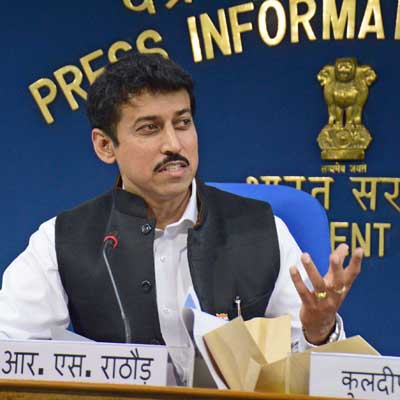
    “The country has the power to become a super power in M&E and as government, we want to interact with the different sectors in the M&E industry. We want to hear about the bottlenecks and the suggestions. We are keen to iron them out to do business,” said Minister of State Information & Broadcasting Rajyavardhan Singh Rathore.


    Rathore, who was talking at the just concluded FICCI Frames 2015, said that the Indian M&E sector had the ability to reach out to the world. “India is poised to be a global phenomena. We just need to come up with content that can create a foothold in any country,” said Rathore.


    He added that Indian content can be targeted at larger audiences and not just the Indian diaspora. “This we can learn from the US, which has been able to push across its culture across boundaries,” he said.


    The I&B Ministry, under the aegis of Prime Minister Narendra Modi’s government, has been working hard towards improving the media unit. “The Prime Minister has been able to popularize radio, which is now expanding. In a year or so, close to 800-900 cities will have either one or multiple FM Radio stations,” he informed.


    Talking about film certification, Rathore said that the Central Board of Film Certification (CBFC) has be a certification board and not censorship body. “They need to give certification based on content,” he said, adding that the Ministry has decided to have a re-look at the Cinematography Act.


    The Ministry is also looking at improving the Film and Television Institute of India (FTII). “Script is important for any movie and that is what is currently lacking. There is no structure. This facility needs to be improved. Film and TV industry should partner with FTII,” he said.


    Talking about the other initiatives, which the Ministry is undertaking, Rathore said that a National Centre of Excellence for the Animation, Visual, Gaming and Comic (AVGC) is being set up. “We want this centre to be a benchmark for all centres that come later. But to do this, the government will need the support of the industry. It is the industry, which can give life to this project. Become a partner with us,” urged Rathore.


    The MoS is of the view that the country’s culture can be promoted though the films. “The content that is being put out should carry our culture,” he said.


    Speaking on how the M&E sector could become a ‘Soft Power’ of the 21st century, Rathore said, “Currently, the M&E sector is working on individual efforts. We need to join forces and interact more to understand the strengths and move in a certain direction.”


    Rathore concluded by assuring the sector that the Ministry will, with open arms, help the M&E sector grow. “We need to develop a degree of trust to grow,” he concluded.


  • TRAI’s recommendations for reserve price for Phase-III FM radio

    TRAI’s recommendations for reserve price for Phase-III FM radio

    NEW DELHI: The Telecom Regulatory Authority of India (TRAI) today recommended that the reserve price for FM Radio channels for Phase III in a new city is to be set equal to 0.8 times the valuation of FM Radio channels in that city.


    Thus, TRAI said the reserve price for FM radio channels for each of the 253 new cities has been fixed at 80 per cent of the valuation for each city.


    In its recommendations on the reserve price for all the 253 new cities, TRAI also said the reserve price in 11 border cities in the ‘Others’ category in Phase-III should be Rs 5 lakh per channel, as approved by the Cabinet in the Phase-III policy.


    After considering all comments received from stakeholders during consultation process and further analysis of the issues, TRAI said in a consultation paper that the valuation of FM radio channels in 253 new cities has been worked out as a simple mean of the three valuation approaches. The approaches are based on population of the city; per capita Gross State Domestic Product (GSDP); listenership of FM Radio; and per capita Gross Revenue earned by the existing FM Radio operators.


    The regulator said it had received a letter from the Ministry on 16 December seeking recommendations of the Authority on reserve prices for auction of FM Radio channels in 264 new cities as per the Phase-III policy guidelines.


    In all 831 FM Radio channels in these cities are proposed to be auctioned through an ascending e-auction process as provided in Phase-III policy.


    Out of the 264 new cities, 253 cities have a population more than one lakh according to the census data 2011 and are classified as B, C, and D category cities. There are 798 FM Radio channels in these 253 cities, which are proposed to be put up for auction.


    The remaining 11 cities having a population less than one lakh are in the border areas of Jammu & Kashmir (J&K) and the North East (NE) region. There are 33 FM Radio channels in these 11 cities, which are proposed to be put up for auction.


    TRAI issued a consultation paper on “Reserve Price for auction of FM Radio channels in new cities” on 6 February. All the comments received were posted on the TRAI website. Subsequently, an Open House Discussion was conducted by TRAI with all the stakeholders on 9 March at New Delhi.


  • FM Radio Phase III first batch to have e-auction of 135 channels

    FM Radio Phase III first batch to have e-auction of 135 channels

    NEW DELHI: A total of 135 private FM radio channels will be auctioned in the first batch covering 69 cities in Phase III based on the reserve price formula approved by the Cabinet in 2011, the Parliament was informed on 20 March.


    This covers towns and cities, which already have FM but have vacancy for more, apart from areas which do not have FM Radio.


    Information and Broadcasting Ministry officials told Indiantelevision.com that the process would be completed by April-end.


    Speaking in the Lok Sabha, I&B Minister Arun Jaitley said that apart from news that will be taken from All India Radio (AIR) under conditions to be mutually agreed with Prasar Bharati, Phase III will consider as non-news and current affairs live coverage of sports events of local nature, information pertaining to weather and traffic, cultural events and festivals, topics relating to examinations, results, admissions, career counsel availability of employment opportunities and public announcements pertaining to civic amenities.


    In addition, categories not permitted at present, may subsequently be permitted by the Ministry from time to time, the Minister said.


    In reply to a separate question, Minister of State Rajyavardhan Rathore said that there is no proposal for community radios before the Ministry.


    The largest beneficiaries of the first batch are Maharashtra including Mumbai with 26 channels in 13 towns, Uttar Pradesh comes next with 22 channels in eight cities, followed by nine channels in six towns of Rajasthan and eight channels in five cities in Tamil Nadu. 

  • FM Radio phase III: TRAI to hold Open House on reserve price for auction

    FM Radio phase III: TRAI to hold Open House on reserve price for auction

    NEW DELHI: An Open House meet will be organised on reserve price for auction of FM Radio channels in new cities in Delhi on 9 March.


    This follows a consultation paper by the Telecom Regulatory Authority of India (TRAI) on 6 February. It has already received some comments.


    TRAI recommended that the reserve price for FM Radio channels in phase III should be 0.8 times of the valuation of FM Radio channels in that city.


    The authority body suggested a reserve price of Rs 5 lakh per city, for FM Radio channels in 11 border cities in phase III.


    The regulator also asked if stakeholders agree with the proposed approach and methodology for determination of the valuations of FM Radio channels in 253 new cities in phase III.


    The Ministry sent a reference dated 16 December, 2014 to the Authority seeking recommendations of TRAI on reserve prices for 831 FM Radio channels in 264 new cities in the phase III. With this, the private FM Radio operations would be permissible in 350 cities.


    Comments and views of the stakeholders on the issues related to estimation of the reserve prices for auction of FM Radio channels in new cities were to be sent latest by 25 February.


    TRAI said that for FM channels in 253 new cities, the reserve price can be fixed at 80 per cent of the derived valuations.


    For 11 new cities classified in the ‘Others’ category, no reference price is available from phase-II as no city was available in this category in that phase. These cities have population figures of less than one lakh and are located in the border areas of Jammu and Kashmir (J&K) and the North- Eastern (NE) States. The Cabinet approved the RP for each of these 11 cities as Rs 5 lakh.


    These cities are of strategic importance. The availability of FM Radio broadcasting service in these far-flung areas can also be used for Emergency Warning Services (EWS) with the specific approval and guidance of the local district administration. When the reserve price of Rs 5 lakh per city set for these cities in phase III, the policy is compared with the proposed RPs for ‘D’ category cities of NE and J&K, it appears to be reasonable to encourage the participation of a large number of prospective bidders. The inherent design of an ascending e-auction process would anyway ensure that the true market value of the FM Radio channels in each city is discovered during the process of auction. So the RP for each of these 11 new cities may be Rs 5 lakh.

  • Subscription rates in DAS phase III & IV expected to be half of that in first two phases

    Subscription rates in DAS phase III & IV expected to be half of that in first two phases

    NEW DELHI: The subscription revenue from phase III and IV areas of Digital Addressable System (DAS) is expected to be between 20 to 30 per cent as compared to 70 to 80 per cent from phase I and phase II areas.


    Therefore, channel pricing in phase I and II areas need to be decided for areas under phase III and phase IV so that multi-system operators can plan operation in these areas.


    This was stated during the fifth Task Force meeting on phase III and IV held recently under the chairmanship of Information and Broadcasting Ministry additional secretary J S Mathur and attended among others by DAS adviser Yogendra Pal.


    Pal informed the meeting that while the centre had sought from all states and union territories (UT) the district wise data of urban areas to be covered in phase III with number of households, only Chhatisgarh and Uttar Pradesh had responded.


    Similarly, only around 15 states and UTs had responded to the query about nodal officers, both at State level and district level.


    Only Gujarat had responded to the query about nomination of one LCO association from each State and UT for the LCO sub-group.


    The states of Maharashtra and Andhra Pradesh are still to respond to the query about nomination of a local cable operator association to the Task Force.


    Mathur directed that copies of the letters written to State Governments in this regard may be provided to the nodal officers present in the meeting to expedite the pending nominations/data.


    Referring to procurement plans and stock of Set Top Boxes (STB) requirements of phase III, the MSOs said they had limited inventory of STBs. Procurement of STBs is taking place according to earlier orders and no new orders have been placed by the national MSOs either with foreign suppliers or indigenous STB companies.


    The MSOs stated that they are making arrangements for finances for procurement of STBs for phase III. The position with regard to availability of funds would be clear by the end of February.


    At the outset, Mathur said digitisation in phase I and II has been possible due to active cooperation and support of State Governments.


    A Representative of Consumer Electronics and Appliances Manufacturers Association stated that they had called a meeting with MSOs in December 2014 but the response was not good. None of the major MSOs attended this meeting. He mentioned that indigenous STB manufacturers are ready to discuss all issues with MSOs anywhere and anytime.


    Mathur advised the MSOs to have a meeting with indigenous STB manufacturers to sort out all the issues. He said the Ministry was also planning to hold a meeting with the Small Industries Development Bank of India (SIDBI) on the demand of long-term financing.


    When MSOs raised the difficulty of signing agreements with broadcasters, a representative of the Telecom Regulatory Authority of India (TRAI) stated that broadcasters cannot deny signal to MSOs once they are DAS compliant. He suggested MSOs should make a formal written request to the broadcasters for the signal according to the regulations. He added that broadcasters should enter into agreements with MSOs for distribution of content without waiting for the cutoff date.


    A representative of a consumer forum stated that computerized billing was not happening in phase I and II areas. He added that CAF forms should be filled before installation of an STB.


    For publicising the extension in date for applying for MSO registration for operation in phase III areas, it was suggested that broadcasters run a scroll on their channels. It was also suggested that MSOs download a video spot made by the Ministry and play it on their local channels.


    The MSO representatives were told to share the data of existing MSOs operating in analogue regime with the Ministry. The representative of ASSOCHAM wanted that the broadcasters should be apprised for the same.


    Regarding publicity campaign, Joint Secretary (Broadcasting) R Jaya said all stakeholders must contribute in spreading awareness about ongoing digitisation in the country. She suggested MSOs should run audio visual ads on their local channels. She also suggested spreading awareness through handbill or printed ads on monthly bills issued by LCOs to the consumers. She called upon broadcasters to plan publicity campaign on their channels.


    FICCI, Cll and ASSOCHAM were asked to draw up a plan for workshops for public awareness campaign.


    Mathur re-emphasized the need to mount an awareness campaign by all stakeholders particularly the broadcasters. He also asked all the MSOs to begin discussions with indigenous STB manufacturers to meet the deadlines of phase III of December 2015 and phase IV of December 2016.