Tag: Phase III

  • Auction of 2nd batch of 266 FM Phase III channels around mid-Sept

    Auction of 2nd batch of 266 FM Phase III channels around mid-Sept

    NEW DELHI: The e-auction of the second batch of FM Radio Phase-III channels comprising 266 channels in 92 cities is to be held around mid-September this year. The channels include 227 channels in 69 fresh cities and 39 channels in 23 existing cities which had remained unsold as there were no bids.

    As in the first stage, the e-auctions will be conducted by C1 India Private Ltd and the process commenced on 20 June with the notice inviting applications (NIA).

    A Pre Bid conference will be held on 11 July 2016 at 2:30 PM and the last date for seeking clarifications on NIA is 14 July 2016 by 12:00 noon. Clarifications to NIA will be given on 21 July 2016.

    The last date for submission of Applications is 1 August 2016 by 5:00 pm. This will be followed on 16 August with the publication of ownership details of applicants. The Bidder Ownership Compliance Certificate will be issued on 22 August 2016.

    The Pre-Qualification of Bidders will be done by 1 September 2016 or completion of requisite formalities whichever is later, followed four to five days later by a Mock Auction.

    The main auction will start four days after the mock auction.

    The first payment of 25 per cent of the Successful Bid Amount will be made within five calendar days, and the remaining within 15 calendar days of the close of the Auction and notification of successful bidders by the government.

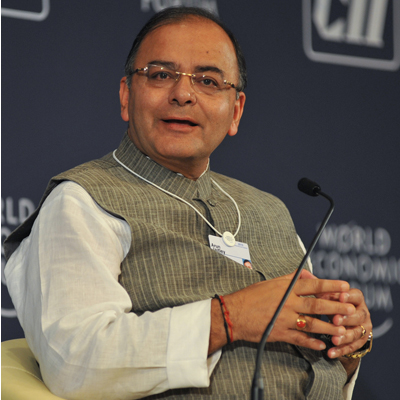
    The e-auction of the first batch of private FM radio phase-III comprising 135 channels in 69 Phase-II existing cities commenced on 27 July 2015 and was completed on 9 September 2015 after 125 rounds of bidding. Out of these, no bid was received in 13 cities having 26 channels, and partial bids were received in 9 cities with 12 channels remaining unsold, which Information and Broadcasting minister Arun Jaitley justified on the ground of “the demand – supply based market economics and bidder’s strategy”.

    However, he told Parliament on 4 December 2015 that the Ministry had received the full payment of Rs.1,055.9 crore notified on 16 September 2015 by 1 October that year

    Against the cumulative reserve price of Rs.550.18 crore for 135 channels, the government received aggregate provisional commitment of Rs.1156.9 crore for 97 channels in 56 cities. Out of 97 channels, 53 channels in 35 cities were sold at a premium over reserve price whereas 44 channels in 21 cities were sold at reserve price.

    The Ministry had decided to conduct e-auction of FM Radio Channels in batches under the extant FM Phase-III Policy.

    For the second batch, the Simultaneous Multiple Round Ascending e-auction process will be carried out for allotting the FM channels, conducted over the Internet. Bidders will be able to access the Electronic Auction System to be used for participation in the Auctions using web browsing software: Internet Explorer 11.x, or Mozilla 34.x. The EAS is a designated computer resource for the receiving of electronic records under the provisions of Section 13(2) of the Information Technology Act 2000, as amended from time to time.

    While issuing the notice for inviting applications, the government said it reserved the right to summarily disqualify any pre-qualified Bidder, at any stage of the Auction or after the Auction is completed on grounds of noncompliance with eligibility conditions, misrepresentation, non-compliance with the Auction Rules, non-compliance with any other pre-condition prescribed for participating in the Auction or for getting the FM channel, or any matter that may, in the opinion of the government, be contrary to general public interest.

    Interested parties were asked to get a copy of this document and any subsequent amendments to the NIA from the MIB website, www.mib.nic.in.

    Before operating the FM service a separate specific license i.e. Wireless Operating License shall be obtained by the company from the WPC (Wireless Planning & Co-ordination) Wing of Ministry of Communications & IT, permitting utilization of appropriate frequencies/band for the establishment and operation of concerned wireless component of FM radio Service under usual terms and conditions of such license. The Grant of such License shall be governed by the rules, procedures and guidelines and shall be subject to compliance with all requirements of the WPC wing.

    Winning Bidders of FM channel(s) in each city shall be determined in the first stage, a Channel Allocation Stage, which will allocate FM channel(s) simultaneously for all the cities. A second stage, a Frequency Allocation Stage, will identify specific frequencies for the Winning Bidders. More specifically, the two stages shall operate as follows:

    The Channel Allocation Stage will allocate number (count) of FM Channels in each of the Cities to the winning bidders. In this stage, Bidders in each City will bid for number of Channels only without linkage to any specific Radio frequency. This stage will consist of a number of Clock Rounds. These rounds will stop once the Auction Activity Requirement is 100 percent and there is no bid submitted by any of the bidders for all Cities in all the channels.
     

  • Seven mfrs making set top boxes locally, MSOs adopt iCAS

    Seven mfrs making set top boxes locally, MSOs adopt iCAS

    NEW DELHI: Even as most high courts extended the deadline for phase III of digital addressable system citing shortage of set top boxes, a total of seven local manufacturers are now producing STB.

    This figure is almost double compared to the details given during the last meeting of the DAS Task Force on 16 February 2016.

    The 15th Task Force meeting on 30 May was informed that seeding of about 41 million (4.1 crore) STBs had been completed.

    However according to a representative of Consumer Electronics and Appliances Manufacturers Association (CEAMA), there was a lull in the market and no orders had been received in the recent past.

    The representative said seven indigenous STB manufacturers had taken Indian Conditional Access System (iCAS) licenses and five out of them are in the process of implementing iCAS in their STBs.

    He said 22 MSOs’ had placed orders for iCAS-based STBs. Twelve MSOs’ had deployed iCAS by 15 February, the 14th meeting had been told.

    Meanwhile, the Department of Electronics and Information Technology is planning a meeting with the operators and stakeholders on 24 June 2016.

    In the meeting on 16 February 2016 which was the first after the deadline for phase III covering all urban areas, it was claimed that the seeding of STBs by multi system operators increased from 6.91 million to 12.43 million between 31 December 2015 and 15 February 2016.

    The Indian Conditional Access System (iCAS) had been developed by DeITY and will be initially available to indigenous STB manufacturers for three years at a nominal fee of $ 0.5 per STB. .

  • Seven mfrs making set top boxes locally, MSOs adopt iCAS

    Seven mfrs making set top boxes locally, MSOs adopt iCAS

    NEW DELHI: Even as most high courts extended the deadline for phase III of digital addressable system citing shortage of set top boxes, a total of seven local manufacturers are now producing STB.

    This figure is almost double compared to the details given during the last meeting of the DAS Task Force on 16 February 2016.

    The 15th Task Force meeting on 30 May was informed that seeding of about 41 million (4.1 crore) STBs had been completed.

    However according to a representative of Consumer Electronics and Appliances Manufacturers Association (CEAMA), there was a lull in the market and no orders had been received in the recent past.

    The representative said seven indigenous STB manufacturers had taken Indian Conditional Access System (iCAS) licenses and five out of them are in the process of implementing iCAS in their STBs.

    He said 22 MSOs’ had placed orders for iCAS-based STBs. Twelve MSOs’ had deployed iCAS by 15 February, the 14th meeting had been told.

    Meanwhile, the Department of Electronics and Information Technology is planning a meeting with the operators and stakeholders on 24 June 2016.

    In the meeting on 16 February 2016 which was the first after the deadline for phase III covering all urban areas, it was claimed that the seeding of STBs by multi system operators increased from 6.91 million to 12.43 million between 31 December 2015 and 15 February 2016.

    The Indian Conditional Access System (iCAS) had been developed by DeITY and will be initially available to indigenous STB manufacturers for three years at a nominal fee of $ 0.5 per STB. .

  • Q3-2016: Activation fees boost Indian cable TV companies top & bottom lines

    Q3-2016: Activation fees boost Indian cable TV companies top & bottom lines

    BENGALURU: The Digital Addressable System (DAS) Phase III deadline has helped boost Indian cable TV companies’ top and bottom lines by way of higher than normal activation fees that they charge, and how! Be it Siti Cable, Hathway or Den Network amongst the major players in the field, the companies have reported higher revenues and profits or reduced losses for the quarter ended 31 December, 2015 (Q3-2016, current quarter). Even a regional player like Ortel saw its cable TV connections rise by 32.7 per cent, both year-on-year (YoY) and quarter-on-quarter (QoQ). It is quite likely that without the hike in activation revenue, the big three players would have reported losses.

    Another significant development that has occurred in Q3-2016 is that Siti Cable has become the largest player in terms of revenue. Until the current quarter, it was placed at number three in terms of total revenue among the four players in this report. Den now stands at number two, while Hathway is at number three. Without activation revenue, it is Den that has the highest operating revenue followed by Siti Cable, with Hathway at number three and the minnow Ortel placed at number four in Q3-2016. Please refer to Fig A below. It must be noted that Ortel’s numbers are not indicated in Fig A. Its quarterly operating revenue was in the Rs 45 – 50 crore range as compared to the Rs 300 – Rs 370 crore of the other three players mentioned in this report.

    In terms of cable subscribers, again, it is Siti Cable as well as Ortel that have added cable subscription numbers, with the Den and Hathway cable subscriber base remaining stagnant. Siti Cable added about 11 lakh subscribers in the current quarter and now stands just behind Den. Hathway has moved behind a place to number three in terms of subscriber base. Ortel’s total cable subscriber base was less than six lakh at the end of December 2015. As a part of an on-going process that began with the implementation (even before in some cases) of DAS Phase I, most multi system operators (MSOs) have been replacing analogue set-top-boxes (STBs) with digital and High Definition (HD) boxes, this report does not dwell on these replacement numbers. 

    Note: (1) 100,00,000 = 100 lakh = 10 million = 1 crore
    (2) Some figures are approximate.
    (3) Other income has not been factored in for EBIDTA in the report.
    (4) Some figures are estimates.
    (5) This report is more skewed towards the financial performance parameters in a limited way, rather than the operational and operational performance parameters of the sample companies.

    Other Revenue Streams

    Another revenue stream that is growing is wireline broadband internet (broadband). Revenue contribution from the broadband segment of each of the four companies has been increasing steadily, to the extent, that in the case of Hathway, broadband internet revenue was 26.2 per cent of operating revenue in Q2-2016 and Q3-2016. The companies have been regularly reporting increase in broadband internet subscription base. Many MSOs have been focusing on broadband internet as a growth engine for revenue and profitability because of the high average revenue per user (ARPU) that the segment brings in. Wireline Internet signals can ride on the MSOs’ existing cable fibre and they don’t have to lay fresh optics. Also, for most MSOs, it is easier to rope in existing cable subscribers for broadband internet services.

    From that point of view, Q3-2016 is an anomaly of sorts, and for this also, it is the higher than normal contribution to revenue by activation charges that is responsible. In Q3-2016, broadband revenue as percentage of operating revenue was either flat QoQ (Hathway) or has declined in the case of Siti Cable and Ortel, while it has increased marginally in the case of Den. But that does not imply that broadband revenue has declined, it is only that its contribution to overall revenue that has been affected. In absolute rupee terms, it has increased YoY and QoQ in Q3-2016 for all the four companies.

    Besides broadband, some companies such as Den have e-commerce portals and also manage a soccer team. This report does not cover those revenues.

    Cable Operations and Activation Fees, Profitability

    Cable operations revenue comprises Subscription Revenue, Activation Fees, Carriage or Placement charges and other income. Fig A1 below gives a breakup of the first three income streams of the three major players.

    Two of the four companies in this report have reported profit after tax (PAT) – Ortel and Siti Cable, while the other two have reported YoY and QoQ EBIDTA increase for the current quarter.

    Let us look at the profitable companies first from their cable operations and activation and profitability perspectives. Please refer to Fig B below.

    Siti Cable

    Last year, in Q4-2015, the Essel Group’s Dish TV reported profit for the first time and led the direct to home (DTH) industry in terms of improved numbers. The trend has continued so far. In Q3-2016, it is another Essel Group company from the carriage industry – Siti Cable that has reported profit after tax (PAT) of Rs 56 crore (15 per cent margin on operating revenue or OPREV) as compared to a loss of Rs 18.5 crore in the corresponding year ago quarter and a loss of Rs 19.4 crore in the immediate trailing quarter. The growth essentially has been driven by higher activation revenue in the current quarter due to the 11 lakh subscribers added in Q3-2016.

    Siti Cable’s activation revenue in the current quarter was almost eight times (grew 7.7 times) YoY at Rs 105 crore (28.4 per cent of OPREV) as compared to Rs 13.6 crore (6.1 per cent of OPREV) and grew by more than five times (5.4 times) QoQ as compared to Rs 19.4 crore (8.8 per cent of OPREV). EBIDTA in the current quarter more than doubled (up 2.6 times) YoY at Rs 129.9 crore as compared to Rs 50.1 crore and also more than doubled QoQ (up 2.5 times) from Rs 51.5 crore.

    Siti Cable executive director & CEO V D Wadhwa said, “Focussing on our guiding principle of creating value for all stakeholders, the company has achieved the financial turnaround for the first time in the history of the company and reported PBT of Rs 56 crore in Q3-2016 and Rs 5.1 crore for the nine months of FY16. At Siti Cable, our efforts to strive for operational excellence continue and during the quarter the company has added 1.1 million digital subscribers, over 10,000 broadband customers and achieved all-time high EBITDA growth of 159 per cent YoY. We expect this momentum to sustain in the coming quarters.”

    “We are also aggressively looking for inorganic growth opportunities in the geographies, which make strategic sense for us to expand and have acquired some networks in the western part of the country, which shall add additional 1.5 million subscribers to our existing subscriber base of 10.7 million. We strongly believe in cohesiveness among like-minded players and are actively engaged in our efforts as a consolidator in the industry,” he added.

    Ortel

    The Bibhu Prasad Rath led regional cable television and broadband internet player Ortel Communications Limited reported a 21.8 per cent YoY revenue (Total Income from Operations or TIO) at Rs 48.03 crore in the current quarter as compared to Rs 39.44 crore and 4.9 per cent QoQ growth as compared to Rs 45.79 crore. The company reported PAT in Q3-2016 at Rs 3.89 crore (8.1 per cent margin) as compared to a loss of Rs 0.1 crore in Q3-2015 and 37.5 per cent higher QoQ PAT as compared to Rs 2.83 crore (6.2 per cent margin). Ortel provides services in the Indian states of Odisha, Chhattisgarh, Andhra Pradesh, Madhya Pradesh and West Bengal.

    Ortel’s connection (activation) fees increased 32.7 per cent to Rs 1 crore as compared to Rs 0.70 crore and increased 33.8 per cent as compared to Rs 0.70 crore. Ortel’s YoY revenue generating units (RGU) grew 19 per cent to 626,475 as compared to 526,551 and increased 9.6 per cent QoQ as compared to 571,834 in Q2-2016. Cable TV RGUs increased 19.3 per cent YoY in Q3-2016 to 558,766 as compared to 468,274 and increased 10 per cent as compared to 508,171 in Q2-2016. Ortel’s YoY primary digital cable RGUs grew 33.9 per cent to 127,098 in Q3-2016 as compared to 94,926 in the corresponding prior year quarter and grew 8.3 per cent QoQ to 117,401. The company says that its cable TV penetration stood at 23.7 per cent in the current quarter.

    Ortel president and CEO Rath said, “I am delighted to share that our key strategy of LCO buyout is receiving huge response in our markets. Healthy addition to RGUs has led to strong growth of 38 per cent in bottom-line on a Q-o-Q basis. Given the strong pipeline of RGUs yet to be integrated, we are confident of improving upon this solid performance in the coming quarters.”

    “FY-2016 will be one-of-the-best-years in the history of Ortel Communications backed by record RGU additions and solid visibility for LCO buyouts in the coming year. With more than 90 per cent subscribers on ‘last mile,’ we remain committed to this model and strongly believe it will create tremendous value for all stakeholders going forward,” he added.

    Hathway

    Indian MSO Hathway Cable and Datacom Limited reported 25.6 per cent YoY growth in standalone Total Income from Operations (TIO) in Q3-2016 at Rs 300.43 crore as compared to Rs 239.15 crore and 9.6 per cent more than the Rs 270.03 crore in Q2-2016.

    Activation revenue in Q3-2016 more than tripled (3.1 times) YoY to Rs 22.3 crore as compared to Rs 7.2 crore and was almost fivefold (4.7 times) the Rs 4.5 crore in Q2-2016.

    The company’s EBIDTA (excluding other income) in Q3-2016 more than doubled (by 2.02 times) YoY to Rs 49.81 crore (16.6 per cent margin) as compared to Rs 24.58 crore (10.3 per cent margin) and increased 45.8 per cent QoQ as compared to Rs 34.15 crore (12.5 per cent margin) in the immediate trailing quarter. 

    Hathway’s loss in the current quarter reduced to Rs 32.58 crore, in Q3-2015 it was Rs 58.05 crore and in the immediate trailing quarter it was Rs 48.94 crore.

    Den Networks

    Den has reported activation revenue of Rs 86 crore in Q3-2016, more than fivefold YoY as compared to the Rs 15 crore in Q3-2015 and more the than three times the Rs 27 crore in the immediate trailing quarter. The company says that it has added nine lakh digital subscribers in the current quarter, taking its digital subscriber base to 85 lakh as compared to the 76 lakh in the previous quarter. The company had reported a digital subscriber base of 68 lakh for the Q3-2015, hence the share of its digital subscriber base has gone up from 58 per cent in Q3-2015 to 65 per cent in the current quarter. The company says that its Cable DAS ARPU has increased 3.8 per cent to Rs 80 in the current quarter as compared to Rs 77 in the immediate trailing quarter.

    Den reported a lower YoY and QoQ consolidated loss of Rs 48.37 crore in the current quarter as compared to a loss of Rs 62.60 crore in Q3-2015 and a loss of Rs 75.23 crore in the immediate trailing quarter.

    The company reported EBIDTA of Rs 42.99 crore (12.2 per cent margin) in the current quarter as compared to an operating profit of Rs 0.28 crore (0.1 per cent margin) in Q3-2015 and an operating loss of Rs 11.27 crore in the immediate trailing quarter. The company’s pre-Activation Cable EBIDTA in the current quarter was Rs 6 crore as compared to the Rs 34 crore in Q3-2015 and a negative Cable EBIDTA of Rs 5 crore in Q2-2016.

    Broadband

    As mentioned above, while broadband revenue in the current quarter has increased YoY and QoQ for all the four companies in this report, it contribution to overall revenues has gone down in the case of two companies, is stable in the case of another one and has increased fractionally in the case of fourth company. Please refer to Fig C below.

    Hathway’s Broadband subscription revenue in Q3-2016 increased 53.4 per cent YoY to Rs 78.7 crore as compared to Rs 57.7 crore and increased 9.5 per cent QoQ as compared to Rs 57.7 crore.

    Siti Cable Broadband revenue in the current quarter almost doubled (grew 99 per cent) at Rs 13.9 crore (3.8 per cent of OPREV) as compared to Rs 7 crore (3.2 per cent of OPREV) in Q3-2015 and increased 49.5 per cent QoQ as compared to Rs 9.3 crore (four per cent of OPREV).

    Den has also ramped up its broadband subscribers by 33.3 per cent to 76,000 in the current quarter from 57,000 in the immediate trailing quarter. The company’s broadband segment revenue increased by over five times YoY (5.5 times) at Rs 11.96 crore (3.4 per cent of TIO) as compared to Rs 2.17 crore (0.8 per cent of TIO) in corresponding prior year quarter and increased 58 per cent QoQ as compared to Rs 8.23 crore (three per cent of TIO). The segment’s YoY operating loss increased to Rs 19.57 crore as compared to Rs 12.37 crore, but reduced QoQ as compared to Rs 23.07 crore. The company says that broadband ARPU has declined by Rs 10 in the current quarter to Rs 760 from Rs 770 in the previous quarter.

    Den’s Broadband Post Activation EBIDTA in Q3-2016 was negative Rs 16 crore as compared to the negative Rs 11 crore in Q3-2015 and negative Rs 20 crore in Q2-2016.

    Ortel’s broadband segment reported 16.3 per cent higher revenue at Rs 8.28 crore as compared to Rs 7.12 crore in the corresponding year ago quarter and 1.7 per cent more than the Rs 8.14 crore in Q2-2016. The broadband segment reported an operating profit of Rs 4.78 crore in the current quarter as compared to Rs 4.52 crore in Q3-2015 and 9.1 per cent higher than the Rs 438 crore in Q2-2016.

    Ortel’s Rath said, “Broadband business continues to do well and remains a key focus area for us. We are working towards delivering notable growth in subscriber base, which would further augment our performance and overall profitability.”

    Concluding remarks

    With 31 December, 2016 as the sunset date for DAS phase IV, the next four quarters should be growth periods for the carriage industry – this includes cable, DTH and HITS (head-end in the sky) companies. How and how well they exploit this opportunity will decide their fate in the medium to long term. Two of the players in this report – Siti Cable and Ortel have said that they are looking at organic growth, and the growth in their subscription base over the past few quarters is a clear indication of that intent. Companies’ toplines and bottomlines will definitely grow over the next few quarters.

    Cable industry players face competition from the existing internet service players like the behemoth Airtel, which is the second largest wireline broadband player in the country after the public sector BSNL. While BSNL and the third largest wireline internet services player in the country – another public sector company MTNL, have been stagnating or losing in terms of subscribers, another MSO, a regional player, ACT Broadband is the fourth largest wireline broadband internet services company in the country. ACT had about 8.4 lakh subscribers at the end of November 2015. It has laid separate optic fibre for internet, rather than let it ride on its cable fibre network and has been canvassing for customers as a pure wireline internet services player in areas where it does not have cable subscribers.

    The race between activation fees and broadband revenue in terms of growth is likely to continue over the next few quarters, until the industry reaches maturity and activation revenues peter out. It remains to be seen how the companies will perform once the big revenue stream from activation fees dries up. Notwithstanding, the court stays that some players in carriage industry will obtain to delay the digitisation process, the next 24 months should be an interesting time for carriage ecosystem as it matures.

  • Q3-2016: Activation fees boost Indian cable TV companies top & bottom lines

    Q3-2016: Activation fees boost Indian cable TV companies top & bottom lines

    BENGALURU: The Digital Addressable System (DAS) Phase III deadline has helped boost Indian cable TV companies’ top and bottom lines by way of higher than normal activation fees that they charge, and how! Be it Siti Cable, Hathway or Den Network amongst the major players in the field, the companies have reported higher revenues and profits or reduced losses for the quarter ended 31 December, 2015 (Q3-2016, current quarter). Even a regional player like Ortel saw its cable TV connections rise by 32.7 per cent, both year-on-year (YoY) and quarter-on-quarter (QoQ). It is quite likely that without the hike in activation revenue, the big three players would have reported losses.

    Another significant development that has occurred in Q3-2016 is that Siti Cable has become the largest player in terms of revenue. Until the current quarter, it was placed at number three in terms of total revenue among the four players in this report. Den now stands at number two, while Hathway is at number three. Without activation revenue, it is Den that has the highest operating revenue followed by Siti Cable, with Hathway at number three and the minnow Ortel placed at number four in Q3-2016. Please refer to Fig A below. It must be noted that Ortel’s numbers are not indicated in Fig A. Its quarterly operating revenue was in the Rs 45 – 50 crore range as compared to the Rs 300 – Rs 370 crore of the other three players mentioned in this report.

    In terms of cable subscribers, again, it is Siti Cable as well as Ortel that have added cable subscription numbers, with the Den and Hathway cable subscriber base remaining stagnant. Siti Cable added about 11 lakh subscribers in the current quarter and now stands just behind Den. Hathway has moved behind a place to number three in terms of subscriber base. Ortel’s total cable subscriber base was less than six lakh at the end of December 2015. As a part of an on-going process that began with the implementation (even before in some cases) of DAS Phase I, most multi system operators (MSOs) have been replacing analogue set-top-boxes (STBs) with digital and High Definition (HD) boxes, this report does not dwell on these replacement numbers. 

    Note: (1) 100,00,000 = 100 lakh = 10 million = 1 crore
    (2) Some figures are approximate.
    (3) Other income has not been factored in for EBIDTA in the report.
    (4) Some figures are estimates.
    (5) This report is more skewed towards the financial performance parameters in a limited way, rather than the operational and operational performance parameters of the sample companies.

    Other Revenue Streams

    Another revenue stream that is growing is wireline broadband internet (broadband). Revenue contribution from the broadband segment of each of the four companies has been increasing steadily, to the extent, that in the case of Hathway, broadband internet revenue was 26.2 per cent of operating revenue in Q2-2016 and Q3-2016. The companies have been regularly reporting increase in broadband internet subscription base. Many MSOs have been focusing on broadband internet as a growth engine for revenue and profitability because of the high average revenue per user (ARPU) that the segment brings in. Wireline Internet signals can ride on the MSOs’ existing cable fibre and they don’t have to lay fresh optics. Also, for most MSOs, it is easier to rope in existing cable subscribers for broadband internet services.

    From that point of view, Q3-2016 is an anomaly of sorts, and for this also, it is the higher than normal contribution to revenue by activation charges that is responsible. In Q3-2016, broadband revenue as percentage of operating revenue was either flat QoQ (Hathway) or has declined in the case of Siti Cable and Ortel, while it has increased marginally in the case of Den. But that does not imply that broadband revenue has declined, it is only that its contribution to overall revenue that has been affected. In absolute rupee terms, it has increased YoY and QoQ in Q3-2016 for all the four companies.

    Besides broadband, some companies such as Den have e-commerce portals and also manage a soccer team. This report does not cover those revenues.

    Cable Operations and Activation Fees, Profitability

    Cable operations revenue comprises Subscription Revenue, Activation Fees, Carriage or Placement charges and other income. Fig A1 below gives a breakup of the first three income streams of the three major players.

    Two of the four companies in this report have reported profit after tax (PAT) – Ortel and Siti Cable, while the other two have reported YoY and QoQ EBIDTA increase for the current quarter.

    Let us look at the profitable companies first from their cable operations and activation and profitability perspectives. Please refer to Fig B below.

    Siti Cable

    Last year, in Q4-2015, the Essel Group’s Dish TV reported profit for the first time and led the direct to home (DTH) industry in terms of improved numbers. The trend has continued so far. In Q3-2016, it is another Essel Group company from the carriage industry – Siti Cable that has reported profit after tax (PAT) of Rs 56 crore (15 per cent margin on operating revenue or OPREV) as compared to a loss of Rs 18.5 crore in the corresponding year ago quarter and a loss of Rs 19.4 crore in the immediate trailing quarter. The growth essentially has been driven by higher activation revenue in the current quarter due to the 11 lakh subscribers added in Q3-2016.

    Siti Cable’s activation revenue in the current quarter was almost eight times (grew 7.7 times) YoY at Rs 105 crore (28.4 per cent of OPREV) as compared to Rs 13.6 crore (6.1 per cent of OPREV) and grew by more than five times (5.4 times) QoQ as compared to Rs 19.4 crore (8.8 per cent of OPREV). EBIDTA in the current quarter more than doubled (up 2.6 times) YoY at Rs 129.9 crore as compared to Rs 50.1 crore and also more than doubled QoQ (up 2.5 times) from Rs 51.5 crore.

    Siti Cable executive director & CEO V D Wadhwa said, “Focussing on our guiding principle of creating value for all stakeholders, the company has achieved the financial turnaround for the first time in the history of the company and reported PBT of Rs 56 crore in Q3-2016 and Rs 5.1 crore for the nine months of FY16. At Siti Cable, our efforts to strive for operational excellence continue and during the quarter the company has added 1.1 million digital subscribers, over 10,000 broadband customers and achieved all-time high EBITDA growth of 159 per cent YoY. We expect this momentum to sustain in the coming quarters.”

    “We are also aggressively looking for inorganic growth opportunities in the geographies, which make strategic sense for us to expand and have acquired some networks in the western part of the country, which shall add additional 1.5 million subscribers to our existing subscriber base of 10.7 million. We strongly believe in cohesiveness among like-minded players and are actively engaged in our efforts as a consolidator in the industry,” he added.

    Ortel

    The Bibhu Prasad Rath led regional cable television and broadband internet player Ortel Communications Limited reported a 21.8 per cent YoY revenue (Total Income from Operations or TIO) at Rs 48.03 crore in the current quarter as compared to Rs 39.44 crore and 4.9 per cent QoQ growth as compared to Rs 45.79 crore. The company reported PAT in Q3-2016 at Rs 3.89 crore (8.1 per cent margin) as compared to a loss of Rs 0.1 crore in Q3-2015 and 37.5 per cent higher QoQ PAT as compared to Rs 2.83 crore (6.2 per cent margin). Ortel provides services in the Indian states of Odisha, Chhattisgarh, Andhra Pradesh, Madhya Pradesh and West Bengal.

    Ortel’s connection (activation) fees increased 32.7 per cent to Rs 1 crore as compared to Rs 0.70 crore and increased 33.8 per cent as compared to Rs 0.70 crore. Ortel’s YoY revenue generating units (RGU) grew 19 per cent to 626,475 as compared to 526,551 and increased 9.6 per cent QoQ as compared to 571,834 in Q2-2016. Cable TV RGUs increased 19.3 per cent YoY in Q3-2016 to 558,766 as compared to 468,274 and increased 10 per cent as compared to 508,171 in Q2-2016. Ortel’s YoY primary digital cable RGUs grew 33.9 per cent to 127,098 in Q3-2016 as compared to 94,926 in the corresponding prior year quarter and grew 8.3 per cent QoQ to 117,401. The company says that its cable TV penetration stood at 23.7 per cent in the current quarter.

    Ortel president and CEO Rath said, “I am delighted to share that our key strategy of LCO buyout is receiving huge response in our markets. Healthy addition to RGUs has led to strong growth of 38 per cent in bottom-line on a Q-o-Q basis. Given the strong pipeline of RGUs yet to be integrated, we are confident of improving upon this solid performance in the coming quarters.”

    “FY-2016 will be one-of-the-best-years in the history of Ortel Communications backed by record RGU additions and solid visibility for LCO buyouts in the coming year. With more than 90 per cent subscribers on ‘last mile,’ we remain committed to this model and strongly believe it will create tremendous value for all stakeholders going forward,” he added.

    Hathway

    Indian MSO Hathway Cable and Datacom Limited reported 25.6 per cent YoY growth in standalone Total Income from Operations (TIO) in Q3-2016 at Rs 300.43 crore as compared to Rs 239.15 crore and 9.6 per cent more than the Rs 270.03 crore in Q2-2016.

    Activation revenue in Q3-2016 more than tripled (3.1 times) YoY to Rs 22.3 crore as compared to Rs 7.2 crore and was almost fivefold (4.7 times) the Rs 4.5 crore in Q2-2016.

    The company’s EBIDTA (excluding other income) in Q3-2016 more than doubled (by 2.02 times) YoY to Rs 49.81 crore (16.6 per cent margin) as compared to Rs 24.58 crore (10.3 per cent margin) and increased 45.8 per cent QoQ as compared to Rs 34.15 crore (12.5 per cent margin) in the immediate trailing quarter. 

    Hathway’s loss in the current quarter reduced to Rs 32.58 crore, in Q3-2015 it was Rs 58.05 crore and in the immediate trailing quarter it was Rs 48.94 crore.

    Den Networks

    Den has reported activation revenue of Rs 86 crore in Q3-2016, more than fivefold YoY as compared to the Rs 15 crore in Q3-2015 and more the than three times the Rs 27 crore in the immediate trailing quarter. The company says that it has added nine lakh digital subscribers in the current quarter, taking its digital subscriber base to 85 lakh as compared to the 76 lakh in the previous quarter. The company had reported a digital subscriber base of 68 lakh for the Q3-2015, hence the share of its digital subscriber base has gone up from 58 per cent in Q3-2015 to 65 per cent in the current quarter. The company says that its Cable DAS ARPU has increased 3.8 per cent to Rs 80 in the current quarter as compared to Rs 77 in the immediate trailing quarter.

    Den reported a lower YoY and QoQ consolidated loss of Rs 48.37 crore in the current quarter as compared to a loss of Rs 62.60 crore in Q3-2015 and a loss of Rs 75.23 crore in the immediate trailing quarter.

    The company reported EBIDTA of Rs 42.99 crore (12.2 per cent margin) in the current quarter as compared to an operating profit of Rs 0.28 crore (0.1 per cent margin) in Q3-2015 and an operating loss of Rs 11.27 crore in the immediate trailing quarter. The company’s pre-Activation Cable EBIDTA in the current quarter was Rs 6 crore as compared to the Rs 34 crore in Q3-2015 and a negative Cable EBIDTA of Rs 5 crore in Q2-2016.

    Broadband

    As mentioned above, while broadband revenue in the current quarter has increased YoY and QoQ for all the four companies in this report, it contribution to overall revenues has gone down in the case of two companies, is stable in the case of another one and has increased fractionally in the case of fourth company. Please refer to Fig C below.

    Hathway’s Broadband subscription revenue in Q3-2016 increased 53.4 per cent YoY to Rs 78.7 crore as compared to Rs 57.7 crore and increased 9.5 per cent QoQ as compared to Rs 57.7 crore.

    Siti Cable Broadband revenue in the current quarter almost doubled (grew 99 per cent) at Rs 13.9 crore (3.8 per cent of OPREV) as compared to Rs 7 crore (3.2 per cent of OPREV) in Q3-2015 and increased 49.5 per cent QoQ as compared to Rs 9.3 crore (four per cent of OPREV).

    Den has also ramped up its broadband subscribers by 33.3 per cent to 76,000 in the current quarter from 57,000 in the immediate trailing quarter. The company’s broadband segment revenue increased by over five times YoY (5.5 times) at Rs 11.96 crore (3.4 per cent of TIO) as compared to Rs 2.17 crore (0.8 per cent of TIO) in corresponding prior year quarter and increased 58 per cent QoQ as compared to Rs 8.23 crore (three per cent of TIO). The segment’s YoY operating loss increased to Rs 19.57 crore as compared to Rs 12.37 crore, but reduced QoQ as compared to Rs 23.07 crore. The company says that broadband ARPU has declined by Rs 10 in the current quarter to Rs 760 from Rs 770 in the previous quarter.

    Den’s Broadband Post Activation EBIDTA in Q3-2016 was negative Rs 16 crore as compared to the negative Rs 11 crore in Q3-2015 and negative Rs 20 crore in Q2-2016.

    Ortel’s broadband segment reported 16.3 per cent higher revenue at Rs 8.28 crore as compared to Rs 7.12 crore in the corresponding year ago quarter and 1.7 per cent more than the Rs 8.14 crore in Q2-2016. The broadband segment reported an operating profit of Rs 4.78 crore in the current quarter as compared to Rs 4.52 crore in Q3-2015 and 9.1 per cent higher than the Rs 438 crore in Q2-2016.

    Ortel’s Rath said, “Broadband business continues to do well and remains a key focus area for us. We are working towards delivering notable growth in subscriber base, which would further augment our performance and overall profitability.”

    Concluding remarks

    With 31 December, 2016 as the sunset date for DAS phase IV, the next four quarters should be growth periods for the carriage industry – this includes cable, DTH and HITS (head-end in the sky) companies. How and how well they exploit this opportunity will decide their fate in the medium to long term. Two of the players in this report – Siti Cable and Ortel have said that they are looking at organic growth, and the growth in their subscription base over the past few quarters is a clear indication of that intent. Companies’ toplines and bottomlines will definitely grow over the next few quarters.

    Cable industry players face competition from the existing internet service players like the behemoth Airtel, which is the second largest wireline broadband player in the country after the public sector BSNL. While BSNL and the third largest wireline internet services player in the country – another public sector company MTNL, have been stagnating or losing in terms of subscribers, another MSO, a regional player, ACT Broadband is the fourth largest wireline broadband internet services company in the country. ACT had about 8.4 lakh subscribers at the end of November 2015. It has laid separate optic fibre for internet, rather than let it ride on its cable fibre network and has been canvassing for customers as a pure wireline internet services player in areas where it does not have cable subscribers.

    The race between activation fees and broadband revenue in terms of growth is likely to continue over the next few quarters, until the industry reaches maturity and activation revenues peter out. It remains to be seen how the companies will perform once the big revenue stream from activation fees dries up. Notwithstanding, the court stays that some players in carriage industry will obtain to delay the digitisation process, the next 24 months should be an interesting time for carriage ecosystem as it matures.

  • I&B Ministry grants new provisional licences to 27 MSOs

    I&B Ministry grants new provisional licences to 27 MSOs

    MUMBAI: The Information & Broadcasting Ministry has granted provisional licences to as many as 27 multi-system operator (MSO). With this, the total number of provisional registrations has gone up to 451, as of 2 February, 2016.

    It may be recalled that in January, the I&B Ministry granted provisional licenses to 42 MSOs in a bid to expedite the implementation digital addressable system (DAS) Phase III in all urban areas in the country.

    Between 18 January and 2 February, the I&B Ministry granted licenses to MSOs operating in the states of Jammu & Kashmir, Haryana, Rajasthan, Chhattisgarh, Tamil Nadu, Odisha, Madhya Pradesh, Manipur, Gujarat, Mizoram, Maharashtra and Kerala.

    Of the MSOs, which were granted provisional licenses, only Viswam Digital Network based in Puducherry was granted a pan-India license.

    The other MSOs that received provisional licenses for DAS Phases III and IV are as follows: Satellite Media Service, SL Cable TV Network, Sapna Cables, Sai Infocomm, Nathan Digital Communication, Maa Shanti Cable Network, Win Cable Network, Ghanshyam Cable Network, Information Service Television Network, Galaxy Cable Network, Shri Vinayak Cable Network, New Millennium Network, Sharda Maa City Cable, New Jai Bharat Cable Network, Sri Chakra Cable System, Friends Cable Network, CO TV, H.D Vision, Sahoo Cable Network, CZS Cable, D.M.V Cable Network, Vashnav Cable Network, Malanad Communication, PMC Network, OK Digital and Sam Digital Cable Network.

  • I&B Ministry grants new provisional licences to 27 MSOs

    I&B Ministry grants new provisional licences to 27 MSOs

    MUMBAI: The Information & Broadcasting Ministry has granted provisional licences to as many as 27 multi-system operator (MSO). With this, the total number of provisional registrations has gone up to 451, as of 2 February, 2016.

    It may be recalled that in January, the I&B Ministry granted provisional licenses to 42 MSOs in a bid to expedite the implementation digital addressable system (DAS) Phase III in all urban areas in the country.

    Between 18 January and 2 February, the I&B Ministry granted licenses to MSOs operating in the states of Jammu & Kashmir, Haryana, Rajasthan, Chhattisgarh, Tamil Nadu, Odisha, Madhya Pradesh, Manipur, Gujarat, Mizoram, Maharashtra and Kerala.

    Of the MSOs, which were granted provisional licenses, only Viswam Digital Network based in Puducherry was granted a pan-India license.

    The other MSOs that received provisional licenses for DAS Phases III and IV are as follows: Satellite Media Service, SL Cable TV Network, Sapna Cables, Sai Infocomm, Nathan Digital Communication, Maa Shanti Cable Network, Win Cable Network, Ghanshyam Cable Network, Information Service Television Network, Galaxy Cable Network, Shri Vinayak Cable Network, New Millennium Network, Sharda Maa City Cable, New Jai Bharat Cable Network, Sri Chakra Cable System, Friends Cable Network, CO TV, H.D Vision, Sahoo Cable Network, CZS Cable, D.M.V Cable Network, Vashnav Cable Network, Malanad Communication, PMC Network, OK Digital and Sam Digital Cable Network.

  • DishTV launches customised packs in Karnataka, AP & Telangana

    DishTV launches customised packs in Karnataka, AP & Telangana

    MUMBAI: In a bid to acquire subscribers in Karnataka, Andhra Pradesh and Telangana during Phase III areas of Digital Addressable System (DAS), direct to home (DTH) operator DishTV has launched a new package called Khushi, which offers customers the power to create their own pack.

    The new includes 45 South Indian channels, five Kannada channels and 11 Telugu channels.

    For the customers moving to DishTV, the company offers various options by providing them a choice of custom-made 17 entertainment add-on packs ranging from Rs 25 – 75 per month and regional add-ons starting from Rs 10 per month.

    Subscribers can avail best of Kannada entertainment at as low as Rs 139 per month and wholesome Kannada entertainment at Rs 169 per month. Further to appease the need for sports enthusiasts, the sports add on with best of Kannada entertainment is available at Rs 189 per month.

    For accessing Telugu entertainment, customers will have to pay Rs 139 per month. Popular kids add on with complete Telugu entertainment is priced at Rs 164 per month and the sports add on with complete Telugu entertainment will be available at Rs 189 per month.

    DishTV CEO Arun Kapoor said, “Over the years we have observed the trend of the viewer preferences prevailing in the Tier 2 and Tier 3 markets. They have an inclination for regional content. Keeping this in mind DishTV has always been at the forefront to provide innovative solutions to enhance the TV viewing experience for our subscribers in regional markets.”

    He further added, “Now, with the extension of deadline for the phase III of TV digitisation in India, we aim to capitalise the huge captive user base, which would be switching from analogue cable to digital platform. Khushi offers its subscribers the ‘Power to create your own pack’ and ensure that they enjoy seamless services with uninterrupted entertainment at cost effective rates.”

  • DishTV launches customised packs in Karnataka, AP & Telangana

    DishTV launches customised packs in Karnataka, AP & Telangana

    MUMBAI: In a bid to acquire subscribers in Karnataka, Andhra Pradesh and Telangana during Phase III areas of Digital Addressable System (DAS), direct to home (DTH) operator DishTV has launched a new package called Khushi, which offers customers the power to create their own pack.

    The new includes 45 South Indian channels, five Kannada channels and 11 Telugu channels.

    For the customers moving to DishTV, the company offers various options by providing them a choice of custom-made 17 entertainment add-on packs ranging from Rs 25 – 75 per month and regional add-ons starting from Rs 10 per month.

    Subscribers can avail best of Kannada entertainment at as low as Rs 139 per month and wholesome Kannada entertainment at Rs 169 per month. Further to appease the need for sports enthusiasts, the sports add on with best of Kannada entertainment is available at Rs 189 per month.

    For accessing Telugu entertainment, customers will have to pay Rs 139 per month. Popular kids add on with complete Telugu entertainment is priced at Rs 164 per month and the sports add on with complete Telugu entertainment will be available at Rs 189 per month.

    DishTV CEO Arun Kapoor said, “Over the years we have observed the trend of the viewer preferences prevailing in the Tier 2 and Tier 3 markets. They have an inclination for regional content. Keeping this in mind DishTV has always been at the forefront to provide innovative solutions to enhance the TV viewing experience for our subscribers in regional markets.”

    He further added, “Now, with the extension of deadline for the phase III of TV digitisation in India, we aim to capitalise the huge captive user base, which would be switching from analogue cable to digital platform. Khushi offers its subscribers the ‘Power to create your own pack’ and ensure that they enjoy seamless services with uninterrupted entertainment at cost effective rates.”

  • Airtel DTH revenue up 19% on higher subscriber additions & ARPU

    Airtel DTH revenue up 19% on higher subscriber additions & ARPU

    BENGALURU: The 31 December, 2015 deadline for Digital Addressable System (DAS) Phase III has been a boost for the carriage industry in subscriber additions, revenues, and operating profits. Buoyed by the government’s decision to stick to deadlines for digitisation, the direct-to-home (DTH) industry in India is continuing its bloom run, if one were to go by the results reported by Bharti Airtel for its Digital TV services (Airtel DTH) for the quarter ended 31 December, 2015 (Q3-2016, current quarter).


    Revenue in Q3-2016 increased 19 per cent to Rs 742.2 crore, up 19 per cent YoY as compared to Rs 623.4 crore. EBIDTA for Q3-2016 grew 45 per cent to Rs 247.4 crore (33.3 per cent margin) as compared to Rs 170.7 crore (27.4 per cent margin).


    Note: 100,00,000 = 100 lakh = 10 million = 1 crore


    The segment’s subscriber base grew 13.2 per cent YoY to 111.06 lakh in the current quarter as compared to 98.10 lakh and grew five per cent as compared to 105.76 lakh in the immediate preceding quarter. Though in US dollar terms, average revenue per user (ARPU) was constant YoY and QoQ at $3.5, in Indian rupees it has increased seven per cent YoY to Rs 229 from Rs 214 and increased two per cent QoQ from Rs 224. Given that the deadline for DAS phase III was 31 December, 2015, Airtel DTH segment reported 5.30 lakh net subscriber additions in the current quarter, which was almost double (1.96 times) the 2.70 lakh subscriber additions in Q3-2015 and more than triple (3.2 times) the 1.64 lakh subscribers added in Q2-2016.


    Subscriber churn in Q3-2016 was lower at 0.7 per cent as compared to one per cent in Q3-2015 and 1.3 per cent in the immediate trailing quarter.


    Airtel’s CAPEX for its DTH segment more than doubled (by 2.1 times) to Rs 342.2 crore as compared to Rs 163 crore in Q3-2015. Airtel’s cumulative investments in its DTH segment increased 17 per cent YoY to Rs 6177 crore as compared to Rs 5494.8 crore.