Tag: Phase III

  • DAS: Even official figures show cable TV digitisation is incomplete

    DAS: Even official figures show cable TV digitisation is incomplete

    NEW DELHI: Almost two weeks after the formal switch-off of analogue in all parts of the country except Tamil Nadu, a majority of multi-system (MSOs) and local cable operators (LCOs) claimed that the seeding of set-top boxes in Phase III is just over 40 per cent, and likely to be less in Phase IV areas where people cannot afford the boxes.

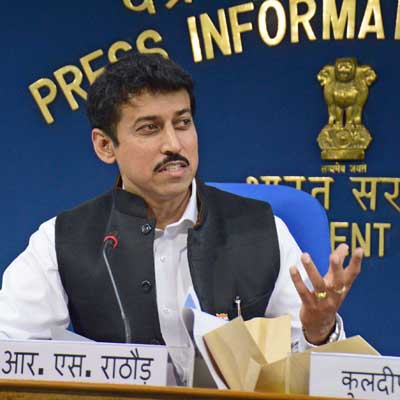
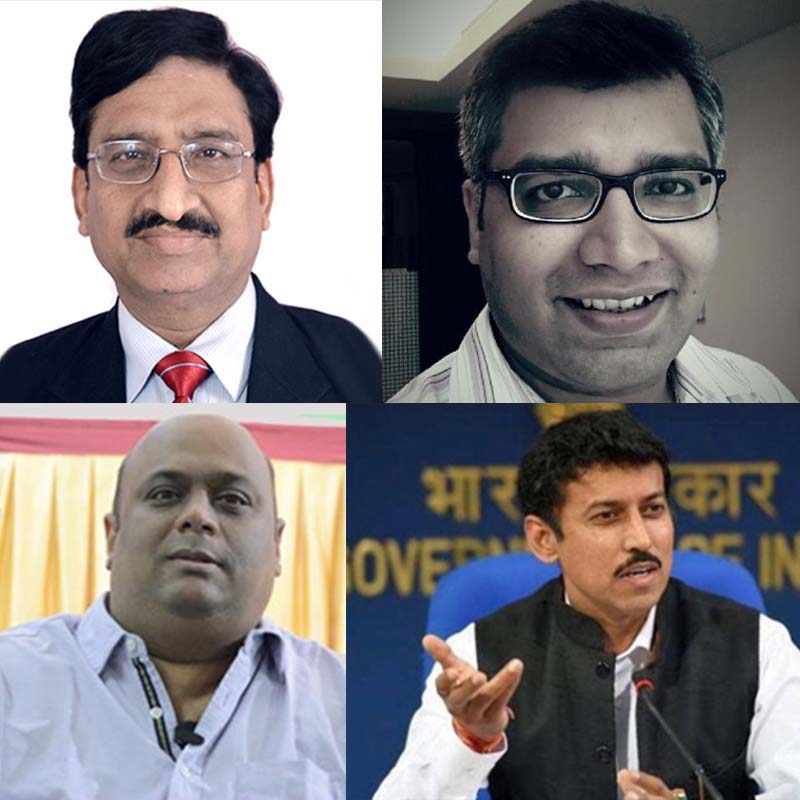
    In sharp contrast, the minister of state for information and broadcasting Rajyavardhan Rathore told the Parliament in mid-March that around 67 per cent seeding of set-top boxes had been achieved in Phase III and IV combined, while it was absolute in the first two phases (minus Tamil Nadu).

    All India Digital Cable Federation Secretary General Saharsh Damani told indiantelevision.com that reports of Phase III received from MSOs indicated that around 43 million STBs had been seeded even as the government had said that the total affected population in Phase III was just over 33 million.

    Furthermore, he said many MSOs said they had ample boxes lying with them, and so were stopping import of more boxes.

    With no clear picture emerging yet even as the country formally completes full digitisation of cable television, an information and broadcasting ministry official claimed told indiantelevision.com that the figure had already crossed 75 per cent in the final two phases. However, he admitted that some extensions had been allowed in some areas, and analogue was continuing in these areas though time limits had been set.

    Meanwhile an MSO who did not want to be named said people in rural areas could not afford boxes and monthly payments, and so they may opt for direct-to-home TV. Adding that MSOs were not doing ‘charity’ but involved in business, he said the chances were that they would take Doordarshan’s FreeDish as a cheaper option.

    Maharashtra Cable Operators Federation office-bearer Arvind Prabhoo told indiantelevision.com that the estimates received by him from Phase IV areas in his state showed just over 20 per cent cable TV homes had gone digital. He also said that, while the situation in Andhra Pradesh and Telangana with regard to Phase IV was very bad, his understanding was that these two states had achieved 60 per cent seeding of which most was in Phase III. Both states have already sought extensions from the centre.

    He added that, though he had no figures, the position in Uttar Pradesh and Madhya Pradesh was very bad – particularly in Phase IV.

    Interestingly, forseeing the DD FreeDish challenge, some DTH platforms have assured subscribers that, at a minimum sum fixed by them, it will be ensured that there is no stoppage of signals to them since DTH is in any case digital.

    About plans to help the poor acquire STBs, the ministry official said the Telecom Regulatory Authority of India had already announced schemes of payments in installments.

    Meanwhile a meeting of the Task Force for the final two phases held two weeks before total switch-off was told by the advisor (DAS) Yogendra Pal that registered operators in Phase III and Phase-IV areas had reported 64.4 million STBs, excluding Tamil Nadu, which came to 67% of the total requirement.

    While giving region-wise figures, he said that there was need to sit together and chalk out a plan for successful implementation of Cable TV digitisation across the country.

    It was decided that a meeting would be held in the office of the Indian Broadcasting Foundation and an action plan would be worked out in the presence of representatives of MSOs.

    Additional secretary Jayashree Mukherjee asked the members to outline the problems being faced by them in Phase IV areas and also their preparedness.

    A representative from SITI Cable stated that they have been facing some problems with regard to carrying of signals as the telecom bandwidth available in remote areas of Phase-IV is poorly served and can only be utilized by one or two MSOs and quality of service is affected. He again raised the issue of infrastructure sharing and wanted to know progress made in this regard.

    The ministry wanted to know if the MSOs had any proposal, noting that no such proposal had been received so far.

    A representative from GTPL Hathway stated they have no problem in Implementing digitization in Phase-IV areas. He further stated that some push-up from the State Government is also required.

    Mukherjee asked the DTH representative what initiatives have been taken by them to cover those areas where cable connectivity is not available. The representative stated that they are in the process of addressing the problems commercially as well.

    Representatives of national MSOs raised the issue of continuance of analogue signals in some areas, particularly in Telangana State and suggested that all broadcasters are required to undergo for total discontinuation of analogue signals.

    The IBF asked the MSOs for specific complaints in this regard so that immediate necessary action can be taken. He mentioned IBF has already issued Circulars/Notices to all their members to switch off analog signals in Phase III areas.

    The representatives from the State Governments outlined their readiness and action being taken by them with regard to successful implement of Digitization. They mentioned that they are holding meetings with stakeholders.

    All the stakeholders also said they have enough inventories of STBs to be seeded in Phase IV areas. No major issue is pending with regard to Cable TV Digitisation in Phase IV areas to be addressed.

    Also Read :

    DAS: MSOs, LCOs give low figure of STB seeding, official sources admit it’s under 80%

    Final phase STB seeding is 35% even as deadline nears

    DAS deadline extension ruled out, govt claims 66% seeding done


  • FM auction: Govt nets Rs 2 bn, ENIL wins 21 channels

    MUMBAI: A cumulative provisional Rs 2,002.4 million was earned against the aggregate reserve price of about Rs 9,159.1 million from e-auction of 66 FM channels in 48 cities in the second batch of Phase III.

    According to an announcement of the Information and Broadcasting Ministry on 27 February, 266 FM channels had been shortlisted but only 66 channels made it to the winning list. ENIL (Entertainment Network India Limited) won the maximum number with 21 channels in different cities and bid for total of Rs 480.9 million.

    Interestingly, only two channels received bids of more than Rs 100 million as compared to 12 channels in the first batch. Kal Radio Ltd’s Hyderabad station bid a winning price is Rs 23,43,48,266 and South Asia FM Ltd’s Dehradun station had a winning price of Rs 15,61,00,590.

    Sambhaav Media Ltd won two stations in Jammu and Kashmir for Rs 5,00,000 each at Kathua and Leh. JCL India Ltd’s bagged stations in Kargil and Leh for Rs 5,00,000 each. South Asia FM Ltd’s won a station at Leh with Rs 5,00,000.

    Stations in four north eastern cities were bagged in the e-auction. Of these, three went to Purvy Broadcast Pvt Ltd: Aizwal for Rs 20,09,444, Dhubri for Rs 5,00,000, and Itanagar for Rs 43,72,914. Agartala went to South Asia FM Ltd for Rs 70,71,529.

    Read the full story here:

    Govt gets over Rs two billion from 66 FM stations in second batch Phase III


  • Govt reiterates inability to permit private radio news

    NEW DELHI: Reiterating its long-held stand that it was difficult to monitor news bulletins on FM and community radio channels, the Centre has expressed that permitting privately produced news bulletins could endanger “national security and public order”.

    The Government has already announced that Community Radio Stations and private FM in Phase III can air bulletins of All-India Radio without any payment.

    The government in an affidavit in the Supreme Court said it could not permit news content on FM as it might be misused by anti-national elements in the country and outside to propagate their agenda and radical views, posing a grave danger to the country.

    Answering the Court’s query in this regard, the Government said there was no mechanism in place to monitor content of live broadcast of all radio stations and law and order problems may arise if they transmit sensitive news.

    It also said several community radio stations were run by NGOs and could be used as platforms to manipulate the minds of local people.

    “Broadcasting of news by these stations/channels may pose a possible security risk as there is no mechanism to monitor the contents of news bulletin of every such station. As these stations and channels are run mainly by NGO or other small organisation and private operators, several anti-national or radical elements within the country can misuse it for propagating their own agenda,” it said.

    The government added that some radio stations also air programmes involving chats with NRIs and these may be exploited too.

    Also Read:  ‘Risk’ in FM stations airing news, apprehends Prasar head

    Why can’t pvt FM channels have news, SC asks govt

  • DAS III: IBF welcomes Delhi HC order

    DAS III: IBF welcomes Delhi HC order

    MUMBAI: The Indian Broadcasting Foundation (IBF) has welcomed the order passed by the Delhi High Court on 3 November 2016 dismissing nine DAS-related petitions. The petitions dealt with the time extension for implementing digital addressable system (DAS) in certain areas of Karnataka, Kerala, Andhra Pradesh and Telangana and Uttar Pradesh under Phase-III, the deadline for which had expired on 31 December 2015.

    There is no change in DAS Phase IV deadline, which continues to be 31 December 2016.

    With the dismissal of these petitions, the stay granted by various high courts in areas covered by the above-mentioned nine cases stands vacated and will no longer apply.

    The Delhi High Court, dismissing these petitions, has also directed the petitioners to switch over to digital addressable systems within three weeks i.e. by 24 November 2016 and inform the subscribers by running a scroll on their networks about the digital switchover deadline

    The high courts in various parts of the country had earlier granted stay in certain matters on DAS Phase III deadline. The stay orders had stalled the implementation of DAS Phase III in those areas. This prompted the MIB to move the Supreme Court to get all the cases transferred to the apex court.

    The SC made Delhi High Court as the designated court for all cases related to DAS Phase III. The above-mentioned order of the Delhi High Court has removed the impediments in implementation of DAS in Phase – III areas.

    The IBF has advised all its member-broadcasters to apprise all its affiliate multi-system operators (MSOs) and local cable operators about the said switchover deadline of 24 November 2016 in these Phase – III areas and make it clear that after the said date the channels can be received only through a digital set-top box. The subscribers in these areas are advised to immediately contact their respective local cable operators (LCOs)/MSOs to ensure the installation of STBs before the expiry of the above-mentioned deadline.

  • DAS III: IBF welcomes Delhi HC order

    DAS III: IBF welcomes Delhi HC order

    MUMBAI: The Indian Broadcasting Foundation (IBF) has welcomed the order passed by the Delhi High Court on 3 November 2016 dismissing nine DAS-related petitions. The petitions dealt with the time extension for implementing digital addressable system (DAS) in certain areas of Karnataka, Kerala, Andhra Pradesh and Telangana and Uttar Pradesh under Phase-III, the deadline for which had expired on 31 December 2015.

    There is no change in DAS Phase IV deadline, which continues to be 31 December 2016.

    With the dismissal of these petitions, the stay granted by various high courts in areas covered by the above-mentioned nine cases stands vacated and will no longer apply.

    The Delhi High Court, dismissing these petitions, has also directed the petitioners to switch over to digital addressable systems within three weeks i.e. by 24 November 2016 and inform the subscribers by running a scroll on their networks about the digital switchover deadline

    The high courts in various parts of the country had earlier granted stay in certain matters on DAS Phase III deadline. The stay orders had stalled the implementation of DAS Phase III in those areas. This prompted the MIB to move the Supreme Court to get all the cases transferred to the apex court.

    The SC made Delhi High Court as the designated court for all cases related to DAS Phase III. The above-mentioned order of the Delhi High Court has removed the impediments in implementation of DAS in Phase – III areas.

    The IBF has advised all its member-broadcasters to apprise all its affiliate multi-system operators (MSOs) and local cable operators about the said switchover deadline of 24 November 2016 in these Phase – III areas and make it clear that after the said date the channels can be received only through a digital set-top box. The subscribers in these areas are advised to immediately contact their respective local cable operators (LCOs)/MSOs to ensure the installation of STBs before the expiry of the above-mentioned deadline.

  • Radio FM Phase III applicants can get 49 per cent FDI after FIPB clearance

    Radio FM Phase III applicants can get 49 per cent FDI after FIPB clearance

    NEW DELHI: Applicants in Phase III of FM Radio will be able to attract foreign direct investment, but the total direct and indirect investment including portfolio and FDI into the company will not exceed 49 per cent at the time of application and currency of licence.

    In an announcement today, the Government said the company would be required the status of such foreign holding and it will have to certify that it is within 49 per cent on a yearly basis.

    It was also clarified that any investment will have to be with the approval of the Foreign Investments Promotion Board.

    The calculation of the direct or indirect foreign investments will be as per extant policy of the government.

    This has been done today by an amendent in the Policy Guidelines for Phase III announced on 24 November last year.

    While announcing a relaxation on FDI in the electronic media on 20 June 2016, the Government had not referred to radio.

    For more information click here:

  • Radio FM Phase III applicants can get 49 per cent FDI after FIPB clearance

    Radio FM Phase III applicants can get 49 per cent FDI after FIPB clearance

    NEW DELHI: Applicants in Phase III of FM Radio will be able to attract foreign direct investment, but the total direct and indirect investment including portfolio and FDI into the company will not exceed 49 per cent at the time of application and currency of licence.

    In an announcement today, the Government said the company would be required the status of such foreign holding and it will have to certify that it is within 49 per cent on a yearly basis.

    It was also clarified that any investment will have to be with the approval of the Foreign Investments Promotion Board.

    The calculation of the direct or indirect foreign investments will be as per extant policy of the government.

    This has been done today by an amendent in the Policy Guidelines for Phase III announced on 24 November last year.

    While announcing a relaxation on FDI in the electronic media on 20 June 2016, the Government had not referred to radio.

    For more information click here:

  • Delay in Phase III monetisation likely to disturb profitability of MSOs: ICRA

    Delay in Phase III monetisation likely to disturb profitability of MSOs: ICRA

    MUMBAI: In the cable TV space, in the current fiscal the revenue growth of multiple system operators (MSOs) will remain sensitive to regulatory changes, says ICRA. While lifting of stay orders and consequent discontinuation of analog signals in Phase III markets will remain a key subscription revenue growth driver, any extension with respect to Phase IV deadline (beyond December 31, 2016) will impact the activation revenues.

    With an estimated population of over 60 million households in Phase IV markets, cable TV players do not anticipate any extension in Phase IV deadline. However, the implementation is expected to be along the experience of Phase III, with analog signals being discontinued in a phased manner. Of the analog population in Phase III and Phase IV markets, residual analog subscriber base amongst the top three MSOs stood at ~9.5 million subscribers only (as on March 31, 2016), against a total analog population of over 6 0 million in the country, indicating healthy growth opportunities for DTH operators and regional MSOs. In this direction, DTH operators have introduced lower priced vanilla STBs and channel packages to tap the opportunity in Phase IV markets; however, DD Free Dish is also expected to emerge as a key player in Phase IV, given the price sensitive nature of subscribers.

    “Over the last few years, market leaders in the cable TV space have adopted an inorganic growth strategy for entering new geographies and increasing their subscriber universe, consolidation in the cable TV space is expected to continue as MSOs look at further strengthening their market position in their respective geographies,” says ICRA Ratings SR GVP Subrata Ray.

    While the overall placement revenues are expected to remain buoyant, driven by new channel launches and the inclusion of tier II and tier III markets in audience measurement metrics; some correction on account of the change in the nature of content deals (net of placement revenues) with larger broadcasting networks is anticipated. While the subject of discontinuation of analog signals in Phase III markets remains under litigation, monetisation of the Phase III markets is expected to get deferred by nearly a year before the benefits of the healthy STB seeding, achieved in Phase III markets, start percolating.

    “In view of the potential delays in Phase III monetisation, ability of the MSOs to improve cost efficiencies and ARPUs from Phase I and Phase II markets remains crucial to support the profitability metrics in the current fiscal,” says Ray.

    During this transition phase, the cash accruals of MSOs are expected to improve gradually as incremental capex requirements are likely to remain low.

    “The capex outlay of MSOs over the medium term will be driven towards achieving higher broadband penetration in identified markets; investments in LCO management and improving penetration of value-added services such as HD channels and Video-on-Demand in digitised markets. In addition, replacement capex for STBs seeded in Phase I and Phase II markets will also drive the investment requirements of MSOs over the medium term,” adds Ray.

  • Delay in Phase III monetisation likely to disturb profitability of MSOs: ICRA

    Delay in Phase III monetisation likely to disturb profitability of MSOs: ICRA

    MUMBAI: In the cable TV space, in the current fiscal the revenue growth of multiple system operators (MSOs) will remain sensitive to regulatory changes, says ICRA. While lifting of stay orders and consequent discontinuation of analog signals in Phase III markets will remain a key subscription revenue growth driver, any extension with respect to Phase IV deadline (beyond December 31, 2016) will impact the activation revenues.

    With an estimated population of over 60 million households in Phase IV markets, cable TV players do not anticipate any extension in Phase IV deadline. However, the implementation is expected to be along the experience of Phase III, with analog signals being discontinued in a phased manner. Of the analog population in Phase III and Phase IV markets, residual analog subscriber base amongst the top three MSOs stood at ~9.5 million subscribers only (as on March 31, 2016), against a total analog population of over 6 0 million in the country, indicating healthy growth opportunities for DTH operators and regional MSOs. In this direction, DTH operators have introduced lower priced vanilla STBs and channel packages to tap the opportunity in Phase IV markets; however, DD Free Dish is also expected to emerge as a key player in Phase IV, given the price sensitive nature of subscribers.

    “Over the last few years, market leaders in the cable TV space have adopted an inorganic growth strategy for entering new geographies and increasing their subscriber universe, consolidation in the cable TV space is expected to continue as MSOs look at further strengthening their market position in their respective geographies,” says ICRA Ratings SR GVP Subrata Ray.

    While the overall placement revenues are expected to remain buoyant, driven by new channel launches and the inclusion of tier II and tier III markets in audience measurement metrics; some correction on account of the change in the nature of content deals (net of placement revenues) with larger broadcasting networks is anticipated. While the subject of discontinuation of analog signals in Phase III markets remains under litigation, monetisation of the Phase III markets is expected to get deferred by nearly a year before the benefits of the healthy STB seeding, achieved in Phase III markets, start percolating.

    “In view of the potential delays in Phase III monetisation, ability of the MSOs to improve cost efficiencies and ARPUs from Phase I and Phase II markets remains crucial to support the profitability metrics in the current fiscal,” says Ray.

    During this transition phase, the cash accruals of MSOs are expected to improve gradually as incremental capex requirements are likely to remain low.

    “The capex outlay of MSOs over the medium term will be driven towards achieving higher broadband penetration in identified markets; investments in LCO management and improving penetration of value-added services such as HD channels and Video-on-Demand in digitised markets. In addition, replacement capex for STBs seeded in Phase I and Phase II markets will also drive the investment requirements of MSOs over the medium term,” adds Ray.

  • Auction of 2nd batch of 266 FM Phase III channels around mid-Sept

    Auction of 2nd batch of 266 FM Phase III channels around mid-Sept

    NEW DELHI: The e-auction of the second batch of FM Radio Phase-III channels comprising 266 channels in 92 cities is to be held around mid-September this year. The channels include 227 channels in 69 fresh cities and 39 channels in 23 existing cities which had remained unsold as there were no bids.

    As in the first stage, the e-auctions will be conducted by C1 India Private Ltd and the process commenced on 20 June with the notice inviting applications (NIA).

    A Pre Bid conference will be held on 11 July 2016 at 2:30 PM and the last date for seeking clarifications on NIA is 14 July 2016 by 12:00 noon. Clarifications to NIA will be given on 21 July 2016.

    The last date for submission of Applications is 1 August 2016 by 5:00 pm. This will be followed on 16 August with the publication of ownership details of applicants. The Bidder Ownership Compliance Certificate will be issued on 22 August 2016.

    The Pre-Qualification of Bidders will be done by 1 September 2016 or completion of requisite formalities whichever is later, followed four to five days later by a Mock Auction.

    The main auction will start four days after the mock auction.

    The first payment of 25 per cent of the Successful Bid Amount will be made within five calendar days, and the remaining within 15 calendar days of the close of the Auction and notification of successful bidders by the government.

    The e-auction of the first batch of private FM radio phase-III comprising 135 channels in 69 Phase-II existing cities commenced on 27 July 2015 and was completed on 9 September 2015 after 125 rounds of bidding. Out of these, no bid was received in 13 cities having 26 channels, and partial bids were received in 9 cities with 12 channels remaining unsold, which Information and Broadcasting minister Arun Jaitley justified on the ground of “the demand – supply based market economics and bidder’s strategy”.

    However, he told Parliament on 4 December 2015 that the Ministry had received the full payment of Rs.1,055.9 crore notified on 16 September 2015 by 1 October that year

    Against the cumulative reserve price of Rs.550.18 crore for 135 channels, the government received aggregate provisional commitment of Rs.1156.9 crore for 97 channels in 56 cities. Out of 97 channels, 53 channels in 35 cities were sold at a premium over reserve price whereas 44 channels in 21 cities were sold at reserve price.

    The Ministry had decided to conduct e-auction of FM Radio Channels in batches under the extant FM Phase-III Policy.

    For the second batch, the Simultaneous Multiple Round Ascending e-auction process will be carried out for allotting the FM channels, conducted over the Internet. Bidders will be able to access the Electronic Auction System to be used for participation in the Auctions using web browsing software: Internet Explorer 11.x, or Mozilla 34.x. The EAS is a designated computer resource for the receiving of electronic records under the provisions of Section 13(2) of the Information Technology Act 2000, as amended from time to time.

    While issuing the notice for inviting applications, the government said it reserved the right to summarily disqualify any pre-qualified Bidder, at any stage of the Auction or after the Auction is completed on grounds of noncompliance with eligibility conditions, misrepresentation, non-compliance with the Auction Rules, non-compliance with any other pre-condition prescribed for participating in the Auction or for getting the FM channel, or any matter that may, in the opinion of the government, be contrary to general public interest.

    Interested parties were asked to get a copy of this document and any subsequent amendments to the NIA from the MIB website, www.mib.nic.in.

    Before operating the FM service a separate specific license i.e. Wireless Operating License shall be obtained by the company from the WPC (Wireless Planning & Co-ordination) Wing of Ministry of Communications & IT, permitting utilization of appropriate frequencies/band for the establishment and operation of concerned wireless component of FM radio Service under usual terms and conditions of such license. The Grant of such License shall be governed by the rules, procedures and guidelines and shall be subject to compliance with all requirements of the WPC wing.

    Winning Bidders of FM channel(s) in each city shall be determined in the first stage, a Channel Allocation Stage, which will allocate FM channel(s) simultaneously for all the cities. A second stage, a Frequency Allocation Stage, will identify specific frequencies for the Winning Bidders. More specifically, the two stages shall operate as follows:

    The Channel Allocation Stage will allocate number (count) of FM Channels in each of the Cities to the winning bidders. In this stage, Bidders in each City will bid for number of Channels only without linkage to any specific Radio frequency. This stage will consist of a number of Clock Rounds. These rounds will stop once the Auction Activity Requirement is 100 percent and there is no bid submitted by any of the bidders for all Cities in all the channels.