Tag: Phase-II

  • NDTV and Diageo launches second season of Road to Safety campaign

    NDTV and Diageo launches second season of Road to Safety campaign

    MUMBAI: After a successful launch, United Spirits-NDTV Road to Safety, a Diageo initiative returns in its second year to address one of the biggest concerns for the Indian government and society today the appalling state of road safety in our country.  Last year, to make India’s roads safer, a 7-point road safety agenda was presented to the government. The agenda covered a lot of aspects ranging from the laws that need amendment to the traffic police force that needs training.


    This year too, the campaign attempts to address this issue by encouraging citizens to take a pledge to never drink and drive. As a part of this initiative, in conjunction with the Ministry of Road Transport and Highways a special talk show was hosted with the honorable Minister of road transport and highways Nitin Gadkari at the Gateway of India, Mumbai.


    Union Minster for Road Transport & Highways, Nitin Gadkari stressed on the importance of making airbags mandatory in every type of car. It is the primary duty of the government to establish measures to protect the life of people irrespective of caste or creed. He further highlighted the significance of having a scientific process of issuing licenses. 30% of driving licenses are bogus. He promised to open 3000 centers in the country for driving and fitness measurement in order to procure those licenses He also requested people to identify accident prone areas on highways and report them on the government website. There are a total of 726 accident and black spots in the country. The government is investing 11,000 crores to improve the condition of these spots and working in the right direction to make Indian roads safer.


    In its second season, United Spirits-NDTV Road to Safety, a Diageo Initiative, a social campaign attempts to make our roads safer and reduce the number of ‘preventable accidents’ by encouraging citizens to demonstrate more responsible behavior behind the wheel. While lack of awareness, bad road designs, poor maintenance of roads is definitely a part of the problem, a majority of the accidents are a result of drunken driving too.


    This year, the event was attended by some of the country’s leading experts, policy makers, and NGO’s to highlight local issues, agendas and recommendations for the road ahead. 


    Speaking about this landmark initiative, United Spirits Ltd. business head luxury vertical and corporate relations Abanti Sankaranarayanan said, “The United Spirits-Diageo ‘Road to Safety’ initiative aims to create the necessary impact to address the abysmal state of road safety in our country. In collaboration with local and national partners – the government, civil society, individuals, families, and the industry; we aim to take Phase-II of the programme to greater heights by encouraging more people to drink responsibly and put safety first.”

  • MSO clearances finally cross 550 with less than six weeks left for completing Phase III of DAS

    MSO clearances finally cross 550 with less than six weeks left for completing Phase III of DAS

    New Delhi: The number of multi system operators has raced to 553 by 24 November from around 470 early this month, as the government races to prepare to meet the deadline of completing the third phase of digital addressable system.


    Of these, 230 have got ten-year licences with three provisional licencees getting permanent licences, and a total of 323 (against 246 early this month) getting provisional licences. One temporary licencee was also given permanent licence till 2024 after its area of operation was changed.


    Information and Broadcasting Ministry sources said it had still not received any formal communication of the Home Ministry’s decision to do away with security clearances for MSOs, while some had been given provisional licences pending certain formalities relating to shareholders and so on.


    According to the list put on the I and B Ministry’s website today, Kal Cables of Chennai and Digi Cable Network Pvt Ltd of Mumbai remain on the cancellation list. Scod 18 Networking Pvt Ltd of Mumbai has also been refused security clearance while SR Cable TV Pvt Ltd of Bangalore has shut down its business.


    Two MSOs which had earlier been granted permanent licences were permitted to change their areas of operation.


    The new entrants in the permanent licence list include Waltair Entertainment Pvt. Ltd for Phase II in Vishakapatnam; Den Manoranjan Satellite Pvt. Ltd of Pune for Maharashtra; and Seemanchal Digital Network of Purnea for Bihar.  

  • MIB updates areas in 7 states & 1 UT to be covered in DAS Phase III

    MIB updates areas in 7 states & 1 UT to be covered in DAS Phase III

    NEW DELHI: The Ministry of Information and Broadcasting (MIB) today further updated the urban areas to be covered in seven states and one union territory during Phase III of the Digital Addressable System (DAS) to be completed by the end of this year.


    This is in addition to the 16 states for which upgradation was announced on 16 October.


    The seven states are: Andhra Pradesh; Chhattisgarh; Jammu & Kashmir; Kerala; Madhya Pradesh; Manipur and Telengana, and the Union Territory of Daman & Diu.


    Earlier last month, the states and union territories where changes were made were: Arunachal Pradesh, Assam, Gujarat, Haryana, Himachal Pradesh, Jharkhand, Mizoram, Nagaland, Odisha, Rajasthan, Punjab, Tripura, Uttarakahd, Uttar Pradesh, Andaman and Nicobar, and Puducherry.


    MIB’s updated list with regard to these states and UTs also indicates areas that have been deleted and those which have been added, apart from the number of television households to be covered in each case.


    The changes have been made on the basis of reports of empowered officers in each state.


    The list does not contain areas covered in the first two phases.


    The list of areas to be covered in Phase III had been issued on 30 April this year.

  • Ground level challenges delay digitsation benefits to MSOs & broadcasters: ICRA

    Ground level challenges delay digitsation benefits to MSOs & broadcasters: ICRA

    BENGALURU: In a vast country like India, ground level challenges is a key reason that has delayed in multi-system operators (MSOs) and broadcasters reaping the benefits of digitisation. The digitisation of the TV distribution industry, initiated in 2011, is yet to achieve its target of addressability and transparency in billing systems, which was expected to yield significant benefits to MSOs and broadcasters as per a report by Indian investment and ratings agency ICRA on the Indian Media and Entertainment Industry – TV Distribution (September 2015).


    Some of the noteworthy points mentioned in the report are as follows:


    As MSOs struggle with last mile ‘addressability’ hurdles for its digitised customer base, the industry’s ability to deliver customised / value added content remains restricted. As a result, the expected benefits of higher subscription revenues for MSOs and broadcasters are yet to be achieved. The end consumers are also yet to benefit from targeted subscription packages, which were expected to optimise the user experience. ICRA believes that end consumers are also yet to benefit from targeted subscription packages. Roll out of channel packages by MSOs remains crucial for driving ARPU growth and profitability as content costs increase.


    Implementation challenges and slow progress in Phase I and Phase II markets have restricted monetisation for MSOs due to slow progress in Consumer Application Form (CAF) collections – effectively LCOs have retained their control over the subscriber base, disputes in sharing of entertainment tax, ARPU is constrained and as yet determined on per subscriber basis, and not on basis of channel packages chosen.


    While distributors have witnessed 25-30 per cent decline in carriage income, overall carriage income for distributors has remained buoyant because the disbanding of channels aggregators has given distributors leverage with smaller broadcasters and new channels. Also, new channel launches and wider audience measurement metrics will keep carriage revenues buoyant for MSOs.


    DTH players and regional MSOs are likely to take the lead in implementation of Phase III and Phase IV. Extension of deadline for Phase III and Phase IV markets provides adequate time for resolving ground issues as well as coverage for large subscriber base; however lower purchasing power and price sensitive nature of subscribers make investments less attractive. DTH players remain well positioned for tapping growth opportunities in Phase III and Phase IV markets due to inherent technology advantage and easier access to cable dark areas.


    Credit profiles unlikely to improve significantly on account of debt funded capex plans.  Longer than expected timelines in monetisation opportunities, higher content costs for digitised areas coupled with ongoing investments for Phase III and IV would keep the return and coverage indicators of MSOs muted in near term. 


    While a significant amount of equity funds supported the investments in Phase I and II markets for major MSOs, investments for penetrating Phase III and IV areas, broadband penetration as well as offering value added services (such as Video on Demand) may be largely funded through debt; correspondingly the borrowing levels are expected to remain high over the next two years while the profitability generation from digitised areas stabilise gradually.


    In spite of execution delays, in the longer term, digitisation is expected to benefit MSOs, DTH operators and broadcasters through greater customer wallet resulting in higher subscription revenues.


    Sizeable subscriber penetration opportunity persists in Phase III and Phase IV markets. The market share dynamics between MSOs and DTH players are expected to change with an uptick in run rate for DTH operators (approximately 20-25 per cent market share in Phase I/II) as the industry progresses towards the Phase III and Phase IV.

  • Chennai: A story of failed digitisation attempts

    Chennai: A story of failed digitisation attempts

    MUMBAI: The Information and Broadcasting Ministry (I&B) has a long wish list for the cable TV sector and one among them is the timely completion of digitisation of phase III and phase IV. While stakeholders have taken up the challenge to ensure that they meet the deadline, what remains to be seen is how will the Ministry deals with the southern cities of Chennai and Coimbatore, which fall in phases I and II respectively and still needs to see complete digitisation.


    While other metros like Mumbai and Delhi have seen 100 per cent digitisation, Chennai falls way behind. An I&B report in 2012 had said that close to 62 per cent of the homes in Chennai were digitised. Rubbishing the report, the Chennai Metro Cable TV Operators’ Association said that the reality was far from the figures released by the Ministry.


    “There are close to 30-35 lakh cable TV homes in Chennai and of this, only five lakh have been digitised,” a multi system operator (MSO) operating in the city tells Indiantelevision.com.


    There are six MSOs operating in Chennai and each of these MSOs have converted only 10 per cent of their consumers to digital TV homes. “We had placed orders for close to one lakh set top boxes, but have seeded only 25,000. The reason behind this is the pending Arasu case in the court,” says the MSO.


    Another problem, which MSOs are facing is that of pay TV channels being available to Arasu Cable for free, while the other operators are paying for it. “About 33 pay channels are available to Arasu Cable for free, but we are paying for those 33 channels. It is a big hurdle in the path to digitisation,” adds an MSO.  


    As for the ongoing case against Arasu, the court asked the I&B Ministry to submit its Inter Ministerial Committee (IMC) report, which hasn’t been submitted as yet. “Not only this, almost 125 cases have so far been filed in the court regarding analogue switch off. The MSOs want to seed set top boxes, but we cannot move forward till the court comes up with a decision on Arasu,” informs the MSO.


    The MSOs in Chennai are preparing themselves for the competition they face from the direct to home (DTH) players. For the same, they are now looking at installing hybrid HD boxes and also pushing broadband to their subscribers. “We want to maintain the digital subscribers and so we are now moving to HD boxes,” he says.  


    The condition of Coimbatore, which falls under phase II, is no better. So far the city has not seen any analogue cable TV home being converted to digital home.


    Also pertinent to not here is that after several failed attempts at getting the DAS license, former Tamil Nadu Chief Minister J Jayalalithaa had resorted to writing to Prime Minister Narendra Modi requesting him to issue the DAS license to the state owned cable operator. In the letter, Jayalalithaa had requested the Inter Ministerial Committee to submit its final report too.


    Complete digitisation spanning 100 per cent homes in Chennai and Coimbatore is possible only after the court gives its final verdict on the state owned Arasu Cable. If the I&B really wants its vision for cable TV digitisation to be complete, it will have to fast track the case.

  • IDOS 2014: Are STBs high on QC?

    IDOS 2014: Are STBs high on QC?

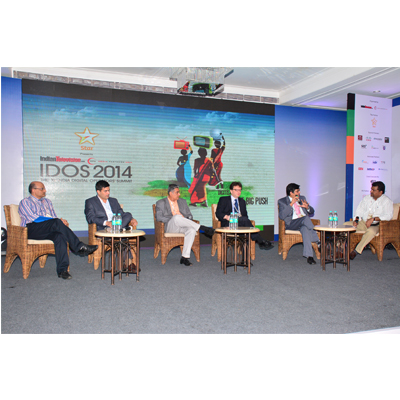
    GOA: As high as 38 million set top boxes (STBs) have been rolled out in phase I and II of digitisation, but as for the quality, a lot of these boxes were described as ‘dabbas’. Of the total number of boxes, a tiny percentage was high definition boxes and even of those, several were found faulty. The session on ‘Technology Shifts in Indian Pay TV’ during the recently concluded India Digital Operators’ Summit (IDOS) 2014 at Goa, started with these crucial facts.


    The government has decided to push digitisation of phase III and phase IV to December 2015 and December 2016 respectively, citing indigenous manufacturing of boxes as the main reason for the extension. The big question now is, ‘Are the Indian manufactures ready for the 100 million boxes needed in the next 24-30 months?’


    “Contrary to the expectations of many, yes, we are ready,” said Mybox executive director Amit Kharbanda.


    With the ‘Make in India’ concept, the government is not just promoting the Indian manufactures, but is asking the international manufacturers to come to India and create hardware here. “When you talk of manufacturing of STBs, the basic requirement, after the components, is the capacity for big production. According to our calculation, if there is a requirement for 100 million boxes, and we break it to 40-45 million boxes per year, the SMT capacity required is 26 machines, and if we remove all the big international manufactures, India will still have SMT capacity with an availability of 46 machines,” informed Kharbanda.


    The next question which many have been asking is how has the extension benefited the STB manufacturers? “We have been growing from the time we entered the manufacturing space. After digitisation, we knew we had to supplement the market and so we increased our capacity by about 30-40 per cent. Right now we have the capacity of 5 million boxes per annum, of which 60 per cent is utilised by our captive customers and 40 per cent is for other consumers. But considering the experience we have, we can easily expand our capacity,” said Videocon Group head trend electronics Jagdish Bangad.


    The question, according to Kharbanda is not about if we can manufacture 45 million STBs in one year, the question is, considering there are 300 components in a STB, “will we have those many Broadcom or other chips makers in India, and this, keeping in mind that we are not the only country buying it?” Kharbanda questioned.   


    For Broadcom MD Rajiv Kapur, the chip output is extremely high. “We produce more than two billion chips annually. The issue is not production of chips, neither is capacity an issue. The main thing now is that we should be a little careful about our expectations. One doesn’t want to go down the path of over preparing and over- producing and compromising on the maturity which is needed to develop quality in a supply chain,” said Kapur.


    He also cautioned the industry, that in order to achieve the target of the 100 million boxes in the given time frame, one should not start cutting the corners on quality.  


    Cisco, which works closely with a number of multisystem operators (MSOs) in the country and also the STB manufacturers, is agnostic to whether the boxes are made in India, China or Korea. “We welcome the move that the Indian government is keen to promote manufacturing locally,” said Cisco director John McCorkindale adding that they haven’t changed their strategy for the country with delayed digitisation.  


     According to Logic Eastern CTO Vineet Wadhwa, one needs to keep the backend support ready. “One of the key points is that most of us are just concentrating on the manufacturing skills or strengths. But, this is just a part. More thoughts need to go when one plans on scaling,” he said adding that the industry needs funding.


    “We are dealing with tier II and tier III markets. The amount of support needed for tier II and III markets don’t help me when I go to tier IV MSOs. For every three or four tier III MSOs, one needs at least one or two support personnel and for every five support personnel, you need one support manager,” informed Wadhwa.


    He also highlighted that with the different types of CAS, boxes, networks etc, the complexity of managing a network 500-2000 km away over mobile phone is difficult. This means that the manufacturers will also need to set up a support team. “They will have to have deep pockets,” he added.


    A very crucial point that came out during the session moderated by Castle Media director Vynsley Fernandes was that while the capability and technology exists in India, the fundamental challenge is that tier III and IV markets have huge pricing issues. One needs to understand from the LMOs, how much their subscribers will be ready to pay.


    Kharbanda pointed out that the industry which has a target of manufacturing 100 million boxes, if it could even produce 50-60 million boxes, will start a cycle that will help them in the long run. “The fact is that we have to come together as an industry and we need support from the MSOs as well,” said he.


    According to McCorkindale tier III and IV MSOs want to control everything on their own. “They want good quality and want more power to increase their ARPU,” he said.


    For Kapur, delayed digitisiation is actually good. “I feel we were going too fast. The benefit of this delay is that now we can look at the experience of the first 20-30 million boxes which have been deployed. The common approach from vendors in the first two phases was of cutting corners, while only thinking of price and compromising on the quality,” he said.


    MSOs, according to Kapur, have learnt a lot from the first two phases and are now upping their specs. “The difference in pricing of high quality and low quality boxes is not a very big dollar amount. One only needs to know what specs are needed for its STBs,” he added.  


    Another point which was highlighted during the session was that in the rush to seed boxes, no field trials were done in the first two phases. “This led to bad quality boxes being rolled out. Now we have the time to do all this and control the quality,” opined Kharbanda.


    A very important component of the STB cost is the warranty and the support charge per hour from the box company, CAS company and SMS company etc. “And my belief is that the MSOs of tier II and tier III will not compromise on the quality of the box. But they might not be able to afford the dollar per hour charges for support,” said Wadhwa.


    Kapur, is a firm believer that the STBs should have a long lifecycle. “India is a nation where TV moves from house to house but is never thrown, so we can’t be producing 100 million boxes, which are bad quality ones, with no support and element of future proof for different markets,” he said.

    The session concluded with the remark: It is time we move away from speed and cost. 

  • TRAI: Phase I and II CAF collection nearing completion

    TRAI: Phase I and II CAF collection nearing completion

    MUMBAI: When the entire process of digitisation started in the country, nobody would have thought it would be such a tough nut to crack and there would be a slippage of so many deadlines. Recently, the Telecom Regulatory Authority of India (TRAI) warned the multi-system operators (MSOs) and subscribers in the digital addressable system (DAS) Phase I and II towns that enough was enough and that they had better get going on finishing the task of submitting the Customer Application Forms (CAFs) with two deadlines – on 27 January for 23 cities and on 31 January for eight cities – once again proving elusive.

    The caning seems to have worked well as everything is getting back on track now. A TRAI official informs that the work in the Phase I and II of Digital Addressable System (DAS) is near completion. Cities with 27 January as the deadline – Rajkot, Surat, Vadodara, Faridabad, Mysore, Aurangabad, Nasik, Pimpri-Chinchwad, Pune, Sholapur, Amritsar, Ludhiana, Jaipur, Jodhpur, Agra, Allahabad, Ghaziabad, Kanpur, Lucknow, Meerut, Varanasi, Chandigarh and Howrah – have almost been  100 per cent  penetrated with active set top boxes (STBs). Almost 85 per cent work has been done (as of 29 January) in areas with 31 January as the deadline that includes cities such as Patna, Ahmedabad, Ranchi, Bengaluru, Kalyan-Dombivali, Nagpur, Navi Mumbai and Thane.

    MSOs have been given two to three additional days post the deadline to submit their compliance reports to TRAI.


    “We are in touch with the MSOs on a daily basis and nearly 99.7 per cent has been completed as per the deadlines. If subscribers have failed to fill the forms, MSOs have cut off connections, saving TRAI’s time and also saving themselves from any action against them,” informs a TRAI official.

    However, Maharashtra Cable Operators Federation (MCOF) president Arvind Prabhoo says that only 70 to 75 per cent work has been completed in the second deadline areas, while in Navi Mumbai hardly 30- 40 per cent work is done.

    A cable operator from Airoli says, “We had got CAF forms in the beginning till about June last year. After that it stopped coming to us.”


    But Siti Cable COO Anil Malhotra says that almost 90 per cent work has been completed and the subscribers who fail to fill the forms by tonight will have to face a TV blackout. “Scrolls have already been running to make them aware about it and thus we are sure that we will reach 100 per cent compliance soon,” he remarks.


    Hathway Cable and Datacom CEO Jagdish Kumar claims that in these areas Hathway has reached near about 100 per cent. “By 27 December, almost 90 per cent work was done, while the rest had to face a disconnection. Few customers came back to fill the forms and others switched to DTH,” he says. In the next eight cities, about 80 per cent of forms have been collected and fed into the system.


    Another leading MSO, Den Networks is also claiming to have achieved 100 per cent compliance for the two dates. Says Den Networks CEO S N Sharma, “In these cities we have complied fully and sent the report to TRAI. We have data of all subscribers and for those who haven’t sent them, their cable connections have been cut off.”


    A bright day for digitisation doesn’t look far if the above numbers are to be believed. While few exceptions are always there, most of the stakeholders are taking it seriously. And if the MSOs continue at the same pace and work towards achieving the goal diligently, by February, the work for phase III and IV will kick off.

  • TRAI gives final deadlines for filling subscriber details in DAS Phase II cities

    TRAI gives final deadlines for filling subscriber details in DAS Phase II cities

    MUMBAI: The Telecom Regulatory Authority of India (TRAI) may have once again extended the rope for stakeholders of digitisation but with a warning that they would get no further extension. In a recently issued notice, fresh and “final” deadlines have been given out for entering the subscriber details in the subscriber management system (SMS) in DAS phase II cities.


    The regulator has already given two extensions of the deadlines earlier for collecting customer application forms (CAF) and entry of these details in the SMS. However, this comes as a warning from the regulator. It says that 23 cities (Rajkot, Surat, Vadodara, Faridabad, Mysore, Aurangabad, Nasik, Pimpri-Chinchwad, Pune, Sholapur, Amritsar, Ludhiana, Jaipur, Jodhpur, Agra, Allahabad, Ghaziabad, Kanpur, Lucknow, Meerut, Varanasi, Chandigarh and Howrah) have completed 90 per cent of the task and the MSOs in these cities have been ordered to cut off signals from 27 January to subscribers who haven’t given their CAFs.


    7 February is the last date for Bhopal, Indore and Jabalpur in Madhya Pradesh; while Vishakhapatnam and Srinagar have time till 28 February. However, state of Tamil Nadu and Hyderabad city have not been given any date due to litigation processes that are pending regarding DAS.


    Eight other cities (Patna, Ahmedabad, Ranchi, Bengaluru, Kalyan-Dombivali, Nagpur, Navi Mumbai and Thane) have been given 31 January as the last date. Subscribers have been requested to cooperate with the process and submit their CAFs, failing which MSOs will have to cut off signals to their TVs or will be in breach of law.


    MSOs will have to provide bills with exact breakup of charges and subscribers will have to insist for a bill and receipt or see blackout on their screens.


    Click here to read the full notice

  • TRAI seeks industry comments on FM Phase III migration

    TRAI seeks industry comments on FM Phase III migration

    MUMBAI: The Telecom Regulatory Authority of India (TRAI) has released the consultation paper on the migration of FM radio broadcasters from Phase-II to Phase-III. As part of the consultative process, the stake holders have been requested to offer their comments and views by 17 December 2013.


    Accordingly, this Consultation Paper (CP) has been prepared to seek the comments/views of the stakeholders on the date of migration from Phase-II to Phase-III; duration of permission after migration from Phase-II to Phase-III; and the amount of migration fee to be charged from existing operators on their migration from Phase-II to Phase-III.


    It also states that in case of counter-comments it may be submitted by 24 December 2013. The Ministry of Information and Broadcasting (MIB) sent a reference dated 9 April 2013, to TRAI seeking recommendations. The clarifications sought by TRAI were provided by MIB by 22 November, 2013.


    The highlights of the Phase-III policy for FM Radio broadcast will be the validity of license is 15 years from the date of operationalisation of the Channel (10 years in Phase II); FDI limit have been raised to 26 percent in a private FM radio broadcasting company (from 20 per cent in Phase II); and it also allows the permission holder to carry the news bulletins of All India Radio in exactly the same format (unaltered) on such terms and conditions as may be mutually agreed with Prasar Bharati, no other news and current affairs programs will be permitted under the Policy.


    The other salient features of the policy are

    – Permission for the channels shall be granted on the basis of Non-Refundable One Time Entry Fee (NOTEF).


    – NOTEF shall be arrived at through an ascending e-auction process, on the lines followed by DoT in the auction of 3G and BWA spectrum in the year 2010.


    – Reserve Price for new channels in existing FM Phase-II cities, the highest bid price received for that city in Phase-II (Click here for more details); and for new cities, the highest bid price received during FM Phase-II for that category of cities in that region.


    – In case the benchmark from Phase-II for a particular region is not available, the lowest of the highest bid received in other regions for that category of cities.


    – For new cities in border areas with a population less than one lakh, the reserve price shall be Rs 5 lakh.

    – Annual licence fee will be four per cent of gross revenue of its FM radio channel for the financial year or 2.5 per cent of NOTEF for the concerned city, whichever is higher. For the permission holders in the States of North East, J&K and island territories (i.e. Andaman and Nicobar islands and Lakshadweep) – at 2 per cent of gross revenue for each year or 1.25 per cent of NOTEF for the concerned city, whichever is higher, for an initial period of three years from the date from which the annual license fee becomes payable and the permission period of 15 years begins.


    -Each applicant will be allowed to own more than one channel but not more than 40 per cent of the total channels in a city subject to a minimum of three different operators in the city.


    -No entity will be permitted to hold more than 15 per cent of all channels allotted in the country excluding channels located in Jammu and Kashmir, North Eastern States and island territories.


    -Networking of channels will be permissible within a private FM broadcaster’s own network across the country subject to 20 per cent of the total broadcast in a day is in the local language of the city and promotes local content.


    – The permission holder is required to follow the Programme and Advertisement Code as followed by All India Radio as amended from time to time or any other applicable code, which the Central Government may prescribe from time to time.


    In this phase, about 839 additional channels in about 294 cities across the country are being offered for the auction.

  • DEN lends its ears to LCOs’ apprehensions


    MUMBAI: As India‘s government-mandated cable TV digitisation rolls out, one person who has been feeling threatened is the local cable operator (LCO). To address this concern, DEN Networks, Star India and Dolby in collaboration hosted a road show ‘DAS: Daulat aur Shahrat’. The initiative was an effort to reaffirm the trust and also appreciate the LCOs for their efforts for successful implementation of phase II of digital addressable systems (DAS).


    The first set of the roadshows, attended by 50 LCOs, was conducted in Kanpur on 19 August and in Lucknow on 21 August. Hosted by Star India on behalf of DEN in association with Dolby, the road show educated the LCOs about the opportunities created by digitisation. “This was the first initiative where the broadcaster, MSO and LCO all came together to talk about the latest in digitisation,” says DEN Networks CEO S.N. Sharma.


    The road show was a step towards creating a platform for the various players in the ecosystem. “This was an effort to inform them that digitisation will help them increase proportionate revenue for their services,” he adds.


    The implementation of DAS across India is a massive undertaking which promises a complete transformation of the Indian media landscape. “This initiative was aimed at DEN’s LCOs, who are the face of the MSO for the subscriber and focused at informing and educating them about the tremendous opportunities that digital cable has to offer,” informs Sharma.


    The LCOs were also made aware of the potential revenue streams due to a wider and better service offering bought in by digitisation such as multiple TV connections, HD, value added services and broadband.

    Digitisation brings with it opportunities even for LCOs says S.N. Sharma

    The conference also elaborated on the challenges lying ahead. “Concerted and continuous efforts from stakeholders can make digitisation a grand success in the remaining territories.”


    To ensure that the transition is more seamless for the subscriber and the LCO, DEN also announced a plethora of schemes on educating the consumer regarding channel packages and filling of package authorisation forms (PAF) before the TRAI deadline of 20 September, 2013.


    Speaking on the concerns of the LCOs, Sharma says, “The LCO feels that his livelihood will be affected post implementation of digitisation and channel packaging. We through the road show have informed them of the benefits of digitisation and explained that life will be great post digitisation.”


    DEN last year conducted a training programme before implementing its digitisation rollout. “That was to make them aware and also address their concerns.”


    The current roadshow, which involved the broadcaster and also the technology partner Dolby, was well received. “It has given us the confidence to try and explore more such forums in other cities and states.”


    Though no specific timeline has yet been set, but the MSO is exploring many more such modes of getting the LCOs together and addressing their concerns. “We will spread out across all markets in tier II cities and also those in the phase III of digitisation,” he informs.


    Clearly, the idea is to have a more joyous ride together on the road to digitisation.