Tag: phase I

  • Aim to take phase 3 ARPU to phase 1 value: Den Networks’ SN Sharma

    Aim to take phase 3 ARPU to phase 1 value: Den Networks’ SN Sharma

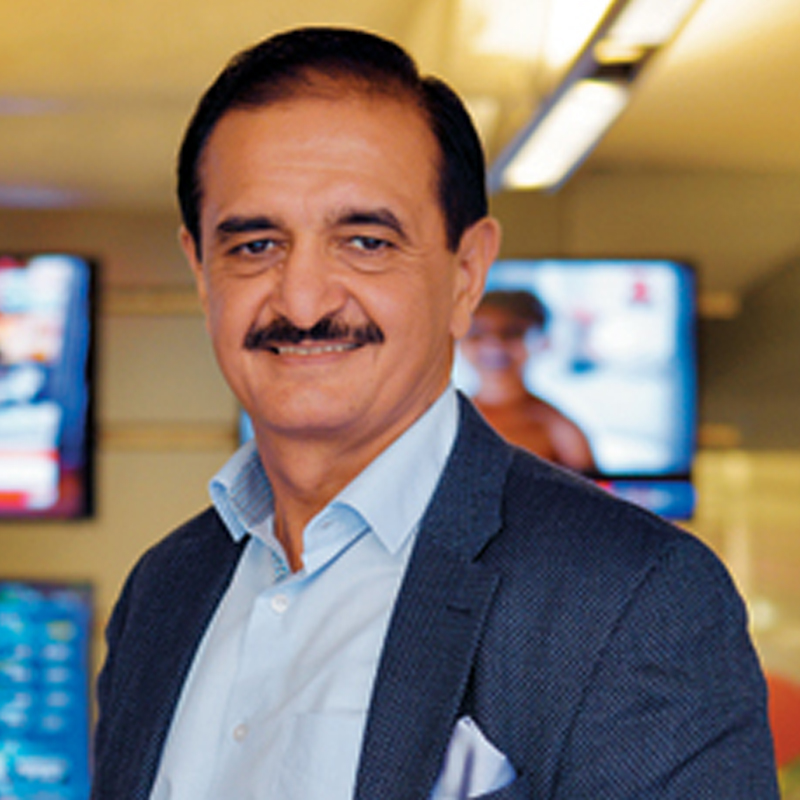
    MUMBAI: Den Networks has an ambitious plan charted out for its cable and broadband business for the coming two to three years. In an interview to Bloomberg Quint, Den Networks CEO SN Sharma highlighted the company’s plan to increase revenue and subscription.

    For the multi-system operator (MSO), digitisation of phase III in India was almost over 10 months ago and certain parts of phase IV were left by all operators. Sharma said that it may take six to eight months to wind this up. “In the last 12 months, we seeded close to five million set-top boxes (STBs) in phase III. Today, we have a tall figure of 11.5 million digital homes out of which 8.5 million are paying,” he said.

    The average revenue per user (ARPU) for Den has gone up substantially over the last two years. Even tier I and II towns had low ARPU of Rs 120 and Rs 80-90 a year ago. Two years ago, the ARPU for tier I and II towns was Rs 60-70 and Rs 50-60, respectively. Today, the ARPU is at Rs 144 for phase I and Rs 112 for phase II. Sharma also said that the company was able to make up 50 per cent of the subscription revenue from the cable operators from phase I while this was 40-45 per cent in phase II markets.

    Phase III ARPUs are still low at Rs 76 out of the ground rate of Rs 150-175. “As we move forward, cable operators know they have to catch up with phase I ARPUs and will gradually increase it with subscription and, accordingly, the same will be shared with us,” he added.

    The aim is to take the current ARPU of phase III up to Rs 144 in two years’ time. “The phase I journey has been successful and a confident path has been set. There is no reason this Rs 76 doesn’t move to Rs 140 level in 2-2.5 years’ time,” he said adding that 50 per cent of the digital universe was phase III and IV. Phase IV ARPU stands at Rs 66.

    Den is talking to broadcasters and peers to increase subscription levels in phase I areas and Sharma said that discussions were actively progressing. “There is headroom to increase this [subscription]. You will see changes in bouquets and packages offered so overall revenue can be taken up,” he shared.

    One of the ways to do this will be by focussing on HD STBs now. The target for the next 12 months is to convert 10 per cent of its SD base into HD, which will allow the MSO to add another Rs 60-70 per box. Another way is by gradually increasing the number of boxes seeded in phase IV that is currently at the rate of 40,000-50,000 a month.

    The company has a system to ensure that all reported boxes are activated. When a box doesn’t yield payment for more than three months, it is removed out of the declaration and considered a dead box. Here, Sharma lauds the system for being as efficient as telecom operators that withdraw service  if a subscriber doesn’t pay.

    The entrance of players like Jio, Airtel and Vodafone has definitely changed the broadband game for the company and Sharma admits this. Den’s broadband ARPU is currently Rs 550 with a speed of 50 mbps and unlimited data. He compared it to telcos who offer just 1 gb data a day with best case speed of 9 mbps.

    Over the years, data consumption on its platform has increased from 20 gb two years ago to 60 gb last year and is hovering at 80 gb today. “There is a data explosion courtesy Jio, Airtel and Vodafone. We are consciously aware of it and so we talk of unlimited data in high speed,” he said.

    Much of its broadband business is concentrated in Delhi with 2 lakh subscribers. However, the tariff war pulled down its ARPU to Rs 600. But the same in Kanpur is Rs 800. The plan is to increase subscribers by 6 lakh in three years taking the total to about 8 lakh.

    Sharma is confident that the entire business needs external funding since it is witnessing healthy growth in subscription and ARPU and no subsidy is being offered on HD boxes. Even the broadband business has been fibre infrastructure. About Rs 100-120 crore will be required for the coming three years, which will be managed through internal accruals.

    Also Read :

    Subscription revenue drives up Den’s PAT

    Den Networks appoints Himanshu Jindal as CFO

    TDSAT rules in favor of DEN Networks, directs ZEE entertainment to provide channels on RIO basis


  • Ground level challenges delay digitsation benefits to MSOs & broadcasters: ICRA

    Ground level challenges delay digitsation benefits to MSOs & broadcasters: ICRA

    BENGALURU: In a vast country like India, ground level challenges is a key reason that has delayed in multi-system operators (MSOs) and broadcasters reaping the benefits of digitisation. The digitisation of the TV distribution industry, initiated in 2011, is yet to achieve its target of addressability and transparency in billing systems, which was expected to yield significant benefits to MSOs and broadcasters as per a report by Indian investment and ratings agency ICRA on the Indian Media and Entertainment Industry – TV Distribution (September 2015).


    Some of the noteworthy points mentioned in the report are as follows:


    As MSOs struggle with last mile ‘addressability’ hurdles for its digitised customer base, the industry’s ability to deliver customised / value added content remains restricted. As a result, the expected benefits of higher subscription revenues for MSOs and broadcasters are yet to be achieved. The end consumers are also yet to benefit from targeted subscription packages, which were expected to optimise the user experience. ICRA believes that end consumers are also yet to benefit from targeted subscription packages. Roll out of channel packages by MSOs remains crucial for driving ARPU growth and profitability as content costs increase.


    Implementation challenges and slow progress in Phase I and Phase II markets have restricted monetisation for MSOs due to slow progress in Consumer Application Form (CAF) collections – effectively LCOs have retained their control over the subscriber base, disputes in sharing of entertainment tax, ARPU is constrained and as yet determined on per subscriber basis, and not on basis of channel packages chosen.


    While distributors have witnessed 25-30 per cent decline in carriage income, overall carriage income for distributors has remained buoyant because the disbanding of channels aggregators has given distributors leverage with smaller broadcasters and new channels. Also, new channel launches and wider audience measurement metrics will keep carriage revenues buoyant for MSOs.


    DTH players and regional MSOs are likely to take the lead in implementation of Phase III and Phase IV. Extension of deadline for Phase III and Phase IV markets provides adequate time for resolving ground issues as well as coverage for large subscriber base; however lower purchasing power and price sensitive nature of subscribers make investments less attractive. DTH players remain well positioned for tapping growth opportunities in Phase III and Phase IV markets due to inherent technology advantage and easier access to cable dark areas.


    Credit profiles unlikely to improve significantly on account of debt funded capex plans.  Longer than expected timelines in monetisation opportunities, higher content costs for digitised areas coupled with ongoing investments for Phase III and IV would keep the return and coverage indicators of MSOs muted in near term. 


    While a significant amount of equity funds supported the investments in Phase I and II markets for major MSOs, investments for penetrating Phase III and IV areas, broadband penetration as well as offering value added services (such as Video on Demand) may be largely funded through debt; correspondingly the borrowing levels are expected to remain high over the next two years while the profitability generation from digitised areas stabilise gradually.


    In spite of execution delays, in the longer term, digitisation is expected to benefit MSOs, DTH operators and broadcasters through greater customer wallet resulting in higher subscription revenues.


    Sizeable subscriber penetration opportunity persists in Phase III and Phase IV markets. The market share dynamics between MSOs and DTH players are expected to change with an uptick in run rate for DTH operators (approximately 20-25 per cent market share in Phase I/II) as the industry progresses towards the Phase III and Phase IV.

  • Chennai: A story of failed digitisation attempts

    Chennai: A story of failed digitisation attempts

    MUMBAI: The Information and Broadcasting Ministry (I&B) has a long wish list for the cable TV sector and one among them is the timely completion of digitisation of phase III and phase IV. While stakeholders have taken up the challenge to ensure that they meet the deadline, what remains to be seen is how will the Ministry deals with the southern cities of Chennai and Coimbatore, which fall in phases I and II respectively and still needs to see complete digitisation.


    While other metros like Mumbai and Delhi have seen 100 per cent digitisation, Chennai falls way behind. An I&B report in 2012 had said that close to 62 per cent of the homes in Chennai were digitised. Rubbishing the report, the Chennai Metro Cable TV Operators’ Association said that the reality was far from the figures released by the Ministry.


    “There are close to 30-35 lakh cable TV homes in Chennai and of this, only five lakh have been digitised,” a multi system operator (MSO) operating in the city tells Indiantelevision.com.


    There are six MSOs operating in Chennai and each of these MSOs have converted only 10 per cent of their consumers to digital TV homes. “We had placed orders for close to one lakh set top boxes, but have seeded only 25,000. The reason behind this is the pending Arasu case in the court,” says the MSO.


    Another problem, which MSOs are facing is that of pay TV channels being available to Arasu Cable for free, while the other operators are paying for it. “About 33 pay channels are available to Arasu Cable for free, but we are paying for those 33 channels. It is a big hurdle in the path to digitisation,” adds an MSO.  


    As for the ongoing case against Arasu, the court asked the I&B Ministry to submit its Inter Ministerial Committee (IMC) report, which hasn’t been submitted as yet. “Not only this, almost 125 cases have so far been filed in the court regarding analogue switch off. The MSOs want to seed set top boxes, but we cannot move forward till the court comes up with a decision on Arasu,” informs the MSO.


    The MSOs in Chennai are preparing themselves for the competition they face from the direct to home (DTH) players. For the same, they are now looking at installing hybrid HD boxes and also pushing broadband to their subscribers. “We want to maintain the digital subscribers and so we are now moving to HD boxes,” he says.  


    The condition of Coimbatore, which falls under phase II, is no better. So far the city has not seen any analogue cable TV home being converted to digital home.


    Also pertinent to not here is that after several failed attempts at getting the DAS license, former Tamil Nadu Chief Minister J Jayalalithaa had resorted to writing to Prime Minister Narendra Modi requesting him to issue the DAS license to the state owned cable operator. In the letter, Jayalalithaa had requested the Inter Ministerial Committee to submit its final report too.


    Complete digitisation spanning 100 per cent homes in Chennai and Coimbatore is possible only after the court gives its final verdict on the state owned Arasu Cable. If the I&B really wants its vision for cable TV digitisation to be complete, it will have to fast track the case.

  • IDOS 2014: Are STBs high on QC?

    IDOS 2014: Are STBs high on QC?

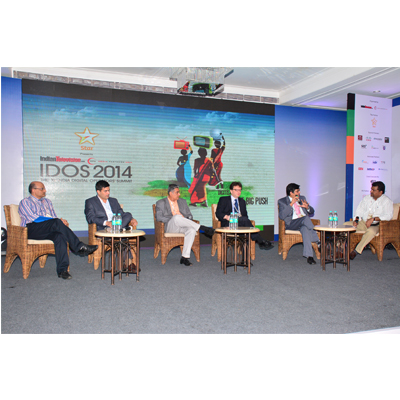
    GOA: As high as 38 million set top boxes (STBs) have been rolled out in phase I and II of digitisation, but as for the quality, a lot of these boxes were described as ‘dabbas’. Of the total number of boxes, a tiny percentage was high definition boxes and even of those, several were found faulty. The session on ‘Technology Shifts in Indian Pay TV’ during the recently concluded India Digital Operators’ Summit (IDOS) 2014 at Goa, started with these crucial facts.


    The government has decided to push digitisation of phase III and phase IV to December 2015 and December 2016 respectively, citing indigenous manufacturing of boxes as the main reason for the extension. The big question now is, ‘Are the Indian manufactures ready for the 100 million boxes needed in the next 24-30 months?’


    “Contrary to the expectations of many, yes, we are ready,” said Mybox executive director Amit Kharbanda.


    With the ‘Make in India’ concept, the government is not just promoting the Indian manufactures, but is asking the international manufacturers to come to India and create hardware here. “When you talk of manufacturing of STBs, the basic requirement, after the components, is the capacity for big production. According to our calculation, if there is a requirement for 100 million boxes, and we break it to 40-45 million boxes per year, the SMT capacity required is 26 machines, and if we remove all the big international manufactures, India will still have SMT capacity with an availability of 46 machines,” informed Kharbanda.


    The next question which many have been asking is how has the extension benefited the STB manufacturers? “We have been growing from the time we entered the manufacturing space. After digitisation, we knew we had to supplement the market and so we increased our capacity by about 30-40 per cent. Right now we have the capacity of 5 million boxes per annum, of which 60 per cent is utilised by our captive customers and 40 per cent is for other consumers. But considering the experience we have, we can easily expand our capacity,” said Videocon Group head trend electronics Jagdish Bangad.


    The question, according to Kharbanda is not about if we can manufacture 45 million STBs in one year, the question is, considering there are 300 components in a STB, “will we have those many Broadcom or other chips makers in India, and this, keeping in mind that we are not the only country buying it?” Kharbanda questioned.   


    For Broadcom MD Rajiv Kapur, the chip output is extremely high. “We produce more than two billion chips annually. The issue is not production of chips, neither is capacity an issue. The main thing now is that we should be a little careful about our expectations. One doesn’t want to go down the path of over preparing and over- producing and compromising on the maturity which is needed to develop quality in a supply chain,” said Kapur.


    He also cautioned the industry, that in order to achieve the target of the 100 million boxes in the given time frame, one should not start cutting the corners on quality.  


    Cisco, which works closely with a number of multisystem operators (MSOs) in the country and also the STB manufacturers, is agnostic to whether the boxes are made in India, China or Korea. “We welcome the move that the Indian government is keen to promote manufacturing locally,” said Cisco director John McCorkindale adding that they haven’t changed their strategy for the country with delayed digitisation.  


     According to Logic Eastern CTO Vineet Wadhwa, one needs to keep the backend support ready. “One of the key points is that most of us are just concentrating on the manufacturing skills or strengths. But, this is just a part. More thoughts need to go when one plans on scaling,” he said adding that the industry needs funding.


    “We are dealing with tier II and tier III markets. The amount of support needed for tier II and III markets don’t help me when I go to tier IV MSOs. For every three or four tier III MSOs, one needs at least one or two support personnel and for every five support personnel, you need one support manager,” informed Wadhwa.


    He also highlighted that with the different types of CAS, boxes, networks etc, the complexity of managing a network 500-2000 km away over mobile phone is difficult. This means that the manufacturers will also need to set up a support team. “They will have to have deep pockets,” he added.


    A very crucial point that came out during the session moderated by Castle Media director Vynsley Fernandes was that while the capability and technology exists in India, the fundamental challenge is that tier III and IV markets have huge pricing issues. One needs to understand from the LMOs, how much their subscribers will be ready to pay.


    Kharbanda pointed out that the industry which has a target of manufacturing 100 million boxes, if it could even produce 50-60 million boxes, will start a cycle that will help them in the long run. “The fact is that we have to come together as an industry and we need support from the MSOs as well,” said he.


    According to McCorkindale tier III and IV MSOs want to control everything on their own. “They want good quality and want more power to increase their ARPU,” he said.


    For Kapur, delayed digitisiation is actually good. “I feel we were going too fast. The benefit of this delay is that now we can look at the experience of the first 20-30 million boxes which have been deployed. The common approach from vendors in the first two phases was of cutting corners, while only thinking of price and compromising on the quality,” he said.


    MSOs, according to Kapur, have learnt a lot from the first two phases and are now upping their specs. “The difference in pricing of high quality and low quality boxes is not a very big dollar amount. One only needs to know what specs are needed for its STBs,” he added.  


    Another point which was highlighted during the session was that in the rush to seed boxes, no field trials were done in the first two phases. “This led to bad quality boxes being rolled out. Now we have the time to do all this and control the quality,” opined Kharbanda.


    A very important component of the STB cost is the warranty and the support charge per hour from the box company, CAS company and SMS company etc. “And my belief is that the MSOs of tier II and tier III will not compromise on the quality of the box. But they might not be able to afford the dollar per hour charges for support,” said Wadhwa.


    Kapur, is a firm believer that the STBs should have a long lifecycle. “India is a nation where TV moves from house to house but is never thrown, so we can’t be producing 100 million boxes, which are bad quality ones, with no support and element of future proof for different markets,” he said.

    The session concluded with the remark: It is time we move away from speed and cost. 

  • TRAI blames MSOs and LCOs for delay in DAS implementation

    TRAI blames MSOs and LCOs for delay in DAS implementation

    MUMBAI: The Telecom Regulatory Authority of India (TRAI) has come up with certain amendments to the Standards of Quality of Service (digital addressable cable TV systems) (amendment) regulation 2012 (12 of 2012). The regulation has laid down norms for billing of subscribers in digital addressable system (DAS) areas.


    It says that even after coming up with the QoS regulation, it kept receiving several complaints from subscribers about not getting proper bill and receipt. Subsequently, the regulator issued a direction in December 2013 directing MSOs to offer prepaid and postpaid payment options, generate bills and issue receipts.


    It also made a team consisting of representatives from TRAI and the Broadcast Engineers Consultant India Limited (BECIL) to inspect the head-end and subscriber management system (SMS) of MSOs in Delhi. During the inspection it noticed non-compliance by cable operators. Some cable ops are not offering prepaid option of payment while those who did offer, didn’t give an option of electronic payment.


    It again issued a direction on 27 May 2014 to ensure bill delivery either by hand, post or e-mail, within 45 days of the direction to provide online payment option in its SMS, electronic acknowledgement to subscribers on payment. MSOs and LCOs are still delaying implementation of the same.


    Since no details are being inserted in the SMS, it is hampering the transparency of financial transactions between MSOs and LCOs thereby affecting smooth implementation of DAS.


    TRAI states that ‘in the absence of proper billing and accounting of receipts, there is a distinct possibility of loss of revenue accruable to government’.


    Due to all these reasons, the regulator feels that financial disincentives should be levied on non-compliant MSOs and LCOS, similar to how it happens in the telecom field where this action has yielded result.


    For non-compliance of issuing bills, a disincentive of not exceeding Rs 20 per subscriber will be levied on the MSO and/or its linked cable operator and for the second time, penalty would be Rs 50. For non-compliance of regulations, Rs 100 will be penalised on each MSO for each contravention. If the MSO and LCO have entered into an agreement, both of them will be penalised for faults while in the case of no deal being signed, only the MSO is liable to pay.


    The regulator says that the MSO may offer multiple denomination schemes for recharging, with an expectation that monthly recharge schemes would be one of the options.


    Another amendment that has been suggested is to ensure that bills have service tax registration number and entertainment tax registration number of either the MSO or the linked cable operator.


    However, before imposing penalties, TRAI will give opportunities to the concerned MSO or LCO to represent its case.


    The amendment, when approved, will come into effect 30 days from the date of publication and will be called Standards of Quality of Service  (digital addressable cable TV systems) (amendment) Regulations 2014.


    Stakeholders can provide comments before 8 September.


    Click here for the press release


    Click here for the amendment

  • TRAI seeks views on penalties for non-compliant MSOs and LCOs in DAS areas

    TRAI seeks views on penalties for non-compliant MSOs and LCOs in DAS areas

    MUMBAI: Days after the news of new deadlines being set for phase III and IV of digital addressable system (DAS) was known, the Telecom Regulatory Authority of India (TRAI) has decided to straighten up the multi system operators (MSO) and local cable operators (LCOs) who are turning up their noses regarding billing in the first two phases.


    TRAI has come out with a notice inviting stakeholders to give their inputs regarding penalties to be imposed on non-compliant MSOs and LCOs. It says that it has received several complaints from DAS subscribers that they weren’t getting either the bill or the receipt of payment for their TV subscription services.


    Therefore, in order to protect the interest of consumers, ensure transparent business practices and promote efficiency, it is proposing to amend the regulation to incorporate provisions of levying financial disincentives on such MSOs and LCOs. TRAI is also seeking to amend the Standards of Quality and Service (digital addressable cable TV systems) Regulations 2012 (12 of  2012) dated 14 May 2012.


    The regulation lays down quality of service norms to be adhered to by the service providers, providing cable TV services through DAS.


    TRAI seeks comments from stakeholders on the draft regulation by 8 September to sksinghal@trai.gov.in.

  • TRAI: Phase I and II CAF collection nearing completion

    TRAI: Phase I and II CAF collection nearing completion

    MUMBAI: When the entire process of digitisation started in the country, nobody would have thought it would be such a tough nut to crack and there would be a slippage of so many deadlines. Recently, the Telecom Regulatory Authority of India (TRAI) warned the multi-system operators (MSOs) and subscribers in the digital addressable system (DAS) Phase I and II towns that enough was enough and that they had better get going on finishing the task of submitting the Customer Application Forms (CAFs) with two deadlines – on 27 January for 23 cities and on 31 January for eight cities – once again proving elusive.

    The caning seems to have worked well as everything is getting back on track now. A TRAI official informs that the work in the Phase I and II of Digital Addressable System (DAS) is near completion. Cities with 27 January as the deadline – Rajkot, Surat, Vadodara, Faridabad, Mysore, Aurangabad, Nasik, Pimpri-Chinchwad, Pune, Sholapur, Amritsar, Ludhiana, Jaipur, Jodhpur, Agra, Allahabad, Ghaziabad, Kanpur, Lucknow, Meerut, Varanasi, Chandigarh and Howrah – have almost been  100 per cent  penetrated with active set top boxes (STBs). Almost 85 per cent work has been done (as of 29 January) in areas with 31 January as the deadline that includes cities such as Patna, Ahmedabad, Ranchi, Bengaluru, Kalyan-Dombivali, Nagpur, Navi Mumbai and Thane.

    MSOs have been given two to three additional days post the deadline to submit their compliance reports to TRAI.


    “We are in touch with the MSOs on a daily basis and nearly 99.7 per cent has been completed as per the deadlines. If subscribers have failed to fill the forms, MSOs have cut off connections, saving TRAI’s time and also saving themselves from any action against them,” informs a TRAI official.

    However, Maharashtra Cable Operators Federation (MCOF) president Arvind Prabhoo says that only 70 to 75 per cent work has been completed in the second deadline areas, while in Navi Mumbai hardly 30- 40 per cent work is done.

    A cable operator from Airoli says, “We had got CAF forms in the beginning till about June last year. After that it stopped coming to us.”


    But Siti Cable COO Anil Malhotra says that almost 90 per cent work has been completed and the subscribers who fail to fill the forms by tonight will have to face a TV blackout. “Scrolls have already been running to make them aware about it and thus we are sure that we will reach 100 per cent compliance soon,” he remarks.


    Hathway Cable and Datacom CEO Jagdish Kumar claims that in these areas Hathway has reached near about 100 per cent. “By 27 December, almost 90 per cent work was done, while the rest had to face a disconnection. Few customers came back to fill the forms and others switched to DTH,” he says. In the next eight cities, about 80 per cent of forms have been collected and fed into the system.


    Another leading MSO, Den Networks is also claiming to have achieved 100 per cent compliance for the two dates. Says Den Networks CEO S N Sharma, “In these cities we have complied fully and sent the report to TRAI. We have data of all subscribers and for those who haven’t sent them, their cable connections have been cut off.”


    A bright day for digitisation doesn’t look far if the above numbers are to be believed. While few exceptions are always there, most of the stakeholders are taking it seriously. And if the MSOs continue at the same pace and work towards achieving the goal diligently, by February, the work for phase III and IV will kick off.

  • TRAI awaits call from Madras High Court for Arasu hearing

    TRAI awaits call from Madras High Court for Arasu hearing

    MUMBAI: More than four weeks have passed since the Madras High Court gave the interim order restraining the Telecom Regulatory Authority of India (TRAI) from taking any coercive steps against the Tamil Nadu state government-owned MSO Arasu Cable TV Corp for giving analogue signals in Chennai.


    However, there has been no follow up by the Madras HC on what it intends to do following the stay. 


    Anticipating a date soon, TRAI lawyers are already up on their toes and are compiling their response so that it can be submitted to the court. “We are still waiting for a date of the hearing. We haven’t heard anything from the court,” says a senior TRAI official.


    The case filed against two parties – the Ministry of Information and Broadcasting (MIB) and the TRAI will hopefully be  heard soon where the respondents from both the parties will get a chance to present their individual viewpoints. 


    The entire issue cropped up because Arasu has not been granted a digital addressable system (DAS) licence to run its business in the state even after continuous efforts to secure it. The MSO is still giving out analogue signals, thus keeping Chennai as the only city from Phase I to not go the whole hog on digitisation. 


    In its order which it passed late December 2013, the court states that the Inter-ministerial Committee (IMC) formed to decide the fate of Arasu has to move quickly on it. The order also mentions that Arasu abided by the rules and applied for a licence even after the Cable TV Networks (Regulation) Act, 1995 was amended in 2012.


    “It is not known to this Court as to why the first respondent (MIB) has not taken any decision so far on the application of the petitioner,” states the order. 


    The TRAI view on this is quite clear. Says a senior official at the regulator: “The decision on granting the licence lies with the MIB. In our recommendation we said that state governments should not be given the licence. The IMC is working on it but we haven’t yet got any response from them.” 


    The HC also states that since Arasu had followed the rules for applying for a licence, the MIB is not justified in keeping the matter pending and not arriving at a conclusion. It has also directed the Ministry to come out with a decision at the earliest.


    If MIB follows the TRAI’s cue and bars Arasu from securing a licence, the regulator  can take action against the MSO, according to the official. “If the MIB disqualifies Arasu from getting a licence, it cannot operate and if they do, they will be in violation of the law,” he says.


    As of now, nothing can be done against Arasu due to the interim order given by the Madras HC. But which direction this case moves is extremely crucial as the country is soon entering phase III and IV of digitisation. And it will decide whether the city of Chennai remains an analogue island in a sea of digitised India. 

  • Despite losses, NDTV reports improved operational performance for Q1-2014

    Despite losses, NDTV reports improved operational performance for Q1-2014

    BENGALURU: Despite the fact that the first quarter is seasonally the worst quarter, and one-time expenses related to the re-launch of NDTV Profit, New Delhi Television Networks Limited (NDTV) has reported an improved operation performance for Q1-2014.


    NDTV’s consolidated net loss for Q1-2014 at Rs 24.04 crore was 7.9 per cent lower than the consolidated loss of Rs 26.09 crore for Q1-2013. The company had reported a consolidated profit of Rs 27.81 crore in Q4-2013 and a consolidated profit of Rs 19.1 crore for FY-2013.


    Consolidated income from operations of Rs 102.4 crore for Q1-2014 was slightly lower (by 4.1 per cent) as compared to the Rs 106.83 crore for Q1-2013 and substantially lower (45.1 per cent lower) than the Rs 186.56 crore for Q4-2013.


    Total consolidated expense was Rs 125.75 crore for Q1-2014, lower by 5.1 per cent as compared to Rs 132.56 crore for Q1-2013 and 21.8 per cent lower than the Rs 160.90 crore for Q4-2013.


    NDTV’s consolidated production expense at Rs 24.11 crore for Q1-2014 was lower by 12.1 per cent as compared to the production expense of Rs 27.42 crore for Q1-2013 and 39.9 per cent lower than the Rs 40.12 crore for Q4-2013.


    NDTV spent Rs 21.57 crore towards marketing, distribution and promotional expenses, 37.7 per cent lower than the Rs 34.65 crore for Q1-2013 and almost half (50.6 per cent of the total marketing, distribution and promotional expenses) of the Rs 42.63 crore in Q4-2013.


    NDTV’s consolidated operating and administrative expense for Q1-2014 at Rs 28.58 crore was 7.2 per cent more than the Rs 26.65 crore for Q1-2013, but 4.8 per cent lower than the Rs 30.01 crore for Q4-2013.


    NDTV’s Profit / (Loss) from ordinary activities before finance cost and exceptional Items for Q1-2014 at Rs (-14.74) crore was 13.6 per cent lower than the Rs (-17.05) crore for Q1-2013. NDTV reported a profit / from ordinary activities before finance cost and exceptional items of Rs 14.65 crore for Q4-2013.


    NDTV’s finance costs for Q1-2014 at Rs 4.65 crore was substantially lower by 31.5 per cent as compared to the Rs 6.79 crore for Q1-2013 and lower by 24 per cent as compared to the Rs 6.12 crore for Q4-2013.


    NDTV says that traditionally, the April to June quarter is seasonally unfavourable for the media industry. This has been exacerbated by the economic downturn. Further, some of the benefits of Phase I and Phase II Digitisation – substantial reduction in carriage fees and significant increase in subscription revenues – are yet to fully accrue.


    NDTV group CEO Vikram Chandra said, “We are excited at the imminent re-launch of NDTV Profit. We are working on a unique concept. A business channel only attracts viewership in the day, when the markets are open. The relaunched channel will cover markets during the day, and high viewership programming in the evening. This enables us to tap into two prime-time bands.”


    NDTV is the first Indian company to have 1 million followers on Twitter.