Tag: P&G

  • Ketan Desai new Grey group India president – north

    Ketan Desai new Grey group India president – north

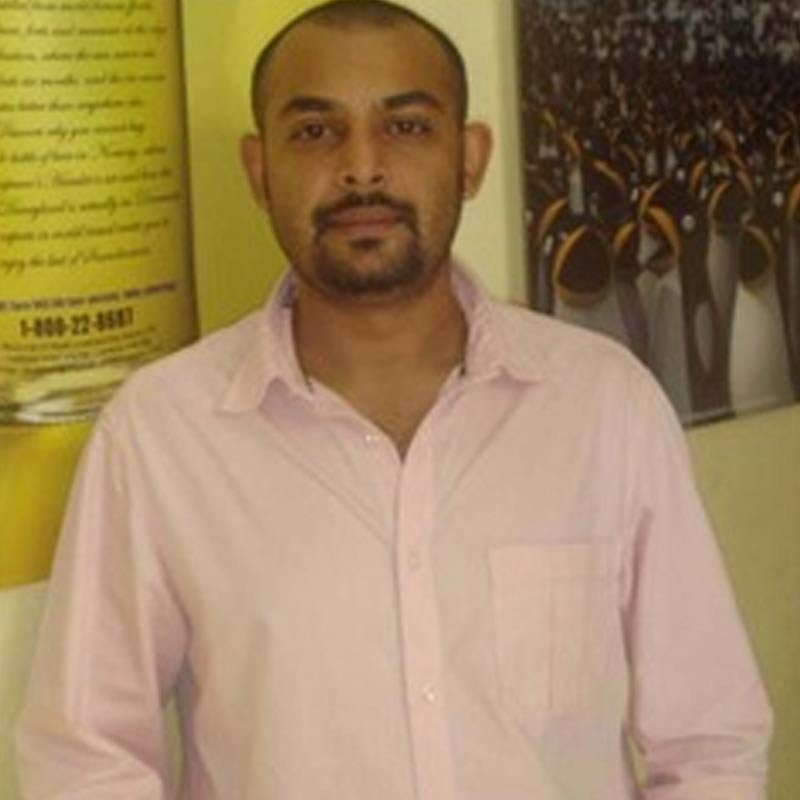
    MUMBAI: Grey group India announced the appointment of Ketan Desai, as president north. Desai has been in the Marketing Services businesses for close to two decades, most of which has been with Grey in Mumbai, Kolkata, New Delhi, Colombo and until recently as the chief operating officer of Grey Bangladesh.

    He brings with him experience from across geographies in India; across domains of Advertising; Activation and Shopper; across clients such as ITC, P&G, Marico Audi, Revlon, Gujarat Ambuja, Hindustan Times, CRY, Suzlon etc. Apart from GREY, Ketan has worked with TBWA too where he set up its Shopper Business.

    Desai will be based in Grey’s Delhi office and will work closely with Grey group India CMD Sunil Lulla. Lulla said, “Grey is enhancing its talent and leadership pool with Ketan Desai. He brings in the relevant diverse skills required to navigate contemporary communication needs of Grey’s clients”

    Desai said, “It is a privilege to be able to partner this marquee list of clients and help build their brands in Grey’s famously effective way.”

  • Leo Burnett promotes Ajeeta  Bharadwaj as Planning Head for Mumbai

    Leo Burnett promotes Ajeeta Bharadwaj as Planning Head for Mumbai

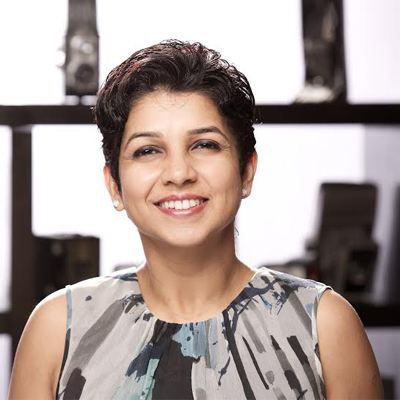
    MUMBAI: Leo Burnett India has boosted its senior team and strategy offering by promoting Ajeeta Bharadwaj to the role of Planning Head in Mumbai.

    Bharadwaj, who was previously Executive Planning Director, will report to, Leo Burnett Chief Strategy Officer – South Asia Dheeraj Sinha.

    Confirming the development, Sinha said, “Bharadwaj has been one of the strongest pillars of strategy at Leo Burnett India. She has made an unparelled contribution in shaping the future of several brands that we work on. Bharadwaj is fully steeped into our HumanKind philosophy and is an astute practitioner of the HumanKind tools. She has also led and developed several knowledge and insight projects over the years. Not only is this promotion very well deserved, it also comes at an opportune time, when we are building a huge momentum around our strategy function. With Bharadwaj as the leader in Mumbai, we will continue to up the temperature on sharp insights, leading to great work for our clients.” 

    Bharadwaj added on her  new role saying, “It has been an amazing journey at Leo Burnett. I have had the good fortune to work on some incredible brands and with some incredible partners, both among clients and within the agency. And I truly believe that the best is yet to come. We are doing some fantastic work and each piece is making us hungrier for more and better. In my new role, I’m looking forward to working closely with Dheeraj in producing new-age work that would help us in our constant endeavour to reach for the stars.”

    Bharadwaj has 15 years of experience in brand planning and strategy. Brands she has worked on include HDFC Life, P&G, Tata Sampann, Emami, Star Plus, Heinz, Coke, Sony Entertainment Television, CavinKare, Anchor, AXN, Sony Pix, Godrej, Qi Spine Clinic and Fiat. 

    She and her team have also received 12 LeoIntel stars for innovative category and culture thinking across the Leo Burnett WW network.

  • Leo Burnett promotes Ajeeta  Bharadwaj as Planning Head for Mumbai

    Leo Burnett promotes Ajeeta Bharadwaj as Planning Head for Mumbai

    MUMBAI: Leo Burnett India has boosted its senior team and strategy offering by promoting Ajeeta Bharadwaj to the role of Planning Head in Mumbai.

    Bharadwaj, who was previously Executive Planning Director, will report to, Leo Burnett Chief Strategy Officer – South Asia Dheeraj Sinha.

    Confirming the development, Sinha said, “Bharadwaj has been one of the strongest pillars of strategy at Leo Burnett India. She has made an unparelled contribution in shaping the future of several brands that we work on. Bharadwaj is fully steeped into our HumanKind philosophy and is an astute practitioner of the HumanKind tools. She has also led and developed several knowledge and insight projects over the years. Not only is this promotion very well deserved, it also comes at an opportune time, when we are building a huge momentum around our strategy function. With Bharadwaj as the leader in Mumbai, we will continue to up the temperature on sharp insights, leading to great work for our clients.” 

    Bharadwaj added on her  new role saying, “It has been an amazing journey at Leo Burnett. I have had the good fortune to work on some incredible brands and with some incredible partners, both among clients and within the agency. And I truly believe that the best is yet to come. We are doing some fantastic work and each piece is making us hungrier for more and better. In my new role, I’m looking forward to working closely with Dheeraj in producing new-age work that would help us in our constant endeavour to reach for the stars.”

    Bharadwaj has 15 years of experience in brand planning and strategy. Brands she has worked on include HDFC Life, P&G, Tata Sampann, Emami, Star Plus, Heinz, Coke, Sony Entertainment Television, CavinKare, Anchor, AXN, Sony Pix, Godrej, Qi Spine Clinic and Fiat. 

    She and her team have also received 12 LeoIntel stars for innovative category and culture thinking across the Leo Burnett WW network.

  • People access Facebook 2.4 times more than Twitter and 2.0 times more than YouTube: Kirthiga Reddy

    People access Facebook 2.4 times more than Twitter and 2.0 times more than YouTube: Kirthiga Reddy

    MUMBAI: It’s very easy to overlook a fundamental fact about brands: people bring brands to life – not companies. Brands aren’t to be found in the factory or in the studio and much less in the balance sheets, but in the minds of consumers, employees, suppliers and other stakeholders. In a sense a brand is a public object – and the strongest brands are those whose consumers feel a real sense of ownership: ‘That’s My Brand’. In other words, a brand exists only in people’s mind. So today what is driving people’s mind? Who is moving people? Where is it they go before they make a decision?

    How often today do we hear in our day to day conversation that ‘On my Facebook account I read this.’ Is it really one’s Facebook account, does anybody really own it? It’s just a successful evolution of a brand that someone feels her or his Facebook account is her or his?

    People today are driven by a small screen which moves along, supplies content on demand and reacts as per the personality of its owner. A personalised interactive medium called ‘Mobile’. “The world is not going mobile, it has gone mobile” says Facebook India MD Kirthiga Reddy. She shares some verified data, “More than 142 million people access Facebook every month in India through any of the access points of which 133 million log in via mobile devices. More than 69 million people get on Facebook every day, 64 million of them through mobile.”

    So there is a humongous amount of interaction which happens daily and it happens all across India. “The diversity of Facebook is also an important factor. The data confirms that Facebook has a very strong pan India reach and this perception that Facebook is only an urban Smartphone product is not true. What we found is for every urban user there are two from other parts of India which shows a very strong distribution of people,” asserts Reddy.

    Facebook in association with IMRB has done a study which shows, “63 per cent people on Facebook use 3G connections and 37 per cent use a 2G connection to access Facebook. 70 per cent people on Facebook own a Smartphone; 88 per cent use a prepaid connection.” Despite having such high numbers which are real by nature and not sampled or extrapolated, the investment on mobile, social media and digital is far from premium. Digitally born entrepreneur The Viral Fever founder Arunabh Kumar paints the scenario in the best possible way. He says, “The ad spend on a digital video which reaches to at least 15 times more number of people when compared to TV actually is equal to one meal catering spend of a television commercial (TVC) shoot.”

    Kirthiga Reddy also echoes same sentiments, but she speaks in terms of time investment of brands. “There is a big delta when it comes to how much time brands are spending on mobile and how much time people are spending on mobile” she says. As a frontrunner of the digital wave, Facebook has taken on multiple responsibilities of educating the ecosystem and the study is one of them, “Our intention through this study is to educate people about what people are doing on Facebook, on mobile, and how this information can help them move the business fast and bridge the gap between how much time people are spending on mobile and how time the brands are investing on mobile. We invest heavily on education as this new platform needs some educating. Late last year we rolled out a multi module educating program Blueprint in association with our partners,” she further adds.

    Blueprint is a new education program that trains agencies, partners and marketers on how to use Facebook, so they can create better campaigns that drive business results. Combining online courses, in-person training and certification Blueprint offers training from campaign optimisation, how to use video on Facebook, to effective ad measurement solutions. The Blueprint program features 34 online courses under various categories such as Facebook pages, targeting, buying and managing your ads, campaign optimisation, insight and Instagram. “Since March 2015, more than 175,000 people have taken more than 500,000 course enrolments. India ranks as the second largest country signing onto Blueprint. The top five countries include the US, India, Egypt, Brazil and the UK,” informs the Facebook India team.

    Platforms such as Facebook are also used to target people in TV dark areas, informs Reddy. She cites a case study on Nestle Everyday Whitener. “Nestle wanted to target people from media (traditional media) dark areas of the northeast. One creative was created for smartphones and another one was created for feature phones. The creatives drove that brand association and emotion to the end consumer, which later translated to positive results. This is an example of brands leveraging benefits of Facebook’s pan India presence.”

    The brand interaction with this disrupting social media platform is also happening in India  feels Reddy, “Three years back,if we were having this conversation, I would have only spoken about global case studies. I did not have a single India example to share,” says she. “But today we have so many examples across all the verticals, so the explosion is already happening. In the past also we saw when TV came in and print was there, it took its time,” she informs further.

    As per the FICCI – KPMG 2016 report, TV witnessed ad spends of Rs 542.2 billion (Rs 54,220 crore) which means a 14.2 per cent growth from the previous year. Whereas the growth rate of digital advertising which witnessed a spend of Rs 60.1 billion (Rs 6,010 crore) is an overwhelming 38.2 per cent. The same report projects a 15.1 per cent growth of television despite all the digital disruption and OTT emergence. The projected spend is believed to reach Rs 617.0 billion (Rs 61,700 crore). Digital is set to see a Rs 20 billion (Rs 2,000 crore) more spends as the projected figure for 2016 is Rs 81.1 billion (Rs 8,110 crore) which means a 33.5 per cent growth.

    So is it TV versus mobile? “We say it’s TV plus mobile,” says the Facebook India MD. But, at the same time she believes mobile has an upper hand, “Mobile is a screen kept close to you while TV is kept far with many distractions in between. A study shows that mobile has 82 per cent higher retention rate and 79 per cent lower distraction rate than any other screen,” she asserts. On TV there is a fight amongst brands to buy a prime time slot which shoots the 10 second ad rate sky high. “People are on Facebook throughout the day which means the brands no longer need to wait for the evening prime time to connect with people they can connect throughout the day,” says Reddy. “There are definitely key advantages when it comes to mobile. Mobile is a medium of discovery, mobile is a medium of personalisation it is a one screen one person platform which allows you to target individually, send the right message to the right person. You are seeing the kind of businesses that you can get, it gives you many opportunities which TV doesn’t, be it a whole day phenomenon or targeting,” she further sheds light on the advantages of mobile.

    Facebook has a strong ethos when it comes to value for money or return on investment or ROI, “We believe whenever a client pays a rupee to Facebook, he could have paid the same for either a TV ad or print or any-other medium. So what we promise is that a one rupee spend on Facebook is the most effective rupee spent by the client, that is what we want to strive for,” informs Reddy.

    Facebook is currently working with more than 85 per cent of Kantar’s reported top 100 advertisers in India, which includes Unilever, P&G, PepsiCo, Coca-Cola, Amazon, Nestle, Reckitt Benckiser, Mondelez, and L’Oreal.  This also includes companies headquartered in India like Tata and ICICI Bank, India’s largest private bank, eCommerce companies like Snapdeal, Flipkart, Ola, and new companies like Craftsvilla.com. In 2014 Facebook established the Facebook Client Council to learn more and develop better ad solutions.

    The study had a few proud findings for Facebook and Reddy throws light on them, “People access Facebook 2.4 times more than Twitter and 2.0 times more than YouTube,” says she while sharing India statistics.

    Facebook is focusing on videos too, as there is no India data available when it comes to video consumption Reddy shares global figures, “Everyday there are more than 8 billion (800 crore) video views on Facebook, and more than 45 per cent of video viewing happens on mobile.”

    “We are seeing a trend, where communication is going visual and with that Facebook is evolving in terms of being a visual storytelling platform” she concludes.


  • People access Facebook 2.4 times more than Twitter and 2.0 times more than YouTube: Kirthiga Reddy

    People access Facebook 2.4 times more than Twitter and 2.0 times more than YouTube: Kirthiga Reddy

    MUMBAI: It’s very easy to overlook a fundamental fact about brands: people bring brands to life – not companies. Brands aren’t to be found in the factory or in the studio and much less in the balance sheets, but in the minds of consumers, employees, suppliers and other stakeholders. In a sense a brand is a public object – and the strongest brands are those whose consumers feel a real sense of ownership: ‘That’s My Brand’. In other words, a brand exists only in people’s mind. So today what is driving people’s mind? Who is moving people? Where is it they go before they make a decision?

    How often today do we hear in our day to day conversation that ‘On my Facebook account I read this.’ Is it really one’s Facebook account, does anybody really own it? It’s just a successful evolution of a brand that someone feels her or his Facebook account is her or his?

    People today are driven by a small screen which moves along, supplies content on demand and reacts as per the personality of its owner. A personalised interactive medium called ‘Mobile’. “The world is not going mobile, it has gone mobile” says Facebook India MD Kirthiga Reddy. She shares some verified data, “More than 142 million people access Facebook every month in India through any of the access points of which 133 million log in via mobile devices. More than 69 million people get on Facebook every day, 64 million of them through mobile.”

    So there is a humongous amount of interaction which happens daily and it happens all across India. “The diversity of Facebook is also an important factor. The data confirms that Facebook has a very strong pan India reach and this perception that Facebook is only an urban Smartphone product is not true. What we found is for every urban user there are two from other parts of India which shows a very strong distribution of people,” asserts Reddy.

    Facebook in association with IMRB has done a study which shows, “63 per cent people on Facebook use 3G connections and 37 per cent use a 2G connection to access Facebook. 70 per cent people on Facebook own a Smartphone; 88 per cent use a prepaid connection.” Despite having such high numbers which are real by nature and not sampled or extrapolated, the investment on mobile, social media and digital is far from premium. Digitally born entrepreneur The Viral Fever founder Arunabh Kumar paints the scenario in the best possible way. He says, “The ad spend on a digital video which reaches to at least 15 times more number of people when compared to TV actually is equal to one meal catering spend of a television commercial (TVC) shoot.”

    Kirthiga Reddy also echoes same sentiments, but she speaks in terms of time investment of brands. “There is a big delta when it comes to how much time brands are spending on mobile and how much time people are spending on mobile” she says. As a frontrunner of the digital wave, Facebook has taken on multiple responsibilities of educating the ecosystem and the study is one of them, “Our intention through this study is to educate people about what people are doing on Facebook, on mobile, and how this information can help them move the business fast and bridge the gap between how much time people are spending on mobile and how time the brands are investing on mobile. We invest heavily on education as this new platform needs some educating. Late last year we rolled out a multi module educating program Blueprint in association with our partners,” she further adds.

    Blueprint is a new education program that trains agencies, partners and marketers on how to use Facebook, so they can create better campaigns that drive business results. Combining online courses, in-person training and certification Blueprint offers training from campaign optimisation, how to use video on Facebook, to effective ad measurement solutions. The Blueprint program features 34 online courses under various categories such as Facebook pages, targeting, buying and managing your ads, campaign optimisation, insight and Instagram. “Since March 2015, more than 175,000 people have taken more than 500,000 course enrolments. India ranks as the second largest country signing onto Blueprint. The top five countries include the US, India, Egypt, Brazil and the UK,” informs the Facebook India team.

    Platforms such as Facebook are also used to target people in TV dark areas, informs Reddy. She cites a case study on Nestle Everyday Whitener. “Nestle wanted to target people from media (traditional media) dark areas of the northeast. One creative was created for smartphones and another one was created for feature phones. The creatives drove that brand association and emotion to the end consumer, which later translated to positive results. This is an example of brands leveraging benefits of Facebook’s pan India presence.”

    The brand interaction with this disrupting social media platform is also happening in India  feels Reddy, “Three years back,if we were having this conversation, I would have only spoken about global case studies. I did not have a single India example to share,” says she. “But today we have so many examples across all the verticals, so the explosion is already happening. In the past also we saw when TV came in and print was there, it took its time,” she informs further.

    As per the FICCI – KPMG 2016 report, TV witnessed ad spends of Rs 542.2 billion (Rs 54,220 crore) which means a 14.2 per cent growth from the previous year. Whereas the growth rate of digital advertising which witnessed a spend of Rs 60.1 billion (Rs 6,010 crore) is an overwhelming 38.2 per cent. The same report projects a 15.1 per cent growth of television despite all the digital disruption and OTT emergence. The projected spend is believed to reach Rs 617.0 billion (Rs 61,700 crore). Digital is set to see a Rs 20 billion (Rs 2,000 crore) more spends as the projected figure for 2016 is Rs 81.1 billion (Rs 8,110 crore) which means a 33.5 per cent growth.

    So is it TV versus mobile? “We say it’s TV plus mobile,” says the Facebook India MD. But, at the same time she believes mobile has an upper hand, “Mobile is a screen kept close to you while TV is kept far with many distractions in between. A study shows that mobile has 82 per cent higher retention rate and 79 per cent lower distraction rate than any other screen,” she asserts. On TV there is a fight amongst brands to buy a prime time slot which shoots the 10 second ad rate sky high. “People are on Facebook throughout the day which means the brands no longer need to wait for the evening prime time to connect with people they can connect throughout the day,” says Reddy. “There are definitely key advantages when it comes to mobile. Mobile is a medium of discovery, mobile is a medium of personalisation it is a one screen one person platform which allows you to target individually, send the right message to the right person. You are seeing the kind of businesses that you can get, it gives you many opportunities which TV doesn’t, be it a whole day phenomenon or targeting,” she further sheds light on the advantages of mobile.

    Facebook has a strong ethos when it comes to value for money or return on investment or ROI, “We believe whenever a client pays a rupee to Facebook, he could have paid the same for either a TV ad or print or any-other medium. So what we promise is that a one rupee spend on Facebook is the most effective rupee spent by the client, that is what we want to strive for,” informs Reddy.

    Facebook is currently working with more than 85 per cent of Kantar’s reported top 100 advertisers in India, which includes Unilever, P&G, PepsiCo, Coca-Cola, Amazon, Nestle, Reckitt Benckiser, Mondelez, and L’Oreal.  This also includes companies headquartered in India like Tata and ICICI Bank, India’s largest private bank, eCommerce companies like Snapdeal, Flipkart, Ola, and new companies like Craftsvilla.com. In 2014 Facebook established the Facebook Client Council to learn more and develop better ad solutions.

    The study had a few proud findings for Facebook and Reddy throws light on them, “People access Facebook 2.4 times more than Twitter and 2.0 times more than YouTube,” says she while sharing India statistics.

    Facebook is focusing on videos too, as there is no India data available when it comes to video consumption Reddy shares global figures, “Everyday there are more than 8 billion (800 crore) video views on Facebook, and more than 45 per cent of video viewing happens on mobile.”

    “We are seeing a trend, where communication is going visual and with that Facebook is evolving in terms of being a visual storytelling platform” she concludes.


  • Leo Burnett ups Rich Stoddart as worldwide CEO; Tom Bernaddin named chairman

    Leo Burnett ups Rich Stoddart as worldwide CEO; Tom Bernaddin named chairman

    MUMBAI: Publicis Communications has made an important leadership transition at Leo Burnett Worldwide.

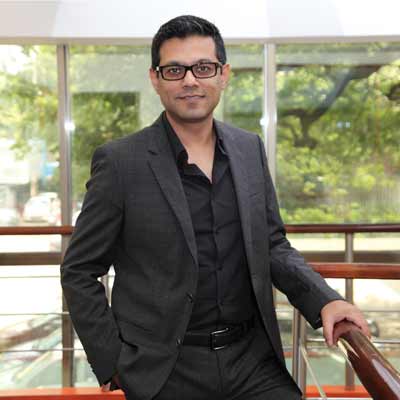
    Effective 1 February, 2016, Leo Burnett North America CEO Rich Stoddart will be taking over as CEO of Leo Burnett Worldwide. He will, however, continue to hold his post as Leo Burnett North America CEO.

    Leo Burnett chairman and CEO Tom Bernardin will remain chairman through June 2017. Both Bernardin and Stoddart also serve on the Publicis Communications ComEx and Stoddart is one of the U.S. country leads for the new organisation led by Publicis Communications CEO Arthur Sadoun.

    “Leo Burnett is a leading force within Publicis Communications. We want to make sure that this brand and its unique culture are stronger than ever as we pursue our ultimate goal – to be the indispensable creative partner to our clients,” Sadoun said. “Maurice Lévy and I are both confident that Rich is the best person to incarnate Leo Burnett on this new journey and lead the teams to great successes for our clients and our agencies. And we know we can count on Tom and his wealth of experience to actively help the Publicis Communications ComEx achieve its objectives.”

    Bernardin joined Leo Burnett Worldwide as CEO in 2004 and the following year hired Stoddart back to the agency to run Leo Burnett Chicago. Under Stoddart’s leadership, Leo Burnett North America has seen significant growth and client acquisition, strong integration and collaboration across business units including Arc, Lapiz and Rokkan while delivering some of the most effective and integrated campaigns for clients including Allstate, GM, Kellogg’s, McDonald’s, P&G and Samsung.

    “Rich Stoddart is an incredibly talented business leader, a tremendous champion for creativity and talent and my obvious successor. I’m very proud, after 11 years, to have been the longest serving chairman and CEO of Leo Burnett Worldwide since Leo Burnett the man. After 40 years in the business, it is the perfect time to pass the reins to Rich. As chairman of Leo Burnett, I will assist both Rich and Arthur in the continued success of Leo Burnett and of the new Publicis Communications,” said Bernardin.

    “I’m so energised by the opportunity to lead this global company and the amazing talent within it during a time of unprecedented change, opportunity and reinvention,” Stoddart added. “In partnership with Arthur and Tom, we will deliver upon the promise and potential of Leo Burnett – ‘the best in the world bar none.’ To me this means the very best talent, the very best work and the very best business results for our clients.”

    Stoddart will remain based at Leo Burnett global headquarters in Chicago.

  • Leo Burnett ups Rich Stoddart as worldwide CEO; Tom Bernaddin named chairman

    Leo Burnett ups Rich Stoddart as worldwide CEO; Tom Bernaddin named chairman

    MUMBAI: Publicis Communications has made an important leadership transition at Leo Burnett Worldwide.

    Effective 1 February, 2016, Leo Burnett North America CEO Rich Stoddart will be taking over as CEO of Leo Burnett Worldwide. He will, however, continue to hold his post as Leo Burnett North America CEO.

    Leo Burnett chairman and CEO Tom Bernardin will remain chairman through June 2017. Both Bernardin and Stoddart also serve on the Publicis Communications ComEx and Stoddart is one of the U.S. country leads for the new organisation led by Publicis Communications CEO Arthur Sadoun.

    “Leo Burnett is a leading force within Publicis Communications. We want to make sure that this brand and its unique culture are stronger than ever as we pursue our ultimate goal – to be the indispensable creative partner to our clients,” Sadoun said. “Maurice Lévy and I are both confident that Rich is the best person to incarnate Leo Burnett on this new journey and lead the teams to great successes for our clients and our agencies. And we know we can count on Tom and his wealth of experience to actively help the Publicis Communications ComEx achieve its objectives.”

    Bernardin joined Leo Burnett Worldwide as CEO in 2004 and the following year hired Stoddart back to the agency to run Leo Burnett Chicago. Under Stoddart’s leadership, Leo Burnett North America has seen significant growth and client acquisition, strong integration and collaboration across business units including Arc, Lapiz and Rokkan while delivering some of the most effective and integrated campaigns for clients including Allstate, GM, Kellogg’s, McDonald’s, P&G and Samsung.

    “Rich Stoddart is an incredibly talented business leader, a tremendous champion for creativity and talent and my obvious successor. I’m very proud, after 11 years, to have been the longest serving chairman and CEO of Leo Burnett Worldwide since Leo Burnett the man. After 40 years in the business, it is the perfect time to pass the reins to Rich. As chairman of Leo Burnett, I will assist both Rich and Arthur in the continued success of Leo Burnett and of the new Publicis Communications,” said Bernardin.

    “I’m so energised by the opportunity to lead this global company and the amazing talent within it during a time of unprecedented change, opportunity and reinvention,” Stoddart added. “In partnership with Arthur and Tom, we will deliver upon the promise and potential of Leo Burnett – ‘the best in the world bar none.’ To me this means the very best talent, the very best work and the very best business results for our clients.”

    Stoddart will remain based at Leo Burnett global headquarters in Chicago.

  • Carat realigns global leadership for next phase of growth

    Carat realigns global leadership for next phase of growth

    MUMBAI: In response to the tremendous growth and success of Carat over the past five years, the agency has realigned its global leadership team to ensure continued momentum and resources to drive growth and innovation for its clients.


    Doug Ray will refocus on Carat US, continuing as CEO, charged with leading the agency’s continued double-digit growth in the world’s largest market. Will Swayne, with more than 15 years leadership tenure within the network, will succeed Ray as Carat global president.


    Under Ray’s leadership, Carat has grown to become the world’s third largest media agency network by billings, according to RECMA, and the fourth-largest in the US, from seventh in three years.


    During Ray’s tenure, Carat has been named Agency of the Year some 54 times across 15 markets, and last month was named the number one media agency network by RECMA in its global qualitative evaluation, Carat’s fifth such distinction in the last six reports.


    In the US, Carat has won close to $1.5 billion new billings this year from clients including P&G, Mondelez and Pfizer, with global clients including MasterCard, Mondelez, adidas and GM all headquartered in the US.


    “Our momentum, particularly in the US over the past five years, has been tremendous, and the size and scale of Carat today now requires dedicated leadership both locally and globally to continue to deliver on our vision and our commitment to redefine media on behalf of our clients. I am looking forward to refocusing on my US role. I’m incredibly proud of all that Will and I have achieved so far and look forward to continued success,” said Ray.


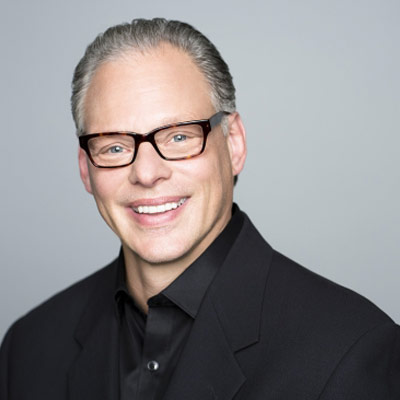
    Swayne and Ray have worked closely together for the past six years, with Swayne most recently Dentsu Aegis Network global client president for P&G. He assumes his new role on 1 January, 2016 as part of a planned transition, and will be responsible and instrumental in driving Carat’s next phase of growth globally.


    Leading its clients through the digital economy, Swayne will be based in London and will report to Dentsu Aegis Network CEO global clients and media brands Peter Huijboom.


    Swayne’s career at Dentsu Aegis began when he joined Aegis Media in 2000, as part of Carat International. In 2005 Will moved to Asia and became MD of Carat Hong Kong before transferring to the US in 2009 to take responsibility for Carat’s P&G Gillette business in North America.


    While in the US, Will took responsibility for all of Carat’s P&G North America business and in 2012 was promoted to Carat US East MD in recognition of his success across a number of areas, including driving forward relationships with leading global clients.


    Will was appointed global client president for P&G in January 2014, and during this time Dentsu Aegis Network has significantly grown its relationship with P&G, winning media assignments in Italy, Canada, Brazil, Spain and most recently expanding its remit in North America, as well as growing its digital and creative contracts too.


    “Carat is a critical driver of Dentsu Aegis Network’s momentum in the US, and Doug’s vision, visibility and leadership in this market is integral to our and our clients’ success. With a growing roster of US-based global clients, as well as significant opportunities to pilot and scale industry-leading innovation from here, we are well-placed to continue our progress and deliver on our vision to lead in the digital economy,” said Dentsu Aegis Network US CEO Rob Horler.


    Commenting on the announcement, Huijboom added, “Through Doug’s leadership, Carat has achieved unprecedented success and global recognition as the leading media network that is truly redefining media. With Doug concentrating on the buoyant US market and Will taking the helm globally, the talented team at Carat and its clients have all to benefit. Will’s client-centric approach and wealth of experience globally across Carat during the last 15 years made him the standout candidate following an extensive internal and external global search.”


    Swayne said, “I am delighted to be taking on the role as Global President of Carat and leading the network through the next phase of its growth. Carat is the most dynamic and agile media agency network, with the best and most diverse talent in the industry. With a superior understanding of people, we are best placed to lead our clients in the digital economy and be a catalyst for their growth.”

  • #TouchThePickle shouts out loud P&G’s Whisper

    #TouchThePickle shouts out loud P&G’s Whisper

    MUMBAI: Like the two sides of a coin, India too is divided into two mindsets. While a certain part is moving towards modernisation, there are still a few things that are holding us back to be culturally liberal.

    P&G Whisper’s new advertising campaign brings out the painful truth of our society.

    According to market experts, the Rs 2,100 crore sanitary napkin market in India is growing at the rate of 19 per cent year on year. Whisper is one of the dominating brands in the category that has worked smartly on its pricing strategy over the years.

    The brand, in the past, has taken up various corporate social responsibilities (CSR) as part of its marketing initiatives.

    It can be recalled that P&G’s ‘Parivartan’ program has been protecting millions of adolescent girls in India from getting trapped in traditional practices of using unhygienic cloth for sanitary protection by providing menstrual education.

    The program has been improving the lives of over two million girls annually across 15,000 schools in India. The objective of the program is to help adolescent girls embrace womanhood positively and enable them to adopt the right feminine hygiene practices to stay healthy and stay in school. ‘Parivartan’ ensures that adolescent girls do not miss school on account of periods and initiates a series of cascading effects leading to a more equal gender status in the state.

    P&G’s ‘Shiksha’ that was launched in 2005 was aimed at enabling consumers to contribute towards the cause of education of under-privileged children through simple brand choices. It is considered to be one of the most successful CSR campaigns initiated by a multinational corporation in India.

    Taking a step further and breaking the stereotypical communication thoughts, Whisper has rolled out a movement titled #TouchThePickle to try and put an end to period taboos that still haunt many Indian girls and women. The movement is initiated under the brand campaign called ‘Kadam Badhaye Ja’.

    Click here to watch the TVC

    The TVC already has got over 22,600 views in five days. The video which was shared on the brand’s You Go Girl page has received over 17, 908 likes and 494 shares.

    On the communication strategy by the brand, the Elephant Strategy+Design founder director and principal designer Ashwini Deshpande wished the TVC was done 25 years ago, but feels it is never too late.

    “A global brand with real alignment to Indian culture is a rare sight yet delightful,” adds Desphande.

    On the other hand Curry Nation co-founder Priti Nair has a different observation. “When I first heard about the movement I really thought that is a fantastic concept, very radical and memorable. I was genuinely happy and proud that a brand like Whisper has taken this stance. I thought we are finally getting rid of the stereotypical commercials from this category and someone is busting the conservative regressive cultural myths attached to a natural cycle of a woman and wished I could have done something similar. My perception changed after I saw the ad,” says Nair.  

    She believes that the brand diluted the huge idea to tick all the points of research work.  According to her, the brand should have taken on the regressive thoughts on menstrual cycle and break them first and then taken on more myths that exist in our society.

    “A brand like Whisper which worldwide is doing large mind set alteration would have succeeded doing that in India as well,” concludes Nair.

  • Missed call from FB will accelerate digital engagement: Valerie R Wagoner

    Missed call from FB will accelerate digital engagement: Valerie R Wagoner

    It was in April that Facebook announced that it had 100 million active users in India, and was aiming at touching the one billion landmark. The social networking site which now has an established subscriber base, is looking at launching more ad inventories. The latest from its kitty is the missed call ad product, which according to Facebook has already started generating some buzz.  


    The announcement of this new ad format had come at a time when Facebook COO Sheryl Sandberg was visiting India hobnobbing with government officials, and small and medium business owners.


    Facebook has partnered with ZipDial, a Bangalore based mobile agency for this. Indiantelevision.com’s Priyanka Nair speaks to ZipDial founder and CEO Valerie R Wagoner at length to understand the mobile marketing ecosystem in India, partnership with Facebook, the agency’s journey and much more.


    How has marketers’ demand from mobile marketing changed in recent years? 


    In emerging markets where the vast majority of consumers are still not online and still pay for things in cash, there is exceptionally little data on consumers and their preferences and behaviours. However, only this year, marketers we work with, are ready to embrace a comprehensive data strategy.


    Four years ago at the end of 2009 when we started ZipDial, marketers were barely getting comfortable with using the mobile at all, and it was an era of small experiments. By around two-three years ago in early 2012, using the mobile for media activations had become an industry standard. By now, marketers are truly embracing both, bridging offline-to-online consumer experience over the long-term, and driving a real business impact from data and analytics.


    You have been in the business for four years. How were the initial days?


    The idea for ZipDial was born from a brainstorming session between Sanjay Swamy (now chairman of ZipDial) and me on a late night flight back to Bangalore from New Delhi. Over next couple months, we fine tuned the idea further with as many as 600 varied user cases.


    The idea just stuck, and within a few more weeks, we had launched a minimum viable product. I think the ideation and execution happened within a short time. But ideas are cheap. Anyone can have an idea. To be really successful, an entrepreneur has to be great at execution, to think strategically about how to drive real inflection points in the business, and have the stamina to see through. What was launched as a mere polling product, over time transformed into a full-fledged mobile marketing and analytics platform.


    ZipDial founder and COO Amiya Pathak and the tech brain created a prototype during IPL 2010 wherein users could give a missed call and get live cricket scores. With zero marketing, within a couple of months, millions of users were zipdialing millions of times a day. It took off completely word-of-mouth. That was the first sign of success. Shortly thereafter we cracked P&G Gillette as our first big client, and we never looked back.


    How did you partner with Facebook? Can you elaborate on how the partnership will work?


    We launched the Facebook-ZipDial missed call ad product with Facebook as its partner for emerging markets (only company in the world). We collaborated and drove conception, design, development, sales, and analytics. In fact, given that the vast majority of the engagement happens on ZipDial after the user clicks on the Facebook ad, we have a lot of interesting data comparing performance across different media as well as performance between Android and feature phones.


    The purpose of the Facebook-ZipDial ad product is to create online-to-offline engagement and driving results. Facebook can track to the level of a click and online engagement. Upon user dialing, ZipDial takes over the consumer experience to drive actual outcomes in the offline world via retargeting, for example reminders to the user encouraging them to buy a product, visit an outlet, watch a particular TV channel, download particular content or an app, etc. Everything is 100 per cent permission-driven by the user and is targeted to them.


    We also need to track performance of Facebook v/s other media channels because ZipDial integrates across all media channels, including print, TV, OOH, and non-Facebook digital ads. We can track which media drives higher RoI for the advertiser.


    To put this in simple words, Facebook is the media where the ad is displayed. The user clicks on the ad. As soon as the user responds to the ad, it bridges from Facebook into a 100 per cent ZipDial experience.

    Coca-Cola (Coke Studio), L’Oreal (Garnier Men), P&G (Gillette), Mondelez (Cadbury Dairy Milk), Disney Channel and Nestle are a few campaigns that have used the inventory so far.


    We also need to give a performance analysis across media. This includes results from analysing the cost effectiveness of each media in terms of driving unique user acquisition. The metric used is user acquisition cost = spend on media / number of unique users who engaged from that media, averaged across all client campaigns.


    It can be noted that digital (including Facebook and non-Facebook digital) performed 10.40 times better than print and Facebook performed 3.02 times better than non-Facebook digital ads.


    How does the Garnier Men campaign for which Facebook has partnered with you work?


    Garnier Men had been for long planning to run a campaign with ZipDial for print and digital media. ZipDial designed and implemented the campaign on the platform in order to drive engagement with brand content around IPL 2014. The ZipDial campaign for Garnier Men was planned well in advance.


    Luckily the Facebook-ZipDial product was launched in time such that Facebook could also become part of L’Oreal’s marketing plan for the Garnier Men campaign. The results have been phenomenal with the Facebook-ZipDial ad performing 16 times better in terms of RoI than the same ZipDial integration with Garnier’s Print Ads.


    What according to you makes a campaign hit on mobile?


    There are many reasons. But, one of the major reasons is that today almost 100 per cent of all emerging market consumers have mobile phones. There is an ease of use in the design format that makes it a single click transition from online to offline in a seamless and user-friendly manner.


    Mobile is the unique ID for the customer. Even when consumers bridge from the on-Facebook experience to an offline experience such as watching a TV show or purchasing a product, there can be an offline-engagement in a targeted way.


    What are the key things that brands should keep in mind to build a healthy social conversation? 


    We strongly believe in the six best practices for social and mobile activations. One, know your customer; a visit from an anonymous user is not enough. All engagement should be verified and known-user engagement so that the brand can personalise the experience later.


    Two, don’t lose your customer, use re-targeting and follow-up engagement, don’t just make it a one-off transactional experience. However, never ever spam your consumers, and always make the experience permission-driven and privacy protected. Three, there is simplicity in the call-to-action, do not overwhelm consumers with too many options. Give them one single compelling message and way to engage.


    Four, there is multiplicity after the call-to-action. Target your response to users on a personalised basis in terms of content and interface. No two users with different profiles should receive the same content/interface. Five, it allows to measure your media. Never run a campaign without the ability to track and measure response rates and RoI. This applies across all digital and traditional channels, including print, television, etc.


    Six, every media can go viral, including offline. Never miss an opportunity for a viral campaign. ZipDial achieves between 60-400 per cent increase in reach of media through viral campaigns even when the only media used is offline traditional media. This improves RoI immensely.


    Mobile being a personal medium, there is a lot that a brand needs to keep in mind before making that one missed call. How do you make sure that a user doesn’t hang up?


    The ZipDial platform does all the hard work automatically for the brand. Marketers only need to think about what their brand benefits and the message they want to get. The ZipDial platform does all of the hard work in analysing data and results, profiling users based on preferences and behaviours, and automatically delivering the right personalised message to the right user at the right time, and even through the right user interface (i.e. voice, text, WAP, Apps).


    ZipDial always puts the consumer’s interests and the consumer’s privacy first. If this is broken, then ultimately it reflects poorly on the brand. Conversion rates on ZipDial campaigns are between 9-45 per cent compared to industry standard conversion rates of less than 0.5 per cent. Users trust the privacy-protected and personalised ZipDial experience and therefore stay more engaged.


    Typically how does ZipDial help a brand to roll out its mobile campaign?


    ZipDial keeps a close watch on the needs and trends in the market before advertisers even realise it themselves. We invest in developing our engagement, retargeting and analytics to keep the industry move forward.


    We also work closely with all for brand marketing as well as for trade marketing. Our focus is also to integrate our advanced platform into their overall consumer loyalty, data and marketing strategies. We work hand-in-hand with our most forward thinking marketers and then replicate and scale the solutions across the industry.


    How has H1 of 2014 been for Digital ZipDial?


    ZipDial has already more than doubled its revenue run rate in the first quarter of the financial year. We look forward to working further with clients about their comprehensive mobile, data and loyalty strategies.


    What is at top of your wish list for 2014? 


    Taking ZipDial’s innovative platform global is one of our main priorities for this year. We have already started to expand into the rest of Asia, but we are even more excited to take our expansion further into Africa very soon.