Tag: P&G

  • P&G appoints Shailesh Jejurikar as global chief operating officer

    P&G appoints Shailesh Jejurikar as global chief operating officer

    Mumbai: Global consumer products major, The Procter & Gamble Company (P&G) has announced the appointment of Shailesh Jejurikar as the global chief operating officer (COO), with effect from 1 October. This is in line with the change at the CEO level with Jon Moeller taking over from David Taylor.

    Currently, Jejurikar is the chief executive officer (CEO) of P&G’s largest business sector, fabric & home care.

    In his new role, Jejurikar will have profit/loss responsibility for P&G’s enterprise markets (Latin America, India, Middle East, Africa, Southeast Asia and Eastern Europe). He will also lead IT, global business services, sales, market operations, new business, purchasing, manufacturing, and distribution efforts for the company.

    Jejurikar joined P&G in 1989 as an assistant brand manager for personal health care in India. He has since risen through the ranks and worked across many roles within the company.

    P&G said in a statement, “Shailesh’s extensive P&G career has spanned multiple businesses (health & beauty care, home care, fabric care and P&G professional) in both developed and developing regions (North America, Europe, Asia, and Africa). He has consistently delivered strong business results in every market and on every business, enabled via his deep experience of growing brands locally, regionally, globally, and across service industries, together with his passion for brand building. He has the unique ability of identifying growth possibilities.”

    “As executive sponsor for global sustainability, Shailesh is actively driving P&G’s ‘force for good and a force for growth’ vision to ensure our sustainability goals are fully integrated into the day-to-day business to enable—and to inspire—positive impact on the environment and society while creating value for the company, consumers and shareholders,” it added.

  • Tide reminds people of the value of time in new ad

    Tide reminds people of the value of time in new ad

    MUMBAI: P&G laundry and fabric care brand, Tide has launched its latest digital campaign #TideforTime which aims to contextualise the importance of time for the families dealing with work-life balance, especially under the pressures of pandemic-induced lockdown.

    The brand shines the spotlight on the story of many households, where work and everyday tasks take up most of the time, leaving little time for anything else, by raising an important question – ‘Are we spending our time on what’s really important?’. The ad draws inferences, from a recent survey conducted in partnership with Tide which showed that 82 per cent people agree that balancing housework and office work has led to spending less time with your family during the pandemic.

    The #TideforTime film, conceptualised by Leo Burnett India and directed by Shoojit Sircar, depicts the heart-warming story of a young family, as seen through the eyes of the grandmother who is visiting them. Throughout her stay, she notices her granddaughter spending time by herself, trying to seek her parents’ time and attention while they are caught up in office or housework. After she returns from her visit, the grandmother makes the family realise that the child misses spending time with her parents. She also reiterates that time is most valuable and ought to be spent on what’s really important, urging them to make more time for their child. The grandmother’s dialogue – ‘You don’t ‘find’ time, you have to make time’ has been resonating with many.

    Tide is also showing the way by highlighting simple ways in which families can make time. Households across India spend up to 300 hours doing laundry, indicates data. The ad concludes with the message that with its superior cleaning in the soak or machine itself, using Tide can result in lesser laundry time. This time that is saved, can be leveraged for what’s important to people – be it spending time with family, friends, pursuing their passion, honing a hobby, or anything they haven’t been able to ‘find’ time for!

    “During Covid, we have been limited to the confines of our homes. But this physical proximity has not necessarily led to stronger emotional connection,” P & G India-fabric care chief marketing officer and vice president Sharat Verma said. “Research shows nine out of 10 people agree that Covid has made them realize the importance of togetherness. With #TideForTime, our endeavor is to bring to light a pertinent question, rendered even more important in the current context – ‘Are we spending our time on what’s really important?’. Because there’s only one thing more precious than our time, and that’s how we spend it.”

    Leo Burnett – South Asia CEO & chief creative officer Rajdeepak Das said, “My late aunt was one of those people who always had time for everyone, and I used to often ask her how she managed to have time. Her standard reply to me was ‘Beta time milta nahi hai, time banana padhta hai’. When we started creating this movement, we realized we spend up to 300 hours on doing laundry. With the #TideForTime movement, we want to encourage everyone to make time for all things that are really important by just saving on laundry time. This movement is a true Humankind insight, a story which goes beyond words and we hope will inspire everyone to make more time for their loved ones.”

    MUMBAI: P&G laundry and fabric care brand, Tide has launched its latest digital campaign #TideforTime which aims to contextualise the importance of time for the families dealing with work-life balance, especially under the pressures of pandemic-induced lockdown. The brand shines the spotlight on the story of many households, where work and everyday tasks take up most of the time, leaving little time for anything else, by raising an important question – ‘Are we spending our time on what’s really important?’. The ad draws inferences, from a recent survey conducted in partnership with Tide which showed that 82 per cent people agree that balancing housework and office work has led to spending less time with your family during the pandemic. The #TideforTime film, conceptualised by Leo Burnett India and directed by Shoojit Sircar, depicts the heart-warming story of a young family, as seen through the eyes of the grandmother who is visiting them. Throughout her stay, she notices her granddaughter spending time by herself, trying to seek her parents’ time and attention while they are caught up in office or housework. After she returns from her visit, the grandmother makes the family realise that the child misses spending time with her parents. She also reiterates that time is most valuable and ought to be spent on what’s really important, urging them to make more time for their child. The grandmother’s dialogue – ‘You don’t ‘find’ time, you have to make time’ has been resonating with many. Tide is also showing the way by highlighting simple ways in which families can make time. Households across India spend up to 300 hours doing laundry, indicates data. The ad concludes with the message that with its superior cleaning in the soak or machine itself, using Tide can result in lesser laundry time. This time that is saved, can be leveraged for what’s important to people – be it spending time with family, friends, pursuing their passion, honing a hobby, or anything they haven’t been able to ‘find’ time for! “During Covid, we have been limited to the confines of our homes. But this physical proximity has not necessarily led to stronger emotional connection,” P & G India-fabric care chief marketing officer and vice president Sharat Verma said. “Research shows nine out of 10 people agree that Covid has made them realize the importance of togetherness. With #TideForTime, our endeavor is to bring to light a pertinent question, rendered even more important in the current context – ‘Are we spending our time on what’s really important?’. Because there’s only one thing more precious than our time, and that’s how we spend it.” Leo Burnett – South Asia CEO & chief creative officer Rajdeepak Das said, “My late aunt was one of those people who always had time for everyone, and I used to often ask her how she managed to have time. Her standard reply to me was ‘Beta time milta nahi hai, time banana padhta hai’. When we started creating this movement, we realized we spend up to 300 hours on doing laundry. With the #TideForTime movement, we want to encourage everyone to make time for all things that are really important by just saving on laundry time. This movement is a true Humankind insight, a story which goes beyond words and we hope will inspire everyone to make more time for their loved ones.”

  • Whisper’s new ad keeps it ‘bloody’ real, soothes period ‘blues’ away

    Whisper’s new ad keeps it ‘bloody’ real, soothes period ‘blues’ away

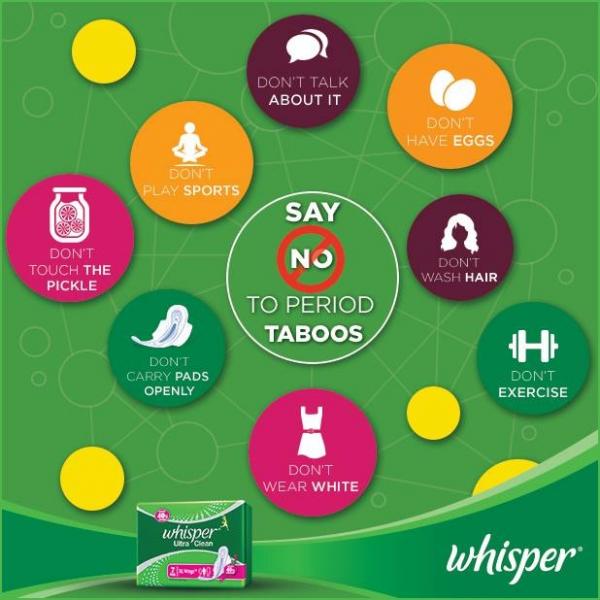
    Mumbai: Whisper is finally keeping it real. India’s leading sanitary napkin and personal hygiene brand has debuted its new commercial using realistic red fluid- not blue- depicting period blood for what it is. Bloody red, of course.

    About time too. It’s 2021 for period’s sake. The ubiquitous blue-coloured liquid has been used in ads promoting feminine hygiene products for far too long.

    The new ad for Whisper Ultra, which claims to be endowed with herbal oil that not only locks wetness but odour too, is otherwise unremarkable, showcasing the usual tropes of a sanitary pad ad- a happy looking girl going about her job with extra enthusiasm.

    Where it breaks new ground is when it shows the pad absorbency, using an authentic-looking red fluid in place of the usual sanitised ink-blue liquid. The brand had used red before too, in an animated video ad launched in November 2020, but it had less of an impact being an animation.

    The Feminine Hygiene Products Market in India is valued at Rs. 25.02 billion in 2018 and is expected to reach INR 58.62 billion by 2024, expanding at a compound annual growth rate (CAGR) of ~14.92 per cent, during the 2019-2024 period, as per a ResearchAndMarkets report.

    The report also revealed that Whisper by P&G Hygiene & Health Care held the largest market share at a cool 51.42 per cent, followed by Stayfree and Kotex in 2018.

    For the country’s biggest brand to take this maiden step of normalising periods and menstruation is nothing short of a giant leap for the Indian consumer market. Growing awareness about intimate hygiene and increase in preference for sanitary products like tampons and panty liners have garnered a huge demand for feminine hygiene products in the country. The entry of new players and start-ups is also expanding the feminine hygiene products market in India.

    In fact, the credit for breaking this age-old misleading practice of using blue liquid in commercials goes to a much lesser-known homegrown brand. Nobel Hygiene’s RIO, which was the first sanitary pad brand that woke up to the challenge in India and realistically portrayed ‘period blood’ in red, instead of blue on TV.

    The viral ad featuring actor Radhika Apte launched in July last year was path-breaking in many ways, tackling most of the uncomfortable truths associated with menstruation but which are usually brushed under the carpet by most commercials keen to show a happier-than-thou picture perfect version. For someone who has no knowledge of periods, it wouldn’t be surprising if these ads made them believe that women indeed bleed blue and that periods are effortless!

    However, conversations around the subject are still hush-hush in public and even in families sometimes, despite it being a normal biological function affecting half of human-kind. Sanitary napkins continue to be wrapped up in sanitised brown paper, lest its offensive contents be visible to the public eye.

    In March this year, The Body Shop India had launched a campaign ‘Periods are #BloodyNatural’ calling out to end period shame and break taboos and stereotypes around it.

    The campaign, featuring actor Shraddha Kapoor talked about how it’s been normal for society to shame periods, giving out the much-needed message: “But periods are #BloodyNatural. It is society that’s strange. We at The Body Shop India believe that a conversation can change the world. It’s time to talk about periods as the natural phenomena that they are. #DropThePWord into your conversation to end period stigma.”

    Recently, a Thai-origin brand called SANITA also came up with an Indian ad that promotes awareness and openness about the product. It gave out a pertinent message, while also taking a potshot at the giant in the category- the tagline for the brand went “There’s nothing to Whisper about it”! We agree!

    It goes without saying that brands hold the power to drive change in society and start that much-needed conversation. Here’s hoping that more companies join P&G’s Whisper, wake up and realise that blood has always been red. Let’s normalise talking about something that’s a very basic biological function. Period!

  • How men’s grooming brands took off during the pandemic

    How men’s grooming brands took off during the pandemic

    Mumbai: ‘Mooche Ho Toh Nathulal Jaise, Warna Na Ho’ was a popular dialogue by Big B from a Bollywood movie from the 80’s, where the actor goes on to praise Nathulal’s bushy moustache, in contrast to his own clean-shaven ‘saaf maidaan’ (clear field). Well, if Nathulal were around today, he would definitely be delighted at the plethora of grooming choices to pamper himself with!

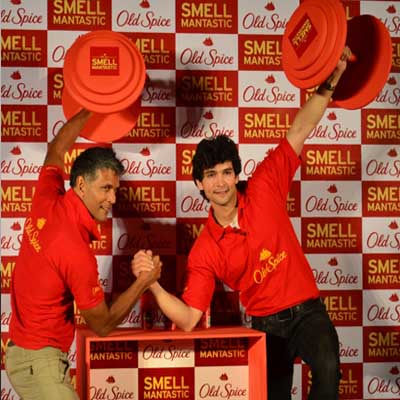
    Last few years have seen the male personal care and grooming industry grow with products from Mooch and beard growth oil, serum, crème, and wash. Gone are the days when only a few shaving products of brands like P&G’s Old Spice or Gillette catered to men’s grooming needs. Today, urbanisation, the rise of the ‘Metrosexual’ male, and the awareness to look presentable and well-groomed have paved the way for an increase in demand and variety of men’s personal care products. 

    Brands like The Man company, Ustra, Whiskers, Bombay Shaving Company, Beardo, Nykaa Man and many more offer men holistic skincare and personal hygiene solutions including scrub, moisturiser, masks, bodywash, serums and a carefully curated hair care range. There’s even Tattoo Aftercare products!

    The beauty industry is aggressively targeting men with advanced products and treatments designed just for them. These brands are offering a tough fight to the traditional players who will now need to go beyond offering just shaving solutions. 

    “The men’s beauty segment is growing beyond fragrance, shave and beard care. There are so many brands that are creating products which are relevant to men. As an influential brand, Whiskers takes its responsibility very seriously. Striving to elevate the grooming sector in India, we have charted out a plan to guide the consumers through educational live streams about skincare, hair care and the art of grooming to enhance customer satisfaction.” Whiskers co-founder, Aakash Goswami told IndianTelevision.

    According to Research and Markets, the Indian male grooming market stood at $643 million in 2018 and is projected to grow at a CAGR of over 11 percent to cross $1.2 billion by 2024.

    As the pandemic and subsequent restrictions on movement confined us to our homes, DIY (do it yourself) haircut and personal-grooming became a necessity and a trend. Products such as razors, trimmers, and epilators saw an upsurge in demand. Majority of consumers now prefer home grooming than visiting salons and spas.

    Says Dentsu Impact’s vice president & head of Digital, Binodan KD Sharma, “The statistics predicted by Industry bodies like ASSOCHAM is a 45 per cent CAGR to reach around a 35,000 crore market by the end of 2021. This is not unfounded as male grooming has become an important phenomenon among urban consumers and now the effect is slowly rolling over to Tier 2 and 3 towns where the aspiration and ambition of the TG have catapulted with the growth of mobility and internet.”

    Talking about how most of these brands try to reach their consumers, Binodan says, “The niche and urban players heavily focus on digital with a wide spread of content published across social, YouTube, influencer engagement and focusing on e-com strategy. The mass players continue to use print and television with digital mostly limited to YouTube and OTT platforms. Ustraa is an interesting case study, which has built its brand equity mostly by leveraging Instagram. In the coming months with digital being embraced more vociferously, more mass players will also choose the medium to focus on some of their products.”

    According to the founder and CEO of the Bombay Shaving Company, Shantanu Deshpande, e-commerce has been one of the most important growth drivers. “Covid-19 has helped us to accelerate innovation in technology, product, and brand. Digital adoption by consumers is at an all-time high. We have been on a growth path since then and have grown 150% over the pre-covid level on our monthly run rate”, he told ET.

    OPEN Strategy & Design’s Amit Sharma believes the next ten years will be decisive for any brand in the sector. “The next ten years will depend on the new generation that gets recruited into this category. Marketers will need to be sharp on codifying the notions of masculinity, grooming, self-expression and identity that this young demographic is getting influenced by. If their popular culture consumption, which includes K-Pop, Instagram influencers, new age fitness role models, is anything to go by, this category is going to get very interesting,” he said.

    Digital marketing agency Natter COO Avinash Joshi feels that it is imperative for these players to rope in big-ticket stars to cut across the audiences, “because grooming as a category has always seen role models. It was Vinod Khanna, Amitabh Bachchan in the yesteryears, and today we have Virat Kohli, Shahid Kapoor, Ayushman Khurana, Hrithik Roshan, and many others.”  

    In the latest ad from men’s skincare brand, Uncle Tony India conceptualised by United We Productions LLP, the brand has positioned itself as the go-to “for men who don’t care about skincare”. It hilariously captures what it would be like to introduce grooming products to cavemen!

    Clearly, brands are keeping their eyes on trends to cater to the requirements of Indian men by designing disruptive products. We are finally seeing men’s grooming coming of age and stepping out of the shadows of the women’s grooming category.

  • E-comms step forward to help tide over Covid second wave

    E-comms step forward to help tide over Covid second wave

    MUMBAI: With India battling a deadly second wave of the pandemic, night curfews and partial-to-near-complete lockdowns seem to be the norm in many parts of the country. The last couple of weeks in particular have been more devastating with the nation witnessing an unprecedented pan-India surge in Covid cases. India Inc is stepping on the gas to ensure that employees and their families get vaccinated as soon as possible. MNC consumer goods company Procter & Gamble, on Monday pledged Rs 50 crores towards ten lakh vaccine doses covering five lakh Indians.

    E-comms are also going the extra mile to ensure protection of their associates, including delivery staff, while guaranteeing safe delivery of orders to customers. With movement restrictions being introduced in additional parts of the country, buyers are taking the safety route of shopping from home. This has resulted in driving bigger orders for e-commerce companies across India.

    Here are some of the efforts undertaken by online platforms in the fight against Covid2019:

    Food delivery app Swiggy last month took the initiative of supporting the vaccination cost for its entire delivery fleet. The company announced on its Twitter handle: “From essentials to food, delivery partners have always been our lifelines. We’re happy to announce that we’re supporting 100 per cent of the vaccination cost for our entire delivery fleet, and that this entire drive will be facilitated by us to keep them and you safe. #DeliveringHope”

    Food & Grocery app Grofers took the initiative of using its platform to set up a real-time data of all Covid2019 resources, including city-wise databases and helpline numbers. It shared on its blog, “A lot of people are currently overwhelmed and struggling to find relevant information on what to do and what measures to take if they or someone they know is currently affected by the virus. We thought we could use our platform to help a bit here. To help make this a slightly less cumbersome process we have aggregated some of the publicly available information for your convenience, so you do not have to go looking for it in different places.”

    Grofers has also partnered with UNICEF to encourage people across the country to get vaccinated. It tweeted :“When you get vaccinated, you potentially safeguard yourself and your family from Covid2019. Here is our little way of expressing our appreciation for those who have taken this important step.”

    E-commerce giant Flipkart went all-out in its measures to ensure a safe working environment for all its employees and stakeholders across the board. The company took to its twitter handle to share a video on the same. “We stand strong in our commitment to safety. Our priority remains the well-being of our employees, customers, sellers, and our entire ecosystem. Watch for the various measures we continue to implement to ensure  #SafeCommerce for all.”

    The firm has also been lending its helping hand to deliver Covid care medical kits. Official Twitter handle of infrastructure & industrial development department of the Uttar Pradesh government tweeted lauding the company’s efforts, which included delivering over 3,000 covidcare medical kits free of charge.

    Food delivery app Zomato had in 2020 taken steps to educate the riders and restaurants on safety and hygiene practices, provided them with COVID insurance, masks, and facilitated hand sanitisation stations at restaurants across the country. This time the Food delivery app has rolled out a feature for “Covid emergencies”. Zomato Founder Deepinder Goyal tweeted, “Today, along with thousands of our restaurant partners, we just rolled out a “priority delivery for covid emergencies” feature on the Zomato app. This feature will allow our customers to mark *This order is related to a Covid2019 emergency* option during checkout.

    These orders will be prioritised by providing fastest rider assignment, and dedicated customer support in case of queries. Thousands of restaurants have pledged to prioritise these orders in their kitchen above all others.

    In addition, the firm’s not-for-profit arm Zomato Feeding India has kickstarted a Help Save My India endeavour in association with @delhivery to source oxygen concentrators and related supplies to help hospitals and families in need.

    Early this month, Urban Company (formerly UrbanClap) – a managed marketplace for home services, committed towards getting 100 per cent of their fleet vaccinated, free of cost in the coming weeks. “We have already initiated phase 1 of this effort for service partners aged 45+, and are working closely with local govts and healthcare providers.

    With the government now allowing vaccination for all above 18 starting 1 May, @urbancompany_UC further reiterated its commitment. “ @urbancompany_UC is committed to getting all our front lines service professionals and employees vaccinated at the earliest possible availability,” tweeted Urban Company co-founder Abhiraj Singh Bhal  @abhirajbhal .

    Tata Group’s Online apparel brand TATA CLIQ chose to take a step back by reminding everyone that ‘It’s Time To Pause’. It urged its customers to think again before making a purchase on the app. Declaring that ‘Today Community takes precedence over Commerce’ the brand sent out communication to its subscribers and on its webpage saying “Sometimes it takes courage to pause, to listen to what the heart already knows. We encourage you to pause and ask yourself – do you really need to buy this now? Just because someone else carries it well doesn’t mean it isn’t heavy.”

    It added “Out of respect for our stakeholders, we are open for commerce – so we will still deliver your orders, take your calls, process returns and refunds – but we will not penalise our delivery team on road for a day of delayed delivery, we will not focus on the number of calls made in an hour by our customer care executives, we will not allow colleagues at our warehouse to travel via public transport and expose themselves and their families to risk.” 

  • P&G pledges Rs 50 crore for vaccine doses, as Covid2019 batters India

    P&G pledges Rs 50 crore for vaccine doses, as Covid2019 batters India

    Mumbai: As India struggles to combat the record spike in Covid2019 cases, Procter & Gamble (P&G) announced on Monday that it will contribute towards the vaccination of over five lakh Indian citizens by pledging Rs 50 crore in partnership with government and local authorities in India.

    For every P&G employee in India, the company will contribute towards the vaccination of 100 Indians, it said. The FMCG major said it will also cover the vaccination cost of its 5000+ employee force in India, and their eligible immediate family members.

    With as many as 3,52,991 fresh Covid2019 cases and 2,812 deaths, India witnessed a new record high on Monday as the deadly second wave took a toll on the people. This is the fifth straight day that over three lakh cases have been recorded by the country. 

    P&G brands Whisper, Vicks, Pampers, Oral-B, Head & Shoulders and Pantene are partnering in this vaccination drive through their brand programs and will also continue to raise awareness on safety and hygiene in the country.

    P&G Indian subcontinent CEO Madhusudan Gopalan said, “P&G is committed to playing an active role in India’s fight against Covid2019. Since the outbreak of the pandemic, through our #PGSurakshaIndia program, we have stepped up to support the health, safety, and wellbeing of our employees, our consumers and the communities. In the current situation and going forward, vaccines play a critical role in containing the spread of the virus.”

    Contribution towards vaccines will be on top of P&G’s earmarked CSR funds for the current year. Under its #PGSurakshaIndia program, the company will also continue to donate products, in-house manufactured masks and sanitisers specially to aid frontline and essential workers who are tirelessly working to combat the spread of Covid2019.

    The company said it will also continue to leverage its advertising and brand voice responsibly to increase awareness on health, safety and hygiene measures among consumers and the community.

    It has so far donated more than 35 lakh health, hygiene and cleaning products (which include Whisper, Ariel, Tide, Vicks, Pampers etc) to the communities it operates in. P&G stepped up its manufacturing capabilities to produce masks and hand sanitisers to donate more than 15 lakh masks in the country’s fight against Covid2019.

  • P&G announces Rs 400 crore fund for self-reliant India

    P&G announces Rs 400 crore fund for self-reliant India

    MUMBAI: Procter & Gamble (P&G) has announced a Rs 400 crore ‘India Growth Fund’ to collaborate with existing and new suppliers to build capacities that will further localise manufacturing of finished products, procurement of raw materials & packaging materials, and adopt go-to-market innovations & technology.

    This is in line with the government's vision of a self-reliant India and P&G’s commitment to drive inclusive growth in India through external partnerships. This new fund is part of P&G India’s ‘vGROW’ program that focuses on identifying and collaborating with start-ups, small businesses, individuals or large organisations offering innovative industry-leading solutions.

    With this announcement, P&G also launched the third edition of ‘P&G vGROW External Business Partner Summit,’ on October 29-30, 2020, that offers a platform to existing and new suppliers to pitch their solutions to P&Gs leadership team. This year, in addition to localisation solutions, the summit will also focus on identifying solutions that revolutionise go-to-market capabilities, optimise inventory and expand consumer reach of P&G brands.

    P&G Indian subcontinent CEO Madhusudan Gopalan said, “P&G has been making in India for decades and we are committed to the vision of a self-reliant India. More than 95 per cent of the products we sell in India are manufactured locally. We also export finished products manufactured in India to more than 120 countries. In line with our commitment, we are setting-up P&G’s ‘India Growth Fund’. We are confident that through these partnerships we will be able to create an eco-system and supplier network that will further enable us to make in India, for India and the world.”

    Madhusudan further added, “Three years ago, we launched our vGROW program with a vision to create an active partnership platform for suppliers across India. In the first two years we also set-up the ‘Innovation Fund’ and ‘Sustainability Fund’ through which we have invested more than Rs 250 crore in forging partnerships on new-age, innovative and sustainable solutions for the business. We strongly believe that these efforts have created value for our consumers, partners, and the company.”

  • Star signs Daily Hunt as an associate sponsor for IPL

    Star signs Daily Hunt as an associate sponsor for IPL

    NEW DELHI- Star Sports, theofficial broadcaster of the Indian Premier League (IPL 2020), has signed a partnership with Daily Hunt as an associate sponsor. A close source confirmed the development to Indiantelevision.com. The brand aims to maximise its reach via advertising on IPL 2020.

    The local language content discovery platform recently launched a short-video app ‘Josh’. As per reports, the IPL broadcast sponsorship will be used to promote the new launch.

    Announcing the official launch on Wednesday, Dailyhunt said gaining phenomenal traction through the beta phase, Josh is Dailyhunt’s tribute to Bharat, celebrating its creative beauty and diversity. “In the last 45 days of its beta launch, Josh numbers have exploded: 200+ A-rated exclusive creators, 4 mega music labels, 50+ million downloads, 1+ billion video plays per day, 23+ million daily active users (DAUs), 21+ minutes time spent per DAU, and over 5 million User Generated Content (UGC) content creators,” the platform claimed.  

    Star Sports already has signed up with brands like PolyCab, ITC, Coca Cola, Rummy Circle, AMFI, P&G, Kamla Pasand as associate on-air sponsors in the category. DailyHunt will be the 11th brand in the associate sponsorship category. 

    Other than this Star Sports will have Dream11, Phone Pe, Amazon, and Byju’s as Co-presenting sponsors of the league in IPL 2020.

  • P&G pledges to go carbon-neutral by end of decade

    P&G pledges to go carbon-neutral by end of decade

    NEW DELHI: Announcing a series of interventions that protect, improve, and restore nature, P&G has committed to going carbon-neutral by the end of this decade, it shared in a press statement. The company will need to balance ~30 million metric tons of carbon from 2020 to 2030. 

    “Recognising the next decade represents a critical window for the world to accelerate progress on climate change, P&G will go beyond its existing Science Based Target of reducing greenhouse gas emissions by 50 per cent by additionally advancing a portfolio of natural climate solutions. These efforts will deliver a carbon benefit that balances any remaining emissions over the next 10 years, allowing P&G operations to be carbon neutral for the decade,” read the release. 

    P&G chief sustainability officer Virginie Helias said, “Our role as leaders is to make a lower-emission economy and lifestyle possible, affordable and desirable for everyone. It is our responsibility to protect critical carbon reserves and invest in solutions that regenerate our planet. Consumers also want to do more to address climate change. As a company, we touch five billion people with our brands; we are striving to make a difference every day by encouraging responsible consumption with products that are effective and intuitive to enable adoption of new lower emission habits.”

    Its brands have been active in marketing their products in a way that engages consumers to involve in healthy environment-friendly habits. As per the global giant,  more than 60 per cent of a laundry detergent’s footprint is in the consumer use phase due to the energy used to heat the water. Its brands, Ariel and Tide,  have adopted brand messaging encouraging users to "turn to 30" and "cold water wash" their clothes, reducing roughly 15 million metric tons of carbon dioxide since 2015 as a result.

    Likewise, dishwasher detergent brands Cascade and Fairy are encouraging consumers to skip pre-washing in order to reduce water usage and cut up to half of the total carbon footprint of every wash cycle.

    Helias noted, "As a company, we touch five billion people with our brands; we are striving to make a difference every day by encouraging responsible consumption with products that are effective and intuitive to enable adoption of new lower-emission habits."  

    P&G has also partnered with  Conservation International and World Wildlife Fund (WWF) to identify and fund a range of projects to achieve the goal. The already identified a slew of international projects including Atlantic Forest Restoration Planning with WWF and Evergreen Alliance with Arbor Day Foundation. 

    Follow Tellychakkar for the consumer facing news & entertainment

  • Will fairness brands bid adieu?

    Will fairness brands bid adieu?

    NEW DELHI: After beauty standards and the flawed idea of "fair is beautiful" caught the limelight amid the #BlackLivesMatter protests in the US, brands have taken a much-needed step across countries. Just yesterday, Hindustan Unilever (HUL) announced that it will be dropping the word 'fair' from its infamous skin whitening product Fair & Lovely and soon announce a new name.

    Supporting the #BlackLivesMatter cause, American multinational giant Johnson & Johnson also decided to stop selling its skin lightening products range globally. Clear & Clear will no longer be sold in India and Neutrogena will not be available in the Asian and Middle Eastern markets.

    The fairness cream market in India is dominated by HUL, P&G, Garnier, L’Oreal and many others. Brands over the years have played on and perpetuated the idea that fair skin is everything and have been criticised for provoking thoughts which encourage discrimination on the basis of colour.

    Fair & Lovely, endorsed by actress Yami Gautam, is considered to be one of HUL's best-selling products, unhampered by criticism. 

    According to a recently published report, "India Fairness Cream & Bleach Market Overview, 2018-2023", the women's fairness cream category is anticipated to achieve market revenues of more than Rs 5000 crore by the year 2023.

    While Johnson&Johnson recently called it quits from the fairness cream market, could we see other brands, especially Indian ones, taking the same route or revise their way of communicating to viewers?

    Dentsu Impact VP planning Krittika Chakraborty shares, “The Indian fairness cream market is dominated by HUL whose Fair & Lovely has an 80 per cent share. It is, of course, very much possible that brands like Fair & Lovely may stop advertising during this time as this debate boils over in the international arena. Ad spends might be affected in the short to medium term in India but it is doubtful whether it would directly impact demand for these products.”

    Commwiser Consultants co-founder Aman Abbas says that the fetish for fair skin in India is deep-rooted and centuries old. Therefore, it will take many decades of active campaigns and a lot of education for this to start fading off. 

    There has been a heated debate against such advertisements, as a result, the ministry of health and family welfare finalised drugs and magic remedies (objectionable advertisements) (amendment) Bill, 2020 under which the proposed draft amendment bans advertisements of products that promote fairness creams, enhance sexual performance, cure premature aging and greying of hair, improvement in height of children or adults, among others. The violators will face a penalty up to Rs 50 lakh and can be served prison time for five years.

    "Interestingly, the laws are more focused on the ‘misleading claims’, which means whether the creams are actually making one fair or not and whether the ingredients are safe. There is little focus on the very concept of it," Abbas points out.

    He also adds, “Global brands like J&J have taken the right step and it must be lauded. But there may be many local players who would view J&J’s exit as an opportunity and move in to fill the gap."

    Over the years brands have diversified their business to the male fairness segment as well with leading actors as brand ambassadors including Shah Rukh Khan, Hrithik Roshan, Varun Dhawan and Kartik Aaryan. Indian cricket team captain Virat Kohli was also a former brand ambassador but from 2017, he has refused to endorse fairness brands and others that he doesn't personally use.

    Chakraborty says that even if the marketing angle changes, the promise of the product stays the same and that needs to be addressed.

    “An answer might lie in ranges and narratives that talk about healthy skin with an equal celebration of all skin tones and face types, not just the ones that fit our prevailing notions of beauty,” she says.

    Echoing the same perspective Abbas shares, “The reality is that the society would still ‘need’ fairness creams for the age-old ‘approval’ to look beautiful. So, the products will exist and sold in the market. The brands have an image to keep, appear sensitive to the environment and say the right things. In the days of social media activism that impact the brand image and even sales directly, brands may ‘respond’ to the environment and change the communication to something subtle.”

    Chakraborty strongly opines that such products should not exist as they reinforce a dangerous and regressive stereotype.While it's desirable to believe that a change in marketing tactics may cut down demand, she says it's wishful thinking. 

    “While multinationals might take global calls to end the glorification of light skin or certain beauty standards through their products and advertising, the majority of Indians will still continue to hold light skin in high regard," she says.

    Experts believe that the recent backlash will not negatively impact any Indian brand and they will not stop selling such products as they clock huge revenue.