Tag: Peter Mukerjea

  • Karti told to move petition relating to INX Media in Delhi High Court

    Karti told to move petition relating to INX Media in Delhi High Court

    NEW DELHI: Karti Chidambaram, son of former Union Minister P Chidambaram, will have to go to the trial court or the High Court in Delhi with his petition seeking to quash a Central Bureau of Investigation FIR in a bribery case involving INX Media.

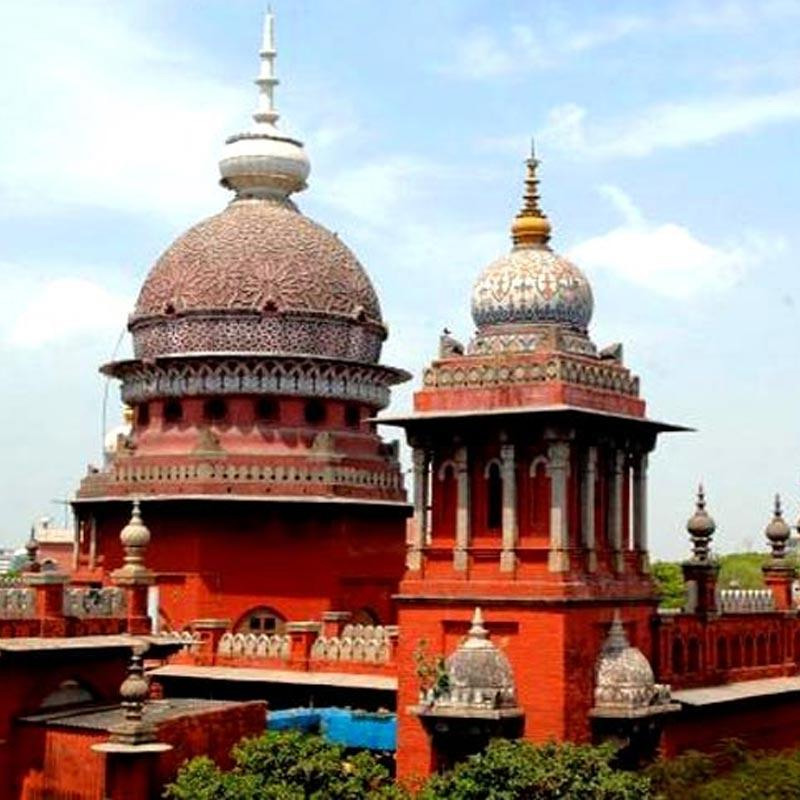
    The Madras High Court today said the case does not come under its jurisdiction and the Delhi High Court has territorial jurisdiction in this case.

    Karti had moved the court after a Supreme Court order asked him to appear before the CBI in its New Delhi office on 23 August, to help the investigating agency with its probe on the alleged kickbacks that his company, INX Media paid to get clearances from the Foreign Investment Promotion Board.

    Karti had told the Supreme Court that he is ready to appear before the agency today itself, but needs protection. While directing him to appear before the CBI, the SC told Karti to carry with him all documents necessary.

    The Madras High Court, in an earlier order this month, had stayed the Look Out Circular (LOC) issued against Karti and four others. The Supreme Court had later said that it would review the HC order cancelling the LOC issued by Foreigner Regional Registration Officer (FRRO).

    On 16 May, CBI raided the Chidambaram residence in Chennai, along with 13 other locations in New Delhi, Gurugram, Mumbai and Chandigarh. The raids were regarding a 2007 case in which INX Media had allegedly paid bribes to get an FIPB approval.

    While the clearance granted was only for Rs 40 million, the actual foreign investment was reportedly much higher. An FIR was filed against Karti, Indrani Mukherjee and Peter Mukerjea, who owned INX media.

  • Sheena Bora murder case involving Indrani Mukerjea gets murkier

    Sheena Bora murder case involving Indrani Mukerjea gets murkier

    MUMBAI: The recent developments in the Sheena Bora murder mystery seem nothing short of twists out of James Patterson’s crime thriller novels. If the media and entertainment industry was shocked by the alleged involvement of media honcho and ex-Star TV CEO Peter Mukerjea’s wife Indrani Mukerjea in her sister’s murder, Wednesday’s revelations have left them speechless.


    The day was marked by media reports revealing that a close family friend of the accused had claimed that the victim Sheena Bora was indeed Indrani’s daughter from a previous marriage.


    While the allegation could not be verified then with Indrani’s legal representatives, Sheena’s brother, Mikhail Bora, who works in an airline and was brought up with the victim in Guwahati by their grandparents, confirmed it to the media. “My sister was killed, I have no doubt about that. I had no clue when Sheena died. Whenever I checked, Indrani always claimed Sheena is abroad and busy with her studies,” he told ANI.


    He also shared that Sheena and Indrani didn’t have a pleasant relationship and hinted that he would disclose the real motive behind the murder if Indrani doesn’t confess. “If Indrani Mukerjea doesn’t admit to her crime, I will tell police the exact reason for the murder and provide evidence,” he said, dismissing property dispute as a motive. “Since last September, we are not getting any financial help from Indrani.”


    With a storm like this brewing and the mystery getting murkier, when the media turned to Peter Mukerjea for answers, he claimed that he had no knowledge that Indrani was Sheena’s mother. In fact, his understanding was that Mikhail Bora was also Indrani’s brother. “I am in a state of complete shock,” he said in an interview with Times Now. “I knew Sheena Bora as my wife’s sister for the last 15 years of my marriage and now I am being told that she was her daughter and possibly the person I thought as her brother is actually her son from another marriage,” he added.


    Peter also revealed that while in a relationship with Sheena, his younger son from an earlier marriage, Rahul Mukerjea, had once mentioned that Sheena was Indrani’s daughter but he had dismissed his son’s claims.


    According to Peter, Sheena was sent to the US in 2012 as Indrani disapproved of her relationship with Rahul, and thus he never questioned her constant absence from home.


    “I didn’t believe him (Rahul) at that time as Indrani maintained that she was Sheena’s sister. So much so that it caused a rift between me and my son. I haven’t spoken to him in the last three years,” Mukerjea shared with media before being led away to be questioned by the Mumbai police.


    Indrani Mukerjea’s first husband Sanjeev Khanna was also arrested by Mumbai Police in connection with the murder case from Kolkata after interrogation. According to media reports Indrani Mukerjea has confessed to the police that Sheena Bora was her daughter.


    Each peg in this murder case has so far been unearthed with dramatic effects.


    The Mumbai police spokesperson, DCP (detention) Dhananjay Kulkarni, said Indrani had been arrested along with her driver, Rai, this morning by the Khar (a Mumbai suburb)  police.


    In the meanwhile, Mumbai Police commissioner Rakesh Maria told reporters that the murder was carried out by strangulation on 24 April, 2012 and the body was then burned and dumped. Maria also confirmed that this act was performed by the three people who have been arrested till now – Indrani Mukerjea, her ex-husband Sanjeev Khanna and driver Shyam Rai.


    Sheena’s remains were found by the police in Raigad district, 112km from Mumbai, following which a case of murder was registered against unknown persons in 2012 and her identity was eventually established. 


    Further investigations are underway by the police in this shocking case of murder.

  • Ex-Star India CEO Peter Mukerjea’s wife Indrani arrested in murder case

    Ex-Star India CEO Peter Mukerjea’s wife Indrani arrested in murder case

    MUMBAI: In what can be called one of the most shocking news to rock the Indian broadcast fraternity, the Mumbai Police reportedly arrested former Star India CEO Peter Mukerjea’s wife Indrani Mukerjea.


    As per news pouring out late Tuesday night (25 August), which rocked the business capital of India, Indrani was taken into custody for allegedly playing a role in her sister Sheena Bora’s murder in 2012. 


    She was produced in court on Tuesday and remanded in police custody till 31 August.


    Reports also suggests that Indrani and her driver Shyam Manav Manohar Rai were involved in disposing off Bora’s dead body in the jungles of Raigad. 

    Indrani was arrested by suburban Khar police, DCP (Detection) Dhananjay Kulkarni.

    Kulkarni told ANI, “We have arrested two accused (Indrani Mukerjea and her driver) under IPC sections 302 (murder), 201 (causing disappearance of evidence), 34 (criminal conspiracy).”


    Indrani co-founded 9X Media in 2007 along with Peter Mukerjea and headed it as CEO. The company was an amalgamation of INX Media Pvt Ltd and INX News Pvt Ltd, where Peter held the post of chairman and chief strategy officer. However, the husband – wife duo exited the business together in 2009 when the management changed.

    The two got married in 2002, when Indrani was working as an HR consultant at Star India where Peter was the CEO.

  • KBC’s 15 years: A dash of nostalgia

    KBC’s 15 years: A dash of nostalgia

    MUMBAI: 3 July, 2000 is a date Indian television industry folks will not forget. It was on this day that a new show hit TV screens on a channel called Star Plus which was a straggler in the Hindi general entertainment channel (GEC) sweepstakes.


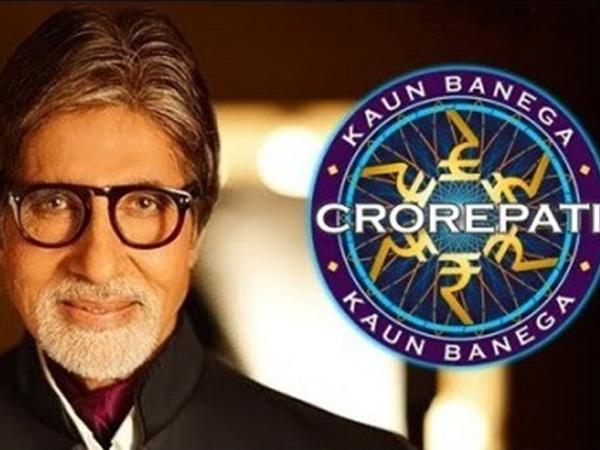
    It was hosted by an ageing actor who was a superstar a decade before.  Amitabh Bachchan on the Indian adaptation of Who Wants to be a Millionaire? Kaun Banega Crorepati? caught Indian TV viewers’ imagination.


    Television had in the past experimented with film talent hosting or acting or directing shows. In the eighties, Ramesh Sippy, BR Chopra and Ramanand Sagar had managed to get the Indian TV audiences riveted in front of their TV sets with their ensemble consisting of film actors and some newbies. And it had worked – worked incredibly well.


    But Mr Bachchan was not at his peak.  He had begun his fall down the cliff. The buzz was that his star was on the descendant, his health had failed him and his business ventures had capsized, he had defaulted on payments and loans and he owed a lot to people.


    Hence, no one really expected Mr Bachchan and the new show to work. Excepting two executives: Sameer Nair, who was then programming head at Star and Steve Askew, his senior colleage out of Star Asia, HongKong. And Peter Mukerjea who headed Star India then. He had replaced the flamboyant former government bureaucrat Rathikant Basu.


    Packaged intelligently with Kaun Banega Crorepati were two other shows: Kyyunkii Saas Bhi Kabhi Bahu Thi and Kahaani Ghar Ghar Ki. Both talked about families and values of a bygone era, yet they seemed very contemporary because probably they were. And these three powered Star Plus very soon to the number one spot in the GEC space, polevaulting over the well entrenched Zee TV, Sony and Doordarshan.


    It was a spot it held on to for almost seven years, earning for News Corp billions of dollars, and becoming the brilliant stone of its Asian crown.


    Today, the network is headed by Uday Shankar who has expanded it into the regional space, niche content, sports, OTT services. It still leads the Indian market as probably the most valued Indian entertainment company. Some may argue that it’s Zee which is at the top, but that’s an argument that no one will possibly win.


    On 3 July, however, who were associated with the channel and the show at that time got nostalgic on social media.


    It began with a post by the then Star entertainment channel programming head Steve Askew: “15 years today since the beginning of the Indian Television revolution for STAR Plus! Thanks to Big Synergy, Balaji and of course Sameer Nair.”


    Sameer in turn went on to thank Big B and a host of others from Star associated with the show at that time.  Big Synergy promoter Siddhartha Basu then raised a toast stating: “Here’s to the crystal anniversary of the show that brought in the millenium, and everybody who was part of making it happen, cheers !”


    Star Plus marketing executive Mubina Ansari then posted a comment on her Facebook page which attracted several comments like bees to a honeypot.


    Said she:  “I will never forget 3.7.00. Rains like never before and a 1000 promoters on the streets of Mumbai asking people to tune in to KBC.”


    To which another Star Plus marketing had Vidyuth Bhandary (currently with Fremantle India) responded: “Yep !! How 15 years have passed !! I still remember behaving like a typical client with Roshan Abbas and Karan Chettri, as I was overlooking the Delhi onground promotions on 3rd July 2000 !! That was a mammoth operations and nothing has come close to it even today !!!”


    Remembering the old times Roshan Abbas who ran an event agency then added: “Oh I remember ! With Siddharth Roy Kapur (currently CEO UTV-Disney) in Lucknow, Vidyuth Bhandary Mubina Ansari all manning the streets ! And then came the biggest revolution in TV and Star Plus.”


    Sumantra ‘Sumo” Dutta (currently based in Dubai with a telecom company) who headed sales at that time piped in  “Seriously fun times. Game changing times. High risks too.”


    “Everything was planned up to the last detail,” revealed Samson Jesudas (in the distribution of Star India then). “Be it programming, marketing, distribution, advertising, branding, etc etc. I have yet to see a launch like this… No wonder today, if one picks up any channel, advertising firm, agencies, MSO, etc, one will find a ex Star guy/girl working for them. Amazing experience.”


    Jesudas also elaborated the role that distribution played in making the show visible to Indian viewers. He remarked in his response to Mubina: “Guys u forgetting the distribution team who ensured that Star Plus runs in prime band in all cable networks. I remember that we bought all cable guys under one roof on 3.7.00, so that there’s no sabotage and blackout of Star Plus and even if there’s one, we have the cable owner in front of us to rectify the same.”


    He finally ended by saying it was “teamwork” which made it happen.


    KBC, ran for only three seasons on Star Plus (2000-2001, 2005-2006 and 2007) but it helped chart a new course for Murdoch’s Indian entertainment venture. It moved to Sony in 2010 and has run for five seasons (2010, 2011, 2012, 2013, and 2014).  The format has undergone a metamorphosis with more reality elements being added. Hopefully, its sixth season will do the trick for Sony.

  • New Silk Route looking to encash part of 9X Media investment

    New Silk Route looking to encash part of 9X Media investment

    MUMBAI: The news of New Silk Route (NSR) approaching buyers to divesting a part of its stake in 9X Media is out. And Pradeep Guha, the managing director of 9X Media, who incidently also holds a small (15 per cent) stake in the group feels this could not be a better move for the network.

    “If more buyers come in with more money, then it is only going to benefit the group,” he says.

    However, he has not decided if he will be offloading his holding or keeping it. He feels that it is too early to discuss it and all depends on what happens next.

    Launched as INX Media, the company started operations with 9XM. It was renamed 9X Media in August 2010, with complete focus on its music business. (The assets and liabilities of the mother GEC 9X were absorbed by Zee Entertainment.) It currently operates five channels, 9XM (Hindi music channel), 9XO (international music), 9X Jalwa (classic Bollywood music), 9X Tashan (Punjabi) and 9X Jhakaas (Marathi).

    The NSR had invested in the network founded by Peter Mukerjea and his wife Indrani Mukerjee in 2007 and took over its reins in 2011. “We are a private equity fund so it was but obvious that at some point we will exit the venture,” says NSR Advisors partner Shantanu Nalavadi who clearly states that it is the company’s seventh year in the group as an investor.

    Nalavadi proudly proclaims that over the years, the group has become a great platform. “We are now known as a music group and we hope to be known as the music destination among our viewers.”

    He highlights that it will continue to invest in 9X Media because it has been showing 30 per cent growth year on year. “We didn’t take the decision overnight and are in talks with others over the past two years or so. And we will not leave it completely,” he clarifies.

    According to Mihir Date, a consultant with Ernst & Young says that with 100 per cent FDI allowed in non-news channels there will be many takers. He adds that the plan to sell it when the company is at a peak is a wise decision. “The position of 9X Media is good in the genre and its plans to expand are positive signals for any buyer.”

    That must be music to Guha’s ears.

  • ‘Star to invest in India’s growth market and not be greedy about profits’ : Star India CEO Uday Shankar

    ‘Star to invest in India’s growth market and not be greedy about profits’ : Star India CEO Uday Shankar

    Uday Shankar had to wrestle with a thorny problem as soon as he took over as Star India CEO: How to be more successful than his predecessors Peter Mukerjea and Sameer Nair?

    Grown up as a journalist and in TV news for long, Shankar did not take long to take tough business calls in the television entertainment broadcasting business. He parachuted out of the Balaji Telefilms’ joint venture agreement as the popular long-running ‘K’ soaps were running out of steam and were turning out to be “expensively” priced. He brought in a bunch of young producers to connect with the changing India at a time when new players like Viacom18 (Colors), 9X (Mukerjea’s venture after quitting Star) and NDTV Imagine (headed by Nair) were making their entry.

    Shankar also quickly realised that Star’s creative, marketing and distribution strategies were not in sync to capture the new markets that had come into the C&S homes. He designed Star’s new strategy and laid out a clear road map for the Rupert Murdoch company’s growth in India which at that stage was heavily dependent on the flagship Hindi general entertainment channel (GEC) Star Plus.

    Asianet was acquired to get a footprint in the lucrative South Indian media market and Bengali and Marathi GECs were launched. He next launched the second entertainment channels in Hindi to house them under the ‘OK’ brand.

    Shankar knows well that India is a growth market and has, thus, decided to reinvest in the business aggressively to build a Star network that would grow and thrive in the future as well. “While we will always try to keep a very sharp eye on the profits, we will not be greedy about profit margins,” he says.

    In the third and concluding part of the interview with Indiantelevision.com’s Sibabrata Das, Shankar talks about how Star India is ring-fenced today to stay as a strong leader in the TV entertainment business and is ready to grow in a digitised environment.

    Excerpts:

     
    Q. How challenging was it for somebody who came from a news background to conquer the entertainment broadcast business as CEO of Star India? Or was the transition easier because TV news in India had imbibed entertainment content in its culture?
    Listen, the news that I was part of is very different from the news of today. I launched Aaj Tak which was a financially very healthy company. It did high quality news, it had a large number of viewers and it was profitable. Hence, it could invest in content. Today, the scenario is very different.

    I think too much is made out of this whole thing of news versus entertainment. At the end of the day, the viewer is the same. In a way, news allows you to engage with the consumer in a very dynamic environment and it gives you those insights. Those insights helped me.

    The other thing that helped me is that as a news editor or journalist you get to develop some understandings and insights about the Indian society which in all humility I think the entertainment guys lack completely. Their reference to India is a few films, a few shows and little stories that they pick up in newspapers. Sometimes I see what is portrayed in our films and stories and dramas about India is completely unrealistic. And that is what my advantage was in this aspect. Because I had done so many years of journalism, I understood India very well. My general understanding of this country, both as a journalist and as a student of social sciences, was fairly evolved. I think that helped.

    Q. When you inherited the chair, Star India had slipped into some sort of a management mess. What were the ills that you had to correct?
    No ills. Star was a great company even then and it had a solid leadership. It had an amazing brand; I don’t think there is or there ever will be a media brand in this country that would be as big as Star. The problem is that it was the victim of its own success. There was a sense of complacency that had set in.

    The other thing that had happened is that there was a disconnect that had developed between the channel and its viewers. The cable and satellite (C&S) TV universe had penetrated deeper into the countryside. And our creative, marketing and distribution strategies were not in sync to capture the new markets that had come into the C&S homes. I think that was the biggest challenge which I had to tackle. And that is what we have done slowly – by going regional, by creating stories which are more diversified and realistic. We got content which echoed the new sentiments, the new aspirations and the new women. We brought that into Star Plus by way of ‘Rishta Vohi Soch Nayi’.

    I also think that we changed the talent mix inside the channel and also the mix of the producers outside the channel. We brought in a bunch of young producers who were producing their first shows at that time. They brought in a fresh pair of eyes and a certain amount of freshness of creativity – and I would like to think that they were better connected. So that’s what helped.

    Q. Was there a need to bring about changes in Star Plus in phases? Are we seeing the Aamir Khan show as part of that content evolution?
    I don’t see those as different phases. I see them as a journey of evolution for a company, a channel, an entertainment network and for me as a professional.

    We were doing a certain kind of stories, we were reaching out to a certain kind of audiences and were addressing a certain kind of market. Slowly, we wanted to expand and diversify in all these three areas. First we started doing different kinds of dramas and then a different kind of non-fiction shows which finally evolved into ‘Satyamev Jayate’ (the Aamir Khan show launched in May 2012 and aired on Sunday mornings). However, it would be a mistake to say that ‘Satyame Jayate’ was the first such step that we took. As early as four years ago, we did a show with Kiran Bedi called ‘Aap ki kacheri…Kiran ke saath’ and in 2009 had ‘Sacch ka Samna’. In drama, we launched Kaali – Ek Agnipariksha.

    I go back to the philiosophy that I carry from my journalism background – we must constantly try out new things and must constantly innovate. Because the biggest story of yesterday becomes stale today. And that is something which is deeply ingrained in me.

    Q. When you earlier spoke about sports broadcast, you mentioned about drama becoming a bit of a commodity. What made you say that?
    Anybody who has the money and an idea can go and create a drama – lease the producer, the writer and the studio. But even if you have the money and the idea, you can’t go and create a sporting property because it is locked in IP. You have to have the teams and the sporting board has to back you up. In that sense, the access to drama is commoditised. But that is not the case with sporting content. If you want to create a cricket tournament, you can’t do it unless the BCCI is supporting it. And BCCI won’t go and support any cricket tournament.


    ‘My bosses and I are very clear about one thing: reinvesting in the business far more aggressively than taking out profits because India is a growth market and we are building a network that would grow and thrive in the future as well. This is the most critical phase of building the network. If we don’t continue to invest aggressively and ahead of the curve in a market that is so dynamic and evolving and segmenting, then the market forces might overtake us. While we will always try to keep a very sharp eye on the profits, we will not be greedy about profit margins‘


    Q. Is entertainment content limited by the fact that India is primarily a single TV household country? That is a bit of a concern. There is mature adult explicit content that you can’t do in a single TV household. Even otherwise, you can’t do that in multiple TV households because not everybody in his or her bedroom wants to watch adult content; the content consumption habits are heavily determined by our cultural systems. I am not sure whether Star as a network would want to do such kind of content even in multiple TV households.

    But what is bad is that the government, the regulator and a bunch of self-styled policemen want to act on behalf of the audiences. They act as guardians thinking that the audience is a mass of retarded, dumb, unintelligent people who do not know what is good for them. You go and show them one kiss and it is as if the whole culture of India will collapse. It doesn’t work like that. And these are the people who either have a vested interest and say this because they want to control media or their mindset is so corrupt and regressive that they think that because they have a dirty mind, the whole world has a dirty mind.

    Q. But isn’t the growth of niche content limited by single TV households in India?
    Surely, because niche content means content that is of interest to a very small set of people. It is difficult to have a business model for niche channels in an analogue cable environment where there is bandwidth constraint. A channel on health, education, classical music and serious political drama will not interest a large number of people and youngsters. Older audiences are not generally interested in science fiction; nor are women in crime or thriller-based shows. In a single TV household you will have to do content which appeals to a large common denominator.

    In Star Plus, for instance, we don’t want to put content that won’t deliver reach; it simply doesn’t work for us. But digitisation will change this whole content game. We can then create a channel only for youth or for older men or for teenagers. And audiences having digital cable can choose individual channels; in an analogue system they have to take the whole bunch of channels and pay for it. Why will a family having no youngster in the house want a youth channel? And if there is no old parent living with me, I wouldn’t want a channel meant for old people.

    Q. Star Plus made an effort in creating a Sunday morning band and we have seen other channels follow that. Is it possible to drive in audiences regularly in these time slots?
    I hope so. I do think that on Sundays there is an appetite that we as content providers are not able to satisfy. Sunday content is generally not satisfying except for a movie that gets shown once in a while.

    The quality and quantity of Sunday content is not adequate. Broadcasters should step in to fill that gap with all kinds of programming. What matters is the emotions that your content triggers, the stories that you tell and the connect that you build.

    Q. Haven’t all Hindi entertainment networks evacuated the afternoon band?
    This is kind of sad but reflects our economic compulsions. The advertising market is tough, rates are under pressure, subscription incomes aren’t going up much and the programming costs are up. That is why broadcasters have to do all kinds of things. But it is not good in the long run. There are a large number of people who tune in to watch TV in the afternoons. It is an audience that all of us had built over a period of time. I guess broadcasters have all had to take short sighted and tactical steps.

    I also think that there is another challenge. The creative capacity, particularly in Mumbai, is not developed enough. Or not broad enough to cater to the prime time, afternoon and the weekend needs of such a large number of Hindi entertainment channels. So somewhere the capacity construct is also influencing. You are not getting high quality content. At least that is what our experience has been.

    Q. Hindi GECs are almost entirely depending on prime time for ad revenues. As we are in the midst of an economic slowdown, is this the wrong time to make that shift and cultivate other time bands?
    There are challenges in opening other time bands. But there is never a right time and there is always a right time. The last few months have not been great for advertising. That has pulled back broadcasters from experimenting with the afternoon slots. But I see this as a short term tactical withdrawal.

    Q. Since Star is as you say an amazing brand, why did you create the OK brand for your second channels in the Hindi general entertainment and movie space?
    Though we have a big portfolio, each market in India is segmenting and new competition is coming. We were getting restricted because in Hindi we had only one channel and Star One was not doing well. When we were looking at fixing Star One, we thought why should we limit the company to just one brand. Though Star is an awesome brand property, we decided to create one more brand. That is how the OK brand was born.

    Q. Is Star being identified as premium and the OK brand with a more general appeal?
    I don’t see the positioning of Star Plus or Zee TV or Sony as any different but pretty much similar. If at all, we see Star Plus to be the channel that’s identified more closely with people who are more aspirational and OK with those who are satisfied with life. That is the only distinction we think we can make.

    Q. Is this more in tune with a flanking strategy?
    I don’t believe in flanking strategies at all. It is a very boring and owner-driven mindset. Viewers do not understand anything of that; they want to go to a channel and a programme that they like. Everything competes with everything in this market. It is a very dynamic and fluid market where one remote changes everything. Flanking is perhaps a product conceived by somebody who has been influenced by a military mindset and didn’t understand media much.


    ‘The C&S TV universe had penetrated deeper into the countryside. And our creative, marketing and distribution strategies were not in sync to capture the new markets that had come into the C&S homes. I think that was the biggest challenge which I had to tackle. And that is what we have done slowly – by going regional, by creating stories which are more diversified and realistic‘

     
    Q. Do you see the need of a second channel, particularly in a digital environment which will lead to further audience fragmentation?
    It will always help in segmenting the market. But there is no question of a second GEC. Who knows? The viewer doesn’t. That is why we have decided to keep Life OK totally separate from Star Plus. A large number of viewers may not be even aware that the two channels are owned by the same company.

    In a market where there is Star Plus, Life OK, Zee TV, Colors, Sony, Sab and Sahara, everyone competes with everyone. At an ownership level, you might have two channels. But in the marketplace, the two channels are relevant only when they are the only two channels.

    But yes, second channels help in aggregating audiences. And it is becoming increasingly difficult to address the entire Hindi heartland through one channel. Demographic segmentation is also taking place.

    Q. Was Movies OK conceived because Star had a vast movie library and a new channel gave it more ad inventory to sell?
    India is a very movie crazy market. TV attracts more audiences than cinema theatres for movies. We beefed up Star Gold. We thought we should go deeper into that market and so launched a second movie channel. In any case, we had invested in a big enough movie library.

    Movies OK gives more fizz to the OK brand. And opens up ad inventory.

    Q. Will we see more launches in the OK brand?
    It is always an option. In Hindi entertainment content, we have already got Life OK and Movies OK. Unless there is some clarity on the digitisation front, I am not sure we are going to launch more channels in the near future. We have a huge challenge on the sports front and need to build it after the deal (buyout of Disney’s stake in ESPN Star Sports) finds the necessary regulatory approvals. We also need to consolidate Life OK and Movies OK.

    Q. What led Channel [V] to shed its Bollywood music content to become a youth GEC from 1 July?
    In the ‘90s, Channel [V] and MTV connected to the youth through music offerings. But now music has become a commodity; it is accessible across many devices including FM radio, mobile and online sites. So we needed a different proposition to get to the youth segment. We came up with the idea of capturing their aspirations through regular TV viewing formats and dramas; we thought this way we would integrate more deeply with youth and address them more effectively.

    The other route some music broadcasters have taken is some kind of non-fiction content which reduces youth to being sex-starved and having non-thinking minds. Reality shows like Roadies (MTV) have painted the youth as a group that is sensually-driven. We have not gone through that path. We believe the youth is interested in society, career and education.

    Q. How is Zeel’s Ebitda margins from non sports business (Q1 Fy’13 at 34%) higher than Star’s which market estimates say is around 25-27per cent?
    First of all, I am not commenting on Ebitda margins because Star doesn’t discuss its financials. But my bosses and I are very clear about one thing: reinvesting in the business far more aggressively than taking out profits because India is a growth market and we are building a network that would grow and thrive in the future as well. This is the most critical phase of building the network. If we don’t continue to invest aggressively and ahead of the curve in a market that is so dynamic and evolving and segmenting, then the market forces might overtake us. While we will always try to keep a very sharp eye on the profits, we will not be greedy about profit margins.

    Q. Will digitisation increase content costs with many more channels being launched?
    Yes, but your earnings should also go up. If you have more channels, you will have more inventory to sell and your subscription income should be more if you succeed.

    Q. Will Star launch new channels or enter into new regional markets?
    No, I don’t see any immediate plans. In regional markets, the carriage capacity is even more constrained. Even if digitisation happens with contracts, its impact will not be felt for at least 2-3 years after the implementation.

    We might do small channels here and there. We just launched a movie channel in Kerala (in July) to take our bouquet of Malayalam channels to three – Asianet, Asianet Plus and Asianet Movies. In Tamil Nadu, we have Vijay TV which is a very successful Tamil GEC but is still not the leader. There is an opportunity to make it grow bigger. In Kannada, we have Suvarna which is doing very well now and is the No. 1 channel in prime time. But it is still not the unqualified leader in the Karnataka market. So there are certain unfinished agendas that we have to first complete before we launch something new.

    Q. Sun TV network is seeing some sort of market share erosion due to cable TV distribution being challenged by state-owned Arasu Cable. It is also losing control over movie studios in the state. Will Star be aggressive in Tamil Nadu to capitalise on this opportunity?
    Everybody has been talking about it (market share erosion) but it has not happened yet. And I don’t see that happening in a hurry, if at all. Don’t forget that despite everything, Sun has built a very loyal viewership profile. It also has many channels and is, thus, able to segment the market very well.

    The shift in viewership you are talking about is marginal, not gigantic. There would always be a bit of an opening in that market but it would be a mistake to swing to the other extreme. Sun has some very strong content and some very successful channels. And those are not easy to take away.

    I won’t launch anything where we don’t have clarity on breaking even and making the business profitable. Otherwise, it doesn’t make business sense. And right now there is no business model.

    Q. When Star expanded into regional-language markets why did it look at Bengali and Marathi GECs?
    Though the states of Bengal and Maharashtra form part of the Hindi TV viewing population, they are also distinct linguistic markets with strongly driven local creative communities. While Gujarat and Punjab are also attractive markets, the creative class does not work in the local language. Mumbai is more attractive for them and they find it lucrative churning out Hindi content. We, thus, decided to launch Bengali and Marathi GECs first.

    Q. Why are broadcasters pressing for a new television ratings system under the aegis of BARC?
    Television advertising is cheaply priced today. TAM (the sole TV audience ratings agency in India) does not map the entire C&S universe and only a part of India is measured. We want the ratings coverage to spread out into more areas and socio-economic demographics.

    The ratings system should primarily be for a broadcast market. BARC will reflect this need of the broadcasters and allow them to monetise the eyeballs that they deliver more effectively.

    Also read:

    ‘BCCI rights great opportunity to build Star‘s sports biz‘

    ‘Cross-media regulation has only discouraged clean, legitimate players in DTH & cable‘

  • ‘The last 20 years belong not to Star but to Zee’ : Star India CEO Peter Mukherjea

    ‘The last 20 years belong not to Star but to Zee’ : Star India CEO Peter Mukherjea

    Peter Mukerjea became the CEO of Star India at a crucial period of satellite television history in India when the relationship between two media moguls Rupert Murdoch and Subhash Chandra had soured.


    led Star against India’s homegrown broadcasting business of Chandra and took its flagship Hindi general entertainment channel (GEC) Star Plus to the top in 2000, the position it still enjoys after he quit to try his hands at his own private equity-backed broadcasting venture.


    The former Star India CEO admits that the last 20 years of private television broadcasting belong to Subhash Chandra despite himself being at the helm of a significant piece of Indian broadcasting history by successfully leading Star India.


    In a tete a tete with Indiantelevision.com’s Sibabrata Das, Mukerjea speaks candidly about how Chandra has outrun Star and Sony and today “runs the most effective broadcasting network, has a thriving cable business and was the first to launch DTH in India”.


    Excerpts:


    Q. Rupert Murdoch and Subhash Chandra started as allies and formed a joint venture. But this relationship turned stormy by the time you became Star India CEO. How bitter was it?
    The relationship with Zee was initially harmonious. But as News Corp started becoming more grounded in the Indian market and established its capability, Chandra’s views on Star, Murdoch and a multinational broadcaster changed.


    That in a way was inevitable to happen. So long as Star was in English and Zee in Hindi, the two companies operated in two ecosystems. The moment Star started Hindi content, Chandra saw it as a violation of the joint venture agreement and there was a major shift in relationship between the two partners.


    Q. And the beginning of the pay TV industry in India also helped in Chandra taking a hostile approach?
    Yes, it built a hostile environment. Alongside the personal stresses and strains, pay TV was becoming a reality in India. Murdoch has experienced pay TV in other markets and successfully developed it in his sprawling media empire. Chandra knew this.


    Though the two also ran an equal joint venture in Siticable (the cable TV outfit), there was mutual suspicion. The partnership became frigid and fell apart.


    I was in the hot seat as CEO. And the only way to progress was for Zee to buy out News Corp’s stakes in the joint ventures – which they eventually did. Having finished with that task, Star got an opportunity to do a total Hindi entertainment channel. Punit Goenka (son of Chandra and now in charge of Zeel and Zee News Ltd ) was a baby then and Chandra was running the company.


    Q. Were Chandra and Murdoch bitter even when they met after they split?
    Even when the meetings were pleasant, there was always tension in the background. Both were media moguls in different parts of the world and there was mutual respect. But it was always laced with a fair amount of rivalry.


    Q. In your early days as CEO, how did you find Chandra’s aggressive attacks?
    There were lots of questions put in Parliament and Star was accused of repatriating money from India and showing obscene content (Star Movies). Some of these were public petitions but we suspected that they were from our competitors. We, though, had no proof that they were Zee-backed.


    ‘Lobbying, having deeper pockets, being able to hire better executives – all these don’t matter. In love and war, all is fair. As a piece of history, it is Chandra who started DTH first in India. He has a strong presence in cable and runs the most effective broadcasting network in India. It is only in sports broadcasting that he needs an international partner‘


    Q. Murdoch always wanted to be the first to launch direct-to-home (DTH) operations in India. So what made Chandra beat Murdoch in this race?You can say it is because of lobbying or whatever. But the truth is that Chandra launched the first DTH platform in India. And he deserves credit for that.


    Q. Even Murdoch is known as a lobby master. Is that how you see this as a neutral proposition?
    Lobbying, having deeper pockets, being able to hire better executives – all these don’t matter. In love and war, all is fair. As a piece of history, it is Chandra who started DTH first in India.


    Q. So who would you say ruled the first 20 years of private satellite television broadcasting in India?
    The last 20 years surely belong to Chandra. He runs the most effective broadcasting network in India today. He has created an Indian product and has built a phenomenal international business with that content. He is the first to set up a regional-language network across India. And he has a strong presence in DTH and cable.


    Q. You say this even though you used to work in Star and later head it?
    Yes, you have to give credit to the man. He has worked so hard getting back, despite being knocked off in Hindi entertainment business in 2000. That was the time he expanded into different languages. Chandra has helped Zee stay probably as the largest broadcasting business in India today and as a publicly listed company. He had a longer part of the rule in these 20 years.


    Zee has outrun everybody else. It’s not Star, not Sony but Zee which is the leader of the pack. And this despite not having the backing of the multinationals which have an advantage in bringing truck loads of money. Look at the impact he has had in Indian society and entertainment culture. Zee has connected deeply with the Indians.


    Q. Do you see Chandra becoming a leader in sports broadcasting?
    He has to find an international sports partner. Though India is just cricket, he needs to step out of the base and bet much bigger. If he has higher risk-taking ability in sports and finds an international partner to provide richness in content, Zee will become a strong competitor to Star in sports broadcasting.


    Q. But didn’t he bid the highest for the ICC World CUP and also the BCCI rights?
    You can blame that on pedigree. The sad truth is that if you are a decision maker in allocating sports rights, you may go for a lower bid which has greater capability rather than give it to the one whose monetary bid was higher.


    Q. Chandra is now stepping into local languages in overseas markets like Middle East and Russia. Is the timing good?
    After building a solid business in India, Chandra is now stepping out to other parts of the world. There are great opportunities in eastern Europe or the entire Soviet Union country base. Parts of America are also a good hunting ground.


    I think it is a great strategy. Chandra has built the capability, the resources and the relationships. And it is not a bad time to strike. News Corp is going through a crisis and a lot of management time is wasted on external issues rather than businesses. Zee can capture market share and grow it.


    Q. Do you think Zee’s over-the-top (OTT) platform has a fair chance to succeed?
    There are serious rights issues and OTT is not still an open book. The bulk of the revenues in OTT is in the movie business. Chandra will have to wait it out. But it is creditable to pursue OTT and see it as a future growth business. Even in India, OTT will happen and grow alongside TV.


    Q. Would you have loved to work as CEO of Zee?
    That is difficult to say and I have never thought of it. I have never spent time with Chandra to understand him as an individual and what his goals are. A lot depends on the personal chemistry that you share with your personal boss. If goals do not match, then that relationship can’t work.


    Q. How much does an organisational culture matter?
    The promoter always brings a certain kind of personality into the organisation. But a lot depends on the CEO rather than the owner in influencing that culture; he brings his style and charm to the operations of the company.


    There are many critics who say the corporate culture in News Corp is not as wonderful as it is supposed to be. Citing the phone hacking issue, they say the organisational culture is wrong. There is, thus, no fixed solution to corporate culture.

  • NewsX undergoes makeover, gets new name

    NewsX undergoes makeover, gets new name

    NEW DELHI/MUMBAI: Eighteen months after it was bought over by Indi Media from Indrani and Peter Mukerjea, the English news channel NewsX is all set to take on a new identity: it will be known as IMN News from July.

    The change in the name of the channel to Independent Media Network News will also mean a change in the name of the company. But the new nomenclature will be known only after one of the three names, proposed by Indi Media, is approved.

    Jehangir S Pocha, who had formed a joint venture with NaiDunia promoter and CEO Vinay Chhajlani to take over INX News in January last year, did not rule out more ventures in media after the re-launch of NewsX as IMN News. Pocha, who is a former editor of Businessworld, was categorical that any new venture would be in the non-fiction sphere.

    Introducing the new name and logo, he told mediapersons that the entire news channel would undergo a complete change with new programmes and formats. He also stressed that the channel would not ‘personalise news’ – that is, individual presenters or anchors will not be promoted as it is being done by some other channels.

    Pocha said that the new brand name and look had been developed by Argentina-based broadcast design house Stein Branding and the new sets were being created by James Yates Design in New York.

    He said, unlike other news channels, IMN News would have a clear screen and not cluttered with several scrolls running simultaneously. There will be just one half-hour slot on entertainment, he said, reacting to a comment that most news channels thrive on cricket, cinema and crime. He said crime would not be played up as is being done by some channels, particularly in the regional and Hindi sphere.

    Answering a question, he said around 15 to 25 new stories would be covered everyday, with just three or four being played up if necessary. He stressed that there would be no ‘noisy shouting’.

    He was categorical that the aim would be to present news that is non-tabloid in nature and contemporary. Around 12 to 14 new programmes are being launched simultaneously though he indicated that the popular India Inc business programme would continue.

    Talking about the logo, he emphasised that the morning beam and evening beam will have different colours in keeping with the mood of the day. He also said a new website will be launched, imnews.com.

    Stressing that the new organisation had cut costs since it took over the channel, he said the number of staff had come down from 450 to around 327, of which 65 per cent were on the edit and journalistic side. Outside the country, the channel has bureaus only in New York and London.

    While ruling out any financial investment by any other media group from India or overseas, he said that arrangements for getting news are being worked out with Voice of America and a Pakistani news channel.

    He said TBWA is handling the advertising for the channel. 

    IMN News will continue to be beamed from INSAT 4A, which has a footprint over south and South East Asia and parts of the Arab world.

  • Vir Sanghvi quits INX, to announce new news channel ‘very soon’

    NEW DELHI: Vir Sanghvi, CEO of INX News and editorial head of the group’s upcoming news channel News X, has finally left the INX group and is slated to announce the opening of another news channel very soon.

    A source very close to Sanghvi, who has also left the group, confirmed the developments to Indiantelevision.com, adding that equity driven issues and that of accountability was what ‘finally broke the camel’s back’.

    It is worth noting that it was Indiantelevision.com that had first put out a report categorically stating that rumblings within Indrani and Peter Mukerjea’s news broadcast arm INX News Pvt Ltd had come to a head and that Sanghvi was on his way out of the company.

    Neither of the Mukerjeas were available for comment at the time of filing this report.
    As for who might be replacing Sanghvi, while no confirmation is still available from the company, the buzz remains that the head of a leading Hindi news channel might be taking charge in due course.

  • Vir Sanghvi exiting INX News

    MUMBAI: The rumours have been floating for a while of rumblings within Indrani and Peter Mukerjea’s news broadcast arm INX News Pvt Ltd. It can now be confirmed that Vir Sanghvi, CEO of INX News and editorial head of the group’s upcoming news channel News X, is on his way out of the company.

    As for who might be replacing Sanghvi, while no confirmation was available from the company at the time of filing this report, the buzz is that the head of a leading Hindi news channel might be taking charge in due course.

    Details are awaited…