
Tag: persuasion

  • Storytelling, the scale of persuasion and retention: A neuromarketing approach

    Storytelling, the scale of persuasion and retention: A neuromarketing approach

    Mumbai: For centuries the history of human civilization has been influenced by the power of storytelling. Over time storytelling has evolved as an essential tool for propagandists, publicists, and corporations for decades. It is a powerful way to communicate ideas, evoke emotions, and persuade people to take action. In recent years, neuromarketing has emerged as a new field that uses neuroscience insights to understand how people make decisions and how they respond to marketing stimuli. Neuromarketing has shown that storytelling can be an effective tool for customer retention and persuasion.

    We will explore the neuromarketing approach to storytelling and how it can be used to improve the effectiveness of marketing campaigns.

    The power of storytelling

    Storytelling is a powerful way to communicate ideas and evoke emotions. Stories have been used for centuries to teach moral lessons, entertain, influence and inspire people. Stories are memorable, and they can be used to convey complex ideas in a simple and engaging way. In marketing, stories can be used to create an emotional connection with the audience, which can lead to increased engagement and loyalty.

    The neuromarketing approach to storytelling

    Neuromarketing is a field that uses neuroscience to understand how people make decisions and how they respond to marketing stimuli. Neuromarketing has shown that storytelling can be an effective tool for customer retention and persuasion. The neuromarketing approach to storytelling involves understanding how the brain processes information and using that knowledge to create stories that are more engaging and persuasive.

    The science of storytelling

    The human brain is wired to respond to stories. When we hear a story, our brains release dopamine, a neurotransmitter that is associated with pleasure and reward. Dopamine makes us feel good, and it motivates us to seek out more of the same. This is why stories are so effective at capturing our attention and keeping us engaged.

    Neuromarketing has shown that there are certain elements of storytelling that are more effective at engaging the brain and eliciting an emotional response. These elements include:

    Emotion: Stories that evoke strong emotions are more memorable and more likely to be shared. Emotion is a powerful motivator, and it can be used to create a connection between the audience and the brand.

    Relevance: Stories that are relevant to the audience are more likely to be engaging. People are more likely to pay attention to stories that are relevant to their lives and their interests.

    Simplicity: Stories that are simple and easy to understand are more likely to be remembered. Complex stories can be confusing and difficult to follow, which can lead to disengagement.

    Visuals: Stories that are accompanied by visuals are more engaging than stories that are told through text alone. Visuals can help to create a more immersive experience and make the story more memorable.

    The scale of persuasion and retention

    Application of neuromarketing demonstrates that storytelling can be an effective tool for customer retention and persuasion. The scale of persuasion and retention refers to the degree to which a story can influence the audience’s attitudes and behaviors. The scale of persuasion and retention can be influenced by several factors, including:

    Storytelling style: Different storytelling styles can be more or less effective at persuading and retaining the audience. For example, stories that are told from a first-person perspective can be more engaging than stories that are told from a third-person perspective.

    Storytelling medium: The medium through which the story is told can also influence the scale of persuasion and retention. For example, stories that are told through video can be more engaging than stories that are told through text alone.

    Audience: The audience’s characteristics can also influence the scale of persuasion and retention. For example, stories that are targeted at a specific demographic can be more effective than stories that are targeted at a general audience.

    Coca-Cola’s “Share a Coke” campaign is a great example of how storytelling can be used in neuromarketing. The campaign started in Australia in 2011 and became a global phenomenon

    The campaign involved replacing the Coke branding on Coca-Cola bottles and cans with customized names. The idea was to create a personal connection between the consumer and the brand by using the consumer’s name on the product. The campaign was a huge success, generating millions of dollars and countless impressions for Coca-Cola.

    Here are some more interesting corporate examples of storytelling in neuromarketing:

    Coca-Cola’s “Taste the Feeling” campaign: Coca-Cola’s “Taste the Feeling” campaign is another great example of storytelling in neuromarketing. The campaign used emotive language and visuals to create an emotional connection between the audience and the brand. The campaign was a huge success, generating millions of impressions and increasing sales.

    Apple’s “Think Different” campaign: Apple’s “Think Different” campaign is a classic example of storytelling in neuromarketing. The campaign used a powerful narrative to create an emotional connection between the audience and the brand. The campaign was a huge success, helping to establish Apple as a leading brand in the tech industry.

    Nike’s “Just Do It” Campaign: Nike’s “Just Do It” campaign is another great example of storytelling in neuromarketing. The campaign used a powerful narrative to create an emotional connection between the audience and the brand. The campaign was a huge success, helping to establish Nike as a leading brand in the sports industry.

    Dove’s “Real Beauty” campaign: Dove’s “Real Beauty” campaign is a great example of storytelling in neuromarketing. The campaign used a powerful narrative to create an emotional connection between the audience and the brand. The campaign was a huge success, generating millions of impressions and increasing sales.

    Google’s “Year in Search” Campaign: Google’s “Year in Search” campaign is a great example of storytelling in neuromarketing. The campaign used the power of storytelling to create an emotional connection between the audience and the brand. The campaign was a huge success, generating millions of impressions and increasing engagement.

    These examples demonstrate how storytelling can be used to create an emotional connection between the audience and the brand. By using powerful stories, emotive language, and visuals, these companies were able to engage their audience and create a lasting impression and these examples demonstrate how it can be used to create successful marketing campaigns.

    Conclusion

    Storytelling is definitely a powerful tool for persuasion and customer retention. Neuromarketing has shown that there are certain elements of storytelling that are more effective at engaging the brain and eliciting an emotional response. By understanding the science of storytelling and the scale of persuasion and retention, marketers can create stories that are more engaging, memorable, and persuasive.

    The article has been authored by Dr Christopher Abraham PhD.,FCIM | CEO & head – Dubai Campus, director – executive education, professor of leadership, design rhinking & organizational behaviour at SP Jain School of Global Management.
  • Govt. studying ways to ensure greater responsibility in social media

    Govt. studying ways to ensure greater responsibility in social media

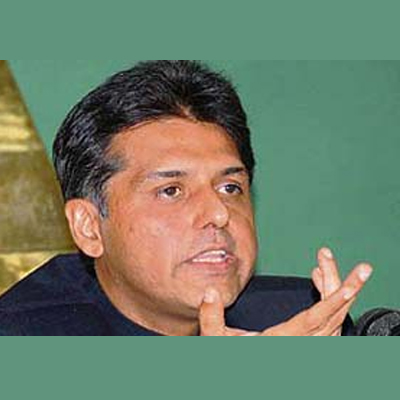
    NEW DELHI: Information and Broadcasting Minister Manish Tewari, while regretting that the new media had been used without any sense of responsibility in events like the Muzaffarnagar riots, feels that one way out of this is to put more credible information in public space ‘to counter mis-information’.

    The Minister told the National Integration Council in a meeting today that while this was causing concern, the United Progressive Alliance’s policy over the last nine years had been ‘an essay in persuasion rather than regulation as far as the media goes’.

    He said that the government is working on how misuse of the new social media can be prevented and said that he would like to hear from all stakeholders at the Council meeting.

    He said it was now possible for any individual to reach out to the world with any news within a second, often ‘without responsibility and restraint’.

    He added: ‘Every individual has become a broadcaster in his own right without editorial control.’

    The social media had empowered the people but this power should be used with responsibility, he said.


  • Media should consider reasonable restrictions: Tewari

    Media should consider reasonable restrictions: Tewari

    NEW DELHI: Information and Broadcasting Minister (I &B) Manish Tewari today stressed that the government wanted the relationship with the media to be one of persuasion rather than regulation but the media should introspect about the reasonable restrictions laid down in the constitution to the freedom of speech.

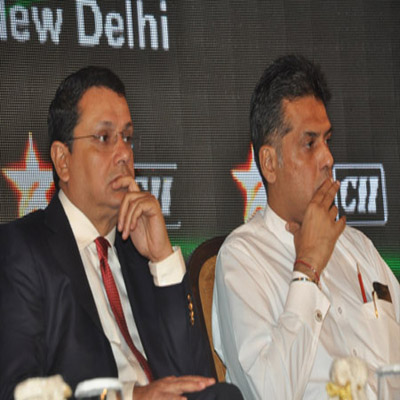
    Making the inaugural address at the Big Picture Summit on Media and Entertainment organised by CII, the minister said the government will cooperate to ensure that the M & E sector is able to ‘unlock the potential of millions.’

    He stated that the phase III in FM radio will get underway next month with the e-auctions, adding that radio had seen a major resurgence thanks to mobile telephony.
    Manish Tewari believes that the industry must explore new avenues and technologies like mobile telephony and how it can be used to grow the sector

     The minister announced that the Justice Mudgal Committee which was going into the Cinematograph Act including film censorship was expected to give its report by mid-October. Tewari was responding to remarks made by previous speakers Star TV CEO Uday Shankar and Walt Disney MD Ronnie Screwvala about extra-constitutional authorities and even state governments raising voices even after a film had been cleared by the Central Board of Film Certification, and making a strong case for bringing cinema on the concurrent list.

    Tewari noted that despite the general slowdown the world over and in India, the M and E sector was expected to grow at a pace of 18.4 per cent CAGR to Rs 2,245 billion by 2017 from Rs 965 billion in 2012.

    He noted that the print and television sector comprised 48 per cent of this growth and the internet was expected to take over by 2017. He said the real success story was the print media since its growth continued at a rate of ten per cent per year when it was falling all over the world.

    Although India had the largest number of TV news channels in the world, it represented only 17 per cent of the M and E industry and therefore there was need to remove the bottlenecks in distribution.

    While the channels were not lagging in content, hardware was an area in which they were found lagging, he felt. The minister said that he wanted the industry to come up with ideas on how the number of cinema screens could be increased.

    Complimenting CII for its optimism in setting a target of USD 100 billion for the industry, he spoke of the opportunity that the sector presents in terms of innovation in content and non-content areas, adding that the government would partner the industry to put into place a system to see that the vision of USD 100 billion is translated into reality.

    He also mentioned that the industry must explore new avenues and technologies like mobile telephony and how it can be used to grow the sector, emphasising that the government would look to facilitate innovation and expansion.

    Screwvala in the keynote address said that although there have been challenges and a sense of gloom, there has been a fair amount of progress as well, especially in the movie industry, which has flourished.

    The M&E industry, he said, is seen as an industry of ‘high impact’ with the ability to bring about noteworthy transformation. Therefore, he felt that the time is right for the M&E industry, the government and other stakeholders to take time to deliberate upon the challenging issues that the industry faces such as dependency on advertising, inconsistent regulation, the need and ability to attract the best talent, unanimity and long-term thinking and then come up with a roadmap that will help the industry achieve the target of USD 100 billion.

    He hailed the progress in digitisation of cable TV and efforts to go on to better consumer TV viewing surveys, he said dependency on advertising remains a big problem and ways have to be found to make the consumer pay. There was need for unanimity and long-term thinking in the industry, a need to attract the best talent, and the need to recognise that new media needed a different kind of audience and talent.

    While India was among the least regulated countries in the world, he admitted that some regulation was necessary and this has to be consistent and not vary from state to state.

    He also wanted edutainment to be encouraged without being dependent on curriculum, sports to extend from just cricket as far as media was concerned, and the need for a greater bandwidth.

    He suggested setting up of a core group of the government and the industry which could work over the next 18 months or so to get over the bottlenecks, an issue supported by eminent filmmaker Amit Khanna.

    Khanna said the target of $100 billion for M &E was not unrealistic, if there was proper planning and greater cooperation between the government and the industry.

    He said it was unfortunate that the country was over-producing in cinema, considering the small number of screens.

    He suggested that the I & B ministry should change its name to the media ministry as new media was taking over.

    He regretted that there was no proper broadcasting regulator and the Telecom Regulatory Authority of India had been given this responsibility.

    India may have the largest number of TV news channels, but they were all getting ‘tabloidised’.

    He also felt the need for more trained professionals if the industry had to meet its targets.

     Delivering the theme address, Shankar said that openness to new ideas, capital and talent would unleash a fresh wave of growth, just as it did in the 1990s, when economic reforms ushered in a fresh wave of growth for the Indian economy.

    Earlier, in his welcome remarks, CII director general Chandrajit Banerjee spoke of the tremendous ‘soft power’ of the industry to bring about innumerable benefits to the Indian economy.
    A CII-PriceWaterhouse Coopers report on the M&E industry, titled ‘India Entertainment and Media Outlook 2013’ was also released on the occasion by Tewari.