Tag: Personalisation

  • Harnessing geotargeting and personalisation in mobile marketing

    Harnessing geotargeting and personalisation in mobile marketing

    Mobile marketing in India has turned to another peak in 2024 owing to its rapid transformation within the geography. More than 1.2 billion people own mobile devices, and the uploading rates of mobile phones in tier two and three cities are very high. Complex geo targeting practices along with other types of individualised messages allow advertisers to extend their coverage of consumers. Such global shifts allow brands to reach their audiences and fulfill their marketing strategies in new, location enriched, yet personalised ways.

    However, India’s mobile marketing tactics have to cater to the country’s multidimensional cultural fabric. AI alongside machine learning has made it easier for marketers to identify and segment their audience accurately. Companies, for example, provide specific community based marketing wherein language, shopping habits, app usage, and preferred payment methods are taken into account in all communications. For instance, the same active campaign can execute offering Bengali promos at the time of Durga puja in Kolkata and different promos for Navratri in Gujarat at the same time.

    After the implementation of India’s Digital Personal Data Protection Act 2023, new legal regulations have changed the way marketers sought to collect and use consumer’s data. Campaigns today manage to do this better than the past, by being personal yet respecting consumer’s privacy. Brands have begun to place emphasis on ethical data collection by adopting opt-in policies for geolocation sharing, as well as giving users options on how much data they want to share. This notion of privacy has now shifted from simply being a policy to being a key factor in generating consumer confidence.

    Such geotargeting and personalised marketing techniques have already begun to yield positive results in various industries. Lunch promotions at office buildings are being employed by quick service restaurants, retail stores are presenting local customers with available items in their vicinity, while e-commerce sites are showing people when their orders in their area will be delivered and the products that are most appropriate for them. Even banking applications have jumped on the band wagon, advising users on available ATMs in their vicinity, with the maximum amount of cash that they can withdraw from the machine automatically determined by the specific user’s account activity and preferences.

    With 85 percent of users relying on smartphones to access services, 65 percent accessing the internet, and social media via mobile platforms, it is no wonder that campaign planning in India takes a different perspective than in other countries. Most of the successful campaigns today include installation of progressive web apps for better and forward client engagements through searching in voice for a specific region, automatically crafting conversations through information available on WhatsApp, and embedding augmented reality content to be accessed geographically. Such features are critical in countries where the availability of particular networks can be limited and where the specs of devices being used are unlikely to be the same.

    Taking such an approach, marketers experience blockades which relates to data being orthodox regarding Indian audiences, applicable network connectivity standards, device fragmentation and cultural factors. Nevertheless, answers are coming through operational-grade data availability, offline-first approach and extensive compatibility requirements and relevant professional for the market engaged to the content being presented. Metrics have also changed and mobile geo-conversion metrics, app stickiness, geo revenue per user and language friendliness responsiveness have come on board.

    Predictions for 2024 are optimistic, as businesses expect AI to map the location of their customers and persuade them efficiently across channels. Advanced biometric identification and blockchain technologies promise increased data protection without compromising on relevance. It is already apparent that performing accuracy checks on the data, testing campaigns in bunches and smaller biogeographical areas, and being mindful of the shifts in the audience will be the end goals in the land battle of mobile marketing.

    By the end of 2024, marketers will need to combine marketing automation and effective geo-fencing solutions to provide targeted marketing in mobile channels in India. On the other hand, locations and cultures must attract marketers who are sensitive. In this scenario, the future is portrayed in a very optimistic light – the end belongs to those in mobile marketing who can understand the nuance of the country, where heavy personalisation is welcomed not as an intrusion but an enhancement.

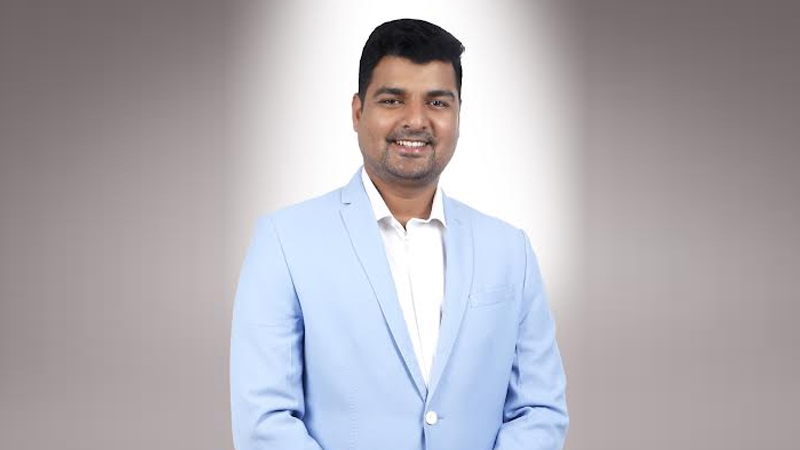
    The article has been authored by NetSetGo Media global business head Abhishek Tiwary.

  • Tata Starbucks rolls out 360-degree campaign #ItStartsWithYourName

    Tata Starbucks rolls out 360-degree campaign #ItStartsWithYourName

    Mumbai: Tata Starbucks has launched its new 360-degree campaign #ItStartsWithYourName, calling out all new customers to come and experience the warmth, personalization and strong sense of connection the brand offers. The campaign has been crafted specifically for customers across the cities of Bengaluru, Gurgaon, Indore, and Bhopal to begin with.   

    As a people-first brand, Starbucks sees all its customers as people. It is celebrated for warmly greeting its customers by their name and making each interaction personal.  

    Created by Edelman India, #ItStartsWithYourName campaign taps into the insight of, if you know a person’s name, more so his/her ‘special’ name or name they were given by friends, relatives, etc., you become closer to them. You break barriers and make them feel at home.

    The campaign celebrates this simple gesture, which welcomes each person walking into any Starbucks store across the country and makes the brand more inclusive.

    The film starts off with two working women making their way to a Starbucks store, one hesitant and homesick as she misses her mother in a new city. To cheer her up, her colleague shares her nickname with the Barista, which leads to him calling out her order by a name that brings a smile to her face. The film showcases the small, but significant personal touches that spark joy and a sense of belonging – experienced at every Tata Starbucks store.

    Tata Starbuckalso announced an exciting array of launches as a part of its strategy to drive growth and acquire new customers. The pilot will see the introduction of the New ‘Picco’ size for beverages, delicious South Indian filter coffee, a range of exciting signature milkshakes, masala chai, cardamom chai and a completely revamped food menu featuring Bite-sized snacks, shareable food and a range of freshly assembled sandwiches. The brand will also be unveiling a range of exciting price points through this launch.

    Each of these launches is supported by a short film that connects the new innovations to a sweet personal moment of connection and warmth. These short films will go live in a staggered manner over the next fortnight.

    The film introducing the new size ‘Picco’ is a lovable take on how customers can enjoy their favourite coffee at an exciting price.

    The ‘filter coffee’ film celebrates the special relationship between a grandmother and grandson as they both enjoy a wonderful cup of South Indian filter coffee, as good as Daadi’s, well almost.

    The ‘masala chai’ film is a sweet tribute to families and shared memories over the perfect cup of tea, just the way mom makes it.

    Introducing Starbucks Signature milkshakes through the romance shared by a senior couple and demonstrating the revamped food menu through camaraderie between two friends as they share their food and have a great time; all films celebrate the special relationships customers have and the sweet moments in their lives.

    Talking about the campaign, Tata Starbucks CEO Sushant Dash said, “At Tata Starbucks, we believe that meaningful relationships are rooted in thoughtfulness. We see people, not customers. In our stores, it starts with asking customers their names and goes beyond a cup of coffee. We believe in connecting with local audiences by identifying and acting on their specific needs. Through this campaign, we aim to form a closer connect with our customers and make them feel more welcome in our stores. Over the last decade, we have been fortunate to connect with a diverse group of customers in India and look forward to the road ahead as we address a newer set of customers.”

    Further talking about the campaign, Edelman Asia, Pacific and India head of brand Ashutosh Munshi said, “Brands today need to be for the people and guided by the people. In creating this campaign, we were inspired by TATA Starbucks’ guiding value of seeing a customer beyond their order by asking for names; thereby taking the first step to know each of us that much better. #ItStartsWithYourName celebrates TATA Starbucks’ service philosophy that fosters genuine connection, while also offering a product range that reflects customer preferences. We have articulated this in a brand film and various creative assets that evoke this sense of belonging that the Starbucks experience stands for.”

  • Dentsu takes over data-driven agency & Adobe specialist Accordant

    MUMBAI: Dentsu, Inc. announced that its global business headquarters Dentsu Aegis Network has reached an agreement to acquire a 100% stake in Accordant Pty Ltd. Dentsu said its global business headquarters Dentsu Aegis Network has reached the agreement to acquire the data-driven customer experience and personalization agency based in Australia.

    Established in 2014, Accordant (accordant.com.au) is a full-service programmatic advertising company and technology solution provider offering advanced digital marketing services that give customers a brand experience optimized in paid and owned media. Its advanced integrated data management platform enables marketers to fine-tune search and display leading to greater personalization of customer experience and improved ROI.

    The Accordant team, only one of two agencies worldwide to achieve the title of ‘Adobe Media Optimization Specialization’ has expertise in most technology stacks with primary focus on the Adobe Marketing Cloud stack. The company, with its data-driven customer experience and personalisation capabilities provides such services as optimized search and display, targeting of website and mobile content, CRO (conversion rate optimization), measurement, analysis and reporting, centralized data management and segmentation and profiling setting.

    The Dentsu Group aims to accelerate its growth strategy in ANZ by increasing experts in digital marketing, media and data management. The Accordant team, working closely with our existing digital and CRM experts at WiTH Collective and Isobar, will contribute significantly to our offerings throughout this region.

    The impact of this transaction on Dentsu’s consolidated financial results for the fiscal year ending 31 December, 2017 is expected to be minimal.

  • IPTV subscriber base set for explosive growth: iSuppli

    IPTV subscriber base set for explosive growth: iSuppli

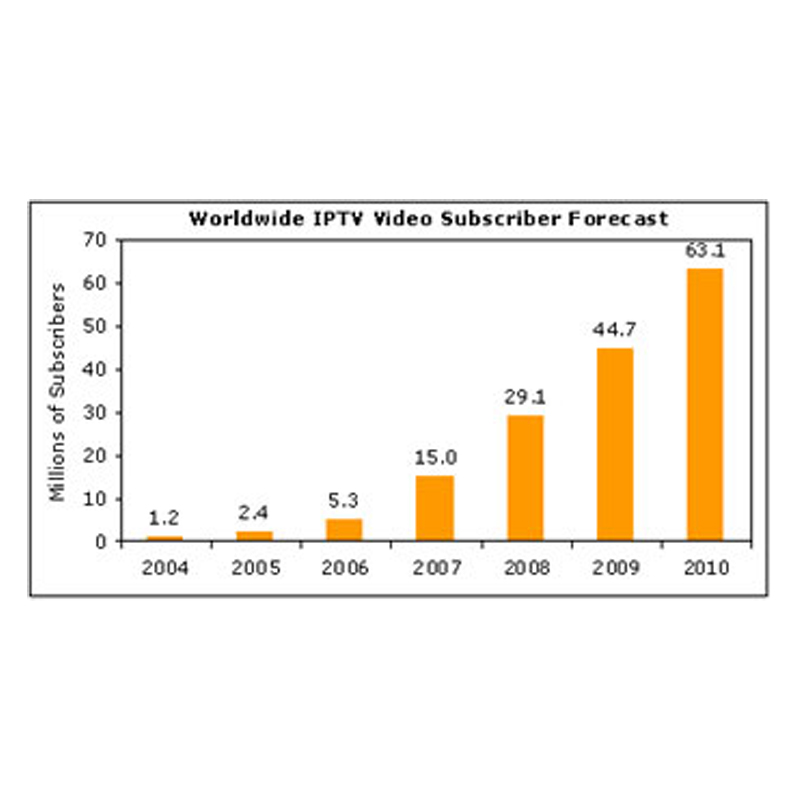
    MUMBAI: The worldwide subscriber base for Internet Protocol Television (IPTV) services is expected to expand by a factor of more than 26 from 2005 to 2010, spurring a competitive battle between video providers both old and new, iSuppli Corp. predicts.

    Global IPTV subscribers will grow to slightly more than 63 million in 2010, rising at a stunning Compound Annual Growth Rate (CAGR) of 92.1 per cent from 2.4 million in 2005, as presented in the figure below.

    The IPTV subscriber base will generate more than $27 billion in overall IPTV services revenue in 2010. While video services will account for the largest portion of these dollars, value-added media services and IPTV operator advertising will combine to represent more than 14 per cent of IPTV services revenue in 2010. Furthermore, across all IPTV services, the corresponding content licensing revenue will reach $11 billion in 2010.

    “The fight to capture the expanding base of IPTV subscribers will put telecom operators on a collision course with existing pay-TV market competitors and with a new class of broadband video portals as they roll-out progressively more sophisticated offerings,” said iSuppli vice president multimedia content and services Mark Kirstein.

    iSuppli categorises market deployment of IPTV services in three phases. The current global IPTV market is early in its first phase: basic service deployment. The second phase will add an array of value-added and interactive services. Phase three will bring dramatic improvements in integration and interactivity.

    Thus, in this pending battle for subscribers, providing a competitive video offering is merely the cost of entry for IPTV operators. Differentiation of IPTV services will be essential to bringing new capabilities to TV-based entertainment and attracting subscribers.

    Areas of differentiation will include:

    Interactivity, such as communication, community, voting, interactive advertising and television commerce (t-commerce).

    Integration across multiple platforms, across voice and data services and across content types, i.e. video, voice, music, gaming, data services and user content.
    Personalisation, including intelligent TV recommendations, individualised advertising and non-linear video programming, such as Video on Demand (VoD) and Digital Video Recording (DVR).

    Value-added services, including on-demand gaming, music, media applications, home networking management, security and data.

    Beyond the video service providers themselves, an array of companies will benefit from new opportunities arising from their roles as the “arms suppliers” for the battle over the next generation of television distribution. These companies include infrastructure gear manufacturers, set-top box makers, software vendors and semiconductor suppliers, iSuppli predicts.

    On a geographic basis, the European market has taken the early lead in the global IPTV market, both for subscribers and for revenue. However, Asia will generate faster growth than the other regions and will achieve the largest subscriber base by the end of this year. The Americas region will lead the world in terms of IPTV dollars starting this year because it will yield the highest Average Revenue Per User (ARPU).