Tag: Permanent Roommates

  • Five reasons to watch ‘Permanent Roommates’ Season 3

    Five reasons to watch ‘Permanent Roommates’ Season 3

    Mumbai: One of India’s earliest web series that stole our hearts with its endearing characters, Mikesh and Tanya, Permanent Roommates is back with season three on Prime Video. The TVF original series Permanent Roommates captured the attention of viewers and critics in India, garnering praise for both season one and season two. Directed by Shreyansh Pandey, this much-loved relationship drama explores companionship, love, and ambitions all under the umbrella of modern-day dating. After the release of season two in 2016, Permanent Roommates Season 3 promises a blend of comedy and heartfelt emotions that fans have been waiting for.

    Here are five compelling reasons to watch Permanent Roommates Season 3.

    Mikesh and Tanya

    Permanent Roommates Season 3 delves deeper into the lives of its much-loved characters, Mikesh and Tanya, as they work through their ambitions and loving relationship. From Mikesh not wanting to fly to Canada to Tanya looking forward to her dreams, the roommates share their ups and downs giving us an honest and relatable portrayal of love and relationships.

    Hilarious comedy and heartfelt emotions

    Sumeet Vyas and Nidhi Singh’s starrer series Permanent Roommates is known for its situational comedy and mushy romance. The latest season of the show promises to bring back the same comedy and adventure for viewers. With fun-filled comedy, crackling dialogues, and light-hearted moments, every episode feels like a rollercoaster of emotions.

    Engaging storyline

    Season 3 presents an engaging and unpredictable storyline, keeping the viewers engrossed in  Mikesh and Tanya’s journey.  The series strikes the ideal balance between drama and comedy, ensuring a delightful experience that touches on serious subjects with some good laughter.  The show echoes how couples of today’s time think and feel about love and relationships.

    Strong ensemble cast

    The talented cast brings the characters to life with their flawless performances, making the show even more enjoyable and authentic. Along with Sumeet Vyas and Nidhi Singh,  watching Sheeba Chaddha and Shishir Sharma in their phenomenal characters is a delight to watch The supporting characters add more fun, emotion, and drama to the series. Every character has added flavors of life to the series.

    Relationship challenges

    Permanent Roommates not only has a great storyline or brilliant characters but it also shows how one should deal with challenges that come in life. Season 3 subtly showcases the challenges faced by Mikesh and Tanya but also provides insights and perspectives that can resonate with viewers in various stages of their own lives.

    Produced by The Viral Fever (TVF) and directed by Shreyansh Pandey, Season 3 of Permanent Roommates will premiere exclusively on Prime Video in India and across over 240 countries and territories from 18 October. Featuring Sumeet Vyas and Nidhi Singh in the lead roles, the romantic drama will bring the internet’s favorite couple back in this latest addition to the Prime membership.

    Permanent Roommates Season 3 is a part of Prime Video’s festive line-up for the Great Indian Festival 2023 starting 8 October onwards. The line-up also includes several other original series and blockbuster movies across multiple languages, special discounts every day for the first 1000 customers renting titles on the Prime Video store and ‘Diwali Special Offers’ for customers with up to 50 per cent discounts across several Prime Video channels.

  • Telugu OTT platform Aha to recreate TVF’s Permanent Roommates

    Telugu OTT platform Aha to recreate TVF’s Permanent Roommates

    KOLKATA: Aha, a Telugu OTT streaming platform brings a pleasant festive surprise for its viewers. In a first of its kind association, the Telugu streaming platform has joined hands with The Viral Fever, popularly known as TVF to recreate the magic of its widely appreciated series, Permanent Roommates. As a part of this association, Aha will remake the show as CommitMental for its Telugu speaking audience. All set to premiere on 13 November, the series is directed by Pavan Sadineni, an acclaimed film director in the Telugu Movie industry and will feature Punarnavi Bhupalam and Udbhav Raghunandan in the lead roles.

    In a pool of numerous love stories, which might feel unrealistic at times, Permanent Roommates stands out with its engaging slice-of-life narration. The remake of India’s first web series, tailor-made for the digital audience, Permanent Roommates had become a trendsetter in no time. aha through its remake, named CommitMental aims to replicate the same success in the regional segment. With CommitMental, Aha seeks to expand its content bouquet by introducing a youth-centric show to build resonance and relatability amongst its audiences.

    Read more OTT news

    Aha is amongst the fastest emerging homegrown OTT platforms in the regional entertainment category. Keeping the audience at its core, the OTT platform hosts a wide-array of content ranging from web series- fictional and non-fictional, exclusive movie premiers, animated content for kids and many more. This association also marks TVF's entry into the regional entertainment space after catering to the Hindi speaking audience across the country.

    Aha promoter Allu Aravind said, “We have always believed that great content must reach audiences, irrespective of any geographical or language barriers. We are glad to associate with a platform such as TVF for their popular show Permanent Roommates. Youth being our primary audience, this is a strategic alliance with an aim to connect with the viewers by bringing the kind of show which is entertaining and extremely relatable.”

    TVF founder Arunabh Kumar said, “Permanent Roommates was India’s first web-show and it gives immense joy as it now also becomes the first Indian web series to be recreated in another language. We would like to extend our gratitude to aha for deciding to recreate the show and bringing it to the Telugu-speaking audience. We are proud to partner with Aravind Sir and have new avenues for TVF to tell great stories beyond Hindi speaking markets and explore a new region.”

    Launched in February 2020, aha is capturing the Telugu masses swiftly with its diverse content and has become one of the top-grossing apps in the market in just few months of its launch.  A complete family entertainer, aha is gradually becoming the first choice for the Telugu speaking audience across the world.

  • Screenwriters, broadcasters, and digital freedom: ISC’2016

    Screenwriters, broadcasters, and digital freedom: ISC’2016

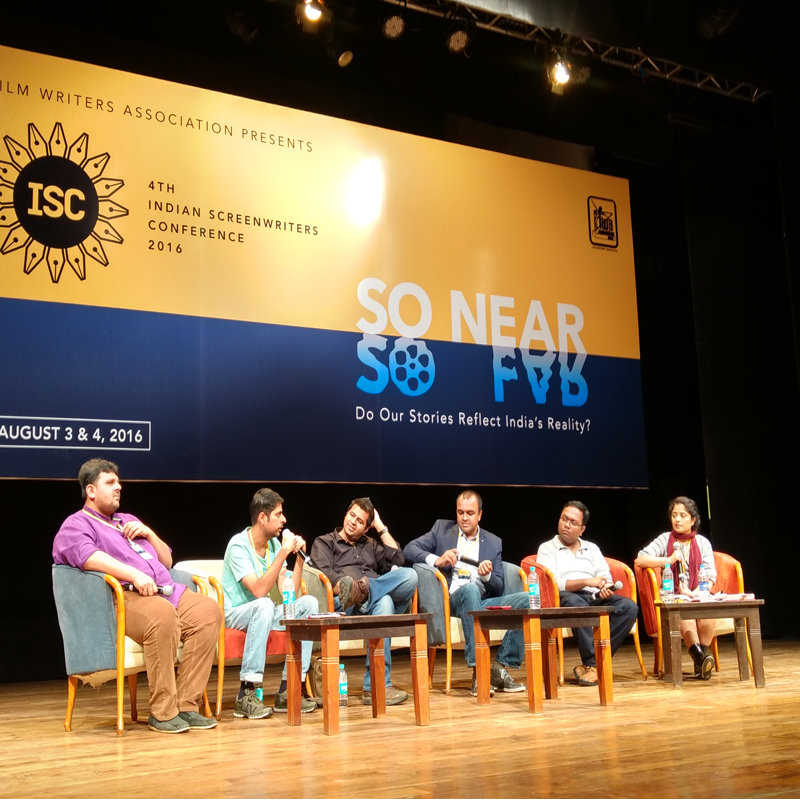
    MUMBAI: What do we really mean by digital media? When did it start? Why did it start? If you too are concerned about these questions and wanted a detailed insight, the Fourth Indian Screenwiters’ Conference 2016’s session on ‘The Digital Explosion’ was the place to get all your answers. Held last week, it saw writers, producers, film makers, broadcasters get together to discuss the issues plaguing the writing community today.

    The panelists included ‘newcomers’ such as the screenwriter of Masaan, standup comedian and National award winning lyricist Varun Grover, The Viral Fever (TVF) creative director Biswapati Sarkar and Y-Films senior manager Nikhil Taneja, with 16 years experience across broadcast media Youtube India operations head content Satya Raghvan and Mukta Arts strategy vice president and Whistling Woods International business development vice-president Chaitanya Chinchlikar.

    Session moderator and FWA activist and Malamal Weekly and Bhool Bhulaiyya screenwriter Manisha Grover set the ball rolling by asking when did digital writing really start in the Indian context and what sparked it off.

    “We initiated the web series Jay Hind when the internet was in its early stages here but it has grown so rapidly that now we have vanished, says Grover. Jay Hind was a popular Indian stand-up comedy show made exclusively for the internet platform and was launched in 2009.

    Grover recalls the day when he pitched the show to NDTV Imagine. “In those time there were only two comedy shows – Movers and Shakers and Aisi Taisi Democracy – which were also written by me. The broadcasters were very excited about the script. We made the pilot and they loved it and sent it to their focus group. The focus group didn’t like our host as they couldn’t relate to him. The channel asked us to shoot the pilot again with a different host. But it was my arrogance that didn’t allow me to do what the broadcaster wanted me to do.”

    Other writers on the panel to narrated how rejection by broadcasters led them to move on to digital. A move that turned out to be a boon for them as it allowed their ideas to come to fruition as completed episodes for the web.

    “My seniors were pitching a show for which I wrote a few episodes,” recollected Biswapati. “We went to MTV and after reading the script, they said the content is too intelligent for Indian audiences. We didn’t understand what they meant but i guess our timing was better at that time because YouTube was growing and it slightly became easy to make the series. For me digital is not a ‘also’ medium.”

    In the digital world, Youtube is pioneer, which has given a creative platform to many writers, was the consensus of the panel. “I think the big conclusion that we have drawn that digital Youtube is a ‘writers’ first’ platform. It’s probably the only medium where the writer can dictate the entire product that will come out,” added Raghvan.

    Raghvan went on to explain that in the Youtube ecosystem the web series revolution was sparked off over a year and half ago and the biggest series we saw was Permanent Roommates season one which is a TVF product. The latter has also produced some formats but Permanent Roommates was the first finite story. “Till now we have seen 40 series on the platform in different shapes and sizes not only in Hindi but also in Tamil,and Telugu,” revealed Raghvan. “We are also waiting for some Marathi productions this year and people are working on it. We will also start doing this in Bengali in couple of months.”

    Till 2014, in India some 150 million internet connection were there that too from the big metros. Between 2014 -2015 we saw a lot of growth in south India, expounded Raghvan.

    “We are doing shows for a certain kind of audience that is there on the internet. The question that arises is what what can we give to them on the internet that they can’t find on television and in films. Digital is mostly about good writing,” adds Taneja.

    The panel concluded that writers need to hone the fine art of writing for digital, as in the future, it is going to emerge as the medium and not as an “also” medium.

  • Screenwriters, broadcasters, and digital freedom: ISC’2016

    Screenwriters, broadcasters, and digital freedom: ISC’2016

    MUMBAI: What do we really mean by digital media? When did it start? Why did it start? If you too are concerned about these questions and wanted a detailed insight, the Fourth Indian Screenwiters’ Conference 2016’s session on ‘The Digital Explosion’ was the place to get all your answers. Held last week, it saw writers, producers, film makers, broadcasters get together to discuss the issues plaguing the writing community today.

    The panelists included ‘newcomers’ such as the screenwriter of Masaan, standup comedian and National award winning lyricist Varun Grover, The Viral Fever (TVF) creative director Biswapati Sarkar and Y-Films senior manager Nikhil Taneja, with 16 years experience across broadcast media Youtube India operations head content Satya Raghvan and Mukta Arts strategy vice president and Whistling Woods International business development vice-president Chaitanya Chinchlikar.

    Session moderator and FWA activist and Malamal Weekly and Bhool Bhulaiyya screenwriter Manisha Grover set the ball rolling by asking when did digital writing really start in the Indian context and what sparked it off.

    “We initiated the web series Jay Hind when the internet was in its early stages here but it has grown so rapidly that now we have vanished, says Grover. Jay Hind was a popular Indian stand-up comedy show made exclusively for the internet platform and was launched in 2009.

    Grover recalls the day when he pitched the show to NDTV Imagine. “In those time there were only two comedy shows – Movers and Shakers and Aisi Taisi Democracy – which were also written by me. The broadcasters were very excited about the script. We made the pilot and they loved it and sent it to their focus group. The focus group didn’t like our host as they couldn’t relate to him. The channel asked us to shoot the pilot again with a different host. But it was my arrogance that didn’t allow me to do what the broadcaster wanted me to do.”

    Other writers on the panel to narrated how rejection by broadcasters led them to move on to digital. A move that turned out to be a boon for them as it allowed their ideas to come to fruition as completed episodes for the web.

    “My seniors were pitching a show for which I wrote a few episodes,” recollected Biswapati. “We went to MTV and after reading the script, they said the content is too intelligent for Indian audiences. We didn’t understand what they meant but i guess our timing was better at that time because YouTube was growing and it slightly became easy to make the series. For me digital is not a ‘also’ medium.”

    In the digital world, Youtube is pioneer, which has given a creative platform to many writers, was the consensus of the panel. “I think the big conclusion that we have drawn that digital Youtube is a ‘writers’ first’ platform. It’s probably the only medium where the writer can dictate the entire product that will come out,” added Raghvan.

    Raghvan went on to explain that in the Youtube ecosystem the web series revolution was sparked off over a year and half ago and the biggest series we saw was Permanent Roommates season one which is a TVF product. The latter has also produced some formats but Permanent Roommates was the first finite story. “Till now we have seen 40 series on the platform in different shapes and sizes not only in Hindi but also in Tamil,and Telugu,” revealed Raghvan. “We are also waiting for some Marathi productions this year and people are working on it. We will also start doing this in Bengali in couple of months.”

    Till 2014, in India some 150 million internet connection were there that too from the big metros. Between 2014 -2015 we saw a lot of growth in south India, expounded Raghvan.

    “We are doing shows for a certain kind of audience that is there on the internet. The question that arises is what what can we give to them on the internet that they can’t find on television and in films. Digital is mostly about good writing,” adds Taneja.

    The panel concluded that writers need to hone the fine art of writing for digital, as in the future, it is going to emerge as the medium and not as an “also” medium.

  • TVF, Ola Cabs & the Permanent Roommates association

    TVF, Ola Cabs & the Permanent Roommates association

    MUMBAI: One of India’s popular YouTube channels and digital producers, The Viral Fever (TVF), is back with the second season of its flagship web series Permanent Roommates . And how!


    Touting it as the best web series that TVF has put together so far, TFV CEO and founder Arunabh Kumar has high hopes from this ambitious project. The company is making this production in association with call taxi service Ola Cabs as of Permanent Roommates season 2.


    While Kumar refused to divulge any details, a source close to the development guesstimated that Ola has shelled out  an eye-popping Rs 2.5-3 crore for backing the production.


    Slated to go online on TVF Play and TVF’s YouTube channel on Valentine’s Day, the new season will consist of eight 30 – 40 minute long power packed episodes.


    It will take off from where season one left off — the drama in the lives of Internet’s most-loved fictional characters Tanya (Nidhi Singh) and Mikesh (Sumeet Vyas). The episodes are scheduled to air fortnightly. And the theme is “The Third Kind of Love.”


    Kumar expects viewership to touch four – five million per episode, which hardly comes as a surprise given last season’s success.


    Launched in October 2014, the web series grossed over 12 million views for five episodes that aired on YouTube, with every episode having more than a million views making it the (claimed) second most watched online long form content in the world.


    “Our target is to cater to and retain the three million viewers who already follow Permanent Roommates and maybe expand our viewership by a couple of more million. We have weaved the content so that it is not only a youth-based love story but also has elements of interest for the entire family. We have some surprises for all of them,” adds Kumar.


    What’s more, with a big chunk of sponsorship money in, the pressure is on the creative geniuses to up the ante now. Season One had CommonFloor as the brand partner; hence, the home was one of the main protagonists.


    Will season 2, see them going around in taxis or make mentions of them using the service like the duo does in the promo that released today?


    “We do work really hard in trying to integrate the brand’s value through the storytelling and send across the brand statement through the narrative rather than a product placement in a 10-second shot,” says Kumar.


    If the guesstimated sponsorship amount of Rs 2.5 crore to Rs 3 crore is right, then TVF has a budget of Rs 30-35 lakh per episode at its disposal, which is far higher than the commissioning fees for fictional TV shows on GECS which are in the range of Rs 7 to Rs 15 lakh per episode.


    “We generally take six to nine months to complete a production. We pay attention to detail and operate on a crew of almost a hundred people,” explains Kumar, adding that one can’t compare it to television as television mathematics work completely differently.


    The latest teaser released by TVF has already created a buzz amongst netizens with over a lakh views in just a few hours. Fans can expect a longer promo from 4 February onwards leading up to the show’s launch on 14 February.


    Surprisingly, with a scale this high, TVF continues to confidently depend on word of mouth and social buzz to increase its audience.


    “We don’t have any solid marketing strategy in place. We will do what we usually do, post messages on our respective social media accounts and our ever attentive fans will spread the word,” Kumar says confidently.


    Having said that, TVF is also looking at dabbling in conversational marketing by collaborating with several partners and maybe go beyond digital and make the shows presence felt offline.


    In the new content ecosystem, everything goes, doesn’t it?

     
  • TVF, Ola Cabs & the Permanent Roommates association

    TVF, Ola Cabs & the Permanent Roommates association

    MUMBAI: One of India’s popular YouTube channels and digital producers, The Viral Fever (TVF), is back with the second season of its flagship web series Permanent Roommates . And how!


    Touting it as the best web series that TVF has put together so far, TFV CEO and founder Arunabh Kumar has high hopes from this ambitious project. The company is making this production in association with call taxi service Ola Cabs as of Permanent Roommates season 2.


    While Kumar refused to divulge any details, a source close to the development guesstimated that Ola has shelled out  an eye-popping Rs 2.5-3 crore for backing the production.


    Slated to go online on TVF Play and TVF’s YouTube channel on Valentine’s Day, the new season will consist of eight 30 – 40 minute long power packed episodes.


    It will take off from where season one left off — the drama in the lives of Internet’s most-loved fictional characters Tanya (Nidhi Singh) and Mikesh (Sumeet Vyas). The episodes are scheduled to air fortnightly. And the theme is “The Third Kind of Love.”


    Kumar expects viewership to touch four – five million per episode, which hardly comes as a surprise given last season’s success.


    Launched in October 2014, the web series grossed over 12 million views for five episodes that aired on YouTube, with every episode having more than a million views making it the (claimed) second most watched online long form content in the world.


    “Our target is to cater to and retain the three million viewers who already follow Permanent Roommates and maybe expand our viewership by a couple of more million. We have weaved the content so that it is not only a youth-based love story but also has elements of interest for the entire family. We have some surprises for all of them,” adds Kumar.


    What’s more, with a big chunk of sponsorship money in, the pressure is on the creative geniuses to up the ante now. Season One had CommonFloor as the brand partner; hence, the home was one of the main protagonists.


    Will season 2, see them going around in taxis or make mentions of them using the service like the duo does in the promo that released today?


    “We do work really hard in trying to integrate the brand’s value through the storytelling and send across the brand statement through the narrative rather than a product placement in a 10-second shot,” says Kumar.


    If the guesstimated sponsorship amount of Rs 2.5 crore to Rs 3 crore is right, then TVF has a budget of Rs 30-35 lakh per episode at its disposal, which is far higher than the commissioning fees for fictional TV shows on GECS which are in the range of Rs 7 to Rs 15 lakh per episode.


    “We generally take six to nine months to complete a production. We pay attention to detail and operate on a crew of almost a hundred people,” explains Kumar, adding that one can’t compare it to television as television mathematics work completely differently.


    The latest teaser released by TVF has already created a buzz amongst netizens with over a lakh views in just a few hours. Fans can expect a longer promo from 4 February onwards leading up to the show’s launch on 14 February.


    Surprisingly, with a scale this high, TVF continues to confidently depend on word of mouth and social buzz to increase its audience.


    “We don’t have any solid marketing strategy in place. We will do what we usually do, post messages on our respective social media accounts and our ever attentive fans will spread the word,” Kumar says confidently.


    Having said that, TVF is also looking at dabbling in conversational marketing by collaborating with several partners and maybe go beyond digital and make the shows presence felt offline.


    In the new content ecosystem, everything goes, doesn’t it?

     
  • CommonFloor.com breaks new ground in marketing

    CommonFloor.com breaks new ground in marketing

    MUMBAI: Everything one ever desires can now be obtained with the click of a button and one such thing on the never-ending list, is real estate. Whether one wants to buy, sell or rent property without resorting to dusty travels and dingy meetings with shady brokers and real estate agents, now there are portals galore to fulfil our needs. Taking a cue from the boom in the online real estate segment is CommonFloor.com.


    CommonFloor.com, a one stop shop real estate destination, which brings builders, buyers owners etc together under one roof, is now riding high on innovative marketing strategies to rise above the clutter.


    One such marketing strategy was the portal’s association with the recently released film Katti Batti starring Imran Khan and Kangana Ranaut. CommonFloor was integrated in the script of the film, wherein the protagonists choose their dream house with the help of the portal.


    Speaking to Indiantelevision.com, Commonfloor.com co-founder Vikas Malpani said, “It’s a wonderful link up to the film, which appeals to mass audience. Basically what we have been doing is experimenting with all possible new age media, which connects to young brands. We were the first ones to tie up with The Viral Fever and one of their series Permanent Roommates, which was quite a global success.”


    According to Malpani, movie integration and activation helps connect with audience on ground as well as reinforce the brand.  


    With the ever increasing cometition between existing and emerging real estate portals from Magicbricks.com to Housing.com, it is always a daunting task to manage to get the required hits and enhance interaction.


    “At the end of the day, a solid product and right perception really helps you to get the brand going. Moreover, in the online real estate space, replicating or competing with existing formats is not easy as a larger vision and skill set is required to take competition heads on,” asserts Malpani.


    Malpani is of the opinion that the brand’s differentiating factors are based on the product, the level of interaction as well as consumer’s experience with the brand.


    As far as marketing strategy goes, CommonFloor has a radical and a rather confidant approach to it. Having a product worthy enough to keep themselves ahead is their marketing mantra.


    Not in the least bit daunted by the competition in the space, Malpani says, “We believe that we have the entire ecosystem upfront and there are no competitors who have the strategy or vision for future of real estate in country like we do. So in that sense, we are not worried about our competitors. What we are trying to do in our marketing strategy is to connect with our audience, who can understand and make decisions. We at CommonFloor are there to empower them with information so that they can make their decision.”


    Throwing light on the company’s growth, he says, “As of now 10 per cent of residential viewers take to the online medium for the real estate space. We believe that in next five years that number will touch 50 per cent, which is 50 per cent of close to about the $180 billion online real estate market. So there is a golden opportunity and we are on the right track.”


    For the promotions and activation around Katti Batti, while the brand name was integrated in the movie, online activation in the form of contests was also carried out wherein string association could be established.


    “Our social media is more about putting out the right information, keeping the audience engaged to our pages and put out relevant real estate trend information, which can be consumed over social media. We also interact with people on Facebook and Twitter, who are looking for a house and connect them with relevant options,” informs Malpani.


    While CommonFloor.com earmarks about 70 – 80 per cent of its marketing spends on television and print, the rest is dedicated to social media activation.  


    As online real estate companies are briskly climbing stairs two steps at a time, the next phase of growth in the space as well as players’ strategy for maximum brand reach will be interesting to watch out for.