Tag: peripherals

  • Under GST, taxes on cable, DTH & entertainment services to come down

    NEW DELHI: Taxation on entertainment, cable and DTH services shall come down under the Goods and Services Tax regime as the entertainment tax levied by states has been subsumed in the GST, the Indian government said today.

    The Finance Ministry in a statement said services by way of admission to entertainment events or cinematography films in cinema theatres will attract 28 per cent GST with effect from July 1. Currently, states impose entertainment tax of up to 100 per cent in respect of exhibition of cinematography films in theatres/cinema halls.

    The GST Council has finalized 18 per cent tax rate on cable TV and DTH services.
    Currently, these services attract an entertainment tax in states in the range of 10-30 per cent over and above the service tax levy of 15 per cent.

    Under the GST regime, hardware equipment for both radio and television transmission and reception is expected to rise.
    The rates on services by way of admission to entertainment events or cinematography films in cinema theatres is 28 per cent under the GST as compared to some states which have been charging as high as 100 per cent until now.

    Thus, taxes on entertainments and amusements (covered by the erstwhile entry 62 of State List of the Constitution) have been subsumed under GST except to the extent of taxes on entertainments and amusements levied by a panchayat (village administration) or a municipality.

    The rate of GST approved by GST Council on access to circus, theatre, Indian classical dance including folk dance and drama is 18 per cent ad valorem. Further, the GST Council has approved an exemption up to a consideration for admission of Rs 250 per person. These services currently attract entertainment tax levied by the States.

    Thus, entertainment services will be lower under GST. In addition to the benefit of lower headline rates of GST, the service providers shall be eligible for full input tax credits (ITC) of GST paid in respect of inputs and input services. Presently, such service providers are not eligible to avail of input credits in respect of VAT paid on domestically procured capital goods & inputs or of Special Additional Duty (SAD) paid on imported capital goods and inputs. Thus, while GST is a value added tax, entertainment tax, presently levied by the States is like a turnover tax.

    Transmission and reception apparatus for both radio and television have been placed in the top category of 28 per cent of the four slabs of the GST. However, the rates may stabilize as taxes levied by states are subsumed in GST.

    Other items coming under the 28 per cent slab are: single loudspeakers, mounted in their enclosures, Audio-frequency electric amplifiers, Electric sound amplifier sets, Parts; Sound recording or reproducing apparatus; and Video recording or reproducing apparatus, whether or not incorporating a video tuner.

    Transmission equipment for radio or TV broadcasting reception apparatus or sound recording or reproducing apparatus; television cameras, digital cameras and video cameras recorders reception apparatus or sound recording or reproducing apparatus; television cameras, digital cameras and video cameras recorders also come under this slab.

    Monitors and projectors, not incorporating television reception apparatus, reception apparatus for television, whether or not incorporating radio-broadcast receiver or sound or video recording or reproducing apparatus also fall in this category.

    Meanwhile, BMR Advisors have said that the information technology sector needs to brace for increase in rates of tax under GST. However, effective planning of credits including on transition stock may aid the sector in mitigating this impact.

    In information technology, both imported and domestically produced mobile phones come in the 12 per cent slab.

    Shrink wrapped software product (on media) will attract tax rate of 18 per cent, as will Laptops, desktops, peripherals, parts, etc. Monitors and projectors (capable of connecting to ADP) will attract a rate of 28 per cent, while the majority of networking products will attract 18 per cent.

    Temporary transfer or permitting the use or enjoyment of any Intellectual Property will attract a GST of 12 per cent.
    In services, software services, that is development, design, programming, customization, adaptation, upgradation, enhancement, implementation of information technology software will attract 198 PER cent GST while Electronic supply of software will attract a tax of 12 per cent.
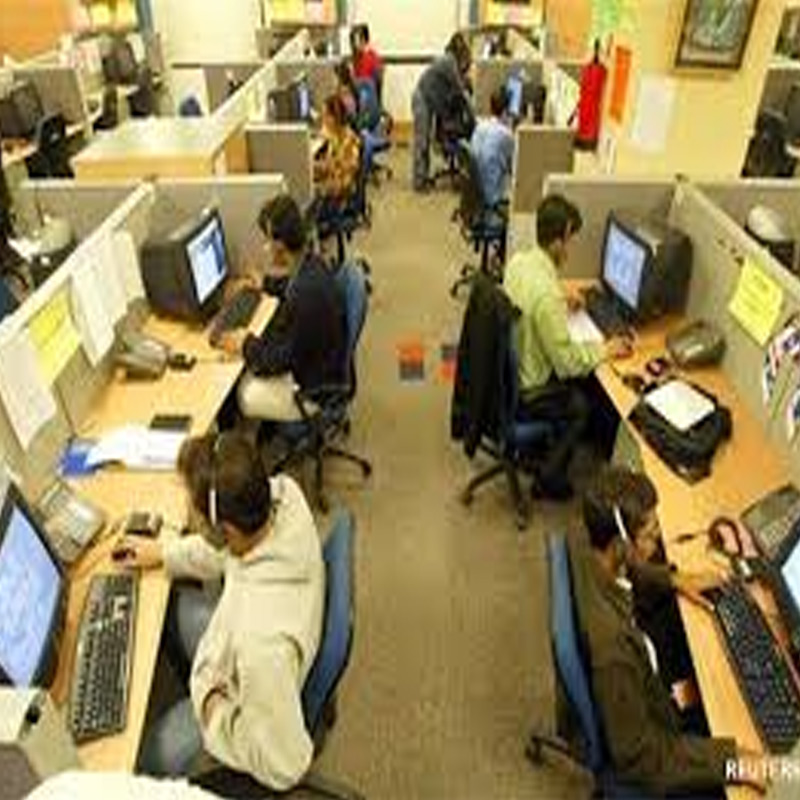
  • Indian IT industry crosses $37.3 bn in ’05-06,MP3 Players, Digital Cameras sales grow 59%

    Indian IT industry crosses $37.3 bn in ’05-06,MP3 Players, Digital Cameras sales grow 59%

    New Delhi, August 14, 2006 : The Indian IT industry logged in total IT revenues of Rs 164,652 crore (USD37.3 billion) in the year ended March 31, 2006 recording a growth of 33 per cent. (However, based on dollar denominated revenues, the growth was placed at 31 per cent) The industry showed a remarkable growth across all segments. The IT Services and BPO industry exports grew 33 per cent to record revenues of Rs 87,951 crore. The domestic IT industry went up 28 per cent to report revenues of Rs 56141 crore.

    The Top 5 IT groups — Tata, Wipro, Infosys, HP and HCL — collectively grew by 34% thus accounting for a third of the total Indian IT industry. The growth of the top 5 IT groups in the previous fiscal was 41 per cent. These findings have been reported in a recent survey of the Indian IT industry by the leading industry journal Dataquest in its 4-part annual survey.

    The hardware segment comprising servers, workstations, peripherals, and networking equipment accelerated its growth to 23% to record revenues of Rs 31706 crore.

    No 1 IT Trainer grows market share to 31%:

    The IT Training industry recorded a growth of 14 per cent to log in revenues of Rs 1453 crore. NIIT strengthened its leadership as the No.1 IT training company with revenues of Rs 450 crore and recording a market share of 31 per cent.

    With revenues of Rs 450 crore, NIIT is nearly 1.5 times bigger than the combined revenues of the next 4 players put together. NIIT which was 2.94 times the size of the next player has widened the gap by becoming 3.72 times the size of the No 2 player.

    NIIT, which addressed the spectrum of e-Learning activities, like learning content, design and development and integration of learning tools, hosted solutions and learner support services, completed its portfolio by acquiring the US headquartered USD 80 million company, Element K at a cost of USD 40 million last month.

    MP3 Players, Digital Cameras sales grow:

    External potable storage devices, External Hard Disks, and Pen Drives, drove demand for storage devices led by corporate executives. Non-traditional storage devices like Digital Cameras and MP3 players got the push from the consumer side. The survey estimates the Indian market for flash-based and HDD-based MP3 players to be around 85,500 units, translating into around Rs
    95 crore revenues. The market was driven largely by iPod, of course, which became the mainstay for MP3 player boom.

    Led by 59 per cent growth during the year, Indian consumer bought 232,265 digital cameras from Kodak, Sony, Canon, Olympus and Nikon. The prices of digital cameras have dropped lower than Rs 10,000. According to Dataquest estimates, the grey market accounted for nearly 30 per cent of the total digital market during the year.

    Internet connections cross 5 million mark:

    An accelerated 29% growth in Internet connections led to an addition of 1.6 million Internet connections. The Internet subscriber base of the Top 10 Internet Service Providers crossed the 7 million mark, even though it fell short of the 3 million new Internet connections target set by the industry
    for itself. India now has the fourth largest base of Internet users in the
    world.

    The industry attributes the high installation charges for the slow increase in the Internet proliferation. Of the Top 10 ISP providers, only VSNL recoded a drop in Internet connections and revenues during the year.

    Under Rs 10,000 PC a reality:

    Personal computer industry maintained its 24% growth (like last year) to sell over 4 million computers with a low cost PC under Rs 10000 a piece became a reality in the year. HCL, HP and IBM/Lenovo were the top PC brands selling nearly 38 per cent of the personal computers in the year.

    A drop in laptop computer prices below the Rs 35,000 mark saw sales grow by 168 %, shipping 588,592 laptop computers in 2005-06, led by HP, Lenovo and Toshiba.

    Over 2 million printers were bought in the second year when printers and scanners gave way to Multi Function Devices or MFDs with competition forcing the inkjet based MFDs below the Rs 5000 price point. While Hewlett Packard topped the sales charts in the Inkjet, Laser Printers and MFDs in the inkjets and A4 sized lasers, India’s TVS Electronics was the numero uno in the impact printer category.

    There was a marked shift in favour of TFT-LCD monitors. The Indian individual and corporate users bought almost 5 million monitors during the year with LCD based Monitors contributing 16 per cent of all the monitors sold. The users preferred larger screen sizes, from 15 to 17 inch and above in both CRT and TFT monitor categories.