Tag: PepsiCo

  • Masters’ Union collaborates with PepsiCo

    Masters’ Union collaborates with PepsiCo

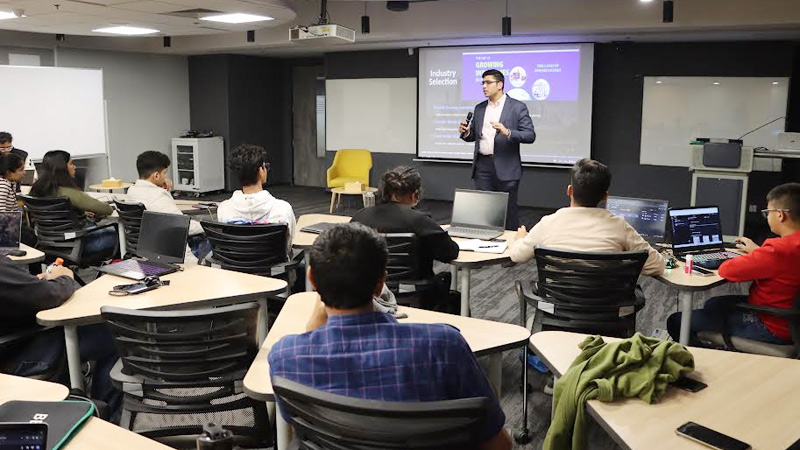
    Mumbai: Masters’ Union, the new-age business school, and PepsiCo, the global f&b corporation, recently organised a Winter Week Bootcamp from 18 to 22 December focusing on nurturing high school students’ talents. The five-day event aimed to equip young minds with practical skills, mentorship, and real-world insights.

    The Bootcamp provided a platform for students to explore diverse disciplines such as design principles, content creation, and stock market trading through hands-on activities, workshops, and discussions led by industry experts. Key workshops were led by professionals including Geetha Radhakrishnan, Franchise Commercial Director – India Beverages, PepsiCo, Susheel Lakhera, Associate Director – Franchise, PepsiCo, Neha Verma, Senior Marketing Manager, Vaango, and Rahul Puri, vice president of Information Technology, Vaango, covering innovation, marketing strategies, and the role of technology in shaping industries.

    Masters’ Union founder Pratham Mittal said, “Collaborating with PepsiCo for the Winter Week Bootcamp was an incredible opportunity to drive practical learning beyond traditional education boundaries. The event aimed to empower students with hands-on skills and insights, preparing them for the dynamic demands of the industry. Education extends far beyond textbooks, and this collaboration aligns perfectly with our vision to equip students with practical expertise that transcends theoretical knowledge.”

    PepsiCo hub lead, e-commerce DTX, data science and analytics Sourabh Agarwal said, “Partnering with the Masters’ Union for the Winter Week Bootcamp was a rewarding experience. Engaging with young minds and further fueling their enthusiasm for learning reaffirms PepsiCo India’s commitment to help foster innovation and skill development in the youth. We are glad that we could be part of this Bootcamp and engage with such young and great talent.”

    Students engaged with real-world case studies, working on tasks like crafting advertising campaigns for PepsiCo, trading stocks on platforms like StockGro, and developing apps for Vaango, bridging theoretical knowledge with practical application. The bootcamp culminated in students showcasing their growth and expertise through final projects, offering insights into their comprehensive learning experiences. The event attracted students from schools like Manthan International School, Sanskaar Valley, CS Academy, Sarvottam International, and KC High. It left a lasting impression, setting the stage for future educational collaborations.

  • VML appoints Babita Baruah as CEO of India

    VML appoints Babita Baruah as CEO of India

    Mumbai: VML has announced Babita Baruah will join as chief executive officer of India from March 1, 2024, and will partner with Saurabh Saksena, who has been elevated into the role of president.

    Baruah’s journey began at JWT/Wunderman Thompson India, where she spent two decades leading global and local brands such as PepsiCo, Unilever, Nestlé, Kellogg’s, Godrej, Kotak Mahindra, Reliance, and Aditya Birla.

    In 2017, she joined the GTB business in India as managing partner and moved to Bangkok in 2021 in a dual capacity role as WPP Lead for the Ford business across India, Australia, New Zealand, Thailand, the Middle East, and South Africa, and executive director, VMLY&R Thailand.

  • PepsiCo’s iconic brands turn up the heat in Sizzlin’ Hot TVC

    PepsiCo’s iconic brands turn up the heat in Sizzlin’ Hot TVC

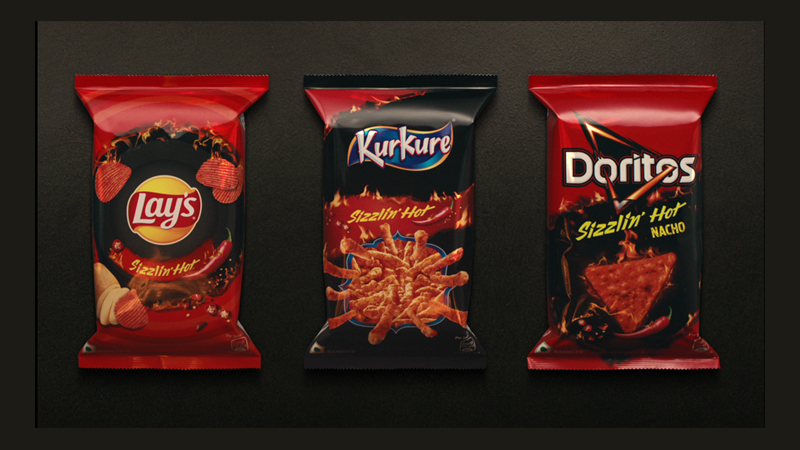
    Mumbai: Flaming up the snack aisle, PepsiCo India, one of the leading players in snack and beverage industry, has introduced a new TVC to celebrate the expansion of its Sizzlin’ Hot platform. This fiery TVC features the complete Sizzlin’ Hot range including Lay’s, Kurkure, and Doritos while highlighting the irresistible heat-packed experience each product offers.

    Sizzlin’ Hot taps into the deep affinity Indians have for ‘chilli’ and offers a spicy sensation, tailored for each iconic brand within PepsiCo’s salty snack portfolio. Following the success of Lay’s and Doritos Sizzlin’ Hot in India, Kurkure recently joined the fiery lineup, introducing its own Sizzlin’ Hot variant that infuses ‘chilli ka tadka’ with Kurkure’s iconic crunch.

    The TVC brilliantly portrays a spectrum of reactions that unfold when people snack onto the irresistible Sizzlin’ Hot range. Set against a captivating backdrop of diverse scenes, including cozy living rooms, bustling offices, and vibrant public spaces, each moment captures their unfiltered, spontaneous responses to the fiery spiciness. From frantically searching for something cool to shedding tears and energetically sprinting in search of relief, this engaging sequence of genuine and humorous reactions serves as a mirror, reflecting the surprise that awaits anyone who takes their first bite of Sizzlin’ Hot.

    Commenting on the Sizzlin’ Hot range expansion and launch of the TVC, PepsiCo VP and foods category head of India and South Asia Anshul Khanna said, “Last year, we introduced one of our most successful global platforms, Sizzlin’ Hot in India and have witnessed an overwhelming response. As we approach the festive season, we’re thrilled to announce the expansion of the platform with localised flavours for the unique Indian spice palate across our beloved brands, including Lay’s Maxx, Kurkure, and Doritos Dinamita. The launch will be accompanied by a comprehensive 360-degree marketing campaign that is sure to get people to intrigued about the fiery range. We hope that consumers love this new range and continue to spice up their snacking occasions.”

    “The Sizzlin’ Hot flavour is available in 3 formats – Kurkure, Lays and Doritos. No matter which one you pick up, the fiery taste is likely to make you react in unexpected ways. From fiery exclamations to bizarre sounds, the execution of the TVC brings together a gamut of expressions in a way that you can’t help but watch it again. Pretty much like the product, that you can’t help but eat another”, added Leo Burnett India national creative director Vikram Pandey (Spiky).

    Sizzlin Hot’ range is available in Lay’s, Kurkure and Doritos across all leading retail and e-commerce platforms in India. The TVC will be supported by a robust 360-degree surround campaign.

  • Delhi high court refuses to restrain Parle from using the trademark ‘For The Bold’

    Delhi high court refuses to restrain Parle from using the trademark ‘For The Bold’

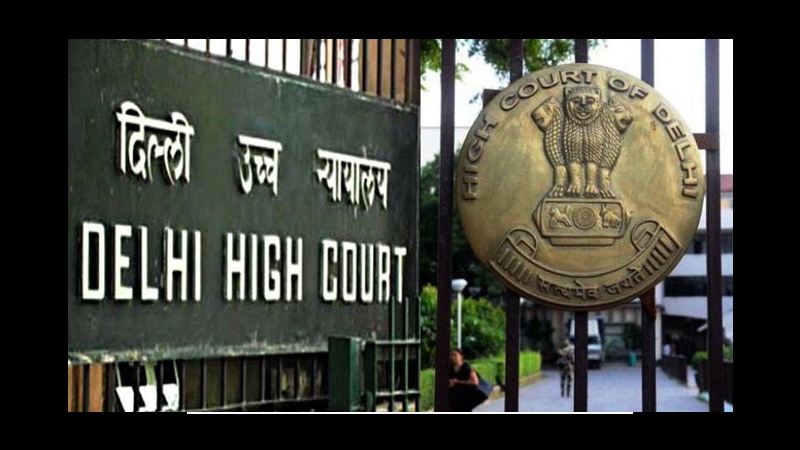
    Mumbai: The Delhi high court on 18 September 2023 refused to restrain Parle from using the trademark ‘For the Bold’ on its products in a suit filed by PepsiCo. PepsiCo had sought to restrain Parle from using PepsiCo’s registered trade mark ‘For the Bold’ on its products. In response, Parle challenged the validity of PepsiCo’s trademark ‘For the Bold’ and sought framing of the issue of invalidity of PepsiCo’s trade mark.

    The Delhi high court while allowing the aforesaid plea of Parle raising the issue of invalidity, rejected the prayer of PepsiCo to restrain Parle from using the trademark ‘For the Bold’ on its products. However, it has directed Parle to not use the tagline ‘For The Bold’ as the predominant part of its advertising campaign and not to alter the label on its “B Fizz” bottle without prior approval of the court.

    Ankur Sangal, Pragya Mishra and Shashwat Rakshit from Khaitan & Co appeared for Parle.

  • Pepsi announces new campaign ‘More Fizz, More Refreshing’

    Pepsi announces new campaign ‘More Fizz, More Refreshing’

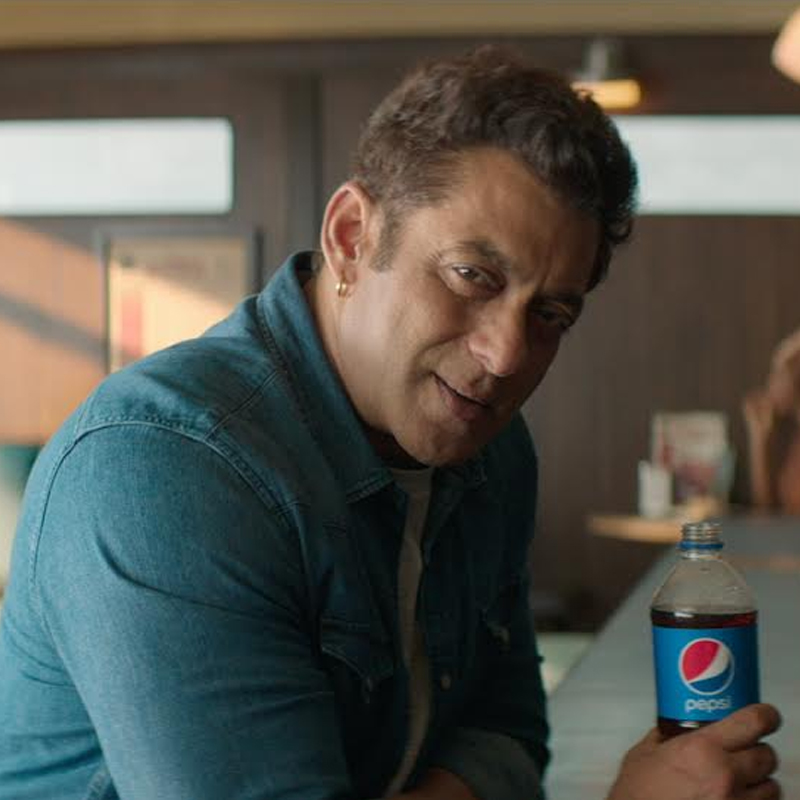
    Mumbai: Pepsi has rolled out a new ad film that continues to elevate its philosophy of “More Fizz, More Refreshing,” featuring brand ambassador Salman Khan.

    The new film reiterates that Pepsi is the voice and choice of the swag generation. The campaign’s core message is to encourage young people to try Pepsi, which is now offering a more fizzy refreshing experience to consumers.

    The new Pepsi TVC will be amplified via a robust 360-degree campaign. Pepsi is available in single and multi serve packs across all modern and traditional retail outlets in India, as well as on leading e-commerce platforms.  

    The film opens with a young couple sitting at a diner, where a waitress serves them a bottle of chilled Pepsi. The guy gets up, walks to the waitress, and asks her to serve them a cola beverage with more fizz, and he is overheard by none other than superstar and swag ambassador Salman Khan, who is seated nearby.

    Khan, in his irreverent swagger, passes on a glass of cola and asks him to try it. The boy’s thirst is dramatically quenched, and he asks the waitress if he wants the same cola beverage as the one given to him just now. Hearing this, Khan says he was just given Pepsi, which surprises the boy because he hadn’t expected Pepsi to have so much fizz. The boy then picks up a bottle of Pepsi and is seen enjoying the more refreshing experience that it has to offer.

    Speaking on the film, PepsiCo India Pepsi Cola category lead Saumya Rathor said, “Pepsi’s new campaign brings alive the philosophy of swag and refreshment with more fizz. This campaign is pivoting on driving trials while maintaining the brand’s quintessential irreverent challenger spirit. Working with Salman has been an absolute delight, and we are sure all Pepsi lovers will enjoy his new swag avatar in the film.”

  • Mountain Dew encourages people to be courageous in new TVC

    Mountain Dew encourages people to be courageous in new TVC

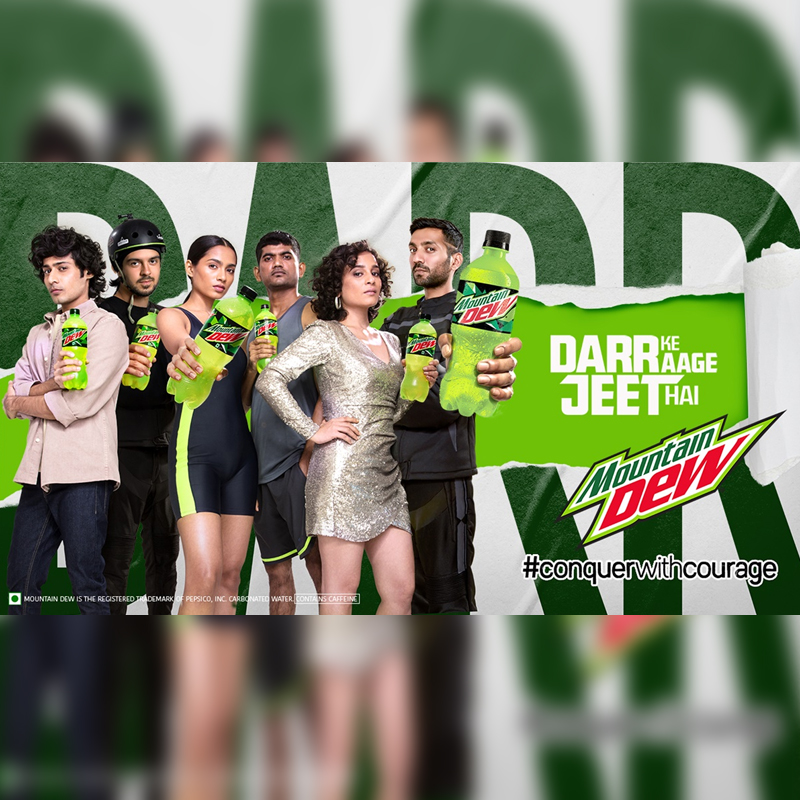
    MUMBAI: Mountain Dew brand has always focused on facing one’s fears to achieve exemplary results. Targeted at the youth of India, the beverage brand has unveiled a new campaign that encourages consumers to move beyond their fears and stand victorious in the race of life.

    The new TVC delves into the daily struggles of people across the spectrum – bringing out that each person reacts differently to circumstances and that fear is subjective with no definite scale, measure, or boundary. The film is a reverberation of Mountain Dew’s belief that in case of a challenge, there are only two choices one can make – either give in to fear and turn back or overcome fear and move ahead with courage. It is the choice that one makes that sets the real heroes apart from the rest.

    The film brings together situations and scenarios from the lives of different people in the form of a montage – a boy facing the microphone in front of an audience, a boxer in the boxing ring, a biker at the edge of a cliff, a girl standing at the edge of a diving board, a boy frozen in his steps to paraglide and a girl sending a text to break up with her partner – all these people are hesitating to take their challenges head-on. In comes Mountain Dew – with one sip of the drink, metaphorically, these moments of hesitation and fear are dissolved as the characters take the plunge with faith and courage to face their fears.

    PepsiCo India category director Mountain Dew Vineet Sharma said, “With our ‘Darr Ke Aage Jeet Hai’ philosophy, Mountain Dew has always celebrated the spirit of those who push themselves forward in the face of fear to achieve extraordinary results. The brand acknowledges that fear is universal, and every individual is beset with the feeling of fear. Fear can arise from a myriad of situations that are unique to each one of us and in this film, we have tried to focus on everyday fears that many of us can relate to. We believe that real heroes are those that face the challenge head-on and eventually emerge as winners. We are confident consumers across the country will relate to this touching new film and as always, the philosophy of ‘Darr Ke Aage Jeet Hai’ will resonate strongly with them.”

    Flibbr Consulting managing partner Rahul Jauhari stated, “Speaking of everyday fears yet keeping the ethos, energy and adrenaline rush of the brand was a fine line one had to tread and I’m glad we could deliver on the brief. We are confident that this TVC will help in connecting to a wider audience at a deeper level.”

    The new Mountain Dew campaign and TVC will be amplified across TV, digital, outdoor, and social media with a 360-degree campaign. The beverage is available in single/multi-serve packs across modern and traditional retail outlets as well as on leading e-commerce platforms.

  • Kurkure rolls out new campaign for its brand new flavour ‘Chatpata Cheese’

    Kurkure rolls out new campaign for its brand new flavour ‘Chatpata Cheese’

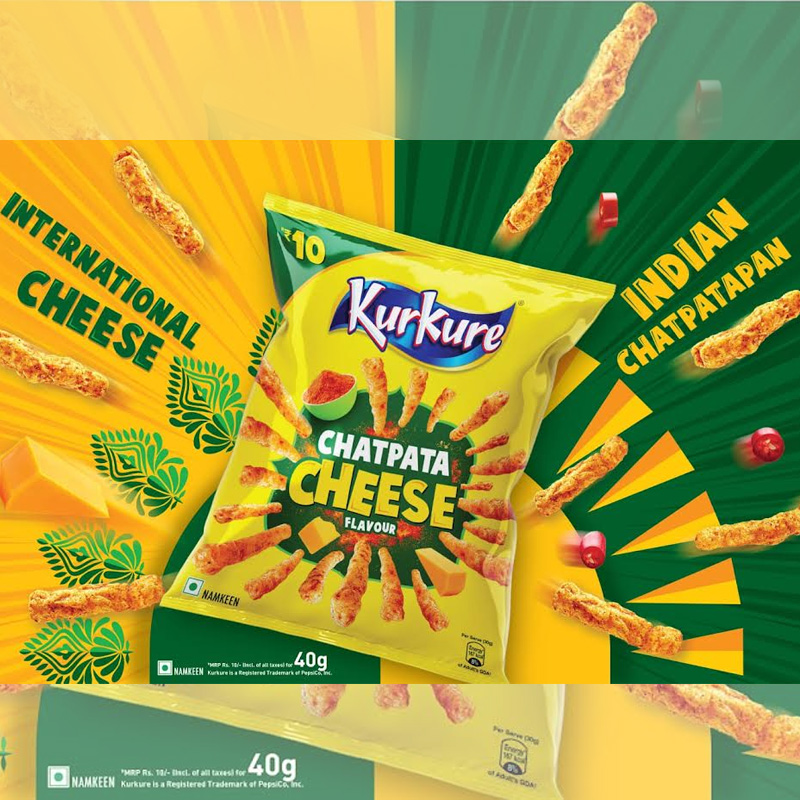
    Mumbai: The quirky snack brand, Kurkure, has unveiled an entertaining new TVC campaign to introduce its latest flavour innovation ‘Kurkure Chatpata Cheese’.

    Crafted by the creative agency Wunderman Thompson, the campaign is not limited to a TVC, but will also be brought to life through a robust 360-degree surround campaign across multiple platforms and an engaging social media initiative for its fans.

    Expressing the magic of fusion, the TVC opens with two families, one Indian and the other a foreigner, discussing their children’s love marriage. The Indian boy’s mother, who is skeptical of their union expresses her displeasure to her son, claiming that he would be better off marrying someone from an Indian family. While doing so, she offers the girl’s parents some Kurkure Chatpata Cheese, but instead tells them in English that she’s proud of her son’s choice. That’s when the ‘chatpata’ twist kicks in and the girl’s mother playfully responds, “chal jhoothi!”, shocking everyone in the room.

    With smooth international cheese and masala ka twist, the new permanent flavour stems from the globally successful cheetos crunchy cheddar jalapeño flavour.

    Kurkure’s latest offering embraces India’s growing affinity for dairy-flavoured snacks. The never-seen-before fusion flavour extends the brand’s play beyond the classic ‘masala’ flavour, which is unheard of in the collet category. The all-new Kurkure chatpata cheese aims to create curiosity amongst the Indian youth with its unique combination of international cheese and Indian ‘chatpatapan’ that is just ‘two much fun’.

    Speaking about the TVC, PepsiCo India Kurkure associate director- brand marketing  Neha Prasad said, “For over twenty years, Kurkure has been the family-entertainer that adds a spark of quirky masti into the daily lives of its consumers. We keep our consumers at the heart of everything we do by creating campaigns that illustrate unconventional, yet relatable modern Indian family moments. Our latest TVC intends to transform any family moment into an entertaining one with our new Chatpata Cheese fusion flavour that is truly ‘videsi mein desi chatpatapan’!”

    Expressing her thoughts on the campaign, Wunderman Thompson senior vice president Ritu Nakra said, “Kurkure now brings alive an irresistible new flavour by dramatizing the fusion of India’s favourite masaledar crunch with an International cheese flavour. Watch how ‘videsi mein desi chatpatapan’ will make a perfect snack in the new ad campaign.”

  • Former PepsiCo India’s David Pross joins Elite Pro Basketball League as chief advisor

    Former PepsiCo India’s David Pross joins Elite Pro Basketball League as chief advisor

    MUMBAI: David Pross has joined the Elite Pro Basketball, a first of its kind in India a 5×5 Pro Basketball League as an advisory board member for the league. Having worked in various countries across the globe, David Pross with all his experience will help the team in planning and executing the league. Organized by Elite Sports India (ESI), it will attract top players, coaches across India and will have the highest salaries in the Indian basketball circuit.

    Pross ESI said someone who has a great idea of the Indian market as he has launched his fourth new business initiative in India with Mobile Global Esports (MOGO).   He also led the financial development of PepsiCo’s investment in India. This project achieved the first new launch of a global brand in India in 15 years, a market previously closed to investments by foreign consumer product companies. In his stint with R. J. Reynolds Tobacco Company, he managed to gain government approval, environmental clearances and the industrial license for the only new foreign investment in India’s tobacco industry in 75 years.

    Pross said, “Elite Pro Basketball gives the most exciting players in India a chance to prove their skills and create a dynamic showcase for the way basketball should be played — a fast-paced, nothing conceded, score-at-will game of the best.”

     Elite Pro Basketball CEO Sunny Bhandarkar said, “Having someone as experienced as Mr Pross will certainly help us immensely. His inputs will be crucial in making this a World class league, our initial conversations have already been beneficial, and he has some great ideas which we will be implementing.”

  • Out of home consumption contributes a big chunk of our business: Pepsico India’s Shailee Tyagi

    Out of home consumption contributes a big chunk of our business: Pepsico India’s Shailee Tyagi

    MUMBAI: Pepsico has long been associated with India’s food service industry, ever since the beverage brand entered India in the 1990s. Amidst inflationary pressures and a tough two years of pandemic notwithstanding, PepsiCo’s India biz in April 2022 reported a double-digit organic revenue growth in the first quarter. The company is well-positioned to adapt and execute in a “challenging operating environment”, having enhanced its focus on productivity and “sharpening its revenue management capabilities”, Pepsico stated while reporting its earnings recently.

    With the pandemic fuelling a paradigm shift in consumer behaviour aided by digital acceleration, and customers preferring doorstep food delivery over dine-in services, the food service industry has been witnessing an upheaval in the past two years. Several restaurants are looking to shift from a traditional dine-in facility to set up a delivery-only cloud kitchen model. On the sidelines of the National Restaurant Association of India’s (NRAI) cloud kitchen convention held recently in Mumbai, Pepsico India beverages director of Organised Trade Channels Shailee Tyagi spoke exclusively to Indiantelevision.com on how the beverage major has been making a difference in the evolving food service ecosystem in the country. She also weighs in on the restaurants vs food tech platforms ongoing dispute and offers her insights on the tussle.

    Tyagi has been a Pepsico veteran with twelve years of experience in channel sales and strategy. She was also the driving force behind the #Pepsisaveourrestaurants campaign with NRAI and Swiggy, to support the restaurant workers when the first covid pandemic wave hit in 2020.

    Edited excerpts:

    How did the food service industry, on the whole and Pepsico India beverages fare during the two successive pandemic waves?

    We launched a Covid assessment report for the foodservice industry along with the NRAI last year, and this was commissioned to Technopak. The insights that came out of the study was that the industry shrunk by 55 per cent in terms of revenue. So, it was a 4.5 lakh crore business with services that shrunk to less than two crore- that was the impact. About 2.5 million restaurants shut down completely- largely the ones unorganised, who do not have the muscle to survive a pandemic like this. And, of course, millions of people lost their jobs.

    Now coming to beverages and us as a company- In the beverages industry, out of home consumption(we refer to outdoors eating as an “out of home” occasion) contributes to a big chunk of our business. For the overall category, it would be nearly 50 per cent. The OOH food service is a part of our growth model for PepsiCo globally. And it is expansive- not just restaurants, even cinemas, airports, airlines all are part of the service. We have built a very strong portfolio which caters to food service requirements. Suddenly, when that shut down, and that too happening in summers, which’s the peak season- you can imagine the upheaval. Unluckily, both the times we lost two summers due to Covid. And those three to four months account for almost 60 per cent for the category. As for the food service industry overall, they lost almost more than 50 per cent of their revenue.

    What was the #PepsiSaveOurRestaurants campaign with NRAI all about?

    The #Pepsisaveourrestaurants is a campaign very close to my heart. It came about at a time when the unthinkable and the unprecedented lockdown happened during the first wave- which was the worst from the viewpoint of the food service industry. We have a huge ecosystem of restaurant partners, and all of a sudden the restaurant workers were out of their livelihoods. There was so much uncertainty looming. So, it was time to really reflect and ask ourselves, ‘Do we just remain silent or become salient at that point in time’? And that’s how I came up with this concept of ‘rallying for our restaurant workers’.

    Fundamentally, we’re a consumer company and we have a consumer connect. So, the idea was how do we connect with consumers and make them part of a movement, where they also come forward to support the restaurant workers. That gave germ to the thought of having an aggregator in play. So, this was really about coming together of three stakeholders who are interconnected, but who hadn’t worked together before, for a common purpose.

    What we essentially did through this is that every time a consumer ordered a meal online on Swiggy, and so long as he or she is adding any beverage- not just Pepsi- for every beverage added, we donated a meal to the restaurant worker. All our proceeds were directed to it and we generated 2.5 million meals during the 40-45 day-long campaign. We generated a lot of goodwill too. It also gave consumers the power of one touch where they could make a difference in the restaurant workers’ lives.

    Essentially, it was about leveraging Pepsico’s entire ecosystem of partnerships, so I think, for me the biggest learning was the power of partnerships, especially in difficult times. How collaboratively we can solve problems, rather than doing it alone. Now, of course, it’s heartening to see the service industries bouncing back.

    How did the industry and the brand cope with the decreasing footfalls in restaurants and the consequent hit in revenue? How is Pepsico making a difference in the post-pandemic F&B ecosystem?

    It’s a very symbiotic relationship that we have with our restaurant partners. It’s like them winning is us winning, and them losing is us losing. After the first wave, we recognised that the consumer habits were changing, and they were moving to aggregators. Because ‘ordering in’ was, in a way, needed and it became the new consumer habit. So what we did is that we worked with the food aggregators on a joint business plan to make sure that all PepsiCo partners, or PepsiCo restaurants, which are on the aggregator platform, how do we increase the discoverability of them. How do we make sure their average order value goes up? So, we came up with insights, partnership with aggregators, built combo led menus, PepsiCo collections, and also created incremental occasions for every festival, where you could celebrate at home with restaurant food. And that’s what we did for every single festival that happened in the last one and a half years through the aggregator platforms.

    After the initial relief that food aggregators offered during the first wave, several restaurants now are at loggerheads with the food tech platforms like Swiggy and Zomato, believing that they are eating into their revenues now that businesses are opening up. Your take on it?

    So, I think, the common insight is that everybody is recognising the benefits of being in a marketplace. It is akin to being in a food court in a physical world. Think of it- in a food court the consumers are there. So, you put up your brand shop, and then the consumer comes and tries it. That’s exactly what an aggregator marketplace is offering you. It does come at a cost. But so is the cost of every channel. I think fundamentally, every channel has certain pros and cons. It’s important to recognise the pros and make it work for you. For instance, the restaurant can ask the aggregator for a lot of insights. Say if you want to do targeted marketing, and want to talk to people who have not interacted with your brand in the last couple of months. So, the moment you recognise them as a partner, and say, what do you bring in as a partner, then I think one can have meaningful conversations.

    The second thing I would say is revenue management is very critical. Like, every channel requires certain dynamics and the consumer requires something. So, fundamentally, you can work with the serve-size of your food, you can work with larger bundles, you can increase your order value on aggregators for group meal occasions. And aggregators are currently working on a model where higher your order value, lower the commission rate. So, it is happening. And a lot of players who have recognised that this is important are having those conversations, and it’s a win-win outcome.

    And thirdly, I think, the stickiness that you build for your food and brand. Once you have built stickiness, the aggregator would also want you, so then they would also want to discuss different terms. Having said that, it’s not just all about aggregators. There is also a ‘direct order’. So, initially you get a trial done on an aggregator, you get immediate feedback, because ratings are visible. Once you have got your trial, and your feedback, and you rework your product and concept fitment, you can always leave a QR code on the packaging, and you can say, hey, next time you order, why don’t you order direct, you can leave a phone number. So, if consumers are comfortable, and if they love you, they will find you. Thus, it’s the mindset that one has to get out of.

    Also Read | Why Restaurants are stepping away from Swiggy, Zomato with #OrderDirect campaign

    What possible pitfalls do you foresee in the cloud kitchen ecosystem in India?

     The only, if I may say, enemy of a cloud kitchen brand is going to be themselves. If they don’t build to last, if they kind of think that this is quick money. If you’re entering with that mindset, you will go wrong. Primarily, if you’re entering a restaurant business you have to enter with a hospitality mindset, be open to feedback for improvisations and have to build trust on board. That is very critical. If this is what a cloud kitchen is building its business on, it’s going to thrive and become scalable.

    The second thing I would say is adoption of technology. One thing that cloud kitchens have access to, is data. They have to ask for that data, it would be available to them in some form. They know exactly how many orders they are taking, they know whether more group meals are getting ordered, or more single people are ordering, they know exactly how many orders are coming and from which location, etc. A physical restaurant didn’t have that choice. Cloud kitchen by the very nature of it is digital-friendly. So, any brand built on consistency, trust and then adopting technology, not just in data, even the processes having standard operating procedures of making food- has to succeed.

    Cloud kitchens and food aggregator platforms saw a spurt during the pandemic-induced lockdown and its aftermath. Now, with businesses and restaurants opening up post-pandemic do you see the growth scaling or sustaining in 2022 and the near future?

    In India, food consumption is on the rise. Because essentially consumer habits are shaping up. What started out as a need has now become convenience. And the fact you have access to so much variety. So, people are okay converting some of their occasions into ordering-in occasions. It takes about 90 days to build a habit, it is said. And in this case, it’s a two-year phenomenon! So, the habits have gotten entrenched.

    The second thing is a couple of things that are fueling it such as, just the fact that people have more spending power now. Also, digital access- wherever you are, the internet travels with you. So, the access and the digital acceleration is supporting it. And when that happens, it’s not just on cloud kitchen, fundamentally, it’s the e-commerce app-based economy that’s really thriving. Digital penetration has happened and the Internet, smartphones are available in even tier four rural areas. People have become comfortable transacting online. Cloud kitchens are just a subset of that.

    And honestly, consumers don’t know whether they’re ordering from a cloud kitchen or restaurant. When you open the app, you’re ordering biryani, and you are ordering from the best place which is nearest and will deliver you on time and has the best rating. That’s all. It is more our industry which uses these words, as far as consumers are concerned- they are ordering from a restaurant only.

    People love ordering in and even love creating social occasions at home. This is here to stay. And in fact, not just survive, but thrive.

  • Cola wars: PepsiCo ends 30-year partnership with WPP, as Coca-Cola signs up the agency

    Cola wars: PepsiCo ends 30-year partnership with WPP, as Coca-Cola signs up the agency

    Mumbai: The biggest rivalry in advertising history is in full view once again as the two beverage giants PepsiCo and The Coca-Cola Company engage in an indirect battle over their common global partner. PepsiCo India has brought its over three decades of association with WPP to a grinding halt after the latter inked a comprehensive deal with Coca-Cola. The beverage major is set to call India’s leading agencies for media and creative pitches. And the reason behind it is anybody’s guess.

    “PepsiCo India follows a re-pitching cycle every few years for agencies and partners working on our brand mandates. This year Wunderman Thompson and Mindshare will not be participating in the process,” stated a PepsiCo India Spokesperson to IndianTelevision, while adding, “We value our partnership and thank them for what we have achieved together over the years.”

    WPP Group-owned Mindshare and Wunderman Thompson were the company’s media and creative agency on record, respectively.

    Last year in November, Coca-Cola named WPP as its global marketing network partner. As a part of this alliance, WPP will play a major role in Coca-Cola, executing a new marketing model that is built to drive long-term growth for the entire company’s portfolio of brands across more than 200 countries and territories.

    The news of this association evidently has not gone down well with Pepsico, as WPP was handling the latter’s business in markets like India. India is among the few countries where WPP Group agencies represent PepsiCo. Rumours have been strife since then that PepsiCo might change its agency soon as no brand wants to work with agencies with contending brands.

    As the two largest soft-drink brands, Coca-Cola and Pepsi have long been arc rivals. Pepsico and Coca-Cola are two major advertisers in the country and the beverage makers have jostled for consumer attention with pointed ads featuring major Bollywood stars as brand ambassadors over the last decade.

     According to reports, PepsiCo has been devoting between $2.3 and $ three billion to advertising and promotion of its products annually. Over the last six years, Coca-Cola has spent an average of $ four billion a year on advertising worldwide.